REVIEW · TBILISI
Nana’s Kitchen – traditional Georgian cooking class at real Georgian family home
Book on Viator →Operated by Nana's Kitchen · Bookable on Viator
A Georgian feast starts in a family kitchen. At Nana’s Kitchen in Tbilisi, you cook real Georgian dishes with Nana and family, then sit down to a proper Supra dinner. It’s not a show. It’s a living-room-and-kitchen kind of evening.
What I like most is how hands-on it feels, not just watch-and-snack. I also love the family touch: Nana (and her team, like Nina) explains ingredients and the hosting spirit as you work, so it lands as culture, not trivia.
One possible drawback: because this is a home-based class with an evening time slot, it’s not the right fit if you want something quick, slick, and super structured like a big restaurant tour. You’ll be cooking and talking your way through the night.
In This Review
- Nana’s Kitchen: 6 things that make this Georgian cooking class different
- Stepping into a Georgian home, not a cooking set
- Price and value: what $110 buys you in Tbilisi
- The 3-hour flow: wine, Supra talk, and cooking five dishes
- 1) Introduction to Supra (and where Georgian food comes from)
- 2) Kitchen time: roll up sleeves and cook
- 3) Finish with Supra dinner
- Supra dinner: learning the hosting spirit, not just eating
- The dishes: what you’ll cook and why they taste like Georgia
- Traditional spinach paste
- Red peppers with walnut and spice mix
- Fried eggplants with walnuts
- Chakapuli (seasonal veal) or Chakhokhbili
- Instruction style: hands-on guidance that makes you confident
- Where the evening happens: kitchen studio, then living-room dinner
- Getting value from the recipe booklet (and how to use it at home)
- Who this is for (and who should pick something else)
- A few practical tips before you go
- Should you book Nana’s Kitchen in Tbilisi?
- FAQ
- How long is Nana’s Kitchen, and when does it run?
- What does the class cost?
- What language is the class offered in?
- Where does the experience start?
- What will I make and eat during the class?
- Is it a private activity, and is it refundable?
Nana’s Kitchen: 6 things that make this Georgian cooking class different
Real family-home setting with a kitchen studio feel, not a generic cooking venue
Supra practice: you learn the hosting tradition and eat in that style at the end
Homemade Georgian wine to start from the family vineyards
Small-group pace so questions are easy and instruction stays personal
Five-dish hands-on cooking with guidance and demonstrations
Take-home recipe booklet so you can recreate a Georgian party later
Stepping into a Georgian home, not a cooking set
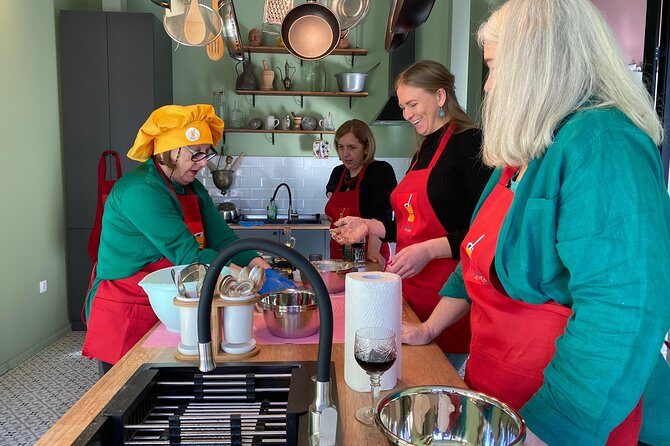
This class works because it’s housed in a real Georgian family home in Tbilisi. You’re not surrounded by props, lighting rigs, or a factory line of tourists. The evening feels like you’ve been invited into someone’s kitchen life for a few hours.
You also get that comfort advantage that matters in cooking. When the host is relaxed, smiling, and patient, people actually learn. One student described it like learning from a grandmother. That’s the energy here: warm, conversational, and built around doing the work side by side.
The hosting vibe matters too. Georgian hospitality isn’t just manners—it’s a whole rhythm of food, conversation, and toasts at the table. Nana’s Kitchen treats that as part of the lesson, not an optional add-on.
You can also read our reviews of more cooking classes in Tbilisi



Price and value: what $110 buys you in Tbilisi
$110 per person sounds like a lot until you map out what’s included. For a roughly 3-hour evening, you get:
- A glass of homemade Georgian wine to begin
- Hands-on cooking for multiple Georgian dishes (not just tasting)
- A full dinner served in the Georgian Supra style
- A recipe booklet with what you made so you can cook it again at home
That blend—wine + cooking + Supra dinner + take-home recipes—is why this class is popular. You’re paying for an experience that’s hard to replicate on your own: the specific way Georgians teach cooking, and the way the meal is hosted.
One practical point: the class is described as being booked about 15 days in advance on average, so if you’re serious about doing it, plan early.
The 3-hour flow: wine, Supra talk, and cooking five dishes
The evening starts in a simple, effective way: a glass of homemade Georgian wine from family vineyards. It’s paired with a short introduction that sets the tone for what you’re about to learn.
Then you get the real structure of the class:
1) Introduction to Supra (and where Georgian food comes from)
Before anyone touches a cutting board, Nana explains the meaning of Supra—the traditional way Georgians host a feast with food and wine. You also get a quick primer on origins and influences on Georgian cuisine. It gives you a framework for why the flavors make sense together: herbs, nuts, acidity, and that signature hospitality at the table.
2) Kitchen time: roll up sleeves and cook
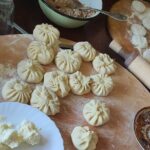
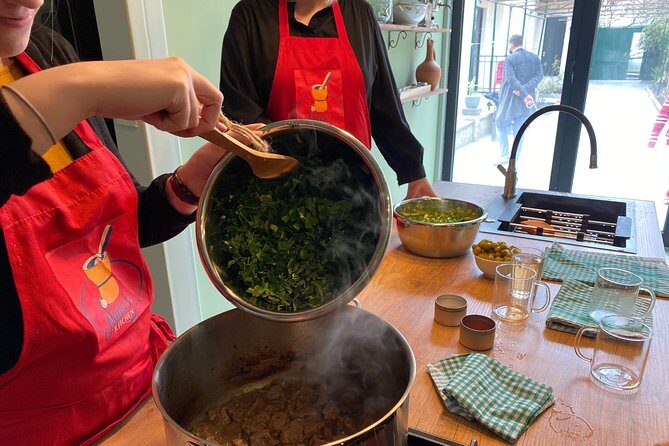
Next you move into the kitchen and actually make dishes. You’re not stuck at a desk. You’ll work with guidance and demonstrations, and you’ll make the dishes yourself.
The menu examples show what you can expect flavor-wise and technique-wise:
- Traditional spinach paste (starter)
- Red peppers with walnut and spice mix
- Fried eggplants with walnuts
- Chakapuli (seasonal veal with tarragon) or Chakhokhbili (the alternative option)
The class is described as covering five Georgian dishes, so you can expect another dish in addition to the sample menu. The exact fifth item can vary, but the core pattern stays the same: you’ll be learning a small spread that you can recreate later.
A few more Tbilisi tours and experiences worth a look




3) Finish with Supra dinner
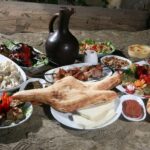
To close out, you sit down to dinner served in a traditional Supra manner. The class isn’t finished until you’ve experienced the meal as a Georgian feast, not a random dinner at the end of a cooking lesson.
Supra dinner: learning the hosting spirit, not just eating
Supra is one of those concepts that becomes clearer when you see it in action. Here, it’s taught as a tradition: food and wine are part of celebration, conversation, and community.
What makes this practical is that you’re not just hearing about it. You finish the class by dining in the Supra style. That means you can connect the dots between the dishes you cooked and the way a Georgian feast moves at the table—expect a more communal, celebratory pace than a normal meal.
Also, the atmosphere tends to be relaxed and friendly. Several people highlight laughter and warm conversation during cooking, which usually translates into the dinner feeling less like a performance and more like a real gathering.
The dishes: what you’ll cook and why they taste like Georgia
If your goal is to understand Georgian cooking through a few key dishes, this is a smart set. It covers the big “Georgia flavor codes” without overwhelming you with a 12-course menu.
Traditional spinach paste
Spinach paste is a great starter because it teaches you texture and balance. Expect an earthy green base, often paired with herbs and seasonings that feel fresh rather than heavy. It’s also a dish that works well at room temperature, which is part of why it fits a feast.
Red peppers with walnut and spice mix
This dish is about depth. Walnuts bring a nutty richness, while the spices and peppers keep it lively. It’s the kind of combination that makes you realize why Georgian food leans so hard into nuts and herbs together.
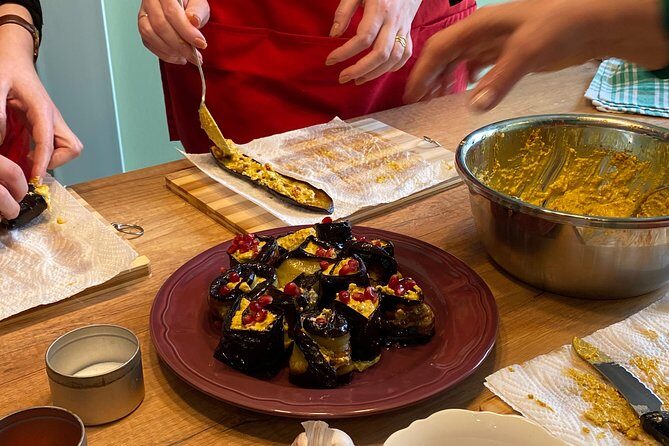
Fried eggplants with walnuts
Eggplant is a classic Georgian ingredient for good reason: it soaks up flavor, and it gives the meal that satisfying, savory weight. Paired with walnuts, it turns into something more complex than simple “fried veg.” You’ll leave with a dish that feels both comfort-y and special enough to serve guests.
Chakapuli (seasonal veal) or Chakhokhbili
This is where the class shows flexibility. You’ll either cook:
- Chakapuli, described as veal with tarragon (seasonal), or
- Chakhokhbili, the alternative choice
Both are main-course energy. Chakapuli, with tarragon, signals herb-forward cooking. Chakhokhbili brings that homey, saucy Georgian main-course feeling. If you like when a class reflects what’s in season, this setup is a good sign.
Instruction style: hands-on guidance that makes you confident
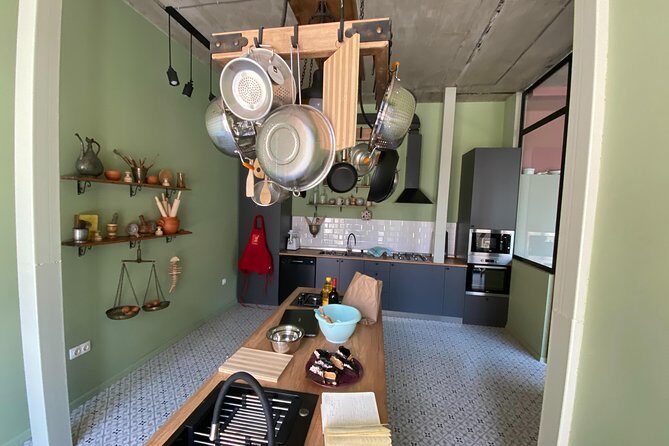
One reason the class gets top marks is how patient and explanatory the hosts are. You’re doing the cooking, but you’re not being thrown to the wolves.
Here’s what that means for you:
- You can ask questions while you’re working, not after the fact
- You learn small “why this works” details as you go
- You leave with a recipe booklet, so your memory doesn’t rely on a shaky phone photo
I like that the class blends technique with context. When Nana explains where ingredients come from and how they fit Georgian cuisine, you stop cooking by imitation and start cooking with understanding.
If you’re traveling solo, it’s also friendly. Several comments highlight how easy it is to form quick connections with the people hosting and with the rest of the group. If you’re traveling as a couple or family, the tone still works because it’s not a loud, chaotic environment.
Where the evening happens: kitchen studio, then living-room dinner
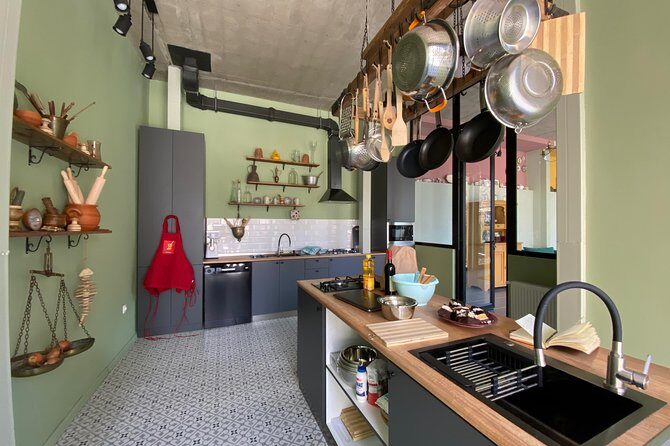
This isn’t just about cooking. The setting helps you enjoy the whole experience.
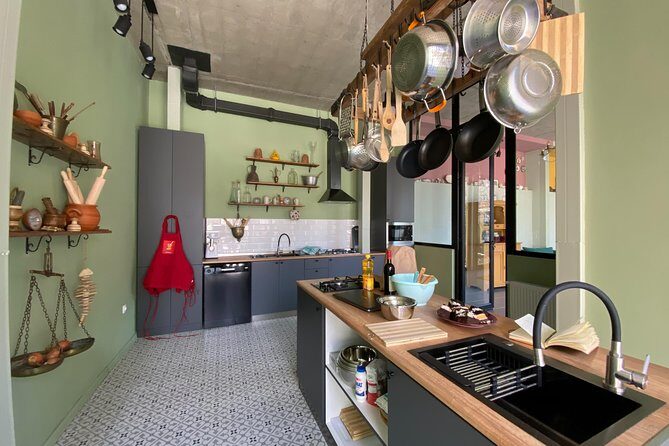
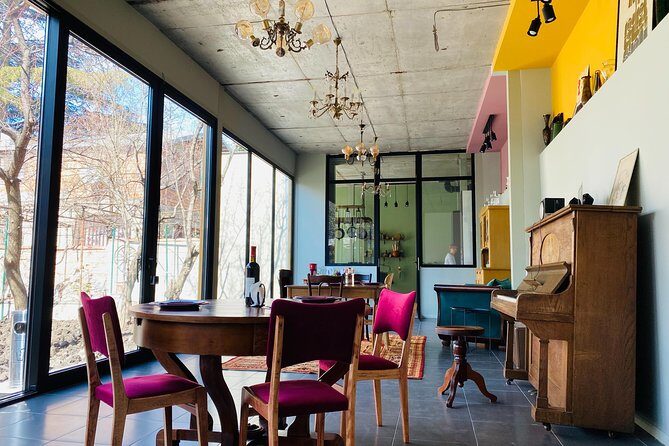
People describe the kitchen and living room spaces as beautiful and inviting, and note that the class may take place in a kitchen studio in Nana’s garden area. That kind of home setting does two things:
1) It keeps the atmosphere relaxed
2) It makes the Supra dinner feel natural, like it’s part of the same evening—not a separate event
You’ll likely feel comfortable asking for small adjustments too, because it’s not a high-speed commercial kitchen. It’s a home rhythm.
Getting value from the recipe booklet (and how to use it at home)
The best souvenirs are edible, but the best edible souvenirs are the ones you can repeat. Nana’s Kitchen gives you a recipe booklet containing the recipes for the dishes you made.
How I’d use it:
- Cook one dish first (spinach paste or peppers often work well to start)
- Use the booklet like a guide, not a strict rule
- Invite friends over and treat it like a mini Supra evening
That’s exactly the intent of the class: you should be able to put together a Georgian party at home and recreate the feel, not just the taste.
One extra helpful bonus: you might find that some people also take home leftovers in a take-out box, depending on what’s left. Even if you don’t rely on that, the recipe booklet plus the practical cooking time is still the main take-home win.
Who this is for (and who should pick something else)
This class fits best if you want more than a tasting. If you enjoy hands-on food experiences and want to learn Georgian cuisine in a way that’s tied to culture—especially Supra—you’ll likely love it.
It’s also a strong choice if you’re:
- A couple looking for a memorable Tbilisi evening
- A family who wants a real cooking activity, not a passive show
- A food traveler who wants to come home with recipes that actually match what you ate
Consider skipping it if you prefer very fast, low-interaction tours. This is an evening-long cooking and dining experience. You’ll be working at the stove and hanging out in conversation mode.
A few practical tips before you go
Because this is an evening class, plan your day so you’re not rushed right before it starts. With an approximate 3-hour duration, you’ll want to arrive with time to settle in.
Also, check your schedule against the operating window: it runs in the evening on weekdays (Monday through Friday) within the 7:00 PM to 11:00 PM time range.
Finally, since it’s offered in English and confirmation happens at booking, you can go in assuming the explanations will be accessible. If you’re relying on a translator or speaking limited Georgian, English instruction is a comfort.
Should you book Nana’s Kitchen in Tbilisi?
Yes—if you want a real Georgian evening where you cook, learn Supra, and eat what you made. The combination of homemade wine, family-home teaching, and a Supra-style dinner makes the $110 price feel more like an event than a ticket.
Book early because demand is real, with many dates taken about 15 days in advance. And if you’re the kind of traveler who remembers meals because you learned them, not just because they were tasty, this is a top choice in Tbilisi.
FAQ
How long is Nana’s Kitchen, and when does it run?
The class is about 3 hours long. It’s scheduled for evening hours on Monday through Friday, between 7:00 PM and 11:00 PM.
What does the class cost?
The price is $110.00 per person.
What language is the class offered in?
The class is offered in English.
Where does the experience start?
It starts at 26 Guram Rcheulishvili St, T’bilisi 0179, Georgia, and it ends back at the meeting point.
What will I make and eat during the class?
You’ll cook Georgian dishes (the experience is described as teaching five dishes) and the evening concludes with a traditional Supra dinner.
Is it a private activity, and is it refundable?
It’s a private tour/activity, meaning only your group participates. The experience is non-refundable and cannot be changed for any reason.
If you want, tell me your travel dates and whether you’re a couple or a group, and I’ll help you plan what time in Tbilisi to schedule it around.