REVIEW · TBILISI
Mtskheta, Jvari, gori, uflistsikhe, history and panorama (Private tours)
Book on Viator →Operated by ushba travel · Bookable on Viator
Two rivers, one huge story. This private day trip through Mtskheta and Uplistsikhe lets you read Georgia’s timeline in real places, from Bronze Age echoes to early Christianity. I especially like the big-picture way the route links sites to what Georgia became, and the views from Jvari and Uplistsikhe that make the geography feel meaningful. One thing to consider: it’s a long 9 hours and lunch isn’t included, so you’ll want to plan a break.
You start in Tbilisi and ride with an air-conditioned vehicle and onboard WiFi, then spend the day walking and looking up at churches, river valleys, and cave walls. If you like history that you can point to—ruins, cathedrals, graves, relics—this is the kind of outing that keeps you busy without feeling rushed every minute.
Because it’s private, it’s only your group. That helps if you want your guide to slow down for photos at viewpoints like Jvari, or spend a bit longer in the candle-and-stone world of Svetitskhoveli and Samtavro.
In This Review
- Key highlights you should care about
- A Private 9-Hour Route That Tells Georgia’s Story in Order
- Jvari Church: The Hilltop Where Rivers and Memory Meet
- Svetitskhoveli Cathedral: Pillar of Life-Giving and the Weight of Relics
- Samtavro Church: Mirian and Nana’s Graves and St. Nina’s Blackberry Bush
- Optional Stalin Museum in Gori: Worth It If Your Group Wants 20th-Century Context
- Uplistsikhe Cave City: Pagan Stone Rooms and Big Kura Valley Views
- Price and Timing: Is $90 a Good Deal for This Much Ground?
- Getting the Most Out of 9 Hours: Pace, Photos, and Comfort
- Best Fit: Who Should Book This Tour
- Should You Book This Private Mtskheta–Gori–Uplistsikhe Tour?
- FAQ
- What time does the tour start, and how long is it?
- Where do we meet in Tbilisi?
- Is pickup offered?
- Are admission tickets included for the main churches?
- Is lunch included?
- Is the Stalin Museum stop required?
- Can I cancel for a full refund?
Key highlights you should care about
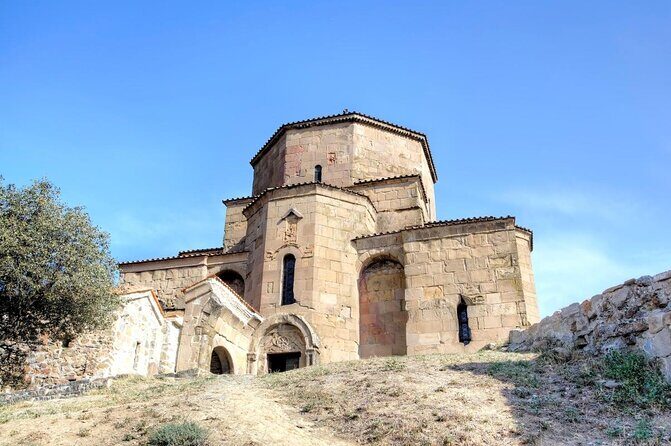
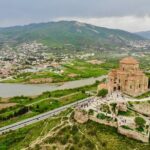
- Jvari’s hilltop church: sweeping views over Mtskheta and the meeting of the Aragvi and Kura rivers
- Svetitskhoveli Cathedral relics: the tunic of Jesus Christ, Elijah’s mantle, and St. Andrew the First-Called
- Samtavro’s royal graves: Mirian and Queen Nana, plus the famous blackberry bush connected to St. Nina
- Optional Gori detour: Stalin Museum in his hometown, with an extra ticket cost noted
- Uplistsikhe cave city: pagan stone labyrinths and panoramic Kura Valley views
- Small practical perks: pickup available, WiFi in the car, and a guide who shares lots of context (often with guides like Nino or Giorgi Beruashvili)
A Private 9-Hour Route That Tells Georgia’s Story in Order
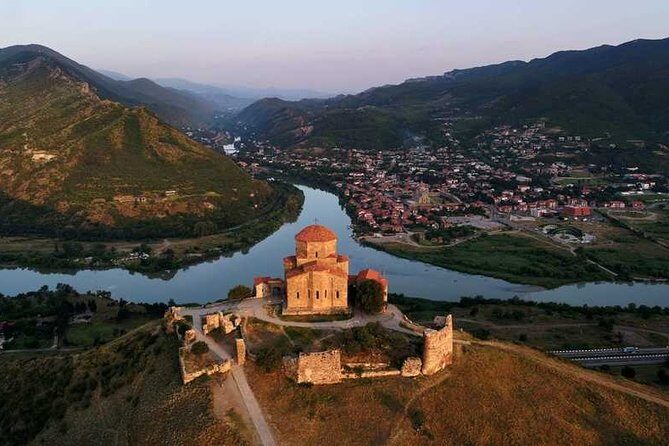
This is one of those day trips that feels planned for your brain, not just your camera. The day is built so you move from Mtskheta’s early-Christian core to a place that preserves pre-Christian, cave-city life, with Gori as the optional middle stop. That order matters: you start with the hilltop silhouette over town, then shift into the cathedral-and-graves layer of Georgia’s Orthodox identity, and finally step into stone rooms that belonged to much older belief systems.
You’ll spend about 1 hour each at Jvari and Svetitskhoveli, then around 30 minutes at Samtavro. After that, the day becomes flexible: your group can add the Stalin Museum in Gori, and you’ll continue to Uplistsikhe. For most people, this pacing hits a sweet spot. You get enough time to take it in, but you’re not stuck in one site long enough to miss the others.
You can also read our reviews of more private tours in Tbilisi



Jvari Church: The Hilltop Where Rivers and Memory Meet
The walk starts around A. Pushkin, M. Lermontov, P. Tchaikovsky, A. Dumas-father, and L. Tolstoy—yes, the route uses famous names to get your bearings fast. As you turn off the main path, you’ll pass places linked to the events described by Lermontov in Mtsyri, then you climb up to the Jvari temple.
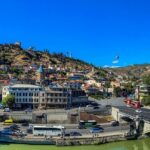
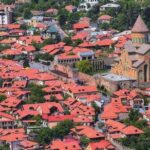
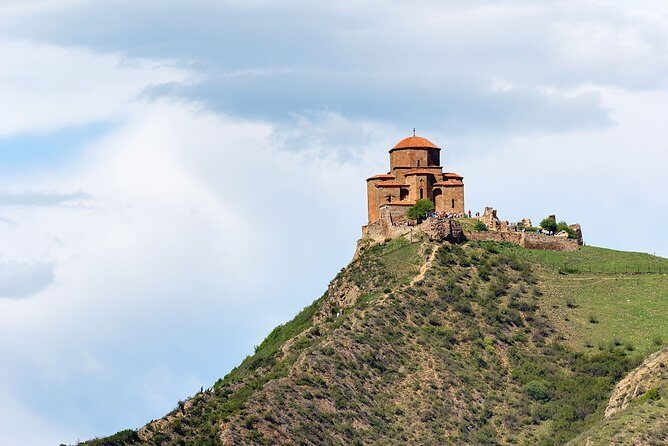
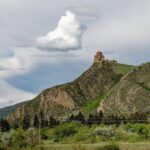
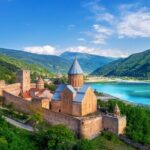
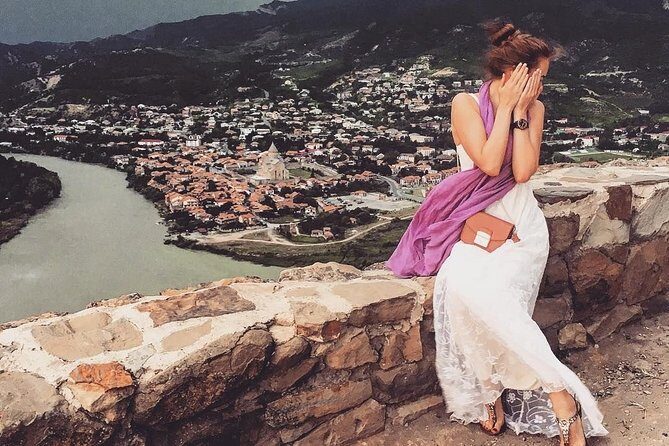
Jvari is a VI-century church, and the big deal here isn’t only the building. It’s the viewpoint. From the hill, you get a clear visual of Mtskheta with the two rivers doing what they do best: shaping the land and the life along it. It’s the kind of scene where, once you see it, you understand why so many stories cluster around this geography.
Practical note: expect some uphill walking. Comfortable shoes help more than you’d think, especially if you want to linger for photos at the top. Also, bring water and a light layer if you’re sensitive to wind, since viewpoints can feel breezy even when the city is calm.
Svetitskhoveli Cathedral: Pillar of Life-Giving and the Weight of Relics
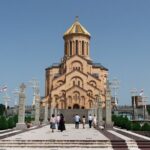
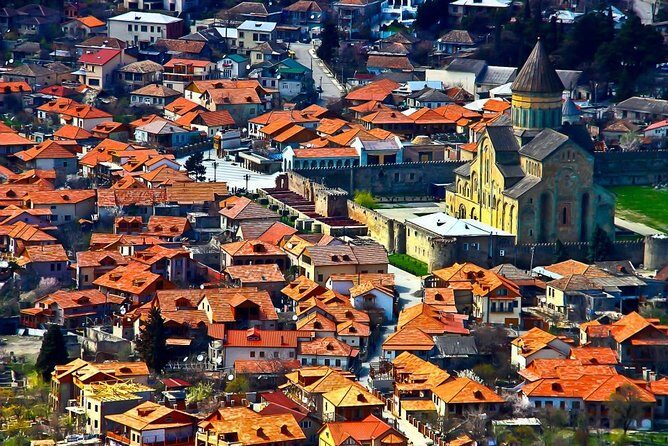
Next comes Svetitskhoveli Cathedral, often described as the patriarchal cathedral of the Georgian Orthodox Church. Here, you’re not just sightseeing in an old church—you’re in a place tied to famous Christian relics and major historical events.
You’ll visit the cathedral named as the Pillar of Life-Giving, and you’ll learn why it matters. The key point is that this is listed as the burial place of major Christian shrines: the tunic of Jesus Christ, the mantle of Elijah the Prophet, and relics of St. Andrew the First-Called. That sounds like a lot of theology, but on-site it tends to hit differently. You see how faith, identity, and local history stack on top of each other.
In the time you have—about an hour—you’ll get oriented to the cathedral’s significance, then you can shift into a slower mode: look at the architecture, notice how people move through the space, and take in the atmosphere rather than trying to read everything at once.
If you’re visiting on a day with busy church activity, it can be helpful to keep your pace gentle. You’ll enjoy the visit more if you treat it like a living spiritual site, not a museum stop.
Samtavro Church: Mirian and Nana’s Graves and St. Nina’s Blackberry Bush
After Svetitskhoveli, the day turns more intimate at Samtavro Church. This stop is shorter—around 30 minutes—but it packs in powerful place-based meaning.
Samtavro is where the grave of the first Georgian Christian king, Mirian, and his wife, Queen Nana, is located. It also includes relics connected to the holy elder Gabriel Samtavrii. But for many visitors, the most memorable detail is outside: you’ll see the blackberry bush under which St. Nina lived and preached.
That blackberry plant has a special legend. It’s described as miraculous and repeatedly cut down by barbarians, only to grow again. Even if you don’t focus on the supernatural side, the story explains why this little patch of living greenery matters so much here.
Practical tip: since this part is outdoors-adjacent, go easy on rushing. Take a minute to look around at the setting, then let the guide’s explanation do the work. The best photos from Samtavro often come from giving your eyes time to adjust to the scale.
Optional Stalin Museum in Gori: Worth It If Your Group Wants 20th-Century Context
The second half of the tour includes an optional stop: Stalin Museum in Gori. If your group wants it, it’s a full hour and comes with an additional ticket cost noted as 15 GEL.
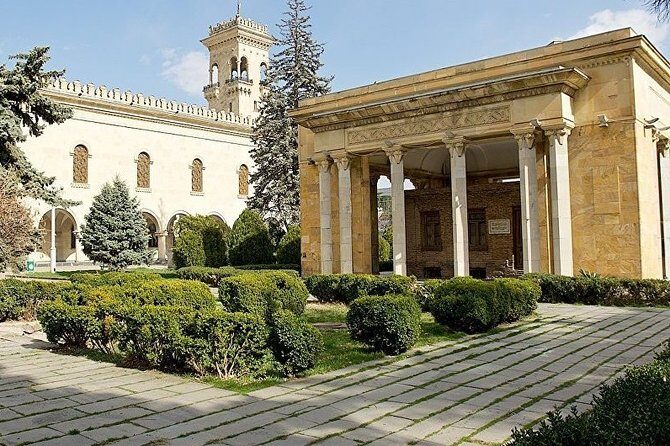
This isn’t the kind of place everyone wants on a history day, and that’s fine. If you’re curious about Georgia’s 20th-century political history and how it’s presented locally, the museum offers a direct way to see preserved sculpture, personal belongings, and furniture, with a guide leading the explanation in the halls.
If your group prefers to stay focused on ancient and medieval themes, you can skip this stop and spend more time on the cave city and viewpoints instead. Either way, the optional structure is useful because it respects different interests within the same group.
You can also read our reviews of more historical tours in Tbilisi



Uplistsikhe Cave City: Pagan Stone Rooms and Big Kura Valley Views
Now for the most physical-feeling part of the day: Uplistsikhe. This cave city is described as being from the end of the 2nd century BC into the first millennium BC—so yes, it’s ancient in a way that changes your perspective fast.
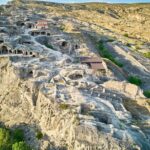
You’ll explore stone labyrinths of living and utility rooms, and the experience is framed around imagining pre-Christian cult rites and daily life. You’ll also learn about Uplistsikhe’s trade connections with ancient states such as Urartu and Media, plus the site’s rise and eventual decline. Even with a guide’s explanation, the place works visually. It’s easy to understand how people could organize a community in rock.
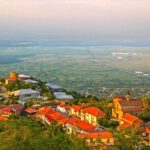
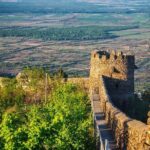
Then comes the payoff: panoramas of the Kura Valley. These views are one reason Uplistsikhe doesn’t feel like a dusty ruin. From the site, the valley reads like a map of travel routes, food sources, and strategic advantage.
Ticket note: the tour notes include an extra 15 GEL ticket cost for Uplistsikhe. In any case, plan a little extra cash for onsite tickets, and don’t count on everything being included.
If you need a bite around this area, plan to buy your own lunch. One piece of practical advice from the experience is that there’s a cafe near the rock city area that can serve inexpensive, good food. It’s exactly the kind of stop that saves time when your day is packed.
Price and Timing: Is $90 a Good Deal for This Much Ground?
At $90 per person, this tour can be a strong value if you want a full historical arc without juggling transport and tickets yourself. The duration is about 9 hours, and you’re covering multiple major sites in one day: Jvari, Svetitskhoveli, Samtavro, and then either Gori, Uplistsikhe, or both. That’s a lot for one outing.
Two things also make the price easier to justify. First, you get pickup offered and an air-conditioned vehicle with onboard WiFi. That matters on a long day outside the city center. Second, it’s private, so you’re paying for your group’s time and for a guide who can adjust pacing to your interests.
There’s also a booking rhythm detail: on average, this tends to get booked about 11 days in advance. If you want a specific date, don’t wait until the last minute. Popular slots can disappear.
What you should budget beyond the base price: lunch (not included) and any extra tickets noted for optional stops and Uplistsikhe. The additional costs mentioned are 15 GEL for the Stalin Museum and 15 GEL for Uplistsikhe.
Getting the Most Out of 9 Hours: Pace, Photos, and Comfort
This day works best if you travel with a flexible mindset. You’ll do multiple steps, short walking stretches, and a couple of viewpoint moments where it’s worth slowing down. If you’re someone who likes taking things in slowly, the private format helps.
For comfort, I’d plan for:
- sturdy shoes for uneven paths and steps
- sun protection for open viewpoints
- a light layer for breeze at hilltop spots
Also, it helps to show up mentally ready for transitions. You’ll move from cathedral interiors to outdoor church areas and then to a rock city with its own temperature and texture. Keep water handy when you can.
If you care about details, ask your guide to set a theme for the day. For example: How did trade shape Uplistsikhe? Or how did Mtskheta’s churches become the story Georgia tells about itself? With guides like Nino or Giorgi Beruashvili noted for being attentive and information-heavy, you’ll likely get clear, organized answers that make the sites stick.
Best Fit: Who Should Book This Tour
This tour is ideal if you want:
- a single-day history route that covers Mtskheta + Uplistsikhe, with a medieval-to-ancient contrast
- big viewpoints that connect geography to story
- private pacing and pickup comfort from Tbilisi
It’s also a good fit for people who don’t want to plan. The route is built for you: you show up, ride out, and your guide handles timing, transitions, and context at each stop.
If your group is only interested in one narrow slice of history—say, strictly 20th-century politics or strictly Orthodox church art—then you may find Uplistsikhe or the Stalin Museum less relevant. But the option to include or skip the Stalin Museum makes it easier to tailor.
Should You Book This Private Mtskheta–Gori–Uplistsikhe Tour?
Yes, if you want a value-rich day with real variety: hilltop church views, major Georgian Orthodox relic significance, royal graves and a legendary blackberry bush, and then a cave city that puts ancient life into stone. The price makes sense because the day is structured tightly and you’re not wasting time on logistics.
Skip or reconsider if your priority is mostly one thing—like only interior church viewing with lots of quiet time—or if you’re not up for some uphill walking and uneven surfaces. And don’t forget the simple reality: with lunch not included, you’ll enjoy the day more if you plan a snack and decide where you’ll eat before you’re hungry.
FAQ
What time does the tour start, and how long is it?
It starts at 9:30 am and lasts about 9 hours.
Where do we meet in Tbilisi?
The ticket redemption point is 3 Vakhtang Gorgasali St, Tbilisi 0105, Georgia.
Is pickup offered?
Yes, pickup is offered.
Are admission tickets included for the main churches?
The tour notes admission included for Jvari Church, Svetitskhoveli Cathedral, and Samtavro Church. The Stalin Museum and Uplistsikhe have additional ticket costs noted in the tour information.
Is lunch included?
No, lunch isn’t included.
Is the Stalin Museum stop required?
No. The Stalin Museum in Gori is optional and depends on your group’s request, with an additional ticket cost noted.
Can I cancel for a full refund?
Yes. You can cancel up to 24 hours in advance for a full refund. If you cancel less than 24 hours before the start time, the amount paid won’t be refunded.