REVIEW · TBILISI
Old Town and Beyond: A Tbilisi Silk Road Feast with Culinary Backstreets
Book on Viator →Operated by Culinary Backstreets Walks · Bookable on Viator
Food and churches in one Tbilisi day.
This 7-hour Old Town route weaves Georgian landmarks together with serious tastings, starting at Waterfall Square and running through central sights with an English-speaking guide. You’ll stay in a small group (max 7), and it’s set up with a mobile ticket for a straightforward day.
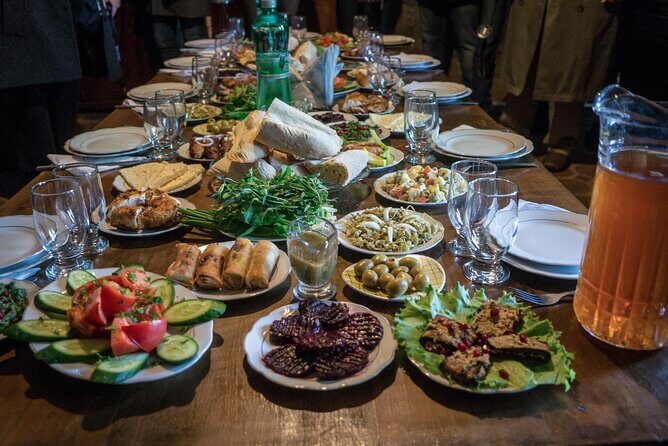
I like how the experience mixes classic Georgian plates with tastings you’d probably miss on your own. You’ll get to sit down for shkmeruli (that sizzling chicken centerpiece), and you’ll also sample freshly-made khinkali-style dumplings.
One thing to plan around: it’s a food-forward schedule, so it can feel like a long, full day. If you hate being on your feet for hours or you don’t want wine at the end, you’ll want to adjust your expectations.
In This Review
- Key things to know before you go
- From Waterfall Square to Metekhi: the vibe of this Tbilisi feast
- The 7 stops that make the day: what to expect (and why it matters)
- Stop 1: Old Town Tbilisi and an underground Azeri tea house
- Stop 2: Sioni Cathedral area and a church-run shop
- Stop 3: Freedom Square back streets and a small-producer wine tasting
- Stop 4: Anchiskhati Basilica, Tbilisi’s oldest church
- Stop 5: Rezo Gabriadze Marionette Theater area and shkmeruli
- Stop 6: Parliament area and a khinkali master’s dumplings
- Stop 7: Metekhi Cathedral pass-by and an artisanal cheese tasting
- The history and food culture connection you actually feel
- What you’re really paying for: $125 and the value check
- Timing, pace, and how to plan your day in Tbilisi
- The Culinary Backstreets Passport detail that’s fun (and low-effort)
- Should you book this Tbilisi Silk Road food tour?
- FAQ
- What’s the duration of the tour?
- How much does the tour cost?
- What time does the tour start?
- Where does the tour start and end?
- Is the tour offered in English?
- How many people are in the group?
- What food and tastings are included?
- Does the tour include wine or tea?
- Do the stops require paid admission tickets?
- What happens if the weather is bad?
Key things to know before you go
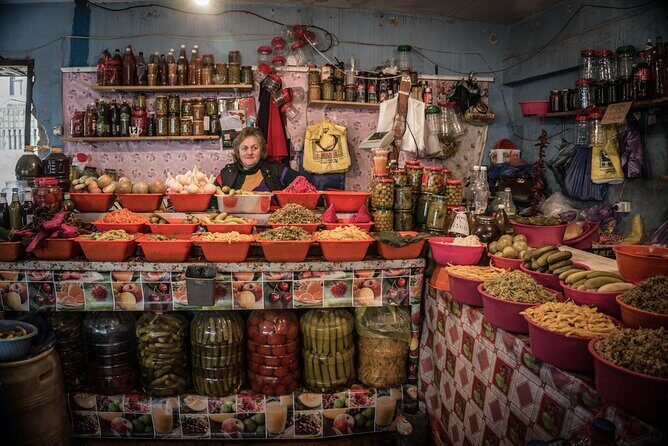
- Seven stops built around food and landmarks, not restaurant hopping.
- An underground Azeri tea house kicks off the day with a change of pace.
- Wine tasting near Freedom Square focuses on Georgia’s small-scale producers.
- Sit-down Georgian classics include shkmeruli and freshly-made dumplings.
- Church sites like Anchiskhati and Metekhi connect what you eat to place and faith.
- A small group size (max 7) keeps the pace conversational.
From Waterfall Square to Metekhi: the vibe of this Tbilisi feast
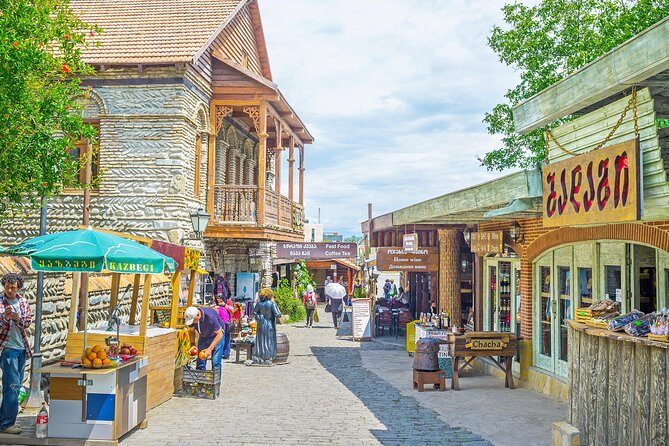
Tbilisi has a talent for mixing eras in the same block, and this tour is built to show you that in human scale. You start at Waterfall Square (21-23 Abano St) at 10:00 am and end at ღvino Underground (15 Galaktion Tabidze St). Expect a guided walk that combines major church landmarks with smaller, hands-on food stops where you taste your way through Georgian culture.
What I like most is the structure. Instead of one big restaurant meal, you get a series of short visits—each with a purpose—so the food feels tied to the place. You also get enough breaks between tastings that you’re not just stuffed the whole time. It’s still a lot of food, but it’s paced.
And yes, the group size matters. With a maximum of 7 people, the guide can explain food and history without feeling like you’re stuck listening over everyone’s head. That’s a big reason this style of tour works in Tbilisi, where walking routes and side streets are part of the fun.
You can also read our reviews of more tours and experiences in Tbilisi.


The 7 stops that make the day: what to expect (and why it matters)
Stop 1: Old Town Tbilisi and an underground Azeri tea house
You begin in atmospheric Old Town and head to an underground Azeri tea house. The stop is about 30 minutes, and the admission ticket here is listed as free.
Why this first stop works: it sets the tone. Tea houses like this aren’t just a warm drink stop. They hint at Tbilisi’s cross-cultural position—Georgia sits where trade routes and empires left their fingerprints, and you feel that in the everyday. Starting underground also makes the day feel like you’re stepping into a story rather than just sightseeing.
Practical note: underground spaces can feel snug, so give yourself an easy start and don’t plan to rush your first tea.
Stop 2: Sioni Cathedral area and a church-run shop
Next you move to the Sioni Cathedral Church area and a church-run shop selling products connected to Orthodox monasteries. This stop lasts about 1 hour, with admission listed as free.
This is one of the most interesting parts for people who like the culture behind the food. You’re not only tasting items; you’re learning how Orthodox monastic traditions support artisanal production. In plain terms, it helps you understand why certain Georgian flavors feel “sacred” to locals rather than purely culinary.
What to expect: you’ll sample treats from the shop. The guide’s job here is to connect where food comes from with how people value it.
Stop 3: Freedom Square back streets and a small-producer wine tasting
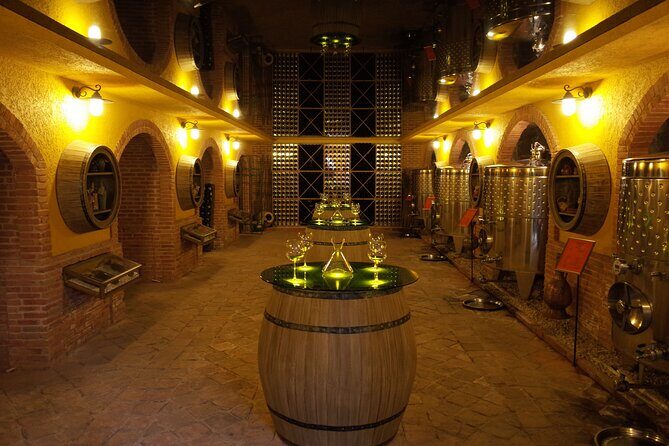
Around Freedom Square, you’ll go into back streets to an unusual wine bar for a tasting of Georgia’s finest small-scale wine producers. This stop is about 1 hour, and admission is listed as free.
If you’re only used to standard labels from big regions, this kind of tasting is a useful correction. Small-scale producers usually taste more experimental and more personal, and that’s the point: Georgian wine culture isn’t one uniform thing.
Practical consideration: this is not a party atmosphere. Still, it’s wine, so if you’re doing the rest of the day with lots of walking, pace yourself and drink water when you can.





Stop 4: Anchiskhati Basilica, Tbilisi’s oldest church
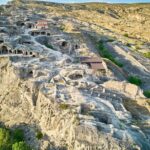
Then you visit Anchiskhati Basilica, listed as the oldest church in Tbilisi. Plan around 45 minutes, with admission listed as free.
This is the moment where the tour turns from food-only into place-based understanding. Churches like Anchiskhati are architectural time capsules, and they help explain why so much of Georgian life—ritual, community, and calendar—runs alongside food traditions.
What I’d do with this stop: slow down a bit. Even if you’re not a church architecture specialist, take a minute to let the age of the building sink in. It makes the later food tastings feel less random.
Stop 5: Rezo Gabriadze Marionette Theater area and shkmeruli
Near the Rezo Gabriadze Marionette Theater, you sit down for shkmeruli, described as a sizzling chicken dish and the kind of centerpiece you’d expect at a Georgian feast. This stop is about 45 minutes, with admission listed as free.
This is your clear “anchor meal” stop. Shkmeruli isn’t a tiny sample; it’s a dish designed to fill you in a Georgian way: warm, hearty, and meant for sharing. If you’ve ever wondered what people mean when they say Georgian meals are generous, this is your answer.
Tip for your appetite: come ready for a real sit-down course. After tea, monastery treats, and wine, this dish is where your day starts to feel truly substantial.
Stop 6: Parliament area and a khinkali master’s dumplings
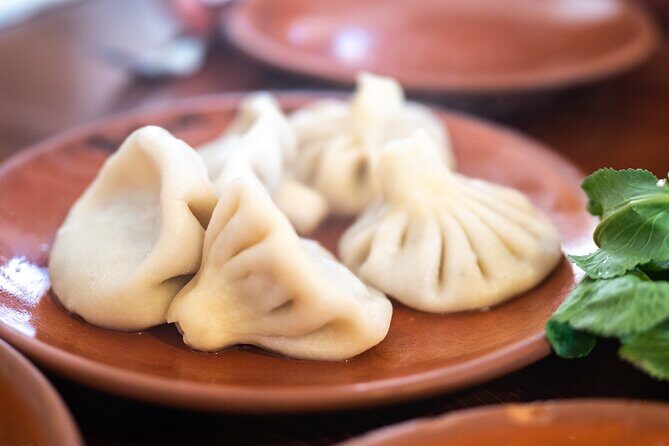
Near Parliament, you’ll meet a khinkali master and sample her freshly-made dumplings. This is about 1 hour, with admission listed as free.
Khinkali-style dumplings are a big deal in Georgia, and the “freshly-made” part matters. When dumplings are made in front of you or right for you, you taste the difference in texture and heat. It’s also a great window into technique—this is the food equivalent of watching bread being pulled from an oven.
Practical note: dumplings are hands-on. You’ll likely eat in a way that’s slightly messy, so plan accordingly.
Stop 7: Metekhi Cathedral pass-by and an artisanal cheese tasting
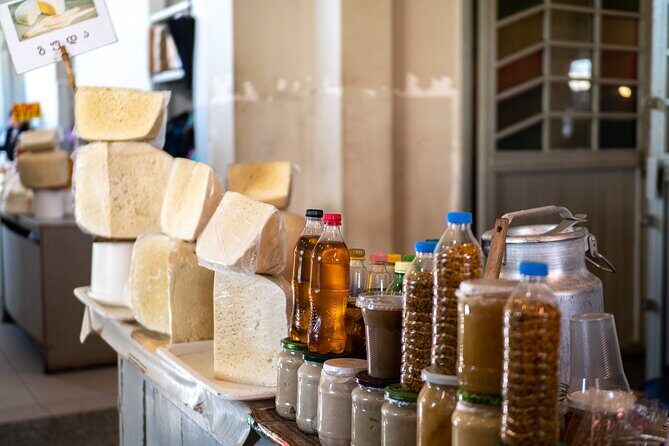
Finally, you’ll pass by Metekhi Cathedral and then head to an artisanal cheese shop for a tasting. This part is about 30 minutes, with admission listed as free.
Metekhi Cathedral is another major landmark on the route, and it helps you close the loop on Georgian faith and identity in the city. After that, you shift back to taste with cheese—another category where Georgian tradition shows up fast.
What to expect: you’ll sample cheese at the shop. If you’re curious about how Georgian dairy culture differs from what you’re used to, this is a good, short way to explore it without turning the day into a full-on food store tour.
The history and food culture connection you actually feel
The guide’s approach is where this tour often wins people over. You’ll learn Georgian food culture through explanations tied to each place—especially the moments that link food to Orthodox monastic traditions and the city’s religious landmarks.
Two things stand out in a good way:
- The route makes food feel like part of Tbilisi life, not just a list of dishes.
- The guide helps you understand why certain flavors or traditions matter locally, so tasting turns into learning.
When you pair churches like Anchiskhati and Metekhi with monastery-connected shop items, the day stops being only about eating. It becomes about context—how faith, craft, and everyday meals overlap in Georgia. That’s also why the day can change your perceptions of what you like. If you’ve been a picky eater elsewhere, a well-led tour can widen what you’re willing to try.
What you’re really paying for: $125 and the value check
At $125 per person for about 7 hours, the value depends on how you like to travel.
You’re paying for:
- A guided route through central landmarks (including major church sites)
- Multiple tastings spread across the day
- Real sit-down food moments like shkmeruli and freshly-made dumplings
- A wine tasting segment at a dedicated wine bar
If your ideal day is one long restaurant meal, this might feel like a lot of walking for the portion you eat. But if you prefer an experience where food is tied to specific places—and you want more than one flavor experience—this format tends to be worth it.
Also, the group cap (max 7) is part of the cost you’re effectively buying. Smaller groups usually mean more time for questions and less feeling like you’re in a herd.
If you’re a serious foodie, a history-curious traveler, or someone who wants an efficient first introduction to Tbilisi, you’ll likely feel satisfied by the end because the food-to-sight ratio stays balanced.
Timing, pace, and how to plan your day in Tbilisi
Start time is 10:00 am, and the full experience runs about 7 hours. That’s long enough that you should treat it like your main outing, not a side activity.
A few practical planning tips:
- Skip a big breakfast. You’ll start with tea and then keep moving through multiple tastings and sit-down food.
- Wear comfortable shoes. You’re moving between Old Town, central squares, and landmark areas.
- Expect a day that can include wine toward the end, so plan for a relaxed finish rather than rushing off to something intense.
There’s also a weather requirement: the tour needs good weather. If it’s canceled due to poor weather, you’ll be offered a different date or a full refund.
One more small but useful detail: it’s near public transportation, so if you’re hopping between sights elsewhere in the city, you won’t feel totally stranded before or after the walk.
The Culinary Backstreets Passport detail that’s fun (and low-effort)
The tour brand uses a Culinary Backstreets Passport on their website, where you can collect stamps for cities you visit. After your Tbilisi tour, your stamp is ready, including a Tbilisi mark.
It’s not required to enjoy the day, but it gives you a simple souvenir that’s tied to what you actually ate rather than a generic postcard.
Should you book this Tbilisi Silk Road food tour?
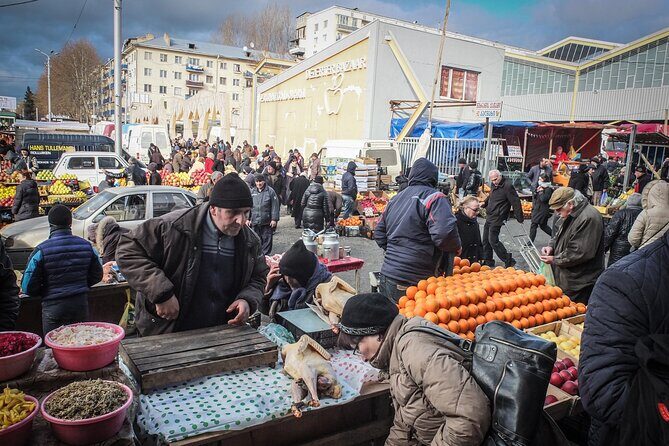
I’d book it if you want a first-rate Tbilisi day that combines Georgian food with real landmarks, and you like learning while you eat. The small group size, the range of tastings (tea, monastery shop treats, wine, cheese), and the two bigger food moments (shkmeruli and fresh dumplings) make the day feel like a complete feast rather than a light snack tour.
I’d think twice if you:
- Don’t want alcohol involved at all (wine tasting is part of the schedule)
- Have a very low tolerance for long walking blocks
- Prefer meals that are separated by long breaks
If you match the target—curious, hungry, and happy to see Tbilisi through food and churches—this is the kind of tour that ends with you feeling like you understand the city a little better, not just full.
FAQ
What’s the duration of the tour?
The tour lasts about 7 hours.
How much does the tour cost?
It costs $125.00 per person.
What time does the tour start?
The start time is 10:00 am.
Where does the tour start and end?
It starts at Waterfall Square, 21-23 Abano St, Tbilisi, Georgia. It ends at ღvino Underground, 15 Galaktion Tabidze St, Tbilisi, Georgia.
Is the tour offered in English?
Yes, it’s offered in English.
How many people are in the group?
The tour has a maximum group size of 7 travelers.
What food and tastings are included?
You’ll have tastings across the day, including treats from a church-run shop, a wine tasting, a sit-down shkmeruli chicken dish, freshly-made dumplings from a khinkali master, and an artisanal cheese shop tasting.
Does the tour include wine or tea?
Yes. You’ll visit an underground Azeri tea house at the start, and you’ll also do a wine tasting later in the route.
Do the stops require paid admission tickets?
The listed stops show admission ticket free.
What happens if the weather is bad?
The tour requires good weather. If it’s canceled due to poor weather, you’ll be offered a different date or a full refund.