REVIEW · TBILISI
Mtskheta,Jvari,Gori,Uplistikhe(private tour)
Book on Viator →Operated by Budget Friendly Tours FZE LLC · Bookable on Viator
Rock-hewn Georgia in one long day.
What makes this private tour work is the 9:00 am hotel pickup and the way the route strings together cave dwellings, Soviet-era memory, and UNESCO church sites without wasting time. I also like that it’s run with an English-speaking guide, so you’re not stuck guessing your way through what you’re seeing.
The big win here is the mix of places with different time periods—Uplistsikhe’s rock-cut layers and Mtskheta’s major cathedral complex—so you get a clearer sense of how Georgia’s story stacked up. You also get practical extras like bottled water and an air-conditioned vehicle for the drive.
One possible drawback: lunch and entrance fees aren’t built into the day the way you might hope. If you’re expecting a specific family lunch in Gori, plan to confirm what will actually happen on your date, because the details can change.
In This Review
- Key Highlights at a Glance
- A 9:00 am Circuit That Hits Cave Town and UNESCO Churches
- Uplistsikhe Cave Town: Rock-Cut Life in Layers
- Gori and Lunch Time: History Meets Daily Life
- Stalin Museum or Free Time in Gori: Choose Your Dose
- Jvari Monastery: The Cross on the Hill Viewpoint
- Svetitskhoveli Cathedral in Mtskheta: A Living Pillar of Meaning
- The Drive Between Stops: Why This Route Works
- Price and Value: What $125 Buys You (and What It Doesn’t)
- Who This Tour Fits Best
- Practical Tips for a Smoother Day
- Should You Book This Mtskheta–Gori–Uplistsikhe Private Tour?
- FAQ
- What time does the tour start?
- Is lunch included in the tour price?
- Are entrance fees included for each stop?
- Does this tour include hotel pickup and drop-off?
- Is the tour private or shared?
- What language is the tour offered in?
- How long is the tour?
- What’s included in the price?
- Can I cancel for a full refund?
Key Highlights at a Glance
- Private pickup and drop-off make the day feel seamless, especially with a 9:00 am start
- Uplistsikhe Cave Town offers rock-hewn history from Early Iron Age through the Middle Ages
- Gori with local food time is the emotional centerpiece, but lunch inclusion isn’t guaranteed
- Stalin Museum option or Gori free time gives you control over how Soviet you want the day to be
- World Heritage Mtskheta sites: Jvari and Svetitskhoveli both bring serious viewpoints and meaning
- Clear ticketing structure: some entries are free, and others may require you to pay on site
A 9:00 am Circuit That Hits Cave Town and UNESCO Churches
This is a long-but-doable day: about 10 hours from pickup to drop-off. You start at 9:00 am right at your place, which matters. In Tbilisi, the difference between “meeting point chaos” and “driver shows up” is huge, and it sets the tone for a day that involves several different kinds of stops.
The tour is private, so your schedule is controlled by your guide, not a bus full of strangers. You’ll also be riding in an air-conditioned vehicle—worth it in Georgia’s warmer months—plus you get bottled water during the day.
The itinerary is built like a timeline: start with Uplistsikhe, move to Gori for lunch and optional museum time, then end in Mtskheta at two of its most important religious landmarks. For a first-time visitor, that’s a very efficient way to “read” Georgia’s geography and history on the same route.
You can also read our reviews of more private tours in Tbilisi



Uplistsikhe Cave Town: Rock-Cut Life in Layers
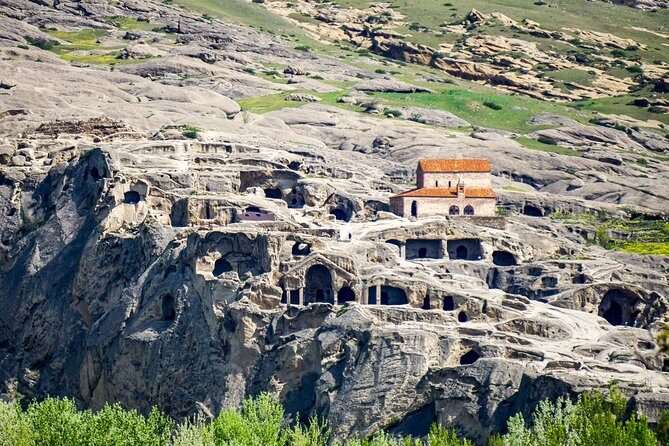
Uplistsikhe is the kind of place where you can feel the past just by looking at the shapes in the rock. You’ll spend about 1 hour 30 minutes here, and it’s one of those sites where time adds up quickly—every turn seems to reveal another era.
This isn’t just one “cave.” It’s an antique rock-hewn town on the left bank of the Mtkvari River. The structures date from the Early Iron Age to the Late Middle Ages, which means you’re seeing different building styles on top of each other. That layering is what makes it more than scenery.
One detail I really appreciate from this stop: Uplistsikhe is known for the mix of rock-cut cultural influences—Anatolia and Iran—and for the overlap of pagan and Christian architectural elements. In practical terms, it helps your brain stop treating history like separate boxes. You start to see how cultures trade ideas, build on what’s already there, and reuse spaces.
Budget note: Uplistsikhe’s admission ticket is not included, so you’ll want to plan for an entry fee on site. If you don’t like surprise costs, keep your payment options ready and ask your guide for the exact amount before you go in.
Gori and Lunch Time: History Meets Daily Life
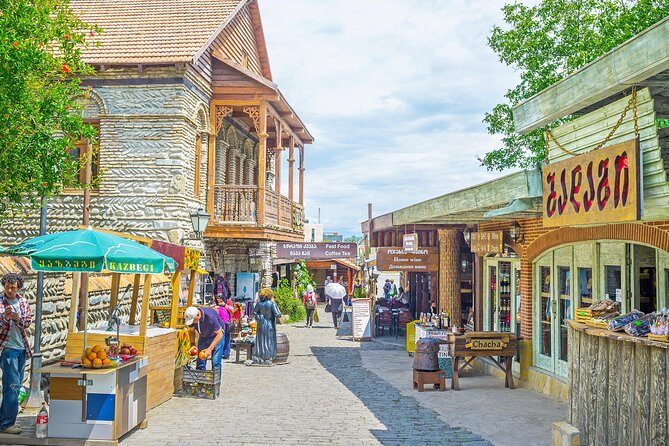
Next comes Gori, with about 1 hour 30 minutes allocated. This is your food and human-scale stop, not just another monument photo op.
The highlight here is the chance to eat in a local setting and get a taste of traditional homemade dishes. This kind of stop is valuable because it changes how you experience a place. You stop thinking only about dates and buildings and start thinking about how people live now.
That said, here’s the practical caution from real-world experience: lunch plans tied to a local family can be changeable. Even when the idea is a family-style meal, the setup may not match what you expected, and the result can be that you’re instead dropped at a local restaurant.
Because the tour info clearly separates lunch from included items, the safest move is simple: ask your guide early in the day how lunch will work for your date. If it turns out there’s no family lunch, you can still make the day work by choosing a place quickly and not losing time.
Entrance fees: none are listed for this stop itself, but lunch is not included. So bring patience, and keep your expectations flexible.
Stalin Museum or Free Time in Gori: Choose Your Dose
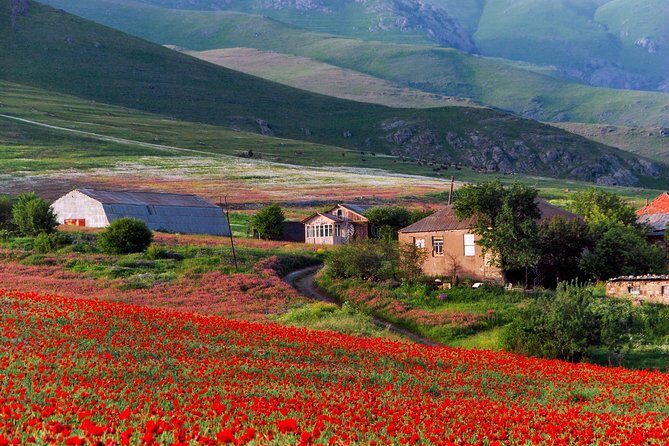
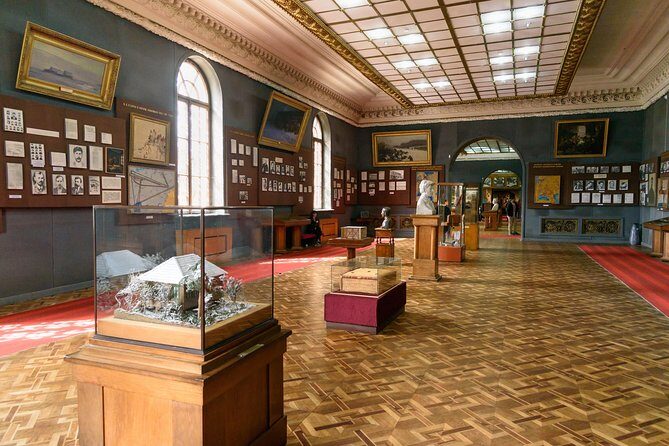
After you’ve eaten, you’ll have around 1 hour for either the Stalin Museum or free time in Gori.
This is where personal preference takes over. If you’re curious about Soviet history—and about how Georgia remembers it—then the Stalin Museum time gives you a focused way to connect the “big history” to the town where it begins. The museum is dedicated to Joseph Stalin’s life and includes Soviet-era elements, his original house, and even his railway carriage.
If you’d rather not go full Soviet, free time in Gori can still be worth it. Gori has been populated since early Bronze Age times, and there’s a fortress presence at least by the 7th century. That long timeline can feel more real when you walk around without a strict schedule.
This stop is also useful for managing the energy of the whole day. By the time you reach Mtskheta, you’ll be grateful you either got your museum fix or reset your pace with a slower wander.
Admission note: the Stalin Museum is not included, so budget for that if you choose it.
Jvari Monastery: The Cross on the Hill Viewpoint
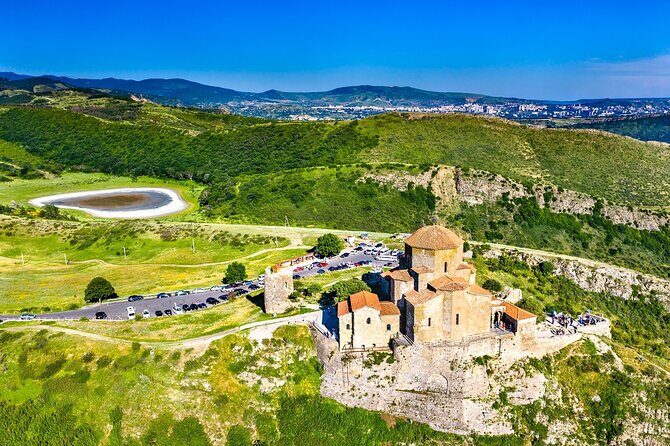
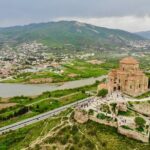
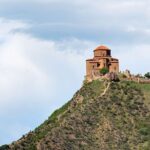
Then it’s on to Mtskheta, and the first major stop is Jvari Monastery, often translated as the Monastery of the Cross. You’ll have about 30 minutes here, with no admission ticket required.
The most important thing about Jvari is its position. It’s a sixth-century Georgian Orthodox monastery on a rocky mountaintop at the confluence of the Mtkvari and Aragvi rivers. From there, you look down on Mtskheta, which used to be the capital of the Kingdom of Iberia.
In a short visit, the goal isn’t to “see everything.” It’s to absorb the placement. This is one of those sites where the setting is the main attraction. Rivers meeting, old stone rising, and a church built where you can literally see the geography that shaped the kingdom.
If you’re visiting in the colder season, dress accordingly. Hilltop stops can feel windier than you expect. And because you only have half an hour, keep your photo plan simple: one wide view first, then a few close-ups, then move on.
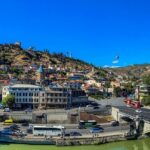


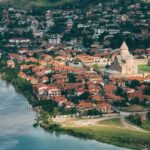

Svetitskhoveli Cathedral in Mtskheta: A Living Pillar of Meaning
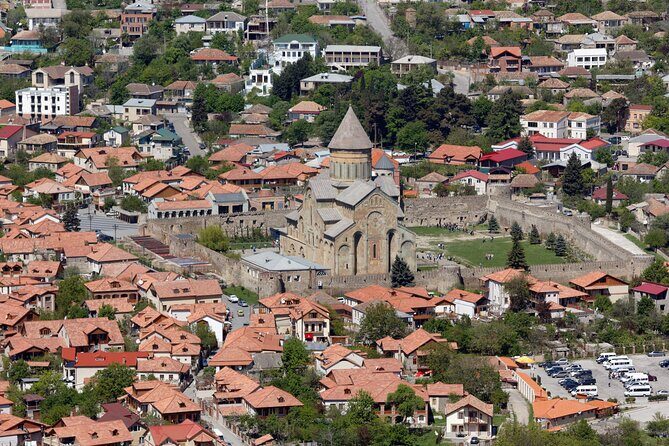
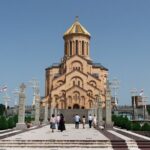
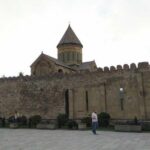
Last in Mtskheta is Svetitskhoveli Cathedral, with about 1 hour 30 minutes and free entry listed.
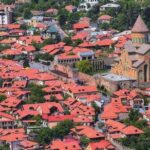
Mtskheta itself is recognized by UNESCO for its historical importance, and the cathedral is one of the key reasons. Svetitskhoveli is associated with royal coronations and burials for much of Georgia’s history, and it’s connected to a very famous religious tradition: it’s believed to be the burial site of Christ’s mantle, which is why it’s known as the Cathedral of the Living Pillar.
Even if you’re not a deep theology person, the cathedral’s significance lands fast. Georgian Orthodox sites often carry meaning through both architecture and tradition, and Svetitskhoveli is one of the biggest. It’s also described as the second-largest church building in Georgia, after the Holy Trinity Cathedral—so it has scale even when you’re seeing it quickly.
This stop is also a good place to slow down. After cave town and Gori, you’ll feel the difference: the atmosphere shifts from rugged history to sacred gravity.
The Drive Between Stops: Why This Route Works
A big part of the value in a private day like this is not what you see, but how you move. You’re covering four major locations with a single guide and a single vehicle, and that cuts down on the stress of transfers.
This route also makes geographic sense:
- Uplistsikhe ties to the Mtkvari River corridor.
- Gori sits in the region that connects daily life with national history.
- Mtskheta is where political power and religious identity converge.
- Jvari and Svetitskhoveli give you both the high viewpoint and the main cathedral focus.
If you’ve only got one day and you want both “old stone” and “bigger story,” this is a strong plan.
Price and Value: What $125 Buys You (and What It Doesn’t)
At $125 per person, this tour can be a good deal if you value convenience and guidance.
Here’s what your price includes:
- Air-conditioned vehicle
- Private transportation
- Professional guide
- Bottled water
- Hotel pickup and drop-off
That’s a lot of practical cost wrapped into one price. It’s especially meaningful because you’re not just hopping between two attractions—you’re doing a full circuit with multiple time periods.
What’s not included:
- Lunch
- Entrance fees (with Uplistsikhe and the Stalin Museum specifically noted as not included)
So the real comparison isn’t just “$125 vs buying tickets.” It’s $125 versus spending extra time arranging transport, figuring out what’s open, and trying to interpret the sites without an experienced guide.
My advice: treat it like a guided day-trip package, then budget separately for entry fees and lunch. That keeps the day pleasant instead of stressful.
Who This Tour Fits Best
This is a good match if:
- you like history that you can see—not just read later,
- you want a planned route with less decision fatigue,
- you prefer a private pace,
- you’re happy to pay entry fees at a couple of stops to keep the overall day organized.
It may feel less ideal if you:
- need a guaranteed lunch plan with no uncertainty,
- dislike museum time or Soviet history enough that you’d rather not offer it as an option,
- prefer slower travel with fewer stops (this schedule is full).
Practical Tips for a Smoother Day
These are small things that help your day run better:
- Wear shoes you can walk in comfortably for rock-cut terrain at Uplistsikhe and hilltop stone at Jvari.
- Plan for the fact that some entries are free (Jvari, Svetitskhoveli) while others are paid (Uplistsikhe, Stalin Museum). Ask your guide what you’ll need before you reach each site.
- If lunch is important to you, ask your guide how it will work on your specific day, since lunch details can shift.
- Keep your phone charged. The view points at Jvari are the kind you’ll want to capture well.
Should You Book This Mtskheta–Gori–Uplistsikhe Private Tour?
If you want one day that covers cave town, a regional town stop, and two major Mtskheta UNESCO landmarks, I’d say yes—this tour is a smart way to make the most of limited time. The private pickup, English guidance, and long enough stops at Uplistsikhe and Svetitskhoveli make it feel complete rather than rushed.
Just go into it with two clear expectations:
1) Budget for entrance fees at Uplistsikhe and the Stalin Museum if you choose it.
2) Confirm lunch arrangements early, because lunch tied to a local family can differ from what you might anticipate.
If that planning mindset clicks with you, you’ll leave with a strong feel for Georgia’s layers—rock-cut towns, Soviet memory, and cathedral-scale meaning—all strung together in one well-paced day.
FAQ
What time does the tour start?
The pickup starts at 9:00 am from your living place.
Is lunch included in the tour price?
No. Lunch is not included.
Are entrance fees included for each stop?
No. Entrance fees are not included in general. Uplistsikhe is listed as not included, and the Stalin Museum is also not included. Jvari and Svetitskhoveli are listed as free.
Does this tour include hotel pickup and drop-off?
Yes. Hotel pick up and drop-off are included.
Is the tour private or shared?
This is a private tour/activity, so only your group participates.
What language is the tour offered in?
The tour is offered in English.
How long is the tour?
It runs for 10 hours (approx.).
What’s included in the price?
Included items are air-conditioned vehicle, private transportation, professional guide, bottled water, and hotel pickup and drop-off.
Can I cancel for a full refund?
Yes. You can cancel up to 24 hours in advance for a full refund. If you cancel less than 24 hours before the start time, the amount paid is not refunded.