REVIEW · TBILISI
Mtskheta-Jvari-Gori-Uplistsikhe-Stalins Museum All inclusive tour
Book on Viator →Operated by Travel To Georgia · Bookable on Viator
Cave town and Stalin in one long day. This all-inclusive route stitches together Uplistsikhe rock-hewn rooms, the riverside drama of Jvari, and the Gori stops in between, so you get a real sweep of Georgia’s layers in one go. I especially like the way the day keeps the focus on what you’re seeing, not just where you’re going.
I love that you’re not stuck with only church architecture or only Soviet history. The Stalin Museum in Gori includes 60,000 exhibits, plus the memorial house and even Stalin’s personal train car used on trips to Tehran, Yalta, and Potsdam. It’s the kind of stop that makes history feel physical, not abstract.
My main caution is that it’s a full program from morning to late afternoon, so timing can feel tight. In particular, lunch may not be perfectly on the clock, and if your guide’s explanations aren’t super easy to follow, you may miss some of the story beats—so ask questions early.
In This Review
- Key highlights you’ll care about
- How the all-inclusive route works from Tbilisi
- Uplistsikhe Cave Town: where rock becomes a whole city
- Stalin Museum in Gori: 60,000 exhibits and the personal train car
- Goristsikhe in Gori: a fortress with a prison name
- Jvari Church at Mtskheta: UNESCO at the meeting of rivers
- Svetitskhoveli Cathedral: the XI-century center with relics and royal tombs
- Lunch in Gori and the timing reality of a long day
- Value at $155: what you get, what it costs you, and what to plan for
- Should you book? My decision guide for the right kind of traveler
- FAQ
- How long is the tour?
- What time does it start?
- Is pickup included?
- What does the price include?
- Are tickets for all stops included?
- Is alcohol included with lunch?
- Is this a private tour?
- What fitness level do I need?
- What’s the starting location?
- Can I cancel and get a refund?
Key highlights you’ll care about
- Rock-hewn Uplistsikhe Cave Town: explored for about 2 hours, with history reaching back to the early Bronze Age and references in the VII century
- Stalin Museum in Gori: 60,000 exhibits in a built-for-visiting setup, including the memorial house and personal train car
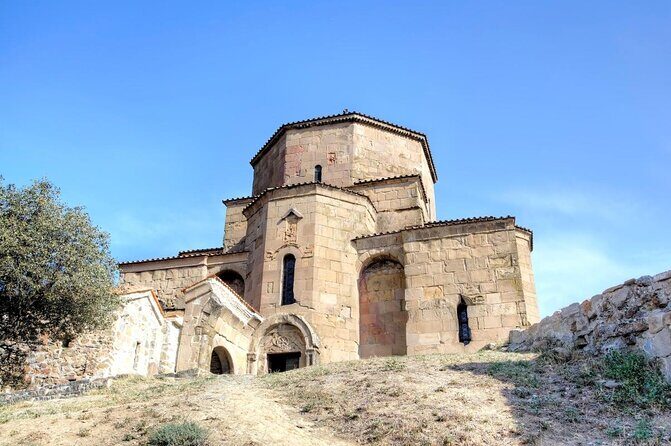
- Jvari Church UNESCO views: a VI-century monastery on the hill opposite Mtskheta at the Aragvi–Mtkvari confluence
- Svetitskhoveli Cathedral UNESCO: XI-century complex tied to centuries of religious life, including preserved mantles and royal tombs
- All-inclusive transport + lunch: private air-conditioned vehicle, bottled water, and lunch in Gori with entry tickets included for key sights
How the all-inclusive route works from Tbilisi
This is a private, all-in-one day built around a long drive plus smart time blocks at each stop. You start at 9:30am, and the total time runs about 8 to 10 hours, which means you should plan on a real day-trip pace—not a “wander whenever” style. The good part: private transportation (air-conditioned) plus bottled water keeps you comfortable while you hop between sites.
What makes this setup practical is that key entrances are handled for you. Your tour includes admission to Uplistsikhe Cave Town and Stalin’s Museum, and lunch is included in Gori at a restaurant. That matters because it removes the common stress of figuring out ticket lines, payment methods, and “where exactly do we meet later?”
Group discounts and a mobile ticket are also part of the package, so once you’re in, you spend less time managing logistics. One last thing: you’ll want moderate physical fitness, mainly because the cave town and church hilltop areas can involve uneven footing and walking. Comfortable shoes are not optional here.
You can also read our reviews of more museum experiences in Tbilisi

Uplistsikhe Cave Town: where rock becomes a whole city
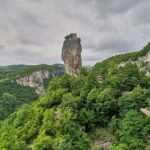
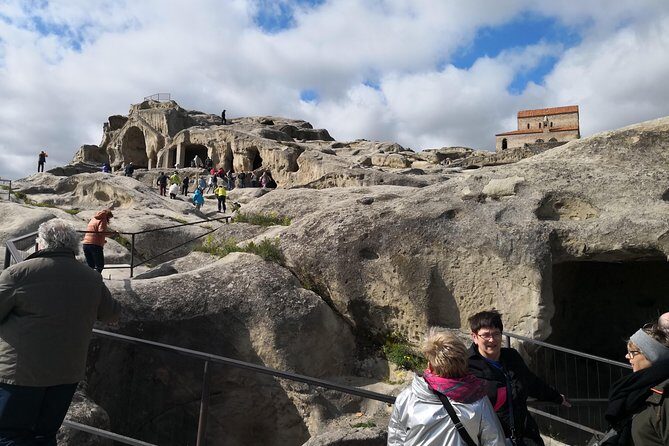
Uplistsikhe is one of those places that feels like it shouldn’t exist—then you realize it absolutely does, because people carved it into the landscape and lived with it for centuries. It’s located about 10 km east of Gori on the left bank of the Mtkvari River. This is not a quick “look at a cave entrance” stop. It’s a full cave-town experience, scheduled for about 2 hours with your admission included.
The big story thread here is age. Uplistsikhe is recognized as one of the oldest settlements in the Caucasus region. The area’s archaeological and architectural monuments trace back to the early Bronze Age, and they’re linked to the Kura-Araxes culture. Later, Uplistsikhe is first mentioned in historical records dating to the VII century—so even if you’re not a history nerd, you’re standing in layers of time.
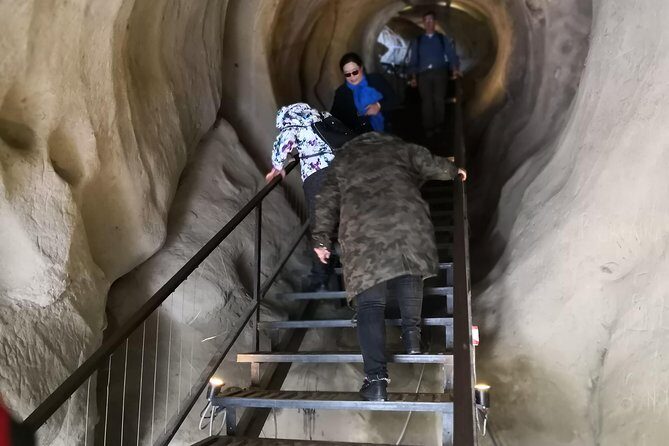
What you’ll enjoy most is the way the site helps you understand how a community adapted to stone. You get to walk through rock-hewn spaces and see how the layout could support defense, daily life, and religious practice. Expect stairs, uneven ground, and a bit of effort. That’s part of the charm—this isn’t a polished theme attraction.
A reasonable drawback: because your time is capped (about 2 hours), you’ll have to pick up the vibe quickly rather than reading every corner in slow motion. If you’re the type who wants to linger for extra explanations, arrive ready to ask questions and focus on the rooms and viewpoints that catch your eye first.
Stalin Museum in Gori: 60,000 exhibits and the personal train car
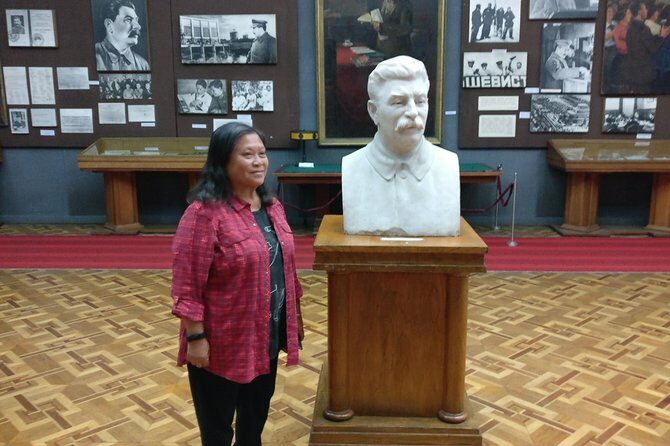
If you think you know what a history museum should feel like, this one can surprise you. The Stalin Museum in Gori was founded in 1937 and contains 60,000 exhibitions. That number is huge, and your scheduled visit is about 1 hour, so it’s less about seeing every object and more about getting the overall shape of the story.
The museum experience is built around several anchor pieces: the memorial house where Stalin is believed to have been born, a separate exhibition building, and—this is the standout—the personal train car used for trips to Tehran, Yalta, and Potsdam. There are also Stalin’s personal belongings on display. This turns political history into something you can point to: documents, objects, and transportation rather than just dates.
One way to approach a museum like this (so it doesn’t feel like a blur) is to decide what you care about most beforehand. If you’re interested in how leaders projected power, focus on the personal items and presentation. If you’re more into the human side of history, the preserved birth-related house will likely hit harder. Either way, you’ll get context that helps you connect later events you might read about in Georgia’s Soviet-era story.
A possible consideration: not everyone wants a deep look at Stalin-era material. If that theme makes you uncomfortable or you’re short on patience for politically loaded museums, you might feel time pressure. But for most culture travelers, it’s exactly the kind of contrast that makes this route memorable.
Goristsikhe in Gori: a fortress with a prison name
Between Uplistsikhe and the church stops, Goristsikhe is a quick breather in the middle of the day—about 40 minutes and free admission. It sits on a rocky hill in the center of Gori, and the ruins on the northern slope plus archaeological findings point to a fortress presence as far back as the I century BC. That’s old enough to make your brain do a small reboot.
The name you’ll hear from historical manuscripts adds another layer: the fortress is first mentioned in the XIII century as “Gori Prison.” That detail gives the stop a sharper emotional edge than you’d expect from ruins. It’s not just “pretty leftover stone.” It’s a place tied to control, confinement, and changing power.
What to expect during your short visit is mostly exterior exploring—walk, look, and connect the hill position to why a fortress would fit there. In many cases, these ruins also give you a better sense of the town’s shape, since they sit high enough for you to read the geography.
Since time is limited, don’t plan on a museum-style explanation here. You’re getting the fortress atmosphere and the key historic idea: the hill mattered for a very long time.
Jvari Church at Mtskheta: UNESCO at the meeting of rivers
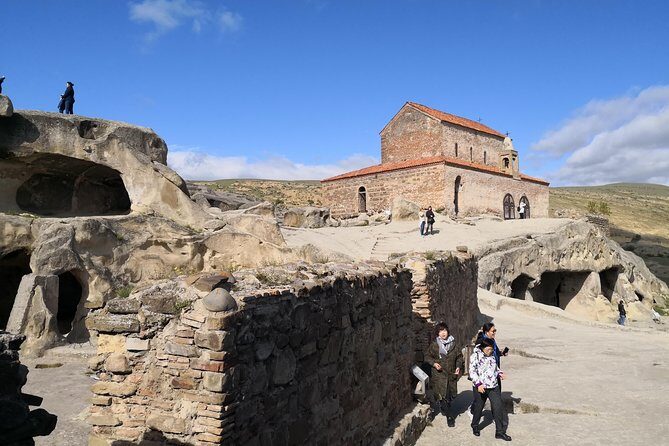
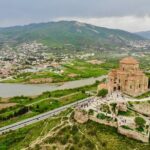
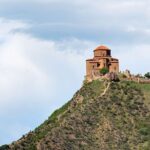
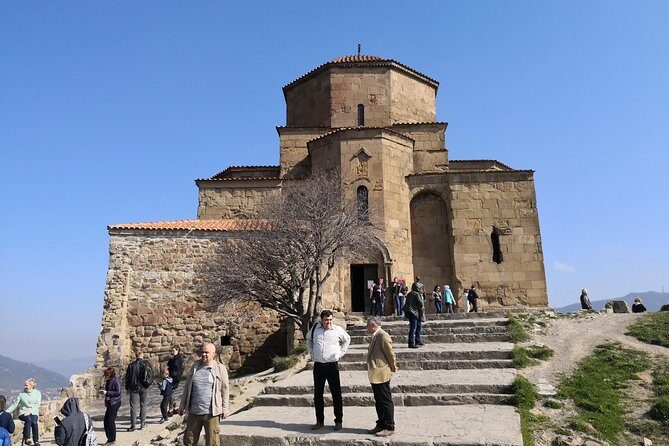
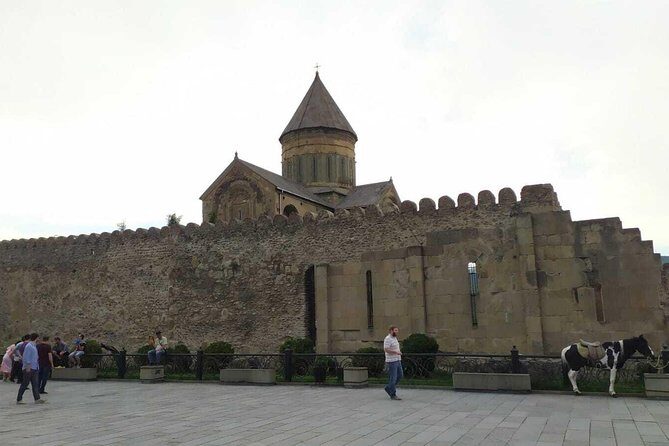
After the Gori area, the day shifts toward Georgia’s early Christian story with Jvari Church. You’ll visit in about 40 minutes, and admission is free. Jvari is a VI-century Georgian Orthodox monastery built on a hill opposite Mtskheta, at the confluence of the Aragvi and Mtkvari rivers.
This stop has a strong narrative arc, and it’s one you’ll likely feel even if you don’t read every inscription. Soon after Christianity was adopted, King Mirian III erected an enormous wooden cross on this site. Later, in the second half of the VI century, Guaram, ruler of Kartli, built a small church beside the Holy Cross. The entire area is included on the UNESCO World Heritage list because it reflects early Georgian Christian architecture.
What I like about Jvari as a tour stop is the way it turns history into a location you can picture. You’re at a natural crossroads. That makes the architectural story make more sense. Even if you only have a short window, it’s the kind of place where you look around and get what the builders were trying to do: anchor spiritual meaning to a real geographic moment.
Possible drawback: because it’s a short stop, you won’t get deep slow study. If you’re the type who wants to sit with a site and let it unfold, plan to take in the big shape first, then ask your guide to point out the elements that matter most.



Svetitskhoveli Cathedral: the XI-century center with relics and royal tombs
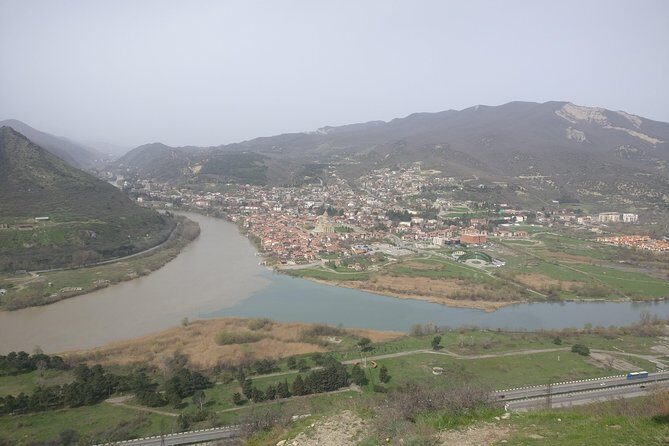
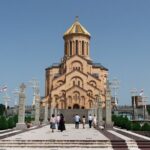
If Jvari gives you the early blueprint, Svetitskhoveli Cathedral gives you the long-lasting center of power and faith. This is an XI-century Georgian architectural wonder and it served as the religious center for hundreds of years. Your visit is about 1 hour, and admission is free.
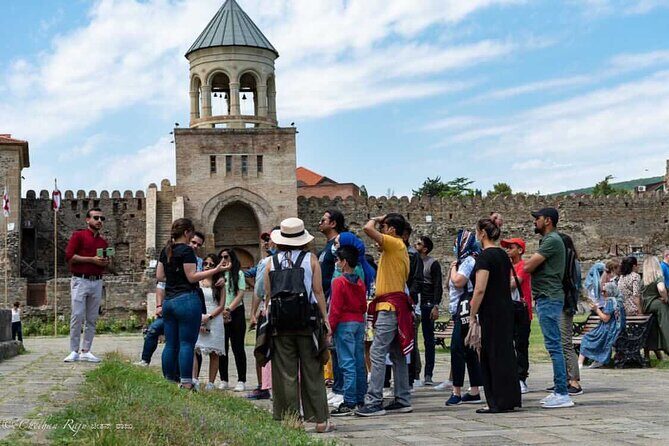
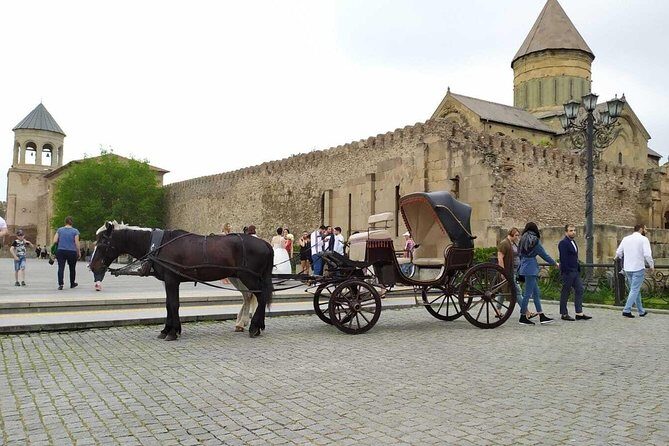
The complex isn’t just one building. It includes a church, a gate, a bell tower, castles, and clerical residences. That wide grouping helps you understand why it became a central place: it wasn’t only about worship space. It was an entire institutional hub.
Here are the details that make this stop feel special. Inside the cathedral, preserved mantles of Christ and Prophet Elijah are mentioned as being kept there. Also inside is the tomb of King Vakhtang Gorgasali, a key figure connected to the founding era of Tbilisi.
This is a UNESCO World Heritage site, and you’ll feel that in how the place is designed to last. The architecture and layout don’t scream for attention; they hold it. It’s the kind of stop where even after a long day, you can still slow down a bit.
A practical caution: because it’s in your schedule for a full 1 hour, it can steal time from your “photos and quick looks” habit. Pace yourself. Give yourself enough attention to appreciate the whole complex before you run out of energy.
Lunch in Gori and the timing reality of a long day
The tour includes lunch in Gori at a restaurant, and bottled water is provided. That’s genuinely helpful when you’re covering multiple UNESCO-type sites plus the cave town. You don’t want to spend the middle of the day doing mini logistics.
That said, the day is packed enough that lunch may land later than you’d ideally like. If you’re sensitive to waiting around, take a simple step: have breakfast that fills you up and consider bringing a small snack for the ride. Alcoholic beverages are not included, so if you want wine with lunch, you’ll be adding that cost on your own.
One nice note from the tour experience: when the guide really runs the day well, the pacing can feel relaxed even with a “full program.” In particular, one guide named David is mentioned as letting guests take the time they need, which can make the whole day feel more human instead of rushed.
Value at $155: what you get, what it costs you, and what to plan for
At $155 per person, this tour isn’t trying to be the cheapest way to hit five major sites. It’s priced as an all-inclusive day, and you can see what’s driving the value.
Included items that matter:
- Private transportation in an air-conditioned vehicle
- Fuel surcharge
- Lunch in Gori restaurant
- Bottled water
- Entry tickets for Stalin’s Museum and Uplistsikhe Cave Town
Not included:
- Alcoholic beverages
Also included in the structure of the experience:
- Pickup is offered
- Mobile ticket
- Group discounts (so the per-person value can improve depending on how your group sizes up)
- Your guided time is designed to cover each stop without you having to coordinate transfers
So is it worth it? If you’d otherwise have to rent a car, pay for separate admissions, and manage your own timing between Mtskheta, Gori, and the cave site, the bundled cost starts to look like a fair deal. The bigger value is time saved: you’re not playing transportation Tetris for a day that’s already 8 to 10 hours long.
What you should plan for is effort and pace. Bring comfortable walking shoes. Keep your expectations flexible. And if you care about understanding details, be ready to ask your guide for the “why it matters” version, not just the facts.
Should you book? My decision guide for the right kind of traveler
Book this tour if you want one day to cover the big themes of Georgia: early Christianity, monumental cathedral culture, rock-hewn ancient settlement life, and the Soviet-era story centered on Stalin. You’ll likely like it if you enjoy history that comes in different flavors—stone churches and cave towns, plus a museum that makes twentieth-century events feel immediate.
You might think twice if you dislike political history or if you prefer slower, more contemplative visits where you can linger without a schedule. The cave town and the cathedral both take real energy, and with a tight overall day, you won’t have unlimited time at any single stop.
One more practical tip: if you want a smoother day, go in ready to communicate. A clear guide voice helps. If you happen to get David, the odds improve that the pacing stays relaxed—and that can make all the difference when you’re stacking multiple major sites in one outing.
If your goal is a well-run, ticketed, all-in day that covers the most important stops in this corridor from Tbilisi, this is a strong choice.
FAQ
How long is the tour?
The tour runs about 8 to 10 hours.
What time does it start?
Pickup starts at 9:30am.
Is pickup included?
Yes, pickup is offered.
What does the price include?
Lunch in Gori, private transportation in an air-conditioned vehicle, fuel surcharge, entry tickets for Stalin’s Museum and Uplistsikhe Cave city, and bottled water.
Are tickets for all stops included?
Stalin’s Museum and Uplistsikhe Cave city admission are included. Entry is free for Goristsikhe, Jvari Church, and Svetitskhoveli Cathedral.
Is alcohol included with lunch?
No, alcoholic beverages are not included.
Is this a private tour?
Yes. Only your group participates.
What fitness level do I need?
You should have a moderate physical fitness level.
What’s the starting location?
The tour is based in Tbilisi, Georgia.
Can I cancel and get a refund?
Free cancellation is available up to 24 hours in advance of the experience start time for a full refund.