REVIEW · TBILISI
Soviet Story – Private day trip to Chiatura, Stalin’s museum and Katskhi pillar
Book on Viator →Operated by Travelist Georgia · Bookable on Viator
Soviet echoes still linger in western Georgia. This private day trip pairs Chiatura’s old cableways with a proper stop at Stalin’s museum in Gori, then tops it off with views from Katskhi Pillar. I like that it is built around real places, not just viewpoints, with guided time where you can actually see how people lived. The main drawback is simple: it is a long day, and the plan depends on good weather.
What I really like is the contrast. You get museum context first, then you ride an aging cable car down into a former mining town. I also love that the tour includes hands-on time in Chiatura, including a walk that focuses on abandoned buildings and the town’s look and feel.
One thing to consider: you are spending a big chunk of the day in the car, with nearly six hours of total driving. If you get car-sick or you hate tight schedules, this may feel like a marathon.
In This Review
- Key highlights you’ll feel right away
- Why Chiatura and Stalin’s Gori museum fit together
- Price and value: what $20 covers (and what it means)
- Getting started in Tbilisi: how the day flows
- Stop 1 in Gori: inside Stalin’s birthplace museum
- Cableways Chiatura: the ride that sells the whole mining-town idea
- Chiatura Local Museum: what miners’ life looks like
- Katskhi Pillar: a free viewpoint with a monastery on top
- Walking through Chiatura: abandoned buildings and real views
- Lunch in Chiatura: a family-owned restaurant break
- The long drive from Tbilisi: plan your day like a pro
- Who this private Soviet story tour is best for
- Should you book Soviet Story to Chiatura, Stalin’s museum, and Katskhi Pillar?
- FAQ
- How long is the Soviet Story day trip?
- Is hotel pickup included?
- What does the tour price include?
- Is this tour private?
- Is there an English option?
- Is the tour weather-dependent?
Key highlights you’ll feel right away
- Admissions are included for the big indoor stops like Stalin’s museum, the cableways, and the Chiatura Local Museum
- A short ride on the very old cable car gives you a real sense of how Chiatura works
- A guided walk through abandoned mining-town scenes plus time for viewpoints
- Katskhi Pillar gives you a dramatic monastery viewpoint with a free stop
- Lunch is provided at a family-owned restaurant in Chiatura
- Private tour with pickup from anywhere in Tbilisi and an English-speaking guide
Why Chiatura and Stalin’s Gori museum fit together
This is not a typical cookie-cutter history day. You start with the heavy, controlled story of Soviet life in Gori, then you move to Chiatura, where the Soviet-era experience feels physical. The town still carries that look: blocks of buildings, aging infrastructure, and the odd feeling that time just slowed down.
If you like history but prefer texture over lectures, this combo works. The morning gives you names, context, and artifacts, while the afternoon shows you what those ideas meant on the ground—especially in an industrial town built around mining.
You can also read our reviews of more private tours in Tbilisi



Price and value: what $20 covers (and what it means)
The price is $20 per person, and that matters because you are not paying extra for the core attractions. Your admission tickets are included for Stalin Museum in Gori, Cableways Chiatura, and the Chiatura Local Museum. Katskhi Pillar is free, and the guided walking time plus lunch are built into the day.
So you can think of this as paying mainly for guide time, transportation, and the included museum and cableway admissions. For a private format with pickup in Tbilisi, that is unusually good value—especially when you compare it to the cost of piecing together taxis, separate entrances, and guide services.
Getting started in Tbilisi: how the day flows
Pickup is offered from any location in Tbilisi, and the tour starts at 9:00 am. Expect an 8 to 10 hour day on the road and on site, which is ideal if you want a full-plan day rather than a short add-on.
This is a private tour, so it is just your group. That tends to make the pacing feel more natural—your guide can adjust to your group’s questions and pace during the walk in Chiatura.
Stop 1 in Gori: inside Stalin’s birthplace museum
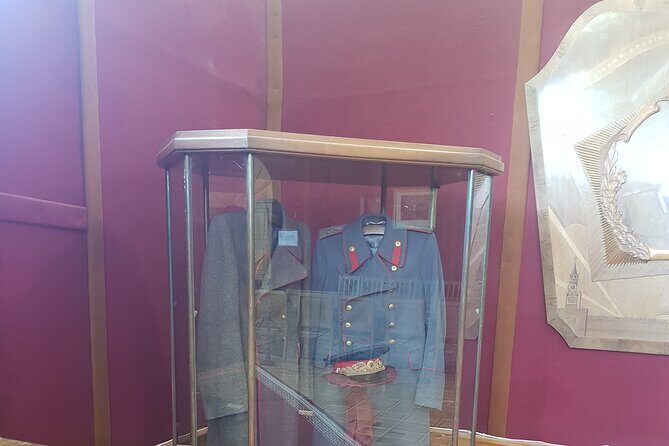
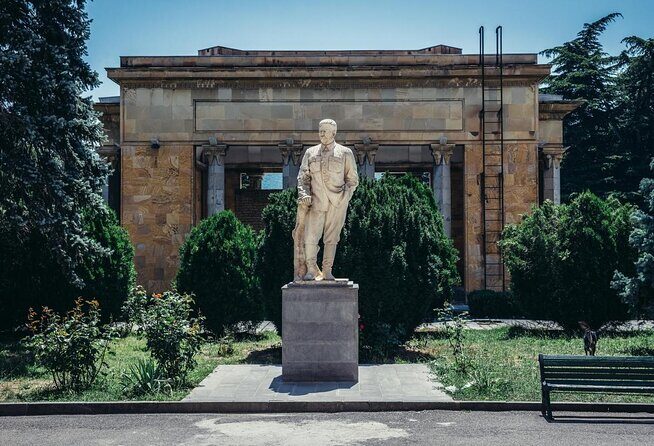
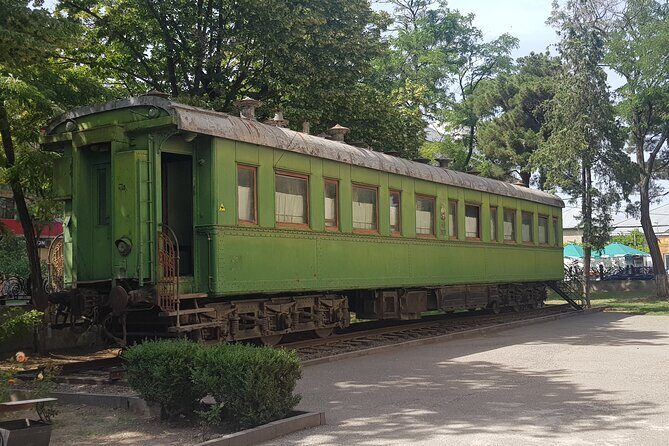
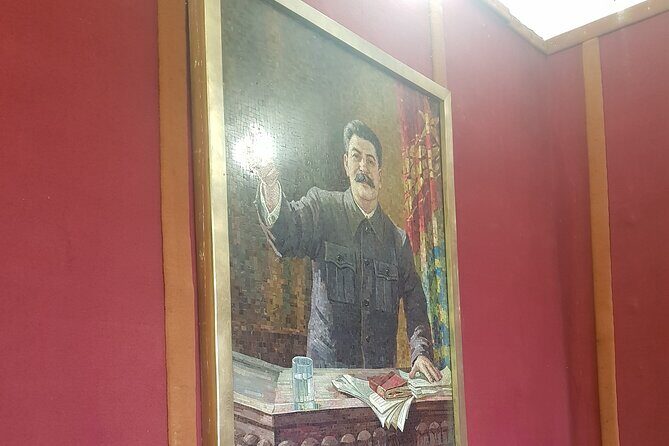
Your first scheduled stop is Stalin Museum in Gori, with about 45 minutes on site and admission included. This is where the tour earns its political-history weight in a very specific way: you get access to Stalin’s house where he was born, the wagon he was traveling with, and the museum exhibits that describe his Bolshevik life.
This museum is not trying to be vague. It is built around objects and staging that help you visualize the story arc of his rise. If you come into it curious about how the Soviet era framed leadership, you’ll likely get more from it than if you only know the broad headlines.
What I like about starting here is that it gives you mental hooks before you go to Chiatura. After the museum, the cableways, miners’ life, and the town layout start to feel like an extension of a system.
Cableways Chiatura: the ride that sells the whole mining-town idea
Next you head to Chiatura for the Cableways Chiatura stop. You’ll spend about 15 minutes riding the very old cable car, with admission included.
That short ride is doing a lot of work. Chiatura’s mining history is not just in buildings; it is in how the town moves. Even with limited time, the cable car gives you a practical sense of vertical geography and the transport reality of a steep, industrial place.
One practical note: 15 minutes sounds short, but it is enough time to get the feeling without forcing you into an all-day ride. Wear comfortable shoes because even brief stops in towns like this usually involve uneven ground and a few walking moments before and after.
You can also read our reviews of more museum experiences in Tbilisi

Chiatura Local Museum: what miners’ life looks like
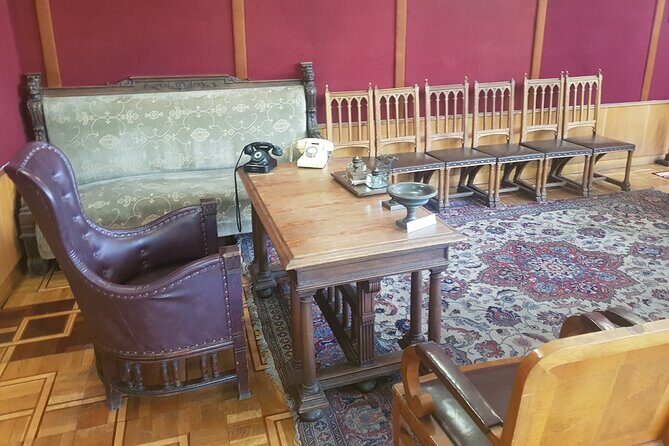
Then you visit the Chiatura Local Museum, also included, with about 30 minutes. This stop focuses on miners’ life and what daily life was like in the once lively mining town.
This is where you can fill in the blanks that the cableway alone can’t explain. You see why the town looked the way it did, and you start connecting the industrial infrastructure to human schedules, routines, and community life.
For me, the best value here is that it makes the afternoon walk in Chiatura far more meaningful. When you later spot abandoned structures and old urban details, you can imagine the purpose behind them instead of just taking photos.
Katskhi Pillar: a free viewpoint with a monastery on top
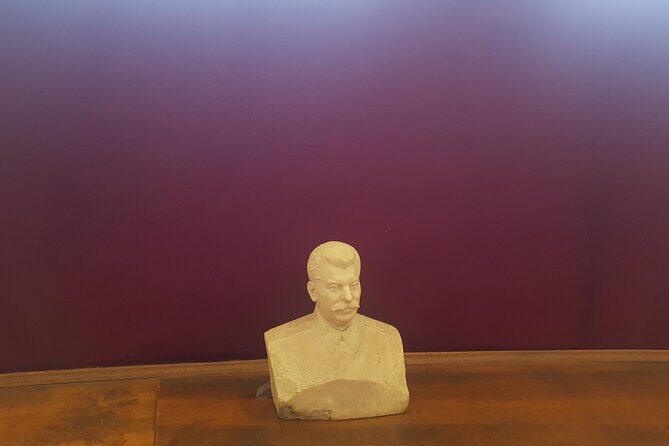
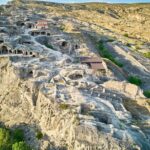
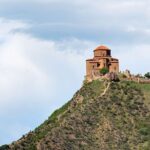
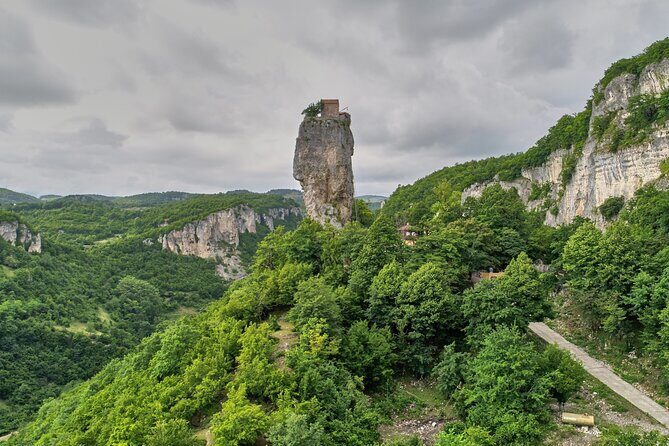
Katskhi Pillar is a short, free stop with about 15 minutes of time. The key detail is the monastery built on top of the natural pillar, and the views that come with it.
This is the kind of stop that adds contrast after a long day of Soviet-era context. You step out into scenery and let your brain reset. Even if you are not a big hiking person, this works because the time is brief and viewpoint-focused.
Bring a camera if you like dramatic geometry in your photos: a tall rock, a monastery presence, and wide sightlines are a strong visual recipe even with limited time.
Walking through Chiatura: abandoned buildings and real views
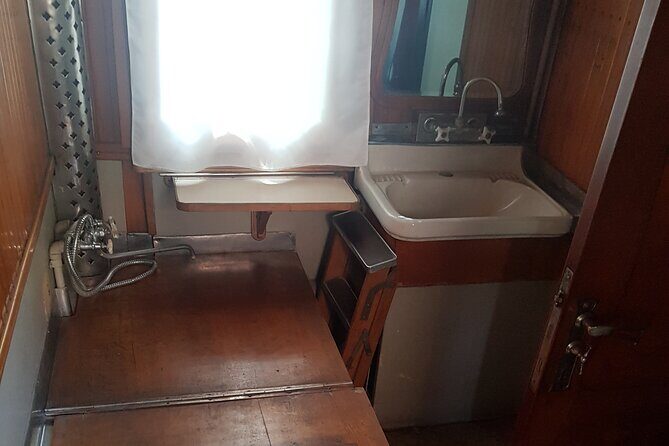
After the museum, you get about an hour for a guided walk in Chiatura. This is one of the most memorable parts, because you are exploring beyond the obvious spots. Your guide focuses on abandoned buildings and places with good views.
This is also where the tour earns its popular pull. Chiatura has that strong Soviet-era look—blocky structures, industrial traces, and urban decay that feels specific to the mining story. You are not just watching ruins from a distance; you’re walking through the town’s textures.
Practical advice: keep your expectations grounded. Abandoned does not mean preserved. Some structures may be in poor condition, so stay on marked areas and be careful around unstable surfaces. If you plan to photograph, bring a strap or stable grip on your camera; walking in uneven areas is part of the deal here.
Lunch in Chiatura: a family-owned restaurant break
Lunch is included, and it happens in Chiatura at a family-owned restaurant. You’ll have about an hour for the meal.
This is more than a time filler. Eating locally in a mining town that still feels lived-in gives you an everyday break from monuments and exhibits. It also keeps the day efficient: no searching for a place, no extra transport plans.
If you are picky about timing, this lunch slot is your anchor. Use it to rest your legs, drink water, and reset before you head back out for the remaining drive time.
The long drive from Tbilisi: plan your day like a pro
The total driving time is nearly six hours. That means the tour is packed, even though you have clear stops on the schedule.
For comfort, I recommend you plan for the reality of a full day: wear layers (car rides can swing from cool to warm), bring water, and keep something small for snacking if you know lunch might run a little earlier or later than you expect. The tour includes lunch, but travel time can still make your appetite a variable.
It is also why good shoes matter. Even with guide-led stops, you’ll walk more than you’d think for an 8 to 10 hour day.
Who this private Soviet story tour is best for
This tour is a great fit if you:
- like Soviet-era architecture and industry and want it in a real town setting
- want history that you can pair with how people moved, worked, and lived
- enjoy guided walks where you get context for what you’re seeing
- prefer a private format with pickup, especially if you want the day to feel smooth
It may be less satisfying if you prefer slow travel with lots of free time. This is a schedule-driven day. You’ll see multiple sites and you’ll move between them, so it’s best for people who enjoy a focused itinerary.
Good news: the tour notes say most people can participate. Service animals are allowed too.
Should you book Soviet Story to Chiatura, Stalin’s museum, and Katskhi Pillar?
I’d book it if you want one day to cover three different angles of the same theme: power and propaganda in Gori, industrial life in Chiatura, and a striking view at Katskhi Pillar. The included admissions help the value, and the hour-long guided walk is where you get the most “wow, this place has a personality” payoff.
I would not book it if you dislike long driving days or if your trip window is unreliable weather-wise. The tour requires good weather, and with a full-day schedule, rain or poor conditions can change how comfortable the walking stops feel.
If you are the kind of person who likes your history grounded in streets and old infrastructure, this is a strong, cost-effective choice.
FAQ
How long is the Soviet Story day trip?
It runs about 8 to 10 hours, starting at 9:00 am. The total driving time is nearly six hours.
Is hotel pickup included?
Yes. Pickup is offered from any location in Tbilisi.
What does the tour price include?
Admission tickets are included for Stalin Museum, Cableways Chiatura, and the Chiatura Local Museum. Lunch in a family-owned restaurant is also included, along with the guided walk time and free access to Katskhi Pillar.
Is this tour private?
Yes. It is a private tour, so only your group participates.
Is there an English option?
Yes, it is offered in English.
Is the tour weather-dependent?
Yes. It requires good weather. If it is canceled due to poor weather, you’ll be offered a different date or a full refund.