REVIEW · TBILISI
Virtual tour to Georgia
Book on Viator →Operated by Georgia Country Tours · Bookable on Viator
One small screen can still open a big country. This Georgia virtual tour (Tbilisi-based) stitches together major stops—from Jvari Church to Tusheti views—in a private, on-demand format that’s easy to fit into real life. I especially like the short 25–30 minute structure (it gets you oriented fast) and the fact that you’re not stuck waiting for a live session to start. One thing to consider: since it’s not a hands-on, in-the-street experience, you may crave more time once you see how many places are in play.
If you’re planning a future trip, this works like a preview trailer with context. The tour is designed for families and first-timers, and the feedback highlights how much people learned, plus how useful it was for planning ideas later. The provider also emphasizes communication and follow-through, and the reviews mention Nina Georgia Country Tours as a responsive point of contact.
The main drawback is simple: the format is quick and virtual. If you want deep, stop-by-stop conversation in real time, you’ll have less of that than you would on a live tour or during an actual day out in Georgia.
In This Review
- Key things that make this tour worth your time
- Georgia from your couch: what to expect in 25–30 minutes
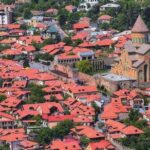
- Starting point: how the Tbilisi anchor sets the whole tone
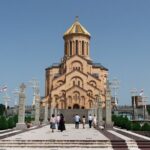
- Jvari Church and Gergeti Trinity Church: two religious stops that teach context
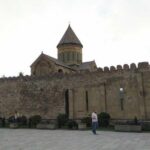
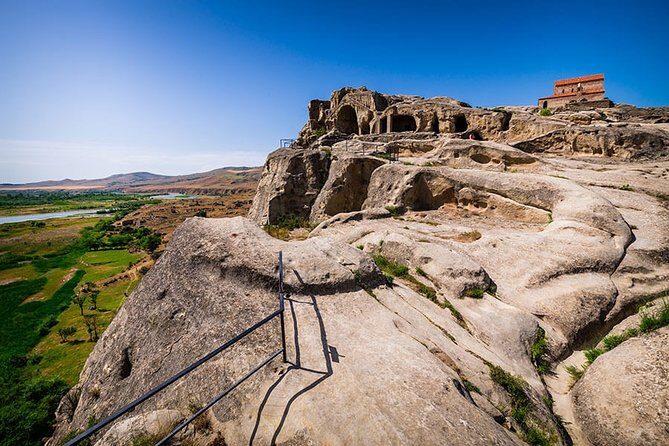
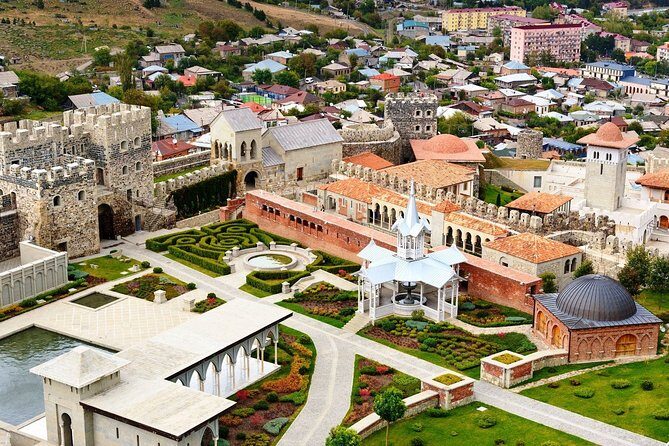
- Uplistsikhe and Rabati Castle: where fortifications give you a feel for the past
- Katskhi pillar: one stop, one unforgettable visual question
- Martvili and Okatse Canyons, plus Kinchkha waterfall: nature segments that break up the history
- Batumi city: changing moods, still learning the route
- Sighnaghi city and Al. Chavchavadze estate: finishing with a Kakheti flavor
- Tusheti views: one section that sparks real planning
- Family-friendly and private: why the format gets high marks
- Price and value: why $10 feels fair (and what you’re really paying for)
- Practical tips to watch it well (so it actually helps your future trip)
- Should you book this Georgia virtual tour?
- FAQ
- Is this virtual tour in Tbilisi?
- How long is the virtual tour?
- Is it a live tour?
- Is it private or shared with other people?
- Do I need a ticket on my phone?
- Are service animals allowed?
- How much does it cost?
- Can I cancel and get a full refund?
- When is the experience available?
Key things that make this tour worth your time
- On-demand convenience: no need to line up your schedule for a live broadcast.
- Private group feel: it’s set up so only your group participates, which suits families and small circles.
- A big geographic sweep in one sitting: churches, fortresses, canyons, Black Sea views, and Kakheti towns all get covered.
- Built for getting oriented: it’s a compact way to learn the names and get a sense of the route you might take in person.
- Responsive hosting: reviewers specifically praised communication and attentiveness from the team (including Nina).
- Low-cost entry: at $10 per person, it’s priced like a symbolic start rather than a big travel splurge.
Georgia from your couch: what to expect in 25–30 minutes
This is a private virtual tour of Georgia built around one core idea: help you get your bearings fast, even when you can’t cross borders. The experience runs about 25 to 30 minutes, so it’s not trying to replace a full trip. It’s trying to do something more practical: give you a guided, structured tour through widely recognized places, in a way that’s easy to watch and share.
I like the pacing. Short tours can feel shallow, but this one’s meant to teach. The reviews back that up with comments about learning a lot and gaining planning ideas for the future. If you’re the type who loves to come home from travel research with a list of must-sees, this kind of quick orientation can be a big win.
Also, the on-demand angle matters. One reviewer called out how convenient it was compared with live formats. That means you can fit it around meals, work schedules, or a family Zoom call without worrying about missing the start.
You can also read our reviews of more tours and experiences in Tbilisi.



Starting point: how the Tbilisi anchor sets the whole tone

The tour ties to Tbilisi, with the listed start at Davit Aghmashenebeli Avenue in Tbilisi. Even in a virtual format, that Tbilisi anchor is useful. It helps you frame Georgia geographically: you’re not jumping straight to the farthest provinces. You’re being guided from a sensible base, which makes the rest of the route feel like a journey rather than random place names.
Georgia Country Tours also lists pickup offered and a mobile ticket. For a virtual experience, pickup may not apply the way it would on an in-person tour, but it’s still good to note that the provider operates with a real-world travel mindset and logistics know-how. If you’re unsure what’s included for the virtual piece, double-check at booking so you know what you’ll actually receive.
Time zone is listed as +4 UGT, which is another small but important practical detail. When you’re planning your watch time, you don’t want to lose an hour to confusion—especially if you’re coordinating with family.
Jvari Church and Gergeti Trinity Church: two religious stops that teach context
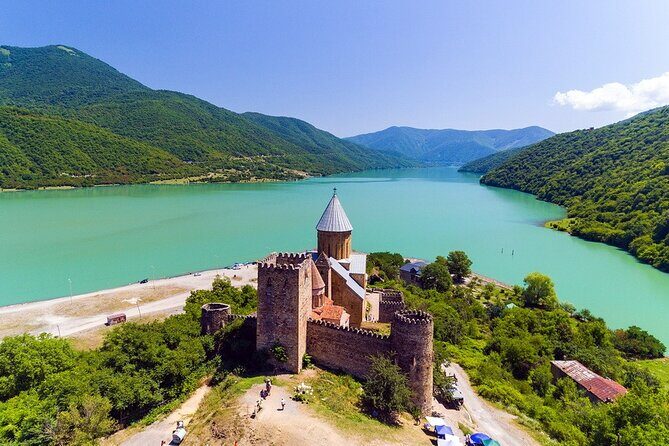
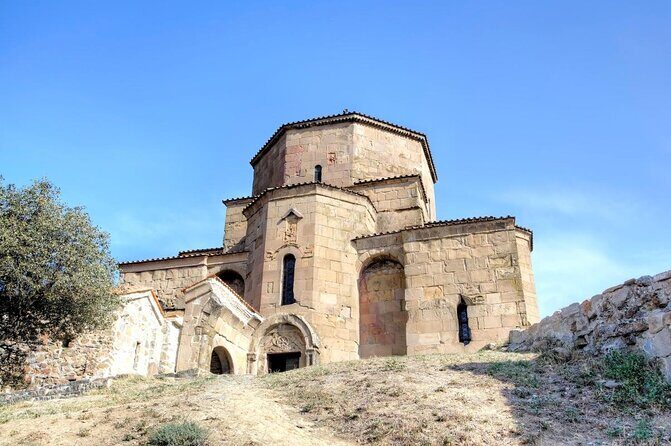
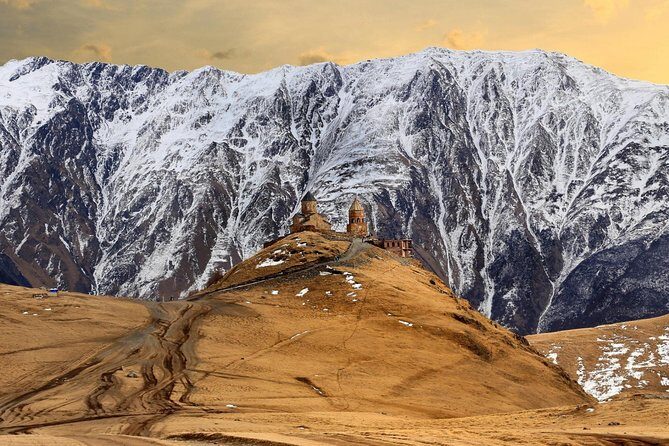
The tour includes Jvari church and gergeti trinity church back-to-back in the flow. Even if you’re not chasing architecture trivia, two church stops like this usually do the same job: they show you how Georgia expresses identity through sacred sites and how landscapes shape religious building choices.
Here’s how to get value from these segments. Watch for what the video guide emphasizes: the way the camera frames each church, the explanations around why these places matter, and how they connect to the bigger story of Georgia. If you’re planning in-person travel later, religious stops are also practical planning anchors. They often become day highlights, and they help you understand where different regions place their cultural center of gravity.
A possible consideration: if you’re not in the mood for historical or religious explanation, church segments can feel like homework. That said, the reviews praise how informative the tour is, so if learning is your style, this part likely hits the right notes.
Uplistsikhe and Rabati Castle: where fortifications give you a feel for the past
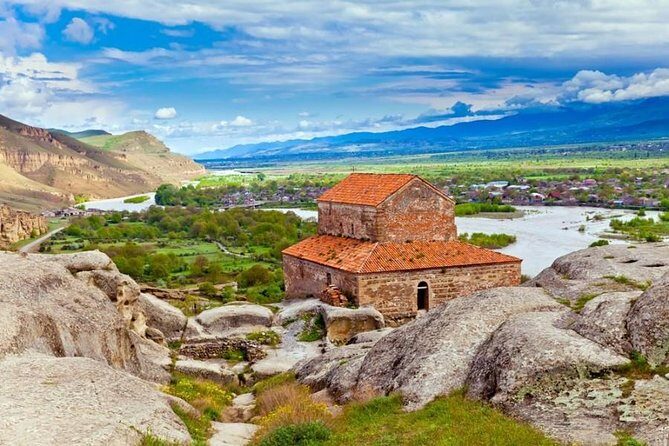
Next up, the tour visits Uplistsikhe and Rabati Castle. Even without needing a textbook, forts and stone complexes have a built-in advantage: they make history visible. They also tend to connect to themes you’ll see across Georgia—trade, defense, changing rulers, and the logic of where people built.
From a viewer standpoint, this section can be especially helpful if you’re the type who wonders why towns sit where they do. Fortresses tend to reflect both strategic thinking and local geography. A good virtual tour will use visuals to communicate that logic, so you can start predicting what you’ll like when you travel in person.
Potential drawback? These stops can feel dense if you want strictly modern city life. But if you’re trying to understand Georgia as a whole, these are the kinds of pauses that make your future itinerary make sense.
Katskhi pillar: one stop, one unforgettable visual question
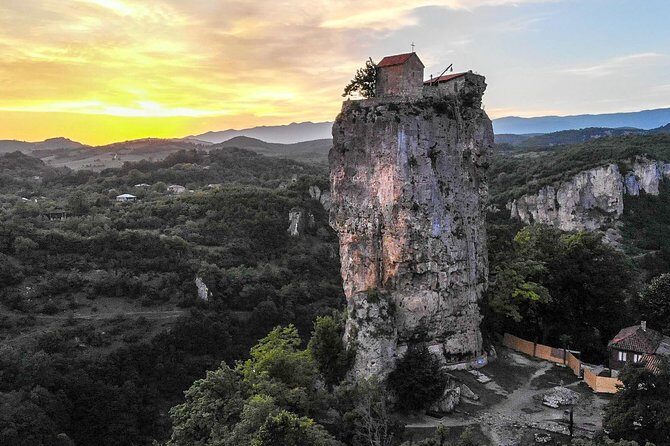
Then comes Katskhi pillar. A single-site segment like this can be a highlight because it gives your brain a clear image. When a place is famous for a specific vertical or distinctive feature, even short segments can leave a lasting impression—especially when the guide frames why it’s significant.
How to watch this one well: don’t just look at the pillar. Pay attention to the explanation around how you should interpret the sight. Virtual tours that focus on one striking site often do a better job of teaching than tours that bounce rapidly between many minor stops, and this seems designed with that idea in mind.
If you’re traveling with someone who gets impatient, a distinctive stop like this is often the easiest sell. It creates a moment where everyone can agree on what they’re seeing.





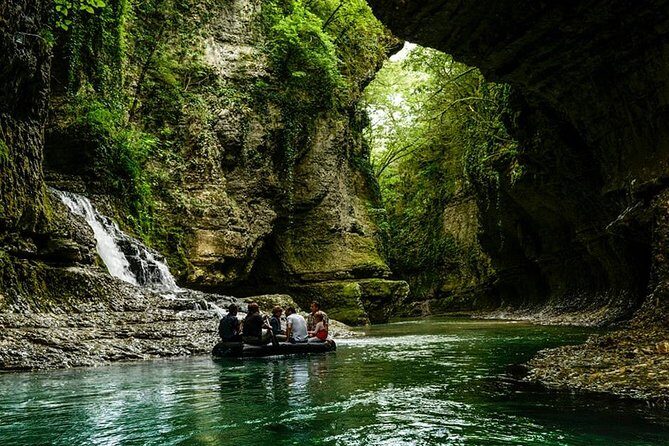
Martvili and Okatse Canyons, plus Kinchkha waterfall: nature segments that break up the history
After the more historical stops, the tour shifts into natural scenery with Martvili and Okatse Canyons and Kinchkha waterfall. This kind of structure is smart. It keeps the tour from becoming only churches and fortresses, and it gives you a reset between regions.
For many people, this is where the virtual format can still work well. Canyons and waterfalls offer motion cues and scale that don’t require you to stand in the place yourself to understand the impact. The key is to watch for the guide’s transitions—how the video explains the sequence, the way water and rock shape the terrain, and what you might expect if you visited later.
A consideration: nature content can be very location-specific. If the tour doesn’t give much practical detail for your future trip, you might still have questions like timing, seasonal changes, or access. The tour, however, is built for orientation, not a substitute for on-the-ground planning.
Batumi city: changing moods, still learning the route
Next, Batumi city enters the tour. That city stop likely changes the tone from stone-and-sacred to a more urban rhythm. Even in a virtual session, city chapters are valuable because they help you picture where you’d base yourself and how a route might feel day-to-day.
This is also where you can start thinking like a traveler. If you’re dreaming about Georgia but not sure how to structure it, a city segment can tell you what kind of days you’ll want. Do you want evenings with atmosphere? Then a stop like Batumi can become a natural anchor for one of your days.
The main limitation of virtual city segments is that cities also depend on street-level detail: sound, crowds, and walkability. Still, for the purpose of building a mental map, this chapter does its job.
Sighnaghi city and Al. Chavchavadze estate: finishing with a Kakheti flavor
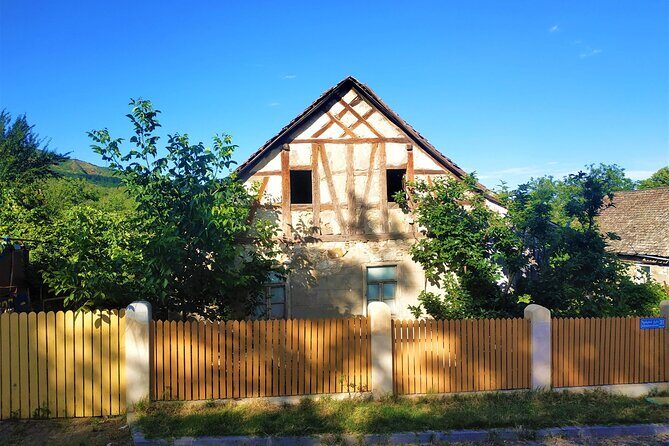
The tour continues with Sighnaghi city and Al. Chavchavadze estate. Two places in one move often signals a region theme—in this case, finishing the tour with a more lifestyle and cultural side rather than only panoramas or ruins.
Sighnaghi in particular tends to be the kind of town that people connect with on a personal level: it feels like a place you’d like to wander slowly. The virtual format can’t replace wandering, but it can still help you understand the vibe and whether it’s the right fit for your travel style.
The estate stop is a helpful balance. Estates give you a different lens on how people shaped land and culture over time. If you’re planning a future trip and want more than just point-to-point attractions, adding an estate-style stop in your mental itinerary can broaden what you ask for when you plan days.
Tusheti views: one section that sparks real planning
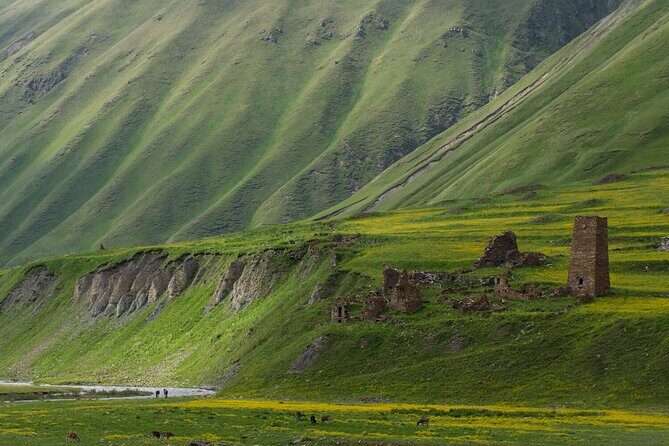
Finally, you get views of Tusheti. Ending on mountain views (even virtually) is a classic way to leave you hungry for more. If you’re considering a trip to Georgia, a Tusheti segment can help you decide whether you want your route to include a more remote, scenic chunk—or whether you prefer to keep things easier and closer to major bases.
I treat this kind of ending as a planning tool. It gives you a question to carry forward. Do you want big scenery and a slower pace? If yes, Tusheti becomes more than a name. If not, you can still use it as a contrast point and decide what kind of Georgia you personally want.
Family-friendly and private: why the format gets high marks
The tour’s reviews are strikingly consistent about the emotional value. One review mentions buying it for a mother who loved it and learned a lot. Another describes a family Zoom call where it was a hit. That tells me the tour isn’t just a solo research tool. It works as a shared “let’s learn about Georgia together” activity.
That’s the private tour setup doing real work. A private experience can make the viewing feel more intentional and less like background content. It also matters if you’re watching with kids, older relatives, or a group that needs a clear structure rather than a free-for-all.
And one review specifically praised the guide as super attentive with communications. That’s important. Virtual experiences sometimes fail when the provider disappears after payment. Here, the communication tone in the responses suggests someone is actually paying attention—at least based on what guests reported.
Price and value: why $10 feels fair (and what you’re really paying for)
At $10 per person, this is priced like a gateway experience. It’s not a full tour refund substitute for lost travel plans. It’s more like: pay a small fee, learn the names and themes of the main sights, and build momentum for the trip you plan next.
Why it feels like good value:
- The duration is long enough to feel like an actual tour (not a 5-minute teaser).
- It covers a wide range of regions and types of places, so you come away with a broader mental map.
- Reviews emphasize learning and inspiration, which is exactly what you want for a travel imagination starter.
If you’re deciding whether to spend, think about what $10 buys you in your own process. If it helps you plan a future itinerary, identify priorities, or excite the people you travel with, that’s real value—even if you’re not traveling that day.
If you want a long, immersive storytelling experience, you may find 25–30 minutes a bit short. But that’s also the point: it’s a fast, structured introduction.
Practical tips to watch it well (so it actually helps your future trip)
I recommend treating this like a guided museum visit with a homework-friendly goal. When you press play, do these three things:
- Grab a note list of the places you want to visit next. The tour covers churches, fortifications, canyons, cities, and Tusheti views, so it’s easy to categorize your preferences.
- Pause if you’re watching with family and someone asks questions. The tour is on-demand, which makes it easier to pause and talk.
- After you finish, map it to your future route. Ask yourself which region you’d want first in real life: a religious-cultural start, a fortress-and-history middle, or a canyon-and-waterfall break.
One more practical note: the tour is private to your group, so it’s a good candidate for family calls or small friend gatherings where you want something shared and structured.
Should you book this Georgia virtual tour?
Book it if you want a low-cost, on-demand way to get oriented to Georgia’s major sights in one focused session. It’s especially worth it if you’re traveling with family, or if you need a simple starting point for future planning. The reviews’ highest praise centers on learning, convenience, and how it works as a shared activity—those are the signals you should trust.
Skip it if you’re looking for deep, real-time Q&A or a substitute for a full day of on-the-ground exploring. The experience is brief by design, and virtual visuals can’t fully replace being there.
If your goal is inspiration with structure, this tour fits the bill.
FAQ
Is this virtual tour in Tbilisi?
The experience is associated with Tbilisi, Georgia, and the listed start point is Davit Aghmashenebeli Avenue, Tbilisi.
How long is the virtual tour?
It runs approximately 25 to 30 minutes.
Is it a live tour?
The experience is on-demand rather than live, which makes it convenient to watch.
Is it private or shared with other people?
It’s a private tour/activity, so only your group participates.
Do I need a ticket on my phone?
A mobile ticket is listed as part of the experience.
Are service animals allowed?
Yes, service animals are allowed.
How much does it cost?
The price is $10.00 per person.
Can I cancel and get a full refund?
Yes. You can cancel up to 24 hours in advance for a full refund.
When is the experience available?
The listed opening hours run daily, from 12:00 AM to 11:30 PM, for the date range shown.
If you tell me who you’re booking for (age range, first-time to Georgia or not, and whether they like history vs scenery), I can suggest how to watch each segment to match their interests.