REVIEW · TBILISI
Brutal Tbilisi: Urban exploration and untold stories
Book on Viator →Operated by Friendly.ge: Transfers & Tours in Georgia · Bookable on Viator
Tbilisi hides brutalist stories in plain sight. This Brutal Tbilisi walk is about Soviet-era concrete, bold modern monuments, and the real neighborhoods around them, with an English-speaking guide guiding you through places most visitors never slow down for. You’ll get a street-level education in how the city changed.
What I like most is the combo of architecture + human context—you’re not just looking at shapes, you’re hearing how Tbilisi worked then and how it still works now. The second big win is the pace: short stops that still leave room for photos, questions, and actually taking in details, not sprinting from one landmark to the next with Alex or Khato leading the storytelling.
One thing to consider: the tour is designed for moderate physical fitness, and it includes an abandoned site that may feel eerie. It’s also primarily aimed at adults, so if you’re traveling with younger kids, plan to bring an adult and expect it to be more walking and less entertainment.
In This Review
- Key highlights to plan around
- Soviet concrete, memorial stone, and everyday Tbilisi
- Price and value for a 4-hour brutalism route
- Getting to the meeting point and staying oriented
- Stop 1: Ministry of Highways of the Georgian SSR (30 minutes)
- Stop 2: Chronicles of Georgia (45 minutes)
- Stop 3: Former Archaeology Museum (30 minutes)
- Stop 4: Maglivi Bridge, Soviet dorms, and today’s realities (30 minutes)
- Stop 5: Nutsubidze Skybridge (45 minutes)
- What the best guides do (and why it matters here)
- Pace, walking style, and photo strategy
- Who should book this Brutalist Tbilisi tour
- Should you book Brutal Tbilisi? My decision guide
- FAQ
- How long is the Brutal Tbilisi tour?
- Is the tour offered in English?
- How much does it cost?
- What’s included in the price?
- Where does the tour start and end?
- Is hotel pickup available?
- Do you need to pay separate admission tickets at the stops?
- Is the tour suitable for kids?
- Cancellation: can I get a refund if plans change?
Key highlights to plan around
- Small-group feel (max six on the tour experience) with an upper cap of 14 on the overall activity
- Soviet-to-post-Soviet storylines taught through monuments, not lectures
- Stop variety: government architecture, memorial sculpture, an abandoned museum, refugee housing-adjacent buildings, and a sky-high walkway
- Nutsubidze Skybridge access: you’ll walk across bridges high above the city (70 meters)
- Easy photo opportunities with frequent “pause and look” moments
- Bottled water + English guide included for the practical side of the day
Soviet concrete, memorial stone, and everyday Tbilisi
If you like architecture that looks a little stern at first glance, you’ll have a field day in Tbilisi. This tour is built around brutalism and modernist forms—big blocks, sharp angles, and monuments that were meant to last. But the tour’s real value is that you learn how these buildings fit into Georgian life, from student-era structures to places tied to displacement.
You’ll be out for about 4 hours with a local guide and a route that mixes walking with short transfers between stops. The group size stays small (maximum six), which matters here: you can ask questions, linger for pictures, and still keep a good pace.
And yes, the vibe is urban exploration. You’ll be seeing official-looking buildings, memorials on hills, and places that feel like they’ve been waiting for someone curious enough to notice them.
You can also read our reviews of more tours and experiences in Tbilisi.


Price and value for a 4-hour brutalism route
The tour costs $75 per person, which is the kind of price that only feels reasonable if the guide actually connects the dots. In the best versions of this experience, the guide does just that: you leave with a new way to read Tbilisi’s concrete and signage, and you understand the human reasons these structures were built.
You also get practical inclusions that help the day run smoothly. Bottled water is included, and you get a local guide who focuses on the architecture story. Admission at the featured stops is listed as free, so you’re not paying extra ticket fees for each location.
The main cost trade-off is what you’re giving up: lunch is not included, so you’ll want to plan a meal either before you go or after you finish. If you’re the type who likes long coffee breaks, you may still want to add that buffer.
Getting to the meeting point and staying oriented
You’ll meet at the Giant Bicycle monument at Rose Revolution Square. That’s helpful because it gives you a clear starting landmark, and it’s a spot you can orient to quickly, even if you’re new to the city.
The tour ends back at the same meeting point, so you’re not stuck trying to figure out the route home while your brain is full of Soviet-era facts and skybridge views.
Hotel pickup is a common question. The details provided say pickup is only for private tours, so in the standard setup you should expect to get to the meeting point yourself. Good news: it’s noted as being near public transportation.
Stop 1: Ministry of Highways of the Georgian SSR (30 minutes)
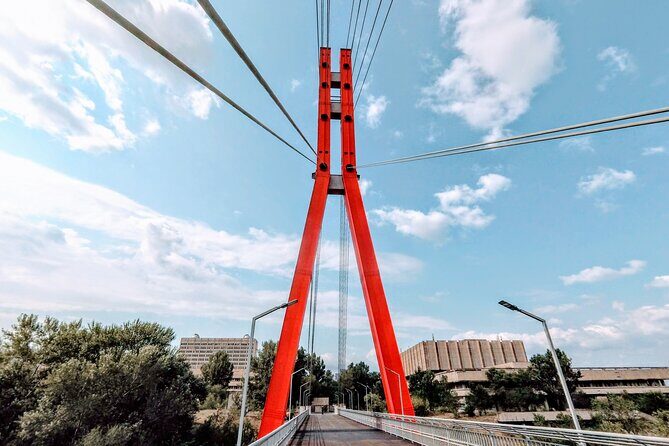
This is a classic “wait, what is that?” start. The Ministry of Highways of the Georgian SSR is presented as a unique Brutalist monument—massive, imposing, and designed to send a message even from a distance.
What you learn here is the difference between Brutalism as a look and Brutalism as a system. The concrete massing and sharp angles aren’t just style; they reflect how the era thought about authority, permanence, and function. In practical terms, this stop is great for understanding why Tbilisi has these heavy, geometric forms scattered across the city.
Why it works in a 30-minute window: you get enough time to see the key design features without burning your whole day. If you’re an architecture lover, you’ll want to take your time here—this is the kind of building where one close look can change how you see the next stop.
Stop 2: Chronicles of Georgia (45 minutes)
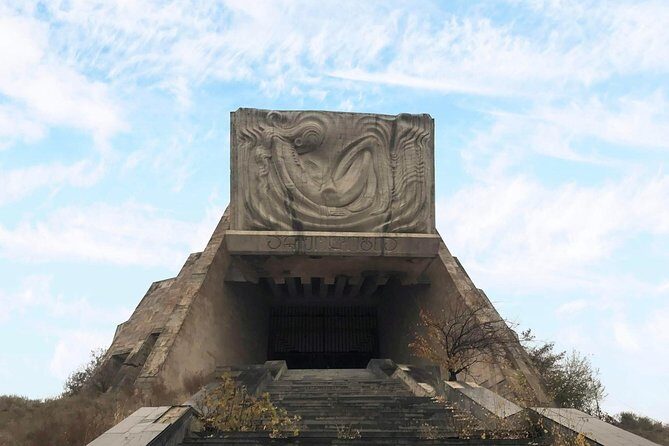
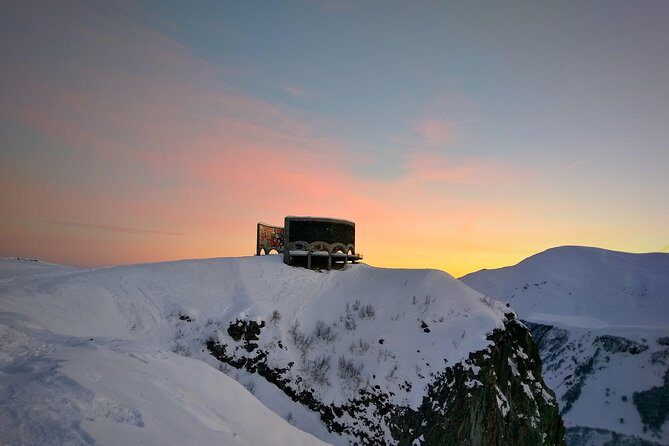
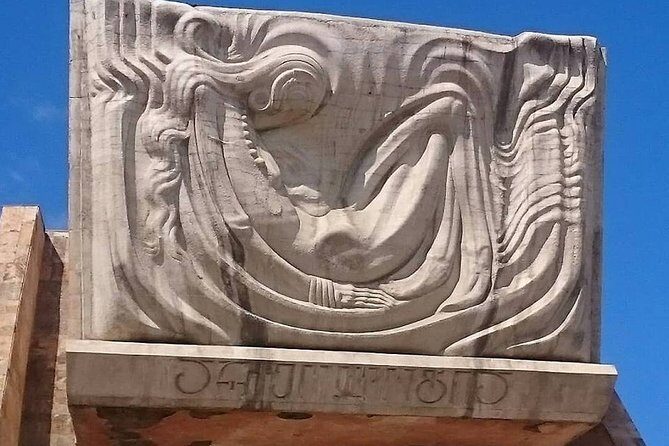
Next comes the Chronicles of Georgia monument, a memorial structure on a hill with views over Tbilisi. It’s built like a monumental history lesson in stone.
The highlight is the massive stone pillars with carved scenes tied to Georgian history and mythology. You’re not just looking at a sculpture; you’re reading a timeline. The stops description notes pillars covering themes like the founding of the Georgian state and the country’s conversion to Christianity, among other eras.
At 45 minutes, this is one of the more time-rich stops. That matters because memorial spaces reward slow attention—especially if you like symbolism and storytelling through form.
One consideration: because it’s on a hill, wear shoes that handle uneven paths comfortably. You don’t need to be a hiker, but you should be ready for a bit of walking and standing for views.



Stop 3: Former Archaeology Museum (30 minutes)
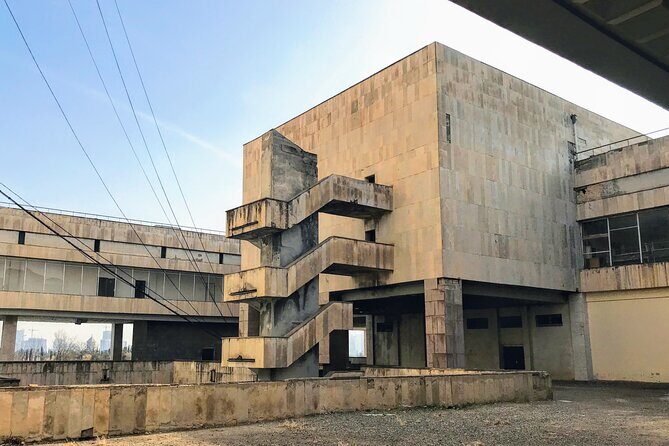
This stop has a different mood. The Former Archaeology Museum is described as grand but now abandoned—an eerie place that still feels like it holds stories.
If you’re into urban exploration, this is the kind of stop that changes your understanding of the city. Architecture is never only about what was built; it’s also about what was left behind and how communities move on. The museum stop is brief at 30 minutes, which helps you experience the atmosphere without turning the tour into a long detour.
Potential drawback: abandoned sites can feel uncomfortable for some people, especially if you prefer bright, active spaces. If that’s you, go anyway for the context and ask your guide how they interpret it. A good guide will steer you toward meaning rather than just spooky vibes.
Stop 4: Maglivi Bridge, Soviet dorms, and today’s realities (30 minutes)
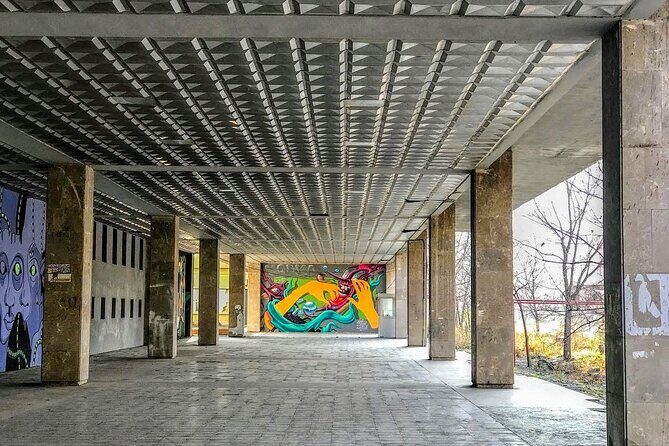
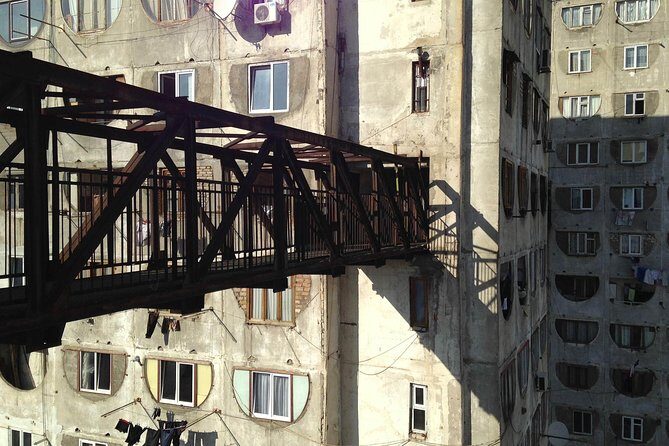
This part of the route focuses on architecture in motion—buildings that have shifted roles over time. The stop description ties Brutalist exploration to former dormitories that now house refugees, connecting student-era spaces to contemporary displacement realities.
That’s the emotional weight of this stop. You’re seeing concrete that once represented education and daily student life, now repurposed under very different circumstances. It’s a reminder that buildings are not only art; they’re containers for real lives.
You’ll also explore the old cable car in the university district, another example of Brutalist architecture noted in the provided info. Cable car infrastructure can be surprisingly photogenic—framework, angles, and the sense of movement even when it’s no longer running.
Why this stop is valuable: it forces the tour beyond aesthetics. You’ll leave understanding how Soviet-era planning still shows up in the city’s present-day needs and housing patterns.
Stop 5: Nutsubidze Skybridge (45 minutes)
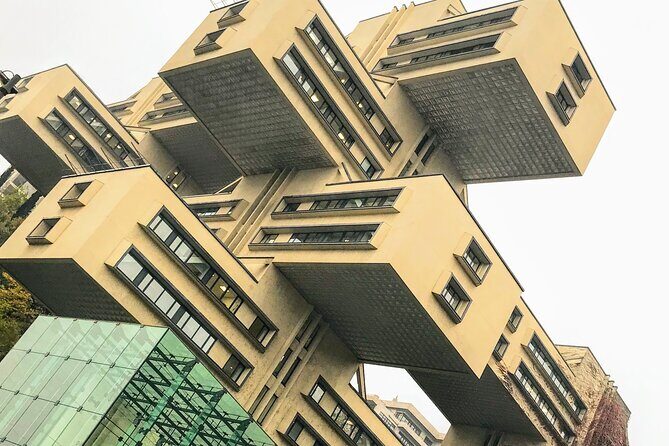
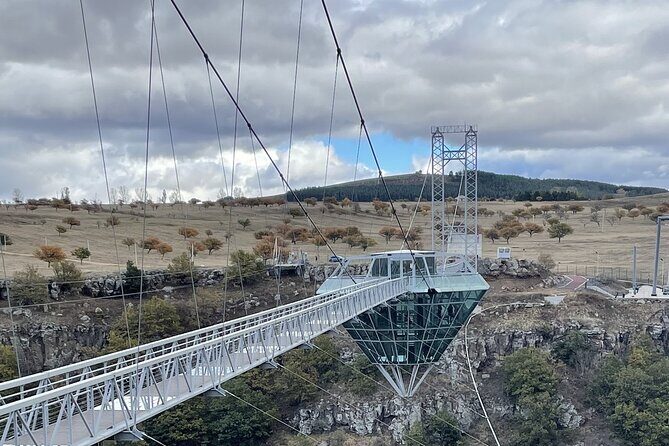
This is the stop people remember. The Nutsubidze Skybridge features twin towers with bridges connecting them, and you get the chance to walk across the bridges suspended 70 meters above the ground.
The sheer height makes this more than a photo stop. Even for people who aren’t obsessed with architecture, the structure gives you a “how did they build this” moment. And the views help you connect the brutalist blocks to the wider city.
One detail that comes up in reviews: you might get to meet the lift lady associated with the Skybridge. That’s not something to count on as guaranteed, but it’s exactly the kind of small human interaction that turns a monument into a story.
Plan for this stop to feel like a mini highlight within the highlight. In multiple accounts, the Skybridge moment is treated as a standout because it combines design, height, and the chance to experience the building as something you actually walk through.
What the best guides do (and why it matters here)
This tour stands or falls on the guide’s ability to translate concrete into story. In the feedback you provided, names like Khato/Khato, Alex, Aleksi, Khatuna, Iona, and Xato appear—often praised for pacing, clear English, and the ability to answer questions.
Here’s the practical impact for you: a strong guide doesn’t just list dates. They connect the design choices to social context—why a building looked the way it did, and how the city used it. That’s why you’ll hear both architecture talk and broader Georgian context during the same walk.
If you ask questions, you’ll likely get straight answers and more detail than you expected. One review specifically called out that the guide was patient and made time for photos and a slower pace at each site.
Pace, walking style, and photo strategy
Even though the tour runs about 4 hours, it doesn’t feel like a long endurance walk because the stops are segmented—30, 45, 30, 30, 45 minutes across the day. That’s smart. It keeps energy up for the most visually intense parts, like Chronicles of Georgia and the Skybridge.
Photo strategy tip: start each stop by looking from a distance first, then again up close. Brutalist buildings often read differently once you notice the textures, edges, and repeated patterns. With a small group, you can usually reposition without feeling like you’re fighting a crowd.
Also, expect some time where you’ll be standing for views or reading monuments. Wear breathable layers if it’s warm, and bring something with pockets for your phone and water.
Who should book this Brutalist Tbilisi tour
This tour fits best if you answer yes to a few questions:
- Do you like Soviet and modernist architecture more than you like postcard old-town streets?
- Are you curious about how buildings reflect politics, education, and social change?
- Do you enjoy guided context that helps you see details you’d miss on your own?
It also suits people who want a structured experience without feeling boxed in. The small-group size (max six) and the stop durations create a rhythm that’s easy to follow.
If you’re traveling with older adults who need pauses, you should still be able to work with the group pace. One review praised accommodation for retired parents who could sit out the archaeology stop. That suggests there’s flexibility for comfort if you communicate needs early.
If you’re traveling with young kids, note the tour is primarily designed for adults, and children must be accompanied by an adult. If that sounds like your group, you may prefer a family-friendly option.
Should you book Brutal Tbilisi? My decision guide
Book it if you want Tbilisi that’s not limited to the usual tourist loop. This is one of those tours where you leave with a new “lens” for the city—how brutalism, memorial sculpture, and repurposed Soviet structures explain modern Georgia.
Skip or reconsider if you’re sensitive to abandoned spaces or you dislike walking around without a lot of active, indoor comfort. Also consider the adult-focused nature and the moderate physical fitness requirement.
If your goal is architecture with real context—government, memorials, university-era structures, and sky-high modern engineering—then the $75 price starts to make sense fast. You’re paying for a guide who can turn concrete into a story you’ll remember long after the photos are posted.
FAQ
How long is the Brutal Tbilisi tour?
It runs for about 4 hours.
Is the tour offered in English?
Yes, it is offered in English.
How much does it cost?
The price is $75.00 per person.
What’s included in the price?
The tour includes bottled water and a local guide.
Where does the tour start and end?
It starts at the Giant Bicycle monument at Rose Revolution Square and ends back at the same meeting point.
Is hotel pickup available?
Hotel pick-up is only available for private tours, not for the standard shared experience.
Do you need to pay separate admission tickets at the stops?
The stop details list admission tickets as free.
Is the tour suitable for kids?
The tour is primarily designed for adults. Children must be accompanied by an adult if they attend, and the information provided recommends family-friendly tours for younger children.
Cancellation: can I get a refund if plans change?
Free cancellation is available up to 24 hours before the experience starts for a full refund.