REVIEW · TBILISI
Kazbegi-Ananuri-Gudauri: Epic Views & History (Group)
Book on Viator →Operated by Explore Georgia Tours · Bookable on Viator
Mountain views start the moment you leave Tbilisi. I love the combo of UNESCO church stops and fortress-and-reservoir viewpoints, all explained clearly by a local guide (Shako is a common favorite). The main thing to consider is that Day 2 can mean about 4 to 5 hours of driving, and there’s no restroom on board.
You’re traveling as a private group (up to 15), so the day feels like your own plan, not a scramble with strangers. With an air-conditioned vehicle and onboard WiFi, you can stay comfortable and even plan your next photo stop on the go, using the provided mobile ticket.
In This Review
- Key highlights you’ll actually remember
- A two-day Kazbegi and Gudauri itinerary that moves fast, but wisely
- Starting from Tbilisi: pickup, private transport, and a long Day 2 mindset
- Mtskheta’s UNESCO morning: Jvari Church and Svetitskhoveli Cathedral
- Jvari Church: where rivers meet and Christianity took root
- Svetitskhoveli Cathedral: frescoes, faith, and major heritage
- Zhinvali Reservoir and Ananuri Fortress: the Aragvi River’s layered story
- Zhinvali Water Reservoir: quick color, big setting
- Ananuri Fortress Ensemble: late feudal walls with river views
- Gudauri’s Friendship Monument: a viewpoint with political history baked in
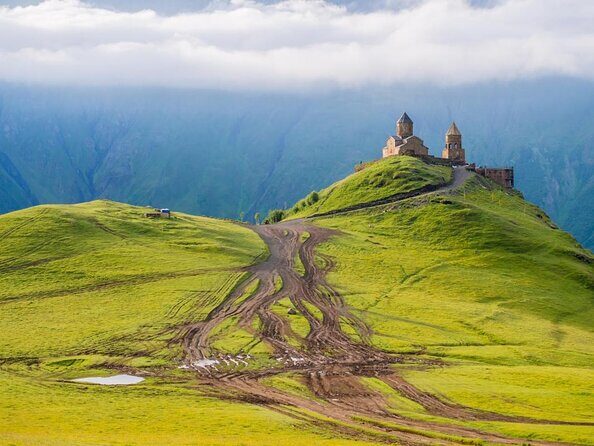
- Kazbegi’s Gergeti Trinity Church at 2,170 meters
- Gergeti Trinity Church: the iconic isolated viewpoint
- How to think about the stop
- Dariali Gorge and the Dariali Church Fortress: the Gateway to the Caucasus
- The medieval fortress-church feel
- Dariali Winery: a structured tasting stop in a big place
- Sno’s giant stone heads and Elia Mountain: art, myth, and sacred air
- Sno Giant Stone Head Sculptures: Merab Piranishvili’s granite figures
- Elia Mountain: a sacred stop with open views
- Price and value: what $800 per group buys you
- Guides and organization: why Shako shows up in the good reviews
- Who this tour fits best (and who should skip it)
- Should you book Kazbegi–Ananuri–Gudauri with Explore Georgia Tours?
- FAQ
- Where does this tour start?
- How many people are in a group?
- What’s included in the price?
- Are admission tickets included for the stops?
- Is there a restroom on board?
- How long is the driving on Day 2?
- What is the cancellation policy?
Key highlights you’ll actually remember
- UNESCO in Mtskheta: Jvari Church and Svetitskhoveli Cathedral for early Georgian Christianity
- Ananuri Fortress above Jinvali Reservoir: towers, churches, and serious river views
- Gergeti Trinity Church at 2,170 meters: the iconic Kazbegi photo moment
- Dariali as the Gateway to the Caucasus: cliff pass scenery plus a medieval church-fortress
- Dariali Winery time: a focused stop to taste Georgia’s winemaking tradition
- Sno’s giant stone heads by Merab Piranishvili plus Elia Mountain’s spiritual viewpoint
A two-day Kazbegi and Gudauri itinerary that moves fast, but wisely
This is the kind of Georgia tour that works when you want big scenery and real history without spending your days building logistics. You get a full loop from Tbilisi toward Mtskheta, then onward to the Kazbegi and Gudauri region, finishing with a mix of sacred and cultural stops.
What makes it work for you is the rhythm: each site gets a short, usable time window (often around 20–30 minutes). That means you see the key places without turning into a marathon of waiting around.
You can also read our reviews of more historical tours in Tbilisi
Starting from Tbilisi: pickup, private transport, and a long Day 2 mindset
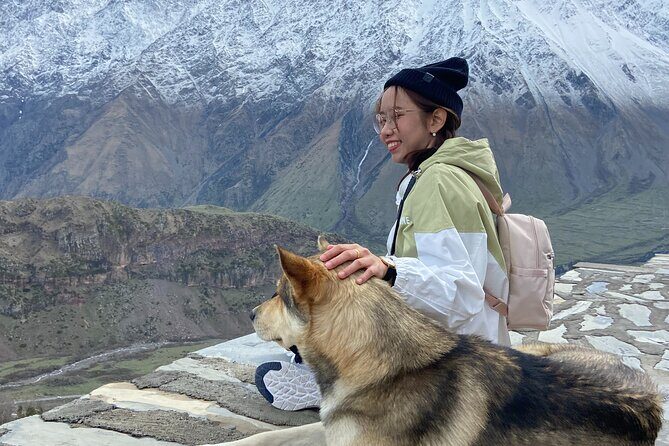
The meeting point is Shota Rustaveli Tbilisi International Airport, and pickup is offered. The tour runs daily, with the meeting window listed from 6:00 AM to 11:30 PM, so it can fit a lot of flight schedules.
Your ride is private, with an air-conditioned vehicle, onboard WiFi, parking fees, and fuel surcharge included. That’s practical value: you’re not budgeting for taxis, parking, or sorting out transport between stops.
The one logistical caution is straightforward: Day 2 is the driving-heavy day (about 4 to 5 hours for driving and transfers). If you’re sensitive to long road time, treat Day 2 like the main event and keep your expectations realistic.
Mtskheta’s UNESCO morning: Jvari Church and Svetitskhoveli Cathedral
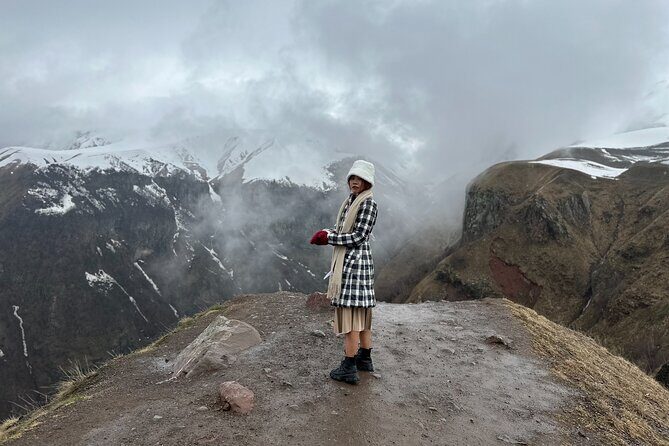
Most first-time visitors love the mountain drama later. But I think the smartest “start with Georgia’s foundation” moment happens in Mtskheta.
Jvari Church: where rivers meet and Christianity took root
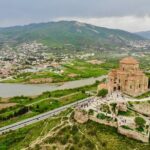
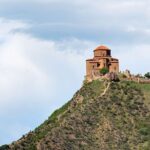
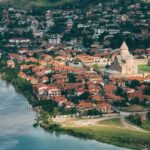
Jvari Monastery sits on a hilltop at the confluence of the Mtkvari and Aragvi rivers. It’s an early medieval Georgian architecture site and a UNESCO World Heritage stop, which matters because it explains how Georgia’s Christian identity formed in an era long before modern tourism.
You’ll get about 20 minutes here, and that’s enough to do two things well: walk around the viewpoint and take in the quiet, spiritual setting while looking out over the river junction.
Svetitskhoveli Cathedral: frescoes, faith, and major heritage
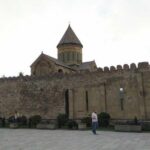
Svetitskhoveli Cathedral is in the heart of Mtskheta and is another UNESCO site tied to Georgia’s deep Christian heritage. The cathedral’s listed value is not just age—it’s the way the space feels: ornate frescoes, a calmer interior mood, and a sense of place in Georgian religious history.
You’ll also have around 20 minutes. If you like architecture and symbolism, this is the stop where you’ll feel you’re not just collecting photos—you’re understanding why these buildings mattered.


Zhinvali Reservoir and Ananuri Fortress: the Aragvi River’s layered story
After the cathedral circuit, the tour shifts from sacred sites to fortifications and water power—two very Georgian themes: faith and survival.
Zhinvali Water Reservoir: quick color, big setting
Zhinvali is a man-made reservoir on the Aragvi River, surrounded by mountain scenery. It’s practical infrastructure—water and electricity—but it’s also a popular viewpoint because the water is strikingly bright and the surrounding hills make the whole scene feel open.
You get about 20 minutes. Use it for a short walk, a couple of photos, and a quick reset before the history-heavy fortress stop.
Ananuri Fortress Ensemble: late feudal walls with river views
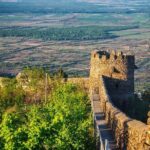
Ananuri is an architectural ensemble from late feudal times, dramatically positioned on a hill beside the Aragvi River. You’ll see the towers, churches, and fortifications—basically the “how people lived and protected themselves” story told in stone.
What I like for you here is the payoff: the fortress itself is compelling, and the view over the Jinvali Reservoir adds a second layer. It helps you understand why this spot made sense strategically.
Time is again about 20 minutes, which is enough if you move with purpose. If you linger too long, you can end up sprinting to the next stop—so I’d keep the pace steady.
Gudauri’s Friendship Monument: a viewpoint with political history baked in

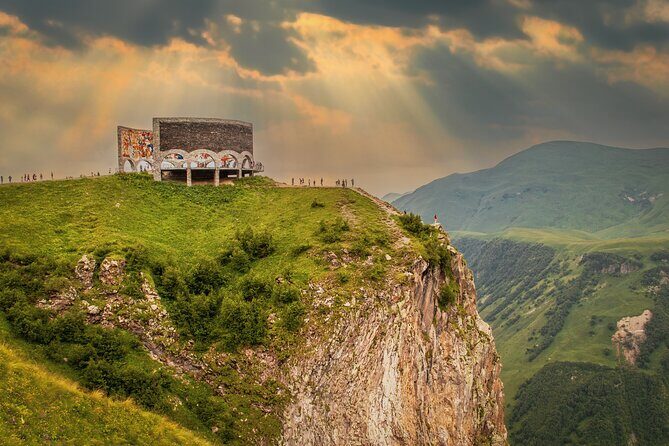
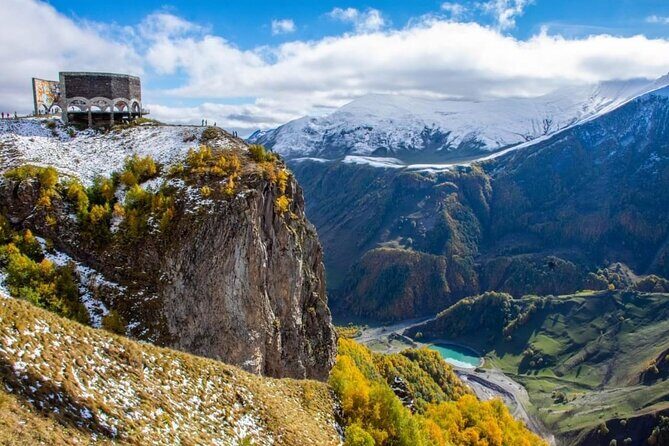
Above Gudauri, you’ll visit the Russian-Georgian Friendship Monument, a mosaic-clad tribute to Georgian-Russian unity. It sits against a dramatic mountain backdrop, and the viewpoint is the easy part.
The part worth paying attention to is the context. Georgia’s modern identity is shaped by eras of different alliances and pressures. This monument is a visible snapshot of that history, presented through art and public space. Even if you just spend 20 minutes, you can still read the site as a cultural marker, not only a photo backdrop.
Kazbegi’s Gergeti Trinity Church at 2,170 meters
Day 2 is where Georgia turns cinematic. The long drive leads you into a region where Orthodox tradition and dramatic topography constantly intersect.
Gergeti Trinity Church: the iconic isolated viewpoint
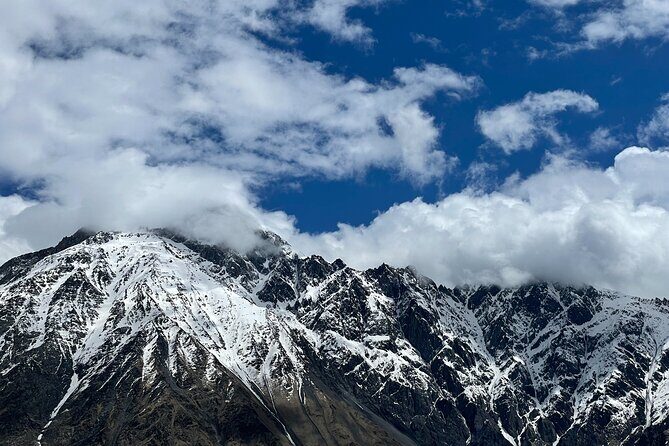
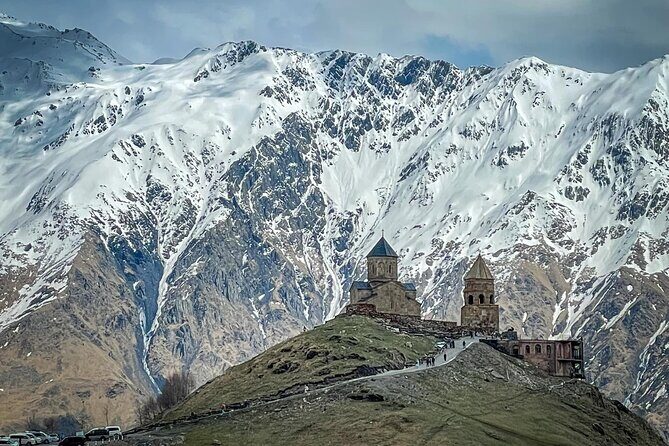
Gergeti Trinity Church sits under Mount Kazbegi at an elevation of 2,170 meters. It’s famous for two reasons: its isolated feel and the stark, photogenic backdrop that makes it look almost carved out of the mountains.
You’ll have about 30 minutes. That time window matters because the stop is compact: you’ll want to get your bearings fast, take a few angles, and keep time for the walk around the viewpoint.
How to think about the stop
This is not the kind of stop where “more time” always helps. What you need is the right timing in the day and a plan for the viewpoint. A guide can also help you judge where to stand for better angles without wasting steps.
Dariali Gorge and the Dariali Church Fortress: the Gateway to the Caucasus
Next up is Dariali, described as the Gateway to the Caucasus. You’ll drive through a dramatic corridor where the Terek River cuts through towering cliffs.
The best value here is the pairing: you’re seeing the pass as a natural route, then you’re connecting it to the historical human attempt to control movement and protect sacred spaces.
The medieval fortress-church feel
The pass area also includes the Dariali Church Fortress, a medieval stronghold that blends sacred architecture with defensive design. You get around 30 minutes for this stop.
Even if you’re not a medieval architecture superfan, the idea lands quickly: this was a critical corridor, and the fortress tells the story of why.
Dariali Winery: a structured tasting stop in a big place
After gorge time, the tour shifts from defensive history to Georgia’s everyday culture. You’ll stop at Dariali Winery for about 30 minutes.
The focus here is winemaking tradition: using time-honored methods and pairing that heritage with views of the Caucasus Mountains. I like this kind of stop because it gives you a break from constant walking and also adds a different Georgia flavor than churches and fortresses.
Use the winery stop to slow down a little, ask questions if your guide offers context, and taste something that feels tied to the region you just drove through.
Sno’s giant stone heads and Elia Mountain: art, myth, and sacred air
The tour finishes Day 2 with two more stops that feel different from the earlier ones—one is art you can’t ignore, and the other is spirituality tied to place.
Sno Giant Stone Head Sculptures: Merab Piranishvili’s granite figures
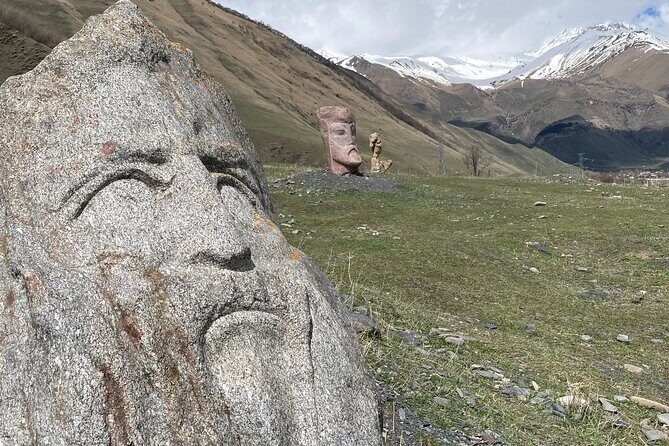
Near Sno village, you’ll find the Giant Stone Head Sculptures: monolithic heads crafted by artist Merab Piranishvili from local granite. The figures are often compared to Easter Island moai, and the tour description specifically links the work to cultural giants like Shota Rustaveli and St. George.
You’ll have about 20 minutes. This is the stop that’s easiest to “wow” at quickly. If you like modern interpretations of cultural memory, it hits harder than you might expect.
Elia Mountain: a sacred stop with open views
Then comes Elia Mountain, a site described as sacred with spiritual significance. You get about 20 minutes, which is just enough time to step back from the road trip energy and enjoy the calm.
This is where the tour’s theme starts to wrap: Georgia isn’t only about one style of landmark. You see religious architecture, fortress history, and then a spiritual mountain space that reads as cultural identity in another key.
Price and value: what $800 per group buys you
The price is $800 per group, up to 15 people. On paper, that might look “high” or “low” depending on how you compare it. Here’s the value logic:
- You’re getting private transportation for two days, including fuel surcharge and parking fees.
- You’re also getting onboard WiFi and air-conditioned comfort.
- All listed stops show free admission tickets, which saves money at each site.
- You’re not paying separately for a guide’s time across multiple regions.
If you’re traveling as a small group, private tours can still feel pricey. But with a max group size of 15 and multiple major stops, this pricing structure can work well when you split the cost.
The biggest “value maker” is time efficiency. You’re not hunting down transit between places like Mtskheta, Ananuri, and Kazbegi. That’s worth something, especially if you’re on limited days.
Guides and organization: why Shako shows up in the good reviews
A repeated theme from the feedback is that the guide role goes beyond driving. Shako is mentioned again and again as an excellent driver, tour guide, and photographer with strong knowledge of Georgia’s history and culture.
People also highlight how he listens to preferences and stays flexible, plus the overall feeling of a smooth, safe trip. That matters because the tour includes both tight stops and a long driving day. Good guidance can make the difference between feeling rushed and feeling in control.
If you want a tour where someone has already sorted the route and can explain what you’re looking at, that’s the style here.
Who this tour fits best (and who should skip it)
This tour is a strong fit if you want:
- A first taste of Georgia’s most famous church and fortress sites
- Quick, high-impact viewpoints around Mtskheta, Kazbegi, and Gudauri
- A private group setup where you can move as one
It may not be ideal if you:
- Want lots of free time in each location (the stop times are short)
- Hate long drives (Day 2 is the heavier one)
- Need a restroom break during transit (there’s no restroom on board)
Should you book Kazbegi–Ananuri–Gudauri with Explore Georgia Tours?
I’d book this if you’re aiming for maximum Georgia “wow” per day: UNESCO churches in Mtskheta, Ananuri’s fortress views over Jinvali, and the classic Gergeti Trinity Church backdrop, plus Dariali’s gorge history and a winery pause.
If your top priority is slow travel with long stays, you might feel the pace is too tight. But if you want a guided, efficient route with strong local explanations (often Shako), this is a solid way to cover a lot of ground without turning the trip into a logistics project.
FAQ
Where does this tour start?
The meeting point is Shota Rustaveli Tbilisi International Airport in Tbilisi, Georgia, and pickup is offered.
How many people are in a group?
It’s a private tour/activity with only your group participating, and the group size is listed as up to 15.
What’s included in the price?
Included are private transportation, WiFi on board, an air-conditioned vehicle, parking fees, and a fuel surcharge.
Are admission tickets included for the stops?
The listed stops show admission ticket pricing as free.
Is there a restroom on board?
No—restroom on board is listed as not included.
How long is the driving on Day 2?
Day 2 is approximately 4 to 5 hours with driving time and transfer.
What is the cancellation policy?
You can cancel for a full refund if you cancel at least 24 hours in advance. If you cancel less than 24 hours before, the amount paid is not refunded.