REVIEW · TBILISI
Tbilisi old town & soviet heritage – Private driver-guided Tour
Book on Viator →Operated by 11 Regions • Georgia · Bookable on Viator
One half-day can feel like a full weekend. This private tour puts Tbilisi’s big sights into a logical route, with an English-speaking driver and guide plus easy hotel pickup so you’re not hunting buses or taxis. I like the air-conditioned car for moving between neighborhoods, and I like the flexible stops that let you pause for photos without derailing the day.
My second favorite part is the way the guide stitches the scenes together: what you’re seeing, why it matters, and how Georgians actually live around these landmarks. You’ll also get practical comforts like bottled water and WiFi on board, which sounds small until you’re walking in old-street heat.
One thing to consider: the schedule is tight, so most places get a quick, meaningful look rather than hours of wandering. If you want to linger for shopping at the markets or go deep into the sulfur baths, plan to treat this as your orientation day and then extend your favorite stops on your own.
In This Review
- Key points worth knowing
- How this Tbilisi private tour saves you time (and decisions)
- Metekhi Cathedral to Holy Trinity: start where the city shows its roots
- Chronicles of Georgia: the story carved into stone
- Rike Park tramway to Narikala Fortress: the views you’ll actually remember
- Shardeni Street, Jumah Mosque, and the sulfur baths of Abanotubani
- Dry Bridge and Meidan Bazaar: browse like a local, not like a shopper
- Rezo Gabriadze’s clock tower showtime energy
- Rustaveli Avenue, Bridge of Peace, and Bazari Orbeliani to finish strong
- What the pacing feels like in real life
- Price and value: what $77.93 buys you
- Who this tour suits best
- Should you book this Tbilisi Old Town and heritage tour?
- FAQ
- How long is the private tour?
- Does the tour include hotel pickup and drop-off?
- Is the tour guided in English?
- Are tickets included for the main attractions?
- What is the start time?
- Can I cancel for a full refund?
Key points worth knowing
- Private, English-speaking driver-guide: you get answers as you go, not a loud group lecture.
- Old Town first, big views second: churches, stone monuments, then Narikala panoramas.
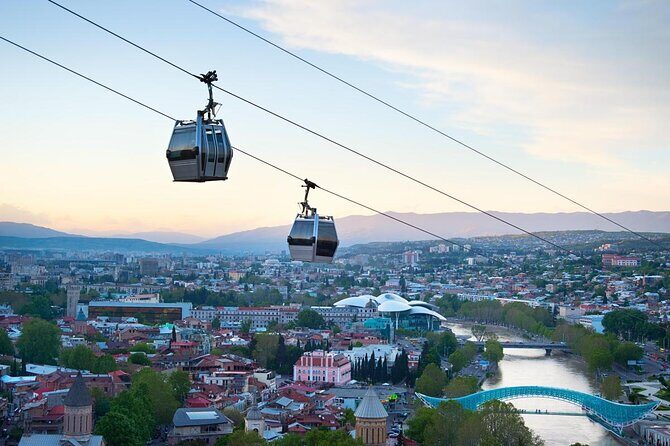
- Tramway included: a fast cable-car ride with 360-degree city views.
- Markets and shopping time: Dry Bridge and Meidan Bazaar give you hands-on browsing.
- A mix of faiths and eras: from Georgian Orthodox sites to the Jumah Mosque and modern city life.
- Food-hall ending: Bazari Orbeliani is a practical last stop if you want a meal after sightseeing.
How this Tbilisi private tour saves you time (and decisions)
Tbilisi is the kind of city where a DIY day can turn into constant little problems: where to park, how to get to the top of the hill, how long a walk will really take, and whether you’re going the right direction for the best views. This tour reduces that friction. You get a private ride in an air-conditioned car, and your guide handles the flow.
The best value here isn’t only the list of landmarks. It’s the structure. You start at the older core, move through major faith-and-heritage stops, then hit the skyline viewpoints via the tram and Narikala Fortress. Even when individual stops are short, you leave with a clear mental map of where things sit in relation to each other.
This tour also has a human factor. Guides mentioned on the day can be energetic and highly attentive, with names like Giga, Makho, Goga, and Timo popping up for good reason: people highlight both storytelling and practical care. If you’re traveling with mixed ages, that matters, and the guide team has shown they can adjust pace for different needs.
You can also read our reviews of more guided tours in Tbilisi


Metekhi Cathedral to Holy Trinity: start where the city shows its roots
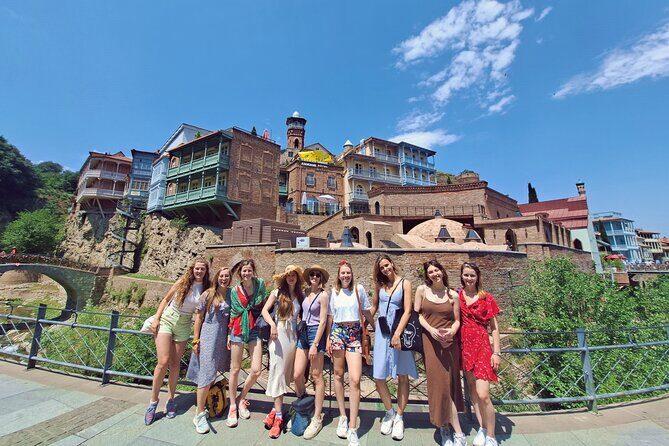
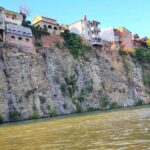
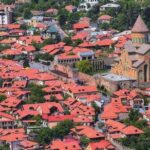
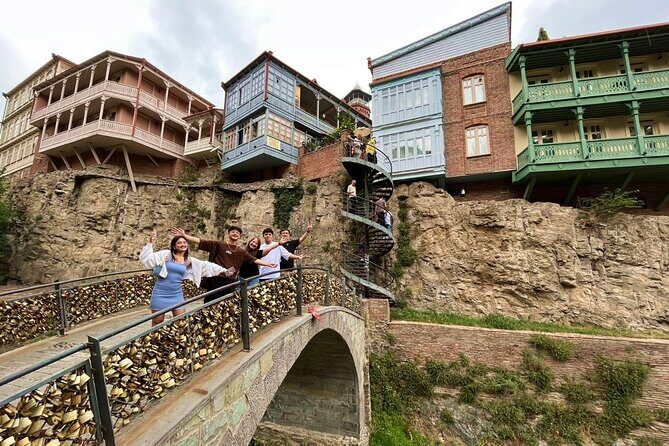
You begin at Metekhi Cathedral, a 13th-century church where the streets immediately feel like Tbilisi’s old skin. Expect narrow lanes, patterned balconies, and those colorful facades that make you stop without meaning to. The point of this first stop is momentum: you get oriented in the right neighborhood before the route jumps outward.
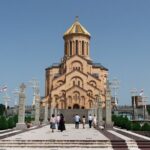
Then you move to Holy Trinity Cathedral, the headline scale moment. It’s a huge presence in the city at 101 meters, and the visuals are the lesson here: size, symmetry, and how it dominates the skyline in a way smaller churches can’t. The guide’s role is what makes this more than a quick photo stop—your time is free, but the context helps you see the symbolism and setting.
Practical note: both places are free to enter, so you’re not “paying to look.” That matters on a half-day schedule. You can spend your energy on watching, asking, and taking photos rather than juggling ticket lines.
Chronicles of Georgia: the story carved into stone
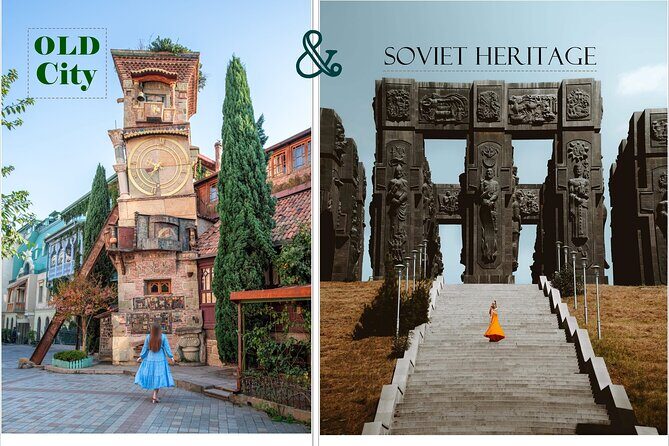
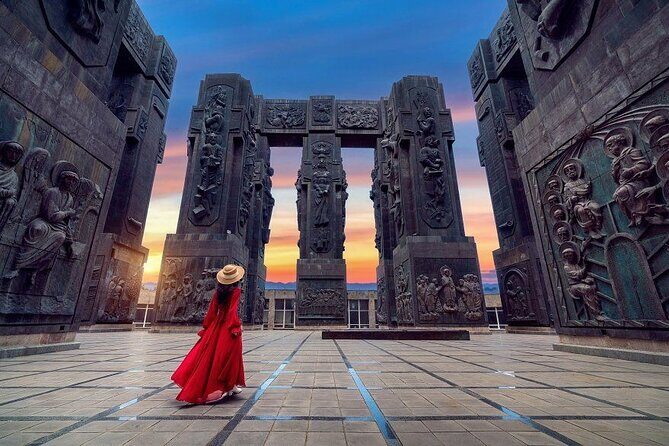
Next comes Chronicles of Georgia, often compared to a Georgian Stonehenge. You’ll see 16 massive pillars that act like a timeline—rulers and scenes from the life of Jesus, all laid out in stone. The attraction isn’t just the size. It’s that the monument gives you a way to understand national story in a single glance.
This is one of those stops where a guide can change the experience quickly. With the right explanation, you don’t just see detailed reliefs—you start recognizing themes and how the monument frames Georgia’s identity across time. It’s free admission, so you get a lot of meaning per minute.
If you prefer art and symbolism over big buildings, this one is a solid payoff. If you’re traveling with kids, the pillars and dramatic “history-as-monument” format tend to hold attention better than a typical museum-style hour.
Rike Park tramway to Narikala Fortress: the views you’ll actually remember
After the stone history, you get moving—upward, for a payoff. The Aerial Tramway connects Rike Park with Narikala Fortress, and you ride through quick, wide-window views of the city. The ride takes only a couple of minutes, and the tram ticket is included, so you don’t need to plan anything except when to look out.
Rike Park itself sits near the modern hub around Europe Square, where the city’s public energy shows. People mingle here, and it’s a good place to reset between sights—especially if your legs are starting to feel the slope of old Tbilisi.
Then you reach Narikala Fortress, one of the city’s best-known ancient monuments. Even with a short visit, you’ll feel what locals mean when they call it the heart and soul of Tbilisi: the fortress viewpoint does the work. The views are the point, and photos from here usually turn into your best postcard shots of the day.
One consideration: this is not a flat stroll. You’ll be on uneven ground and likely on stairs or steep edges. The tour notes moderate physical fitness is best, and that matches the reality of Narikala and old-street walking.
Shardeni Street, Jumah Mosque, and the sulfur baths of Abanotubani
From the heights, the tour comes back into character. You’ll walk through Jan Shardeni Street, one of Tbilisi’s most famous pedestrian streets, where the city feels social and walkable. Think cafés, small shops, and a street rhythm that makes it easy to spend extra time even when your schedule is tight.
Next is Jumah Mosque, currently the only Muslim shrine in the city. It’s described as a simple red brick mosque, and it’s known as a place of worship for both Sunni and Shia Muslims. This stop adds an important balance: Tbilisi isn’t only Georgian Orthodox churches, and a good guide helps you see how faith communities shape the city fabric.
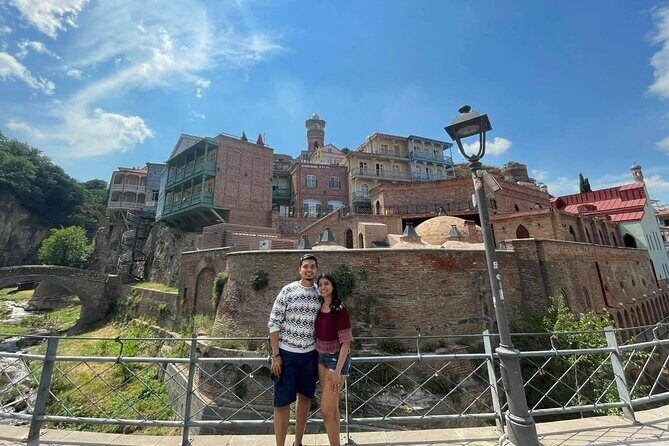
Then you arrive at Abanotubani, the sulfur bath area. You’ll recognize it fast: dome-shaped roofs and tiled facades over underground bathhouses. It’s a Tbilisi icon, tied to the legend that the city was born here. The bathhouse area is not included for admission, so if you want to actually soak or enter a bath facility, you’ll need to pay separately. I like this setup because you can choose your level of participation—look only, or spend more time and money for a full ritual-style experience.
You can also read our reviews of more private tours in Tbilisi


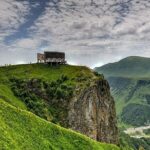

Dry Bridge and Meidan Bazaar: browse like a local, not like a shopper
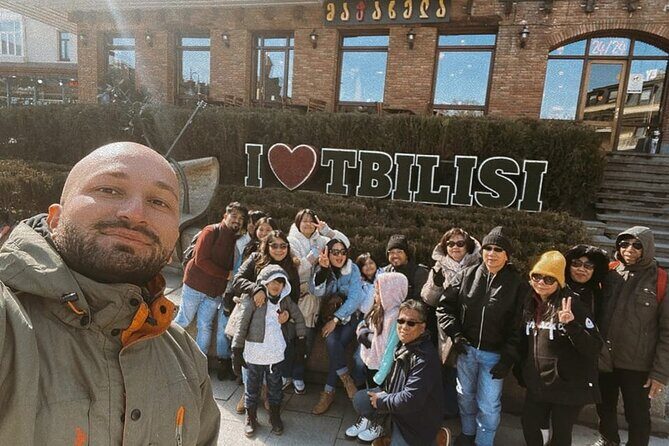
Two market stops make this tour feel more grounded than a pure sightseeing circuit. First is Dry Bridge Market, in the old historical part of Tbilisi. It’s a flea-market style browse where you can find everything from old coins and postcards to dishes, paintings, books, accessories, and even vintage phones and cameras. It’s also where people bring out family treasures or collections to sell—or just show.
Then there’s Meidan Bazaar, an underground tunnel-shop where you’ll see typical Georgian souvenir items, with a strong focus on products made in Georgia—wine, handcrafted socks, postcards, jams, sauces, spices, and tea. This is a good stop if you’re searching for edible gifts you can actually pack and bring home.
If you enjoy markets, you’ll probably wish you had another hour at Dry Bridge. If you don’t like shopping crowds, treat these stops as “look and learn” rather than “buy everything.” The value here is the variety and the chance to understand what people collect, preserve, and sell.
Rezo Gabriadze’s clock tower showtime energy
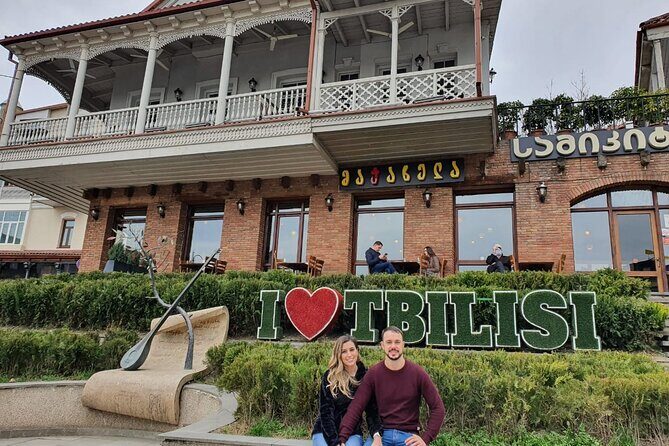
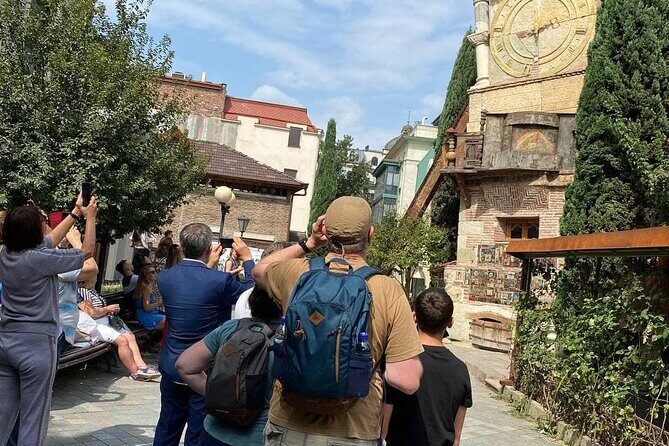
Not all architecture in Tbilisi is old. Rezo Gabriadze Marionette Theater delivers a different kind of attention: a clock tower with hundreds of tiles and a famous hourly show element—an angel comes out with a small hammer to ring the bell every hour.
There’s also a puppet theater inside the tower, with shows twice daily at noon and at 7 pm for something called The Circle of Life. The tour schedules only a short window here, so you might not catch a full performance, but even just seeing the tower and understanding how it works is worth it.
This stop is a nice “reset” after the heavy stone and religious sites. It’s playful. It’s theatrical. And it’s the kind of city detail that gives Tbilisi personality.
Rustaveli Avenue, Bridge of Peace, and Bazari Orbeliani to finish strong
You’ll also get a taste of Tbilisi’s modern spine. Shota Rustaveli Statue anchors the idea of Rustaveli Avenue, a central route about 1500 meters long, lined with governmental, public, cultural, and business buildings. It helps you see how the old and new parts of the city connect.
Next is the Bridge of Peace, a pedestrian bridge opened for the public in 2010. It connects Old Town with Rike Park over the river. For me, bridges are always about orientation, and this one is practical: you can look across and understand the city’s layout between viewpoints.
The day ends at Bazari Orbeliani, which is less about a single landmark and more about a food payoff. You’ll find 35 modern food facilities inside a food hall with Georgian options plus other cuisines from around the world. If you’re done with sightseeing, this is a smart final stop because you can eat immediately without hunting.
What the pacing feels like in real life
This is a half-day tour in the best sense: enough time to hit major anchors, but short enough that you won’t feel stuck all day. Many stops are brief, often around 10 to 30 minutes, which means your guide’s time management matters a lot.
For you, the benefit is clarity. You’ll see where each attraction sits, how the elevations work, and which areas feel best for a return visit later. The tradeoff is that you won’t have time to do everything slowly. If you want slow travel, I’d treat the tour as the “setup day” and then pick one or two places to extend on your own afterward, like Shardeni Street or a longer food stop at Bazari Orbeliani.
Also, remember the route includes hills (Narikala) and older streets (Metekhi, Abanotubani area). Even if each stop is short, you’ll still do real walking in places.
Price and value: what $77.93 buys you
At $77.93 per person for a private 5 to 6-hour experience, you’re paying for three things: time, comfort, and guided meaning. In a city like Tbilisi, time is the big cost of DIY. Getting from viewpoint to viewpoint efficiently, without wasting energy on local transit puzzles, is a real advantage.
You also get bottled water, WiFi on board, and hotel pickup and drop-off within Tbilisi. The tramway admission is included, and most major sightseeing stops have free admission, which helps keep the day from turning into an added-spending marathon.
If you’re traveling solo, it can still be worth it because it’s private and English-speaking. If you’re traveling as a couple or small group, the value gets better fast, especially if you want someone to tailor pacing for kids or older family members. The guide team has been praised for adapting to a family with two small kids plus an elderly person, which tells me they know how to handle real-life schedules rather than rigid sightseeing.
Who this tour suits best
This tour is a strong fit if you want:
- A guided overview of Tbilisi Old Town and major city anchors without planning every turn
- A mix of viewpoints, faith sites, and markets
- Private comfort with hotel pickup, bottled water, and an air-conditioned ride
It’s also a good match if you’re the kind of traveler who likes photo ops but still wants the “why” behind what you’re seeing—stone history, architectural scale, and what locals do in these spaces.
It might be less ideal if you want long, quiet museum-style pacing or if you hate any walking on uneven old streets. In that case, you’ll probably want a shorter route or extra time at fewer stops.
Should you book this Tbilisi Old Town and heritage tour?
I’d book it if you want a clean, efficient way to understand Tbilisi in one half-day—especially if it’s your first time in the city. The mix of Old Town churches, Chronicles of Georgia, the tram-to-Narikala views, and practical market browsing gives you both context and memorable sights.
I wouldn’t book it as your only Tbilisi day if you already know you love markets, food halls, or the sulfur bath experience. This works best as a strong start or a first-orientation day, then you can return to your favorite area with more time to wander.
If you do book, plan to bring modest walking comfort for slopes and stairs, and come ready to pick up local tips from your guide—people like Giga, Makho, Goga, and Timo have been recognized for making the day feel personal and easy, not just scheduled.
FAQ
How long is the private tour?
It runs about 5 to 6 hours.
Does the tour include hotel pickup and drop-off?
Yes. Your driver will pick you up from your hotel or apartment in Tbilisi and drop you off afterward.
Is the tour guided in English?
Yes. The tour is offered in English.
Are tickets included for the main attractions?
Most stops list free admission, and the aerial tramway ticket is included. The sulfur bath area at Abanotubani has admission not included.
What is the start time?
The tour starts at 9:30 am.
Can I cancel for a full refund?
Yes, you can cancel up to 24 hours in advance for a full refund.