REVIEW · TBILISI
Tbilisi Old Town Walking Tour with a Local Guide
Book on Viator →Operated by Views Georgia Tours · Bookable on Viator
Old Tbilisi clicks into place on foot. This Tbilisi Old Town walking tour packs big sights into a short stroll, with a local guide who turns monuments into stories you can actually picture. I like two things most: you get easy, free-entry stops that don’t feel rushed, and the route includes a proper wow moment with the Bridge of Peace and the cable-car viewpoint. The one thing to consider is that you’re walking for about 3 hours, plus churches can require a bit of extra attention (dress code, and no photos inside).
You’ll start near Ioane Shavteli Street and end at Freedom Square, with a group kept small (up to 15). It’s offered in English, and you’ll get a mobile ticket so you don’t waste time finding paperwork. If the weather turns bad, the tour can be rescheduled or refunded, so keep an eye on the forecast the day you go.
Here’s the practical feel: this is a “get your bearings fast” tour. It’s not just sightseeing; it’s a guided way to understand how Tbilisi layers religion, art, politics, and daily life in one compact old-town area. If that’s your style, this one makes sense.
In This Review
- Key points before you go
- A 3+ hour route that teaches you Tbilisi fast
- Step-by-step: what each stop adds to the story
- Sculpture Group Berikaoba near Dry Bridge
- Anchiskhati Basilica, Tbilisi’s 6th-century anchor
- Bridge of Peace: glass-and-steel drama over the Kura
- Shardeni Street in Upper Kala: the old-town mood
- Rezo Gabriadze Marionette Theater and its clock tower
- Sioni Cathedral Complex and the meaning behind the name
- Tamada Statue: Georgia’s wine culture, in bronze
- The Metekhi Church area monument by Elguja Amashukeli
- Europe Square: EU flags in the wind
- The Great Synagogue of Tbilisi, built 1895–1903
- Tree of Life (2016) and art made for conversation
- Rike–Narikala Cable Car: earn the views
- Kartlis Deda: the Mother of Georgia overlooking everything
- Church rules you should know before you get there
- Price and value: what $38 buys you in Tbilisi
- Who this tour fits best
- After the walk: what to do near Freedom Square
- Should you book this Tbilisi Old Town tour?
- FAQ
- How long is the Tbilisi Old Town Walking Tour?
- What does the tour cost and what’s included?
- Are there any sights with admission fees?
- Is lunch included in the tour?
- Does the tour have rules for churches and photos?
- Is the tour good for kids, and is there an age limit for wine tasting?
Key points before you go
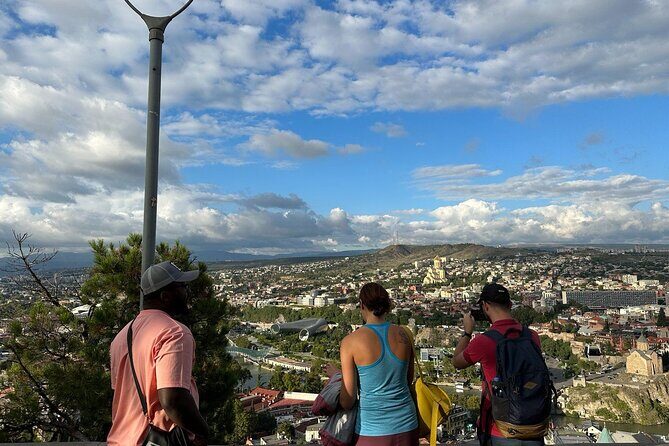
- Small group size (max 15) keeps questions and pacing realistic
- English-speaking guides like Teona often lead the walk, and explanations go beyond labels
- Free admission at each major stop means you’re paying for guidance, not tickets
- Bridge of Peace + Old Town churches give you two very different flavors of Tbilisi in the same route
- Europe Square and the EU flags show Georgia’s direction in a direct, visible way
- Rike–Narikala cable car ride helps you earn views without wrestling uphill streets
A 3+ hour route that teaches you Tbilisi fast
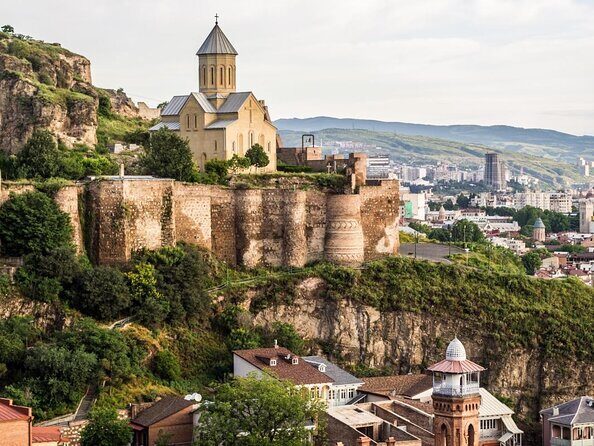
This tour is about 3 hours and 15 minutes, including travel time, so it moves with purpose but doesn’t feel like a mad dash. At around $38 per person, the value is mostly in the human part: a professional guide who connects what you’re seeing to why it matters. You also get a tidy set of stops where most entries are free, which keeps your day from turning into a ticket-counting exercise.
The group is kept to a maximum of 15. That matters in older city streets where crowds can get annoying fast. Here, you can actually hear the guide, and you’re not stuck in a long line where you only get partial views.
You’ll also get a clear endpoint: Freedom Square. That’s useful because you can continue on to nearby sights afterward without backtracking.
You can also read our reviews of more walking tours in Tbilisi

Step-by-step: what each stop adds to the story
Sculpture Group Berikaoba near Dry Bridge
You start with a monument near Dry Bridge that shows expressive figures in motion. It’s tied to Georgia’s cultural traditions and the idea of freedom and rebellion—so right away you learn that Tbilisi isn’t just old stone and quiet chapels. It has attitude. The fact that it’s short and outdoor makes this a good warm-up stop.
Anchiskhati Basilica, Tbilisi’s 6th-century anchor
Next is Anchiskhati Basilica, described as the oldest church building in Tbilisi, dating back to the 6th century. A three-nave basilica sounds technical, but on the ground it’s basically a chance to see how long this city’s religious life has been shaping its streets.
Admission is free, and the stop is brief (about 10 minutes), so you’re not stuck waiting around. You’re there to absorb the age and the scale, then move on while the day still feels fresh.
Bridge of Peace: glass-and-steel drama over the Kura
Then comes one of Tbilisi’s best-known modern landmarks: the Bridge of Peace. It’s relatively new and built of glass and steel in a bow-shaped design over the Mtkvari River (the Kura).
This is the moment where the tour stops being “all ancient all the time.” You’ll get that clean, dramatic city contrast—old streets below, modern design above. Even if you’ve seen photos, the shape looks different in real light and real wind.
You can also read our reviews of more guided tours in Tbilisi

Shardeni Street in Upper Kala: the old-town mood
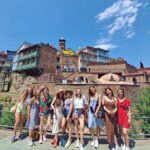
You’ll also pass through Shardeni Street, a small walking street in the Upper Kala district between Vakhtang Gorgasali Square and Sioni Street. Think of it as the “linger zone” in the route: a place where you can feel the old-town vibe even between official stops.
This isn’t meant to swallow your time. It’s there so you can see how Tbilisi’s history and everyday atmosphere share the same space.
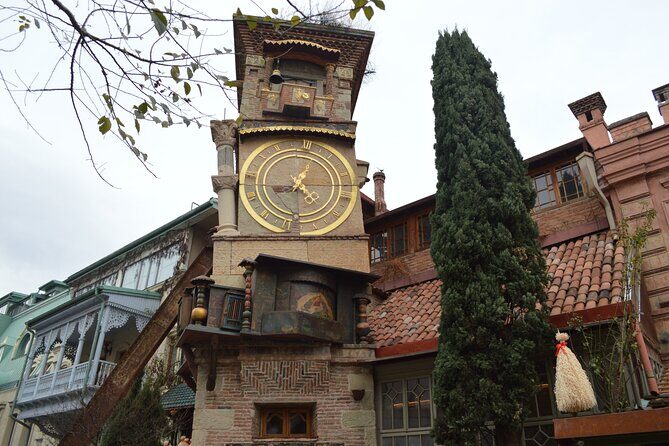
Rezo Gabriadze Marionette Theater and its clock tower
At Rezo Gabriadze Marionette Theater, the highlight isn’t just the building—it’s the clock tower in front and the unique architecture of the area. Marionette theaters might sound whimsical, but this stop helps balance the heavier church and monument themes.
It also gives you a quick cultural angle: Tbilisi doesn’t treat art as a side hobby. It’s part of the city’s visual identity.
Sioni Cathedral Complex and the meaning behind the name
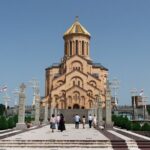
Sioni Cathedral Church sits inside a complex with a fence, the Cathedral of the Assumption, and two bell towers. The name Sioni comes from a sacred mountain in Jerusalem, and it’s noted as a Hebrew word meaning sunny.
That’s the kind of detail a guide can explain without turning it into a lecture. The practical takeaway: this is a real religious site, so it’s not just a photo backdrop.
Tamada Statue: Georgia’s wine culture, in bronze
Near Sioni Cathedral, you’ll see the Tamada Statue. It’s a bronze sculpture of a traditional Georgian toastmaster holding a wine horn (kantsi) in the toasting gesture. The story behind it ties directly to the supra (a Georgian feast) tradition and how central the toastmaster role is to celebrations.
What I like about this stop is that it’s not trying to be deep in a boring way. It’s basically a visual shortcut to understanding a cultural ritual—one that shows up again and again once you start paying attention to food and hospitality in Georgia.
There’s also a note about wine tasting on this tour, with a minimum age of 18 for tasting. If you’re traveling with kids or teens, you’ll still have the sightseeing and cultural explanations, but tasting is restricted by age.
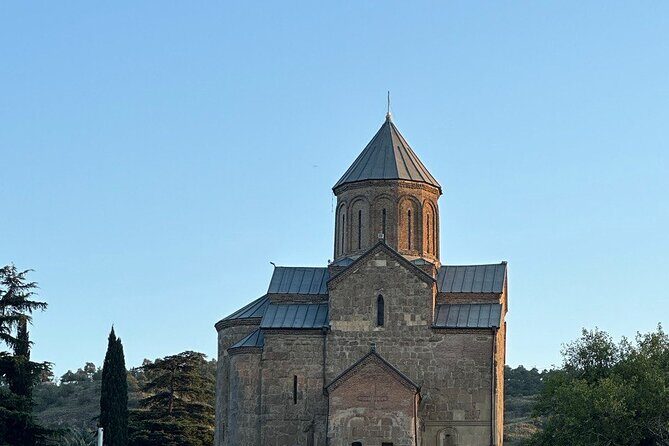
The Metekhi Church area monument by Elguja Amashukeli
You’ll also see a monument created by Georgian artist Elguja Amashukeli, standing in front of Metekhi Church and gazing down toward the river Mtkvari (Kura). Even in a short timeframe, this is a good “listen with your eyes” moment—because statues like this are placed to frame views and reinforce what the city considers important.
Europe Square: EU flags in the wind
Europe Square brings politics into the open, in a way that’s visible within seconds. You’ll see EU flags fluttering, and the tour frames Georgia’s long-running goal of aligning with the EU.
It’s quick, but it’s meaningful. It also helps you understand why so much of modern Georgia feels both forward-looking and still deeply tied to history.
The Great Synagogue of Tbilisi, built 1895–1903
The Great Synagogue is in the old historical district. It was built from 1895 to 1903 by Georgian Jews from Akhaltsihe.
This stop adds a key layer that a lot of “old town” walks skip: the city’s Jewish heritage. It’s also a reminder that Tbilisi’s identity isn’t one-thread religious story—it’s multiple communities shaping the same streets.
Tree of Life (2016) and art made for conversation
Then you’ll reach the Tree of Life monument created in 2016 by David Monavardishvili. The tour encourages you to look for inspiration—maybe tied to daily lifestyle in old Tbilisi.
This is less about facts and more about interpretation. It’s a nice breather after churches and memorials, and it makes you slow down just enough to notice the city’s modern artistic side.
Rike–Narikala Cable Car: earn the views
The route continues with a cable car ride from the Lower Station at Rike-Narikala. The top of the mountain is reached by cable car, and you get breathing-space views over the city.
A quick note: the tour includes the cable car as part of the experience, but the way it’s listed can vary by booking line item. Either way, plan on using the cable car as part of your afternoon.
This is smart for two reasons. One, you save energy for the walking sections. Two, you get a viewpoint that would take much longer to reach on foot.
Kartlis Deda: the Mother of Georgia overlooking everything
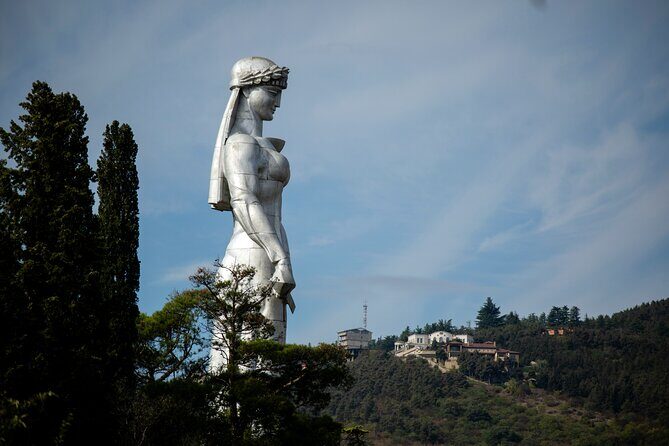
After the cable-car portion, the tour includes Kartlis Deda, the Mother of Georgia monument. It’s described as gazing down over the city, representing Georgian women.
This is the kind of final “big scale” stop that makes the whole walk feel like a full loop—old streets below, symbolic monuments above, and the river threading through it all.
Church rules you should know before you get there
Two practical points matter when the tour hits church interiors.
First, taking pictures inside the church is not allowed. That means you should aim for exterior photos and focus on what the guide shares while you’re inside.
Second, churches have a dress code. It’s not spelled out in detail here, but the expectation is clear: dress appropriately so you don’t get turned away or made uncomfortable. If you’re traveling in light summer clothes, pack something simple to cover up just in case.
These rules don’t ruin the tour. They just change how you should pace yourself. You’ll get a calmer experience inside, and you won’t spend time worrying about whether your outfit is a problem.
Price and value: what $38 buys you in Tbilisi
At $38 per person, this tour is priced like a fair, mid-range city walk. The value comes from a few clear things:
- A professional guide service throughout
- Free admission for the listed main sights
- The cable car portion as part of the overall experience
What’s not included is lunch. The tour plan points to a traditional Georgian bakery stop where lunch can cost around 3–5 Gel (about 2–3 euros). That’s good to know because it keeps your total day budget predictable. If you’d rather eat elsewhere, you’re not locked into a specific restaurant.
Also, the tour can include group discounts, and it offers a mobile ticket. Those are small details, but they matter when you’re trying to keep logistics simple during a vacation day.
Who this tour fits best

This is a strong fit if you want:
- A compact route through Old Town highlights
- Cultural explanations tied to real places (not just photo stops)
- A day plan that ends in a central spot, Freedom Square
Most people can participate, and service animals are allowed. The tour is also near public transportation, which makes it easier to connect this walk with other parts of your Tbilisi stay.
If you hate walking, this may be harder. You are on foot through multiple streets and viewpoints, and the time on the move is part of the experience.
After the walk: what to do near Freedom Square
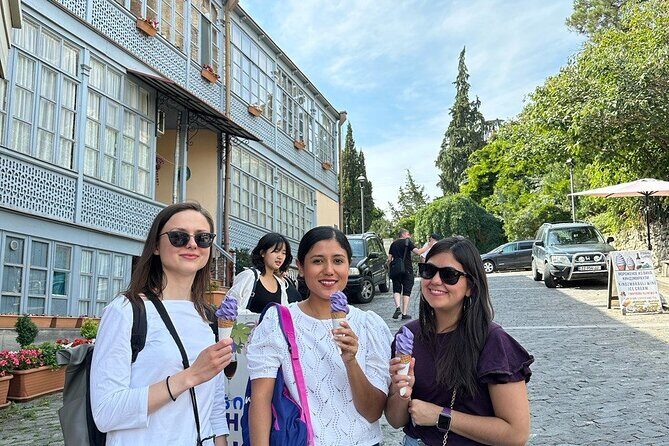
Ending at Freedom Square is convenient because it’s one of those hubs where you can keep going without feeling stranded. Use this tour as your foundation day: once you’ve seen the churches, the river crossings, and the big monuments, you’ll have context for other neighborhoods you might visit later.
If you still have energy, look for a meal that follows the day’s themes: Georgian hospitality, bread-and-dairy comfort food, and the kinds of feasts where toast culture matters.
Should you book this Tbilisi Old Town tour?
I’d book it if you want an efficient way to get oriented in Tbilisi and understand how the city thinks—religion, art, politics, and everyday rituals all in one route. The small group size, free-entry sights, and the guide-driven storytelling make it feel like you’re spending money on clarity, not just time on streets.
I’d skip or rethink it if you’re sensitive to walking duration or you’re not prepared for church dress-code expectations and the no-photo rule inside.
If you do book, do one thing that makes the tour smoother: wear comfortable shoes. In old cities, that’s not a suggestion—it’s survival.
FAQ
How long is the Tbilisi Old Town Walking Tour?
The tour runs for about 3 hours and 15 minutes, including travel time between stops.
What does the tour cost and what’s included?
The price is $38 per person. Included are a professional guide service and the cable car portion of the experience.
Are there any sights with admission fees?
The tour notes that admission tickets for the listed stops are free. Lunch is not included.
Is lunch included in the tour?
No. The plan includes an optional stop for lunch at a traditional Georgian bakery, where lunch can cost around 3–5 Gel (about 2–3 euros).
Does the tour have rules for churches and photos?
Yes. Taking pictures inside the church is not allowed, and churches have a dress code.
Is the tour good for kids, and is there an age limit for wine tasting?
Most travelers can participate, and service animals are allowed. There is a minimum age of 18 for wine tasting.