REVIEW · TBILISI
7-day hiking expedition to Tusheti through the Atsunta pass
Book on Viator →Operated by ExpedBuro · Bookable on Viator
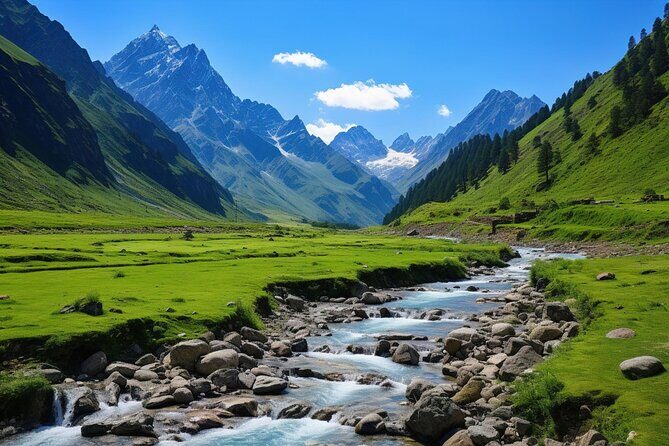
A remote hike through real mountain country. The best part is Tusheti at full distance from daily life, with two days where you will have no mobile communications and no villages in sight. You also get two nights sleeping in a tent, so this feels like an expedition, not a walk with a souvenir shop at the end.
Two things I really like about how this trip is run: the logistics are built for the region, and your load is managed. You’re moved in reliable vehicles (4×4 jeeps), you get horses to carry your stuff, and meals are handled with healthy, practical food along the way.
One consideration: you need moderate fitness, and at least one day is hard. The Atsunta Pass crossing at 3,431m plus a long 20km day can slow your pace if you’re used to easy trekking only.
In This Review
- Key things to know before you go
- Entering Tusheti the hard way: from Tbilisi to Shatili
- Road ends at Ardoti: border checks, Mutso ruins, and tent night prep
- Atsunta Pass (3,431m): the difficult day that splits regions
- Following the Pirikiti Alazani river toward Girevi
- Dartlo and Kvavlo: a lighter day that ends in stone tradition
- Omalo base camp and horse riding to Shenako and Diklo
- Leaving Tusheti: Alvani, Abano Pass, and Kakheti lunch
- Price and value: what $1,190 buys in the remote mountains
- How fit do you need to be, honestly?
- What’s it like not having signal for two days?
- Equipment and packing: you bring the right things, not everything
- Should you book this Atsunta Pass Tusheti trek?
- FAQ
- How long is the Tusheti hiking expedition through Atsunta Pass?
- What does the price include for $1,190 per person?
- Do I need to bring camping gear?
- Is pickup included?
- What about mobile phone reception and villages?
- Are passports required?
- Is there a difficult day?
- How big are the groups?
- Is alcohol included?
- What fitness level do I need?
- What is the cancellation timeline for a full refund?
Key things to know before you go
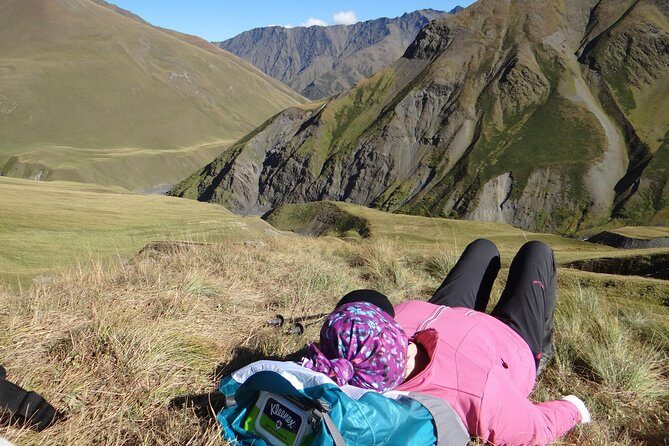
- Atsunta Pass at 3,431m is the big “earned” moment, and the day is intentionally challenging.
- Two communication-light days mean you should plan for downtime and offline hiking.
- You don’t sleep rough alone: tents, pads, and sleeping bags are provided, plus organized camp setup.
- Horses carry the bulk so you can hike instead of hauling.
- Small group size (max 10) keeps the pace workable and the team easier to manage.
- Stone villages and history-by-stepping-stones: medieval Shatili and village stops like Shenako and Diklo.
Entering Tusheti the hard way: from Tbilisi to Shatili
You start in Tbilisi with a pickup at 9:00 AM from the office. The drive is about five hours and covers around 150 km, but it’s not a straight shot. You’ll stop at scenic points along the way, including Bear Cross pass (2,676m), where you’ll have a picnic.
Then you arrive in Shatili, a medieval village with stone architecture that feels built for defense. After you get your room at the guest house, you’ll have time to wander on foot—slow enough to actually look at the details and fast enough to still catch good light for photos. In the evening, dinner is prepared by the guest house owners, which is a nice break from packaged tour food and a chance to eat what locals cook at home.
This is also a smart first day. You’re not grinding uphill for hours right away. You’re easing into the trip with travel, a mountain pass moment, and a real sense of place before you go remote.
You can also read our reviews of more hiking tours in Tbilisi
Road ends at Ardoti: border checks, Mutso ruins, and tent night prep
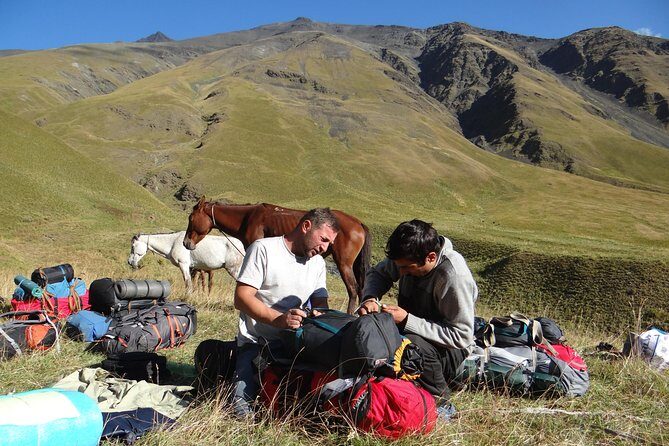
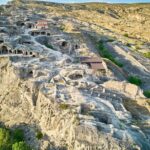
After breakfast, you switch to jeeps for the drive toward Ardoti, where the road ends. This is one of those Georgia details you’ll appreciate: the infrastructure doesn’t keep going, so the trip does. On the way, you stop in Anatori and also at the medieval abandoned city of Mutso.
Next comes a very practical moment: you’ll present passports to Georgian border guards, and the formalities take about 20 minutes. It’s quick, but it’s not optional. If you’re the kind of person who likes to keep things moving, this part still deserves your attention—keep your passport accessible.
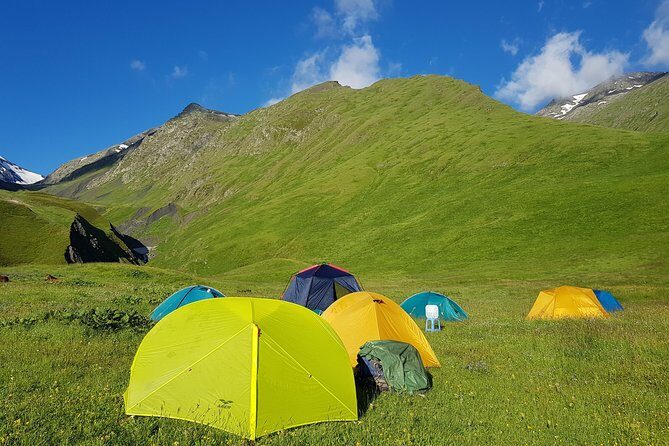
After a picnic, you begin trekking. The hike is about four hours, and when you reach camp you set up tents and rest before dinner. This is also where the expedition rhythm kicks in: you’re moving into a zone where the scenery is the point, not the next restaurant. And because this area is far from everyday infrastructure, this night is part of the “real outdoors” feeling rather than a standard hotel stop.
Atsunta Pass (3,431m): the difficult day that splits regions
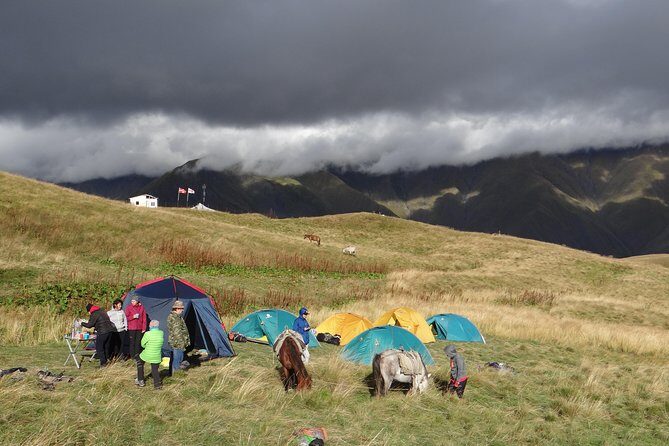
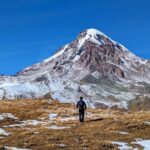
The third day is built around a single big goal: crossing Atsunta Pass (3,431m). The pass divides Khevsureti and Tusheti, so you’re not just climbing high—you’re crossing into a different mountain world.
This is described as the difficult day, and you should treat it that way. High passes ask more of you even if your legs feel okay at the start, because the air thins and your body keeps working. The route also has that expedition feeling: no rushing, no distractions, just your pace and the terrain.
If you’re nervous about the hard day, here’s how I’d think about it: the whole week is shaped so you can reach this moment with the team already set up. You have gear, you have camp logistics managed, and you have the safety-minded structure of a small group and planned transfers. Your job is to keep your pace steady and save energy for the pass itself.
Following the Pirikiti Alazani river toward Girevi
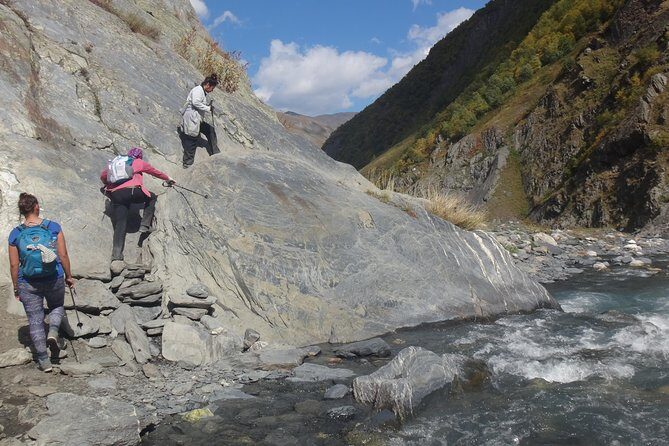
Day four shifts gears. The trail slowly goes down along the Pirikiti Alazani river, and while the route is described as simple, it’s still about 20 km. That means you’ll likely spend more time on your feet than you expect, even if the terrain doesn’t feel like a technical climb.
Along the way you pass shepherd’s houses, which gives the walk a lived-in texture. You’re not just walking through empty space; you’re moving through a working mountain rhythm. You also visit an abandoned stone city: Chontio. Stops like this are valuable because they break up the long hours and give you something tangible to look at besides your footing.
By the end of the day you reach Girevi, a village with people and guest houses. This is the “back to civilization” moment on the trek. You get a proper village night, which matters when you’ve been in tent rhythm and remote hiking mode for days already.
Dartlo and Kvavlo: a lighter day that ends in stone tradition
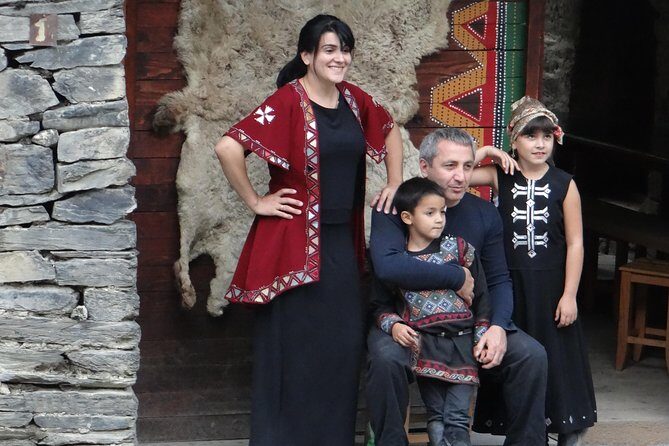
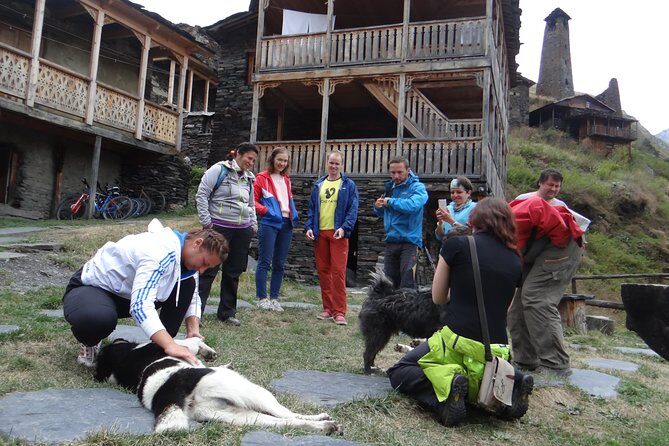
Day five starts easier. It’s about four hours along a jeep road, so you’re not grinding the whole day on foot. By lunchtime you arrive in Dartlo, a place considered included in the World Heritage List. Even if you don’t go into museum-mode, the value here is that the village layout and stone buildings are part of the landscape you’re walking into.
After lunch, you hike uphill to Kvavlo village. Then you sleep in a stone house built according to local traditions. That swap—from tents to a local stone structure—is a welcome reset, especially after a week that’s mostly about stamina.
One practical note: these “easy” days still come after a high-energy start. So don’t assume you can plan to lounge all day. Instead, think of it as a chance to regain control of your pace and enjoy the villages more slowly.
A few more Tbilisi tours and experiences worth a look
Omalo base camp and horse riding to Shenako and Diklo
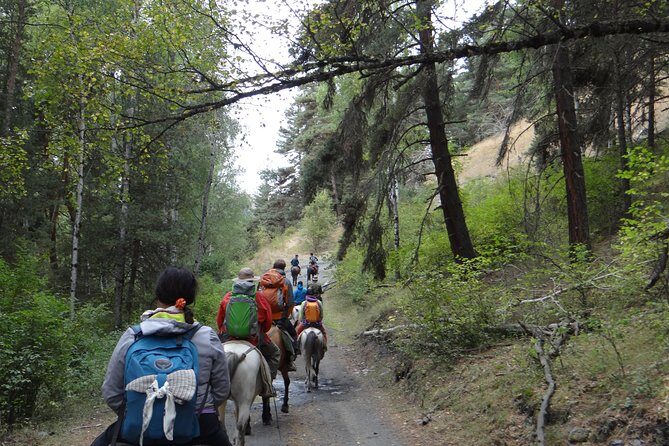
Day six returns to Tusheti’s core vibe by going beyond pure hiking. You drive to Omalo, described as the largest village of Tusheti. You leave your stuff at the guest house, then you head out for horse riding.
From there you visit Shenako and Diklo, and then ride back to Omalo for dinner. This is a smart way to experience the area. It covers distances you might not want to hike on an already packed week, and it gives you a different view angle—both literally and in how the valleys feel when you’re not walking every step.
This day also helps balance the overall trip. After the hard pass day and long river day, horse-assisted exploring gives you variety without turning the trip into a sightseeing schedule. You still do real outdoors travel, but you’re not punishing yourself every single day.
Leaving Tusheti: Alvani, Abano Pass, and Kakheti lunch
On the final day, you start with travel out. In Alvani, you switch from jeeps to a comfortable bus. Then you head to one of the wineries in Kakheti for a festive lunch.
After that you drive back toward Tbilisi, including 60 km of unpaved road. The big road moment is crossing Abano Pass, described as the highest automobile pass in Europe. Even if you’re tired, this is the kind of final-day detail that makes the whole week feel connected: you’re leaving high mountain trails by way of high mountain roads.
You’ll arrive in Tbilisi around 5:00 PM, so the day doesn’t stretch into the middle of the night. It’s a clean finish, and you’re back at the pace where you can sleep in a bed and actually hear yourself think.
Price and value: what $1,190 buys in the remote mountains
At $1,190 per person, this is not a budget day hike. But in a place like Tusheti, remote logistics cost real money, and this price covers the stuff that usually ruins cheap tours: transportation into rough areas, camp systems, and food planning.
What you get that matters for value:
- 4×4 transfers all the way through the remote sections
- Horses for stuff carrying, which reduces the load you personally carry
- Tent, sleeping pad, and sleeping bag, plus a waterproof duffel bag
- Meals included: breakfast, lunch, and dinner throughout the week (plus snacks)
- Small group size, up to 10 people, which helps control pace and safety
What you don’t get:
- Beer, wine, and chacha at guest houses
In other words, the cost is mostly paying for organization you can’t DIY safely or comfortably once you’re in the mountains for a multi-day hike. If you want the freedom of independent travel, this isn’t that style. If you want serious mountain time with the hard parts handled, it’s a strong deal.
How fit do you need to be, honestly?
The trip asks for moderate physical fitness, and the week’s structure supports that. You do trekking days with meaningful distance (like the ~20 km river day) and a clear high-stakes climb at Atsunta Pass.
If your fitness looks like one 5–8 km hike a week, you’ll want to prepare. If you can do 10–15 km days on uneven terrain and you’re comfortable climbing steadily, you’ll likely enjoy the rhythm more. Also, remember that altitude can change how hard everything feels, even when the trail isn’t dramatic every minute.
What’s it like not having signal for two days?
One of the most interesting parts is the stated reality: two days with no mobile communications and no villages. That’s not an add-on. It changes how you experience the hike.
You stop checking maps and messages, and you start listening to the day. You pay attention to weather, water, and the team’s timing. If you like calm and simplicity, you’ll love it. If you rely on constant connection for work or anxiety management, plan ahead so you can handle the offline stretch.
Also, with fewer villages, you should treat the included snacks and planned meals like part of your training plan. Eat what’s offered and drink regularly. High hiking weeks feel much easier when you don’t accidentally under-fuel.
Equipment and packing: you bring the right things, not everything
You’re provided with key gear: a tent, sleeping pad, sleeping bag, and a waterproof duffel bag. That’s a big deal because it means you don’t have to figure out how to transport camping gear to Georgia.
What you should still plan to bring (based on how trekking weeks work, not on extra promises):
- hiking shoes or boots with good grip
- a day pack for water and snacks
- a rain layer and warm layer for higher altitude and early mornings
- layers you can manage if the weather shifts
- your passport for the border formalities day
Because horses carry some of your load, you’ll have a lighter hiking experience than you might expect. Still, I’d pack like you’re hiking for real, because your feet and shoulders notice everything after a few days.
Should you book this Atsunta Pass Tusheti trek?
Book it if you want a genuine mountain expedition feel without giving up safety and planning. This tour makes a clear trade: fewer creature comforts, more time outdoors, and a schedule built around high passes, stone villages, and structured camp nights.
Skip it if you want frequent comforts, easy walking only, or an always-connected phone life. The difficult pass day is real, the distances add up, and the two remote days mean you’ll be living in the mountains, not around them.
If you’re the type who likes getting to places that still feel far away, you’ll likely feel rewarded before the week ends—especially once you’ve made it over Atsunta Pass and then spent time in Tusheti’s villages like Omalo.
FAQ
How long is the Tusheti hiking expedition through Atsunta Pass?
It lasts about 7 days.
What does the price include for $1,190 per person?
It includes all transfers (4×4 jeeps), horses for carrying your stuff, food and drinks (breakfast, lunch, dinner, snacks), and equipment like a waterproof duffel bag, tent, sleeping pad, and sleeping bag.
Do I need to bring camping gear?
No. The tour provides the tent, sleeping pad, sleeping bag, and a waterproof duffel bag.
Is pickup included?
Yes, pickup is offered from the tour office at 9:00 AM.
What about mobile phone reception and villages?
For two days, there is no mobile communications and no villages.
Are passports required?
Yes. You will present your passport to border guards during the trek day near the border formalities.
Is there a difficult day?
Yes. Day three includes the Atsunta Pass crossing at 3,431m and is described as a difficult day.
How big are the groups?
The maximum group size is 10 travelers.
Is alcohol included?
Beer, wine, and chacha at guesthouses are not included.
What fitness level do I need?
You should have moderate physical fitness.
What is the cancellation timeline for a full refund?
You can cancel up to 6 days in advance for a full refund.