REVIEW · TBILISI
Georgian Essence: Cultural Immersion in a week
Book on Viator →Operated by Wonderful Travel · Bookable on Viator
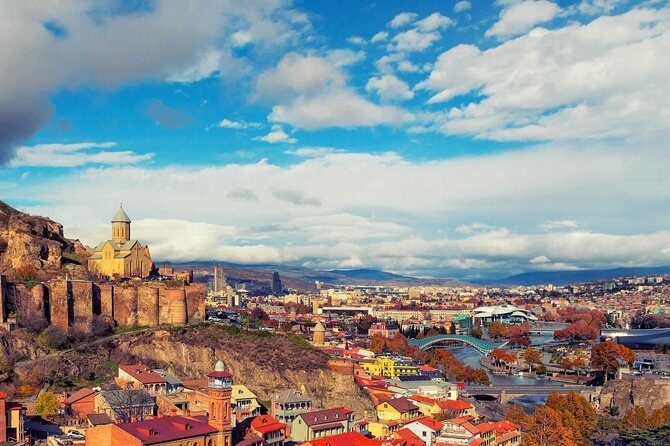
Georgia moves fast with the right local guide. This private 8-day trip across eastern Georgia to the Black Sea mixes faith sites, cliff cities, and wine country with a pacing that lets you slow down where it matters.
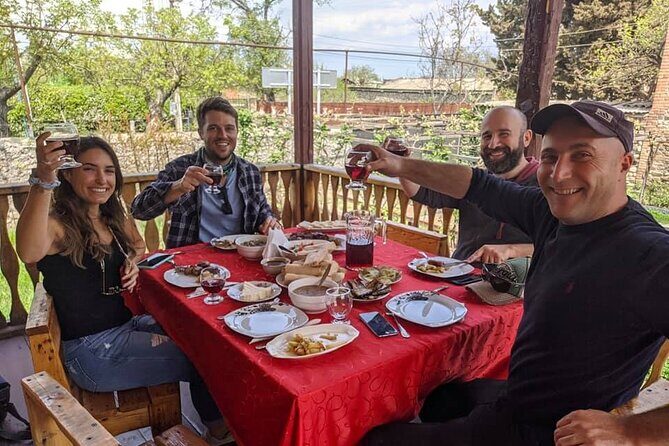
I love the way the plan ties big sights to everyday Georgian food moments, from bread and cheese stops to a family cooking lunch in Mtskheta. And I like that it’s a true private setup, with your own transportation and a guide who can adjust when the road or the day needs it.
The biggest standout is the people. Multiple reviews for this tour name Irakli as a warm, supportive guide who keeps things easy, suggests smart photo stops, and shares context about Georgian history, architecture, geography, food, wine, and even politics. If you want a trip where someone helps you connect the dots, this is that style.
One possible drawback: the itinerary is packed and involves lots of driving days plus walking at monasteries and cave towns. Also, the operator notes the tour needs good weather, so you may need flexibility if conditions aren’t great.
In This Review
- Key highlights that make this trip worth your time
- A real private tour means your pace is the product
- Price and what $2,200 buys you in Georgia
- Day 1: David Gareja to Signagi’s love-at-first-view moments
- Day 2: Kakheti craftsmanship—qvevri, Kvetera, and Shatili fortress life
- Day 3: Ananuri and the road to Kazbegi’s iconic church view
- Day 4: Mtskheta’s churches, Gori’s Stalin Museum, and Uplistsikhe’s cave streets
- Day 5: Dashbashi Canyon, Vardzia’s cave monastery, and Rabati’s mix of empires
- Day 6: Goderdzi Pass to Makhuntseti Waterwall, then Batumi’s Black Sea energy
- Day 7: Batumi nature escapes, Martvili by boat, and Prometheus underground
- Day 8: Gelati, Motsameta, Katskhi, Chiatura rope roads, and Mgvimevi monastery
- Where this tour really shines (and who should choose it)
- Book it or pass? My take on Georgian Essence
- FAQ
- How long is the Georgian Essence tour?
- Where does the tour take place?
- Is this a private tour?
- Is pickup offered?
- Do you use mobile tickets?
- Are entrance tickets included?
- Does the tour require good weather?
- What is the cancellation window?
- Will I get confirmation after booking?
Key highlights that make this trip worth your time
- Irakli as guide: reviews praise his friendly, helpful manner and on-the-ground know-how.
- Kakheti food stops: shotis puri and aged cheese in Badiauri plus traditional winemaking touches.
- Major spiritual sites: David Gareja, Bodbe (St. Nino), Jvari, and the candle-lighting vibe at Motsameta.
- Cave and cliff architecture: Vardzia, Uplistsikhe, and the rock-cut feel of the whole region.
- Black Sea switch in Batumi: combine city strolls with nature stops and underground sights.
- Chiatura rope roads: a Soviet-era-style cable system that’s still running and still fun.
A real private tour means your pace is the product
This kind of trip works because you’re not crammed into a rigid bus schedule. The day-to-day rhythm is built around your group, with private transportation and pickup offered. That matters in Georgia, where drive times can stretch and where the best photo viewpoints are often just off the main road.
I also like that this is set up as a private group experience, not a “everyone meet at the same time” kind of tour. Your guide can steer the route depending on weather, daylight, or simple logistics, and that turns long travel days into manageable ones.
In practice, you’ll feel this in the small choices: stopping for the right angle at a monastery overlook, adjusting how long you stay inside a church, or swapping the order of short walks when the hills get too steep for comfort. If you enjoy sites more when you can breathe and look around, private pacing is a big deal.
A few more Tbilisi tours and experiences worth a look
Price and what $2,200 buys you in Georgia
At $2,200 per person for an ~8-day private tour, this is not a shoestring option. You’re paying for a bundle: guide time, private driver/vehicle, hand-picked hotel stays, and meals that include breakfast and lunches with a Georgian focus.
Here’s how I’d judge value. You’re getting:
- A long route that covers multiple regions, not just one area around Tbilisi.
- A guide who helps interpret what you’re seeing, from church history to fortress architecture to wine culture.
- A mix of included and free-entry stops, so the cost isn’t just “pay once and hope.”
What you should watch: with private tours, the price only feels fair if you’ll use the flexibility. If you’d rather follow a simple fixed circuit at your own pace, you might do better with independent travel. But if you want fewer headaches and someone to guide the story, this pricing can make sense fast—especially with a group that wants comfort, not stress.
Day 1: David Gareja to Signagi’s love-at-first-view moments
Your day kicks off at David Gareja Monastery, a sprawling rock-hewn complex on the Georgia–Azerbaijan border area. What makes it special isn’t just age (it traces back to the 6th century). It’s the setting: monasteries, churches, and caves cut into rugged terrain, with frescoes and an atmosphere that feels unusually quiet.
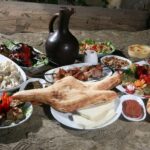
After that, you head to Badiauri for the kind of food stop I love on tours because it’s specific and real: shotis puri baked in clay ovens and paired with aged cheese. You don’t have to be a “foodie” to enjoy this—smelling the bread and tasting the cheese is simply Georgian.
Then it’s off to Bodbe Monastery of St. Nino, one of the country’s key pilgrimage sites. You’ll feel the slower mood here, because the place is about reflection and tradition, not just sightseeing.
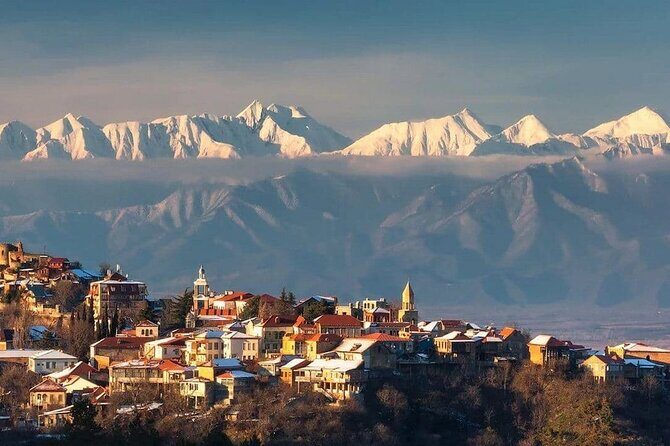
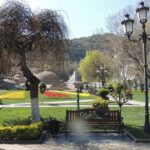
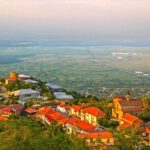
Finally, the day turns romantic in Signagi, the hill town sometimes called the City of Love. You get old-style architecture with balconies and cobblestone streets, plus a big view over the Alazani Valley and the Caucasus Mountains. If you like walking without a crowd pushing you, Signagi fits.
Small consideration: this is a lot of “type of place” in one day—desert monastery, village food, pilgrimage site, then hill town. It’s not too much if you enjoy variety, but pace matters. Wear shoes you can trust.
Day 2: Kakheti craftsmanship—qvevri, Kvetera, and Shatili fortress life
Day 2 is where the trip starts to lean into craft and medieval mountain life.
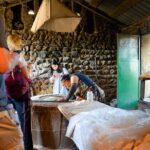
First, you’ll visit a qvevri maker at Vardisubani. This is more than a quick photo stop. Qvevri are the clay vessels used for traditional Georgian winemaking, and seeing how artisans shape the clay gives you a “how it works” feeling. It’s also a reminder that wine culture in Georgia isn’t only about grapes—it’s about tools, craft, and patience.
Next up is Kvetera Fortress, with its church. Sites like this are a good reminder that Georgian church architecture often mixes careful stone detail with a simple, spiritual mood.
Then you move into Shatili, a UNESCO-listed fortress village in Khevsureti. Shatili feels dramatic: defensive towers, stone houses pressed into a rugged setting, and a sense of isolation that explains why these fortresses were built in the first place. The visit is worth it if you like history that still looks physically tough and real.
A practical note: mountain villages mean uneven walking and steps. If you’re traveling with knee issues, plan for slower movement and take breaks.
Day 3: Ananuri and the road to Kazbegi’s iconic church view
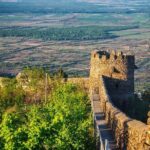
Day 3 begins at Ananuri Fortified Castle Ensemble on the Aragvi River Valley. It’s an architectural set-piece: fortress walls, churches, and views that make you want to climb for one more angle. The mix of influences also helps you understand how Georgia sat at crossroads for centuries.
Then comes the Russian Georgian Friendship Monument, a colorful mosaic memorial in the mountains built in the 1980s. It’s not everyone’s favorite stop, but it does add a layer: how politics and identity get expressed through public art and monumental design.
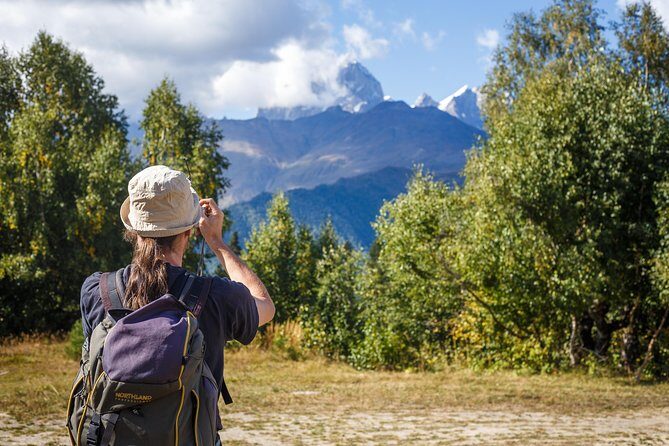
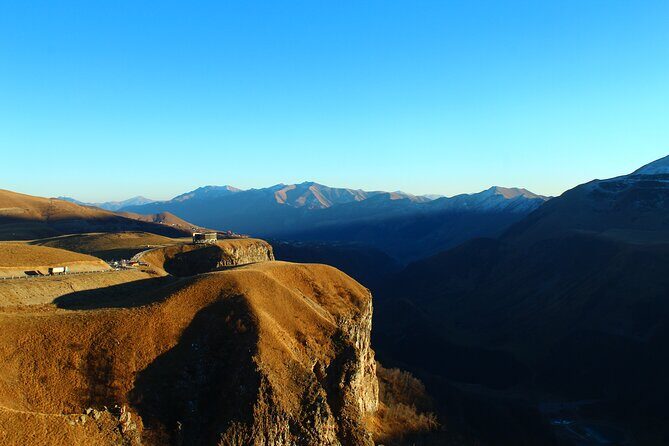
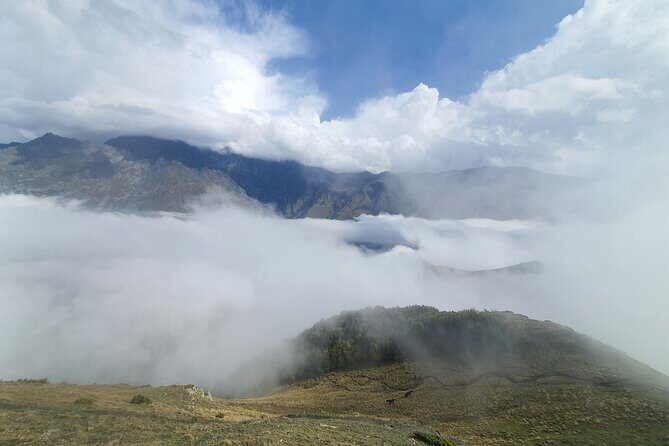
The day ends with the photo you came for: Gergeti Trinity Church above Kazbegi region. The hike is short but steep depending on where you park, and the payoff is the setting—big sky, hard mountain edges, and a church perched in that unmistakable way Georgia does best.
If weather turns cloudy, the views may be softer. Still, the church itself is one of those places that reads well even without perfect light.


Day 4: Mtskheta’s churches, Gori’s Stalin Museum, and Uplistsikhe’s cave streets
Day 4 is a history day with multiple layers.
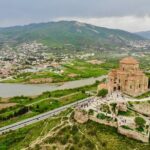
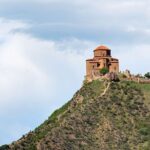
You start at Jvari Church near Mtskheta, a UNESCO World Heritage Site perched on a hill. The design is simple, but the views give it power. You’ll also learn the traditional association with Saint Nino, which helps connect the church to the bigger Christian story in Georgia.
Then it’s to Gori’s Stalin Museum—Joseph Stalin’s birthplace house—where you’ll see personal items, documents, and photographs. This is heavy subject matter, but it’s also a useful time capsule for understanding Georgia’s Soviet-era past and how that era is remembered.
After that, you head to Uplistsikhe Cave Town, an ancient rock-hewn settlement with cave dwellings and cut-stone structures. Walking through the site feels like moving through old street logic—stairs, levels, and carved spaces that show how people adapted to rock.
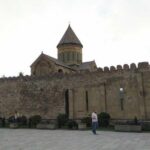
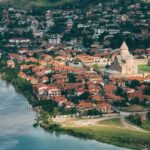
Back to Mtskheta for Svetitskhoveli Cathedral, another major spiritual landmark with medieval architecture and intense symbolism. It’s the kind of place where the building and the legend are both part of the experience.
Finally, you’ll get the best kind of “hands-on” payoff: a cooking class with a local family in Mtskheta. You’ll make classic Georgian dishes like khinkali and then eat the lunch you cooked. This is exactly the kind of experience that makes the day feel more than just “see, move, repeat.”
Day 5: Dashbashi Canyon, Vardzia’s cave monastery, and Rabati’s mix of empires
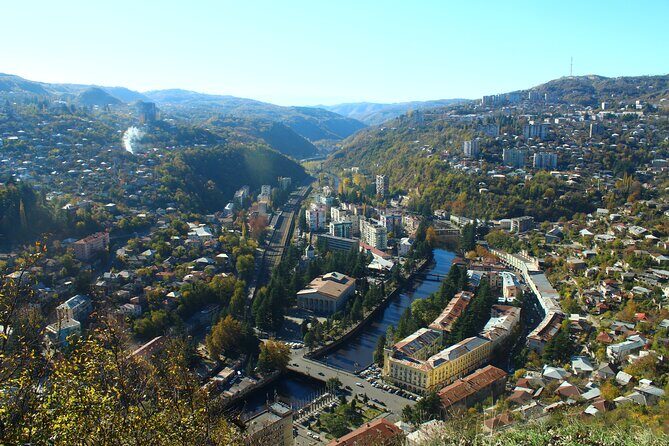
Day 5 starts outdoors at Dashbashi Canyon, highlighted by the Diamond Bridge. It’s a short visit compared to the bigger sites, but it’s memorable because the walk over the canyon makes your brain notice scale fast.
Then you shift to UNESCO territory: Vardzia, a 12th-century cave monastery carved into a cliff. You’ll move through chambers, chapels, and frescoed spaces in a labyrinth feel. It’s one of those places where you keep thinking: how did they build this, and how did people live here while staying connected to faith?
Next comes Rabati Castle in Akhaltsikhe. This fortress has a layered architectural story, with medieval, Ottoman, and European influences showing up in different corners. You can also see multiple religious spaces inside the complex, which helps explain why Georgia’s borderlands history looks so mixed.
Consideration: this day is a blend of physical walking and mental history. If you’re tired from driving, slow down at Vardzia and don’t rush the smaller carved details.
Day 6: Goderdzi Pass to Makhuntseti Waterwall, then Batumi’s Black Sea energy
Day 6 is where the route changes gears.
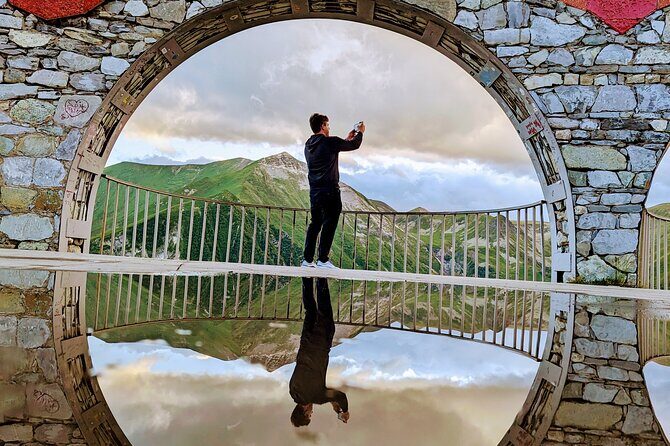
First is Goderdzi Pass, at around 2,025 meters. The payoff is scenic mountain panorama—forests, peaks, valleys—plus the simple fact that you’re high up, breathing different air. It’s also a good stop for short walks and photos if the weather cooperates.
Then you head to Makhuntseti Waterwall and King Tamar’s Bridge in Adjara. This is a nature + history combo stop, with mossy rocky water and an old bridge that lets you slow down.
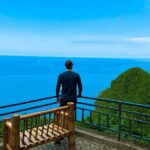
The day ends in Batumi, Georgia’s Black Sea city. You’ll see a modern skyline mixed with old-town streets, plus the famous Batumi Boulevard. Batumi is a change in pace: more promenade energy, more café stops, and a different kind of city sightseeing than the mountain-and-church circuit.
Practical tip: if you come to Batumi expecting a beach day, check the plan balance. The itinerary here includes time for a city walk, but don’t assume you’re getting a full free beach block.
Day 7: Batumi nature escapes, Martvili by boat, and Prometheus underground
Day 7 starts with the calmer side of Batumi at Shekvetili Dendrological Park. It’s not a museum style stop; it’s a shaded walk through curated botanical collections. If you want your pace slowed after city time, this works well.
Then it’s off to Martvili Canyon, where the highlight is the turquoise river feel and a boat ride through the gorges. Towers of rock, waterfall drops, and a green intensity make it feel like you left the map behind.
Next is Prometheus Cave in the Imereti region. This is Georgia’s underground show: stalactites, stalagmites, underground rivers, and lighting that changes the way the rock reads. It’s also a good stop when you want something dramatic but not too weather-dependent compared to open-air hikes.
Then you wrap up with Bagrati Cathedral in Kutaisi. The cathedral’s condition has changed over time with partial destruction and restoration, but the site still brings you back to Georgian church architecture and the hilltop views around Kutaisi.
Day 8: Gelati, Motsameta, Katskhi, Chiatura rope roads, and Mgvimevi monastery
Your last day in the region is built around spiritual sites plus a truly unusual transport moment.
Start at Gelati Monastery, founded in the 12th century by King David the Builder. You’ll see the church and fresco work, plus surrounding complex areas that feel like a learning and religious center, not just a one-room stop.
Then it’s to Motsameta Monastery, perched above the countryside with views down toward the Rioni River. This is the candle-lighting kind of stop. It’s quieter, with a direct sense of devotion tied to the story of martyrdom.
Next: Katskhi Pillar. A 40-meter limestone monolith with a small monastery on top, accessed by a narrow ladder. The climb is not for everyone, but the concept is unforgettable: nature doing the heavy lifting, faith adding the final layer. Even if you only do part of the experience, you’ll understand why people come.
Then you take a break from religion and history to watch engineering. Chiatura is a mining town known for its cable car system—the rope roads—that hang over valleys and cliffs. You can ride, walk, and explore the town’s Soviet-era feel, including a museum focused on cable cars.
Finally, you end at Mgvimevi Monastery, a remote cliffside complex carved into limestone. It’s a fitting closer because it brings you back to the rock-hewn theme you saw at David Gareja and Uplistsikhe, but with its own quiet, tucked-away mood.
Where this tour really shines (and who should choose it)
This trip works best if you want:
- A single guide to connect the story across regions, not just a list of stops.
- Food experiences tied to place, like Badiauri and the Mtskheta family lunch.
- Big architecture and rock-carved history, especially if cave monasteries and fortified sites are your thing.
- Comfort-level travel with hotels and meals handled for you.
Who might want a different style: if you hate early mornings, long car days, or you need a very relaxed pacing, this itinerary can feel heavy. The route includes many standing climbs, steps, and uneven ground—especially around cave towns and monasteries.
Book it or pass? My take on Georgian Essence
I’d recommend this tour if you value guidance and want a “see the real Georgia, not just the highlights” route. The repeated praise for Irakli matters here. When a guide is attentive, calm, and good at explaining what you’re seeing, a busy plan becomes enjoyable instead of exhausting.
I’d hesitate if your budget is tight or if you prefer total independence. For independent travelers, it’s possible to plan a route and travel on your own, but you’ll give up the convenience of private transport, meal handling, and interpretation that makes these sites feel connected.
If you do book, pack sensible shoes, keep your day flexible, and accept that some days are about motion as much as sightseeing. Done right, this tour gives you a Georgia view you can’t get from just one city.
FAQ
How long is the Georgian Essence tour?
It runs for about 8 days.
Where does the tour take place?
The tour is based in Georgia, starting from Tbilisi.
Is this a private tour?
Yes. It’s private, and only your group participates.
Is pickup offered?
Pickup is offered.
Do you use mobile tickets?
Yes, the tour uses a mobile ticket.
Are entrance tickets included?
Admission tickets are included for several stops, while some stops are listed as free entry.
Does the tour require good weather?
Yes. The experience requires good weather, and the operator offers a different date or a full refund if it’s canceled due to poor weather.
What is the cancellation window?
You can cancel up to 24 hours in advance for a full refund.
Will I get confirmation after booking?
Confirmation is received at the time of booking.