REVIEW · TBILISI
Private 7-Day Tours & Transfers from Tbilisi to Top Georgia Spots
Book on Viator →Operated by Visit Georgia with George · Bookable on Viator
Seven days, one plan.
This private tour strings together Tbilisi, Kakheti, Kazbegi, Borjomi, and western Georgia with zero guesswork on logistics.
I love the door-to-door airport transfers, including private pickup and a departure ride back to Shota Rustaveli Tbilisi International Airport. I also love the way the days mix major sights with real local culture, like Kakheti’s traditional bread making and a wine tasting stop in Kakheti’s Khareba tunnel cellar.
One possible drawback: the touring days can run 9 to 18 hours, so you need to be okay with a lot of time on the road and moving from place to place.
In This Review
- Key highlights you’ll care about
- How This Private Tour Runs (and Why That Matters)
- Day 1 Tbilisi Highlights: Peace Bridge to Sulfur Baths
- Day 2 Kakheti Full-Day: Bread Making, Bodbe, Signaghi, and Khareba Wine
- Day 3 Kazbegi Full Day: Jinvali, Ananuri, Aragvi, Friendship Monument, and Gergeti
- Day 4 Mtskheta and Gori: Jvari Monastery, Uplistsikhe Cave Town, and Old Capital Time
- Day 5 Borjomi National Park: Cable Car, Waterfall, River, and Mineral Water
- Day 6 Kutaisi and Tskaltubo: Prometheus Cave, Okatse Canyon, and Kinchkha Falls
- Day 7 Gelati and Bagrati: UNESCO Monastery Pairing and Return to Tbilisi
- Price and Value: What $700 Covers (and What You’ll Add)
- Practical Tips for a Smoother 7 Days
- Who This Tour Suits Best
- FAQ
- What’s included in the $700 per person price?
- What’s not included?
- Do I need to book a hotel during the trip?
- Are airport transfers included?
- Where is the meeting point?
- Is this a private tour or shared with others?
- How long is the tour each day?
- Are entrance tickets covered?
- Can I cancel for a refund?
- Should You Book This Private Georgia Tour?
Key highlights you’ll care about
- Private car and guide for the whole trip, not a packed group bus
- Airport arrival and departure transfers so your first and last day feel easy
- Kakheti stops that go beyond scenery (traditional bread making plus the Khareba tunnel winery)
- Kazbegi views with classic photo points like Ananuri and Gergeti Trinity Church
- Okatse Canyon day includes 4×4 support, which matters on this type of route
- One required overnight in Kutaisi on Day 6 so the west-Gorgia sights flow better
How This Private Tour Runs (and Why That Matters)
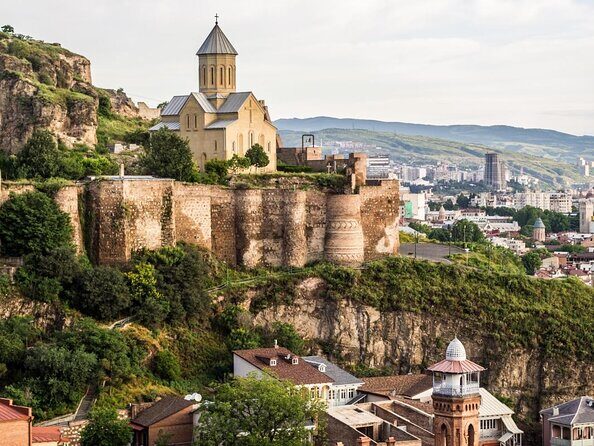
This is a private 7-day route based out of Tbilisi, with one night in Kutaisi. What you’re really buying is organization: a comfortable car, a professional driver and guide, and transfers that remove the awkward parts—especially on arrival and departure.
You’ll see a lot of Georgia’s big-name places in a short time, but you’re not stuck figuring out trains, taxis, or timing between sights. The itinerary is designed like a sequence: one region per day, with logical stops that build on each other. That matters because Georgia has big distances between highlights, and without a plan, you can lose half a day just getting from point A to point B.
Also, the pricing structure is pretty straightforward. You pay per person, and the tour covers the private transport costs (petrol, parking), the guide/driver team, and the transfers. Food, drinks, entrance tickets, and hotels are not included—so you can keep control over what you eat and where you stay.
Finally, from the guest feedback themes, one thing comes through again and again: people appreciate feeling safe, well looked after, and guided end to end. You may meet guides like Beso or George (including George C.), and drivers such as Nugo and Amiran—names that show up in the praise.
You can also read our reviews of more private tours in Tbilisi


Day 1 Tbilisi Highlights: Peace Bridge to Sulfur Baths
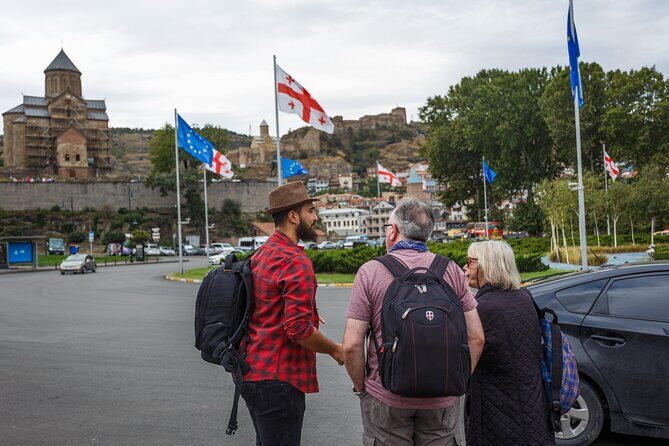
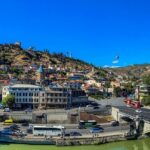
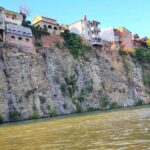
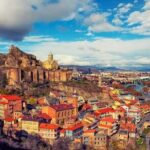
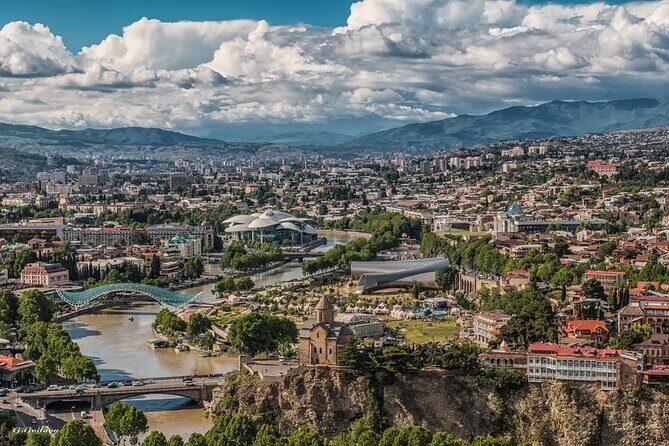
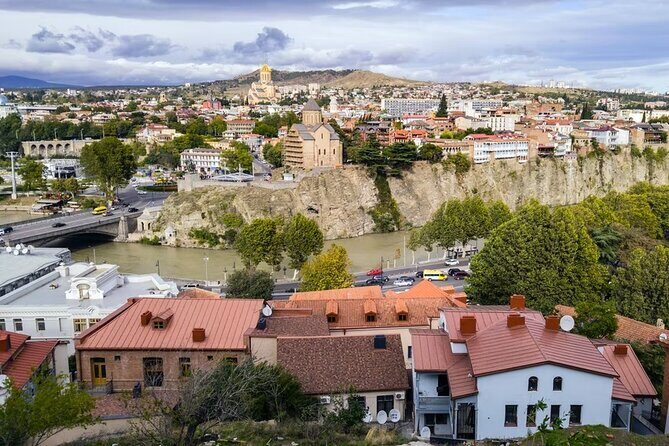
Tbilisi is where most people get their bearings, and this day does that quickly. You start with the modern-but-not-cheesy view of the city from the Bridge of Peace, a bow-shaped pedestrian bridge over the Kura River. It’s short, but it sets a tone: Tbilisi is not stuck in one era. Then you shift uphill to history with Narikala Fortress, with the St Nicholas church down in the lower court.
Next comes the part of Tbilisi that feels like a living tradition: Abanotubani, the sulfur-bath district at the foot of Narikala. Even if you don’t soak in the baths, it’s a great area to understand why Tbilisi’s hot springs helped shape the city’s identity.
You also get a fun photo stop at the Dzveli Tbilisi Sulphur Waterfall, a cool-water break on a hot day with some shade. After that, the itinerary moves through the most walkable cultural spine of town: Rike Park, Jan Shardeni Street, and Freedom Square.
If you want a practical tip here: this is a good day for light planning, because the walking is short at each stop. You’re not committing to a full hike. Your time is spent moving between “zones” that each tell a piece of the Tbilisi story.
You end up with a payoff viewpoint at Mtatsminda Amusement Park, plus a casual local-color moment at Dry Bridge Market (an open-air flea market). It’s a nice touch for day one because it gives you shopping and snacking options without forcing a long detour.
Day 2 Kakheti Full-Day: Bread Making, Bodbe, Signaghi, and Khareba Wine
Kakheti is where Georgia turns from city streets to vineyards and taste-focused travel. Day 2 is built around three anchors: a culture moment, a monastery stop, and a wine cellar.
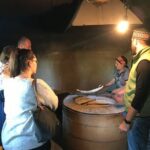
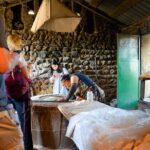
First up, Kakheti’s traditional bread making. Bread is one of those “small” details that turns into a big memory once you see how central it is to daily life and celebrations. If you’re a traveler who likes food culture, this is the kind of stop that pays off later when you’re back home and craving that exact flavor.
Then you head to the Bodbe Monastery of St. Nino, a Georgian Orthodox monastic complex tied to the legacy of St. Nino and located about 2 km from Signaghi. This stop feels calmer than the city. It also gives you a different kind of Georgia: slower, spiritual, and visually open.
After Bodbe comes Sighnaghi (Signaghi), often described as the city of love. What I like about including it is that it’s not only a viewpoint day. It gives you a chance to walk, look at architecture, and experience a town built for strolling—great if you’re traveling with a partner or want a more relaxed rhythm than the mountain days.
The day closes with Tunnel Winery Khareba’s in the Alazani Valley area. This is the standout “Georgia detail” stop: a long wine cellar carved inside the Caucasus mountains, with natural temperature and humidity conditions designed for aging wine. Even if wine isn’t your main obsession, the setting is memorable.
A practical note: the wine-cellar part can be a highlight, but it’s also where you may want to pace yourself with water. The cellar stays around 12–14° Celsius in the tunnel, so you’ll likely feel a cool shift compared to the outside air.
Day 3 Kazbegi Full Day: Jinvali, Ananuri, Aragvi, Friendship Monument, and Gergeti
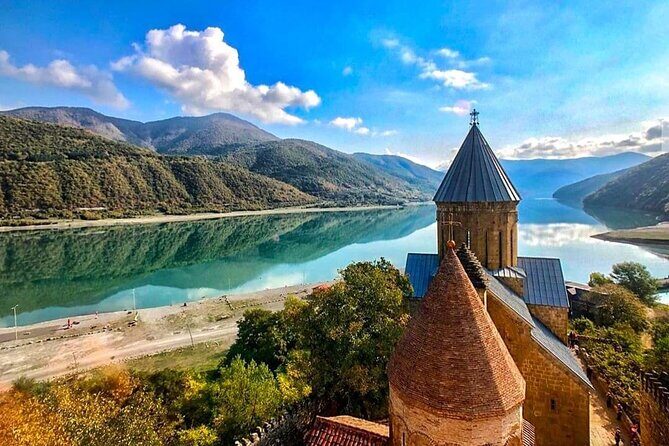
This is the day with the “wow” factor, the one people think of when they picture Georgia’s mountains. Kazbegi days are about drama: reservoirs, fortresses, winding river stops, monuments, and then the big church viewpoint.
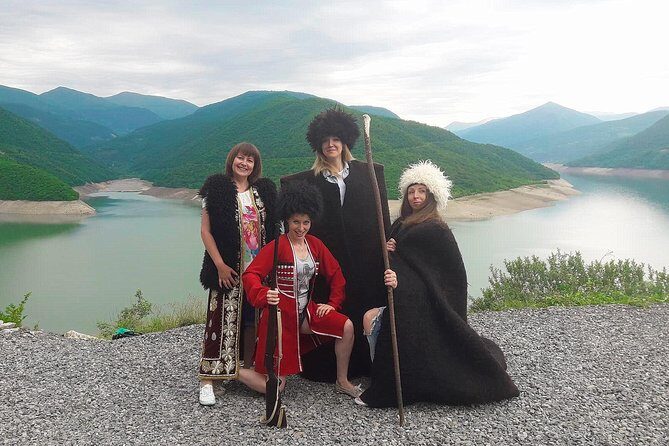
You start at Zhinvali (Jinvali) Water Reservoir, then move to Ananuri Fortified Castle Ensemble on the Aragvi River. Ananuri works well in an itinerary like this because it’s visually strong and historically clear. It’s also a place where you can pause and let the scenery do the talking.
Next come quick but meaningful stops along the river corridor, including a look at the Aragvi River and the Russian-Georgian Friendship Monument—a Soviet-era marker tied to the Treaty of Georgievsk bicentennial. These stops matter because they show layers of influence in the same landscape, not just postcard scenery.
From there, you’ll reach the Kazbegi region town area (listed as Mkinvartsveri / Stepantsminda) and head to Gergeti Trinity Church, perched at around 2170 meters under Mount Kazbek. This is a classic “arrive and stare” moment. It rewards the earlier driving because you finally get the vertical scale—mountains rising behind a small, distinctive church.
If you’re the kind of traveler who likes photos, this is the day to take your time and not sprint through stops. The distances are part of the experience, but Gergeti is the payoff.
One thing to remember: mountain weather can change fast. You were advised to bring rain jackets, and I agree. Even if you don’t expect rain, having one in the car can save the day.
Day 4 Mtskheta and Gori: Jvari Monastery, Uplistsikhe Cave Town, and Old Capital Time
Day 4 shifts from peaks to ancient Georgia. It combines spiritual heritage with real-world history you can walk through.
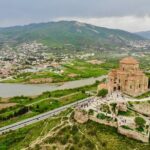
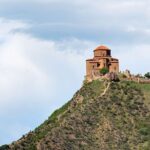
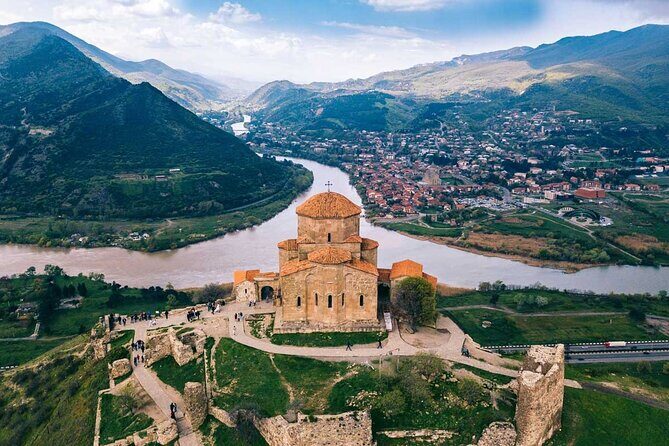
You start near Jvari Church (Jvari Monastery), a sixth-century Georgian Orthodox site near Mtskheta that’s recognized as a UNESCO World Heritage area. The reason it’s great for a one-stop format is that you get both architecture and a wide sense of place—so it doesn’t feel like just another church photo.
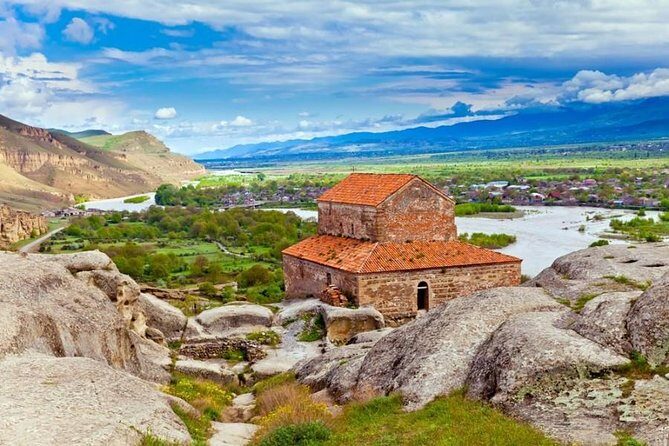
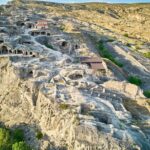
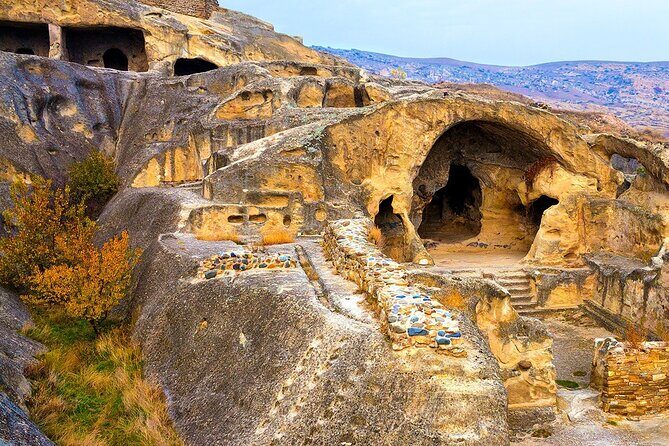
Then the itinerary brings you to Gori city and the Uplistsiche Cave Town, an Iron Age rock-cut archaeological site. Cave towns are one of those travel categories that instantly make the past feel physical. You can almost imagine how people moved, lived, and defended themselves in the rock.
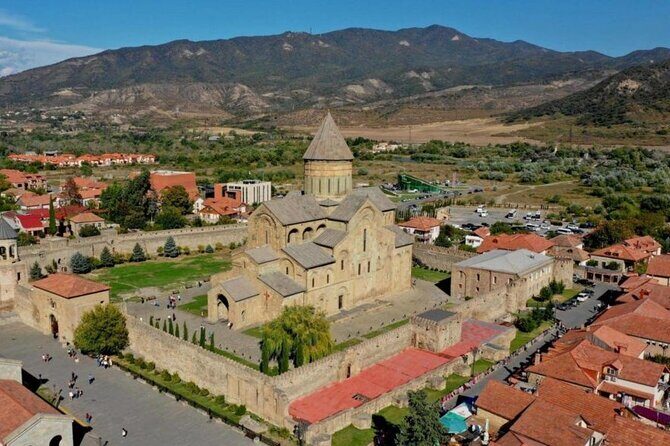
Finally, you reach Mtskheta, Georgia’s old capital, located about 20 km north of Tbilisi near the confluence of the Mtkvari and Aragvi rivers. Mtskheta is a good closer for Day 4 because it ties the day together: you’ve gone from early medieval church heritage to practical survival architecture to a capital city that anchored power and religion.
This is also a good day for pacing yourself if you’ve felt “mountain-tired.” The driving continues, but the mood is more walk-and-look.
A few more Tbilisi tours and experiences worth a look
Day 5 Borjomi National Park: Cable Car, Waterfall, River, and Mineral Water
Day 5 is built as a reset day—still full of sights, but with more time for views, greenery, and the feel of a mountain park.
You’ll go to Borjomi National Park, with a planned mix of cable cars, scenery, a waterfall, a river stop, and Borjomi mineral water. The cable car is a clever inclusion because it helps you get elevation and views without turning the day into a strenuous hike.
What’s valuable here is variety. Days 3 and 4 are heavier on historical and mountain framing. Day 5 gives you a nature rhythm: cool air, moving water, and the chance to slow down.
When planning your own day tempo, treat this as the one where you can take a slightly longer break. Grab something to drink, pause for photos, and don’t rush the waterfall moment.
Day 6 Kutaisi and Tskaltubo: Prometheus Cave, Okatse Canyon, and Kinchkha Falls
Day 6 is where the route flexes to western Georgia. The tour includes major sights in and around Kutaisi and Tskaltubo, and there’s one important logistics rule: you need to book your hotel in Kutaisi for this night.
Why that matters: it prevents a late-day scramble. Instead of trying to force back-to-Tbilisi driving every time you change regions, the trip lets you sleep close to the sights you’ll see next.
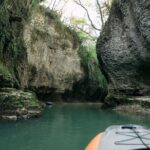
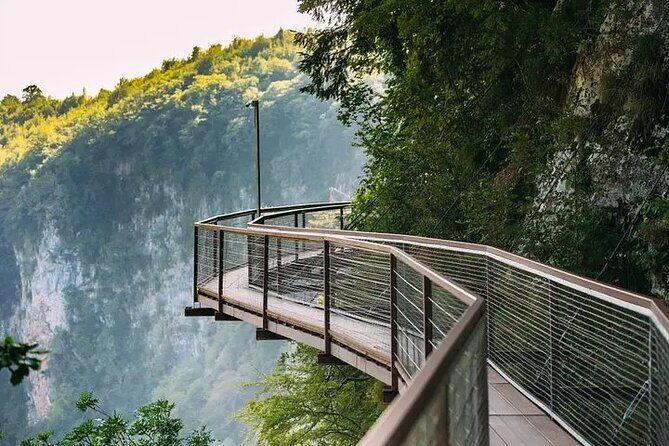
You’ll visit Prometheus Cave (also known as Kumistavi Cave and Tsqaltubo Cave) and then head to the Okatse area for Okatse Canyon and Kinchkha Waterfall. Here’s the practical detail: this day includes a 4×4 car for Okatse Canyon. That’s important because canyon routes can require a sturdier approach depending on how the path and access roads look on the day.
The stops themselves feel like a theme: subterranean wonder in Prometheus Cave, then erosion canyon scenery, then a cascading waterfall. It’s a strong “different environments in one day” combo.
If you’re traveling with anyone who hates rushing, Day 6 is a good one to keep expectations realistic. You’ll likely feel “on the go,” but the stops are spaced to create an adventure arc rather than a random list.
Day 7 Gelati and Bagrati: UNESCO Monastery Pairing and Return to Tbilisi
Your final day brings you back toward Tbilisi with one last shot of medieval Georgia.
Start with Bagrati Cathedral (often called Kutaisi Cathedral) and Gelati Monastery near Kutaisi. Gelati is a major UNESCO-listed complex founded in 1106 and known as an educational and religious center. Bagrati pairs nicely because it gives you two different visual experiences: one cathedral-centered, one monastery complex.
After your western highlights, you’ll drive back to Tbilisi, wrapping up a route that has covered the east, the mountains, the historical core, and then the caves and canyons.
This is the day to keep your energy steady. Even though it feels like a closer, it’s still a long travel day back to base.
Price and Value: What $700 Covers (and What You’ll Add)
At $700 per person, you’re paying for a very specific bundle: private transport, guide/driver services, parking and petrol, and both airport transfers—plus the 4×4 support on the Okatse Canyon segment.
You’re not paying for hotels (except you handle your Kutaisi night), and you’re not paying for food and drinks. Entrance tickets are also not included. That said, many of the named stops are marked as free entry in the route plan. So your out-of-pocket costs may end up being mostly about meals, snacks, and any optional payments that pop up.
The value question is less about the total number and more about how it compares to DIY travel. If you rented a car and tried to coordinate all these day-to-day moves, you’d spend time on driving, timing, and parking. With this setup, that burden shifts to the driver and guide.
Also, the format is well suited to families and mixed-experience groups. In the feedback themes, people praise how the guide team keeps the pace comfortable and helps with food and coffee suggestions, plus local experiences that feel personal rather than scripted.
Practical Tips for a Smoother 7 Days
This tour covers a lot, so small choices help a lot.
First: bring a rain jacket. The itinerary explicitly suggests it, and it’s smart for spring or shoulder seasons when weather can shift quickly.
Second: pack for temperature changes. Mountain and tunnel/cave stops can feel different from Tbilisi. A light layer helps.
Third: plan for long days. Each day is listed as roughly 9 to 18 hours, so you’ll want snacks you like (even if you eat out for meals). You’ll be calmer if you don’t rely on one meal schedule for everything.
Fourth: keep cash or card available for food. The tour doesn’t include meals, so you’ll choose restaurants and timing yourself through the day.
Finally: use your guide for the small stuff. In guest praise themes, guides like George and Beso are described as helpful with food choices and coffee, and they help you feel safe throughout the route. That’s not just hospitality; it saves you from wasting time searching on your own.
Who This Tour Suits Best
This is a strong fit if you want a private experience with classic Georgia highlights in a tight time window.
It’s especially good for:
- Couples who want scenic highlights with smooth pacing and fewer transport hassles
- Families who prefer a driver and guide to reduce stress
- Travelers who like both big sights and “local texture” stops, like bread making and traditional bath district wandering
- People who want the mountain day (Kazbegi and Gergeti) without having to plan it down to the minute
If you’re the type who loves totally independent travel, you might find the structured flow less flexible. But if you want a plan that keeps moving while still making sense, this itinerary is built for that.
FAQ
What’s included in the $700 per person price?
The tour includes a private comfortable car, a professional driver and guide, airport arrival and departure transfers, the 7-day private tour, petrol costs and parking fees, and a 4×4 car for Okatse Canyon.
What’s not included?
Food and drinks, entrance tickets, and accommodations are not included.
Do I need to book a hotel during the trip?
Yes. You must book your hotel in Kutaisi for Day 6. On the other days, hotels are arranged to keep you in Tbilisi.
Are airport transfers included?
Yes. You get a private airport arrival transfer to your hotel and a private departure transfer back to the airport.
Where is the meeting point?
The start is Shota Rustaveli Tbilisi International Airport in Tbilisi, Georgia, and the activity ends back at the meeting point.
Is this a private tour or shared with others?
It’s private. Only your group will participate.
How long is the tour each day?
The schedule lists approximately 9 to 18 hours per day, depending on the day and routing.
Are entrance tickets covered?
No. Entrance tickets are not included, even though many stops on the route are listed as free admission.
Can I cancel for a refund?
Yes. You can cancel up to 24 hours in advance for a full refund.
Should You Book This Private Georgia Tour?
I’d book it if you want major Georgia highlights without the daily logistics headaches. The itinerary covers the key regions—Tbilisi, Kakheti, Kazbegi, Borjomi, and western Georgia—with a private guide/driver setup that keeps the rhythm steady.
Skip it if you hate long days in a car or you want maximum independence. But if you like a plan that hits the big sights (Peace Bridge, Narikala, Bodbe, Signaghi, Ananuri, Gergeti Trinity, Jvari, Uplistsikhe, Prometheus Cave, Okatse Canyon) and still leaves room for local flavor through guided stops, this is a strong value way to see a lot of Georgia in one go.