REVIEW · TBILISI
8-Day Trekking Group Tour in Svaneti
Book on Viator →Operated by TrekGeorgia · Bookable on Viator
Svaneti hits fast. This 8-day group trek through Upper Svaneti and into the UNESCO-style medieval tower world is a strong mix of big mountain hiking and real village life, from Mezari trailheads to the Ushguli Ethnographic Museum. I especially like the small-group feel (max 15) and the practical safety setup, including luggage moved by car on trekking days and expert guides who know the routes well. One drawback to plan for: some guesthouses have simple facilities and hot water is not guaranteed.
If you want mountain time with structure, this works. It also helps that meals are mostly handled (and you’ll get bottled water and snacks during the days on your feet). Just know this is still serious hiking: about 58 km on foot plus passes at 2,600m–3,000m.
In This Review
- Key things to know before you go
- Mestia to Ushguli: why this route feels worth your time
- The pace and hiking load: what 58 km really means
- Day 1: Tbilisi to Mazeri via Zugdidi, the Enguri Dam, and Upper Svaneti
- Day 2: Mazeri hike to Dolra River, mineral springs, and a small church
- Day 3: Guli Pass and Koruldi Lakes with Ushba watching over you
- Day 4: Zhabeshi to the Mulakhi community—easy route, real village time
- Day 5: Adishi village under Tetnuldi—birch forests, rhododendrons, and stone towers
- Day 6: Chkhunderi Pass and a horseback river crossing near Adishi
- Day 7: Ushguli from above, plus the ethnographic museum and Lamaria church
- Day 8: Chalaadi Glacier river source walk and back to Tbilisi
- Where you sleep and eat: guesthouse comfort with realistic expectations
- Guides, safety, and why people rave about Gogi and Dito
- Price and value: is $1,340 a fair deal?
- Who should book this trek, and who should skip
- Should you book this Svaneti trekking tour?
- FAQ
- What is the meeting point and start time?
- How long is the trek and how much walking is involved?
- What kind of lodging should I expect?
- Are meals included, and what about lunch?
- Do I need trekking gear?
- What happens if weather is bad or I need to cancel?
Key things to know before you go
- Small group (max 15) means you’re less likely to feel lost in a crowd on narrow trails.
- Luggage logistics are handled by car during hiking days, so you hike lighter.
- Passes with real elevation: Guli Pass (2,960m) and Chkhunderi Pass (2,655m) are no joke.
- Culture is built in: Zhabeshi and Adishi villages, plus the Ushguli museum and churches.
- Guesthouse variety: private facilities in Mazeri and Mestia, shared facilities on several other nights.
- Guides named in reviews include Gogi, Dito, and Nugo, praised for pacing and care.
Mestia to Ushguli: why this route feels worth your time
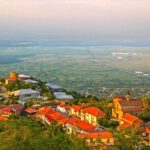
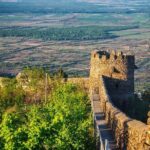
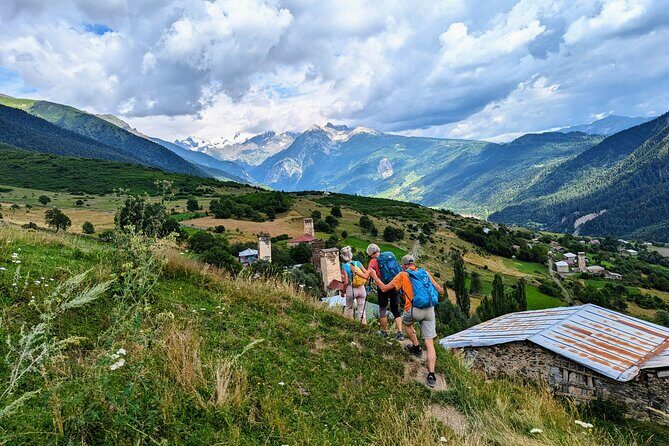
Svaneti is one of Georgia’s places where you feel the mountains shaping daily life. This trek takes you from the Mestia area toward Ushguli, and it’s not just about postcards. You walk between villages where stone towers still dominate the skyline, and you spend enough time in the communities to notice how people live here—not just where they pose.
I love how the tour balances earned views with local context. You hike up through pine forests, meadows, and high passes, then you get to slow down for village visits and medieval architecture. When the day ends, you’re not stuck in a hotel bubble. You’re in guesthouses that keep the trip grounded.
The other thing I like is how “guided” actually means something. Reviews mention punctual, careful leadership and routes built for safety. You get that practical confidence when you’re dealing with high elevation, rocky paths, and river crossings.
Yes, the hiking is demanding. You’ll want moderate fitness and a mindset for long walking days. You should also mentally prepare for basic guesthouse comfort in some locations, especially if you’re someone who counts on hot showers every night.
You can also read our reviews of more hiking tours in Tbilisi
The pace and hiking load: what 58 km really means
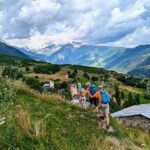
This tour is built around days that can run 5 to 10 hours of walking. Even if some segments feel “easier” because they follow tracks or off-road corridors, you still stack up distance fast. The tour adds up to about 58 km of walking, spread across multiple days, not one long day hike.
Elevation matters here. You’ll cross high points like Guli Pass (2,960m) on the way to Koruldi Lakes, and later Chkhunderi Pass (2,655m) with the Adishi Glacier view. If you’re new to altitude hiking, you’ll do better by keeping a steady pace and taking the small breaks the guide suggests.
Good news: you’re not carrying everything. Luggage is transported by a car during hiking days. You’ll still need your day gear, but you avoid the extra weight that turns a good trek into a slog.
If you’re planning hiking boots, pack for uneven ground and a mix of forest and alpine terrain. If it’s rainy or windy, expect the trail to feel more slippery than the “dry season imagination” you might have.
Day 1: Tbilisi to Mazeri via Zugdidi, the Enguri Dam, and Upper Svaneti
Day 1 is the long travel day, and you’ll feel it. You start early at the Giant Bicycle monument in Tbilisi (Rose Revolution Square), with pickup time set for 7:00 am. The drive is about 9 hours, but the stops break it up and give you context before you start hiking.
You’ll stop in Zugdidi and visit the Dadiani Palace, tied to the regional lords who governed much of Western Georgia. Then you continue to the Enguri Dam, one of the highest arch dams in the world at 271.5m. It’s a sharp contrast: huge concrete engineering right before you enter the mountain village zone.
Then you roll into Upper Svaneti, where the defining feature is how intact the medieval settlement style looks from the road—stone defensive tower houses and old church architecture. The day ends in Mazeri, where you sleep at a guesthouse with private facilities.
What I like about this first day: it prevents that “flat start” feeling. You’re not arriving and guessing what to look for. You get a cultural and geographic warm-up before the trails begin.
Day 2: Mazeri hike to Dolra River, mineral springs, and a small church
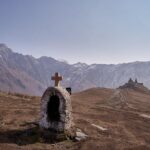
Day 2 is a gentler entry that still feels very Svaneti. You start hiking from Mazeri and head upstream along the Dolra River. The route includes mineral water springs and a small church placed in a picturesque spot you’ll likely remember even if you don’t write down the name.
You’ll move from the river corridor toward meadows, then the trail slowly climbs through pine forests. At some point, you reach a border post, where the last ascent begins. After that, you reverse back down to Mazeri.
The hiking time is about 10 hours on paper, but it’s not “all uphill the whole time.” It’s more of a slow mountain rhythm day. For first-day trekkers, this is a smart way to get used to the pace without jumping immediately into the highest passes.
Practical note: mineral spring areas can mean damp ground. Even if weather is fine, you may step over muddy or slick patches near water.
Day 3: Guli Pass and Koruldi Lakes with Ushba watching over you
This is where the trek starts feeling like a real alpine expedition. You hike toward Koruldi Lakes via Guli Pass, which sits at 2,960m. The ascent requires effort, and you’ll feel the elevation in your breathing if you’re not used to steep grades.
After crossing Guli Pass, you descend into a valley and reach the lakes. Koruldi Lakes are small, but the setting is dramatic. You’ll get impressive peaks around you, including Ushba, one of the region’s most recognizable mountains.
This is a long day (about 10 hours). The good part is that the reward is immediate when you arrive at the lake basin. You get that classic high-mountain stillness, but with actual trail effort behind it.
If you’re the type who hates slow viewpoints, don’t worry. You’re not stuck waiting around all day. You’ll be walking, pausing, and walking again.
Day 4: Zhabeshi to the Mulakhi community—easy route, real village time
Day 4 shifts from steep alpine goals to a more community-focused hike. You’ll start in the morning and trek from Zhabeshi toward the Mulakhi community. The route is described as easy, following an off-road corridor and a well-marked trail.
This is a nice day if you’re trying to balance fitness with interpretation. You get the feel of Svaneti villages without the same high-pass strain as earlier days. It also helps you pace yourself mentally: you’re still hiking, but you’re not paying the tax of another big summit.
You sleep in Zhabeshi on night 4, with shared facilities at the guesthouse. Reviews also suggest guesthouses are comfortable and clean, but facilities can be simple—so don’t build your packing list around spa-level comfort.
Day 5: Adishi village under Tetnuldi—birch forests, rhododendrons, and stone towers
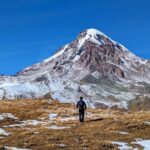
Day 5 heads into “wilderness hiking” mode. After breakfast, you hike up toward the slopes of Tetnuldi, pass a ski resort area, then descend through birch trees and rhododendron bushes. It’s a welcome change of scenery from the conifers you’ve already been walking through.
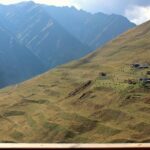
After that forest section, you reach alpine meadows, with the mountains opening up around you. Then you arrive at Adishi, a village known for stone towers and older houses built centuries ago. You’re also walking into a dramatic setting: below Tetnuldi, near a roaring mountain river, and surrounded by high peaks.
This hike is about 6 hours. That makes it a strong mid-trek day: enough effort to feel accomplished, not so long that it wipes out the whole day.
You’ll sleep in Adishi with shared facilities. If hot water is a dealbreaker for you, this is a good moment to set expectations. One review notes you might not always count on it.
Day 6: Chkhunderi Pass and a horseback river crossing near Adishi
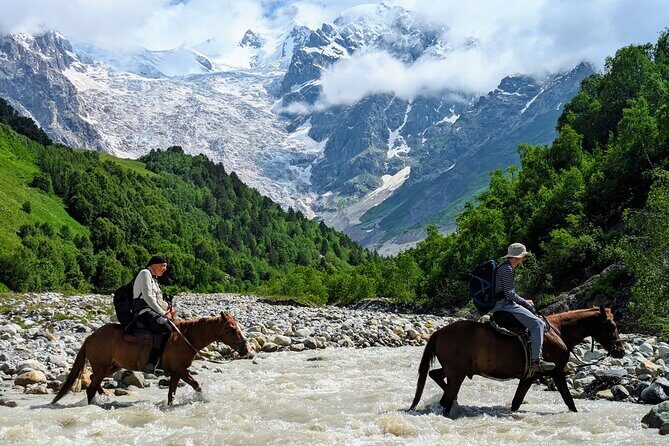
Day 6 is a mix of adventure and careful planning. You start early and walk upstream to the river. After about an hour of pleasant walking, you face the key moment: crossing the roaring Adishi River.
For safety, you cross by horseback. This isn’t a stunt; it’s practical. Fast water and steep banks are not the place for “I’ll just jump and go” energy. It’s reassuring to have this built into the route instead of handled on your own.
From there, you climb toward Chkhunderi Pass (2,655m). Once you’re up, you’ll have panoramic views of the Adishi Glacier. After lunch on the ridge and time for photos and breathing, you descend into the Khaldechala river valley.
Two hours of easier walking brings you to Khalde village, which was destroyed in the 19th century by Russian soldiers. Then the plan continues via off-road to Iprali, where you overnight (night 6) at a guesthouse with shared facilities.
This day has emotional texture, not just physical effort. You’re walking through a landscape shaped by history as much as by geology.
Day 7: Ushguli from above, plus the ethnographic museum and Lamaria church
Day 7 is the crown jewel in terms of medieval Svaneti feel. You trek through traditional Svani villages, passing Kala and Davberi, then you reach Ushguli from above. The village sits at the foot of Mount Shkara near the confluence of the Enguri and Kvishiri rivers.
Ushguli is known as the highest permanent settlement in Europe at about 2,200m. When you arrive, the towers and churches don’t look like museum props. They look like part of daily life, perched above the valleys.
You also get two cultural hits:
- The Ushguli Ethnographic Museum, located in a 12th-century tower-house
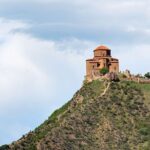
- The Lamaria Church (Assumption of the Mother of God), a medieval site you’ll likely recognize as soon as you see the stonework and form
The hike time is about 5 hours. That’s a welcome reduction after the longer pass days.
Then you overnight in Mestia (night 7) with private facilities. For many people, that feels like a reward: your own room setup again before the final travel day.
Day 8: Chalaadi Glacier river source walk and back to Tbilisi
Day 8 ends with a shorter “finish line” style hike and a big travel hit. You leave after breakfast for Tbilisi, with a stop at Chalaadi Glacier.
You walk upstream along the Mestiachala River, and after about 1.5 km, you reach the finish point where the river is born. It’s a fitting finale: the trek started with dams and palaces, and it ends with the water source that drives the whole mountain system.
Then you continue back to Tbilisi. The tour ends back at the meeting point, and you do not spend an extra night in the city.
Where you sleep and eat: guesthouse comfort with realistic expectations
Most of your evenings are spent in guesthouses. The tour includes 2 nights with private facilities in Mazeri, 2 nights with private facilities in Mestia, and several shared-facility nights in Zhabeshi, Adishi, and Iprali.
What does that mean in real life? Expect simple rooms and local hospitality. Reviews emphasize that guesthouses are generally clean and welcoming, and meals are home-style and plentiful. At the same time, at least one review points out you might not always get hot water. So if you’re sensitive to basic amenities, pack accordingly and plan to be flexible.
Meals are handled for you most days. The tour includes:
- 7 breakfasts
- 6 lunches
- 7 dinners
Lunch isn’t included every single day, so you should be ready for at least one lunch on your own. It’s the kind of minor gap that’s easy to handle if you like to grab a snack or something simple.
During hiking days, you also get bottled water and snacks, which helps you stay fueled without constantly buying things along the route.
Guides, safety, and why people rave about Gogi and Dito
This trip stands or falls on leadership. The reviews are consistent about guide quality: punctuality, caring about everyone’s well-being, and knowing the routes well enough to keep it safe.
Several guide names come up:
- Gogi gets repeated praise for pacing and for being willing to add an extra hike when the group was feeling good.
- Dito is praised for professionalism plus friendliness, and for sharing knowledge about Georgian history, culture, flora, and fauna.
- Nugo is also mentioned for leading with care and attention, with stories that connect the scenery to the people.
Even if your specific departure has a different guide, you can infer the leadership style: clear group management, steady pace, and a real focus on hiking comfort.
Also, group size matters. With up to 15 travelers, it’s easier to keep an eye on hikers who slow down or struggle with elevation. That’s a practical advantage for safety and morale.
Price and value: is $1,340 a fair deal?
At $1,340 per person, this isn’t a budget day trip. But you are paying for logistics, not just scenery.
You’re getting:
- Expert guide leadership for 8 days
- Air-conditioned vehicle for the travel-heavy portions
- Fuel surcharge
- Luggage transportation by car during hiking days
- Guesthouse stays with a mix of private and shared facilities
- Most meals (7 breakfasts, 6 lunches, 7 dinners)
- Bottled water and snacks
- A tour designed around specific passes and village routes
If you tried to piece this together alone, you’d spend time solving transportation between trailheads, securing lodging in multiple villages, and figuring out local guides for safety. The price also bundles the biggest cost driver in mountain hiking: people and coordination.
So the value question comes down to one thing: do you want a guided plan that reduces decision fatigue? If yes, the cost makes sense. If you love self-guided travel and already know how to coordinate hikes and transfers, you might find cheaper alternatives. But they’ll take more work.
Who should book this trek, and who should skip
This tour fits best if you:
- Have moderate hiking fitness
- Prefer structured days over improvising
- Want a real mix of mountain passes and village culture
- Like small groups with expert guidance
It may not fit you if you:
- Need guaranteed “hotel-style” comfort every night (some rooms have shared facilities, and hot water may not be consistent)
- Dislike long walking days, including high elevation efforts
- Want a short, easy stroll rather than multi-day trekking
Also, the tour sets a minimum age of 14. If you’re traveling with teens or older kids who handle hikes well, it can be a good fit.
Should you book this Svaneti trekking tour?
I’d book it if you want Svaneti the practical way: guided hiking, village visits, and the kind of medieval church-and-tower world that you can’t fully appreciate from a single viewpoint. The small group size, luggage support, and consistently praised guides (Gogi, Dito, Nugo) are the big reasons this feels reliable.
I’d think twice if you’re picky about guesthouse amenities or you’re not comfortable with multi-day mountain walking at elevation. For everyone else, it’s an honest, scenic route where the effort feels matched by the payoff.
If you go, pack for variability. Bring layers, plan for weather, and keep your pace steady. Then you’ll get the best version of Svaneti: not just views, but the rhythm of the villages under those jagged peaks.
FAQ
What is the meeting point and start time?
The tour starts at the Giant Bicycle monument at Rose Revolution Square in Tbilisi, with a start time of 7:00 am.
How long is the trek and how much walking is involved?
The tour runs for about 8 days, and it includes around 58 km of walking in total.
What kind of lodging should I expect?
You’ll have guesthouse stays in several villages. Mazeri and Mestia include private facilities, while Zhabeshi, Adishi, and Iprali have shared facilities.
Are meals included, and what about lunch?
Most meals are included: 7 breakfasts, 6 lunches, and 7 dinners. Lunch is listed as not included (so plan for one lunch day on your own).
Do I need trekking gear?
Trekking poles and backpacks are not included, but you can rent them. Bringing your own gear is also fine if you prefer.
What happens if weather is bad or I need to cancel?
This experience requires good weather. If it’s canceled due to poor weather, you’ll be offered a different date or a full refund. You can cancel up to 24 hours in advance for a full refund.