REVIEW · TBILISI
Trekking Tour from Tusheti to Khevsureti via Atsunta Pass
Book on Viator →Operated by TrekGeorgia · Bookable on Viator
One of Georgia’s toughest scenic weeks starts with stone towers. From Tusheti’s high villages to Khevsureti’s fortress-clad gorges, this trek gives you mountain walking at altitude and real village life, not just scenic stops. I love how the route mixes Tusheti stone villages with 3 days in near-wild country, where you’ll feel truly remote. The one thing to consider is that the hiking is serious: you’ll cover about 72 km, including a high pass around 3430m.
The best part is the variety. You begin with a long 4WD approach and village wandering (Omalo, Dartlo, Kvavlo, Girevi), then shift into shepherd-trail wilderness with tent camping and a big climb over the Atsunta Pass (3400–3431m). You also get medieval architecture you can actually stand in front of—tower houses and fort complexes—plus end-stage comfort in Tbilisi via a transport ride out from Shatili.
Now the trade-off: it is a group trek with early starts and day-after-day effort. If your idea of hiking is mostly flat paths and short walks, you may find the pace and elevation hard work, especially on the pass day and the camping days without nearby villages.
In This Review
- Key things you’ll love on this Tusheti to Khevsureti trek
- From Tbilisi meeting point to Omalo towers: your first mountain day
- Dartlo and Kvavlo in Tusheti: the stone villages you’ll actually walk through
- Chesho, Parsma, and Girevi gorge walking: narrow paths and closer-to-nature days
- The first Atsunta days: camp in alpine meadows and hike where huts don’t exist
- Down into Khevsureti: Mutso and Shatili fortress villages in narrow gorges
- Price and what you truly get for $1,620
- Fitness, gear, and small realities that matter on this trek
- Who this trek fits best (and who should choose something else)
- Should you book this Tusheti to Khevsureti trek?
- FAQ
- How long is the trekking tour?
- What is the highest point on the route?
- What walking distance should I expect?
- What’s included for camping?
- Where do I meet the group, and when does it start?
- What trekking gear is not included?
Key things you’ll love on this Tusheti to Khevsureti trek
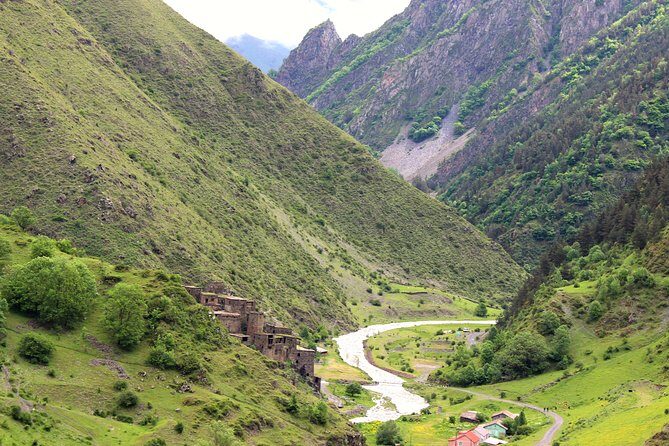
- Atsunta Pass views that reward effort: the route reaches about 3431m for snack breaks and panoramic mountain time.
- Tusheti to Khevsureti culture shift: stone villages in Tusheti give way to tower-packed Khevsureti strongholds like Shatili.
- Real remoteness for 3 days: no huts and very few human touchpoints beyond hikers.
- Luggage support by horses: less hauling for your own pack during the tougher stretches.
- Camping with provided basic gear: tents, sleeping bags, sleeping mats, and cooking gear are included.
- Guides who know the terrain: past hikers highlighted guides like Tato, Dito, and Dimitri for their local knowledge and smooth trip management.
From Tbilisi meeting point to Omalo towers: your first mountain day
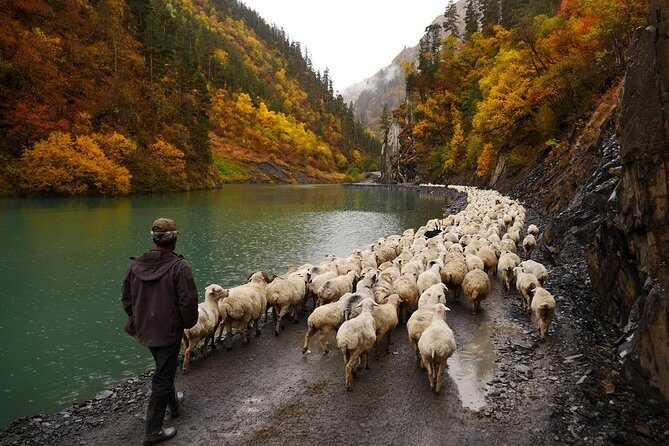
You start in Tbilisi at 9:00 am near the Giant Bicycle monument in Rose Revolution Square. Expect a full day of driving first, because getting into Tusheti is part of the adventure. After about 6 hours on winding roads and a mountainous pass at roughly 2850m, you land in Omalo.
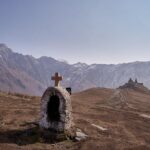
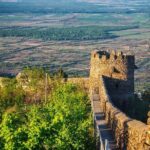
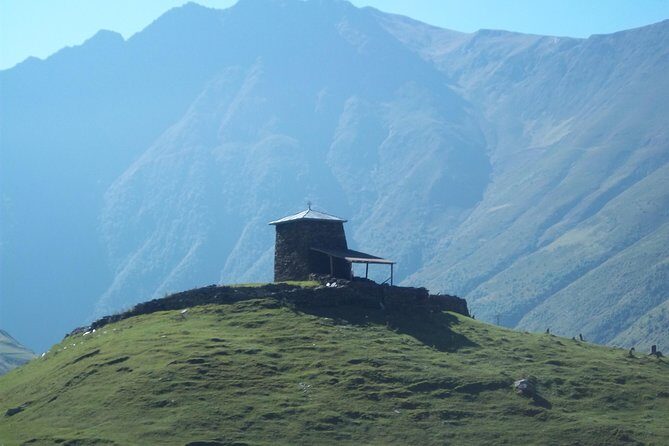
Omalo and the nearby Keselo Towers are a gentle way to warm up. You get to walk at human speed, take in the stone architecture, and absorb the Tusheti vibe: small settlements perched in dramatic terrain, where houses and defensive towers sit close together because life is never flat.
I like that Day 1 isn’t just transit. You also get a proper orientation moment in the village. If you’ve only done day hikes before, this is where you learn how the route will feel when the paths narrow and the mountains surround you on all sides.
One practical consideration: your energy on the first day matters. You’ll be driving most of the time, but you still need to be ready to explore and settle in—then hit longer trekking days soon after.
You can also read our reviews of more hiking tours in Tbilisi
Dartlo and Kvavlo in Tusheti: the stone villages you’ll actually walk through
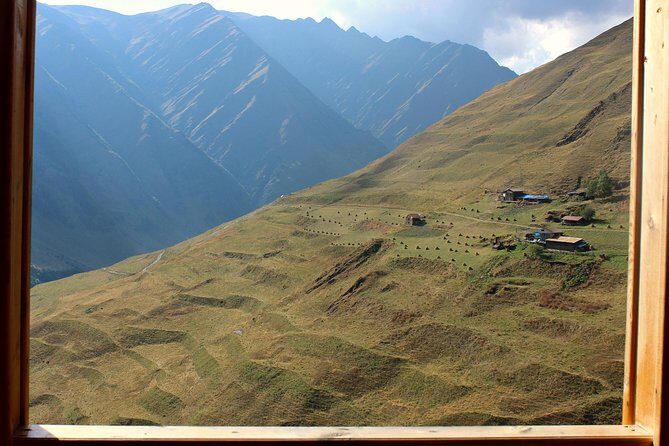
Day 2 begins with a hike from Omalo into the Tusheti valleys toward Dartlo. This village is described as recently renovated, but it still reads as a classic Tusheti stop: medieval stone houses, defensive buildings, and that steady sense of human adaptation to a harsh environment.
Then comes the payoff hike to Kvavlo. It’s mostly ruined towers and houses, which can be oddly moving in a way that polished monuments never are. You’re hiking with the Alazani river and valley views in mind, and the climb isn’t just for show—it changes what you can see at every turn.
Here’s what to expect on the Kvavlo segment in practical terms:
- The one-way walk is about 3.2 km
- Ascending is roughly 400 meters (from about 1833 to 2182m)
- Plan around 2 hours one-way
So this isn’t an all-day slog, but it is real hiking time with altitude and uneven ground. If your fitness is decent and you keep a steady pace, you’ll feel in control instead of frantic. If you rush, you’ll pay later when fatigue stacks up across the week.
You’ll return from this day with a better sense of Tusheti’s logic: towers for defense, stone for durability, and villages shaped around terrain that doesn’t ask permission.
Chesho, Parsma, and Girevi gorge walking: narrow paths and closer-to-nature days
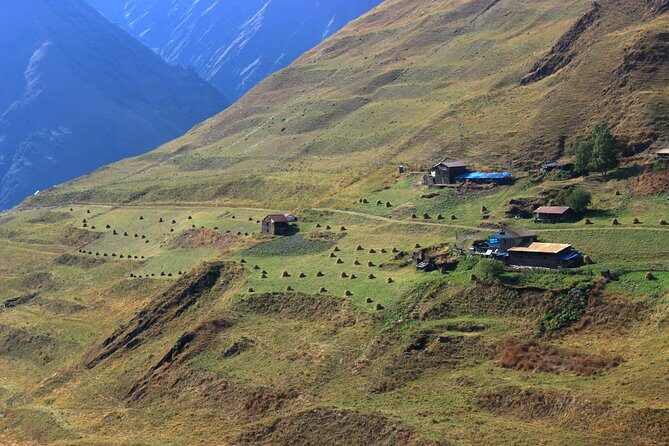
Day 3 keeps you in Tusheti, following upstream along the Pirikiti Alazani river through a narrow gorge. This is one of those trekking days where the environment starts doing more of the work than the schedule.
You first visit villages Chesho and Parsma, both with stone houses and tower structures. From there, the path narrows. You transition to a more intimate walking route that leads you to Girevi.
Why this day matters: it’s where your senses get tuned. Tusheti here feels less like a set of photo stops and more like a living corridor—water, rock, and village remnants lined up in a way that makes you slow down.
Also, it sets up the later shift into true wilderness. After days of villages and gorge walking, the sudden quiet of the high pass region will feel even bigger.
The first Atsunta days: camp in alpine meadows and hike where huts don’t exist
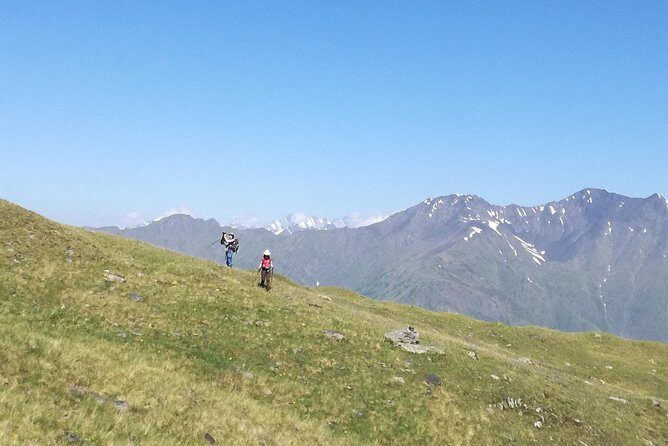
Day 4 is where the trip stops pretending it’s easy. After breakfast, you start the hardest section as the route follows a narrow gorge above Girevi, crossing small mountain rivers and passing the ruined village Chontio. Eventually you stop near Kvakhidi, in open alpine meadows with rock stones.
This is tent camping time. You’re not in a campground with amenities. You’re setting up camp in mountain country and having dinner as night closes in. The tour design explicitly leans into no huts and no humans except hikers for the wilderness stretch, and you feel that in the way the mountains dominate everything.
The big value here is perspective. When there aren’t nearby villages or buildings, the mountains become your only backdrop. It’s the kind of trek that makes conversations shorter and listening longer—wind, footsteps, and the rhythm of the day.
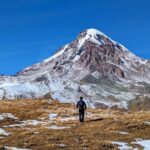
Day 5 goes higher. You start early and hike up toward Atsunta Pass, reaching about 3431m for snack breaks and long panoramic pauses. Then you descend into the Khidotani ridge, camping in another open alpine meadow.
Two practical things to plan for:
- That pass day is a big altitude moment, even if you take breaks.
- Your legs may feel fine early, then start to talk back mid-day. That’s normal here; pacing matters.
Since the tour includes basic camping equipment—tents, sleeping bags, sleeping mats, and cooking gear—you don’t have to source this stuff at home. You do still need to plan your own pack strategy because trekking gear like your backpack and trekking poles is not included.
Down into Khevsureti: Mutso and Shatili fortress villages in narrow gorges
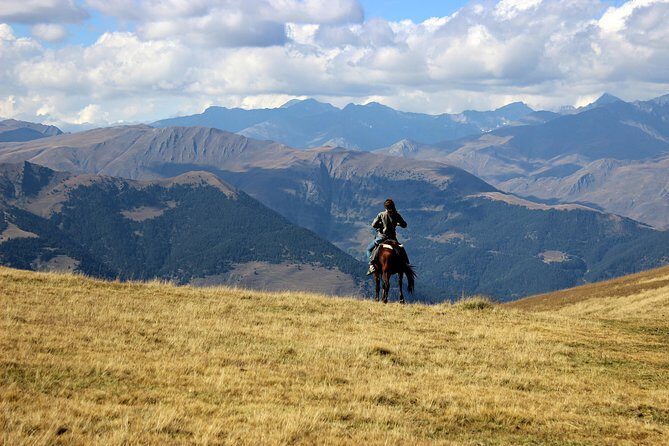
After the hard high-country days, Day 6 becomes about descent and fortresses. You start with breakfast, then hike down into a narrow gorge and reach the first inhabited place in Khevsureti. After passing village Khone, you continue on to Mutso.
Mutso is now largely abandoned, but what it gives you is a sense of the old defensive logic made visible. You’ll see towers and the architectural style up close. And importantly, the Mutso fortress complex has been renovated, so you can interpret it rather than only guess.
Near Mutso, you take a detour and hike about 2 km to the Mutso fortress. Then your transport meets you. From there, it’s a drive to Shatili, and then onward back to Tbilisi.
Why I think this ending works: you finish the toughest walking days with a reward that’s structured and clear. Instead of another long climb, you end by moving through a place that feels built for watching the horizon—tower houses perched above gorges, defensive layouts, and dramatic views you don’t have to search for.
It also means the week ends with real recovery time. Your day isn’t just walking until the last minute; it has that reset moment where the vehicle does its job.

Price and what you truly get for $1,620
At $1,620 per person for an approximately 6-day trek, this isn’t a budget weekend. But the cost isn’t only for guides and scenery. The included package covers several expensive parts of this kind of remote route:
- Expert leadership from adventure guides
- 4WD transfers from Tbilisi to Alavani, then to Omalo
- Transportation from Mutso to Shatili and then back to Tbilisi
- Guesthouse nights (Omalo private facilities; Dartlo, Girevi, and Shatili shared facilities)
- Camping gear (tents, sleeping bags, sleeping mats, cooking gear)
- Horses for luggage transportation, which reduces what you carry during harder sections
- Meals included: 5 breakfasts, 6 lunches, and 6 dinners
When you weigh it like that, the price starts to look more like a cost of making remote trekking actually possible—getting you there, feeding you, and supplying the camping basics.
My advice on value: compare this kind of trek to doing it yourself. If you tried to reproduce it on your own, the 4WD logistics, local guides, and camping setup would usually balloon quickly.
Also, this tour caps at 15 travelers, which helps keep the group manageable on narrow paths and reduces the chaos-factor common on popular trails.
Fitness, gear, and small realities that matter on this trek
This is a mountains trek for people who are comfortable walking long days. The tour notes a strong physical fitness level and about 72 km of walking across the six days. There’s also a minimum age of 14 years.
A few gear realities based on what’s included and what isn’t:
- Included: tents, sleeping bags, sleeping mats, cooking gear
- Not included: trekking gear like your backpack and trekking poles
- Drinks are not included, so plan for that in your budgeting and hydration strategy
You also have a luggage limit: you can bring up to 1 suitcase and 1 carry-on. Oversized or excessive items may be restricted. If you travel with unusual gear, ask ahead.
My biggest practical tip: pack for foot comfort and cold altitude swings. The pass region reaches over 3400m, and you’ll be sleeping outdoors the last two nights. That combination can make feet and layers more important than fancy extras.
Who this trek fits best (and who should choose something else)
This is a strong fit if you want:
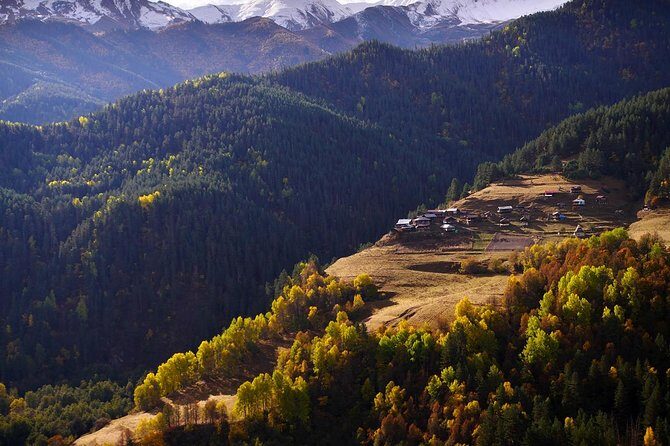
- A route that mixes village culture with real wilderness hiking
- A guided experience that handles remote logistics through 4WD transfers and luggage support by horses
- Medieval stone villages you can walk among, ending in Shatili’s fortress setting
It’s less ideal if you:
- Prefer low-altitude hiking or shorter distances (the week includes a major pass and about 72 km)
- Want guaranteed private bathrooms every night (you’ll have shared facilities in several guesthouses)
- Don’t want to camp outdoors for two nights
If you’re a solo traveler, you should feel comfortable. Past feedback highlighted that it works well for people traveling alone, mainly because the group size is limited and the guide team keeps things organized and calm.
Should you book this Tusheti to Khevsureti trek?
If you like mountains with fewer people and more authenticity, I think this is a great call. You’re getting Atsunta Pass at 3431m, two distinct mountain regions, and days that feel like you’re moving through real space rather than bouncing between highlights.
Book it if:
- You can handle long walking days and altitude
- You’re okay with guesthouses in shared facilities at times
- You want camping outdoors without having to source all the gear
Skip it or look for an easier alternative if:
- You’re not confident with repeated long hikes
- You want minimal exposure to cold altitude and the discomfort that comes with tent camping
The strongest sign to me is how the trek is built: it doesn’t just show you places. It changes the environment as you go—from towers to gorge paths to pass-country silence—so by the time you reach Shatili, you’ll feel like you earned it.
FAQ
How long is the trekking tour?
The tour is about 6 days.
What is the highest point on the route?
You cross Atsunta Pass, with the highest point around 3431 meters above sea level.
What walking distance should I expect?
The tour involves about 72 km of walking.
What’s included for camping?
Camping basic equipment is included, including tents, sleeping bags, sleeping mats, and cooking gear.
Where do I meet the group, and when does it start?
You meet at the Giant Bicycle monument near Rose Revolution Square in Tbilisi, with a 9:00 am start time.
What trekking gear is not included?
The tour does not include trekking gear such as your backpack and trekking poles. Drinks are also not included.