Kazbegi in one day feels unreal. This 12-hour Tbilisi day trip strings together Gergeti Trinity Church and Gveleti Waterfall with an air-conditioned vehicle and Wi-Fi on board. I love the comfort for a long day and I love the private English-speaking guide who keeps everything understandable. The catch is the schedule is packed, so you will want warm layers, good shoes, and a no-rush mindset.
You are not just sightseeing. You are moving through water, stone, and stories across the Aragvi valley in one shot. The route is built to hit major monuments like Ananuri and Gergeti, then add smaller stops like Sno village sculptures and the travertine at Jvari Pass. At $157.50 per person, it is a solid value if you want maximum northern Georgia in a single day.
In This Review
- Key things to know before you go
- The point of this Kazbegi day trip: speed with structure
- Starting in Tbilisi: Jinvali Reservoir sets the tone
- Ananuri Fortress Ensemble: churches, towers, and a feudal seat
- The Black and White Aragvi meeting point (and the legend)
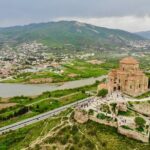
- Gergeti Trinity Church at 2,170 meters: the classic Kazbegi moment
- Mtavarangelozi Monastery: Dariali Gorge views near the border
- Gveleti Waterfall hike: 4 km roundtrip, easy pace, real canyon energy
- Stepantsminda lunch in Kazbegi: local family option vs restaurant menu
- Khevi gorge basilica and watchtower signals
- Sno village: Patriarch home, portraits, and carved figures
- Jvari Pass travertine and mineral springs at 2,197 meters
- Russian-Georgian Friendship Monument: a Soviet-era panorama point
- Price and value: what $157.50 gets you on a long day
- What to wear and bring (so the day does not fight you)
- Who this tour fits best
- The call: should you book this Kazbegi day trip?
- FAQ
- How long is the Kazbegi Tour, and when does it start?
- What is the first stop on the route?
- Are entrance tickets included for the main sites?
- How long is the Gveleti Waterfall hike?
- What lunch options are available in Stepantsminda?
- Is 4×4 transportation included for Gergeti Church in winter?
- What should I wear for Georgian Orthodox churches?
- Does the vehicle include Wi-Fi and water?
- What happens if weather is poor?
Key things to know before you go
- Tight but varied itinerary: 10 major stops, spread across reservoirs, fortresses, churches, monasteries, waterfalls, villages, and viewpoints.
- A real hike, not a photo-walk: Gveleti Waterfall is about 4 km roundtrip and roughly 1.5 hours, described as easy.
- Winter gets 4×4 help for Gergeti: during the winter period, transportation to Gergeti Church is included by 4×4.
- Church dress rules are part of the day: women should plan headscarves and dresses; short trousers for men are forbidden.
- Food choice depends on your lunch option: you can go with a local family option or a standard restaurant stop in Stepantsminda.
- Wi-Fi and water onboard: you can stay connected and keep hydrated while the day moves fast.
The point of this Kazbegi day trip: speed with structure
Kazbegi (Stepantsminda) is famous enough that you could spend a full vacation here. This tour does something different: it gives you the highlights of northern Georgia in one long day, starting at 8:00 am and running for about 12 hours. That means you trade extra free time for a tight route that actually covers ground.
I like this style of day trip when my goal is simple: see the iconic places, then come home with enough variety that I feel like I learned something about the region. You get an air-conditioned vehicle, and you can even use Wi-Fi onboard to share photos right away. If you are the type who hates spending vacation time on logistics, this format tends to fit.
The main consideration is pacing. Most stops are short (often around 10–20 minutes), so this is not your choice if you want to linger. Bring patience. Think of each stop as a chapter, not a book you read slowly.
You can also read our reviews of more hiking tours in Tbilisi
Starting in Tbilisi: Jinvali Reservoir sets the tone
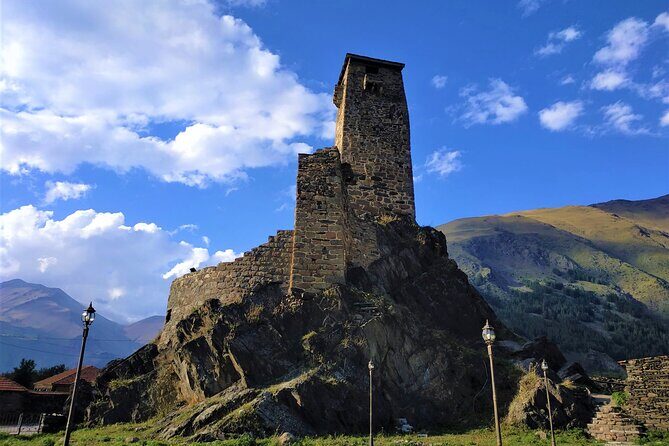
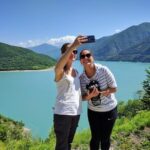
The day opens with a stop at Jinvali Water Reservoir, a drinking-water reservoir that supplies Tbilisi. It was constructed in 1985 and reaches a maximum depth of 75 meters. Even if you have seen reservoirs before, this one is a useful warm-up because it frames the region as more than just mountains and churches. Water infrastructure, valley geography, and human engineering all show up quickly.
Practically, this early stop also helps you settle into the day. You are not thrown straight into a major climb or the first big monument. You have time to get oriented, dress for temperature changes, and make sure your shoes are ready.
Ananuri Fortress Ensemble: churches, towers, and a feudal seat
Next comes Ananuri Fortified Castle Ensemble, tied to the dukes of Aragvi and the feudal dynasty that ruled the area starting in the 13th century. The complex brings together several elements in one place: churches, a water reservoir, a bell-tower, prison cell remnants, and watch or defensive structures like older and newer towers.
This is the kind of stop where you get multiple textures in a short time. You can look at religious buildings, then zoom out and see the military purpose. Since the stop includes an admission ticket and lasts about 20 minutes, you do not need to be an architecture specialist to get something out of it.
A small drawback: because time is limited, you may want to pick one or two focal points to concentrate on. If you try to read everything at once, you will feel rushed.
The Black and White Aragvi meeting point (and the legend)
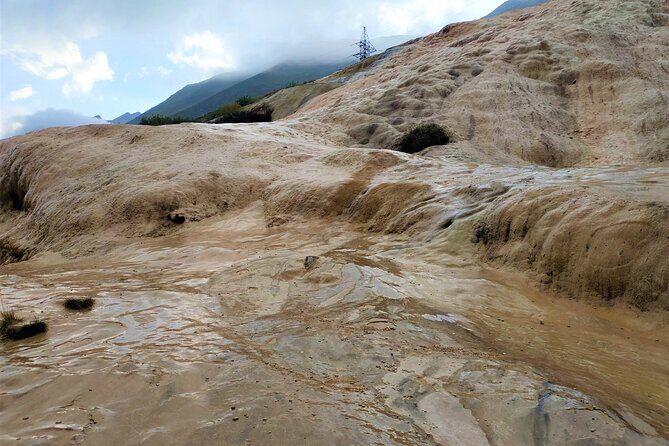
Then you shift to a very short stop: the place where the Black Aragvi and White Aragvi rivers merge. The tour connects the story to geology by explaining that the river origins are tied to rocks of corresponding colors.
This is brief (about 10 minutes), but it is a smart palette cleanser between bigger monuments. You are moving from fortress walls to something quieter and more natural. Even if you do not follow the legend every step, it helps you see why locals treat these waters like living characters in the landscape.
Gergeti Trinity Church at 2,170 meters: the classic Kazbegi moment
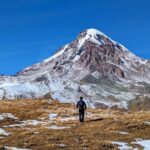
Gergeti Trinity Church is the centerpiece for many people, and the tour gives it the time it deserves: about 30 minutes, with an admission ticket included. The church sits at an elevation of 2,170 meters beneath Mount Kazbek, which reaches 5,054 meters.
Here is what makes it more than a postcard stop. During dangerous times, precious relics from Mtskheta, including Saint Nino’s Cross, were brought to this site for safekeeping. There is also a small council area on the south wall dating from the 15th–16th centuries, tied to local community decisions. In other words, the building has both spiritual and practical meaning.
One very practical detail matters for your plans: during the winter period, the tour includes 4×4 transportation from Kazbegi to Gergeti Church. That means you are less likely to lose time figuring out winter access once conditions turn icy.
Consideration: you will likely feel the altitude just by being at 2,170 meters. You do not need to panic, but do take it slow when you arrive. Also plan for wind. Even on bright days, it can cool down fast at elevation.


Mtavarangelozi Monastery: Dariali Gorge views near the border
After Gergeti, the tour continues to Mtavarangelozi Monastery at about 1,300 meters elevation. This stop includes an admission ticket and lasts about 20 minutes.
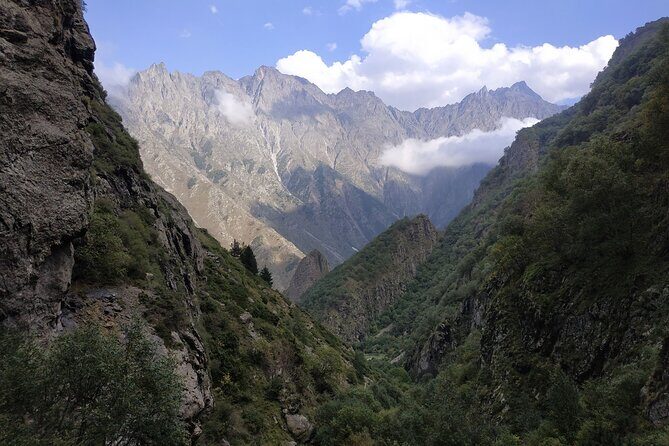
The big draw is the view corridor. The tour highlights Dariali Gorge and the mountainous Khde river, with the monastery positioned near the Russia–Georgia border. It is one of those places where you look out and realize how much the region has always been shaped by passes and routes.
One potential issue is expectation. This is not a long monastery visit where you study every corner. It is a quick, scenic stop with a focus on what you can see from the area and how the site relates to the surrounding geography.
Gveleti Waterfall hike: 4 km roundtrip, easy pace, real canyon energy
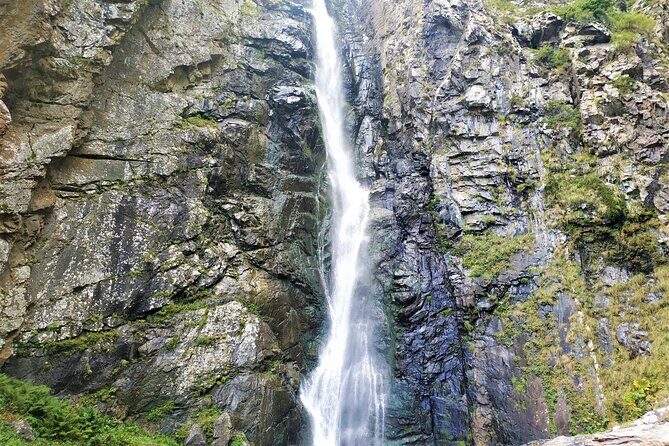
Now for the active part: Gveleti Waterfall hike, also called Snake’s Waterfall. This is where the tour earns its name as more than just driving to viewpoints.
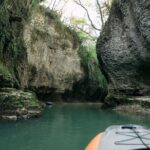
You hike to both small and big waterfalls of Gveleti. The total distance is about 4 km roundtrip, with roughly 1.5 hours total. The tour describes the hike as easy, which matches what I look for in a day trip: short distance, manageable duration, and a payoff that is more than a single waterfall photo.
A detail worth taking seriously: the hike includes a narrow pathway to the canyon area. That means you should wear shoes with solid grip and keep an eye on your footing, even if the overall pace is not strenuous.
What you will likely enjoy most is the sequence. You start with village countryside views, then transition toward the canyon feel as the trail narrows. It is a smooth arc that makes the hike feel purposeful instead of random.
Stepantsminda lunch in Kazbegi: local family option vs restaurant menu
Lunch happens in Stepantsminda, with about 1.5 hours set aside. This is where your tour choice changes the vibe.
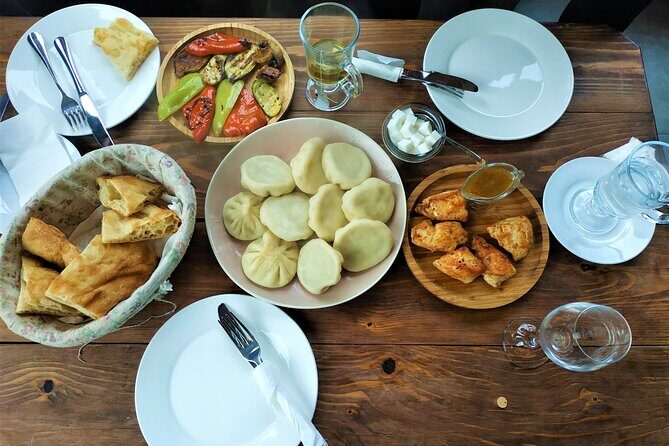
If you pick the Tour with Lunch option, the lunch is in a local family setting, with tasting of local mountainous cuisine. In at least one experience, that family-style meal included a hands-on khinkali moment, so you might go beyond eating and learn a basic technique with the food.
If you choose the Standard Tour option, you still get the same time window, but you stop in a restaurant where you can order from the menu.
Either way, this is the point in the day where you should think strategically. You started early, you hiked, and you are about to hit more viewpoints. Eat something filling. If you have dietary restrictions, tell the operator ahead of time so the lunch option can match your needs.
Khevi gorge basilica and watchtower signals
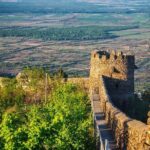
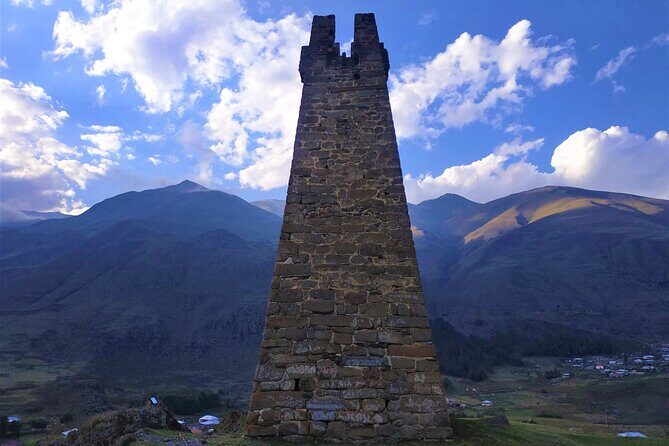
Next up is Khevi: a three-nave basilica from the IX–X centuries and a four-story pyramidal watchtower on a steep cliff edge. The tower’s purpose was practical—watching for enemy movements and transmitting signals by smoke.
This stop is shorter (about 20 minutes) and free of admission per the tour data. The free-entry aspect is nice because it keeps costs tied up in the parts that really need it. But the bigger value is variety: after the waterfall and lunch, you get a shift back to stone heritage and defensive geography.
A tip for getting your money’s worth of time: take one minute to look at the watchtower location relative to the cliff and the valley below. Even with limited time, that visual helps the story make sense.
Sno village: Patriarch home, portraits, and carved figures
Sno is one of the more unusual stops on the route. You visit a village where the Patriarch of Georgia has a home there, and Sno includes a statue of Vakhtang Gorgasali, plus a Medieval Watch Tower.
What makes this stop memorable is art. The tour mentions giant portrait sculptures of Georgia’s prominent writers and public figures by artist Merab Firanishvili. It is not just sightseeing. It is public sculpture as identity-making—names you might recognize from Georgian culture, shown at scale.
This is also a short stop (about 10 minutes) with free entry. So treat it like a quick walk-through. If you linger too long, you may feel rushed when the day accelerates again.
Jvari Pass travertine and mineral springs at 2,197 meters
Then you move to Jvari Pass Travertine, part of the Kazbegi Protected Areas, at 2,197 meters above sea level. The tour frames travertine formation as carbonate minerals precipitating out of ambient temperature water.
This stop is only about 10 minutes and includes an admission ticket. Even so, it can be satisfying because it gives you a concrete geology story. You can look at the mineral pattern and connect it to why certain springs exist in the first place.
A small warning: being at high elevation again means you should keep up your warm layers. If you get cold after the waterfall hike, this quick geology break might not feel quick enough.
Russian-Georgian Friendship Monument: a Soviet-era panorama point
Finally, you stop at the Russia–Georgia Friendship Monument, sometimes associated with the panorama view over Gudauri. It was built in 1983 to celebrate the Treaty of Georgievsk and the ongoing friendship between Soviet Georgia and Soviet Russia. You get about 20 minutes here, with an admission ticket included.
The practical value of this stop is straightforward: it is a viewpoint anchor near the end of the day. By the time you reach this monument, you have seen churches, monasteries, valleys, waterfalls, villages, and stone relics. A panorama helps stitch it together.
If it is clear weather, you will appreciate the wide mountain views. If it is foggy or rainy, the stop still gives you a cultural marker, but you may have less to see.
Price and value: what $157.50 gets you on a long day
At $157.50 per person, this tour is priced like a full-day package rather than a quick hop. The value comes from three things you do not want to manage yourself:
- A single vehicle day that covers multiple districts without you arranging separate rides.
- An English-speaking guide who ties sites together, which matters when each stop is short and you want context fast.
- Admission coverage across key stops plus a guaranteed structure for the day.
Also, the tour includes onboard Wi-Fi and water, plus air-conditioned transport. Those details sound small, but on a 12-hour day they add comfort and keep morale from draining before you reach the waterfalls and Gergeti.
The schedule is full, though. If you prefer slow travel, you might feel like you are constantly checking the time. In that case, you might get better value with a shorter route or a multi-day Kazbegi plan.
What to wear and bring (so the day does not fight you)
This tour includes churches and a hike, so pack like you are mixing city comfort with countryside weather.
- Bring comfortable shoes with grip for the Gveleti narrow-path section.
- Wear warm layers. A warm jacket is recommended, and you will thank yourself around high-elevation stops.
- For Georgian Orthodox churches: women should wear headscarves and dresses; short trousers for men are forbidden. Headscarves and dresses are available near some church entrances, but it is still smart to bring what you can.
- If you want to snack between meal stops, consider grabbing something before you start. The day is structured, but you will likely move fast between sights.
If you are sensitive to cold, wind, or altitude, plan accordingly. This day trip can feel like a changing-weather machine.
Who this tour fits best
This is a strong pick if you:
- want a 12-hour northern Georgia highlight route from Tbilisi
- like a mix of famous sites and smaller cultural stops like Sno village sculptures
- are okay with a short hike around 4 km roundtrip
- want guidance and pacing so you do not have to research each stop
You may want to skip it if you:
- want lots of free time at a single location
- have trouble with walking on narrower paths during the waterfall hike
- dislike strict timing and quick transitions
The call: should you book this Kazbegi day trip?
I would book it if you are visiting Tbilisi and want Kazbegi without losing a whole vacation week to transport planning. The combination of Gergeti Trinity Church, the Gveleti Waterfall hike, and the add-on stops like Mtavarangelozi Monastery, Sno village, and travertine at Jvari Pass gives you a day that feels like a full education, not just a list of monuments.
I would hesitate only if you hate packed schedules or you are not comfortable with cold and short hiking sections. If that sounds like you, look for a slower route.
One smart move: book early. The tour is often reserved about a month in advance on average, so securing your date ahead of time helps.
FAQ
How long is the Kazbegi Tour, and when does it start?
The tour starts at 8:00 am and runs for about 12 hours (approx.). That usually means you are back in the evening.
What is the first stop on the route?
The first stop is Jinvali Water Reservoir, which supplies Tbilisi with drinking water. It was constructed in 1985 and has a maximum depth of 75 meters.
Are entrance tickets included for the main sites?
Some stops include admission tickets, including Ananuri Castle Complex, the Black and White Aragvi area, Gergeti Trinity Church, Mtavarangelozi Monastery, Gveleti Waterfall, Mineral Springs at Jvari Pass Travertine, and the Russian-Georgian Friendship Monument. Other stops on the route are listed as free.
How long is the Gveleti Waterfall hike?
The hike is about 4 km roundtrip and takes roughly 1.5 hours for an easy hike. It includes a narrow pathway as you reach the canyon area.
What lunch options are available in Stepantsminda?
You get about 1.5 hours for lunch in Stepantsminda. With the Tour with Lunch option, you eat with a local family and taste local mountainous cuisine; with the Standard Tour option, you stop at a restaurant where you can order from the menu.
Is 4×4 transportation included for Gergeti Church in winter?
Yes. During the winter period, the tour includes 4×4 transportation from Kazbegi to Gergeti Church.
What should I wear for Georgian Orthodox churches?
Women should bring a headscarf and wear a dress. Men should avoid short trousers. Headscarves and dresses may be available near some church entrances.
Does the vehicle include Wi-Fi and water?
Yes. Wi-Fi is available onboard so you can share photos, and water is provided.
What happens if weather is poor?
This experience requires good weather. If it is canceled due to poor weather, you will be offered a different date or a full refund.