REVIEW · TBILISI
Private Cooking Class with a Tbilisi Food and City Expert Dinara
Book on Viator →Bookable on Viator
Cooking in someone’s real kitchen beats any restaurant. I love the hands-on part, and I really liked that you end by eating the dishes you helped make in Dinara’s private apartment. It’s a personal slice of daily life in Tbilisi, not a scripted food show.
The one thing to think through is logistics and fit: it’s about 3 hours 30 minutes total and the menu includes khachapuri plus either khinkali or shkmeruli. If you have strict food preferences (or you’re not into certain ingredients like cheese, eggs, garlic sauce, or nuts), you’ll want to be clear before you arrive.
In This Review
- Key highlights you’ll actually care about
- Why Dinara’s Tbilisi kitchen feels different
- Getting started in Saburtalo: meet, relax, and prep
- The main event: hands-on cooking for about 2.5 hours
- What you’ll likely make (and why it’s a smart mix)
- The dishes: what to expect beyond the names
- Khachapuri: cheese-and-egg bread you’ll understand after making it
- Georgian salad: simple ingredients, clear payoff
- Khinkali or Shkmeruli: dumplings or garlic-forward chicken
- Pkhali: minced vegetables with nuts and herbs
- Dinner at Dinara’s table: you eat what you built
- Dinara’s background: why the class feels like a conversation
- Price and value: is $148 per person worth it?
- Who should book this private Georgian cooking class?
- Booking timing and what to expect day-of
- Should you book Dinara’s class?
- FAQ
- Where does the cooking class start?
- How long is the class?
- What dishes will we cook and eat?
- Is this tour private?
- How soon will I get confirmation?
- Can I cancel for a full refund?
Key highlights you’ll actually care about
- Meet Dinara at her Saburtalo apartment and get a real-home welcome before cooking
- Cook 3 Georgian dishes from scratch over roughly 2.5 hours with direct instruction
- Eat a family-style meal that includes khachapuri, Georgian salad, and either khinkali or shkmeruli
- Try pkhali and a Georgian dessert like matsoni or yogurt with honey and nuts
- Your group stays private to you only, so questions and pacing are yours
- Price makes sense if you want the meal + the lesson (not just dinner)
Why Dinara’s Tbilisi kitchen feels different
Georgian food can be easy to sample in restaurants. What’s harder is getting the why behind the flavors—the little choices in dough, seasoning, and assembly that make the dishes taste like they’re meant to. This class gives you that context because it happens in Dinara’s actual home kitchen, not a demo studio.
I also liked the tone of the experience. Dinara isn’t just reciting recipes; she runs the class like a city host and a former café owner who enjoys sharing how people really eat and talk. When you’re in her home (with her husband, daughter, and friendly dog), Georgian cuisine turns from “stuff you order” into “stuff you can make.”
You can also read our reviews of more food & drink experiences in Tbilisi



Getting started in Saburtalo: meet, relax, and prep
The experience starts back at the meeting point in Saburtalo, Tbilisi. You’ll meet Dinara at her apartment, where you’ll get settled before you cook. Before the stove-and-table part begins, there’s a refreshing drink to start things off smoothly—more “welcome” than “tour activity.”
This is also your chance to set the vibe. Since it’s private (only your group), you can ask practical questions right away: how the meal typically comes together, what to expect from the dishes, and how to work at the pace of the kitchen. And because it’s in a home, you’ll likely notice small details that don’t show up in restaurants—how the kitchen is organized, how people share tasks, and how the meal is served at the end.
One small consideration: a friendly dog lives there too. If you’re sensitive to pets, it’s worth keeping that in mind when you arrive.
The main event: hands-on cooking for about 2.5 hours
The cooking portion lasts about 2.5 hours, and the class focuses on making 3 Georgian dishes from scratch. You’ll work directly with Dinara in a large open kitchen, learning techniques rather than just copying a final result.
Think of this as a structured workflow you participate in: mixing and preparing components, shaping or assembling the dish, and then cooking until it’s ready to eat. Exact steps aren’t the point—what matters is that you learn the logic behind each dish so you could repeat it later with confidence.
What you’ll likely make (and why it’s a smart mix)
The menu is built to give you a well-rounded Georgian meal, not only one specialty. You’ll cook dishes that represent different categories of Georgian comfort food:
- Bread + cheese + egg energy with khachapuri
- A fresh, crunchy side with Georgian salad
- A filling main that can be khinkali (dumplings) or shkmeruli (fried chicken in a garlic sauce)
- Plus pkhali, which brings in the nut-and-herb flavor profile that makes Georgian meals taste layered
From a value standpoint, the mix is excellent. Many food classes focus on one dish. Here you get multiple textures—stretchy bread, soft dumplings, or saucy chicken—plus herb-forward sides.
The dishes: what to expect beyond the names
If you’re used to Georgian food as a menu item, this is where it clicks. You’ll see how the dishes are built from different flavor bases and textures.
A few more Tbilisi tours and experiences worth a look

Khachapuri: cheese-and-egg bread you’ll understand after making it
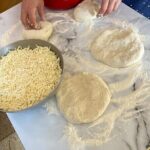
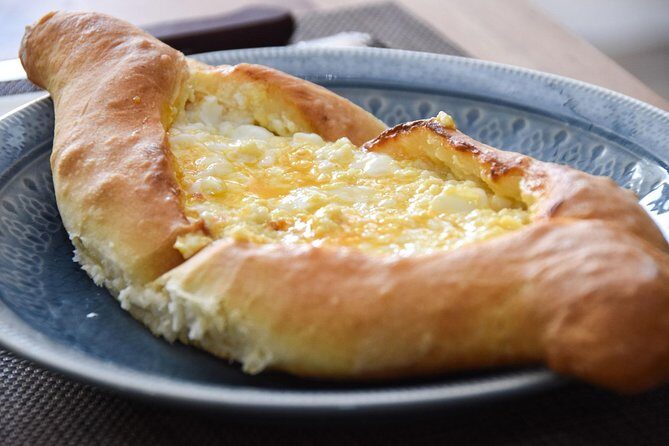
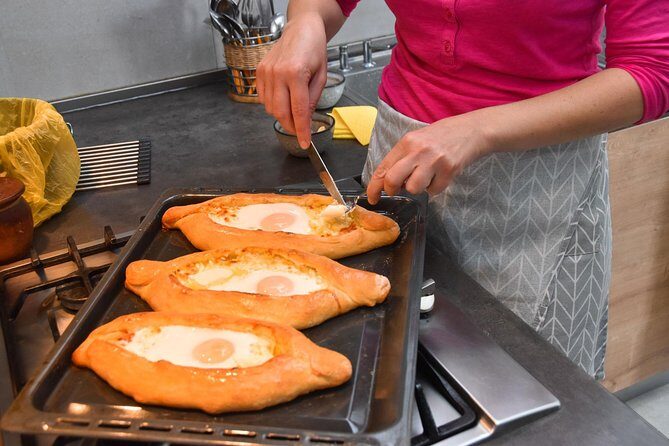
Khachapuri is one of Georgia’s most recognizable foods, but the magic isn’t only the cheese. It’s the balance: dough structure, heat, and how the filling behaves as it cooks. When you make it, you get a feel for how Georgian bread can be both comforting and slightly indulgent.
You’ll likely work through the dough and filling process yourself, then watch how the final bake brings everything together.
Georgian salad: simple ingredients, clear payoff
A Georgian salad might sound like a side you could skip. In reality, it works as a palate reset. During the class meal, it adds brightness and crunch, which makes the heavier main dishes easier to enjoy.
The class usually includes it as part of the family-style spread, so you’re not stuck hunting for sides afterward.
Khinkali or Shkmeruli: dumplings or garlic-forward chicken
One of the biggest decisions in the meal is whether your class version includes khinkali or shkmeruli.
- Khinkali brings dumpling-style satisfaction. When you cook them, you’re learning assembly and shaping—how to form something that seals properly and cooks evenly.
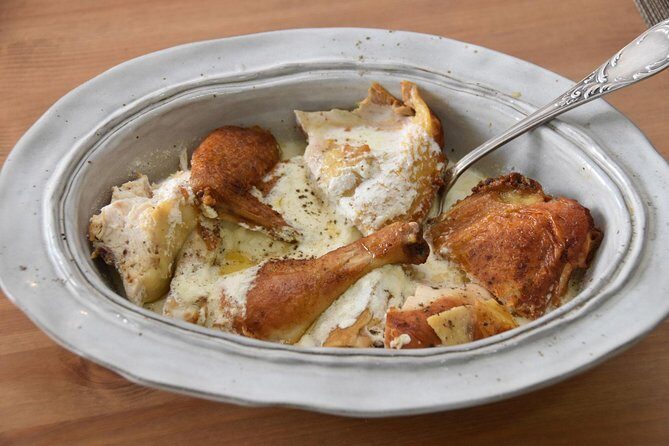
- Shkmeruli goes in a different direction: chicken with a garlic sauce. If you like bold, savory flavors, this option is a treat because the sauce is the star of the dish.
Either way, you’re not just eating—you’re learning the central technique that makes the main taste right.
Pkhali: minced vegetables with nuts and herbs
Pkhali can be surprising if your idea of comfort food is only meat or cheese. This dish is built around minced vegetables plus nuts and herbs, so it lands with a nutty, herby depth that feels distinctly Georgian.
Cooking it teaches you how herbs and nuts can create richness without relying only on heavy meat flavors. It’s a great contrast to the more bread-and-meat-centered items.
Dinner at Dinara’s table: you eat what you built
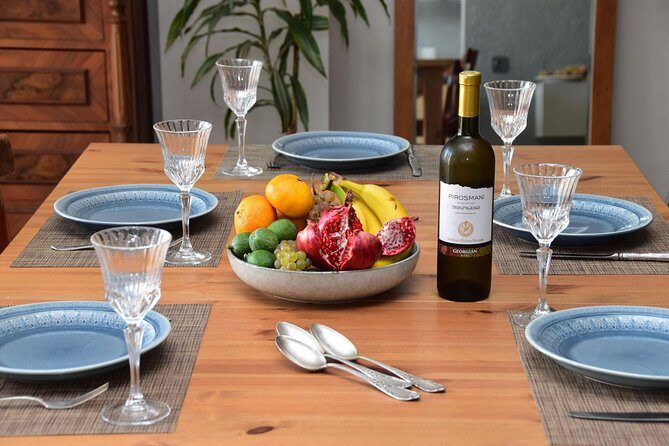
After the cooking lesson, you sit down together for a family-style meal made from what you prepared. This is the part I value most. You get to taste-test your work while it’s still fresh and clearly in the right order.
The meal may include:
- khachapuri
- Georgian salad
- khinkali or shkmeruli
- pkhali
And it ends with a Georgian dessert such as matsoni (yogurt-like) or yogurt with honey and nuts. That sweetness and creamy finish is a nice way to close a savory cooking session.
If you’re the type who likes to understand food at the source, this is also where you’ll notice the small differences between what you made and what you usually buy. Restaurant versions are great, but the home version tends to feel more straightforward and more personal.
Dinara’s background: why the class feels like a conversation
Dinara is a former café owner and a city guide. That combination matters. It means she can explain Georgian food through both technique and culture—what people eat, how meals are structured, and what guests should pay attention to while cooking.
Since the experience is private, you can ask follow-up questions without feeling rushed. You’ll likely learn practical tips that make a difference later, especially if you plan to cook Georgian dishes at home.
Also, being in her apartment gives you a human scale to Tbilisi. It’s not just about ingredients—it’s about the routine of sharing a meal with family and how travelers fit into that moment.
Price and value: is $148 per person worth it?
At $148 per person, this isn’t the cheapest way to eat in Tbilisi. The question is: what are you paying for?
Here’s the value case:
- You get a private class in a real apartment, not a group demo
- You cook 3 dishes from scratch (about 2.5 hours of instruction and active work)
- You eat a full family-style meal and dessert at the end
- You’re paying for your time with a local expert in her home, including cultural context
If your goal is only dinner, you can find cheaper options. If your goal is to leave with real cooking skills and a memorable, grounded experience, the price starts to feel fair.
One more angle: the class is often booked in advance (about 17 days on average). If you want a specific date, plan early rather than assuming you can walk in last minute.
Who should book this private Georgian cooking class?
This is a great fit if you:
- want hands-on cooking instead of only tasting
- enjoy home-style, local experiences where you can ask questions
- are excited about learning Georgian staples like khachapuri, khinkali, shkmeruli, and pkhali
It may not be ideal if you:
- have strong aversions to specific ingredients that show up in the included dishes (like cheese/eggs, nuts, or garlic-heavy sauce)
- don’t like being in a home environment with a pet present
If you’re traveling solo or as a couple, the private format can be a strong value because you’re not sharing your kitchen time with strangers. If you’re with friends, you may also benefit from group discounts.
Booking timing and what to expect day-of
Confirmation happens within 48 hours of booking, as long as availability is open. The class includes a mobile ticket, so you’ll likely just show it on your phone at the start.
It’s a 3 hours 30 minutes total experience, with the cooking component lasting around 2.5 hours. Build in buffer time before and after, since you’ll want to arrive on time, enjoy the welcome drink, and then settle into the meal without rushing your day.
Should you book Dinara’s class?
I’d book it if you want more than food. This is one of those experiences where the meal at the end feels earned because you made it—then you can talk with Dinara about what matters in the flavors. It’s also a nice way to understand Georgian cuisine without hunting down multiple restaurants.
Skip it only if your priority is cost-cutting over skill-building, or if you have strong dietary or ingredient constraints. Otherwise, $148 buys you a whole afternoon worth of cooking, eating, and local conversation in Tbilisi’s Saburtalo—exactly the kind of trip memory that sticks.
FAQ
Where does the cooking class start?
The experience starts in Saburtalo, Tbilisi, Georgia and ends back at the meeting point.
How long is the class?
The total duration is about 3 hours 30 minutes, with the hands-on cooking lasting roughly 2.5 hours.
What dishes will we cook and eat?
You’ll make 3 Georgian dishes from scratch and enjoy a family-style meal afterward. The meal can include khachapuri, Georgian salad, khinkali or shkmeruli, and pkhali, plus a Georgian dessert such as matsoni or yogurt with honey and nuts.
Is this tour private?
Yes. It’s a private tour/activity, and only your group will participate.
How soon will I get confirmation?
You should receive confirmation within 48 hours of booking, subject to availability.
Can I cancel for a full refund?
Yes. You can cancel up to 24 hours in advance for a full refund. Cancellation cut-off is based on local time.