REVIEW · TBILISI
UNESCO Gems of Mtskheta – Old Capital of Georgia
Book on Viator →Operated by We Are Georgia Tours · Bookable on Viator
UNESCO sites, close together, in one smooth route. I like how this tour stacks major stops in Mtskheta with door-to-door pickup from wherever you’re staying in the capital, so you lose less time to figuring things out. It’s a practical way to connect Georgian faith, royal history, and everyday local life in just a few hours.
The second big win for me is the focus. You get free entry at each stop listed, and the time at the sites is long enough to actually look up, notice details, and read the spaces. A guide is optional during checkout, but the stories are what help it all click.
One thing to consider: the tour description mixes a short 3-hour schedule with a longer day-trip pitch that mentions Uplistsikhe and Gori. Before you go, double-check what your exact booking includes so you’re not surprised by a shorter Mtskheta-only route.
In This Review
- Quick hits: what makes this Mtskheta UNESCO tour work
- A fast, focused UNESCO circuit from Tbilisi
- Jvari Monastery: the cross over Aragvi and Mtkvari
- Svetitskhoveli Cathedral: where Georgia’s story turns
- Mtskheta Flea Market: souvenirs with real artisan energy
- Samtavro Church: a calmer finish in Mtskheta
- Transportation, timing, and one detail to verify
- Guide service, language, and the storytelling factor
- Price and value: is $89 per person fair?
- Who this UNESCO Mtskheta tour suits best
- Should you book this UNESCO Mtskheta tour?
- FAQ
- What’s the duration of the tour?
- What stops are included in the itinerary?
- Is pickup from my hotel included?
- Is admission included for the sites?
- Is the tour private?
- What language is the tour offered in?
- Is a guide included?
- Do you offer mobile tickets?
- What’s the cancellation policy?
- Can I participate if I’m traveling with others?
Quick hits: what makes this Mtskheta UNESCO tour work
- Door-to-door pickup and drop-off make the route feel easy from Tbilisi
- Free admission at Jvari, Svetitskhoveli, the cathedral area, Samtavro, and the market stop (per the plan)
- Jvari’s river confluence views add a wow-factor even if you’re not a church-history person
- Svetitskhoveli’s 11th-century core and the tradition around the robe of Jesus give real emotional weight
- A market stop helps you buy Georgian crafts without turning it into a shopping trap
A fast, focused UNESCO circuit from Tbilisi
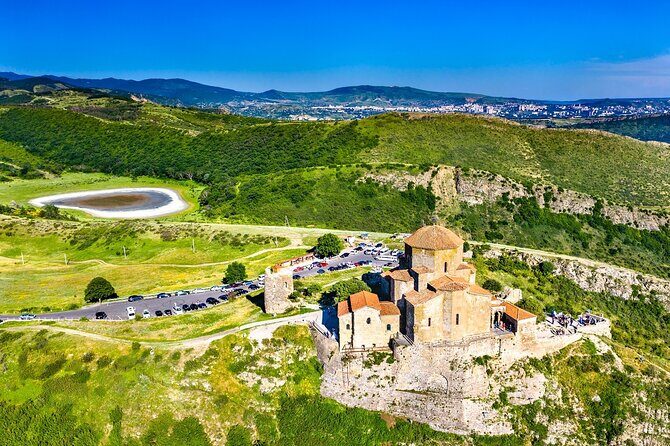
This is the kind of tour that’s built for travelers who want the important UNESCO hits without a full day of long drives and constant transfers. You start in Tbilisi and get met at your doorstep. That means you’re not doing the classic early-morning game of “Which bus is this?” You just go.
The pacing is also clear. The plan calls for about 30 minutes at Jvari and then about 40 minutes at each of the next main stops (Svetitskhoveli, the market, and Samtavro). That’s enough time to take in the big architectural shapes, look for the little details that make Georgian churches distinctive, and still have time to breathe.
One more practical point: the tour is private, meaning it’s only your group. That matters for comfort and for questions. If you want the guide to slow down at Svetitskhoveli or spend a little longer wandering the Mtskheta flea market, you’re more likely to get that adjustment than you would on a crowded group bus.
You can also read our reviews of more tours and experiences in Tbilisi.



Jvari Monastery: the cross over Aragvi and Mtkvari
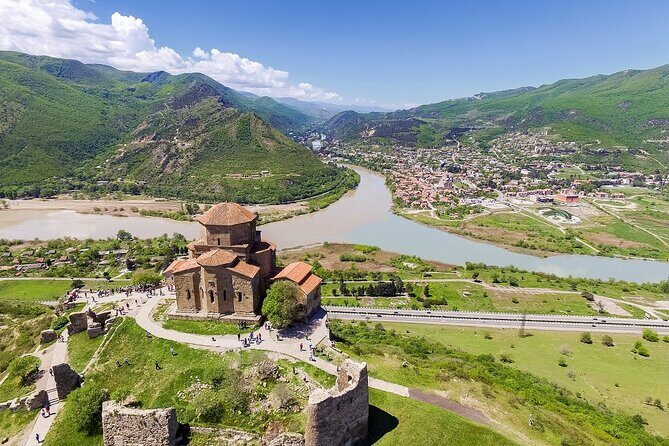
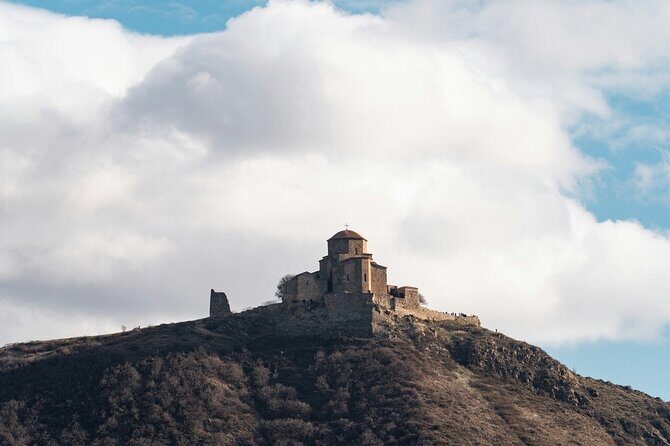
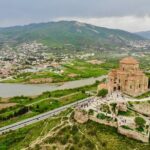
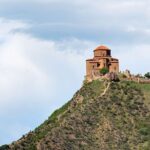
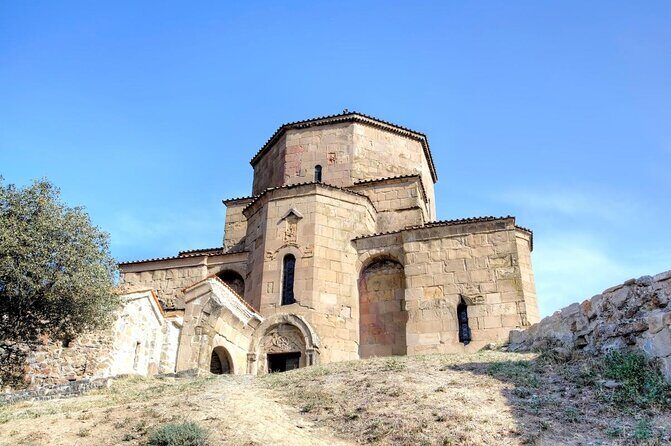
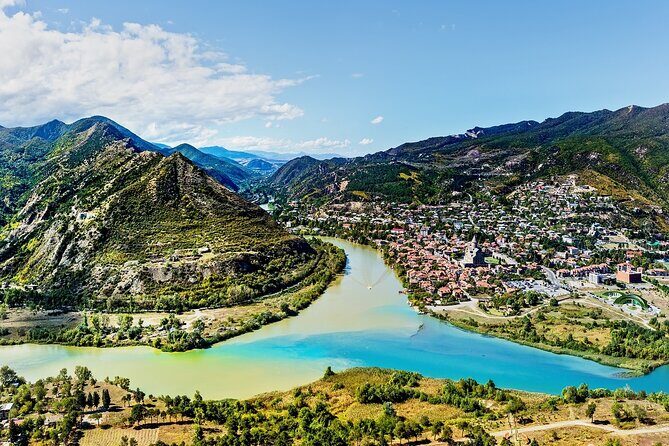
Jvari is the first stop, and it’s set up like a warm-up with a payoff. The church name translates as cross, and it sits in a spot that looks over ancient Mtskheta and the confluence of the Aragvi and Mtkvari rivers. Even if you’ve barely read any Georgian history, that view helps you understand why people built here.
Jvari is also listed by UNESCO as part of the historic structures in Mtskheta. That UNESCO status matters because it signals that the site is not just pretty. It’s part of a bigger historic story tied to the region’s early Christian era.
What I’d watch for on your visit is the way the location changes your perspective. From lower streets, a church can look like a landmark. From Jvari, it feels like a sentence in the landscape—faith placed at an edge where the rivers meet and history still feels close.
Why this stop is worth your time
- You get an easy-to-grasp highlight: a viewpoint plus a historic church
- The visit is short but meaningful (about 30 minutes), so it won’t eat the whole tour
- The river confluence angle makes the UNESCO listing feel tangible
Possible drawback
If you’re sensitive to weather or winds, remember that viewpoints can be exposed. It’s still a great stop, but dress for the open air.
Svetitskhoveli Cathedral: where Georgia’s story turns
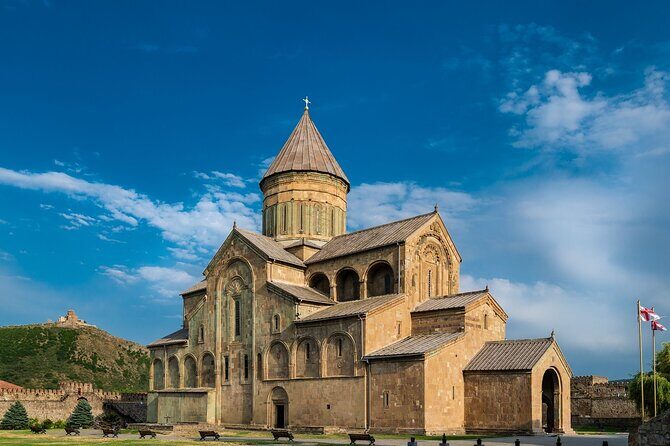
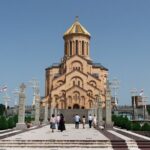
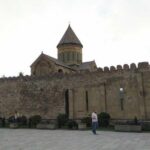
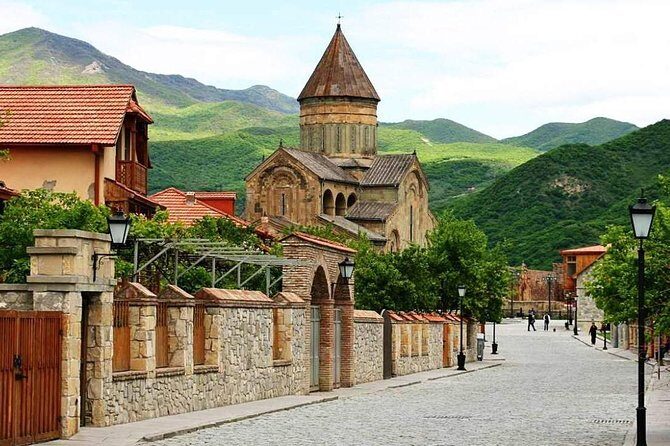
Next comes Svetitskhoveli, and this is the stop that tends to land hardest for people. The cathedral dates from the 11th century, described as early in Georgia’s golden age of church architecture. That alone is a good reason to slow down and look carefully—11th-century architecture has a way of showing you the craft that went into it.
This is also called the mother Cathedral of Georgia. The plan includes why: it’s tied to kings and major church leadership, and it’s considered the burial place of many Georgian kings, their family members, and patriarchs. That’s a lot of weight for one building.
Then there’s the tradition that lifts Svetitskhoveli beyond simple sightseeing. The holiest element is believed to be part of the robe of Jesus Christ, thought to lie beneath the central nave under a square pillar. The plan notes colorful but faded frescoes connected to the conversion of Kartli. So you’re not just looking at stonework—you’re looking at a space where people believe a sacred story is physically present.
A 40-minute visit is the right length for this kind of place. If you rush, you miss the meaning. If you linger too long, you risk fatigue after the emotional density. The best move is to start by looking up, then take a slow circuit, then let the guide’s explanation frame what you’re seeing.
What makes Svetitskhoveli special in plain terms
- It connects royal power and church authority in one site
- The robe tradition and the frescoes give you a concrete hook for the architecture
- It’s a UNESCO stop tied directly to the historic identity of Mtskheta
Mtskheta Flea Market: souvenirs with real artisan energy
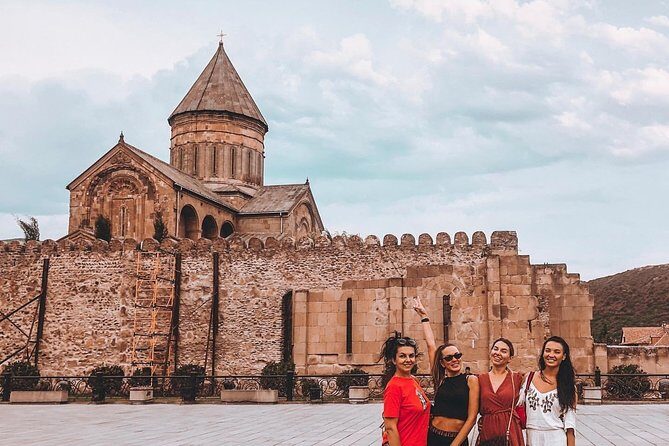
After the cathedral, the plan shifts gears with a stop in Mtskheta for a flea market. The idea isn’t just shopping. It’s a chance to see how the town expresses culture day-to-day through handmade goods.
You’ll have about 40 minutes here, which is perfect for a browse without feeling like you’re trapped. The market is described as a cultural shopping haven with stalls and local artisans. You can look for traditional textiles and hand-carved wooden keepsakes.
Here’s how I’d handle this stop for best value:
- Go in with a short list: one textile item, one small craft, maybe a wooden keepsake
- Don’t buy the first thing you see. Prices and quality can vary by stall
- If you want gifts, use the time to compare small details like carving style or fabric pattern
Market time works especially well after churches because you’ve switched from “history and faith” mode into “people and craft” mode. It also gives you something to do with your hands besides taking photos.
Samtavro Church: a calmer finish in Mtskheta
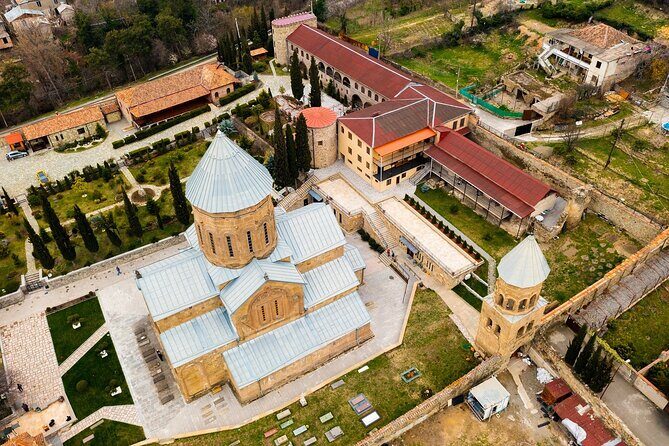
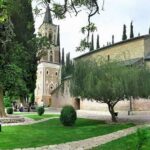
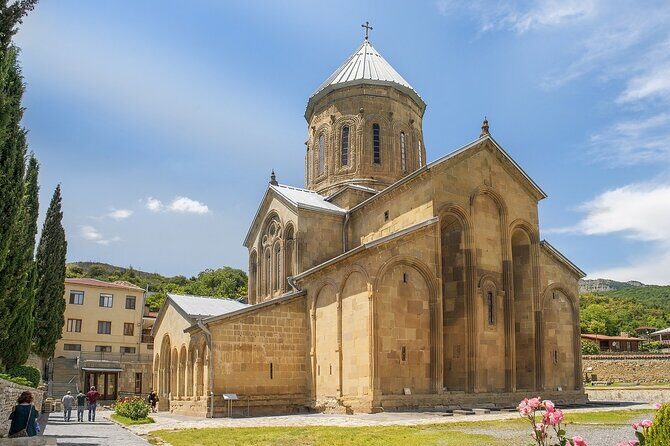
Samtavro Monastery is a quieter ending, and I like that the route doesn’t end with another heavy, monumental stop. The plan describes it as a spiritual sanctuary in lush greenery, with a serene atmosphere and intricate Georgian religious architecture.
You get another 40 minutes here. That length matters because it allows you to actually settle after the bigger cathedral stop. At this stage, you’re likely to have two competing needs: keep looking because the place is beautiful, and also rest because your brain has been working hard.
If you want to make the most of the Samtavro portion, don’t treat it like a checklist photo moment. Instead, slow down. Notice how the church’s feel differs from Svetitskhoveli. Even without going deep into theology, you can usually sense the shift—from royal-center intensity to personal quiet.




Transportation, timing, and one detail to verify
This is where you should be a bit alert. The tour summary describes it as a private full-day Georgia day trip that includes Mtskheta, Uplistsikhe, and Gori, yet the tour duration is listed as about 3 hours and the stop-by-stop plan focuses on Mtskheta sites: Jvari, Svetitskhoveli, a market stop, and Samtavro.
So the smart move is simple: confirm the exact itinerary for your booking. Ask what your day includes beyond Mtskheta and whether Uplistsikhe and Gori are part of your specific route. The operator’s team can clarify what your driver/guide will take you to.
What’s consistent from your details is the transport style:
- Private transportation
- Pickup from your hotel or apartment
- Drop-off back at your accommodation
That is a huge value for many travelers, because the time cost of local transit can eat up your sightseeing day fast.
What you can expect about time on-site
- 30 minutes at Jvari
- 40 minutes at Svetitskhoveli
- 40 minutes at the market
- 40 minutes at Samtavro
If you’re the type who likes to read every inscription and linger in chapels, you’ll probably want a guide to help you prioritize what to focus on in the time you have.
Guide service, language, and the storytelling factor
The tour is offered in English, and it’s private—your group stays together. Guide service is not included by default, but you can add it during checkout. That matters because these sites hit harder with context.
Even without a formal guide on board, you’ll likely appreciate the atmosphere. But if you do add the guide, the difference is real. Based on the guide experiences attached to this tour, two names come up often: Luka and Catherine.
Luka is described as someone who shares and comments on the stories behind the sites, making the long history feel connected rather than random. Catherine is noted for being eager to speak and for keeping the route well curated around the highlights of the day. Another key point from the guide feedback is that the host can adjust the tour to your interests and tastes, which is great if your group cares more about religious architecture than shopping, or the other way around.
A simple way to use this: when you’re picked up, tell your guide what you care about most—views from Jvari, the robe tradition at Svetitskhoveli, or finding a couple of good crafts at the market. It helps the explanations land right.
Price and value: is $89 per person fair?
At $89 per person for about 3 hours, the headline value is mostly in the logistics: pickup and drop-off, private transportation, and free admission at the listed stops.
If you were to do this on your own with taxis, you’d still pay for car time, and you might spend extra effort coordinating routes and arrival times. With a driver/guide meeting you at your doorstep, the plan becomes a smooth, low-stress UNESCO sprint.
Is it expensive? Not really, assuming your route matches the listed stops. Where value can change is if your booking turns out to include additional sites beyond the Mtskheta-focused plan, since that would mean more driving and more time. That’s why confirming the exact itinerary is worth 30 seconds of effort.
Also note: guide service is optional. If you care about interpretation, adding a guide may be the best “value upgrade” you can make.
Who this UNESCO Mtskheta tour suits best
This works well if you:
- Want a high-impact UNESCO route without a full-day schedule
- Prefer private time over squeezing onto a bigger group tour
- Like church architecture and the stories tied to sacred sites
- Want an easy cultural-shopping stop that doesn’t swallow your day
It may be less ideal if you:
- Expect a long day trip with Uplistsikhe and Gori included (confirm your itinerary first)
- Need huge blocks of time at each site to read everything and slow-walk details
- Have a very tight schedule and can’t spare the time for multiple stops, even if each visit is under an hour
Should you book this UNESCO Mtskheta tour?
Book it if you want an efficient UNESCO-focused day that starts with great views at Jvari, lands the emotional heavyweight at Svetitskhoveli, gives you a real chance to shop in Mtskheta, and ends calmly at Samtavro. The private pickup/drop-off is a big quality-of-life upgrade, and the free admission stops make the day feel less like a paywall of extra fees.
Skip or at least double-check if the big selling point for you is Uplistsikhe and Gori. Because your booking might be a shorter Mtskheta-heavy route, I’d verify what’s actually included before you commit. Once that’s confirmed, this tour is a smart, low-stress way to see why Mtskheta matters.
FAQ
What’s the duration of the tour?
The tour is listed as approximately 3 hours.
What stops are included in the itinerary?
The plan includes Jvari Monastery, Svetitskhoveli Cathedral, a stop in Mtskheta Flea Market, and Samtavro Church.
Is pickup from my hotel included?
Yes. The tour includes pickup from your hotel or apartment, with the driver/guide meeting you at your doorstep.
Is admission included for the sites?
Yes. The plan lists admission tickets as free for each stop listed.
Is the tour private?
Yes. It’s a private tour/activity, and only your group participates.
What language is the tour offered in?
The tour is offered in English.
Is a guide included?
Guide service is not included by default, but you can add it during checkout.
Do you offer mobile tickets?
Yes. Mobile ticket is listed as a feature.
What’s the cancellation policy?
Free cancellation is available. You can cancel up to 24 hours in advance for a full refund.
Can I participate if I’m traveling with others?
Yes. The tour is described as suitable for most travelers, and it offers private transportation and pickup for your group.