REVIEW · TBILISI
Northern Armenia Highlights Tour from Tbilisi
Book on Viator →Operated by Friendly.ge: Transfers & Tours in Georgia · Bookable on Viator
Three monasteries, one day, no fuss. This northern Armenia tour from Tbilisi mixes a Georgia-Armenia border crossing with UNESCO architecture and canyon views.
I like that it’s structured and guided, so you know what you’re looking at instead of wandering blind.
I love the stop list: Akhtala Monastery for its frescoes and bell tower, then Sanahin for St. Astvatsatsin’s carefully carved cathedral front. The guide’s stories make the carvings and church layouts feel personal, not just old-stone pretty.
One watch-out: the day is long, and the itinerary gives Haghpat a short time slot. If you want slow, detailed photography everywhere, you’ll need to move fast and choose your moments.
In This Review
- Key highlights (what makes this trip work)
- From Tbilisi to Sadakhlo: the border crossing part
- A small planning tip that pays off
- Akhtala Monastery: fortress walls, Holy Trinity frescoes, and a bell tower
- Haghpat Monastery: khachkars, scriptorium rooms, and tight timing
- Sanahin Monastery: St. Astvatsatsin and Armenia’s spiritual-and-intellectual center
- Debed Canyon drive: where the day gets a breather
- Mikoyan Brothers Museum: the MIG-21 photo stop that surprises you
- Guide quality and the private-group pace
- Price and value: what $105 covers and what to budget
- Weather, documents, and packing for a border-day tour
- Should you book this Northern Armenia Highlights tour?
- FAQ
- What is the duration of the tour?
- Where does the tour start?
- Which monasteries are included?
- How long do you spend at each stop?
- Are monastery and museum tickets included?
- Is lunch included?
- Do I need a visa?
- What happens if the weather is bad?
Key highlights (what makes this trip work)
- UNESCO monasteries in a single day: Akhtala, Haghpat, and Sanahin let you compare Armenian religious architecture back-to-back.
- Akhtala’s fortress feel: intact walls, a famous bell tower, and frescoes tied to the Holy Trinity church.
- Haghpat’s learning-space details: features like the scriptorium and khachkars help you see the monastery as more than a church.
- Sanahin’s Cathedral of St. Astvatsatsin: an elaborate façade and interior that anchors the whole complex.
- Debed Canyon scenery during the drive: you get nature time without losing the historical focus.
- Mikoyan Brothers Museum + MIG-21 photo stop: a surprising Soviet-aircraft twist in the middle of the day.
From Tbilisi to Sadakhlo: the border crossing part
This is a classic “early start, big loop” day trip. You begin in Tbilisi with pickup (if offered in your booking) and private transportation heading toward Sadakhlo, the Georgian–Armenian border area. Expect the border crossing itself to be the wild card of your schedule; it’s not just driving time, it’s paperwork time and queue time.
The good news is the tour doesn’t throw you into border life cold. There’s a planned stop after crossing where you can exchange money and buy local products. That’s practical, and it also helps you shift from Georgia mode into Armenia mode fast—your brain catches up sooner.
Because this is a private tour for your group, you’re not stuck doing the “follow the herd” shuffle. You have a guide working with your timing, and your driver keeps things moving. Just remember: a border-day tour always rewards preparation more than luck.
You can also read our reviews of more tours and experiences in Tbilisi.


A small planning tip that pays off
If you need a visa, the info recommends applying for an e-visa in advance. Also, it’s your responsibility to bring the right documents and ensure you can cross. On a day like this, being missing anything means losing the whole day.
Akhtala Monastery: fortress walls, Holy Trinity frescoes, and a bell tower
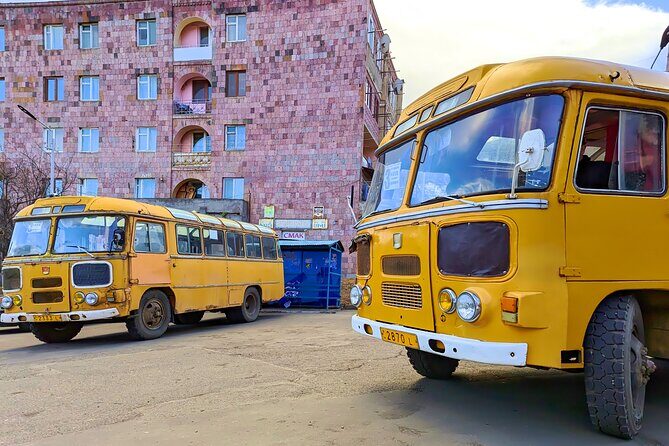
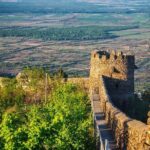
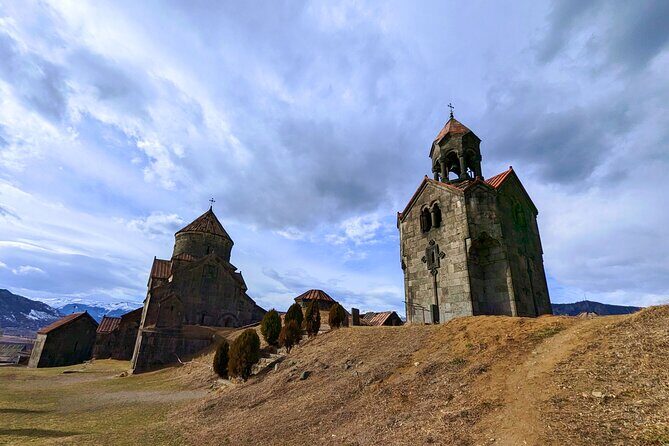
Akhtala is the kind of site you understand instantly. The monastery complex feels like it’s built to hold its ground—surrounded by imposing walls, with a bell tower that becomes part of the skyline. It’s known as one of Armenia’s major landmarks, and the architecture is what makes people stop and stare.
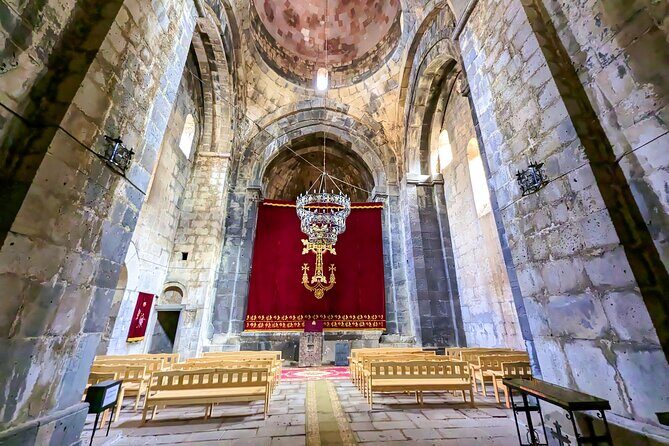
Dating is part of the story here: the monastery complex traces back to the 10th century, while the surrounding walls are from the 12th century. That mix matters because you can sense different building phases and styles. Inside the main church, dedicated to the Holy Trinity, you’re looking at a church space decorated with frescoes and Armenian cultural details like stone carving work and ancient Armenian script.
The practical upside: Akhtala is a strong “first UNESCO hit” after the border. Your guide can point out what to notice, like the exterior carvings versus what’s preserved inside. The itinerary schedules about an hour for this stop, which is enough time for the key views without turning the day into a marathon.
One caution: the hour goes quickly if you’re aiming for perfect photos of every angle. Pick your “must shots” early and let the guide tell you what’s worth lingering on.
Haghpat Monastery: khachkars, scriptorium rooms, and tight timing
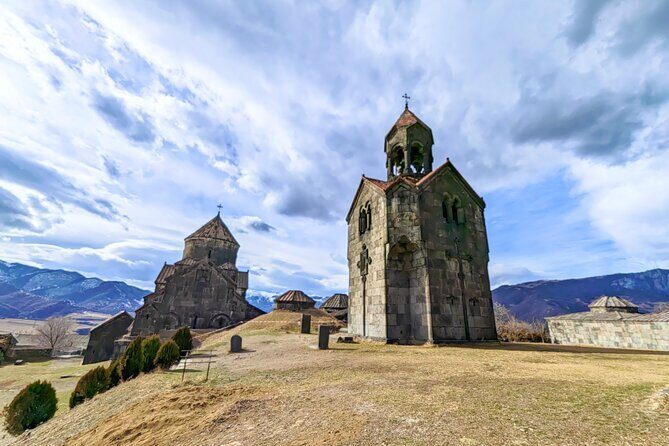
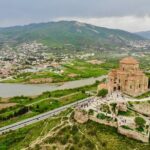
Haghpat is one of those monasteries that rewards context. The complex spans from the 10th to the 13th centuries and includes a lot of parts, not just one “main church and done” stop. You’ll encounter elements like a narthex, two corridor sepulchres, a refectory, and a scriptorium—plus chapels, a belfry, tomb areas, and cross-stones known as khachkars.
The architecture angle is especially interesting. Haghpat is described as one of the top achievements of Armenian religious architecture, with a style that blends Byzantine ecclesiastical influences and traditional vernacular building. In plain terms: it doesn’t look like a copied template. It looks like local people adapted big religious ideas to real materials and building needs.
The tricky part is pacing. The itinerary lists only about 6 minutes at Haghpat. Even if that’s a tight highlight window (and the guide can still lead you well), it means you won’t do a slow, everything-detail visit. You should plan to look, learn, photograph, and move.
If you like churches but also like to understand how religious sites functioned—education, ritual, community life—Haghpat’s layout hits that sweet spot.
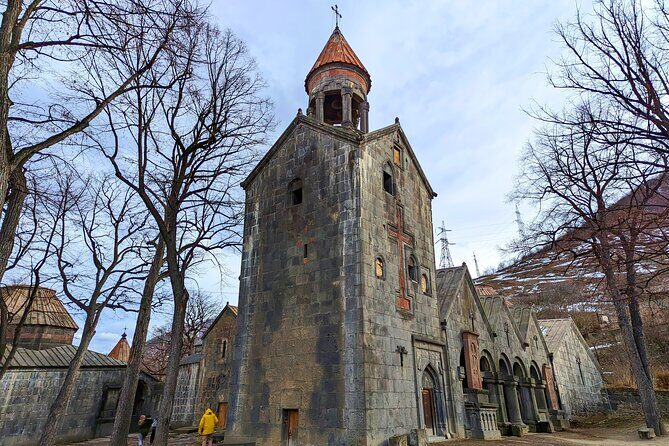
Sanahin Monastery: St. Astvatsatsin and Armenia’s spiritual-and-intellectual center
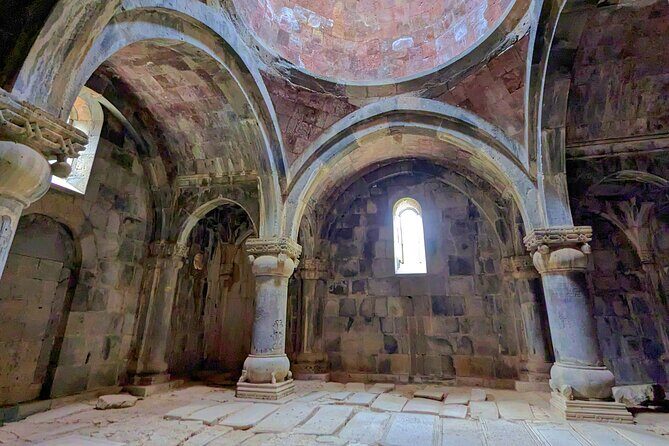
Sanahin is your second UNESCO stop, and it keeps the focus on architecture plus purpose. This complex is linked to the 10th century and is noted as a center of spiritual and intellectual activity—meaning it wasn’t only about prayers. It played a role in shaping Armenian religious and cultural traditions.
The centerpoint is the Cathedral of St. Astvatsatsin. This is the place where you’ll see the elaborately decorated façade and interior, with carvings and stonework doing more than decoration. The guide’s interpretation matters here; once you understand what parts are, you start noticing relationships between the façade design and what’s going on inside.
The itinerary gives about an hour for Sanahin. That’s more comfortable than the Haghpat time slot, and it lets you take a breath and do a quieter round of looking. If you’re the type who likes one site to be your “main event” of the day, this is a good candidate.
As with all monastery visits, you’ll want to dress and behave respectfully. You can still be curious and take photos where allowed—the goal is just to treat the place as a living spiritual site, not a stage set.

Debed Canyon drive: where the day gets a breather
The tour includes time in and around Debed Canyon, and that’s an important balance. Three monasteries back-to-back can get intense. The canyon scenery breaks up the “stone and scripture” focus with actual views—mountain air, a sense of distance, and roads that make you understand why these towns and religious sites were built where they were.
This part is less about a single ticketed stop and more about using the drive time well. The guide typically connects what you’re seeing in the canyon area to the broader historical setting—how routes and valleys shaped travel, communication, and trade.
If you’re prone to motion sickness, plan for it like any long road day. This is a roughly 10-hour tour total, and you’re doing border crossing plus multiple sites. Having a little patience and hydration helps.
Mikoyan Brothers Museum: the MIG-21 photo stop that surprises you
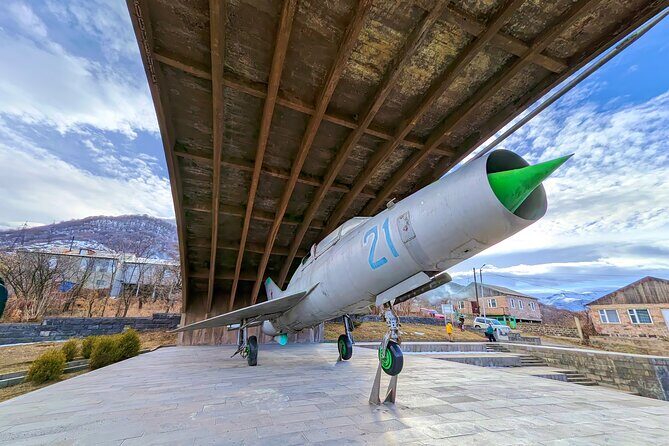
After the monasteries, the day takes a sharp turn into Soviet aviation history with a stop at the Mikoyan Brothers Museum. The big hook here is simple: you can see and take photos with a real MIG-21.
Admission to this museum isn’t included, and the itinerary schedules about 30 minutes. That’s enough time to do the photo moment, read what you can, and get the main story: the Mikoyan brothers as pioneers in developing Soviet aircraft and their impact on aviation.
This is actually a smart contrast. You’re going from medieval monastery architecture and church symbolism to a 20th-century story about engineering and national industry. It gives your brain something new to track, which helps you remember the day as more than a single theme.
If you’re not an aviation fan, you can still use the museum as a quick palate cleanser before the long ride back.
Guide quality and the private-group pace
The difference between a good day trip and a great one is usually the guide. Here, the experience leans hard on guided storytelling—culture, history, and what to notice at each monastery. In one of the reviews, the guide Alexis is specifically praised for making the trip pleasant with interesting stories at each stop.
In practice, that means you’re not just walking into old stone buildings. You’re getting a guided “what am I looking at and why does it matter?” version of the day. That’s especially valuable at sites like Haghpat, where the complex includes many components and details.
Because it’s private, you also have more freedom to ask questions and adjust for your group’s rhythm. The trade-off is still time. Even with private pacing, a 10-hour day with multiple major stops means you’ll be moving, not lingering for hours in one place.
Price and value: what $105 covers and what to budget
At $105 per person, this tour is priced as a day-trip package rather than a DIY adventure. You’re getting private transportation from Tbilisi, a guide service, and a private tour setup for your group. The itinerary also marks the UNESCO monastery admissions as free, which helps keep costs predictable.
What isn’t included is important:
- Lunch is optional (not included).
- Mikoyan Brothers Museum admission is not included.
- Government fees and visa costs are not included, and documentation is your responsibility.
So does it feel worth it? Usually, yes—if you want three UNESCO sites plus a border crossing day handled for you, without planning driving routes, tickets, and timing on your own. The value improves if your group is comfortable moving through a full day, since the main cost savings come from organized logistics.
One extra cost you should plan for is time itself. Border days can run slower than expected, and that’s not anyone’s fault. Going in calm and ready makes the day feel smoother—and that’s where private guiding pays off.
Weather, documents, and packing for a border-day tour
This experience requires good weather. If conditions aren’t right, you’re offered a different date or a full refund. That matters because northern Armenia sites and canyon drives are still outside planning logic—cloud cover, rain, and road conditions can change how pleasant the day feels.
Pack like you’re doing a long walking day around churches:
- Comfortable shoes for uneven stone surfaces
- Layers for changing temperatures
- A camera you can use quickly (the itinerary includes at least one very tight timing segment)
For documents, don’t wait until the last minute. The tour info emphasizes that you must ensure you can cross the border between Georgia and Armenia, including visa needs if applicable. If you need a visa, it recommends using the e-visa in advance to reduce border waiting.
Also, there’s mention of a mobile ticket. Bring your phone with the ticket access available, and keep any ID documents ready to show quickly if asked.
Should you book this Northern Armenia Highlights tour?
Book it if you want a single day that hits major UNESCO monasteries in northern Armenia—Akhtala, Haghpat, and Sanahin—and you like the idea of mixing medieval religious architecture with a Soviet-era museum stop. It’s a strong choice for history buffs and architecture lovers who don’t want to build a complicated itinerary.
Skip it (or choose another option) if you crave slow, detailed time at every site. The day moves, and Haghpat’s listed time slot is short. If you want “sit and soak it all in,” you’ll feel rushed.
For most people traveling with a clear day free, this is a practical, well-structured way to see a lot of Armenia fast—especially since the monasteries’ admission is listed as free and the guide helps you understand what you’re seeing along the way.
FAQ
What is the duration of the tour?
The tour is approximately 10 hours.
Where does the tour start?
The tour starts in Tbilisi, Georgia, and pickup is offered.
Which monasteries are included?
You visit Akhtala Monastery, Haghpat Monastery, and the Monastery of Sanahin.
How long do you spend at each stop?
The itinerary lists about 1 hour at Sadakhlo, about 1 hour at Akhtala, a short time at Haghpat (listed as 6 minutes), about 1 hour at Sanahin, and about 30 minutes at the Mikoyan Brothers Museum.
Are monastery and museum tickets included?
Admission for the monastery stops is marked free, but the Mikoyan Brothers Museum admission is not included.
Is lunch included?
Lunch is not included; it’s optional.
Do I need a visa?
Visa needs and government fees are not included. It’s your responsibility to ensure you have the necessary documentation to cross the border. The info recommends applying for an e-visa in advance if you need one.
What happens if the weather is bad?
This experience requires good weather. If it’s canceled due to poor weather, you’ll be offered a different date or a full refund.