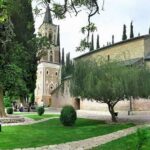
REVIEW · TBILISI
Soviet tour of Georgia – Gori, Tskaltubo, Chiatura, Enguri Dam.
Book on Viator →Operated by Travelist Georgia · Bookable on Viator
A tour about Soviet Georgia can be surprisingly moving. You’ll see Stalin-era history and the blunt beauty of abandoned concrete across Gori, Chiatura, Tskaltubo, and the Enguri region. I especially like how the route keeps things human-scale: museums, neighborhoods, and real buildings—not just photos and theory.
The main trade-off is language and pacing. An English-speaking guide is not included by default, so you’ll rely on what’s arranged on request, while the included driver handles the long stretches and waiting time.
And one more thing to match expectations: the description of this experience also mentions a longer, mountain-focused Svaneti version with hikes, Ushguli, and a Mestia hotel—while the day-by-day plan listed here is more Soviet-architecture heavy. If you book the longer package, you’ll want good weather for the hikes.
In This Review
- Soviet Georgia From Tbilisi to Enguri: What You’re Really Signing Up For
- Tbilisi: Soviet Blocks and the Street-Level Start
- Gori’s Stalin Museum: Context Before the Concrete
- Chiatura: The Soviet Mining Town Feel
- Tskaltubo Sanatoriums: When Nature Starts Taking Back the Buildings
- Enguri Hydropower Station: Soviet Engineering at Giant Scale
- The Included Meals and Why They Matter
- If Your Booking Includes the Svaneti Add-On: Hikes, Ushguli Views, and Qoruldi Lakes
- Driver-Heavy Touring: Easy Pace, Less Explanation
- Price and Value: What $850 Covers (and What You Might Want to Add)
- Who This Soviet Georgia Route Fits Best
- Should You Book It? My Honest Take
- FAQ
- FAQ
- How long is the tour?
- Where does the tour start and end?
- Is pickup included?
- Is an English-speaking guide included?
- What are the main stops?
- Are admissions included?
- What meals are included?
- Is this tour private?
- Does the tour require good weather?
Soviet Georgia From Tbilisi to Enguri: What You’re Really Signing Up For
This is a car-based, story-through-buildings kind of trip. You get to watch Georgia’s Soviet chapters play out in very different forms: official power in the form of a museum, industrial ambition in mining and hydropower, and everyday life in sanatorium architecture that now feels like a movie set left out in the rain.
The vibe is not polished. It’s atmospheric and a bit eerie in the best way. Tskaltubo’s abandoned sanatorium world is the star for many people with an interest in Soviet-era design, and the Gori + Tbilisi pairing gives you the political context that makes the architecture hit harder.
If you’re the sort of traveler who likes to understand a place by looking closely at what people built, not just what they say, you’ll likely love the structure of this tour: each stop adds a new layer.
Tbilisi: Soviet Blocks and the Street-Level Start
Your day begins back at Rose Revolution Square in Tbilisi at 8:00 am, and the early focus is Soviet-era planning in the city. You’ll see Soviet buildings in Tbilisi, plus a mention of Rustavi as part of the first-day framing.
This is a smart warm-up. Soviet architecture can feel repetitive if you only look at one district, but moving through different kinds of structures early helps you start spotting patterns: how buildings are spaced, how large public projects changed the city’s rhythm, and how the era’s style still shapes daily life.
You’ll be on the move for about six hours, and the admission ticket for this segment is free. That means you’re spending your time watching and walking around rather than managing a timed ticket experience.
Practical tip: if you’re sensitive to sun and glare, bring sunglasses. Brutalist concrete can reflect hard, especially in late morning.
You can also read our reviews of more tours and experiences in Tbilisi.


Gori’s Stalin Museum: Context Before the Concrete
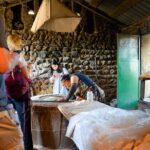
Gori is where the trip turns from architecture to meaning. You’ll explore Stalin Museum and then continue onward toward Chiatura and an overnight stay near Tskaltubo.
The museum matters because it gives you a lens. Soviet buildings can be beautiful, but they’re also tied to power and propaganda. Seeing the story up close helps you read the rest of the route differently—less like sightseeing, more like understanding how governments shaped space.
After the museum, you travel toward Chiatura and then sleep in Tskaltubo in a former Soviet sanatorium setting. That overnight base is a big deal for comfort and for the atmosphere. You wake up already in the right zone of history and you’re not commuting in circles.
The museum’s admission is included, and your schedule for this day is about 12 hours total—so bring patience. This is a long day by design.
Chiatura: The Soviet Mining Town Feel
Chiatura is one of those places that makes you look twice. It’s described as a former Soviet mining town, and that label isn’t just for trivia. You can feel the industrial logic in how the town developed—how the environment and the built form serve the work that once drove the economy.
Why I think this stop works: mining towns tend to be less curated than tourist cities, so you often get a more honest sense of what Soviet planning produced. Even if you’re not a specialist, it’s an easy place to connect the dots between labor, infrastructure, and architecture.
Chiatura and Tskaltubo also complement each other. Chiatura tells you about extraction and movement, while Tskaltubo is about health infrastructure—both are Soviet systems, built for different needs, and both now carry that “time stopped here” feeling.
Tskaltubo Sanatoriums: When Nature Starts Taking Back the Buildings
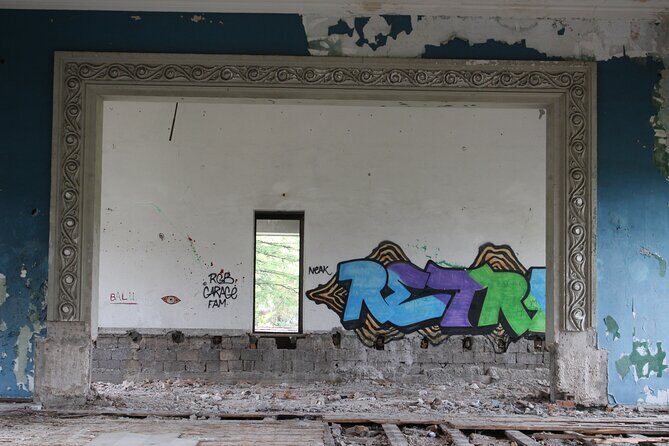
Tskaltubo is the stop that gets the strongest emotional reaction. The most memorable moments are the abandoned hotels and sanatorium buildings, where nature has folded into the structures over the years.
You spend about four hours exploring Tskaltubo, with admission ticket noted as free for this segment. That freedom is helpful here. You’ll want time to walk slowly, look for textures, and decide which structures you want to circle back to.
What I like about the Tskaltubo portion is the way it reframes Soviet architecture. These weren’t military sites or official monuments. They were places meant for care, rest, and routine. Now they read like a ghost version of comfort—spatially generous but slowly surrendered.
This is also where your shoes matter most. Wear something with grip. Even if paths look stable, weather can make concrete and gravel slippery.
Enguri Hydropower Station: Soviet Engineering at Giant Scale
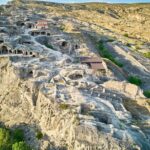
From Tskaltubo you head toward Zugdidi and then to the Enguri hydropower station, built in Soviet times. The highlight is the dome-shaped dam and the sheer scale of Soviet engineering.
This stop balances the architecture theme with pure infrastructure. It’s not about what a building looks like up close—it’s about what people expected to control and how they did it with materials, labor, and big-picture planning.
The admission ticket is included here, and the day is about six hours total. You’ll get enough time to take in the project without turning it into a rushed, photo-only stop.
One quick consideration: places tied to major infrastructure can involve restricted areas and viewpoints. The tour info here doesn’t spell out access details, so keep expectations flexible and follow any on-site instructions.



The Included Meals and Why They Matter
The package includes dinner, plus breakfast (2) and lunch (2). Even when a tour looks like a full-day sightseeing plan, meals are one of those hidden value items—without them, you’d spend your time hunting food instead of enjoying the route.
If the longer Svaneti portion is included for your dates, the Mestia stay is also described as Hotel Old House in Mestia (or equivalent) with dinner and breakfast. That matters because it suggests you’re not just paying for transit—you’re getting organized overnight logistics tied to the hiking days.
Bottom line: you should be able to travel without constantly checking prices and opening hours.
If Your Booking Includes the Svaneti Add-On: Hikes, Ushguli Views, and Qoruldi Lakes
Here’s where you’ll want to confirm what version you’re actually getting, because the description includes a mountain-focused component that goes beyond the Soviet route.
If your trip includes the Svaneti experience, you’ll be doing two hikes: one in Becho gorge to see Ushba waterfalls, and another to see Chalaadi glacier. The trails are described as very well marked, and the driver will wait for you while you hike. That setup can be a relief if you don’t want to stress about navigation.
You’ll also visit the village of Ushguli, with views on the Shkhara mountain range. And there’s a horse riding trip to Qoruldi lakes. If you don’t want to ride, the transportation can be changed to a car.
For hiking-day comfort, pack layers. Even in good conditions, mountain weather can shift fast, and marked trails still feel different depending on sun and wind.
Also note: the experience info says it requires good weather. So if skies are poor, you’ll want to be ready for schedule changes or an alternate date.
Driver-Heavy Touring: Easy Pace, Less Explanation
Throughout the tour, the driver is included, and that’s a key part of the appeal. A driver makes the long stretches manageable. You get pickup (offered) and a private setup where only your group participates.
The trade-off is that an English-speaking guide is not included. On request, guiding service can be organized. In practical terms, that means:
- You’ll get transportation and time-management without a constant guide.
- You should ask ahead if you want a guided explanation at the museum sites and architecture stops, not just during the hikes.
If you love Soviet history and want the stories behind every building, I’d treat the optional guiding service as part of your planning—not an afterthought.
Price and Value: What $850 Covers (and What You Might Want to Add)
At $850 per person, you’re paying for a lot more than entrance tickets. The value comes from:
- Multi-stop routing across several major Soviet-era sites
- Included transport with a driver
- Selected admissions included (Stalin Museum and Enguri hydropower station)
- Meals (dinner plus breakfasts and lunches)
- Pickup and a private group structure
What you’re not automatically getting is an English-speaking guide. If you’re the kind of traveler who loves context, consider adding guiding service on request so you don’t miss the meaning behind the buildings.
Also, the schedule complexity matters. The info describes about four days in the itinerary view, but also mentions six days and five nights with flights and Svaneti time. The more days in your final package, the better the price can feel—because you’re spreading the cost across more transport, more meals, and more included experiences.
Who This Soviet Georgia Route Fits Best
This trip is a strong match if you:
- Like Soviet architecture and want to see it in multiple forms (civic, industrial, and everyday facilities)
- Enjoy “time capsule” atmospheres, especially the abandoned sanatorium feel in Tskaltubo
- Prefer a structured tour with a driver, but still like having room to wander at each stop
It may be less ideal if you:
- Need an always-on English guide included in the base price
- Want only short sightseeing blocks with minimal travel time between sites
Should You Book It? My Honest Take
If your idea of a great trip is buildings with stories, this tour is worth serious consideration. The standout strength is how it connects Soviet power, Soviet infrastructure, and Soviet daily-life structures into one road trip rhythm. Tskaltubo’s abandoned sanatoriums and Gori’s Stalin Museum are the kind of pairings that make the rest of the stops make more sense.
I’d book it—especially if you care about brutalist architecture and industrial-era sites—while also planning to request an English-speaking guide if you want deeper explanations. And if your booking includes the Svaneti hikes, don’t treat good weather as a minor detail. It’s the difference between a memorable mountain day and a wasted one.
FAQ
FAQ
How long is the tour?
The experience is described as about 4 days, but the overall package is also described as a private six-day tour with five nights.
Where does the tour start and end?
It starts at Rose Revolution Square, Tbilisi, Georgia at 8:00 am and ends back at the same meeting point.
Is pickup included?
Pickup is offered.
Is an English-speaking guide included?
An English speaking guide is not included by default, but guiding service can be arranged on request.
What are the main stops?
The route includes Soviet sights in Tbilisi, the Stalin Museum in Gori, Chiatura, Tskaltubo, and the Enguri hydropower station. The longer description also includes Svaneti options such as hikes, Ushguli, and Qoruldi lakes.
Are admissions included?
Admission tickets are included for the Stalin Museum and for the Enguri hydropower station. Other segments are listed as free.
What meals are included?
Dinner is included, along with breakfast (2) and lunch (2).
Is this tour private?
Yes. It’s a private tour/activity, and only your group participates.
Does the tour require good weather?
Yes. The experience requires good weather, and if it’s canceled due to poor weather, you’ll be offered a different date or a full refund.