REVIEW · TBILISI
Alternative walking tour New Tiflis and backstreets
Book on Viator →Operated by Friendly.ge: Transfers & Tours in Georgia · Bookable on Viator
New Tbilisi streets beat the usual old route.
This Alternative Walking Tour focuses on New Tiflis and backstreets, with stops that mix big public squares, real local hangouts, and creative side streets. I especially like how the route gives you direct, walkable context—you see the city’s history and culture in buildings you can actually stand in front of. And the tour sweetens the deal with a complementary wine tasting, plus a guide who keeps moving the story forward.
The main thing to plan for is the walking. You’ll cover about 3 km at a relaxed pace, and some parts include busy roads and urban noise, so it’s not a fit if you hate traffic or have mobility limits.
You’ll meet at the entrance of the Burberry shop near Liberty Square, then work your way through five different “sides” of town—squares, markets, theatre-and-architecture stretches, a rose garden, and a repurposed Soviet factory—before ending near the Marjanishvili metro area. If you want a Turkey-sized slice of Tbilisi that’s not just postcard Old Town, this one makes a lot of sense.
In This Review
- Key Things You’ll Notice on This New Tbilisi Walk
- New Tbilisi Route: Why This Walk Feels Different Than Old Town
- Price and Pace: What $30 and 3 Hours Really Buys
- Before You Go: Comfortable Shoes, Weather Notes, and Late Arrivals
- Stop 1: Liberty Square (Svobody Square) and the City’s Freedom Symbol
- Stop 2: Orbeliani Square and the President’s Palace Exterior
- Stop 3: Dry Bridge Flea Market for Vintage Finds and Soviet-Era Stories
- Stop 4: Agmashenebeli Avenue for Art Nouveau Facades and Theatre Culture
- Stop 5: Roses Park for a Quiet Backstreet Walk
- Stop 6: Fabrika Tbilisi for Street Art in a Repurposed Soviet Factory
- Stop 7: St. Peter and Paul Roman Catholic Church and Its Baroque Details
- Stop 8: Kote Marjanishvili Theatre and the 2006 Reopening Story
- Stop 9: Marjanishvili Square Finale Near the Metro
- Wine Tasting and What’s Actually Included in the Booking
- What This Tour Is Best For (and Who Should Skip It)
- Should You Book This Alternative Walking Tour New Tiflis and Backstreets?
- FAQ
- How long is the Alternative Walking Tour New Tiflis and backstreets?
- How far will I walk?
- Where do I meet the guide?
- What’s included in the price?
- Is this tour in English?
- What if I arrive late to the meeting point?
Key Things You’ll Notice on This New Tbilisi Walk
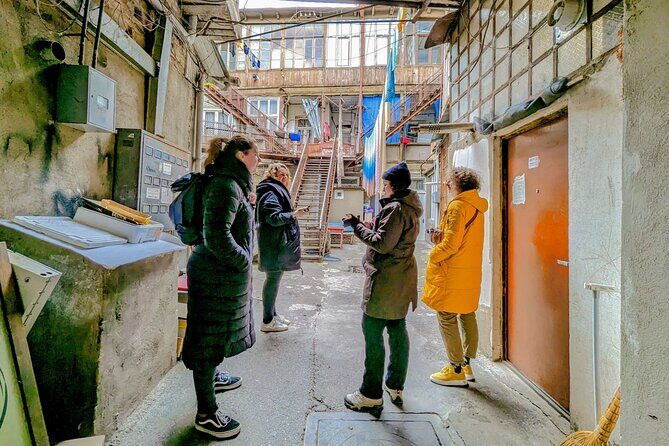
- A tight 3-hour loop built around walkable stops, not hopping between far neighborhoods
- Dry Bridge Flea Market for vintage, Soviet-era items, and crafts sold by the people making them
- Art Nouveau / Neo-Renaissance facades along Agmashenebeli Avenue, with major theatres along the way
- Fabrika Tbilisi: a former Soviet sewing factory turned culture-and-street-art space
- Small-group feel with a maximum of 10 travelers and guide attention
- Liberty Square and Orbeliani Square as your early “big city anchors” before you wander off the main tourist track
New Tbilisi Route: Why This Walk Feels Different Than Old Town
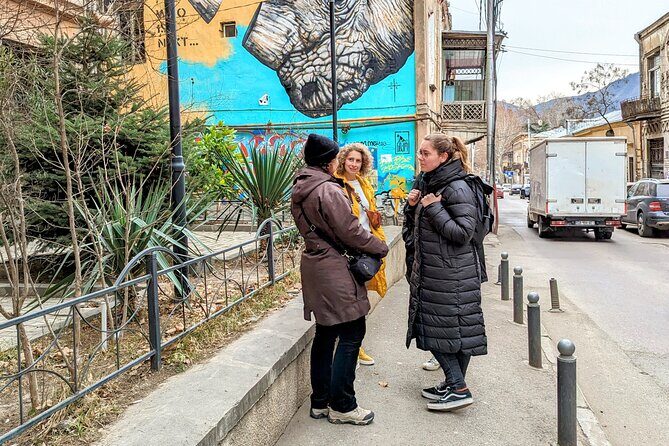
This tour is built for people who already know the classics—or at least want a break from them. Instead of staying in the Old Town zone, you’ll spend your time in the areas that locals use day to day and where Tbilisi’s more modern layers show up clearly.
What I like about this route is how it moves from “symbol” to “everyday.” You start at Svobody Square / Liberty Square, where the city’s freedom story is literally stamped into the center statue and the surrounding civic buildings. Then you shift into squares and shopping streets that feel lived-in, where cafes, markets, and theatres shape the rhythm of the city.
You’ll also get a practical kind of sightseeing. Many stops are easy to revisit later because they’re in normal street life, not hidden-by-design attractions. That matters: it helps you build your own walking map of Tbilisi after the tour ends.
You can also read our reviews of more walking tours in Tbilisi


Price and Pace: What $30 and 3 Hours Really Buys
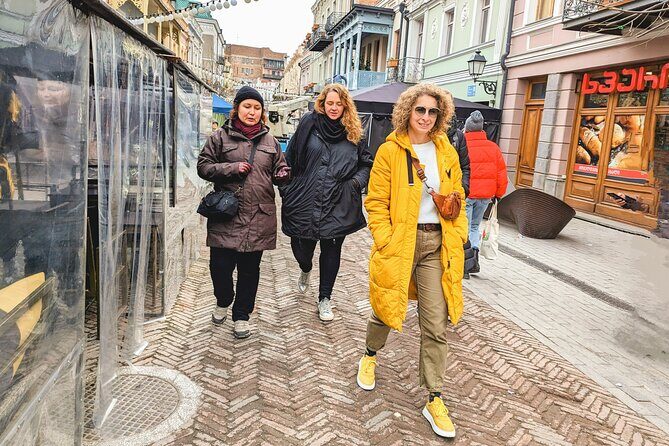
At $30 per person for about 3 hours, this is priced like a solid city-orientation walk, not a museum day. You’re paying for a guide to connect the dots and for the structure that keeps you from wandering randomly.
The pace is labeled as a relaxed walk of around 3 km, and that detail is crucial. If you want a tour where you can actually look up at buildings and not just keep up with the group, this fits better than the marathon-style tours. The day also works if you’re mixing it with other plans in Tbilisi—morning or afternoon, you’ll still have energy left.
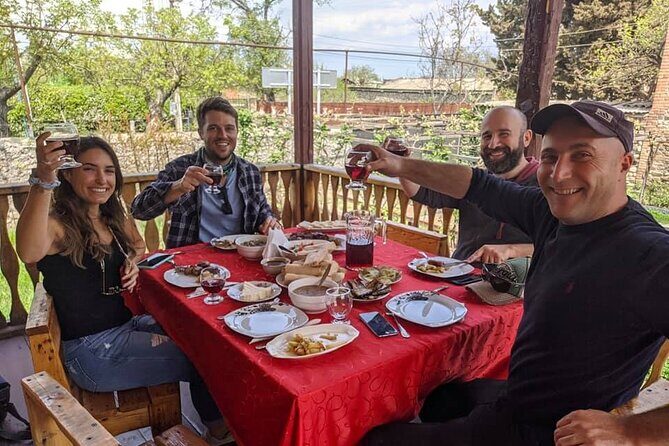
One other value point: the tour includes guide service and complementary wine tasting. Even if you don’t go deep on wine, it’s a nice cultural touch that avoids the usual “here’s a ticket, good luck” vibe.
Before You Go: Comfortable Shoes, Weather Notes, and Late Arrivals
Bring comfortable, non-slip shoes. In winter, Tbilisi can be cold, windy, and rainy. In summer, it can get hot, especially around midday, so plan hydration and sun protection.
Also, this is a schedule-first experience. The guide waits up to 10 minutes after the scheduled start time. If you arrive later than that, waiting beyond that point won’t happen, and you’ll need to rebook.
This matters for two reasons. First, you’re walking a route with multiple stops. Second, several stops are timed to group movement. Showing up on time helps you get the full story instead of half the route.
Stop 1: Liberty Square (Svobody Square) and the City’s Freedom Symbol
Liberty Square is where Tbilisi lays out its identity in public space. You’ll start here at the meeting point near the Burberry shop entrance, and your guide will get you going from there.
Liberty Square is also called Tavisuplebis Moedani, and the centerpiece statue—St. George slaying the dragon—acts like a citywide symbol for Georgia’s fight for freedom and independence. Around it, you’ll see major civic buildings including the Georgian National Museum and Tbilisi City Hall.
Two practical perks also matter. One, the square has a metro station, so it’s easy to connect this tour to other parts of the city. Two, Liberty Square is used for demonstrations and celebrations, including New Year’s Eve and Independence Day. In other words, it’s not just scenery—it’s a stage.
Stop 2: Orbeliani Square and the President’s Palace Exterior

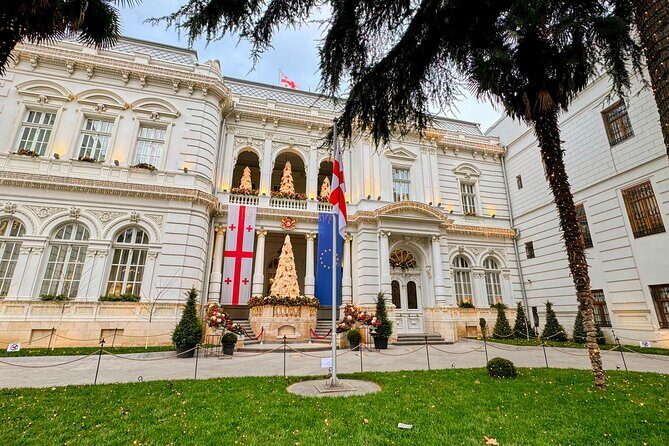
From Liberty Square, the tour moves to Orbeliani Square, where the Orbeliani Palace sits as the official residence of the President of Georgia. You won’t go inside, but you’ll still get something valuable: the ability to study grand architecture at street level without paying an attraction fee.
Orbeliani Square also gives you a change of pace. It’s a place for cafes and restaurants, so it’s ideal as your early “catch your breath” moment before walking gets more textured.
One standout detail here is the famous flower market, known for colourful blooms and fragrant herbs. Even if you’re not shopping, it’s an easy photo moment and a good taste of how the city looks when it’s not trying to perform for tourists.



Stop 3: Dry Bridge Flea Market for Vintage Finds and Soviet-Era Stories
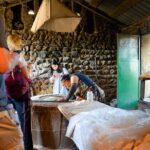
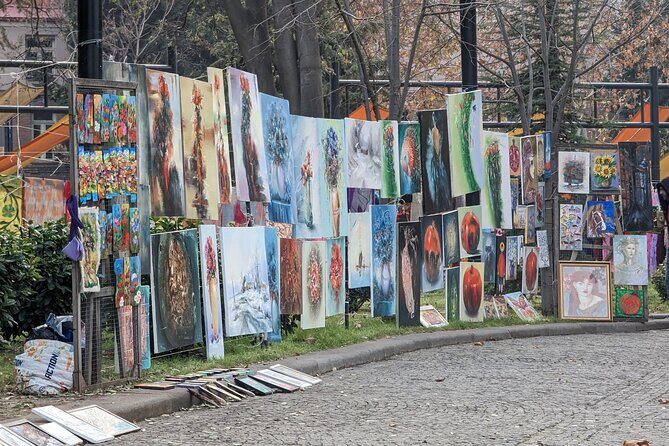
Dry Bridge Flea Market is the stop that many people remember later, and it’s easy to see why. This is where you find a mix of antiques and oddities: vintage clothing, jewellery, furniture, and Soviet-era memorabilia, plus plenty of crafts.
What makes Dry Bridge more interesting than a standard market is the creative side. Many vendors are artists and craftsmen selling their own work alongside vintage and antique items. That blend gives the market a personal feel, not just a pile of goods.
Practical advice: go in with patience. Flea markets move slowly because each stall is different. If you want to buy something, keep your priorities straight—small items are easier to manage, and you’ll have more time to compare.
Stop 4: Agmashenebeli Avenue for Art Nouveau Facades and Theatre Culture
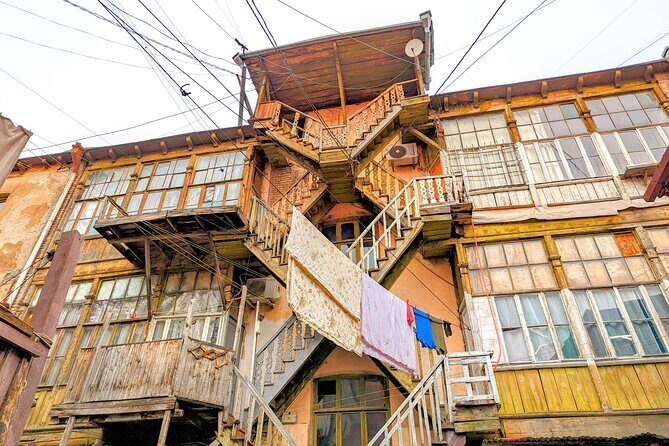
Next you walk along Agmashenebeli Avenue, and the buildings here do some of the explaining for you. Many facades date to the late 19th and early 20th centuries, showing Art Nouveau and Neo-Renaissance styles.
This is also a theatre corridor. You’ll pass the Marjanishvili Theatre, and at the northern end you’ll find the Tbilisi Opera and Ballet Theatre. Even if you’re not attending a performance, it helps to know where the cultural institutions live inside the city’s daily layout.
This stop is a good “zoom out” moment. After markets and squares, it’s refreshing to focus on the way streets shape identity. Architecture becomes a map for the city’s artistic ambitions.
Stop 5: Roses Park for a Quiet Backstreet Walk
Then the tour turns into something more relaxed: Roses Park in the backstreets. If you’re expecting only big squares, this pause is the relief you didn’t know you needed.
The rose garden has an impressive collection—over 200 varieties of roses. In summer, it’s at full bloom and the air carries that rose scent you can’t really fake with perfume.
Practical note: this stop works even if roses aren’t peak season, because the point is the shift toward everyday life and calmer streets. It’s also where you get some shade and a break from constant city noise.
Stop 6: Fabrika Tbilisi for Street Art in a Repurposed Soviet Factory
Now you hit one of Tbilisi’s most modern-feeling layers: Fabrika Tbilisi. The building used to be a Soviet sewing factory. It’s been transformed into a multi-use creative space for locals and visitors.
Why this matters for your trip: it’s urban renewal you can see with your own eyes. Instead of “old building meets new use” being a theory, you’ll walk through it and look at how the space functions today.
The biggest visual draw is the street art. Walls and surrounding areas carry murals, showing how street art has become part of Tbilisi’s identity. Even if you’re not a street-art superfan, this is a great place to slow down and notice details—colors, textures, and the way art interacts with everyday foot traffic.
Stop 7: St. Peter and Paul Roman Catholic Church and Its Baroque Details
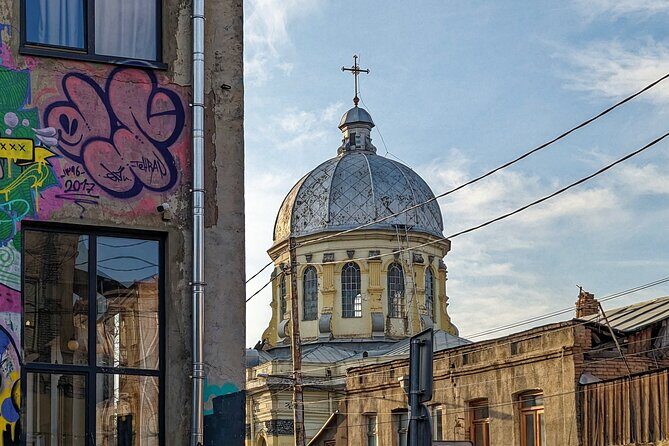
Next is St. Peter & Paul Roman Catholic Church, built between 1870 and 1877. The architecture is described as baroque, and you can see that in the strong ornament and contrast in the facade.
A few specific details make it worth stopping even for a short visit. The entrance faces west. Above the wooden front door, there’s a rose window decorated with floral ornaments and a dove. The church’s modern look includes changes added after 2000, when the rose window was placed and the high arched door was transformed into a wall.
One especially memorable historical note: Pope John Paul II celebrated Mass at this church during a visit to Georgia in October 1999.
If you like churches for their stories as much as their shapes, this stop gives you both: architecture plus a clear moment in modern history.
Stop 8: Kote Marjanishvili Theatre and the 2006 Reopening Story
The tour also includes the Kote Marjanishvili State Drama Theatre. This is one of Georgia’s important theatres, and it comes in second only to the national Rustaveli Theatre in terms of significance.
Founded by Kote Marjanishvili in Kutaisi in 1928, the theatre moved to Tbilisi in 1930 and has operated in the same building since. The building itself is Art Nouveau, and it was renovated before reopening in 2006 with the premiere of Bertolt Brecht’s The Threepenny Opera.
Even if you don’t plan to see a show, this stop gives you cultural context you’ll feel later in the city. Tbilisi’s arts scene is not a side hobby. It’s a real part of how the city marks time.
Stop 9: Marjanishvili Square Finale Near the Metro
Your alternative-walk ending is Marjanishvili Square, a lively intersection with restaurants, cafes, and shops nearby. It’s a smart finishing point because it’s easy to continue on your own from there.
If you want an easy transit option, the metro station is near. The Marjanishvili metro station opened in 1966 and was designed by O. Melia and G. Melkadze. There’s also a high-relief bust of theatrical director Kote Marjanishvili—a nice visual wrap-up for the theatre-heavy day.
You can finish with a meal, grab coffee, or hop into the metro to reach other parts of Tbilisi without backtracking.
Wine Tasting and What’s Actually Included in the Booking
The inclusions are straightforward. You get guide service plus complementary wine tasting (an alcoholic beverage is included). You also use a mobile ticket.
Nothing is mentioned for hotel pick-up and drop-off, so plan to get yourself to the meeting area. You should also be ready to pay for any personal snacks or purchases at markets. The tour itself doesn’t frame food as included, though the route passes multiple cafe areas.
What This Tour Is Best For (and Who Should Skip It)
This is best for you if:
- You want a New Tbilisi perspective, not a strict Old Town circuit
- You like street-level culture: theatres, churches, markets, and everyday streets
- You enjoy shopping time without needing a full shopping tour
- You want a guide to connect history, architecture, and local life in plain terms
You should think twice if:
- Walking 3 km sounds uncomfortable
- You need quieter, low-traffic areas throughout the day
- You have significant mobility issues or recent injuries
- You’re sensitive to urban traffic noise
The tour limits group size to 10 travelers, which usually helps the guide keep it organized and responsive.
Should You Book This Alternative Walking Tour New Tiflis and Backstreets?
I’d book it if you’re trying to understand modern Tbilisi through the streets. The itinerary works because it balances civic symbolism (Liberty Square), everyday textures (flowers, markets, parks), and culture anchors (theatres, a major church, and Fabrika’s creative reuse).
The strongest selling points for me are practical: you get a structured 3-hour route, you see architectural styles up close, and you visit a market that’s more than just souvenirs. Add in the fact that the guide you may meet—Oksana—is praised for being engaging and able to answer questions, and you’re likely to leave with a clearer sense of where Tbilisi’s stories live.
So if you want a walk that feels like real city life, not only landmark hopping, this one is a great fit. Just wear shoes you trust, bring water in warm weather, and give yourself permission to wander at the market stops instead of rushing.
FAQ
How long is the Alternative Walking Tour New Tiflis and backstreets?
It runs for about 3 hours.
How far will I walk?
The tour is described as about a 3 km walk at a relaxed pace.
Where do I meet the guide?
The start point is at the entrance of the Burberry shop at Svobody Square / Liberty Square area (Shalva Dadiani Street, Mtawminda 0105, Georgia).
What’s included in the price?
The booking includes guide service and complementary wine tasting.
Is this tour in English?
Yes, it’s offered in English.
What if I arrive late to the meeting point?
The guide will wait up to 10 minutes after the scheduled start time. If you’re later than that, they won’t be able to wait and you’ll need to rebook your tour.