REVIEW · TBILISI
Chiatura. Soviet Past in the present. + Katskhi pillar
Book on Viator →Operated by Wonderful Travel · Bookable on Viator
Soviet ruins, but still working. That mix is the magic here: Chiatura is a real USSR-style mining town where old cable cars still run for magnesium miners, and the day pairs that industrial grit with the Katskhi Pillar monolith and monastery views. I love the private, English-speaking attention and the way the stops stay practical—enough time to take photos and still not feel rushed. One thing to plan around: you’ll need a moderate fitness level, especially with steps and a tunnel at Mgvimevi.
What makes this tour feel good is the flow. You get hotel pickup and drop-off in an A/C vehicle, plus snacks and bottled water for the road, so the day stays comfortable even when the sights are a bit remote. If you’re the type who likes your history specific (machines, workplaces, how people actually lived), this one will click.
In This Review
- Key Points Worth Noticing
- Soviet Chiatura and Katskhi Pillar: What You’re Really Signing Up For
- Price, Time, and the Real Value of a $150 Private Day
- How the Day Moves: Timing, Transport, and Where You’ll Feel the Pace
- Chiatura: The Soviet Mining Town Where the Cable Cars Still Matter
- Katskhi Pillar: A 40m Limestone Monolith and a Monastery Above
- Mgvimevi Monastery: 13th-Century Stone Carvings and the Steps-and-Tunnel Route
- Guides Who Make the History Click: David and Irakli as an Example
- What’s Included vs. What You Should Plan For
- Who This Tour Fits Best (and Who Might Want a Different Option)
- Should You Book? My Take on When This Tour Is Worth It
- FAQ
- Is this tour a private experience?
- How long does the Chiatura and Katskhi Pillar tour take?
- Does the tour include hotel pickup and drop-off?
- What language is the tour offered in?
- Are admission tickets included for the stops?
- Is lunch included?
- Is there a fitness requirement?
- What is the cancellation policy?
Key Points Worth Noticing
- Private guide focus: your group gets undivided attention, not a crowded shuffle.
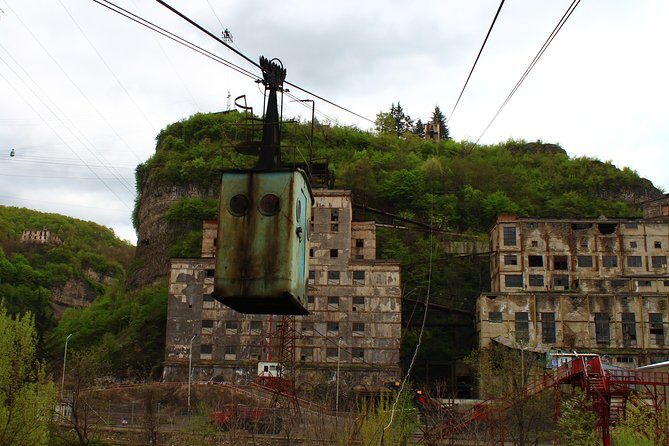
- Actual “still operating” Soviet remnants in Chiatura, not just abandoned sets.
- Free admission at the main stops, so you’re not scrambling for ticket rules on the day.
- A long but manageable pacing: about 8–10 hours with short, concentrated visits.
- Practical comfort: A/C transfers, WiFi onboard, and snacks plus bottled water.
- A physical component at Mgvimevi (steps and a tunnel), so bring shoes you trust.
Soviet Chiatura and Katskhi Pillar: What You’re Really Signing Up For
This isn’t a quick “see a landmark and leave” tour. You’re spending a full day moving between three very different places, all tied together by the same theme: how Georgia’s geography shaped work, faith, and survival.
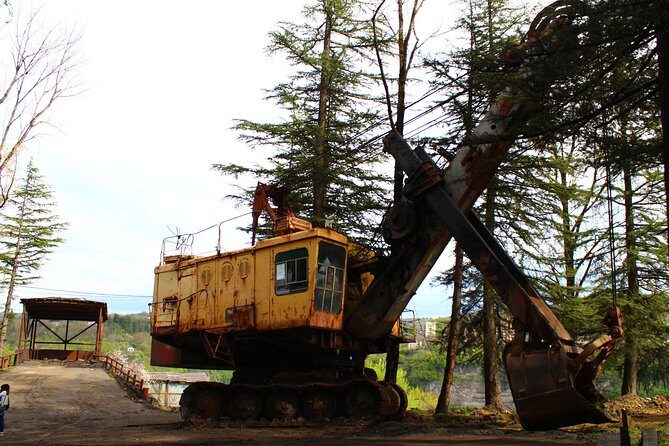
Chiatura brings you face-to-face with the industrial side of the USSR. It’s not a museum vibe. It’s a town where old mining infrastructure still matters. Then you switch gears to the Katskhi Pillar, a towering limestone monolith with a monastery perched on top, where the story shifts from heavy industry to devotion and endurance. Finally, Mgvimevi monastery gives you the stone-carving and fresco side of the culture—plus a climb that makes you feel like you earned your view.
The value is strongest if you like clear, guided context. A good guide can explain what you’re seeing—how the mining system worked, why that pillar was chosen, and what makes the monastery art feel different when you’re standing right in front of it.
You can also read our reviews of more tours and experiences in Tbilisi.


Price, Time, and the Real Value of a $150 Private Day
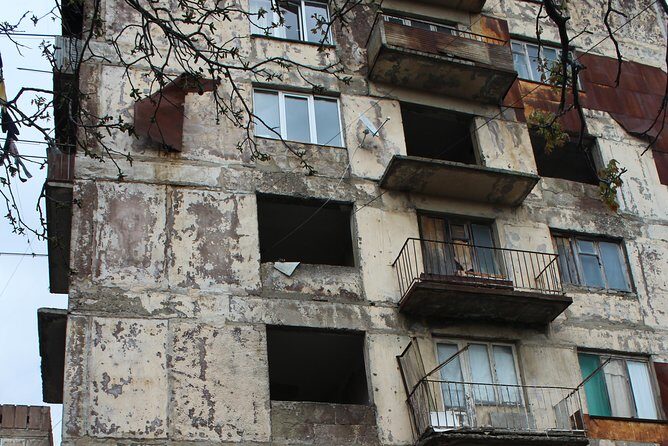
At $150 per person for an 8–10 hour private tour, the biggest question is: does it justify a full day away from central Tbilisi?
From a value angle, I think it mostly does because you’re not just paying for transport. You’re getting:
- Hotel pickup and drop-off
- A/C vehicle
- Snacks and bottled water
- WiFi onboard
- Admission tickets marked free for the main stops
- Private transportation (meaning you aren’t squeezed into other groups’ schedules)
Also, this is one of those days where a guide matters. Chiatura can look like “old ruins” at first glance. With the right explanation, it becomes a story about labor, technology, and how that technology shaped daily life.
Possible downside: lunch isn’t included. That’s not a deal-breaker, but you should plan for it. A long day without a planned meal can turn into decision fatigue—especially when you’re hungry between stops.
How the Day Moves: Timing, Transport, and Where You’ll Feel the Pace
This is a one-day circuit, so you’ll feel the rhythm. The tour runs roughly 8–10 hours, but the actual time at each “wow” stop is shorter and focused:
- Chiatura: about 2 hours
- Katskhi Pillar: about 30 minutes
- Mgvimevi Monastery: about 20 minutes
That structure works well because it prevents the common problem with long tours: spending too much time on one place and rushing the rest. Here, you get a real block of time in Chiatura (which deserves it), and the other two stops act like concentrated chapters.
Transport-wise, you’re in an air-conditioned vehicle with snacks and bottled water. That small detail matters in Georgia—especially on days when roads can be long and weather can shift. You’ll also have WiFi onboard, which is handy for quick map checks or just staying comfortable while you wait to reach each site.
Fitness note: the tour asks for moderate physical fitness. That doesn’t mean you need to be an athlete. It does mean you should expect stairs and a tunnel at Mgvimevi. If you have mobility concerns, it’s worth thinking carefully before booking.
Chiatura: The Soviet Mining Town Where the Cable Cars Still Matter
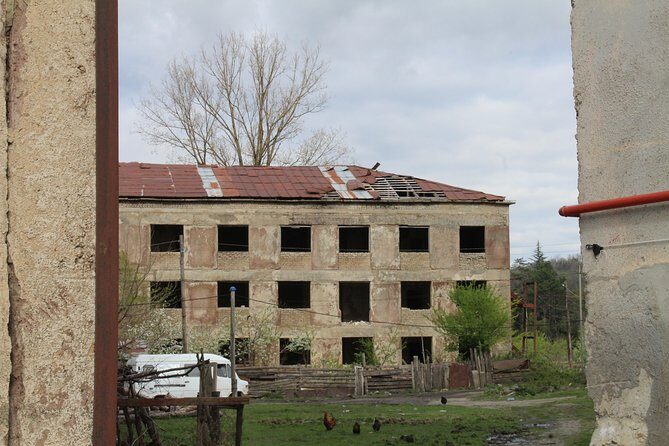
Chiatura is the headliner for a specific reason. Yes, it’s tied to the USSR. But the bigger thrill is that it feels alive in a working way.
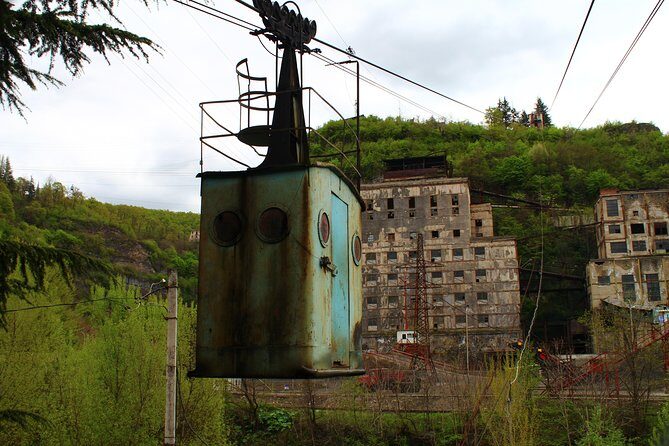
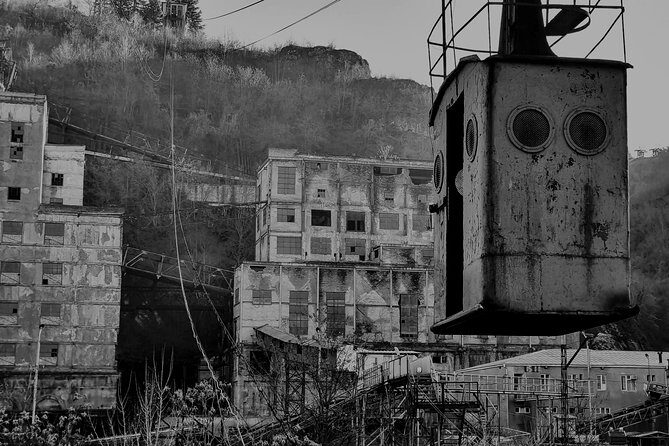
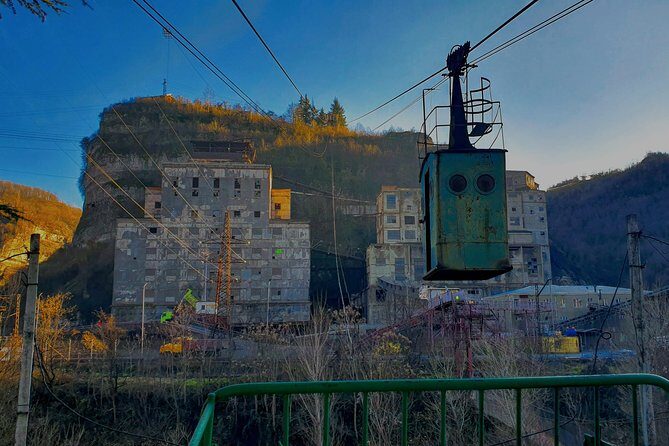
You’re exploring a town with Soviet-era industrial infrastructure where cable cars still operate for magnesium miners. That’s the rare combo: history you can see, plus evidence it wasn’t staged or preserved for show.
Inside the town experience, you’ll also encounter:
- Old factory spaces
- Great viewpoints over the area
- The sense of scale that comes from industrial design meant for heavy work
What I like about Chiatura in a guided format is that you can connect the visual pieces. Old stations, rail lines, and the way people move through the terrain start to make sense when explained as a system rather than scattered leftovers.
You get about 2 hours, which is a sweet spot. It’s long enough to walk around, take photos, and absorb the details without turning the day into a marathon. And admission is listed as free at this stop, so you can focus on the site rather than paperwork.
Small practical tip: this is a “camera” place, but go slow. In industrial towns, light and angles can change fast, especially if you’re moving between viewpoints.
Katskhi Pillar: A 40m Limestone Monolith and a Monastery Above
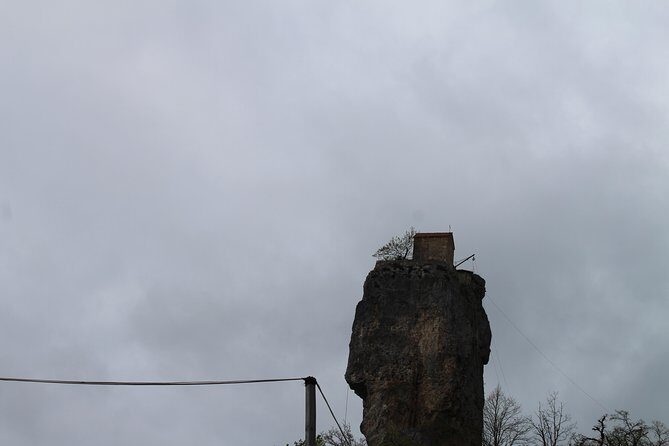
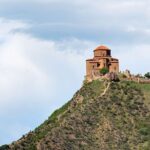
Then you shift to Katskhi Pillar, a natural limestone monolith rising about 40 meters high, with a monastery on top.
This stop is shorter—around 30 minutes—which is exactly what you want here. Katskhi is one of those places where the main impact is visual and immediate. You’ll feel the scale quickly, and the time window helps you avoid that trap of lingering too long when the best moments are right at the start.
The value of having a guide matters less for “what is it?” and more for “how to look at it.” From ground level, you’re trying to understand the relationship between rock, access, and faith. A guide can help you frame what you’re seeing, so it doesn’t feel like just a tall rock.
Admission is listed as free, so you’re not paying to access the basic experience. That’s a good trade, because you’re really buying time and context, not a ticket booth experience.
Practical consideration: because it’s a pillar with dramatic height, plan your photo timing. Weather and cloud cover can change quickly in Georgia, and your best angles often happen in a small time window.


Mgvimevi Monastery: 13th-Century Stone Carvings and the Steps-and-Tunnel Route
If Chiatura is about industry and Katskhi is about the sky, Mgvimevi is about stonework and spiritual art in a place that asks you to move.
This is a 13th-century monastery known for stone carvings and frescoes, and the setting is described as spectacular. You don’t just look at it from a distance. You go up through steps and a tunnel, which changes the feel of the visit. The approach makes the arrival more meaningful, and it’s easier to remember what you saw once you’ve earned your way there.
You only get about 20 minutes, but that’s enough when the goal is focused viewing: look at the carvings, take in the frescoes, and absorb the atmosphere. If you try to do this like a slow museum, you can spend too long and lose the rest of the day’s balance.
The admission is listed as free here too, so again, you’re not paying to see the art. You’re paying with your time and your energy—and your ticket is already bundled into the day.
Shoes matter here. That steps-and-tunnel detail isn’t optional flavor. It’s part of the experience, and it can be slippery or uneven depending on conditions.
Guides Who Make the History Click: David and Irakli as an Example

One of the strongest signals from the experience is the quality of the guiding. In the feedback, two guide names show up clearly: David and Irakli.
- David is praised for friendly, professional storytelling and a deep understanding of Georgia’s history. That kind of guide helps Chiatura click, especially when you’re looking at a now-abandoned cable car system and trying to connect it to the mining story behind it.
- Irakli is described as great for conversation about Georgian life, and he adapts based on the interests you bring to the day.
Even if your guide isn’t named David or Irakli, you’ll benefit from the same thing: a guide who knows how to turn sights into explanations. This kind of tour works best when someone can answer the quiet questions you’ll have while walking—Why was this built here? How did people live with it? Why does this place feel the way it does?
What’s Included vs. What You Should Plan For
Here’s how the day stacks up, practically.
Included:
- All fees and taxes
- Air-conditioned vehicle
- Private transportation
- WiFi on board
- Snacks and bottled water
- Pickup and drop-off from your hotel
- Admission is listed as free for Chiatura, Katskhi Pillar, and Mgvimevi
Not included:
- Lunch
So your real budgeting choice is simple: bring your own lunch or plan to buy something near your route once you’re on the ground. Since time at each stop is limited, you don’t want to waste the day hunting for food. Treat lunch as a prep task, not an afterthought.
Also consider your camera and what kind of photos you want. Chiatura is about structure and views. Katskhi is about height and angles. Mgvimevi is about detail—carvings and frescoes—so close-up photography can help, too.
Who This Tour Fits Best (and Who Might Want a Different Option)
This works especially well for you if:
- You like off-the-beaten-path places with a strong sense of place
- You’re curious about Georgia’s Soviet-era industry and how it shaped real towns
- You want a private guide so the day can follow your questions
- You’re comfortable with a moderate amount of walking and steps
It may not be ideal if:
- You need a fully relaxed day with minimal stair climbing. Mgvimevi includes steps and a tunnel.
- You hate long drives. This is a full day from Tbilisi, and the time in the vehicle is part of the trade.
Should You Book? My Take on When This Tour Is Worth It
If you want one day that feels different from the usual Tbilisi highlight loop, this is a strong pick. Chiatura gives you real Soviet industrial flavor, Katskhi gives you a striking natural monument with monastery meaning, and Mgvimevi adds the art-and-stone dimension that turns the day from sightseeing into story.
I’d book it when you value context as much as photos. A private guide makes the difference on a day like this, because the sights only become truly memorable when someone explains how they connect.
If you’re deciding between a “standard” group tour and this private format, the private structure is the appeal. You’ll move with a plan that respects the pacing of the sites, and you won’t spend the day negotiating with strangers about timing and photo stops.
Go for it if you’re okay with a moderate fitness requirement and you plan your lunch. Skip it if you want a low-effort day or you’re sensitive to stair-and-tunnel routes.
FAQ
Is this tour a private experience?
Yes. It’s a private tour/activity, and only your group will participate.
How long does the Chiatura and Katskhi Pillar tour take?
The duration is approximately 8 to 10 hours.
Does the tour include hotel pickup and drop-off?
Yes. Pickup and drop-off are offered, and the transfers are done in an air-conditioned vehicle.
What language is the tour offered in?
The tour is offered in English.
Are admission tickets included for the stops?
Admission tickets are listed as free for Chiatura, Katskhi Pillar, and Monastery Mgvimevi, and all fees and taxes are included in the tour.
Is lunch included?
No, lunch is not included.
Is there a fitness requirement?
Yes. Travelers should have a moderate physical fitness level.
What is the cancellation policy?
Free cancellation is available. You can cancel up to 24 hours in advance for a full refund.