REVIEW · TBILISI
Walking City Tour in Tbilisi
Book on Viator →Operated by Alesia Aliakseichyk · Bookable on Viator
Tbilisi makes sense fast on this 2-hour walk. I love how Alesia Aliakseichyk connects the city’s layers, from the sulfur baths at Abanotubani to the wide views from Narikala Fortress. I also like that you get entrance to all stops for free, which keeps the focus on people, streets, and stories instead of ticket chaos. The main drawback: the cable car is optional, and if you choose it, it adds a small extra cost.
You’ll start at Orbeliani Baths (31 Abano St) and finish near Liberty Square (2 Freedom Square). Expect a steady walking rhythm with a few climbs around the fortress area, so wear good shoes if your legs need a heads-up. This is a private tour, so the pace and route choices can fit your group, and you get a mobile ticket for the day.
What makes the route feel especially Tbilisi is how it mixes faiths, empires, and everyday life in just a couple hours. I like that you stop at places that locals actually use, plus classic photo scenes like the old streets and Frida’s Cafe area. If you’re short on time and want strong orientation without running yourself ragged, this format works.
In This Review
- Key highlights you’ll remember
- Getting oriented fast in Tbilisi (without missing the big themes)
- Orbeliani Baths and Abanotubani: your first taste of Tbilisi’s sulphur soul
- Old Town Tbilisi: narrow streets, carved balconies, and photo-ready corners
- Cable car or legs: how to manage Narikala Fortress without the stress
- Narikala Fortress viewpoint plus Betlemi churches: a time-warp walk
- Kartlis Deda and Ateshgah: the city’s faiths and empires in a short radius
- Liberty Square to puppet theater: politics, symbolism, and an hourly show
- Price and value: why $23.27 feels fair for a guided circuit
- What it’s like on the ground (timing, walking, and getting the most out of it)
- Should you book this walking city tour?
- FAQ
- What is the price of the Walking City Tour in Tbilisi?
- How long is the tour?
- Where does the tour start and end?
- Is admission included for the sights?
- Is the cable car included in the price?
- What kind of ticket do I receive?
- Is this tour private?
- Is free cancellation available?
- Should you book this tour anyway?
Key highlights you’ll remember
- Orbeliani Baths, also called Pushkin or Dumas Bath, as a classic intro to Tbilisi’s water-and-history theme
- Abanotubani (the sulfur bath neighborhood) with quick context on how the area functions for locals
- Old Town photo time, including Frida’s Cafe and other spots geared for good views
- Flexible cable car decision for Narikala Fortress (up, down, or skip it)
- Narikala Fortress viewpoint plus nearby churches for a time-warp feel
- Rezo Gabriadze Marionette Theater, including the clock tower and an hourly short performance
Getting oriented fast in Tbilisi (without missing the big themes)
This tour is basically a guided “map in motion.” In about two hours, you cover the core geography of the city and the main story threads that explain how Tbilisi grew where it did. You’re not just hopping from one monument to the next. You’re learning why those places matter, and how Georgia fits into the wider mix of Europe and Asia.
That’s the value of a focused walking loop. You’ll see the old streets, understand the bath culture area, get a hilltop panorama, and then move through churches and temples tied to different belief systems and past rulers. By the time you hit Liberty Square, the political context clicks because you’ve already built the city’s physical and cultural groundwork.
Because it’s private, you’re not stuck watching a guide race ahead while you struggle to keep up. If you want the faster option at a certain moment, you can usually choose it. If you want more time for photos or questions, you can do that too.
You can also read our reviews of more walking tours in Tbilisi



Orbeliani Baths and Abanotubani: your first taste of Tbilisi’s sulphur soul

You begin at Orbeliani Baths on Abano Street. This bath complex is also known as Pushkin or Dumas Bath, and that name alone tells you something about how layered the city’s identity can be. The atmosphere right here sets the tone for everything that follows: Tbilisi’s hot springs and bath tradition aren’t an afterthought. They’re part of how the city breathes.
Next comes Abanotubani, the sulfur bath neighborhood with its row of traditional bathhouses. You’ll get quick context on why this area is so popular with locals, and you’ll see the kind of street life that doesn’t feel staged for tourists. Admission for these stops is listed as free, which means your time goes to observing and learning rather than budgeting for entry fees.
A practical tip: this is a great place to slow down for a moment and watch. The neighborhood has a strong sense of place even on a short visit. If you’re thinking about relaxing later, your guide can point you toward a good way to do it, since this area is used by locals in a very real, everyday way.
The only consideration is that bath neighborhoods can be lively and sometimes humid. If you’re sensitive to strong smells or warm air, plan for it and keep water handy.
Old Town Tbilisi: narrow streets, carved balconies, and photo-ready corners
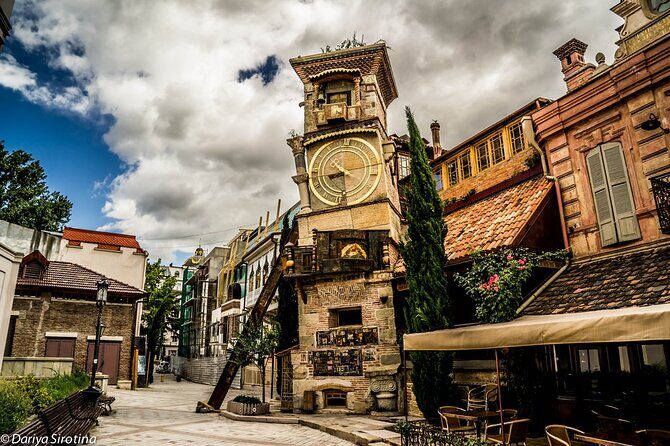
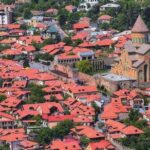
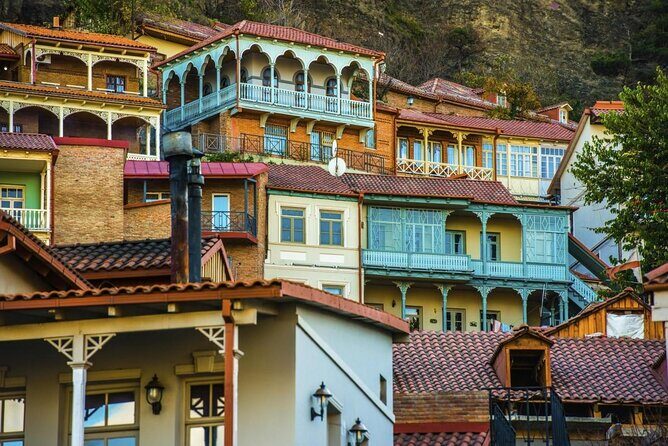
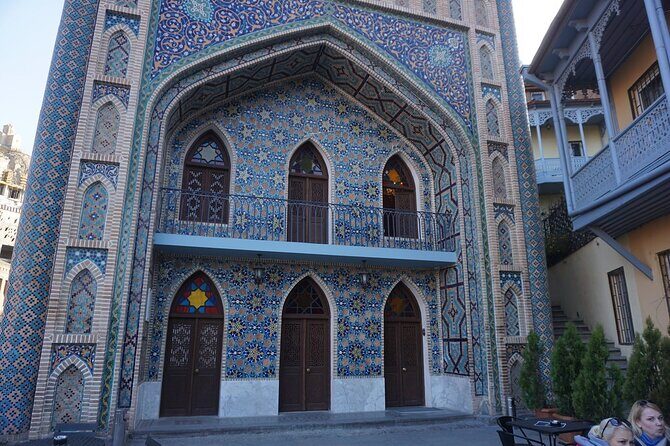
Old Town is where Tbilisi goes postcard mode, but in a good way. You’ll spend about 20 minutes here, wandering narrow lanes with carved balconies and that “you could get lost and still be happy” feeling. It’s the part of town where the details matter: woodwork, balconies, street texture, and the way buildings stack on each other.
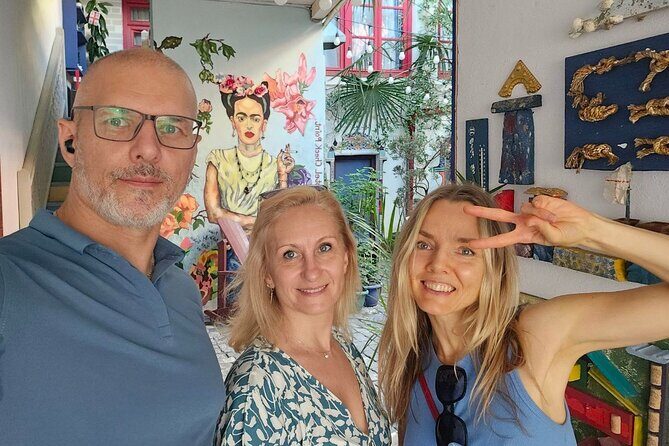
One stop point you’ll appreciate is Frida’s Cafe. The tour routes you close to it, so you can get photos in the context of the real streets rather than chasing images from afar. You’ll also be guided toward other Instagram-friendly photo angles. That’s useful because Tbilisi’s streets can be confusing at first. A local guide helps you find the composition quickly.
What I like most about this section is that the guide doesn’t treat the Old Town like a museum hallway. You’ll get a sense of how the city’s past and present share the same sidewalks. That context makes the photos feel more meaningful later.
Potential drawback: Old Town is pretty compact, so it can feel crowded at busy times. If you want calm photos, don’t just shoot while walking. Pause once or twice, then let the crowd flow around you.
Cable car or legs: how to manage Narikala Fortress without the stress
When you get to Tbilisi Cable Car, you’re offered a choice. You can use the cable car for going up and/or down from Narikala Fortress, or you can continue by foot through the lovely old streets. The important part is that the tour is flexible about how you handle that hill.
The cable car admission is not included, listed at €2.00 per person. If you’re on moderate physical fitness, I think this is the smart “choose your own adventure” moment. Use the cable car if the climb will drain you for the rest of the day. Walk if you want the slow reveal of viewpoints and streets as you ascend.
In real terms, this is where you can save energy for the best part: the fortress view. Narikala is the highlight, and you want your eyes and camera ready, not tired.
If you skip the cable car, plan your pacing. The walk up can feel steeper than it looks on a map. Either way, the tour keeps you moving enough to stay efficient, but it doesn’t feel like a forced march.
Narikala Fortress viewpoint plus Betlemi churches: a time-warp walk
Narikala Fortress is the star of the show. You’ll spend about 10 minutes there, but it’s the kind of 10 minutes that resets your understanding of the whole city. From the top, Tbilisi spreads out in a way that makes everything you saw earlier click into place.
This is your high point, both literally and mentally. If you want a single moment to justify taking any tour at all, this is it. You’ll see the layout of the city and get a quick mental map for the rest of your trip.
After that, you move toward Lower and Upper Betlemi Churches. These are older Orthodox sites, and you’ll get the context of Georgia becoming a Christian country—because it’s not just a building, it’s a timeline you can stand inside. Admission is listed as free, so you’re paying with time, not extra money.
What I like about placing churches near a fortress viewpoint is contrast. You go from wide urban scenery to religious architecture and then back toward political and cultural landmarks later. It helps you understand Tbilisi as a place where different eras overlap, rather than cleanly separate.
You can also read our reviews of more city tours in Tbilisi



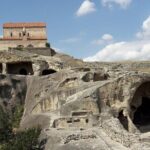

Kartlis Deda and Ateshgah: the city’s faiths and empires in a short radius
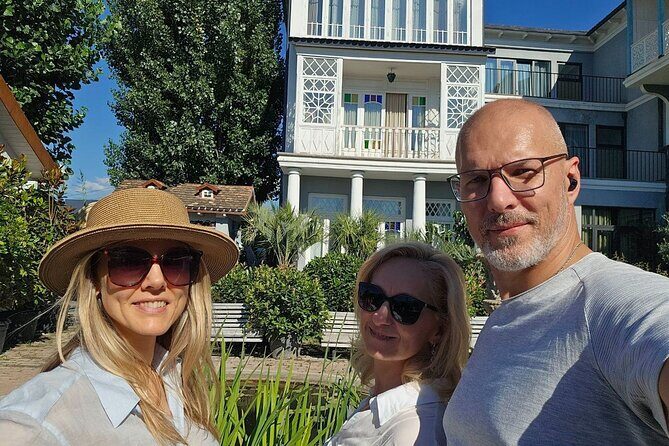
Next comes Kartlis Deda, the giant monument of Mother of Georgia. It’s a quick stop, but it’s the kind of visual anchor that tells you how Georgians imagine themselves. Even if you don’t know the full story yet, seeing the monument in person makes the later cultural talk land better.
Then you go to Ateshgah Zoroastrian Temple. This stop is a reminder that Georgia’s story isn’t only Orthodox Christian. Ateshgah connects to Persian imperial influence, which helps explain why you see traces of different empires and religious traditions across the city.
If you’re the type of traveler who likes your monuments with context attached, these two stops are a strong one-two punch. You see how identity is shown in a modern-feeling monument and then how older imperial religious traces remain visible.
A practical note: these are short stops, so come prepared to look. The guide can only fit so much into the time. If you enjoy asking questions, this is a good time to do it.
Liberty Square to puppet theater: politics, symbolism, and an hourly show
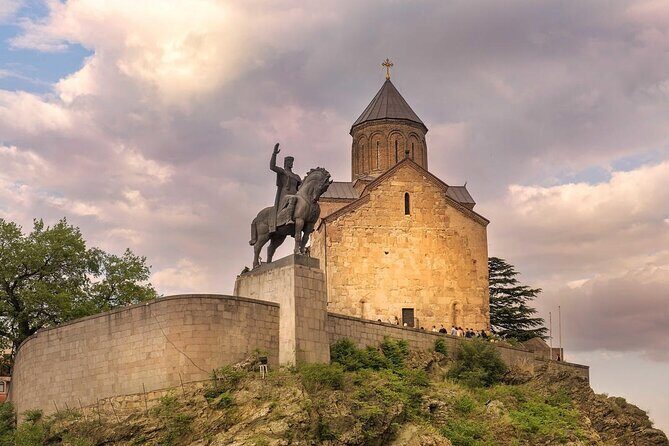
By the time you reach Liberty Square, you’re shifting from architecture to interpretation. The tour frames this area as a great place to talk about the Russian Empire in Georgia—why it mattered, and why you still see echoes of it in the way public spaces are understood. This is exactly the kind of context that makes a landmark more than a backdrop for photos.
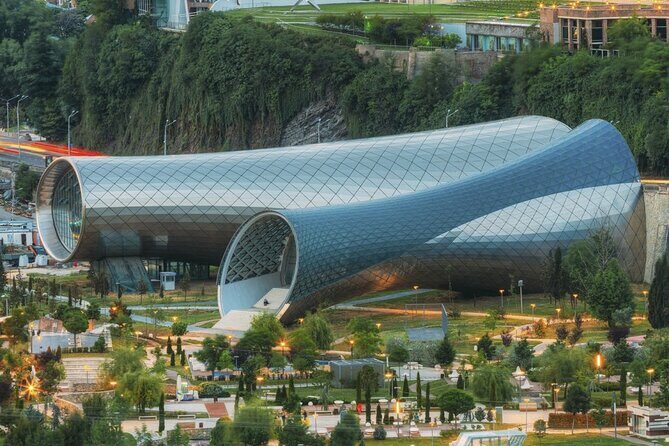
From Liberty Square, you also reach Rezo Gabriadze Marionette Theater. You’ll notice the clock tower, and the tour includes time near the theater’s small performance schedule, described as every hour. Even if you don’t stay for a full show, the theater’s presence and the idea of puppetry as a public tradition are memorable.
This is a smart way to end a walking tour. You’re not just “back where you started.” You finish in a place that feels central to modern Tbilisi life. Plus, puppet performances are an easy cultural reset after serious historic context.
Price and value: why $23.27 feels fair for a guided circuit
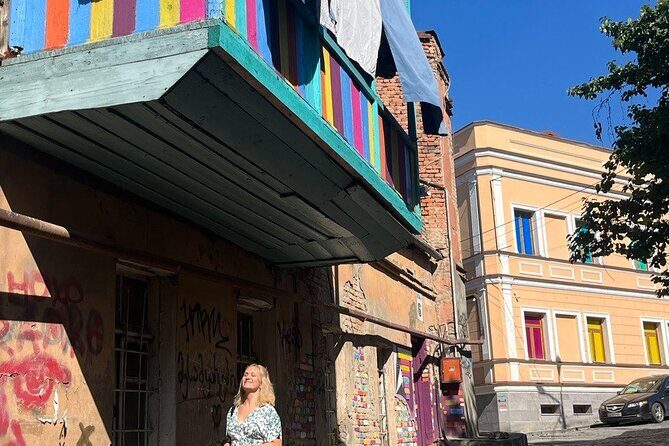
At $23.27 per person for an approximately 2-hour private walking tour, the value mainly comes from two things: a certified guide and free entry to the sights on the route.
Cable car cost is the only clearly listed add-on: €2.00 per person if you choose it. Since you have the option to walk instead, you’re not forced to pay. That flexibility matters because it lets you control costs based on your energy level.
All the included sights are marked as free to enter. That’s a big deal in practice. It means you’re not juggling separate tickets while your guide is trying to keep you on schedule. You can just enjoy the stops and focus on understanding what you’re seeing.
Also, the tour is booked on average about 8 days in advance. That suggests it’s popular enough to secure, but not so in-demand that you’ll always find it unavailable. If you’re traveling in a busy season, I’d still plan early, just to avoid getting stuck with a less ideal time.
What it’s like on the ground (timing, walking, and getting the most out of it)
You should expect a steady pace with short stops that add up to a full city orientation. Total duration is listed as about 2 hours, and many stops are around 5 minutes, with a couple longer ones like Old Town and the puppet theater area.
For me, the trick is to treat it like a guided tasting menu. You’re sampling each neighborhood’s vibe quickly, then you decide what to return to later on your own. After this tour, you’ll usually know where you want more time: the bath area for atmosphere, Narikala for views, or the religious-temple sites for cultural context.
Physical fitness is rated as moderate. That doesn’t mean it’s extreme, but there is some walking and hill terrain near Narikala. If stairs or inclines are an issue, the cable car option is your friend.
The tour uses a mobile ticket, and the meeting point is at Orbeliani Baths, with a finish near Liberty Square. It also notes being near public transportation, which is practical if you’re pairing this with the rest of your day.
Finally, your guide Alesia Aliakseichyk is a big part of the experience. One of the standout comments is the strong personal connection, plus the way she introduces Georgian cuisine ideas that you might not know to order on your own. Even if food isn’t the center of every stop, it’s a useful bonus for turning what you see into what you’ll try.
Should you book this walking city tour?
Book it if you want fast orientation, solid context, and a route that covers major Tbilisi themes in about 2 hours. It’s especially good if this is your first day and you’d like a built-in mental map for the rest of your itinerary.
Skip or reconsider if you hate walking on hills or you already have a plan that focuses on only one or two neighborhoods. Also, if you’re hoping for long time inside every site, this format is more about seeing, understanding, and moving on.
If you want value, this one makes sense: guided, private, free entries, and only a small optional cable car cost.
FAQ
What is the price of the Walking City Tour in Tbilisi?
The tour costs $23.27 per person.
How long is the tour?
It runs for about 2 hours.
Where does the tour start and end?
It starts at Orbeliani Baths, 31 Abano St, Tbilisi, Georgia and ends at Liberty Square, 2 Freedom Square, Tbilisi, Georgia.
Is admission included for the sights?
Yes. The tour says all sights are free to enter. The only listed exception is the Tbilisi Cable Car.
Is the cable car included in the price?
No. The Tbilisi Cable Car costs €2.00 per person if you use it. You can also go up and down to the fortress by foot.
What kind of ticket do I receive?
You’ll receive a mobile ticket.
Is this tour private?
Yes. It’s a private tour/activity, and only your group participates.
Is free cancellation available?
Yes. You can cancel up to 24 hours in advance for a full refund.
Should you book this tour anyway?
If your goal is to get your bearings fast and understand Tbilisi’s mix of faiths and past rulers in a short visit, I’d book it. The combination of a certified guide, free entries, and the Narikala viewpoint is the core reason this tour works. If you’re comfortable with moderate walking and you pack a camera-ready attitude, you’ll get a lot for your time.