REVIEW · TBILISI
3 Day Tusheti Tour Explore Unspoiled Wilderness
Book on Viator →Operated by Friendly.ge: Transfers & Tours in Georgia · Bookable on Viator
That first road into Tusheti is a lesson in awe. You get winding mountain drives, stone-tower villages, and high-altitude viewpoints that feel worlds away from Tbilisi’s pace.
I especially love the way the trip mixes wild scenery with real village life—not just quick sightseeing. A second standout for me is the small-group feel (max 6) paired with drivers and guides who make the rough roads feel manageable.
One consideration: this is remote, rustic travel. Expect limited services, big altitude exposure, and comfort that may be simpler than what you’re used to.
Key moments that make this tour special
- Abano Pass at 2,850m: high, dramatic driving with sheep and shepherds along the route
- Omalo guesthouse stays: simple rooms, private bathrooms, and home-style meals in a tiny mountain village
- Tower villages like Shenako: Middle Ages defensive architecture in black stone and wood
- History beyond the views: Silk Road-era stops plus the Keselo Fortress connected to the Mongol invasion
- Small group vibe (up to 6 people): more attention on the road and in the villages
- Weather-flex planning: the schedule can shift with rain or delays, so you’ll need a flexible mindset
In This Review
- Tusheti in 3 Days: What You’re Really Buying
- Gombori Pass and Alaverdi Cathedral: A Scenic Start in Kakheti
- The 93-Kilometer Road to Tusheti: Where the Tour Gets Serious
- Abano Pass to Omalo: The Switch from Drive Time to Village Time
- Dartlo: Stone Towers, Pagan-to-Christian Layers, and Village Scale
- Diklo and Shenako: The Defenses of Tusheti
- Omalo Again on Day Three: Keselo Fortress and a Tiny Village
- Driving, Safety, and Comfort: Mitsubishi Delica and Real-World Tips
- Price and Value: What $335 Covers (and What It Doesn’t)
- Who Should Book This Tusheti Tour—and Who Might Reconsider
- Should You Book? My Decision Checklist
- FAQ
- What is the price and duration of the 3 Day Tusheti Tour?
- Where does the tour start and what time?
- Is the tour offered in English?
- How big is the group?
- What’s included in the tour price?
- Are all meals and drinks included?
- Is horse riding included?
- Does the tour run year-round?
- Will I have reliable cell service and modern utilities?
- What is the cancellation policy?
Tusheti in 3 Days: What You’re Really Buying
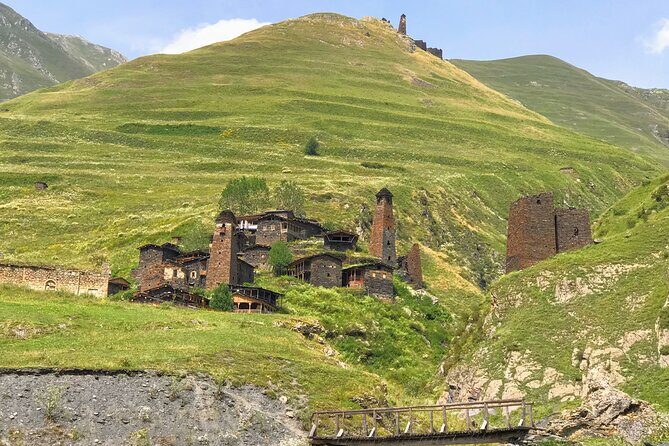
Tusheti is Georgia’s high mountain “end of the line,” where roads climb into the clouds and villages cling to steep slopes. This tour is built for that reality. You’re not just moving from stop to stop—you’re spending time in places shaped by isolation, altitude, and old stone traditions.
I like that the trip stays practical about what you’ll face: limited infrastructure, limited cell coverage, and rustic living conditions. And I like that it’s not only about dramatic viewpoints. You also get churches, fortresses, and village architecture that explain how people survived here.
The other value point is pacing. Three days is long enough to see the region’s signature villages (Dartlo, Shenako, Omalo), but short enough that the experience stays focused and not exhausting. Still, you should know this is not a “lie back and relax” itinerary. The driving is part of the deal.
Gombori Pass and Alaverdi Cathedral: A Scenic Start in Kakheti
Before you even reach Tusheti, you ease into the Caucasus with two strong cultural stops.
First comes Gombori Pass, the road that connects Tbilisi and Telavi and earned its reputation the old-fashioned way: winding turns, long views, and viewpoints where you can stop and look back. As you climb, the scenery shifts from semi-desert tones into greener slopes. There’s also a history thread here—this pass served as a strategic point on the Great Silk Road. If you enjoy small moments of context, you’ll appreciate that it’s not only a pretty drive.
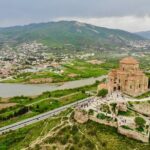
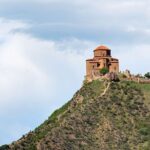
Then you land at Alaverdi St. George Cathedral, part of the Alaverdi Monastery complex in the Alazani Valley. The main draw is the cathedral’s scale and age: the monastery dates back to the 6th century, and the standout 11th-century cathedral is known as one of Georgia’s tallest religious structures. The interior decorations—frescoes and carvings—are the kind of details you only get at places that have been cared for over centuries. You also get a scenic bonus: monastery gardens and mountain-valley views.
If you’re thinking about logistics, these two stops are smart because they break up the day and reset your eyes before the long climb toward Tusheti.
A few more Tbilisi tours and experiences worth a look
The 93-Kilometer Road to Tusheti: Where the Tour Gets Serious
The best part of Tusheti starts when the road stops feeling easy.
The drive is described as 93 kilometers long from Alvani in Kakheti, and it’s one of those routes where you feel every turn. This is where the tour’s high value depends on having the right transport setup and the right driver behavior. In multiple reviews, people praise drivers like Vepho/Verpho and Gotcha, calling out their calm handling on steep and cliffside roads. That matters, because it’s not just comfort—it’s safety.
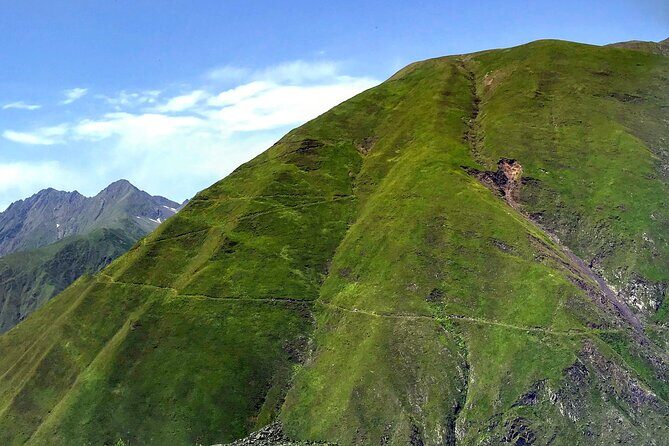
You’ll also cross high terrain via the Abano Pass area. This pass sits around 2,826m to about 2,850m, and it’s only open in the warmer months (the pass is described as open late May to early October). That seasonal window is one reason Tusheti tours are limited. In other words: if you’re traveling at the wrong time, the road itself can shut the door.
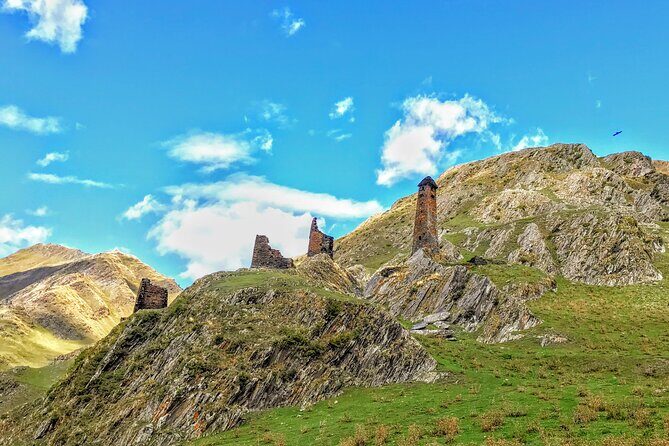
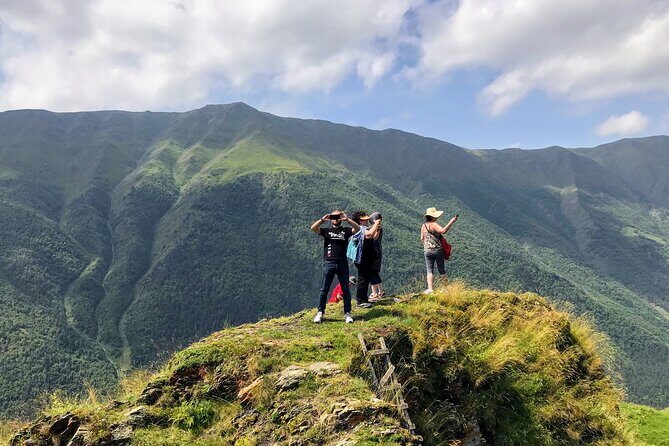
Expect “wow” moments that aren’t only about views. You might spot shepherds and flocks moving across the pass, which adds a very Tusheti kind of authenticity. The region’s culture also shows up through traditional stone towers and ancient churches scattered around mountain villages.
Abano Pass to Omalo: The Switch from Drive Time to Village Time
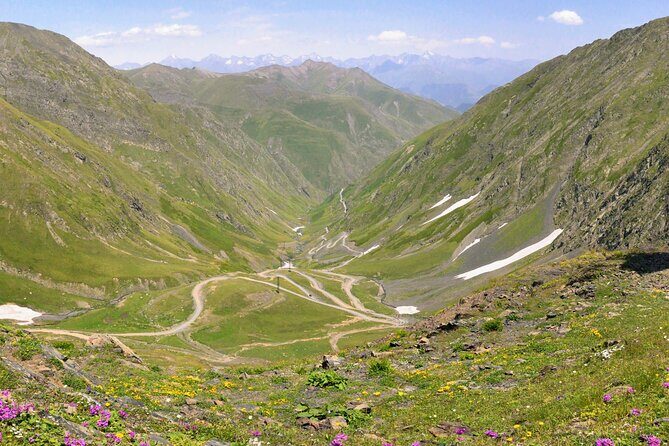
The Abano Pass crossing and then the arrival into Omalo is where the trip shifts from travel mode into lived-in mode.
Omalo is one of the best base points for seeing Tusheti because it’s small, traditional, and close to the village rhythm of the region. You’ll be staying in a traditional guesthouse in Omalo. The accommodations are simple, but the details matter: rooms are described as clean, and you get private bathrooms. Meals are home-style and use local produce.
I like guesthouse stays here because they solve a common tourism problem. You’re not trying to “find Tusheti” on your own using limited infrastructure. Instead, the trip hands you a place where people know the rhythm—when to be outside, how to dress for temperature swings, and how to live comfortably despite the basics being… basic.
What to plan for:
- Limited electricity and running water are mentioned as a reality in Tusheti, so don’t expect modern comfort.
- Phone coverage can be limited, so rely on your group coordination and bring an offline mindset.
- Weather can flip fast, including heavy rain and possible snow, so pack warm layers and waterproof gear.
Dartlo: Stone Towers, Pagan-to-Christian Layers, and Village Scale
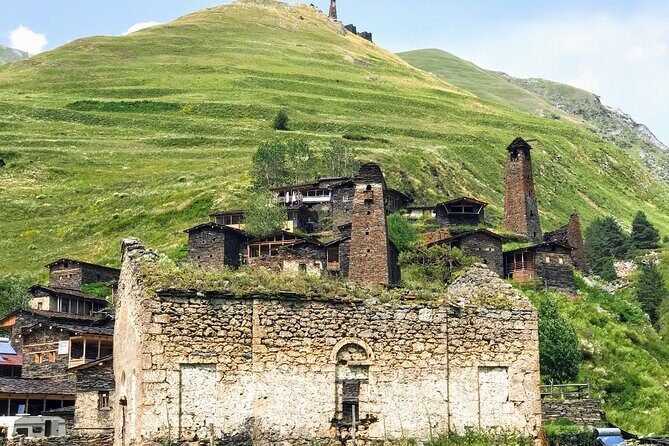
Day two has a great “architecture first” feel.
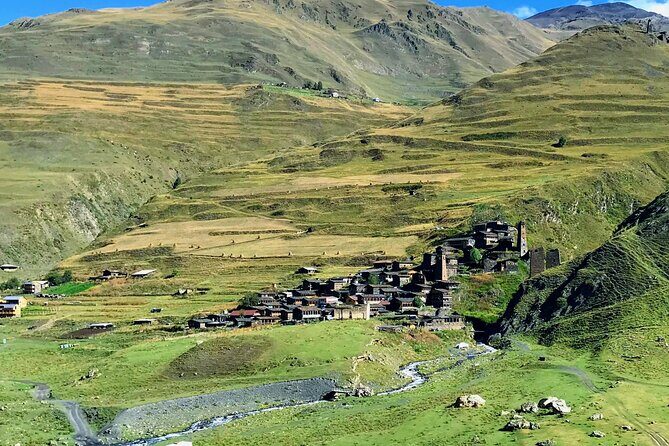
You start with Dartlo, known for its traditional stone houses, narrow streets, and mountain views. Dartlo also carries both Christian and pagan-era remnants, which is exactly what makes Tusheti history interesting. One site linked to this blend is the Iakhsari Icon Complex, dedicated to a pagan deity and made up of several buildings (including a hall, sacristy, and a flag tower). Even if you don’t read every stone like a historian, you can feel how belief systems layered over time.
Dartlo also includes Christian markers like the 19th-century Dartlo Church and the presence of a late medieval family tower connected to local lineages. The point isn’t to “check boxes.” It’s to see how a village built in stone can preserve meaning across centuries.
If you like walking at a slow pace, Dartlo is ideal. But keep an eye on your energy. Narrow streets and changes in altitude add up over a full day.
Diklo and Shenako: The Defenses of Tusheti
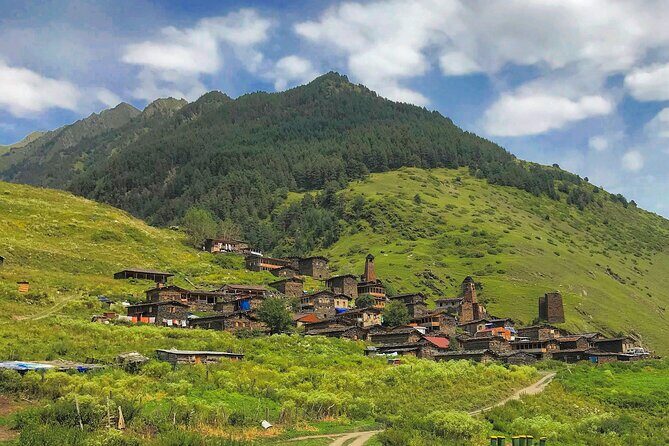
Next you visit Diklo, where you’ll see ruins of a fortress above the village. Diklo is described as depopulated in winter because of harsh climate and difficult roads. But in-season, it still feels peaceful and real—more “quiet mountain life” than tourist staging.
Then you get to Shenako, which is one of the major Tusheti architecture stops for a reason: tower houses built from black flat stones and wood. These structures date back to the Middle Ages and were designed for defense. The ground level often served livestock, while higher floors served as living space and protection from intruders. That practical design is visible even now.
The centerpiece in Shenako is St George’s Church, built in the 19th century. The church is notable for its domed form made of slate and limestone, plus its eight narrow and arched windows and whitewashed walls. There’s also a surrounding slate shelf and features like gate structures and minarets (with some foundations remaining in places). If you’re the type who loves details—material, shape, window rhythm—Shenako rewards you.
This day is a strong value because you see more than one type of “stone culture.” Dartlo shows mixed-era sacred layers. Shenako shows how homes and religion were built to survive conflict and weather.



Omalo Again on Day Three: Keselo Fortress and a Tiny Village
Day three keeps you in Omalo for a deeper look at medieval defense history.
The highlight is the Keselo Fortress, dating to around 1230 and connected to the Mongol invasion period. It’s said to have served as defense against raids by North Caucasian tribes. The fortress has been partially restored, so you can still get a sense of scale without it being a total ruin.
You’ll also see how the village itself is structured with houses dating between the 17th and 19th centuries. Omalo is tiny—only 37 inhabitants—which helps explain why the area feels so untouched. When a place has so few people, the tourism footprint stays lighter.
This is also the day when the return journey toward Tbilisi starts late afternoon. You’ll trade cliffside mountain views for highway reality, and you might notice how quickly the air changes.
Driving, Safety, and Comfort: Mitsubishi Delica and Real-World Tips
The tour uses a Mitsubishi Delica, described as reliable and equipped for rugged terrain. It won’t feel like a luxury vehicle, but it’s purpose-built for mountain roads that demand traction and patience.
What makes the difference is driver skill and guide coordination. Multiple reviews highlight drivers such as Goce and Gotcha handling tricky routes calmly. People also mention feeling safe even if they usually fear steep road travel. That’s not a small thing here.
Practical tips you should take seriously:
- Motion sickness: the tour notes that the road can be challenging and suggests medication if you’re prone to motion sickness. If you’re even a little susceptible, consider planning ahead.
- Altitude precautions: Tusheti’s altitude is listed from 1,800m to 2,900m. If you’re altitude-sensitive, talk to a doctor first and don’t assume you’ll adapt easily.
- Cold + rain gear: the region’s weather can shift quickly, including heavy rain and even snow. Warm layers and waterproof clothing are not optional if you want comfort.
- Communication limits: cell coverage can be limited, and there are limited medical facilities. Travel insurance is strongly implied by the remote evacuation reality.
Also remember: this area is protected. You should follow Leave No Trace habits—pack out trash and respect the natural environment.
Price and Value: What $335 Covers (and What It Doesn’t)
At $335 per person for roughly 3 days, this is best understood as a package deal for expensive logistics. You’re paying for mountain transport, a small group, a local guide approach, and built-in village lodging with meals.
Here’s what’s clearly included:
- Breakfast (2) and dinner (2)
- Guesthouse accommodation for the stay
- Guided experience across the key Tusheti villages and major stops
- Pickup offered in the Tbilisi area
- Mobile ticket and English as the tour language
- Small-group cap of up to 6 travelers
What’s not included:
- Additional food and drinks beyond the included meals
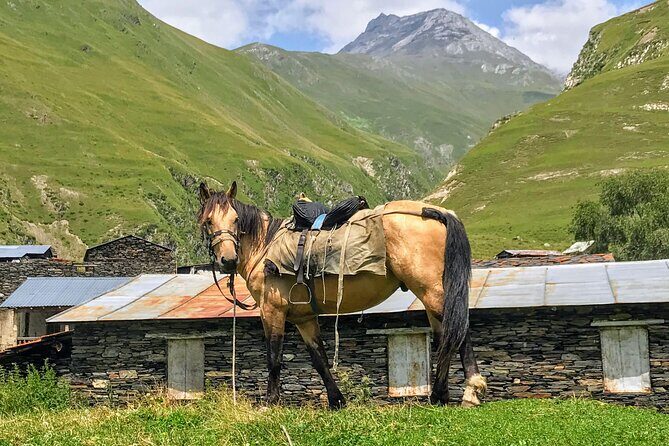
- Horse riding (optional)
- Private room upgrade: if you want a private room, there’s an additional $50 for 2 nights
To judge value, ask yourself what it would cost to reproduce this independently. You’d need transport capable of high passes, reliable scheduling, and access to guesthouse arrangements. In this region, the “how” is the hard part. That’s where a small-group tour is usually worth it.
Who Should Book This Tusheti Tour—and Who Might Reconsider
This is a great match if you want:
- Remote, traditional villages instead of big-city tourism
- An emphasis on stone architecture and historical context (towers, churches, forts)
- A trip where the road is part of the experience, not an inconvenience
- Small-group attention and a guide who can shape your understanding as you go
It’s less ideal if:
- You’re extremely sensitive to altitude or motion sickness (the tour explicitly warns about both)
- You need reliable phone service, constant electricity, or very modern amenities
- You want a totally predictable schedule—weather can cause changes, and the region is remote enough that flexibility matters
Season is also crucial. The tour is only available during a limited window, typically June to September. That lines up with the pass season window described for the Abano Pass road access.
Should You Book? My Decision Checklist
I’d book this tour if you’re excited by the idea of high-country travel with real village context, and you can handle rustic conditions without needing luxury. The combination of Abano Pass drama, tower villages like Shenako, and guesthouse meals in Omalo is a strong recipe for a memorable Georgia trip.
I’d think twice if you’re expecting comfort-first travel, or if your health situation makes altitude or steep roads risky. This isn’t the place to test your limits.
If you do book, prep smart: pack warm layers, bring waterproof gear, and plan for limited connectivity. Then let the mountain routine set the pace. Tusheti rewards that kind of mindset.
FAQ
What is the price and duration of the 3 Day Tusheti Tour?
The tour costs $335.00 per person and runs for approximately 3 days.
Where does the tour start and what time?
The start time is 7:00 am from the meeting point. Pickup is offered from Tbilisi if you provide your contact details.
Is the tour offered in English?
Yes, the tour is offered in English.
How big is the group?
The maximum group size is 6 travelers.
What’s included in the tour price?
The tour includes breakfast (2) and dinner (2). Accommodation is also included through the guesthouse stay.
Are all meals and drinks included?
No. Additional food and beverages are not included.
Is horse riding included?
Horse riding is not included. It’s offered as an optional activity.
Does the tour run year-round?
No. The Tusheti tour is only available during a limited season, typically June to September.
Will I have reliable cell service and modern utilities?
No. Cell phone coverage is limited in Tusheti, and there is also limited access to electricity and running water.
What is the cancellation policy?
You can cancel for a full refund if you cancel at least 24 hours in advance. If you cancel less than 24 hours before the experience starts, the amount paid is not refunded.