REVIEW · TBILISI
4 Group Tours Including Airport Transfers
Book on Viator →Operated by Gamarjoba Georgia Tours · Bookable on Viator
One trip, three different Georgia moods. This 4-day small-group route links old Tbilisi street life, Caucasus mountain views, and Kakheti wine cellars into one smooth plan. I especially love how guided sightseeing turns famous landmarks into stories you can actually remember.
I also love the practical value here: airport transfers plus transport and a certified guide mean you spend less time figuring out logistics and more time enjoying the day. If you’ve ever cringed at paying for “tiny” extras on a trip, this one feels refreshing.
One thing to plan for: a few key costs are marked as not included, like the Tbilisi cable car and some entrance fees. Also, the Kazbegi-to-Gergeti climb may require a 4WD add-on.
In This Review
- Key highlights to know before you go
- A 4-Day Georgia Mix of Churches, Mountains, and Wine Cellars
- Price and Logistics: Does $172 feel fair?
- Day 1 in Tbilisi: Old Town churches, Bridge of Peace lights, and Narikala views
- Day 2 on the Georgian Military Highway: Reservoir, Ananuri fortress, and Kazbegi’s big church moment
- Day 3: Uplistsikhe rock-cut town, Soviet-era history in Gori, and Mtskheta’s UNESCO churches
- Day 4 in Kakheti: bread-making, Bodbe nunnery, Sighnaghi walls, and tunnel wine cellars
- Group size, pace, and what you can realistically expect each day
- Who should book this tour, and who might want another option
- Should you book this 4-day Georgia route?
- FAQ
- What’s the price for this tour?
- How long is the tour?
- Does the price include airport transfers?
- What’s included besides sightseeing?
- Is lunch included?
- Are entrance fees included for Uplistsikhe and the Stalin Museum?
- Is the Tbilisi cable car included?
- Do I need a 4WD car to reach Gergeti Trinity Church?
- How big is the group?
- What’s the minimum age to join?
- Can I cancel for a full refund?
Key highlights to know before you go
- Airport pickup and drop-off included so you start and end without stress
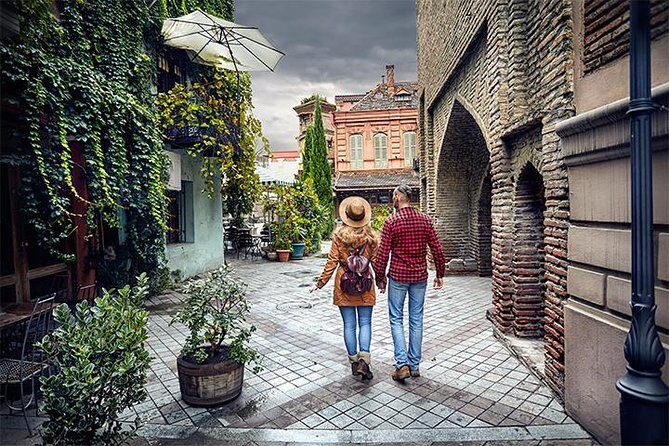
- Tbilisi on foot, with classic viewpoints like Bridge of Peace and Narikala Fortress
- Wine tastings in multiple places including Kindzmarauli and a local family winery
- Caucasus scenery day along the Georgian Military Highway with Ananuri and Jinvali Reservoir
- Mtskheta UNESCO sites with Jvari Monastery and Svetitskhoveli Cathedral
- Kakheti experiences beyond tasting like a khachapuri cooking masterclass
A 4-Day Georgia Mix of Churches, Mountains, and Wine Cellars
This tour is built for people who want more than just one city. You get architecture in Tbilisi, big sky mountain moments around Kazbegi, and the historic religious heart of Georgia in Mtskheta. Then you shift into Kakheti, where the day ends in wine cellars and food you’ll want to repeat at home.
I like that the plan doesn’t treat Georgia as one-note sightseeing. Yes, there are cathedrals and monasteries. But the route also gives you street-level culture in Tbilisi, countryside water-and-rock scenery on the Military Highway, and hands-on food moments in Kakheti.
What really helps is that the guide keeps the day from feeling like a checklist. In real-world tours, that’s often the difference between I saw things and I understood things. This one aims for the second.
You can also read our reviews of more tours and experiences in Tbilisi.


Price and Logistics: Does $172 feel fair?
At $172 per person for an approx. 4-day tour, the value comes from what’s bundled in: transportation, a certified guide service, and airport transfers. You’re also getting a thick layer of included tastings—four wine tastings in Kindzmarauli, plus two tastings at a local family winery. On the Tbilisi side, there are also two wine tastings tied to the walking tour, along with traditional Georgian pie and lemonade.
That matters because wine tastings in Georgia can add up quickly if you book each stop separately. Here, you’re paying once and the tour handles the schedule.
Two “watch your wallet” items:
- Tbilisi cable car is not included.
- Some entrance fees and add-ons are not included (Uplistsikhe, Stalin Museum, and the 4WD option for Gergeti).
If you’re the type who budgets for experiences ahead of time, you’ll find it easy to plan. If you hate surprises, I’d skim the not-included list early so it doesn’t catch you later.
Day 1 in Tbilisi: Old Town churches, Bridge of Peace lights, and Narikala views
Day 1 is a classic Tbilisi intro—walking, looking up, and using viewpoints to understand the city’s layout. You start near the river Mtkvari and work your way through major old-town stops, with multiple brief photo breaks.
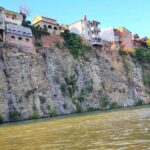
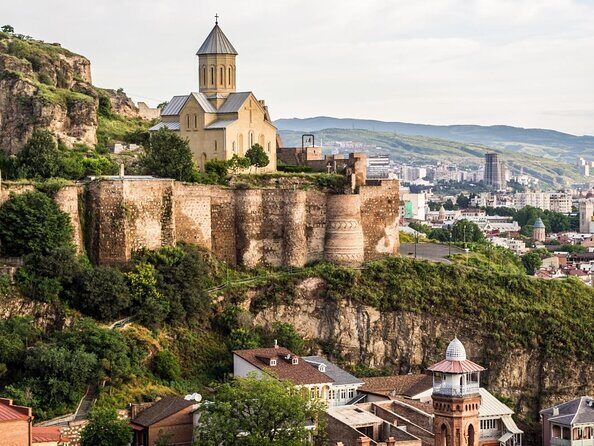
You begin at Metekhi Cathedral, perched on a cliff plateau by the river. The stop isn’t only about the building; it connects to older traditions tied to Vakhtang Gorgasali and St. Shushanik. Next, you hit the Monument of King Vakhtang Gorgasali, a small stop that helps you place the origin story of Tbilisi itself.
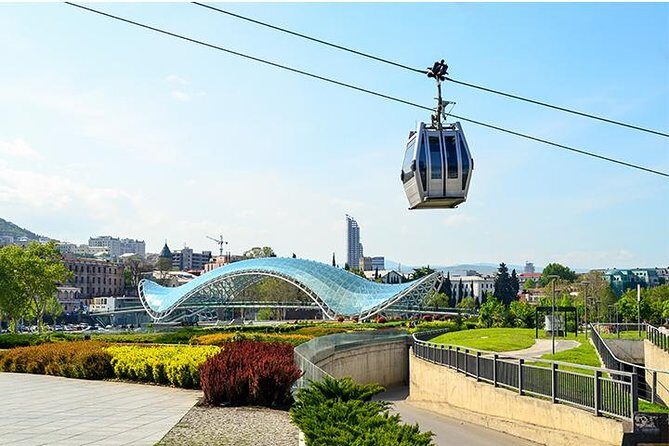
Then the tour gives you modern Tbilisi vibes. Europe Square sets up Georgia’s relationship with the European Union, and Rike Park puts you in the middle of a lively riverside public space. From there, you cross the Bridge of Peace, which is more than a pretty bridge: it has 10,000 LED bulbs and they switch on about 90 minutes before sunset.
After the bridge, Rezo Gabriadze Marionette Theater adds a very Tbilisi flavor. The clock tower with the angel and bell is timed for hours, and there’s a puppet show at 12:00 and 19:00 if your timing lines up. If not, you’ll still get the visuals without waiting around all day.
Religious sites keep the pace grounded. Anchiskhati Basilica (6th century) and Sioni Cathedral are both quick stops, but they each help you see how layers of Georgian Christian tradition stack up over time. There’s also a stop at the Patriarchate of Georgia, plus the Tamada (toastmaster) Statue, where you learn why toasting is part performance and part social glue.
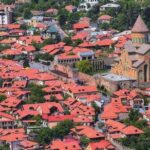
You’ll likely feel the shift once you reach Shardeni Street—an easy walk, an atmospheric pedestrian stretch, and the kind of place where your feet naturally slow down. After that comes the Tbilisi Cable Car to Mother of Georgia’s statue. That’s not just scenic; it’s a practical way to get city orientation fast, without trekking uphill.
Other “this is why I like Georgia” stops on Day 1:
- Narikala Fortress, the skyline landmark that lets you feel the city’s age even when sections of the walls look worn
- Tbilisi Juma Mosque, a tolerance-focused stop that adds context beyond religion as a building style
- Leghvtakhevi Waterfall and Chreli Abano Spa, for a break that feels both local and tourist-friendly
- Abanotubani, the old hot-bath district where sulfur baths line the streets
Tip for your shoes: you’re walking all day. Go with comfortable footwear and expect some uneven paths near viewpoints.
Day 2 on the Georgian Military Highway: Reservoir, Ananuri fortress, and Kazbegi’s big church moment
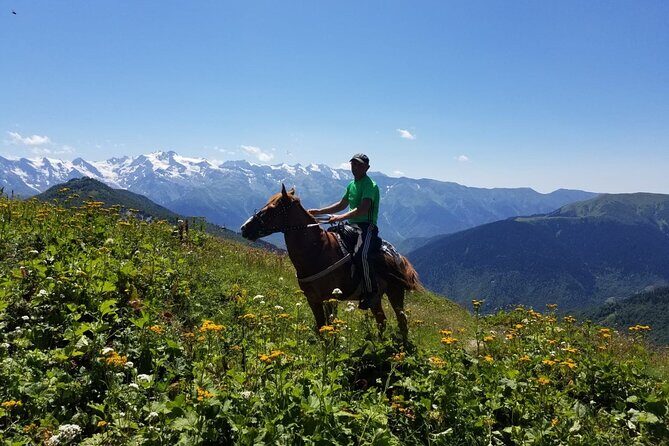
Day 2 is where Georgia starts feeling like a road movie. You head out toward the mountains with photo stops and a long scenic drive that helps you understand why this region draws photographers.
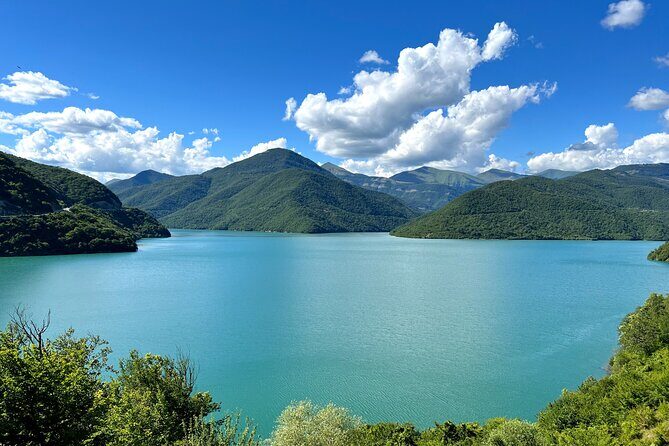
First stop is Zhinvali (Jinvali) Water Reservoir on the Georgian Military Highway. The dam-built lake gives you broad views and a clean foreground for photos. It’s short, but it sets the mood: even before the big fortress, you’re already seeing why the drive matters.
Next is Ananuri Fortified Castle Ensemble. This is one of those stops that works even if you’re not a “history museum” person. It’s a fortress and it’s scenic—Aragvi River views, landscape photography angles, and the kind of structure that reads well in short time. The complex dates to the 16th–17th centuries and was linked to the Eristavis (Dukes) of Aragvi. It’s also noted as being on the UNESCO tentative list in 2007, which adds credibility if you like your stops with official weight.
Lunch happens at Hotel-Restaurant Kakhaberi. The schedule allows time for rafting before lunch, which you can treat as optional energy if weather and your comfort level match. Either way, you’re eating traditional Georgian dishes in a setting that feels tied to the landscape rather than stuck in a generic restaurant box.
Then comes the Russian Georgian Friendship Monument, built in 1983 to connect to the Treaty of Georgievsk and the Soviet-era idea of friendship. It sits between Gudauri and Jvari Pass, with a view over Devil’s Valley. Even if you’re not into Soviet-era symbolism, it’s a strong roadside landmark stop.
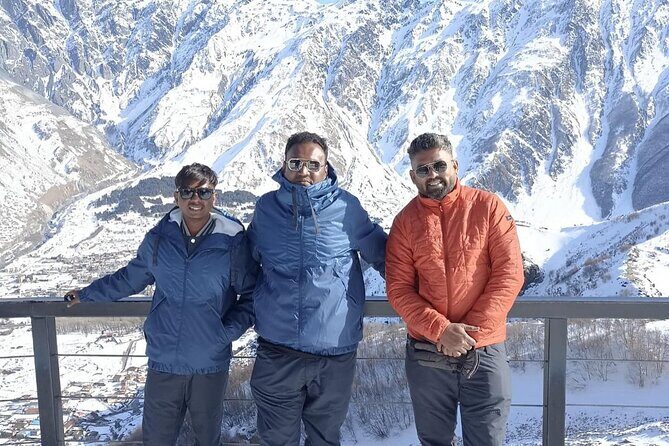
From there, you reach the Kazbegi area and Rooms Kazbegi. This is a proper “base” moment—time to settle, use hotel facilities, and potentially plan your next move. Then the big highlight: Gergeti Trinity Church.
Gergeti Trinity Church is high (over 2,000 meters) and built in the 14th century. It’s famous for its isolated location near Gergeti village, plus it’s described as the only cross-cupola church in Khevi province. The tour also includes context about how relics (including Saint Nino’s Cross) were moved there for safekeeping, and how religious services were prohibited during the Soviet era while the church remained a tourist draw.
Important practical note: the tour indicates a 4WD car option from Kazbegi to Gergeti and suggests a wait time of about 30 minutes for the driver. The 4WD itself is not included and listed at 20 GEL per person.
Day 3: Uplistsikhe rock-cut town, Soviet-era history in Gori, and Mtskheta’s UNESCO churches
Day 3 moves from mountains to ancient sites and then into the spiritual center of Georgia. It’s a day of contrasts—rock-cut architecture, Soviet museum rooms, and UNESCO-era monasteries.
You start at Uplistsikhe Cave Town. It’s an antique rock-hewn town with structures spanning early Iron Age to late Middle Ages. What I like about this stop is that you can still see the blend of influences—described as a mixture of rock-cut cultures from Anatolia and Iran, plus pagan and Christian architecture living side by side. You get 1.5 hours there, which is enough to grasp the layout without rushing every cutout detail.
Then the schedule steers you to Gori for lunch. The plan emphasizes a local family visit with homemade traditional food. If you want a more “everyday Georgia” meal (instead of the same set-menu feeling), this part is the one to look forward to. You’ve also got an optional way to handle free time: Gori’s Stalin Museum.
The Stalin Museum is focused on Joseph Stalin’s life, including his original house and a railway carriage, while keeping strong Soviet-era characteristics. If that subject makes you uncomfortable, you can skip it—your time in Gori can still be used for the town’s context without forcing the museum angle.
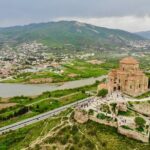
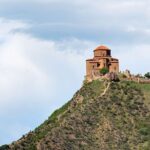
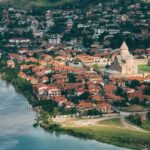
You’ll then reach Jvari Church (Monastery of the Cross). This 6th-century monastery is perched near the confluence of the Mtkvari and Aragvi rivers. It’s UNESCO-listed with the wider Mtskheta historic area. This stop tends to work because the views are part of the meaning. Even for a quick 30 minutes, it gives you that “this place shaped a kingdom” feeling.
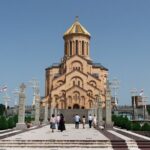
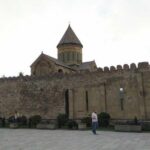
Finally, you arrive at Svetitskhoveli Cathedral in Mtskheta. The tour frames Mtskheta as one of the oldest cities in Georgia, with centuries of role as a coronation and burial place. Svetitskhoveli is described as the second-largest church in Georgia (after the Holy Trinity cathedral) and tied to the burial site concept related to Christ. You get about 1.5 hours, which is a nice buffer for absorbing both the building and the setting.
Practical note: Day 3 is heavy on “sit and stare” stops. If you’re sensitive to travel fatigue, bring water and plan to slow your pace at the cathedrals.


Day 4 in Kakheti: bread-making, Bodbe nunnery, Sighnaghi walls, and tunnel wine cellars
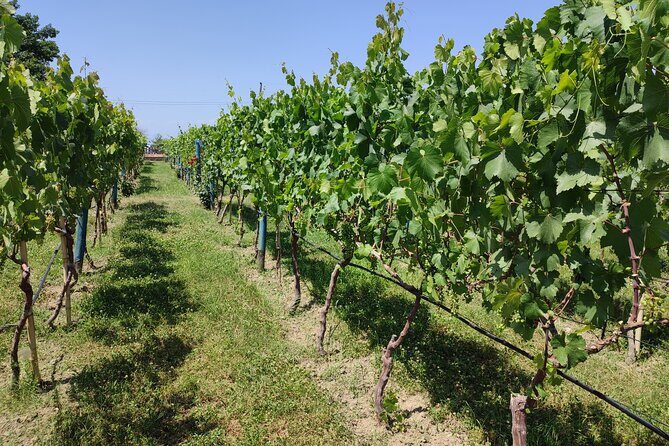
Day 4 is the most food-and-wine-forward day. It also has the most “do something” moments, not just look at things.
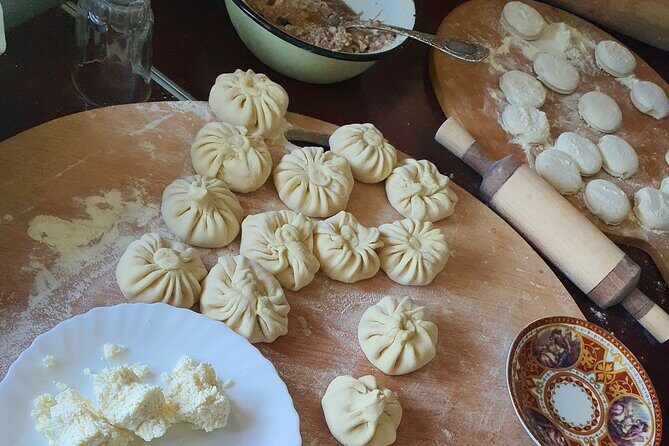
You start at Badiauri Bakery, where you taste Georgian bread, cheese, and chacha. The standout is the bread-making experience—you try making traditional Georgian bread yourself. That’s a different kind of souvenir. It’s also the kind of activity that makes the day feel like a living culture, not staged tourism.
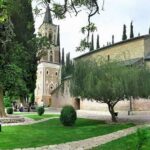
Next is Bodbe Monastery of St. Nino, with a viewpoint stop along the way in the Sighnaghi direction. Bodbe is described as built on the burial place of Saint Nino, the saint credited with converting Georgians to Christianity. The tour notes that Georgian kings cared about the monastery, and it has been repaired and restored multiple times. Even if you don’t go deep into religious detail, the legend connection is easy to remember.
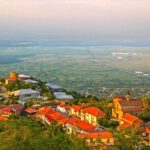
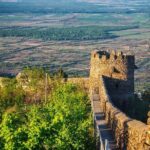
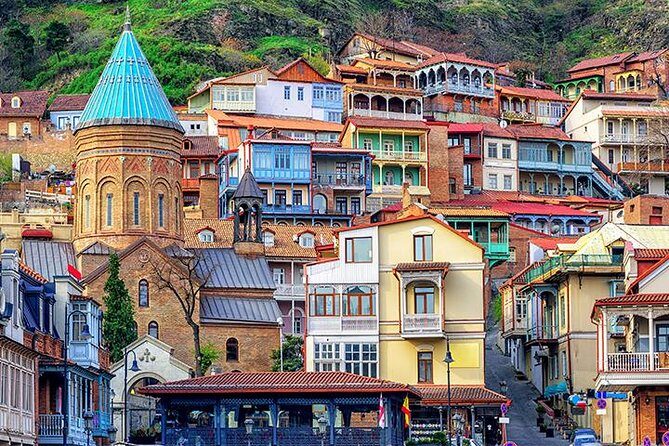
Then you move to Sighnaghi. It’s described as a small town in Kakheti, about 75 km east of Tbilisi, right in the wine-growing region. The town’s charm is practical for travelers: pastel houses with wooden fretwork balconies, narrow cobblestone streets, and the Great Wall of Georgia views.
Lunch is in Sighnaghi with an Alazani valley view. Before lunch, there’s a khachapuri cooking masterclass. You’ll make your own khachapuri and then try Georgian dishes along with good wine, followed by a view-focused break from above. This is one of the best parts for people who want more than tastings—hands-on food always makes the meal stick.
Finally, you hit the wine cellars.
First stop is Tunnel Winery Khareba’s. This is described as Georgia’s largest wine cellar complex, with 7.7 km of tunnels and constant temperature storage around 12–14°C. You get a walking tour with a local guide, plus a museum in the tunnel and a tasting.
Then you finish at Kindzmarauli Corporation Wine House. The tour notes a history tied to 1533 and the Kvareli fortress. The cellar originally produced wine and molasses for royal families, and now it’s open to broader markets. You’ll have another tasting experience here—part of the reason this tour feels like it’s built for wine lovers without turning the whole trip into one long alcohol festival.
Group size, pace, and what you can realistically expect each day
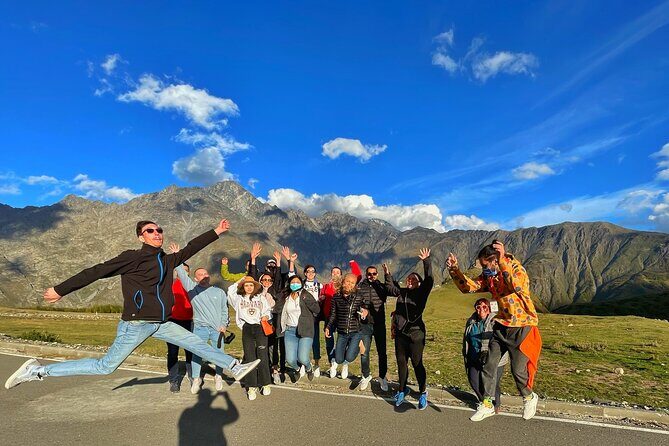
With a maximum of 18 travelers, you’re not stuck in a huge bus crowd. That often makes it easier for a guide to adjust pace and answer questions. Still, it’s a group tour, so the day runs on a schedule.
Expect:
- Many short stops rather than one long stop per site
- A mix of walking and viewpoints, especially in Tbilisi
- A few places where you’ll want to slow down and read what’s there, since the tour gives you context
Two “small planning” tips that make this smoother:
- Bring a light layer. Even in warmer months, higher areas near Kazbegi can feel cooler.
- Plan for optional costs: the cable car ticket in Tbilisi, Uplistsikhe and Stalin Museum entrance fees, and the possible 4WD add-on for Gergeti.
Also, if you care about how your guide handles storytelling, look for the moment when the guide names specifics and ties the stops together. In strong tours, that’s when the day clicks. The tour’s guides (Zura and Katherine are specifically mentioned) are described as well-versed in Georgian history and cathedrals, and good at food guidance too.
Who should book this tour, and who might want another option
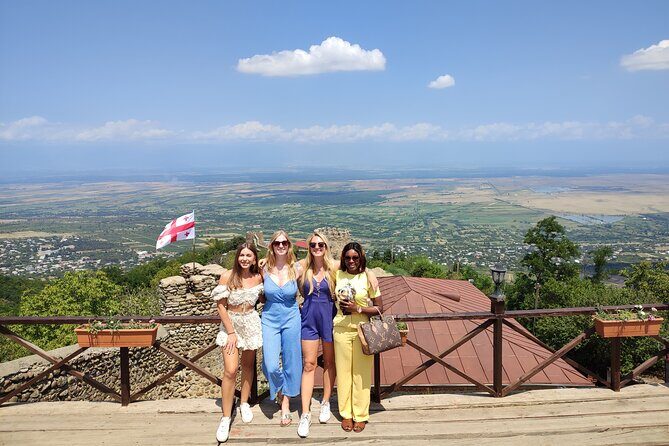
I’d point you to this tour if you:
- Want to see Tbilisi plus the Kazbegi and Kakheti regions without planning everything yourself
- Care about wine tastings and food experiences, not just sightseeing
- Prefer a small group with a certified guide rather than a private driver for every day
I’d think twice if you:
- Hate walking or uneven ground (Day 1 especially has lots of steps and uphill moments)
- Want every entrance fee included (Uplistsikhe, Stalin Museum, and the Tbilisi cable car are not included)
- Are strongly opposed to Soviet-era content, since Gori includes an optional Stalin Museum
Should you book this 4-day Georgia route?
Yes, if you want a well-structured sampler of Georgia where the logistics are handled and the day feels active, not random. The best reason to book is the combo of airport transfers, guided sightseeing, and multiple tasting experiences that would cost extra if booked individually.
Before you say yes, do one quick check:
- Decide if you’ll pay for Tbilisi cable car
- Decide if you want the 4WD add-on for Gergeti
- Budget for the optional entrance fees at Uplistsikhe and the Stalin Museum
If those fit your style, this tour is a strong value way to cover a lot of ground in only four days. You’ll leave with Tbilisi viewpoints, mountain scenery memories, UNESCO church moments in Mtskheta, and Kakheti flavors you can recreate at home.
FAQ
What’s the price for this tour?
It’s priced at $172.00 per person.
How long is the tour?
The tour runs for 4 days (approx.).
Does the price include airport transfers?
Yes. Private airport transfers are included, with pickup and drop-off tied to the airport meeting point.
What’s included besides sightseeing?
You get a certified guide service and transportation, plus wine tastings and entrance fees to the wineries. The Tbilisi walking tour also includes traditional Georgian pie and lemonade.
Is lunch included?
No. Lunch is listed as not included.
Are entrance fees included for Uplistsikhe and the Stalin Museum?
No. Entrance fees for Uplistsikhe and the Stalin Museum are not included.
Is the Tbilisi cable car included?
No. The Tbilisi cable car is marked as not included.
Do I need a 4WD car to reach Gergeti Trinity Church?
The tour indicates a 4WD car can be hired from Kazbegi to visit Gergeti Trinity Church, and it’s listed as not included (20 GEL per person).
How big is the group?
The group size is capped at a maximum of 18 travelers.
What’s the minimum age to join?
The minimum age is 5.
Can I cancel for a full refund?
Free cancellation is offered up to 24 hours in advance for a full refund.