REVIEW · TBILISI
Tbilisi Walking Tour with Cable Car, Wine Tasting & Bread Bite
Book on Viator →Operated by SelectGeorgia-For Holiday · Bookable on Viator
Tbilisi is best seen on foot and by cable car. This 4-hour private tour strings together Old Town streets, major churches, fortress views, and the Aerial Tramway, plus Georgian wine tasting and a bread bite. You also get the kind of guide attention that helps the day feel smooth, not rushed.
I especially like the mix of viewpoints and “small stop” moments. The route takes you up to the Mother of Kartli monument for wide-city panoramas, then down again into historic lanes and church courtyards where you can actually read the city with your eyes. I also liked the food component: you’ll sample wine at no extra cost, and the bread bite adds a local, practical flavor to the tour.
One thing to plan for: you’ll walk on uneven ground with stairs, and you’ll run into active Georgian Orthodox churches. Dress rules matter—women need headscarves and dresses, and men can’t wear short trousers—though you can usually grab scarves and help near church entrances.
In This Review
- Key highlights you’ll feel right away
- Why This Tbilisi Walking Tour Feels Efficient (Not Exhausting)
- Price and What $77.50 Really Buys You
- Pickup, A/C Comfort, and a Private Pace in One Day
- Old Town Tbilisi to Metekhi Cathedral: Reading the City at Street Level
- Aerial Tramway to Mother of Kartli: The View Stop That Changes the Day
- Narikala Fortress to the Sulfur Bath Area: Fortress Views and Thermal-Spring Reality
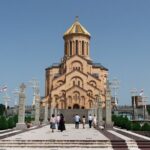
- Jvaris Mama, Sioni Cathedral, and Anchiskhati Basilica: Church Stops Done Right
- Rezo Gabriadze Marionette Theater and the Bridge of Peace: Local Quirk Meets Modern Art
- Wine Tasting and Georgian Bread Bite: A Practical Way to Taste the Region
- Who Should Book This 4-Hour Tbilisi Tour
- Should You Book This Tbilisi Tour?
- FAQ
- How long is the Tbilisi Walking Tour with cable car, wine tasting, and bread bite?
- Is pickup included?
- Is this a private tour or a shared group tour?
- What language is the tour offered in?
- Is wine tasting included in the tour price?
- Is the cable car included, and where does it go?
- Do I need to pay for admissions to the sights?
- What should I wear for church stops?
- FAQ
- What do I need to know about weather?
Key highlights you’ll feel right away
- Private guide attention that keeps your pace comfortable (mine, George, checked in and built in quick breaks).
- Cable car to Mother of Kartli for big panoramic views fast.
- Church stops included across different eras, so you see how Tbilisi’s faith and architecture changed over time.
- Narikala Fortress viewpoint paired with the Sulfur Bath area for a real contrast in scenery.
- Wine tasting + bread bite included in the experience price—no add-ons needed.
Why This Tbilisi Walking Tour Feels Efficient (Not Exhausting)
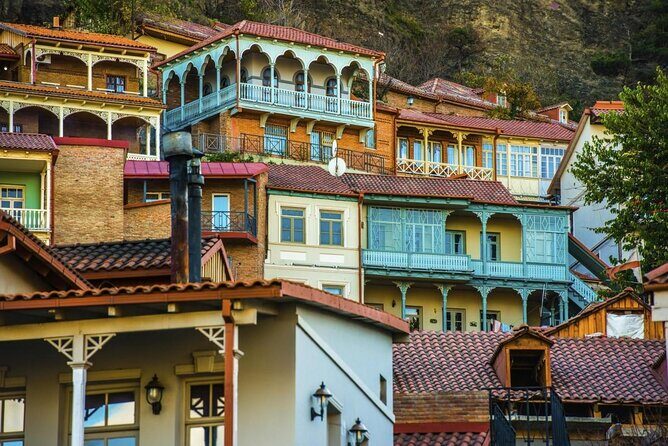
Tbilisi can be a little tricky to “figure out” on your own. The best sights are spread across hills, riverbanks, and Old Town lanes, and the routes you’ll want often come with stairs and slopes. This tour is designed to solve that in about four hours, with a real sequence and a guide who knows where the angles are best.
I like that it’s structured but still flexible. A private setting means you’re not locked to a group’s slowest moment or stuck watching people rush through photo stops. When I visited, guide George kept the energy moving, but he also made room if you needed a breather.
The other big win is pacing around landmarks. Instead of turning this into a museum day, you get short, meaningful stops—cathedrals, church interiors (when open), viewpoints, then back to streets for context. That “walk, look, connect” rhythm is what makes Tbilisi click.
You can also read our reviews of more walking tours in Tbilisi


Price and What $77.50 Really Buys You
$77.50 sounds like a simple number, but it’s easier to judge by what’s included. You’re paying for a private guide, an air-conditioned vehicle ride, the cable car ticket, and wine tasting with no extra charge. Many of the heritage sites along the way are listed as free admissions, which helps keep your total cost down.
You’re also getting organization. A mobile ticket and an English-speaking guide remove guesswork, especially around church etiquette and where to stand for the best sightlines. If you were planning this day solo, you’d likely spend extra time coordinating transit and tickets—time that you don’t really have in Tbilisi.
If you’re the type who hates paying for lots of “micro add-ons,” this package is a good fit. Wine tasting and the bread bite are built in, not tacked on later.
Pickup, A/C Comfort, and a Private Pace in One Day
This is a private tour/activity, meaning it’s just your group. That matters more than you’d think in Tbilisi, where Old Town walking can get bumpy and steep. You can choose a morning or afternoon departure, and the tour includes pickup, so you’re not stuck trying to meet in an awkward spot with a dead phone battery.
The comfort piece is real too. Even though you’ll be walking, you’ll travel between areas in an air-conditioned vehicle. That’s a smart touch in Georgia’s warmer months, and it also gives you a reset between longer stair sections and viewpoint stops.
And yes, you’ll still do walking—this isn’t a “drive and look” day. Comfortable shoes are strongly recommended, and you’ll want to be ready for steps.
Old Town Tbilisi to Metekhi Cathedral: Reading the City at Street Level
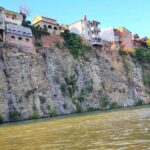
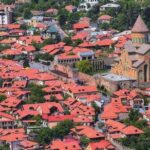
You begin in Old Town Tbilisi, where the city’s crossroads identity shows up in the streets. Tbilisi sits on the Kura River and historically sat between Europe and Asia, so the architecture you see isn’t one style—it’s layers. You’ll notice medieval, neoclassical, Art Nouveau, Stalin-era influences, and modern structures living side by side.
I like starting here because it gives your later stops meaning. When you reach the churches and fortress areas, you’re no longer just looking at isolated buildings. You’re connecting them to the city’s location, past power struggles, and the way Tbilisi has repeatedly reshaped itself.
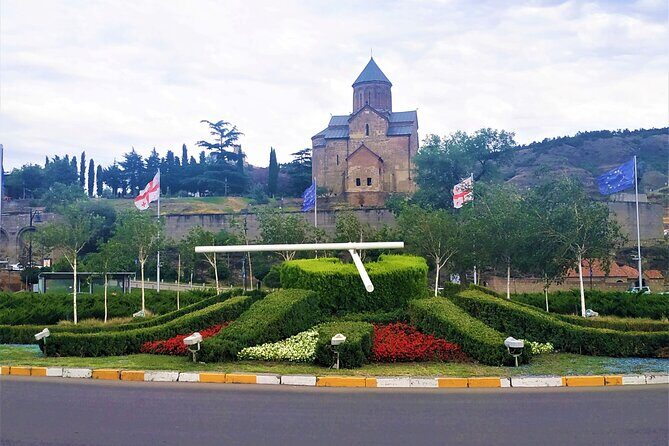
From there, you’ll head to Metekhi Cathedral (Church of the Assumption). It’s tied to King St Demetrius II, and the story includes damage, restorations, and an era when the church’s religious role changed during Russian rule. The statue of King Vakhtang Gorgasali is also part of the area’s modern identity. Admission is listed as free, which makes it an easy stop to keep without stretching your budget.
Practical note: plan for time on stone surfaces and uneven ground. If your feet get tired easily, wear shoes with solid grip.
Aerial Tramway to Mother of Kartli: The View Stop That Changes the Day
Then comes the cable car section: the Aerial Tramway. This ride takes you to the Mother of Kartli monument, erected in 1958 for Tbilisi’s 1500th anniversary. The figure is 20 meters tall and represents Georgia’s national character—left hand holding a bowl of wine to greet friends, right hand holding a sword for enemies.
What you’re really buying here is the angle. When you’re on the ground, Tbilisi feels like a maze of lanes. From up top, the whole city reads differently—the river, the hills, the clusters of rooftops, and the way Old Town sits below the viewpoints.
The cable car stop is listed as 20 minutes, and the admission is included. That’s helpful because it keeps the schedule predictable: you get your views without turning this into a long queue session.
You can also read our reviews of more food & drink experiences in Tbilisi



Narikala Fortress to the Sulfur Bath Area: Fortress Views and Thermal-Spring Reality
Your next big landmark is Narikala Fortress. The fortress traces back to early citadel days, with later expansions under King David the Builder, Mongol renaming, and visible fortification work dating from the 16th–17th centuries. Even the earthquake damage is part of its timeline, which gives the fortress a lived-in feel instead of a “perfect postcard” vibe.
Most of all, Narikala is about the view. You’ll stand where people once watched the city’s movement and still get that classic panorama over Tbilisi. This stop pairs well with the earlier tram ride because you’re getting both wide-city views and fortress-scale context.
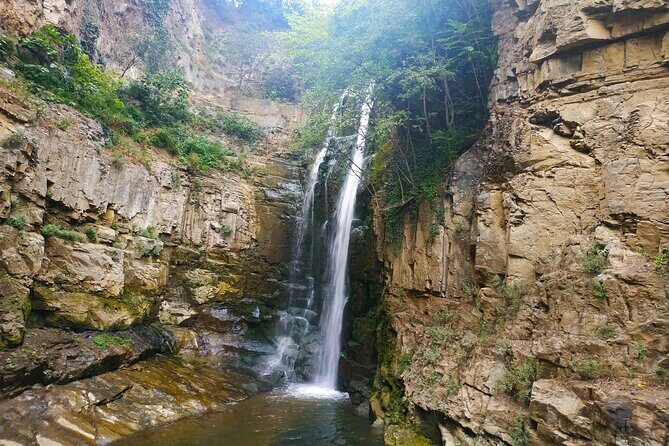
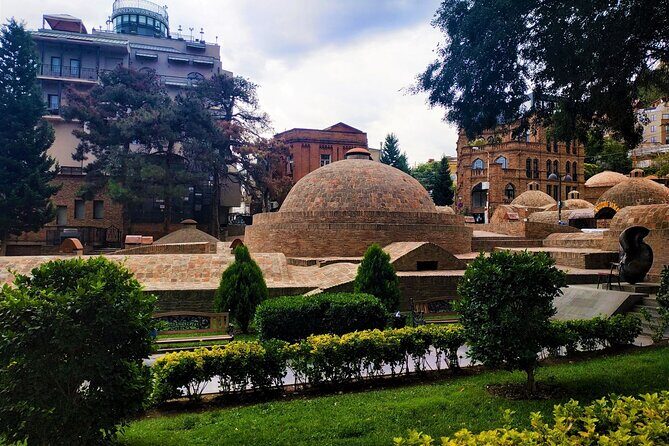
After Narikala, you’ll go to the Sulphur Waterfall / Leghvtakhevi Waterfall area and the Sulfur Bath setting. These sulfur springs come from the ground at 40–50°C, and they’re historically used for issues like skin problems, digestion concerns, and insomnia. In practice for your tour, it’s a chance to see how the city’s thermal identity exists right inside the sightseeing route.
One caution: the bathing “healing” claims are medical-adjacent, but your tour doesn’t promise any treatment. Treat this as a cultural stop and a sensory change of pace, not a spa plan.
You’ll also pass the Love Lock Bridge, a fun photo break that contrasts with the fortress seriousness. It’s quick, but it breaks up the stone-and-history focus.
Jvaris Mama, Sioni Cathedral, and Anchiskhati Basilica: Church Stops Done Right
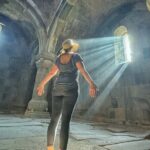
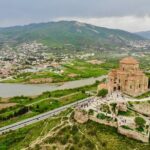
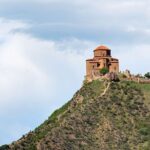
This part of the tour is where you feel the city’s long-running religious identity. You’ll stop at Jvaris Mama, a church connected to an old cross tradition and St Nino legends. The building history includes repeated destruction and a restored version in the 1990s, so it’s a reminder that heritage here is often about recovery, not just preservation.
Next is Sioni Cathedral Church. It’s associated with Mount Zion naming and multiple rebuilding phases from early centuries onward. The current structure draws from a 13th-century version with changes later on, and it was the main Georgian Orthodox Cathedral and seat of the Catholicos-Patriarch until the Holy Trinity Cathedral was consecrated in 2004.
I like that the guide-led pacing keeps these church stops meaningful. You don’t just pop in and rush out. You see why these buildings matter and how their stories overlap with political change, rebuilding after damage, and shifting roles.
Then you’ll visit Anchiskhati Basilica of St Mary, described as the oldest surviving church in Tbilisi. Its story includes an icon transfer (the treasured icon of Ancha) that shaped the church’s name. You also get details like a brick belfry built in 1675 and a dome added in the 1870s, plus a period when the building was used as an art studio during Soviet times.
These short stops (often about 10 minutes each) are smart. You get variety without draining your energy before the final scenic elements.
Dress rule reminder: this is the part that can trip people up. If you’re visiting an active Orthodox church, women should wear a headscarf and a dress. Men should avoid short trousers. Scarves and dresses are available near church entrances for entry.
Rezo Gabriadze Marionette Theater and the Bridge of Peace: Local Quirk Meets Modern Art
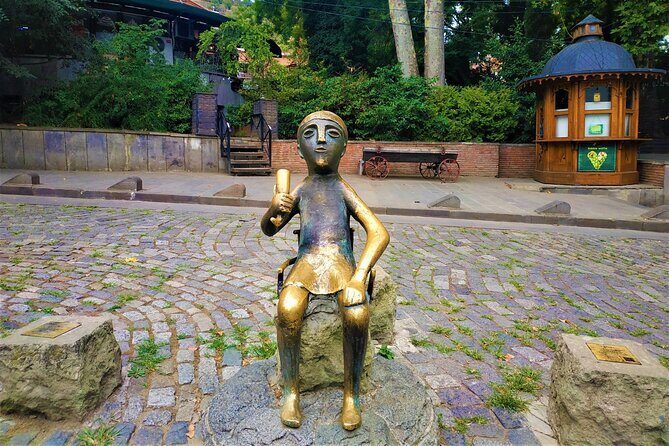
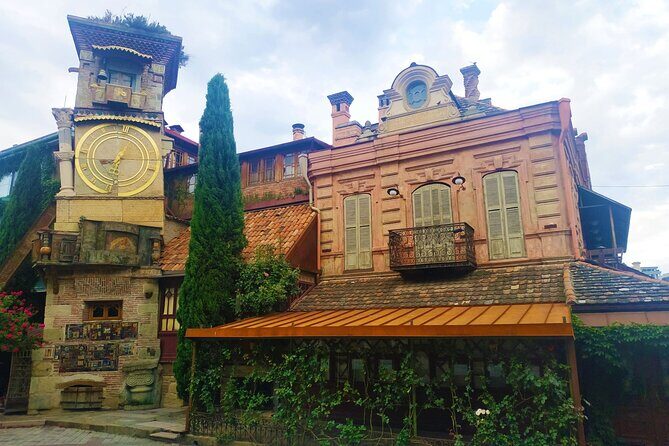
Toward the end, you get a different side of Tbilisi: the Rezo Gabriadze Marionette Theater. The clock tower is connected to the building’s story, and on the hour, a window opens and a mannequin of an angel strikes the bell. Below that, a screen shows scenes of life—from boy meets girl to marriage, childbirth, and funeral.
It’s not a “must see” landmark in the classic sense, but it adds something important. It shows how Tbilisi’s creative identity isn’t only about old stone churches. It’s also about storytelling through performance and design.
Finally, you finish near the Bridge of Peace. Opened in 2010 and about 150 meters long, it features a marine animal design. It’s also designed by Italian architect Michele De Lucchi, which gives it a more international design connection than the older Old Town structures.
This ending section works because it’s visually lighter. After churches and fortress walls, you get a clean walk and a photo-friendly finish.
Wine Tasting and Georgian Bread Bite: A Practical Way to Taste the Region
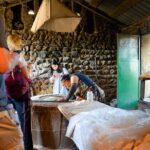
Your tour includes Georgian wine tasting at no extra cost. You’ll be able to sample wine during the experience, and you’ll also have a bread bite included. The bread isn’t a throwaway add-on—it’s the kind of simple local pairing that helps the wine taste make sense.
I like tours that teach you without lecturing. Wine tasting on a walking day feels natural because you’re surrounded by the setting that produced it: hills, weather, and long cultural traditions tied to farming and hospitality. Even if you’re not a wine expert, the tasting gives you a starting point for what to order later at restaurants.
A practical note: Georgia’s legal drinking age is 18. If you’re traveling with anyone under that age, plan ahead for non-alcohol options during the tasting portion (the tour data doesn’t specify alternatives, so ask your operator if that matters for your group).
Who Should Book This 4-Hour Tbilisi Tour
This tour fits best if you want a structured Old Town orientation without spending your whole day navigating. It’s also a strong choice if you like walking but don’t want to guess ticketing for major viewpoints.
You’ll likely enjoy it if:
- You want a mix of churches, fortress views, and a modern landmark finish.
- You’re interested in Georgian wine culture and want it included.
- You value private guidance, especially for managing pacing and church etiquette.
You might not love it if:
- You hate stairs or uneven walking.
- You’re not interested in church visits or don’t like dressing up for them.
- You’re looking for a pure food tour with lots of meals; this is wine plus a bread bite, not a full tasting crawl.
Should You Book This Tbilisi Tour?
I’d book this if you want maximum “Tbilisi feel” in about four hours: Old Town orientation, cable car panoramas, fortress views, and several major churches with enough context to make them click. The price feels fair when you consider the private guide, vehicle comfort, cable car ticket, and wine tasting included.
If church attire rules will be stressful, bring the right clothing (or plan to grab scarves and suitable cover-ups near entrances). And if walking is a concern, wear the best shoes you own and take it slow on stairs—this route is doable, but it isn’t flat.
If your ideal Tbilisi day is organized, scenic, and locally flavored, this is a solid pick.
FAQ
How long is the Tbilisi Walking Tour with cable car, wine tasting, and bread bite?
It lasts about 4 hours.
Is pickup included?
Yes, pickup is offered.
Is this a private tour or a shared group tour?
This is a private tour/activity, so only your group participates.
What language is the tour offered in?
The tour is offered in English.
Is wine tasting included in the tour price?
Yes. Georgian wine is included with no extra cost, and there’s also a bread bite.
Is the cable car included, and where does it go?
Yes. You’ll take the Aerial Tramway to the Mother of Kartli monument, and the admission ticket for this part is included.
Do I need to pay for admissions to the sights?
Most of the listed admission tickets are free, and the cable car admission is included.
What should I wear for church stops?
You’ll need to wear appropriate clothing for Georgian Orthodox churches. Women need headscarves and dresses, and short trousers for men are forbidden. Scarves and dresses are available near church entrances.
FAQ
What do I need to know about weather?
This experience requires good weather. If it’s canceled due to poor weather, you’ll be offered a different date or a full refund.