REVIEW · TBILISI
Private Day Trip to Gudauri and Kazbegi from Tbilisi via Jvari and Mtskheta
Book on Viator →Operated by Traffic Travel LLC · Bookable on Viator
Stepping out of Tbilisi and into the mountains is the easy part. This private day trip strings together Georgia’s spiritual history and high-altitude road drama, from Mtskheta and Jvari to Kazbegi/Stepantsminda, with a guide who keeps the story going the whole way. I love how the route gives you a fast, organized overview of the country without feeling rushed, and I especially like the chance to reach the Kazbegi area and aim for the Trinity Monastery viewpoint when conditions allow. One thing to keep in mind: winter weather can affect road access, and the high pass between Gudauri and Kazbegi may close.
The real payoff here is the mix of UNESCO sites and mountain scenery, all handled with hotel pickup and drop-off so you’re not piecing together buses and transfers. I also like the private format: you can ask questions, manage your photo stops, and keep the pace comfortable with your own driver-guide team. It’s also not just driving and walking—this itinerary builds in multiple viewpoint moments, so you can actually see what people mean when they talk about the Georgian Military Road.
The only drawback I see is timing. It’s a long day (about 10 hours), and at higher elevations in colder months, the visit up to 2,200m can depend on snow and road conditions—so you should mentally plan for an alternate plan if weather blocks the final leg.
In This Review
- Key things that make this day trip worth your time
- Getting out of Tbilisi: why the private format matters
- Mtskheta and Svetitskhoveli: the spiritual heart you can actually feel
- Jvari Monastery: the viewpoint that explains the region
- The Georgian Military Road: Ananuri, Jinvali dam, and the mountain mood shift
- Gudauri to Kazbegi: Friendship monument, Cross Pass, then Stepantsminda
- Lunch in Kazbegi: choose the terrace view or a village meal
- Gergeti Trinity Monastery at 2,200m: worth it, but don’t fight the weather
- Pacing, comfort, and the little safety details that add up
- Price and value: what $114 per person buys you
- Who should book this Gudauri and Kazbegi day trip
- Should you book it or look for a simpler option?
- FAQ
- What time does the tour start and how long is it?
- Is hotel pickup and drop-off included?
- Is this a private tour or will I be mixed with other people?
- Which sights do you visit in Mtskheta and around it?
- Will the Trinity Monastery at 2,200m be included?
- Where do you have lunch during the day?
- What’s included in the price, and what costs extra?
- Is Wi‑Fi available during the tour?
Key things that make this day trip worth your time
- UNESCO hits early: Svetitskhoveli in Mtskheta and Jvari get your historical footing fast
- High-altitude payoff: the Kazbegi/Stepantsminda drive is the main event, not just a quick stop
- Real mountain-road stops: Ananuri by Jinvali dam, Gudauri pass views, and the Friendship monument area
- Lunch with a view: terrace lunch at Rooms Hotel Kazbegi, or an authentic option in Arsha village
- Go when the roads cooperate: Gergeti Trinity Monastery timing can shift in winter
- Private pacing: only your group, with pickup from anywhere in Tbilisi
Getting out of Tbilisi: why the private format matters
This tour starts at 9:00 am with hotel pickup anywhere in Tbilisi and ends with drop-off back at your hotel. That sounds simple, but it changes the whole day. You avoid the stress of meeting groups across town, and you get a smooth, door-to-door rhythm that’s perfect for a one-day hit.
Because it’s private, you can manage your energy. If you want quick photo stops, you can do that. If you want to linger at a viewpoint or ask more questions about the sights, your guide can usually work it into the day.
Vehicles come with free Wi‑Fi on request (limited usage), plus basic safety gear like a first aid kit and fire extinguisher. Some drivers have also been noted for being extra careful on cliffside roads, which matters on this route. Even on a clear-weather day, the road is not the place for rushing.
You can also read our reviews of more private tours in Tbilisi


Mtskheta and Svetitskhoveli: the spiritual heart you can actually feel
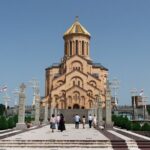
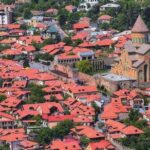
Your day begins with Mtskheta, Georgia’s ancient capital. The big start-stop here is Svetitskhoveli Cathedral, an XI-century site and one of the country’s major sacred landmarks. You get around 45 minutes at this stop, which is enough to get your bearings, appreciate the architecture, and understand why Mtskheta matters beyond the postcards.
Svetitskhoveli is one of those places where context helps a lot. A good guide connects it to Georgian church history and local identity, so it feels less like you walked into a church museum and more like you stepped into a living tradition.
If you’re trying to understand Georgia in a single day, starting here makes sense. You’re anchoring the later mountain drive to something deeper than scenery: faith, story, and identity travel.
Jvari Monastery: the viewpoint that explains the region
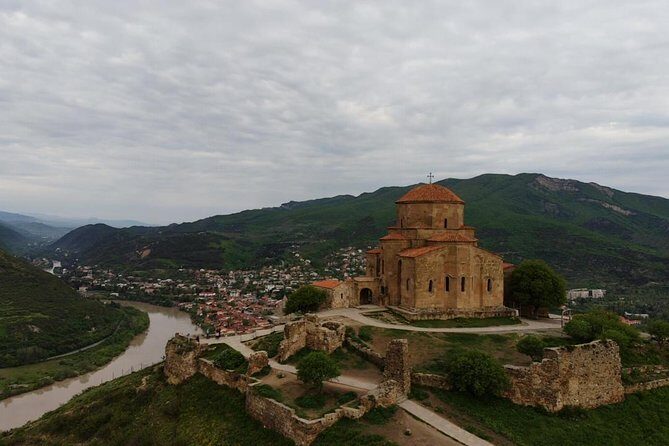
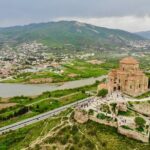
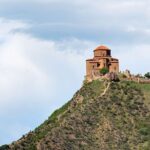
Next comes Jvari Monastery, a VI-century UNESCO site with a classic “look down over everything” setup. You’re there for about 30 minutes, and the main reason people love it is the panoramic angle over the area around Mtskheta.
This is one of the stops where you’ll feel the difference between seeing Georgia on a screen and seeing it with your own eyes. Even if the weather is a little cloudy, the elevation and the river-and-town layout tend to clarify the geography fast.
It’s also a nice pacing reset. After cathedral time, Jvari lets you stand back, breathe, and take in the shape of the land. This helps later when you climb toward Kazbegi, because you start understanding how the mountains funnel both travel and weather.
The Georgian Military Road: Ananuri, Jinvali dam, and the mountain mood shift
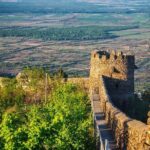
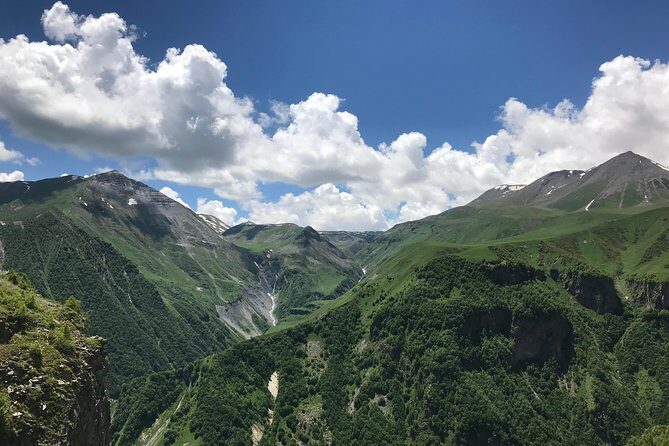
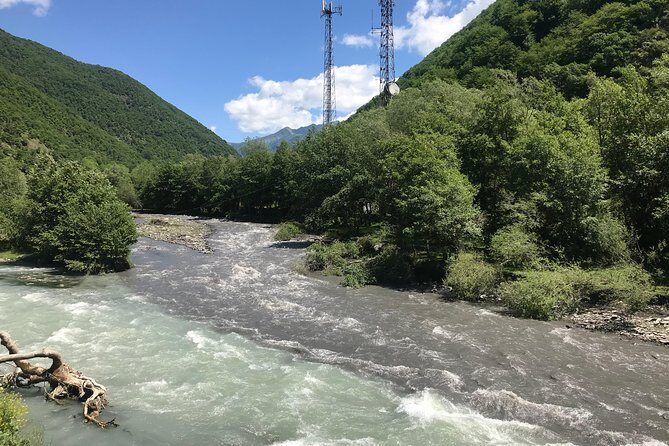
Once you leave Mtskheta and Jvari behind, the drive becomes the attraction. You head along the Georgian Military Road toward Kazbegi/Stepantsminda, with a stop that’s both scenic and historically flavored: Ananuri Fortress near the Jinvali dam.
You get about 30 minutes here. It’s a good duration for walking a bit, taking photos, and getting a feel for how the fortress overlooks the water and landscape. A guide will usually tie Ananuri to the region’s strategic past, which turns it from a quick snapshot into an actual story stop.
Around this stretch, you may pass the Gudauri Ski Resort area, plus the Friendship monument region (the “Georgian Russian” term often used for it) and the famous high point approach known as Cross Pass. Even if you’re not skiing, these areas teach you something practical: the country’s winter road logic, and why closures happen.
This is where I’d suggest wearing layers. The drive can swing from mild to chilly fast, and you’ll likely do multiple short “stop and look” moments.
Gudauri to Kazbegi: Friendship monument, Cross Pass, then Stepantsminda

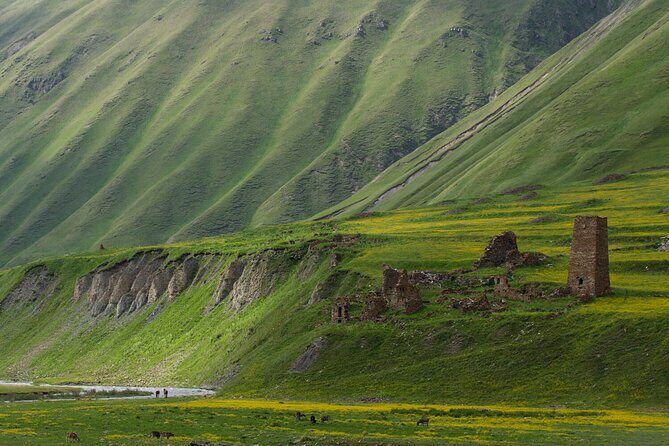
As you move deeper into the mountain route, the day starts to feel like a different country. You’ll pass through the Gudauri area and then toward the Cross Pass section, with Kazbegi/Stepantsminda as your destination.
The tour description also notes winter caveats. In colder months, the pass between Gudauri and Kazbegi might be closed due to extreme weather conditions. That doesn’t mean you’ll definitely lose the day, but it means you should expect the plan to be weather-smart, not stubborn.
In the best moments, you get clear mountain visibility and that famous Kazbegi-region sense of scale. In some departures, even a little unexpected snow can appear, which turns the viewpoint time into something special rather than just scenic.
A few more Tbilisi tours and experiences worth a look



Lunch in Kazbegi: choose the terrace view or a village meal
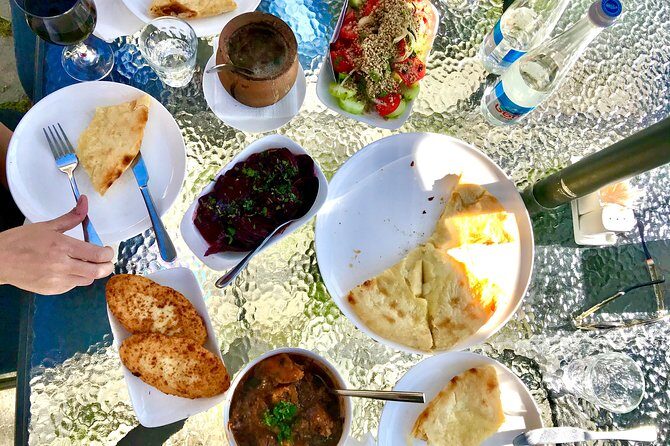
Lunch is one of the best “human” parts of this itinerary. You’ll have about 1 hour for food, either at Rooms Hotel Kazbegi on a terrace with views toward glacier Kazbegi (5,047m) when visibility cooperates, or in an authentic Georgian restaurant in Arsha village.
Both options fit the same goal: get you out of the car for a real break, and let the day breathe. The terrace lunch option is especially good if you’re the type who wants to eat while watching the mountains. If the weather is rough, a village restaurant can be a more comfortable, warmer reset.
I’d go with the terrace lunch when you have decent cloud breaks. It’s the simplest way to end up with a meal that feels connected to where you are, not just food on the road.
Gergeti Trinity Monastery at 2,200m: worth it, but don’t fight the weather
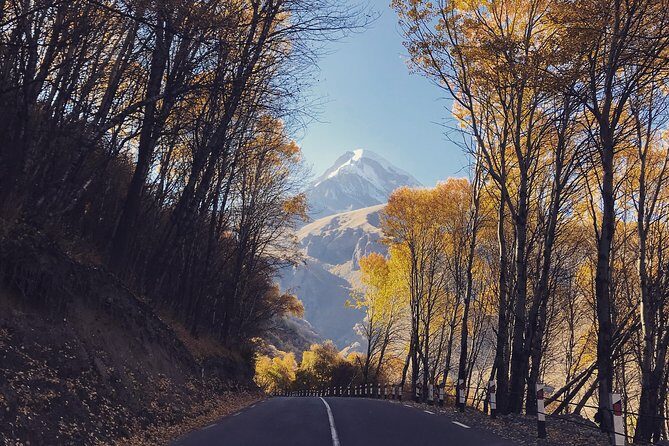
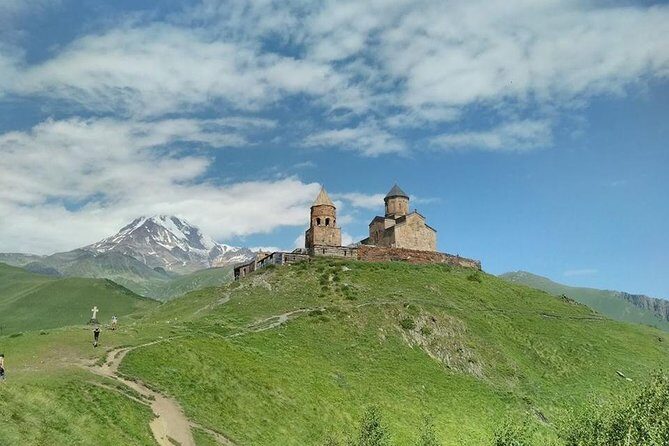
After lunch, the tour heads toward the Trinity Monastery at around 2,200m. In the schedule, the actual time up and down is about 1.5 hours, and the key detail is that in winter, availability depends on weather conditions and snow on the road.
This is the part that can make or break expectations. If you can get up, the payoff is huge: the higher you go, the more the Georgian landscape becomes about altitude and space rather than just architecture. The monastery stop also helps tie the day together thematically—spiritual sites are not stuck only in the lowlands of Mtskheta.
If weather blocks the final leg, the day still remains full. You’ll still have completed the bigger framework: Mtskheta, Jvari, Ananuri, and the drive into the Kazbegi region. That’s why I like this itinerary for first-timers. Even when the last viewpoint is delayed, you don’t feel like the entire day fell apart.
Pacing, comfort, and the little safety details that add up
A 10-hour day trip can either feel heavy or manageable. What makes this one usually work is pacing built into the itinerary: multiple short site stops instead of one long slog, plus a real lunch break.
The private vehicle also supports comfort. Some departures have included an air-conditioned vehicle, which is genuinely helpful when temperatures swing in the mountains. You’ll also benefit from the guide-led timing—especially when road conditions change.
Practical point: bring a light jacket even if Tbilisi is warm. If you’re going up toward 2,200m, you’ll feel it.
And if you care about photo timing, this is one of the reasons to pick private. Your guide can often help place you where the light is best for the route stops, rather than following a rigid timetable.
Price and value: what $114 per person buys you
At $114 per person for roughly 10 hours, this is in the middle of the “serious day trip” tier. The value comes from what’s bundled together:
- Private round-trip transportation from Tbilisi, with pickup and drop-off
- Bottled water
- A guide component delivered in English (or possibly another language, depending on the operator’s schedule)
- Access to multiple major stops across very different regions in one day
What you’re not paying for includes any optional add-ons and the airport transfer option (listed separately at $35 if you need it). There’s also no admission pricing or meal upgrade details spelled out here, other than lunch itself being included in the day’s plan.
In plain terms: if you try to cobble together Mtskheta, Jvari, and Kazbegi on your own, you’ll spend time figuring out transport and you might still miss key viewpoints. Paying for a private driver-guide is often cheaper than you think once you count the hassle factor—and the mountain road is not where I want you improvising.
Who should book this Gudauri and Kazbegi day trip
This is a strong fit if you:
- Want a first-timer overview of Georgian history plus a big Kazbegi mountain day
- Like having a guide to translate meaning, not just point directions
- Prefer a private schedule where your group can keep a comfortable pace
- Are excited by road-trip energy, but still want organized stops
It’s also a good choice for couples and small families who want one major outing instead of two or three separate day trips.
If you’re coming in winter, you should book with a flexible mindset. The itinerary is built to handle the reality of closures. You’ll still have plenty to do, but don’t assume every high-altitude stop will be guaranteed regardless of schedule.
Should you book it or look for a simpler option?
I’d book this if you want your one day outside Tbilisi to feel like a complete Georgia sampler: Mtskheta + Jvari for roots, Ananuri for history and geography, and Kazbegi/Stepantsminda for the big mountain moment.
If you hate long days, or if you’re traveling only when roads must be perfect (no weather wiggle room), you might consider a more focused route. But for most people, the private transport plus the dense itinerary makes this a smart way to maximize value.
If you can, bring one extra planning habit: ask your driver-guide how they’re thinking about the final monastery leg based on snow and road conditions that day. That kind of real-time decision-making is usually what turns a long outing into a memorable one.
FAQ
What time does the tour start and how long is it?
The pickup starts at 9:00 am, and the day trip runs for about 10 hours (approx.).
Is hotel pickup and drop-off included?
Yes. The tour includes hotel pickup and drop-off in Tbilisi, and pickup is offered from anywhere in the city.
Is this a private tour or will I be mixed with other people?
This is private, so only your group participates.
Which sights do you visit in Mtskheta and around it?
You visit Svetitskhoveli Cathedral in Mtskheta and also have time for Jvari Monastery, with panoramic views over Mtskheta.
Will the Trinity Monastery at 2,200m be included?
It’s included in the plan, with about 1.5 hours for the up-and-down and site visit. In winter, it depends on weather and snow on the road.
Where do you have lunch during the day?
Lunch is either at the Rooms Hotel Kazbegi terrace (with views toward glacier Kazbegi) or at an authentic Georgian restaurant in Arsha village.
What’s included in the price, and what costs extra?
Included: bottled water, private transportation, and hotel pickup and drop-off. Not included: airport transfers (listed as $35).
Is Wi‑Fi available during the tour?
Yes. The vehicle has free Wi‑Fi upon request, with limited mobile data (MGbytes).