REVIEW · TBILISI
Day Trip to Rainbow Mountains and David Gareja
Book on Viator →Operated by Gamarjoba Georgia Tours · Bookable on Viator
Striped hills and cave monks in one day. This full-day outing from Tbilisi pairs Rainbow Mountains photo walking with David Gareja Lavra monastery stories, plus a salty lake stop that feels like a different corner of the Caucasus. The day is designed so you’re not just looking, you’re also walking through the scenery and getting context for why this place matters.
The main drawback is practical: you’ll deal with hiking/uneven terrain and there’s no real lunch stop, so you need to plan what you eat and wear shoes that handle dusty slopes.
In This Review
- Key things that make this day trip worth it
- Getting out of Tbilisi: the long drive that turns into part of the adventure
- Stop one: the quick reset before you hit the desert edge
- Kapatadze Lake and the snack reality check
- Udabno Village: the semi-desert scenery you came for
- Walking the Rainbow Mountains: colored stripes and real footing
- David Gareja Lavra: cave monasteries, spiritual stories, and border context
- Church-site etiquette (don’t wait until you arrive)
- A note on facilities
- Food and water: the one part you control
- Guide quality: why this tour often gets high marks
- Transportation and timing: the practical reason organized tours win here
- Who this tour fits best
- Should you book the Rainbow Mountains and David Gareja day trip?
- FAQ
- What time does the tour start?
- How long is the day trip?
- How much does it cost?
- What’s included in the tour price?
- Is lunch included?
- What is the meeting point?
- What should I wear for the monastery?
- What is the minimum age?
Key things that make this day trip worth it
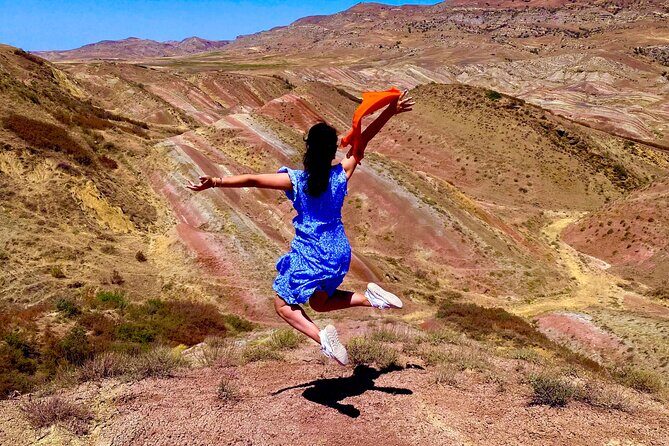
- Rainbow Mountains walk with time to stop, shoot photos, and move at your own pace
- Kapatadze (salt) Lake photo stop plus a quick snack run (important since food options are limited)
- David Gareja Lavra complex with monastery stories tied to spirituality and the region’s history
- Border-area viewing and a chance to see how the remote setting shapes modern life nearby
- Good guide energy is a big part of the experience, with names like Lado, Dmitri, Metroman, and Shoti showing up often
- All-weather operation means you’ll go rain or shine, so you’ll want proper layers
Getting out of Tbilisi: the long drive that turns into part of the adventure
This is a true day trip. You meet at M/S Avlabari in Tbilisi at 10:00 am, and you’re back at the same meeting point by around 5:00 pm. That 7-ish hour loop is a reminder: the magic here is remote, and the bus ride is the price of admission to a place most people can’t reach easily on their own.
One of the smarter parts of this tour is that it starts you off with a social vibe. The meeting spot includes space to connect with the group, listen to music, and even share a glass of wine before you head out. That small touch matters, because after a long drive you’ll want your group to feel comfortable and calm.
Also, keep in mind the tour cap is up to 100 people. In other words, you could end up with a busy day depending on how the schedule stacks up, so be ready to manage timing for photos and walks.
A few more Tbilisi tours and experiences worth a look
Stop one: the quick reset before you hit the desert edge
The first stop is basically your launchpad: a meeting area where people can gather, chat, and settle in. It’s not about monuments or views. It’s about momentum—getting everyone oriented and ready for a full day of scenery, walking, and church-site etiquette.
Because you’re starting early, I like treating this like the start of a hike day. Bring a light day bag, keep essentials accessible, and make sure you’re dressed for the weather you’ll actually have—not the weather you’re wishing for.
Kapatadze Lake and the snack reality check
Your first real “get ready” moment comes right away. You stop at a shop to buy snacks, because the route doesn’t include a proper lunch stop. If you skip this, you’ll likely feel it later, especially once the walking starts and the air changes around the semi-desert areas.
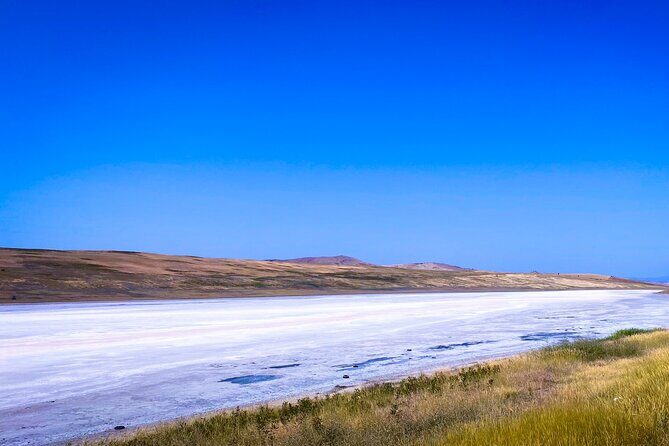
Then you roll to Kapatadze (salt) Lake, a quick but scenic photo stop. The timing is short—about 30 minutes total for shopping and the lake—so treat it as a sprint. If you want tight compositions, use that window for a clean, steady loop of shots rather than wandering too far.
This salty-lake detour is more than a break. It gives you a taste of the surreal geology and barren beauty you’ll see later at the Rainbow Mountains. In practical terms, it also gives you a food-and-water reality check: when you’re nowhere near restaurants, you can’t count on convenience.
Udabno Village: the semi-desert scenery you came for
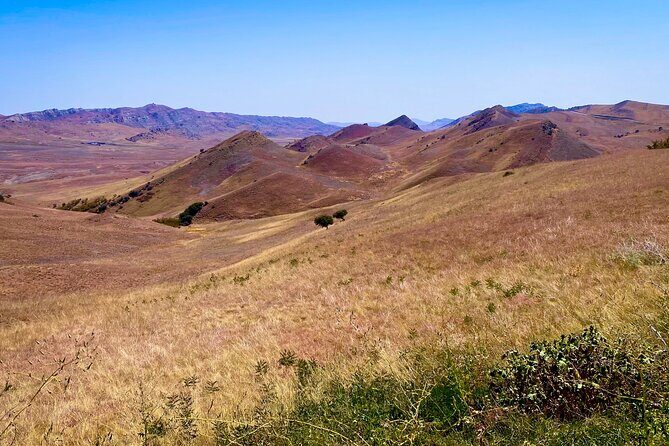
After the lake, the drive continues through an area called Udabno Village, often translated as desert. It’s one of the reasons this trip feels so “different” from typical Georgia sightseeing: the country can shift from green slopes to dry, mineral-rich terrain faster than you expect.
You probably won’t get out and roam much here. The value is mostly in the transit views—watching how quickly the rock and color palette changes as you head toward the David Gareja complex.
If you’re thinking about photos, this is where you start paying attention to light. Even if the mountains look dramatic later, the approach helps you plan where the colors will read best when you’re actually on the ground.
Walking the Rainbow Mountains: colored stripes and real footing
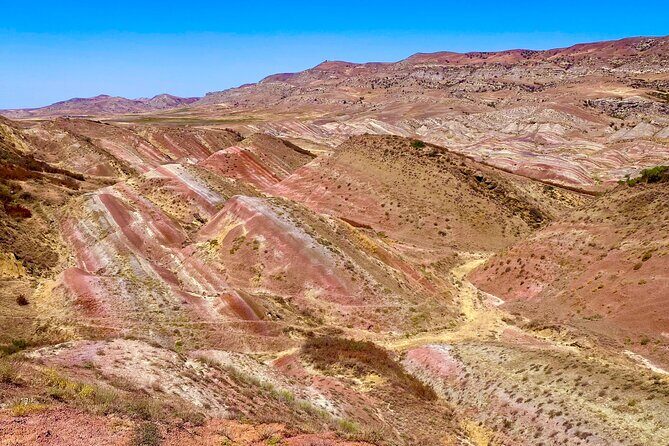
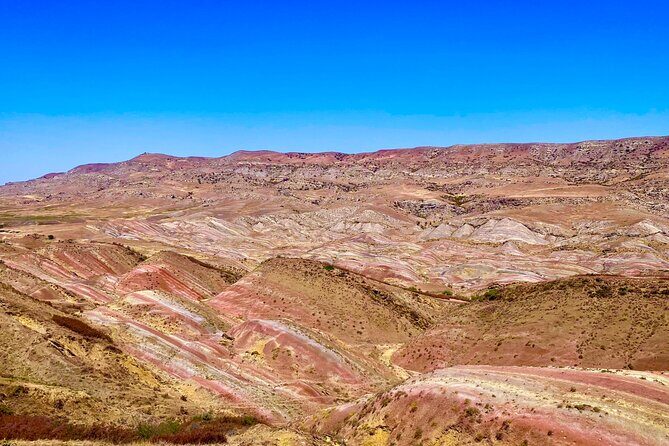
Then comes the main event: heading toward the Rainbow Mountains for a walk and plenty of photo time. The “wow” factor here is geological—mineral-rich sedimentary rock that looks like it’s been painted with bright stripes. The colors don’t just look pretty from one angle. They change as you move, because you’re walking through the bands and ridges.
You should expect some uneven ground and some walking. One big practical note: if it’s rained earlier, the terrain can get slippery. That’s not a theoretical warning. It’s the kind of thing that decides whether you enjoy the walk or spend half the day worrying about footing.
Good footwear is the simplest upgrade you can make. If you tend to wear flimsy sneakers, don’t. Bring shoes with grip, and keep your pace steady rather than rushing for the perfect shot. If the group is moving, you can still stop often, but you’ll be happier if you’re not constantly adjusting your balance.
What I like about how the tour handles the Rainbow Mountains is the timing. You’re not rushed through a single viewpoint. You get enough time to walk, pause, and test angles—especially useful if you like detail photos (the stripe texture) as much as wide landscape views.

David Gareja Lavra: cave monasteries, spiritual stories, and border context
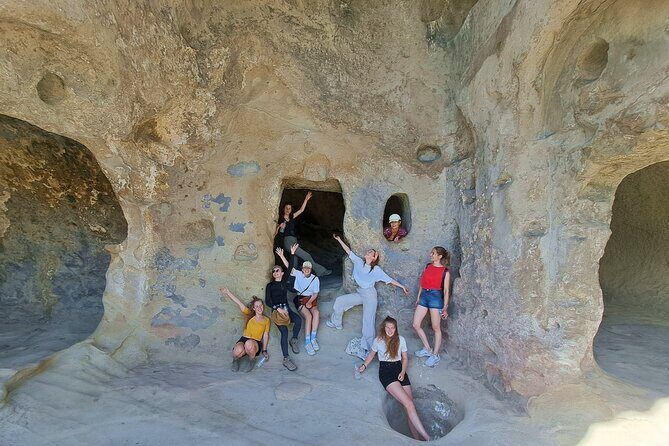
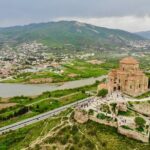
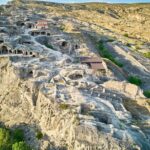
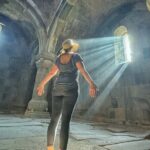
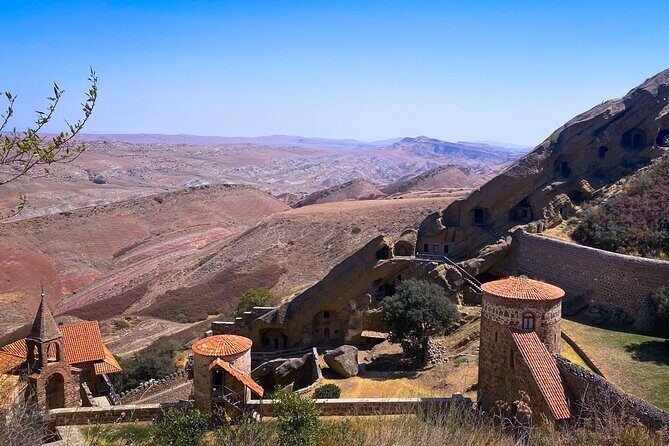
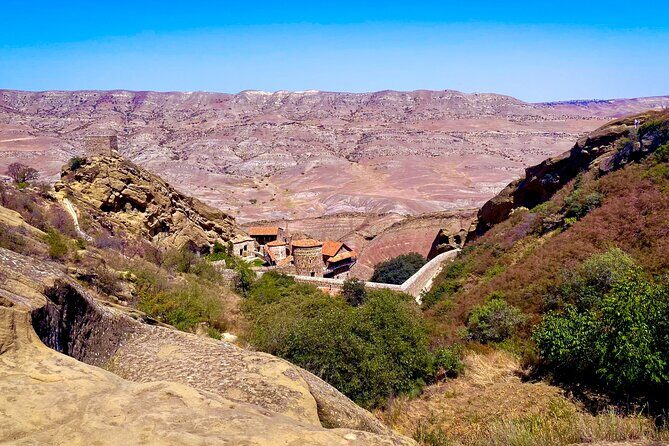
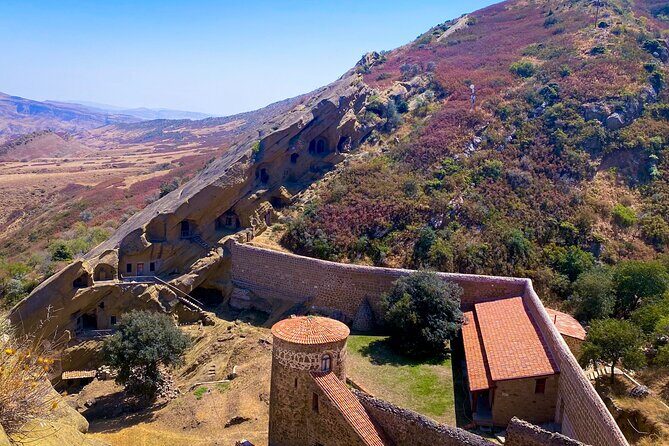
After the colored hills, you shift from nature into history and spirituality at David Gareja Lavra. This is a monastery complex known for its remote setting—built into cliffs that feel exposed to wind and sun. The emotional tone changes here: it’s quieter, more focused, and the conversations usually get more serious.
The tour includes a historical and spiritual explanation. The guiding theme is why St. David chose such an isolated location and what that isolation was meant to encourage in the disciples. In other words, this isn’t just about architecture. You’ll hear how the setting connects to a way of life and a belief system.
You also get practical context for the region. You’ll see a Georgian soldier at the border of Georgia and Azerbaijan, and the site’s geography makes that presence feel very real. David Gareja sits in a complicated border zone, so the meaning of “remote” here includes more than scenery—it includes current-day realities of the area.
Church-site etiquette (don’t wait until you arrive)
This tour involves a monastery setting, so dress rules matter. No shorts for church entry, and women need to cover their heads. Even if you’re just passing through quickly, follow the rules at the entrance. It’s an easy fix if you plan ahead: bring a light head covering and dress layers that you can manage in warm or cool weather.
The monastery walk can also involve steps and uneven ground inside the complex. Wear shoes you trust. Even if you’re not doing a big hike, you’ll still be moving over site terrain.
A note on facilities
Depending on the timing and the exact route you take within the complex, you might find restrooms available onsite (one tour report noted a small fee). It’s not something you should build your day around, but it’s reassuring to know the site typically isn’t completely without services.
Food and water: the one part you control
The tour price doesn’t include food. That means you need to handle your energy like an adult plan. The schedule gives you a snack shop stop early, but you’re still traveling for hours afterward.
Here’s what I’d do if I were preparing for this day:
- Buy snacks at the provided shop stop and also bring a small extra item if you like options
- Bring water, especially if the day warms up in the semi-desert areas
- Pack something easy to eat on the move, because sitting down for a full meal isn’t part of the plan
You’ll feel the difference between “I ate something” and “I kept going.” Even on a cool day, walking plus heat exposure can add up faster than you expect.
Guide quality: why this tour often gets high marks
What keeps this trip highly rated isn’t just the sites. It’s the way the day is explained. Many guides bring a mix of geology context, monastery stories, and general Georgia cultural pointers.
You may get guides like Lado, Dmitri, Metroman, Shoti, Nico, or others mentioned by name in past tour experiences. Common thread: they answer questions, slow down when needed, and give photo advice rather than just pointing and moving on.
In some cases, guides add small cultural touches on the drive back, like traditional polyphonic music, or share a short clip of Georgian dance if the moment feels right. These aren’t the main reason to book, but they help the day feel more stitched together instead of being only a list of stops.
Transportation and timing: the practical reason organized tours win here
Let’s be honest: David Gareja and the Rainbow Mountains are not the easiest places to reach without your own wheels. That’s where the value of this tour shows up. You’re paying for the driving, the route planning, and a guide who makes the remote day more understandable.
With a price around $39 per person, and with transportation plus a professional guide included, the math often works out well compared to piecing together taxis or multiple transit hops. You’re also spending your time doing things instead of figuring out logistics.
The tradeoff is time. This is a long day. You’ll be in a vehicle for a good chunk of it. If you hate long drives, this may feel heavy.
Who this tour fits best
This day trip is a great match if:
- You want dramatic scenery without renting a car
- You like both nature geology and monastery history
- You’re comfortable with moderate walking and some stairs or uneven ground
- You enjoy photo stops where you can actually take your time
It may be less ideal if you:
- Want a relaxed, no-walking day
- Need guaranteed restaurant meals during the day
- Have very limited mobility or dislike slippery footing risks
Most people can participate, and there’s a minimum age of 5, so it’s not only for adult hikers.
Should you book the Rainbow Mountains and David Gareja day trip?
If your Georgia trip includes time in Tbilisi and you want one excursion that combines striped mountain scenery with a serious monastery visit, this is an easy yes. The route hits the essentials in one go, and the included guide makes the remote setting feel understandable, not just scenic.
Book it if you can pack the basics: sturdy shoes, layers for weather, and enough snacks and water to get through the day. Skip it if you dislike long drives or you need a full restaurant lunch built into the itinerary.
If you’re on the fence, consider this: for a single ticket price, you’re buying transportation to a hard-to-reach area and a structured experience that turns geology and spirituality into a coherent day. That kind of value is hard to replicate on your own.
FAQ
What time does the tour start?
The tour starts at 10:00 am.
How long is the day trip?
It lasts about 7 hours (approximately).
How much does it cost?
The price is $39.00 per person.
What’s included in the tour price?
You get a professional guide service and transportation.
Is lunch included?
No. Food and drink are not included, and there isn’t a lunch stop, so plan snacks ahead during the shop stop.
What is the meeting point?
You start at M/S Avlabari in Tbilisi, and the tour ends back at the same meeting point.
What should I wear for the monastery?
For church entry, shorts aren’t allowed, and women need to cover their heads. Dress for the weather since the tour runs in all conditions.
What is the minimum age?
The minimum age is 5.