REVIEW · TBILISI
3-Hour Private Guided Walking Tour in Tbilisi
Book on Viator →Operated by Beyond Georgia · Bookable on Viator
Tbilisi clicks into place fast. This private walking tour links the old town’s big sights with street-level context, so you’re not just collecting landmarks—you’re learning how they fit together. I especially liked the flow of the route and the way the guide makes the architecture and symbols easier to read, even when you’re just passing through busy streets.
Two things stood out for me. First, the stop choices are smart: you hit Anchiskhati Basilica, Metekhi Cathedral, and Sioni Cathedral Church without it feeling like a checklist. Second, the pacing works—about 3 hours for visiting sites, plus around 1 hour to walk the full route of roughly 4 km—so you stay energized rather than rushed.
One consideration: you’re walking a fair bit outdoors and you’ll be doing church dress code, so plan your outfit accordingly. Also, the Narikala fortress is listed as closed for reconstruction, so your cable-car payoff is mainly the panoramic viewpoint and the Mother of Georgia monument, not a fortress wander.
In This Review
- Key highlights you’ll actually feel on the ground
- Freedom Square to Sioni: the route that helps you read Tbilisi
- Rezo Gabriadze Marionette Theater and the Clocktower vibe
- Anchiskhati Basilica: Tbilisi’s oldest church as your time jump
- Peace Bridge and Rike Park: modern Tbilisi enters the picture
- Metekhi Cathedral yard: best old-town views plus the Vakhtang connection
- Rike–Narikala cable car: panoramic payoff, with fortress closure in mind
- Mother of Kartli, Abanotubani, and the Tamada statue culture sprint
- Sioni Cathedral Church: finish at the heart of the old town
- Price and private guide value: what you’re really paying for
- Who this tour is best for (and who should consider alternatives)
- Should you book this Tbilisi walking tour?
- FAQ
- How long is the tour?
- Where does the tour start and end?
- Is this a private tour?
- What language is the tour offered in?
- Are admission tickets required for the stops?
- Is the cable car to Narikala fortress included?
- What should I wear for church visits?
- Is the walking distance manageable?
- What’s the cancellation policy?
Key highlights you’ll actually feel on the ground
- Free entry at the main churches and landmarks, so your money goes to the guide experience
- A Bridge of Peace → Rike Park → Metekhi route that builds views step by step
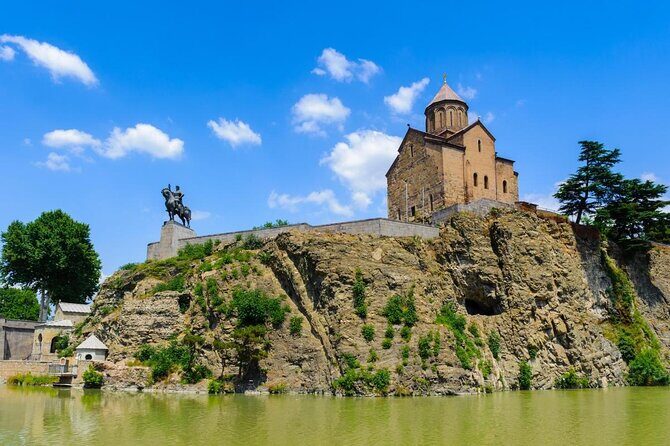
- The yard at Metekhi Cathedral for old-town views plus a statue connection to the city’s founder
- A Rike–Narikala cable car ride with viewpoints and the Mother of Georgia monument (fortress is closed)
- A strong cultural mix at Abanotubani, including the sulfur-bath area and legend-linked storytelling
- Ending at Sioni Cathedral so the tour finishes at one of the old town’s emotional center points
Freedom Square to Sioni: the route that helps you read Tbilisi
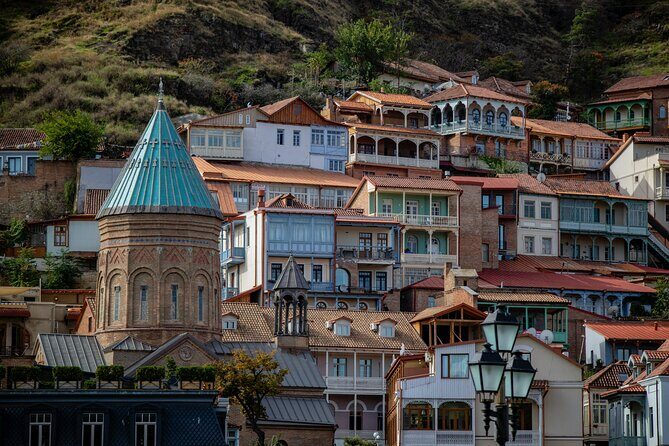
This tour is set up like a guided storyline through central Tbilisi. You start at თავისუფლების მოედანი (Freedom Square) and finish at Sioni Cathedral Church, so you get both orientation and closure at the end.
I like that the walk is long enough to feel like you covered real neighborhood ground, but short enough to stay comfortable: around 4 km total, with a moderate fitness level expected. It also helps that most stops are free, so the schedule isn’t at the mercy of ticket lines.
Because it’s a private tour, you’re not stuck matching a giant group’s pace. If you want slower photo breaks or a little more time at a viewpoint, the guide can flex—one thing I picked up from how the guide works is that he’ll accommodate requests without turning it into chaos.
You can also read our reviews of more walking tours in Tbilisi



Rezo Gabriadze Marionette Theater and the Clocktower vibe

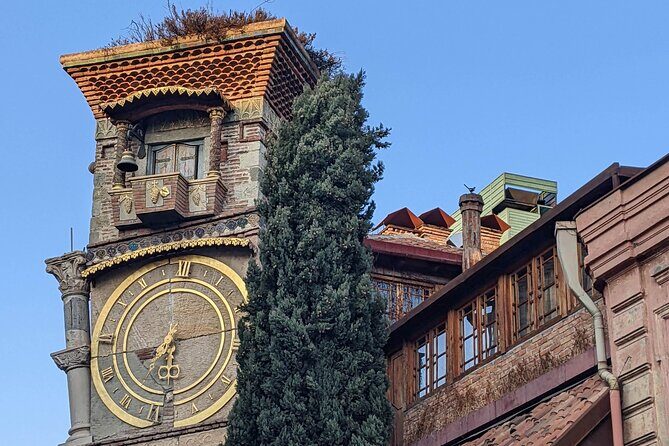
The first stop is the Rezo Gabriadze Marionette Theater and the surrounding Clocktower area. This is one of those places where the building itself feels like part of the entertainment—bright, expressive architecture that gives you an instant sense of Tbilisi’s artistic side.
You get a short visit here (about 5 minutes), and the ticket is free. That short timing actually makes sense: it’s the warm-up, a quick way to get your eyes tuned to the city’s visual style before the tour turns more historical.
If you’re the type who likes architecture more than museum interiors, this is a good opener. It sets a tone for the rest of the walk: you’re going to keep noticing details and symbols, not just reading plaques.
Anchiskhati Basilica: Tbilisi’s oldest church as your time jump
Next comes Anchiskhati Basilica, described as the oldest church standing in Tbilisi. It traces back to the 6th century and still plays the role of an important cultural, religious, and historical relic in the old town.
You’ll spend about 15 minutes here, and admission is free. What I like about anchoring your tour with a site this old is that it gives you a reference point—suddenly later churches don’t feel random. They feel like chapters.
Practical note: because it’s an active church, dress code matters. You’ll want to avoid shorts and be ready to cover your head if you’re a woman (a scarf or hat is recommended). Even if you’re just there briefly, it’s the kind of place where being respectful makes the experience better.
Peace Bridge and Rike Park: modern Tbilisi enters the picture
The Bridge of Peace is a major contrast moment. It opened in 2010 and it’s architecturally different from the older parts of the city, which once caused ambivalent opinions—but it’s now one of Tbilisi’s most popular sights.
You only spend about 10 minutes directly here, with no admission cost. Still, it’s not a throwaway stop. The bridge is an easy way to see how Tbilisi grew: old neighborhoods stay, but new design ideas shape sightlines and movement.
Then you continue toward Metekhi Church via Rike Park. This part matters because you’re not just crossing over water—you’re walking into a viewpoint-driven segment of the tour where the city starts to look layered rather than flat.
Metekhi Cathedral yard: best old-town views plus the Vakhtang connection
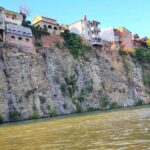
Metekhi Cathedral is more about the setting than a long interior visit. The yard is where you’ll want to pause, because it’s listed as one of the best spots for old town views.
You also get a statue of Vakhtang Gorgasali, the legendary Georgian king and the founder of the city. That’s a smart storytelling move: you’re viewing Tbilisi while standing on a place linked to how the city began, so the view feels purposeful, not just scenic.
Plan on about 30 minutes here, and admission is free. If you enjoy photos, this is the stop where you’ll likely slow down. The yard gives you a strong sense of geography—where the old town sits and how the river bends the streets into natural routes.
You can also read our reviews of more guided tours in Tbilisi



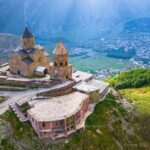

Rike–Narikala cable car: panoramic payoff, with fortress closure in mind
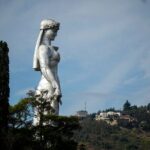
Then it’s up by the Rike-Narikala cable car (lower station). The tour takes you to enjoy panoramic views of the city and to visit the Mother of Georgia monument.
A key detail: Narikala fortress is listed as closed due to reconstruction. So set your expectations accordingly. You’re still getting the main reward from this segment—the skyline perspective and the monument—without needing the fortress wander.
This stop is short (about 10 minutes) and the cable car ride is included. For me, that’s where the tour balances walking with a little vertical help: you get altitude views without turning the day into a workout.
If you’re sensitive to heights or you just don’t love enclosed rides, it’s still worth considering because the tour is only using the cable car briefly. But if you hate it, you can decide before you arrive that you’d rather skip the view payoff.
Mother of Kartli, Abanotubani, and the Tamada statue culture sprint
After the cable car, the tour moves into symbolism and local legend.
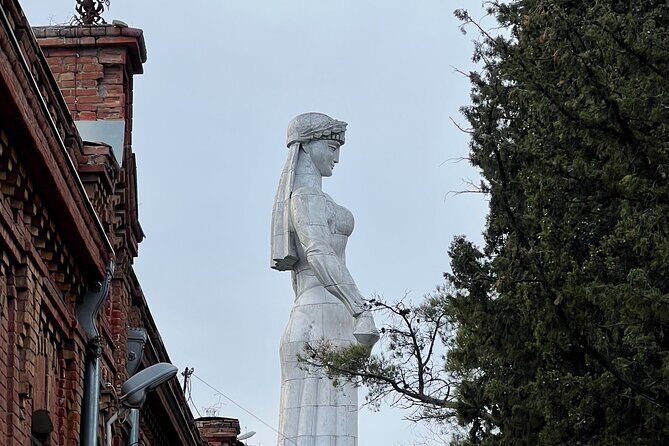
You’ll stop at Mother of Kartli, a monument that carries a strong Soviet-era spirit while still being described as something that characterizes Georgian people well. It’s one of those places where you can feel history layered onto identity, especially when you look at the monument in the context of everything else you’ve seen so far.
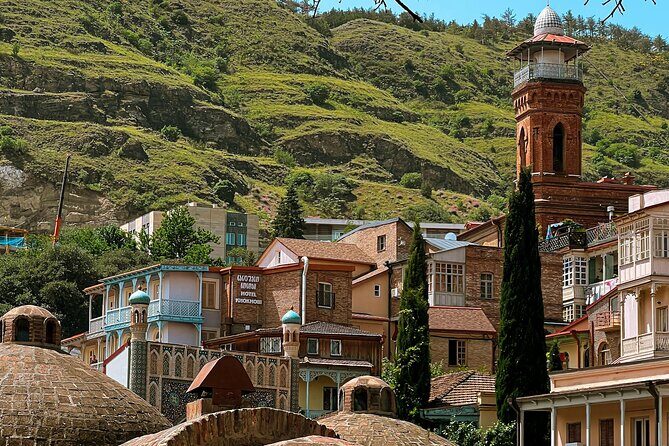
Next is Abanotubani, the sulfur bath district. This is a legendary place tied to the city’s origin story, and the tour keeps it to about 20 minutes with free admission. Even if you don’t go into the baths, this is a powerful neighborhood to walk through. The whole area feels like it belongs to the city’s beginning.
Then you’ll see the Tamada (Toastmaster) statue. It’s a short stop (about 5 minutes), but it’s loaded with meaning: the original version was found near Vani town in West Georgia and dates back to the 7th century BC. That’s a clever reminder that Georgian culture is not only in churches—it’s in everyday ideas too, like hospitality and toasting.
One extra cultural thread you’ll likely hear from the guide here: Tbilisi has long been proud of its multicultural character. Before 1991, about 50,000 Jews lived in the city, and while that community is much smaller now, the friendship between Georgian and Israeli people remains strong. This is the kind of context that makes you look at the city as a living mix, not a sealed museum.
Sioni Cathedral Church: finish at the heart of the old town
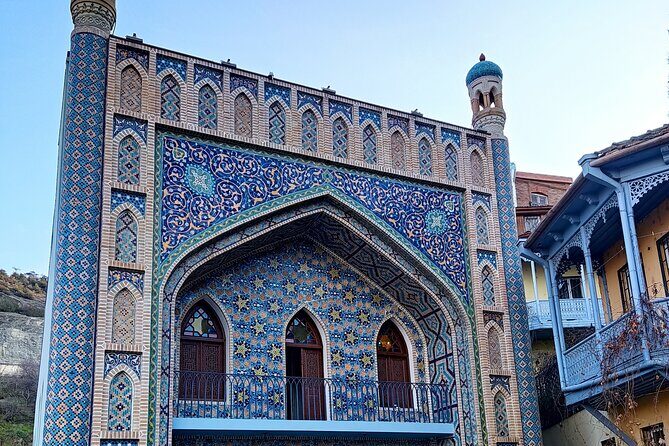
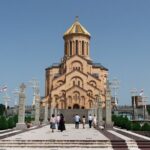
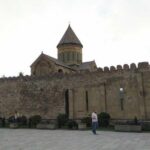
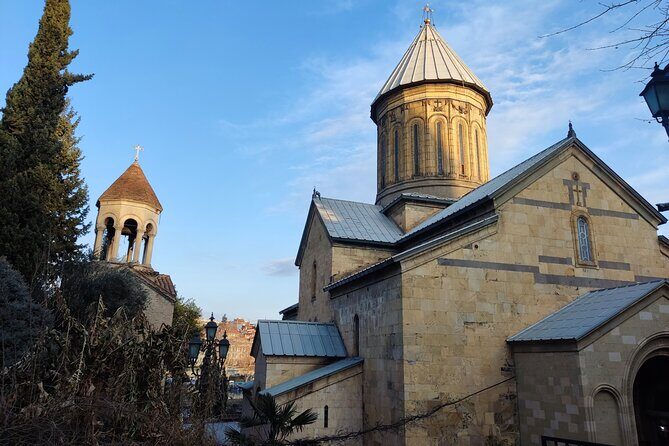
The tour ends at Sioni Cathedral Church, also called the Church of the Dormition of Tbilisi. It’s described as once being the main cathedral of the city, and after invasions and destructions, it still stands at the center of the old town.
You’ll spend about 30 minutes here, with free admission. The big focal point is the St. Nino Cross, which is described as an important religious relic for Georgians—exactly the kind of ending that makes the walk feel emotionally complete.
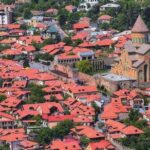
Ending here also makes practical sense. You start at Freedom Square, cross through modern and old districts, and finish where the symbols and stories converge. If you want to keep exploring after the tour, Sioni is a strong base because it sits in the thick of the old town.
Price and private guide value: what you’re really paying for
At $25 per person, this tour is priced like a budget-friendly way to get structure. The good part is that many stops don’t require admission, so the cost isn’t getting swallowed by entrance fees.
What you’re paying for is guidance and time efficiency: a 3-hour sight period, plus walking time that totals roughly 4 hours and covers about 4 km. Instead of spending your morning figuring out routes and working out what matters most, you follow a plan that ties the city’s major layers together—ancient church origins, modern bridges, viewpoints, and culture zones.
One other value factor: it’s private, so you’re not dealing with a crowded group’s pace. That tends to make it easier to ask questions and get clarifications at the exact moment you need them—like when a monument’s meaning hits better once you understand what you’re looking at.
Who this tour is best for (and who should consider alternatives)
This fits best if you want an old-town orientation that still feels meaningful. If you enjoy churches, urban views, and symbolism—and you like getting context while you walk—you’ll probably feel like the day was well spent.
It’s also a good pick if you’re short on time but want a balanced route. The tour hits major sights without dragging you through long museum hours, and the cable car adds a payoff without eating half the day.
If you’re someone who wants only interiors and long guided explanations, you might find a few stops brief. This is more of a walking-and-looking tour with timed pauses. Still, those short visits can be ideal if you prefer your sightseeing to feel efficient and varied.
Should you book this Tbilisi walking tour?
I’d book it if you want a guided introduction to Tbilisi old town that doesn’t feel like a rushed stamp. The itinerary mixes iconic churches (Anchiskhati and Sioni), viewpoint-driven stops (Metekhi yard and the cable car), and cultural anchors (Abanotubani and the Tamada statue).
I’d think twice if you’re very sensitive to walking outdoors or you’re strict about fortress time. Since Narikala fortress is closed for reconstruction, you’re going for views and the Mother of Georgia monument, not a fortress circuit.
If you’re the kind of traveler who likes to understand what you’re seeing—rather than just take photos and move on—this private $25-per-person tour is a strong value. It gives you a clean route, easy logistics in terms of free admissions, and just enough context to make Tbilisi feel legible fast.
FAQ
How long is the tour?
The tour lasts about 3 hours and 30 minutes in total, with around 3 hours for visiting sights and about 1 hour for walking between the start and end points.
Where does the tour start and end?
It starts at თავისუფლების მოედანი (Freedom Square) and ends at Sioni Cathedral Church (Sioni St, Tbilisi).
Is this a private tour?
Yes. It’s listed as a private tour/activity, with only your group participating.
What language is the tour offered in?
The tour is offered in English.
Are admission tickets required for the stops?
The tour notes free admission for the main sights, including the churches and other listed stops. The cable car segment is included.
Is the cable car to Narikala fortress included?
Yes. The tour includes the Rike-Narikala cable car ride, and you also visit the Mother of Georgia monument. Narikala fortress is listed as closed due to reconstruction.
What should I wear for church visits?
You should avoid shorts. Women should bring a scarf or hat to cover the head.
Is the walking distance manageable?
The tour notes total walking distance is around 4 km, and it’s recommended for travelers with a moderate physical fitness level.
What’s the cancellation policy?
You can cancel for a full refund up to 24 hours before the experience starts. If you cancel less than 24 hours before, the amount paid is not refunded.