REVIEW · TBILISI
A Gastronomic Private Guided Journey Through Tbilisi
Book on Viator →Operated by Views Georgia Tours · Bookable on Viator
Tbilisi tastes better when you walk it. This private, English-guided route ties together major sights in central Tbilisi with real eating moments, from coffee and church corners to wine-shop tastings and a honey stop. You start at Freedom Square with St. George’s monument, so you get your bearings fast.
I love two things most: the wine and chacha tasting that feels built into the day (not a last-minute add-on), and the fact that you’re fed with classic dishes like khachapuri and khinkali along the way.
One thing to keep in mind: it’s a 5.5-hour walk-and-stand schedule, so comfortable shoes help, especially if you plan to sample everything.
In This Review
- Key highlights to look forward to
- A private, food-led way to read Tbilisi
- Price and what you’re really getting for $71.88
- Start at Freedom Square: get your bearings in 10 minutes
- Liberty Square to Puri Square: architecture spotting without the guesswork
- Ierusalimi Street: coffee, churches, and a layered city
- Kote Apkhazi Street wine shop: chacha in the middle of sightseeing
- Synagogues and cathedrals: history without heavy homework
- Lunch near Erekle II’s area: eat well, then keep walking
- Bridge of Peace and Rike Park: modern symbols next to old streets
- A quick pause on the EU future
- Meidan Bazaar honey: a sweet stop that actually makes sense
- Dzveli Tbilisi sulphur waterfall: baths, steam, and odd-but-fun treats
- Tbilisi Juma Mosque: one of the city’s distinct silhouettes
- Dinner in the Meidan area: khachapuri and khinkali, no searching required
- Who this tour fits best (and who might want something else)
- Practical tips to make the day smoother
- Should you book this private Tbilisi gastronomic journey?
- FAQ
- FAQ
- How long is the tour?
- What does the tour cost?
- What language is the tour offered in?
- What food and drinks are included?
- Where do we meet, and when does it start?
- Is this tour private?
Key highlights to look forward to

- Freedom Square start with St. George’s monument, a clean orientation for first-timers
- Wine and chacha tasting at Kote Apkhazi Street, built into the route
- Morning coffee on Ierusalimi Street, plus quick stops at a Georgian church corner and the Old Armenian Church
- Religious and cultural landmarks in tight succession, including the Great Synagogue and Sioni Cathedral
- Food market payoff: honey sampling, then a full dinner of khachapuri and khinkali near Meidan Bazaar
A private, food-led way to read Tbilisi

Tbilisi can feel like a puzzle at first. You see churches, synagogues, balconies, and stone streets—then you wonder how it all connects. This tour answers that question with a simple formula: walk the center, stop at key places, then taste what people actually eat and drink.
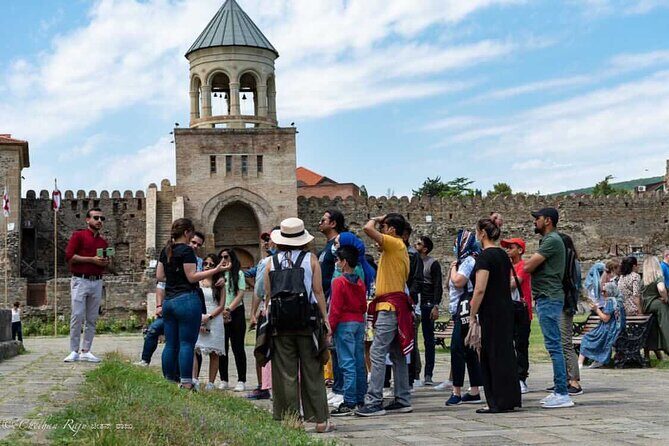
Because it’s private, you’re not stuck with a big-speed herd. You can ask questions, take a breath, and spend a few extra minutes looking at details—like the architecture you’d otherwise rush past. And since it runs in English, you’re not decoding things on the fly.
You can also read our reviews of more guided tours in Tbilisi


Price and what you’re really getting for $71.88

At about $71.88 per person for roughly 5.5 hours, you’re paying for more than guided sightseeing. The value comes from the built-in food and drink plan:
- coffee or tea
- a traditional bread breakfast (listed as Brad)
- a wine and chacha tasting (included)
- a traditional Georgian salad lunch (included)
- wine ice cream as a snack (included)
- dinner with khachapuri and khinkali (included)
- honey sampling at Meidan Bazaar (included)
If you’ve ever done a walking tour and then realized lunch would cost you another hour of budget, this one helps you avoid that trap. You’re already covered for the big eating moments, so the day feels more like a shared experience than a “look, listen, leave” tour.
Start at Freedom Square: get your bearings in 10 minutes
You meet at 2 Freedom Square in Tbilisi. The big visual anchor is St. George’s monument in the middle—an easy landmark to remember when you’re navigating later. This first stop is short, but it sets the tone: the guide frames the story of the central city area, so the rest of the walking makes sense.
If you’re new to Tbilisi, I like starting here because you can later picture how the streets and stops connect. You’ll also notice that the day is designed as a sequence of neighborhoods and symbols, not random sampling.
Liberty Square to Puri Square: architecture spotting without the guesswork
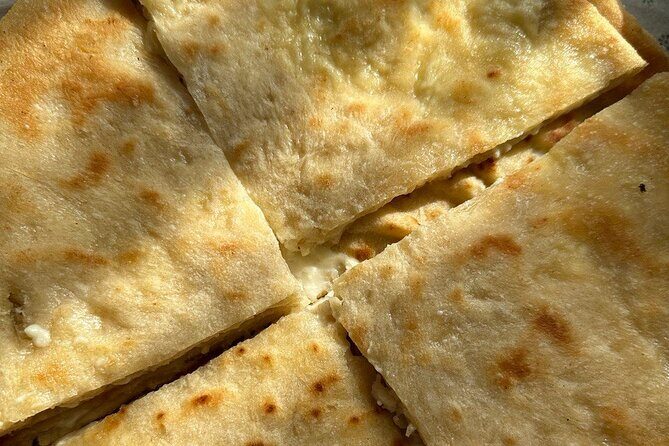
From the Liberty Square meeting point area, you move toward a place where you can recognize typical Tbilisian architecture. Even if you’re not an architecture person, you’ll start to see what makes the city’s look recognizable—especially when you’re guided on what to pay attention to.
Then comes Puri Square—or what the tour calls Brad Square—where the theme turns food-first again. In a country where bread is taken seriously, it’s a fun reminder that everyday items are part of cultural identity, not just fuel. This stop stays quick, but it keeps the tour rhythm moving.
Ierusalimi Street: coffee, churches, and a layered city
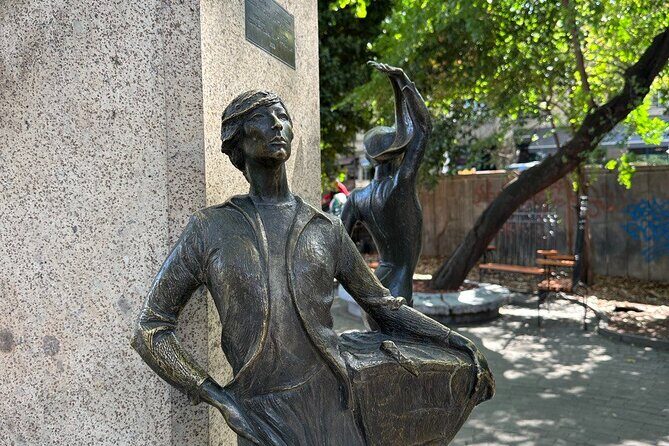
On Ierusalimi Street, you pause for morning tea and coffee. It’s not just a caffeine break—it’s a chance to slow down and watch how the street feels. You’re also set up for a religious-cultural contrast right here on the same stretch.
Two faith landmarks appear near this area:
- a Georgian church at the corner of Ierusalimi Street
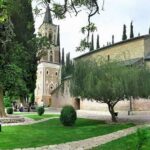
- the Old Armenian Church in Tbilisi
This is one of the smartest parts of the route: you see how different communities built landmarks close enough to share the same urban story. You don’t need a textbook; you just need a guide pointing out what matters, and then you can connect the dots yourself as you walk.
You can also read our reviews of more private tours in Tbilisi




Kote Apkhazi Street wine shop: chacha in the middle of sightseeing
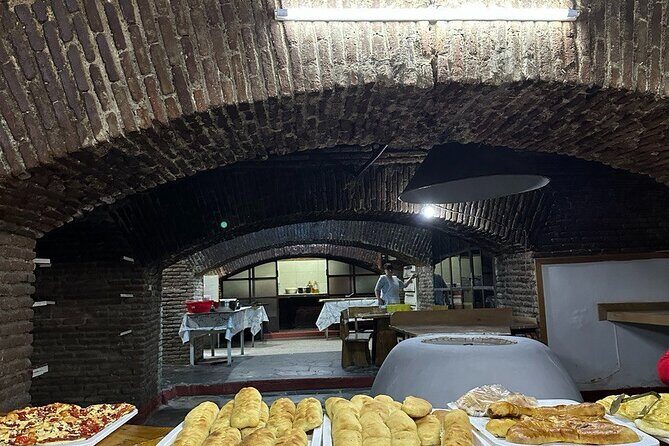
At Kote Apkhazi Street, the tour stops at a wine shop for a free wine and chacha tasting. This is where the day shifts from looking to tasting in a way that feels natural, not forced.
What I like about adding this tasting at a proper street stop is that it breaks up the walking. Also, chacha is one of those Georgian staples people ask about but often struggle to find in a straightforward, low-pressure setting. Here, it’s included, and you can compare it to the wine right next to it.
Practical tip: pacing matters. Since you’ll have more food later, take small sips early and save your favorites for after you’ve eaten.
Synagogues and cathedrals: history without heavy homework
Next up is the Great Synagogue of Tbilisi, where you learn about Jewish-Georgian friendship and get to see the synagogue itself. Even if you know little about the region’s Jewish history, the guide frames it in human terms, focused on how communities relate.
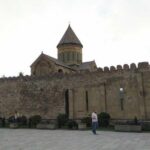
Then you head to Sioni Cathedral Church—described as the center of Georgian Christianity. This stop is a clean opportunity to understand why faith landmarks aren’t just buildings. In Tbilisi, they’re part of how the city explains itself across centuries.
Both stops are short, so treat them like “orienting moments.” You get the big ideas and the visual reference points, and then you can choose what you want to explore deeper on your own later.
Lunch near Erekle II’s area: eat well, then keep walking

Near ერეკლე II-ს მოედანი (Erekle II’s square area), you sit down at a famous restaurant for lunch. The lunch included is a traditional Georgian salad.
Here’s the value: by the time you reach lunch, you’ve already done enough landmark stops that your brain has context. So when you eat, it doesn’t feel like an interruption—it feels like part of the day’s story. Also, because lunch is included, you’re less likely to waste time deciding where to eat in the busiest parts of the center.
Bridge of Peace and Rike Park: modern symbols next to old streets
The Bridge of Peace is next, with a story about why it matters. Then you shift into Rike Park, where you’ll see a monument called Tree and the Berlin Wall segment.
What I find useful here is the contrast: Tbilisi’s old and new don’t live in separate worlds. On the same day, you can see a major cathedral, then a modern bridge, then a park marker tied to European memory. It helps you understand the city’s “now” rather than only its past.
A quick pause on the EU future
There’s also a brief moment where the guide shares the perspective that the EU is the goal and future. Even if you don’t follow current politics closely, this kind of comment adds context to what you see. It turns the trip from pure sightseeing into a real sense of what people care about today.
Meidan Bazaar honey: a sweet stop that actually makes sense
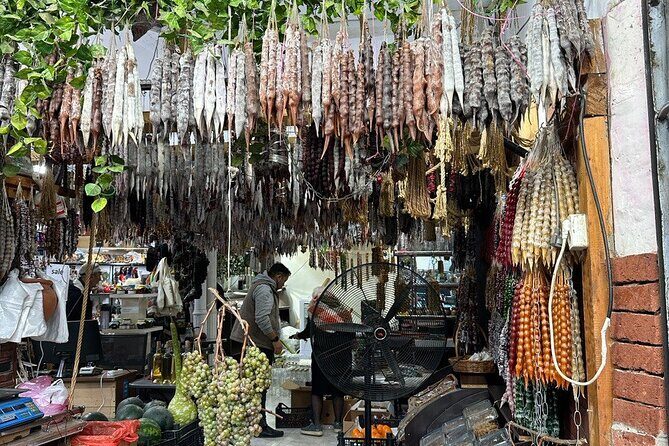
At Meidan Bazaar, you try different types of honey, and this is included. This is one of those tastings that feels smarter than it sounds, because honey is small, easy to sample, and tied to daily life rather than just a souvenir purchase.
If you’re the kind of person who likes comparing flavors, this stop is fun. If you’re not, it’s still a pleasant break before you move on to the sulphur-bath area.
Dzveli Tbilisi sulphur waterfall: baths, steam, and odd-but-fun treats
You’ll visit Dzveli Tbilisi Sulphur Waterfall, described as a key center of Tbilisian culture connected to the city’s hot sulphur springs. You’ll see the architecture of the area and hear the story of the baths.
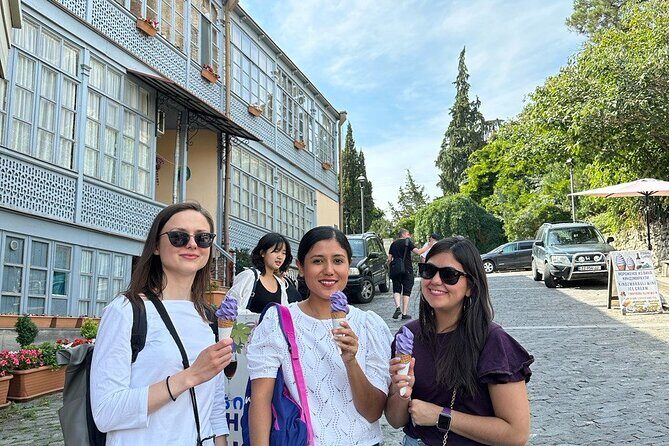
Then, later in the same sulphur complex area, the tour includes wine ice cream. Yes, wine ice cream. It sounds like a stunt until you try it. It’s part of the charm of Tbilisi: tradition and experiments share space, often in the same place.
Keep your expectations flexible. This snack is a light add-on, not a full dessert replacement. Think of it as a fun little taste that keeps momentum going.
Tbilisi Juma Mosque: one of the city’s distinct silhouettes
The tour includes a stop at Tbilisi Juma Mosque, noted as unique. This is another short stop, but it adds variety to a day that otherwise centers on churches and the synagogue.
It also reinforces a key point: Tbilisi is a multi-faith city, and the architecture you see on the street is part of that everyday mix.
Dinner in the Meidan area: khachapuri and khinkali, no searching required
Finally, you head near Meidan Bazaar for dinner. Here the included meal is khachapuri and khinkali. You get about an hour at the table, and if you want anything extra, you can get it on your own.
This is a smart ending. By dinner time, you’ve already heard the stories behind several landmarks and tastes. So eating feels more grounded than it would at the start of the day when everything is still unfamiliar.
A simple strategy: start with one dish you can’t miss (khachapuri or khinkali), then add the other. If you’re hungry, the dinner is designed to satisfy. If you’re cautious with wine/chacha, keep it light—you’ll already have had some tastings earlier.
Who this tour fits best (and who might want something else)
This works especially well for:
- first-time visitors who want a fast, guided orientation through central Tbilisi
- people who want history in short, readable chunks paired with food
- anyone who likes structured eating—breakfast, lunch, dinner, plus tastings—so the day doesn’t become a budgeting headache
It may be less ideal if:
- you prefer very slow, deep museum-style sightseeing and don’t like standing in between meals
- you don’t like alcohol tastings at all. The wine and chacha tasting is included, so you’d want to plan how you’ll handle that portion
Practical tips to make the day smoother
- Wear comfortable shoes. You’ll be on your feet for multiple stops across the center.
- Hydrate before and between tastings; the day includes several food moments and drinks.
- If you’re sensitive to strong flavors, take smaller sips during the wine and chacha tasting, then reassess later.
- Bring curiosity. The best parts of this route come from learning what each place means, not from checking a list.
Should you book this private Tbilisi gastronomic journey?
I think you should book it if you want Tbilisi that actually tastes like Tbilisi. The big win is how the tour builds meals and tastings into a walking route full of religious landmarks, architecture cues, and city-symbol stops like the Bridge of Peace and Rike Park.
If you’d rather craft your own food schedule and only do a couple of sights, you might not feel the full value. But if you like a guided day where you’re fed, oriented, and given context in English, this is a strong pick.
FAQ
FAQ
How long is the tour?
It’s about 5 hours 30 minutes.
What does the tour cost?
The price is $71.88 per person.
What language is the tour offered in?
The experience is offered in English.
What food and drinks are included?
Coffee and/or tea are included, along with wine and chacha tasting. You also get a traditional bread breakfast (Brad), a traditional Georgian salad lunch, wine ice cream as a snack, and dinner with khachapuri and khinkali. Honey tasting at Meidan Bazaar is included too.
Where do we meet, and when does it start?
You meet at 2 Freedom Square, T’bilisi, Georgia, and the tour starts at 10:00 am. It ends back at the meeting point.
Is this tour private?
Yes. It’s a private tour/activity, and only your group will participate.