REVIEW · TBILISI
Tbilisi Guided Walking Tour
Book on Viator →Operated by Budget Georgia · Bookable on Viator
Old Tbilisi is full of stories. This guided walking tour strings them together across 12 standout stops in about three hours, mixing churches, fort ruins, a sulfur-bath quarter, a synagogue, and a mosque—plus viewpoints over the city. I like that every stop is practical for a first visit, and that the pacing stays light enough to keep your energy for the riverfront and parks.
Two things I really enjoyed: the chance to see major sites in one loop without getting lost, and the way the guide (in my experience, Mariam) adds helpful local context—she even helped with booking a sulfur bath and pointed us toward a good place to go afterward. One possible drawback: it does depend on good weather, so if skies are gray or rainy you may need to shift your plans.
In This Review
- Key highlights you will care about
- A 3-hour loop through Old Tbilisi and the Mtkvari River
- Price of $14.30: what makes it good value
- Start at Budget Georgia: how the walk stays manageable
- Metekhi Cathedral to Narikala Fortress: views with context
- Abanotubani sulfur baths and Leghvtakhevi Waterfall: the city’s softer side
- Sioni Cathedral, Jumah Mosque, and the Great Synagogue: one Old Town, many faiths
- Rike Park and the Bridge of Peace: modern Tbilisi at walking pace
- Rezo Gabriadze Marionette Theater: an hourly stop you can plan around
- Anchiskhati Basilica to Svobody Square: old roots into the city center
- What kind of traveler will love this tour most
- How to use this tour to plan the rest of your day
- Should you book this Tbilisi Guided Walking Tour?
- FAQ
- How long is the Tbilisi guided walking tour?
- What time does the tour start, and where does it end?
- Is the tour in English, and do I get a ticket on my phone?
- Are entrance fees included?
- How much does the tour cost?
- What is the cancellation policy if the weather is bad?
Key highlights you will care about
- 12 stops in ~3 hours, starting and ending at Budget Georgia on Anton Purtseladze St
- All listed attractions are free to enter, so your costs stay predictable
- Crossing multiple faith sites in one walk: churches, a mosque, and the Great Synagogue of Tbilisi
- Abanotubani sulfur-bath district includes the founding legend (yes, it gets dramatic)
- Rezo Gabriadze Marionette Theater comes with an hourly performance, so timing matters
- Small group size (max 20) keeps the guide’s attention from feeling stretched
A 3-hour loop through Old Tbilisi and the Mtkvari River
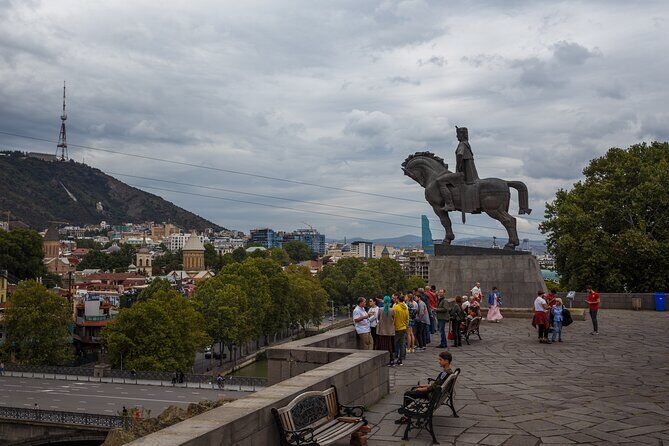
This tour is designed for a specific kind of traveler: the one who wants the big scenes fast, but still wants real explanations instead of a photo-only checklist. You’ll cover Old Town classics and the riverfront in roughly three hours, starting at 3:00 pm and ending back at the same meeting point.
The best part is how the route “teaches” the city. You don’t just see buildings—you see how the city layers different eras and beliefs in close proximity. That means you’re not spending your whole afternoon staring at one monument. You’re getting a walkable storyline.
Also, with a small max group size of 20, you won’t feel like a ticket-number in a line. The guide can answer questions and adjust the pace if someone needs a breather.
You can also read our reviews of more walking tours in Tbilisi



Price of $14.30: what makes it good value
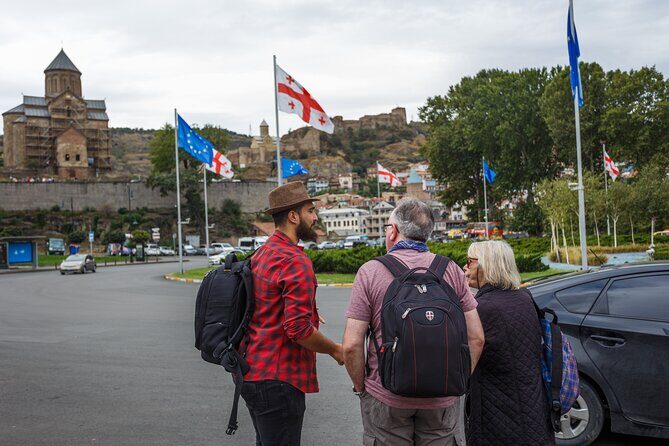
At $14.30 per person, you’re not buying luxury. You’re buying orientation, timing, and a guide who can connect the dots. For this price, the math works because the tour is packed with free-entry stops. According to the tour info, each listed site is marked as admission free, so you’re mostly paying for guided time rather than paying again at every location.
If you’ve ever done DIY walks in Tbilisi, you know the common pain: you arrive at a church, a fortress ruin, a mosque, or a park, and you’re left to guess what you’re looking at. This tour gives you quick context at each stop, so the scenery doesn’t turn into a blur of similar stone and viewpoints.
There’s one extra cost to be aware of: the tour does not include the cable car (listed as 2.5 GEL per way). The tour doesn’t require it to be worthwhile, but if you prefer the quicker route at any point, budget for that option.
Start at Budget Georgia: how the walk stays manageable
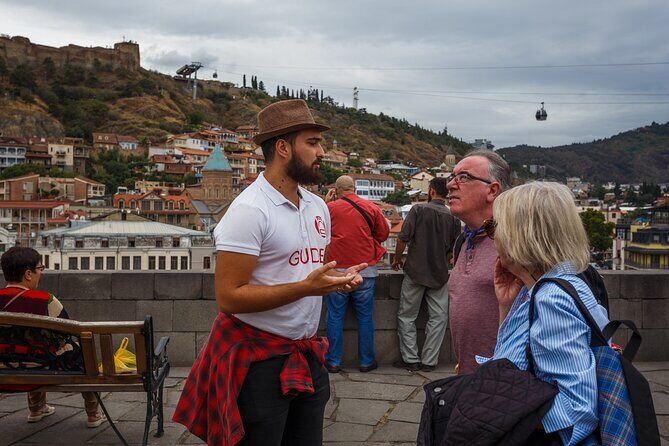
Your meeting point is Budget Georgia Tbilisi, 26 Anton Purtseladze St. The tour ends back at the same place, which is nice when you’re tired and just want to go straight to dinner.
You’ll also get a mobile ticket, which helps if you’re already juggling maps, public transport, and deciding where to eat next. And because the tour is offered in English, you can focus on the story instead of translating your way through signboards.
Most travelers can participate, and the tour is close to public transportation. That’s helpful if you’re not staying in the thick of Old Town or you’re mixing this with other plans like sulfur baths, markets, or a restaurant crawl.
And yes—weather matters. The tour requires good weather, and if it’s canceled for poor conditions, you’ll be offered another date or a full refund.
Metekhi Cathedral to Narikala Fortress: views with context
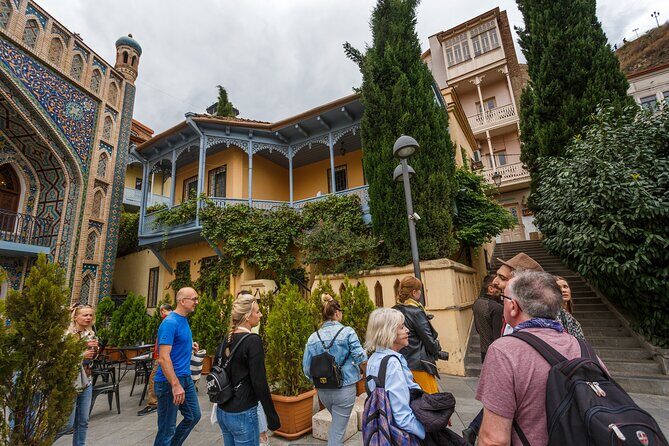
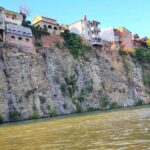
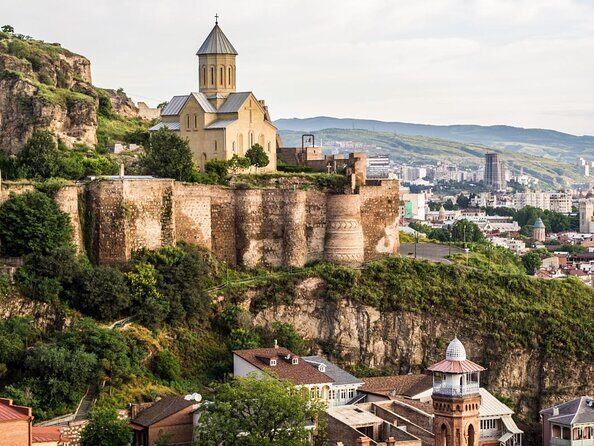
You start at Metekhi Cathedral, one of Tbilisi’s older churches. It’s not just a quick stop for a picture. You’ll get the sense of how this area “frames” Old Tbilisi, because the cathedral’s location gives you a strong look over the older parts of the city. If you like orientation moments—the kind that make the rest of the day click—this is one of them.
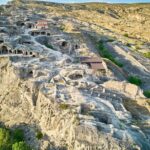
From there you head to Narikala Fortress, described as medieval castle ruins in the center of Old Tbilisi. Even if you’re not a full-time history nerd, fortress ruins are where you start noticing how the city built around defense and visibility. You’ll get a clearer feel for how people once controlled movement through the area.
Practical tip: fortress areas and viewpoints can be windier than the streets below. Bring a light layer if you tend to get cold easily.
Abanotubani sulfur baths and Leghvtakhevi Waterfall: the city’s softer side

Next comes Abanotubani, the sulfur bath district. This is one of Tbilisi’s most distinctive neighborhoods, and it’s especially interesting because it’s not all about sightseeing. It’s about a lived-in tradition. The tour includes a look inside the baths and a legend about the founding of Tbilisi—good storytelling that makes the geography feel personal, not random.
If you’re the type who likes to plan one special experience per trip, Abanotubani is a strong candidate. In the reviews, Mariam’s help with booking a sulfur bath is a standout. That kind of guidance is gold because it saves you from researching at the exact moment you’re tired and hungry.
After the baths, you cool down at Leghvtakhevi Waterfall, a small waterfall in the center of Tbilisi. The tour frames it as a summer-friendly stop. Even if you’re visiting outside peak heat, it’s still a nice rhythm change—less monumental, more calming. Expect a brief break where your senses reset: sound, breeze, and a quick pause from church-and-fort focus.
You can also read our reviews of more guided tours in Tbilisi




Sioni Cathedral, Jumah Mosque, and the Great Synagogue: one Old Town, many faiths
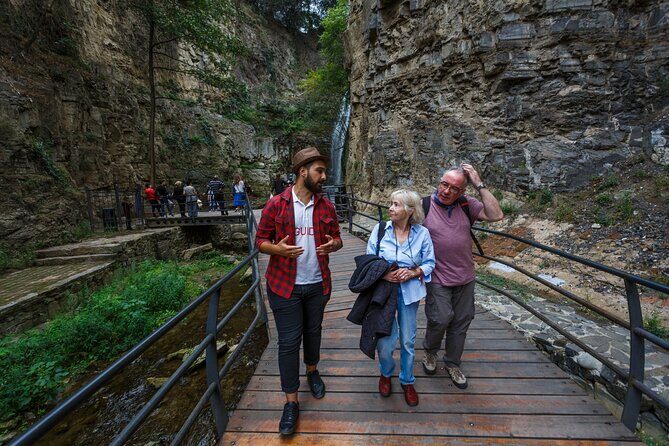
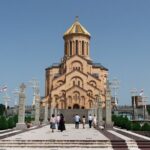
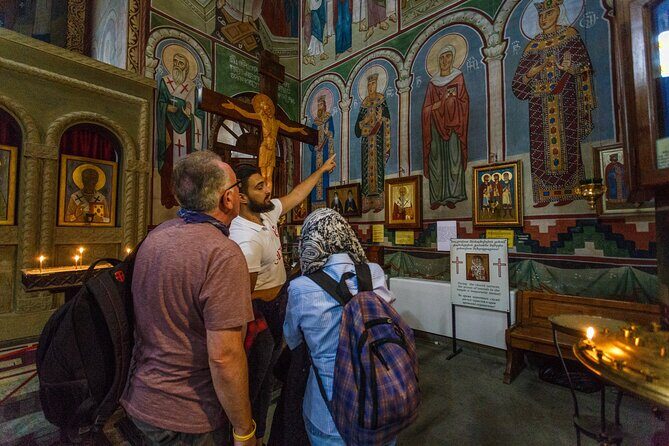
A big reason this tour feels different is how it balances sites from different traditions without turning it into a lecture. You’ll visit Sioni Cathedral Church, where the tour explains that Georgia’s Christian conversion is tied to Saint Nino in the 4th century, and that a cross associated with Saint Nino is kept there. This adds meaning fast, especially if you don’t have a background in Georgian Christian history.
Then the route shifts to Jumah Mosque, a mosque in the old part of Tbilisi. After the cathedral, it’s a clear reminder that Old Town isn’t one cultural bubble. It’s a layered neighborhood where different communities have shaped the city.
You then reach The Great Synagogue of Tbilisi, described as the biggest synagogue of Tbilisi, located in Old Town. This stop rounds out the theme: the city’s identity isn’t one story. It’s multiple threads close together.
What I like about this section is the pacing. Each stop is short, but the guide connects them. You come away noticing not just what the buildings look like, but what they represent in the broader city story.
Quick consideration: because these are religious sites, it’s smart to keep your volume down and move with respect. You’ll enjoy the stops more when you treat them like more than photo backgrounds.
Rike Park and the Bridge of Peace: modern Tbilisi at walking pace
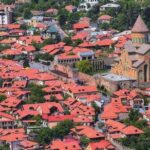
Then the tour opens up with Rike Park, a more open space with nice views on Tbilisi. This is where you get a breather after the tighter historic streets. Parks do that job well: they give your legs a moment and give your eyes a wider frame.
From there it’s the Bridge of Peace over the river Mtkvari. This is a modern contrast to the medieval and sacred stops earlier. The bridge works as a visual “reset,” and it’s a good place to take in the shape of the city from a different angle.
If you’re the type who loves skyline moments, this is likely where you’ll find yourself slowing down just to absorb the view. It’s also an easy place for the guide to point out what you’ve already seen and where you’ll likely go next afterward.
Rezo Gabriadze Marionette Theater: an hourly stop you can plan around
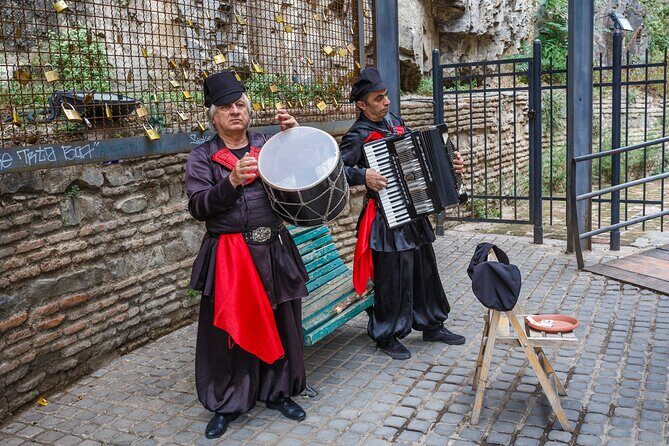
One of my favorite parts of this tour conceptually is the Rezo Gabriadze Marionette Theater stop. The theater has a marionette performance on each full hour, and the tour plan includes arriving about five minutes before so you can watch together.
That means your timing matters. If your trip schedule is tight, you might want to build the rest of your afternoon around this, not the other way around. The show is short (as part of the tour flow), but it adds a playful break from stone and stairs and gives you a taste of local entertainment.
It’s also a good example of why guided tours can be more valuable than self-guided walks. If you walked here alone without knowing the full-hour schedule, you might miss it. With the tour, you’re basically guaranteed you’ll catch the moment—assuming you arrive on time.
Anchiskhati Basilica to Svobody Square: old roots into the city center
Next you’ll visit Anchiskhati Basilica, described as the oldest church in Tbilisi, built in the 6th century. That’s the kind of fact that changes how you look at a building. Even if you only spend around ten minutes, you’ll likely notice details more sharply because you know this isn’t just old—it’s early.
After that comes Svobody Square, also spelled as the city’s Liberty Square, described as the center of Tbilisi. This acts as a closing scene. You move from deep historical sites to the bigger, more central pulse of the city.
And because the tour ends back at the meeting point, it’s a clean wrap-up. You’re not left hunting for your starting spot while your energy is already fading.
What kind of traveler will love this tour most
This is a strong fit if:
- You’re in Tbilisi for the first time and want a sensible highlights route in one afternoon.
- You like faith and culture sites and want quick context that helps you understand why each stop matters.
- You enjoy a mix of viewpoints and stories, not just one museum or one monument.
- You want a small group experience rather than a big bus-style tour.
It might be less ideal if:
- You want deep time in one site, because the plan is deliberately efficient.
- You’re visiting in unreliable weather, since the tour depends on good conditions to run.
How to use this tour to plan the rest of your day
This walk is also a great anchor for your itinerary. Since you end around central Old Town, you can easily turn your afternoon into a broader exploration.
If you’re considering the sulfur baths, I’d use Abanotubani as your decision point. The review highlight about Mariam assisting with bath booking is exactly the kind of local help that can save time and confusion later. Even if you don’t book during the tour, this stop gives you enough context to choose calmly.
Also, build your theater-watching plans around the hourly show. The tour does the scheduling work for you, but you still need to show up on time for it.
Should you book this Tbilisi Guided Walking Tour?
Yes, if you want a smart, low-stress way to understand Tbilisi in a few hours. For $14.30, the combination of free-entry stops, a guided English explanation, and a plan that includes the marionette show makes it feel like a good value. The route covers Old Town foundations and modern viewpoints without dragging on.
I’d especially recommend it if you like learning the why behind what you’re seeing—and if you appreciate practical guidance. The Mariam review detail about helping with sulfur baths is a strong sign you won’t just get facts thrown at you; you’ll get help connecting the tour to real plans.
FAQ
How long is the Tbilisi guided walking tour?
It lasts about 3 hours.
What time does the tour start, and where does it end?
It starts at 3:00 pm and ends back at the meeting point.
Is the tour in English, and do I get a ticket on my phone?
Yes, the guiding service is in English, and you receive a mobile ticket.
Are entrance fees included?
The tour information lists each stop with free admission tickets. The cable car is not included.
How much does the tour cost?
The price is $14.30 per person.
What is the cancellation policy if the weather is bad?
You can cancel for free up to 24 hours in advance for a full refund. The tour requires good weather, and if it’s canceled due to poor weather, you’ll be offered a different date or a full refund.