REVIEW · TBILISI
Tbilisi with all its glory and originality. (group walking tour)
Book on Viator →Operated by ushba travel · Bookable on Viator
Tbilisi history comes at walking speed. This group walk is a practical way to orient yourself fast, then slow down for the details, from the Metekhi Plateau origins to a free wine tasting in a 17th-century cellar. I like that the tour keeps its group size to just 15, so your guide can actually pace the conversation and answer questions as you move.
The itinerary mixes major sights with viewpoint time, and several key entries are covered in the price. One thing to plan for: the best panoramas rely on optional cable-car rides that cost extra, and the experience needs good weather to run smoothly.
In This Review
- What Makes This Tbilisi Walk Worth Your Time
- Walking Into Tbilisi’s Origins at Metekhi Plateau
- Kartlis Deda And The Panoramas With a Real Symbol
- Sulfur Baths No 5: Why This Place Still Matters
- Old Town Tbilisi: Balconies, Fig Valley, and a Real Waterfall Moment
- The Bridge of Peace And Rike Park’s Unusual Details
- Georgian Life On Foot: Italian Courtyards, Rezo Gabriadze, and a Wine Cellar
- Price and Value: What You’re Actually Getting for $20
- Timing, Group Size, and the Real-World Pacing
- Who Should Book This Tbilisi Tour (And Who Might Skip)
- Booking Verdict: Should You Take This Walk?
- FAQ
- How long is the Tbilisi group walking tour?
- What time does the tour start?
- Where do I meet the guide?
- Does the tour end at the same place?
- Is the tour offered in English?
- How much does the tour cost?
- What admissions are included?
- Is the cable car included?
- Is the wine tasting included, and how long does it last?
- Can I get a full refund if I cancel?
What Makes This Tbilisi Walk Worth Your Time
- Small group, max 15: easier questions, better pacing, less funneling through crowds
- Included admissions at several stops, so you are not constantly pulling out your wallet
- Cable car is optional (listed extra cost), but it upgrades the views
- Sulfur Baths No 5 with Marco Polo connections and the story of how many baths remain
- A free one-hour wine tasting in a cellar, with commentary from a winemaker
- Central meet-up on Vakhtang Gorgasali St with the tour ending where it starts
Walking Into Tbilisi’s Origins at Metekhi Plateau

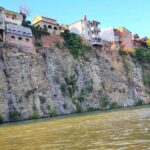
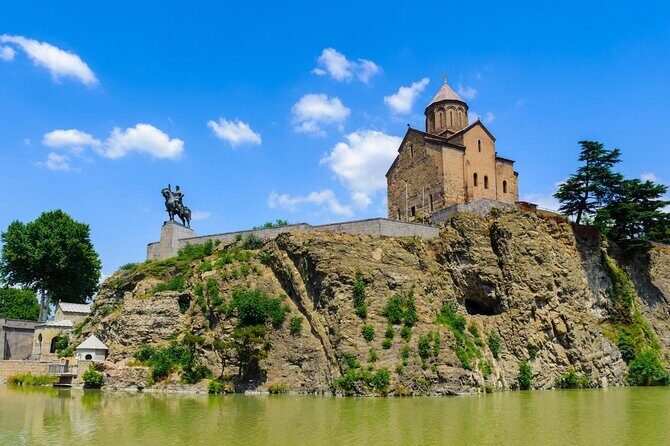
You start the day at Alani1 Vakhtang Gorgasali St, right where Tbilisi’s story feels close to the ground. From there, you head toward the Metekhi Cathedral area—an approach that works well because the route begins with orientation before it becomes sightseeing.
At the Metekhi Plateau, your guide sets the scene with the earliest settlement here and the role of Vakhtang Gorgasali. This matters because Tbilisi’s landmarks don’t float in a vacuum; they sit on layers. Understanding who was ruling and why people settled in this spot makes the later stops click.
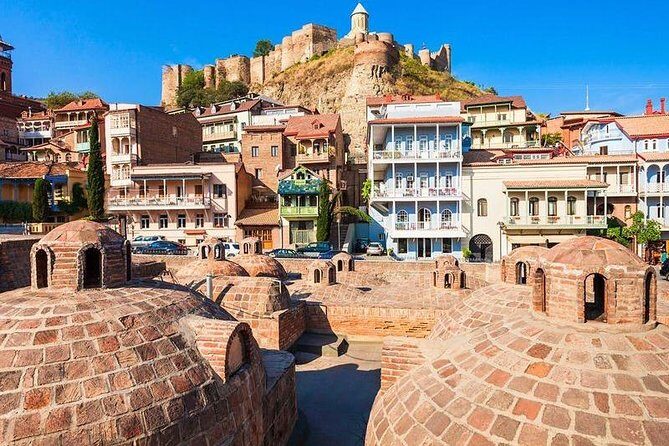
Also, the view from the plateau is a free “map” you can keep in your head. You can take in the Old Town layout and the Narikala Fortress area while you get the history behind the city’s formation. Even if you already know Tbilisi basics, this kind of grounding makes the rest of the walk feel less like museum hopping and more like following a thread.
The Cathedral stop itself is short (about 30 minutes), so treat it as a warm-up: enough time for the big story, not enough time to turn it into a separate visit. If your travel style is slow and contemplative, you may want to linger later on your own—but as a group tour primer, it hits the sweet spot.
You can also read our reviews of more walking tours in Tbilisi



Kartlis Deda And The Panoramas With a Real Symbol
After Metekhi, you shift to Kartlis Deda, the Mother of Georgia statue. What I like about this stop is the way the symbolism is explained in practical, memorable terms: Kartlis Deda holds a cup of wine for lovers in one hand and a sword for enemies in the other.
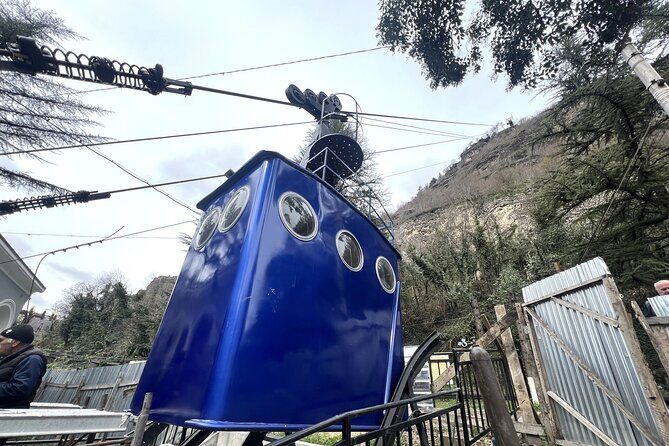
Then comes the practical part: you reach the area by cable car. That extra ride is listed as an add-on cost, but the payoff is the viewpoint. You are not just seeing a sculpture; you are getting a better angle on Tbilisi’s layout. When you can understand the city’s hills and old neighborhoods from above, your later street-level wandering feels more intentional.
This stop also helps you understand Georgian identity beyond slogans. The statue is described as a symbol of national character, and the guide’s framing gives you something to carry as you walk through the Old Town later, where those cultural signals show up in food, stories, and public spaces.
Sulfur Baths No 5: Why This Place Still Matters
Then you get to the sulfur baths—specifically Sulfur Bath No 5. This is the kind of stop where Tbilisi feels different from other European capitals. The guide ties it to a famous name: Marco Polo.
But the real value here is the detail behind the bathrooms you see. You learn why only 15 out of 65 baths remained and what the naming system means—how names can range from simple to more elegant labels like Royal and variegated. That’s the sort of information that turns a pretty facade into something with logic.
Your stop time is about 30 minutes, so you should expect a focused visit rather than an extended soak session. Still, even if you do not book a long bath experience, this is a strong way to understand why sulfur baths became part of the city’s reputation. It also gives you something to ask about later, especially if you plan to visit other bathhouses during your stay.
One note: if your skin is sensitive or you have health concerns, check with the bath staff before committing to any treatment. The tour is informational and structured, but the baths themselves are still a physical experience.
Old Town Tbilisi: Balconies, Fig Valley, and a Real Waterfall Moment
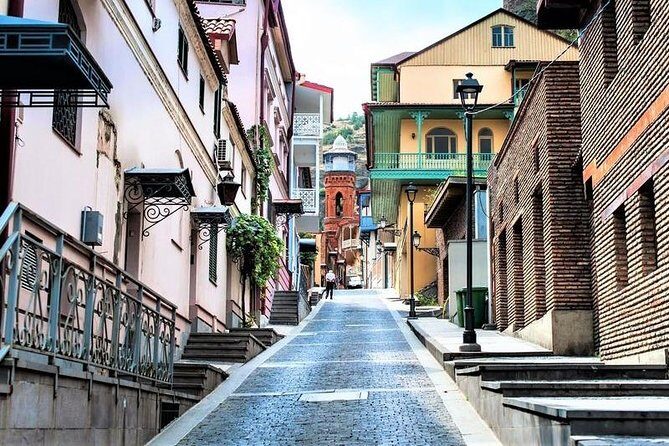
From Sulfur Bath No 5, you continue toward the Old Town area where you can catch a real payoff: a waterfall along the Fig Valley route. This is not a throwaway photo stop. It’s timed so you get a break from monuments and see how the Old Town breathes.
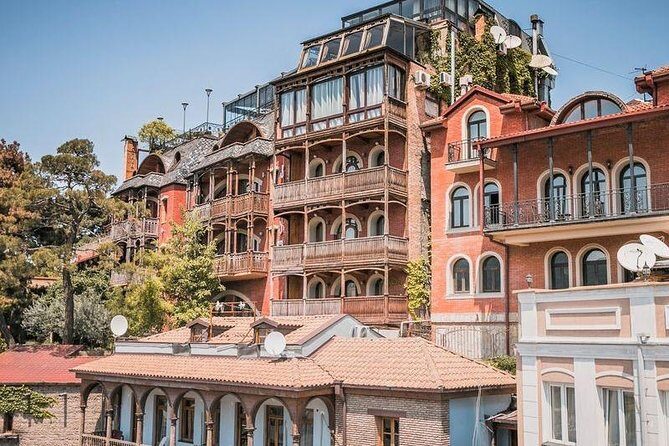
You also spend time admiring the balconies—graceful, varied, and clearly shaped by different eras. The guide’s point is not just that balconies are pretty. It’s why you cannot find two identical ones. That kind of comment changes the way you look at the facades. Instead of seeing decoration, you start noticing design choices.
The stop is shorter (around 20 minutes), which means it works best if you are open to quick observation. If you want to study balcony styles like an architecture critic, plan to revisit the Old Town again later with more time of your own.
Practical downside: Old Town streets can be uneven, and the route is a walking tour, not a bus ride. Wear shoes you can trust. You do not need hiking boots, but you do want comfortable grip.
The Bridge of Peace And Rike Park’s Unusual Details
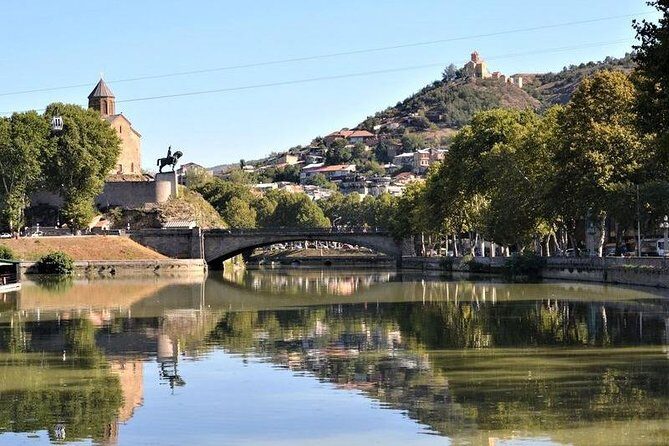
The Bridge of Peace is one of those sights you can see from multiple angles, and the guide uses that flexibility to teach symbolism. You learn what the bridge represents, and then you shift toward Rike Park, where locals’ reactions to the glass skyscraper and unusual pipes become part of the story.
That local viewpoint is what I like. It keeps you from treating new construction like an automatic villain or hero. You get a sense for the debate and the texture of everyday opinion—something many short sightseeing tours skip.
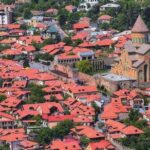
Then comes another cable car moment: you drive to Tbilisi Fortress by cable car. Again, the tour frames this as a viewpoint stage. From the upper position, you can see small houses of old Tbilisi and the narrow streets winding below. This is the kind of perspective that turns photos into understanding.
Stop time is about 30 minutes here, so you will likely do the basics: quick orientation, skyline views, and the key explanations. If you want longer fortress time, consider adding an extra visit on a separate morning or evening.



Georgian Life On Foot: Italian Courtyards, Rezo Gabriadze, and a Wine Cellar
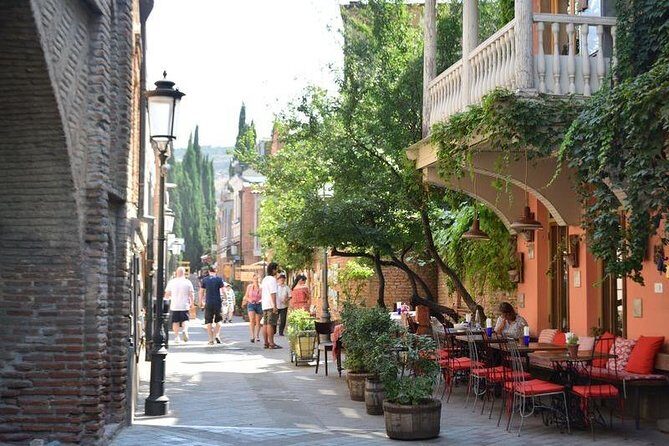
The last stretch leans hard into what makes Tbilisi feel like a living city: people, habits, and food. You continue through the Old Town and the tour becomes more story-driven.
You hear about Georgian mentality and cuisine in the way a local would explain it, with small details that make it feel real rather than staged. A highlight is the talk about Tbilisoba, the colorful festival, and the jokes written on the turret of the Rezo Gabriadze theater. That’s the kind of detail you would never notice unless someone pointed it out and put it in context.
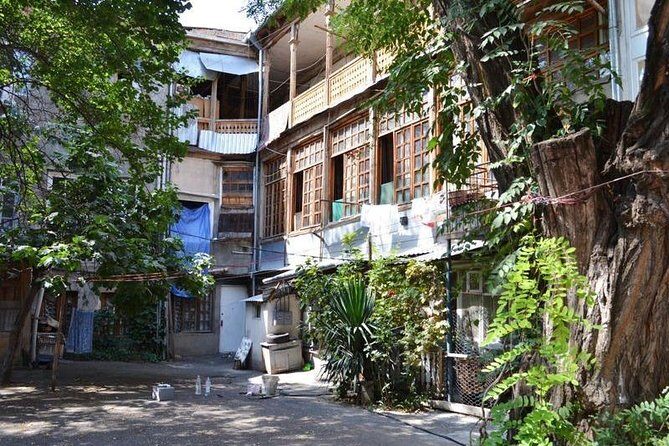
You also visit famous Italian courtyards—courtyards associated with Italian presence and influence in the city. Even if you do not speak Georgian or know the names already, the guide’s framing helps you connect architecture to the people who shaped it.
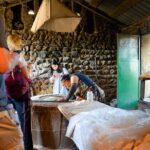
Then you reach something that turns the walk into a genuine break: a stop for a wine tasting in the cellar of the 17th century. The tasting takes about an hour and is free for your tour group. The guide also sets expectations: the tasting has no restrictions, and you get comments from the winemaker.
This matters for value. A one-hour wine tasting can cost a lot in many cities if you book it separately. Here, it is folded into the experience, so your $20 price becomes more like a full evening activity than a quick morning wander.
And there is one more storytelling layer: at the Tamada monument, the guide explains the secrets of the Georgian feast. If you love food culture, this is where the tour feels less like a highlights list and more like a way to understand how Georgians host, celebrate, and talk through meals.
Price and Value: What You’re Actually Getting for $20
At $20 per person for about four hours, this tour is priced for people who want structure without heavy costs. The best part is that several ticketed entries are included, not just a couple of token stops. You are covered at Metekhi Cathedral, Kartlis Deda, Sulfur Bath No 5, the Old Town waterfall/balconies area, the Bridge of Peace stage, and the final Old Town walk with the tasting.
You also get a guide in English, plus a mobile ticket, which makes the whole thing easier on your phone.
The main “price friction” is the cable car add-on. The tour lists cable car cost as $2, and you use cable cars for some of the most scenic pieces—Kartlis Deda and the fortress stage. If you hate extra fees, you might resent that part. If you are okay with a small add-on to get the views, the value stays strong.
Bottom line: you are paying for a guided route with included entry fees and a free wine tasting. If you were to replicate all of that on your own, you would likely spend more in time and money.
Timing, Group Size, and the Real-World Pacing
This is scheduled to start at 10:00 am and end back at the meeting point. With an approximate four-hour duration and a maximum group size of 15, you should expect a fairly energetic walking rhythm with short stops.
That is a good match for a first visit. You get an overview of the Old Town, viewpoints, key landmarks, and the food and wine culture. It’s also a good match if you want to avoid decision fatigue. Instead of figuring out what to see and in what order, you follow a path that makes geographic sense.
One practical consideration: this experience needs good weather. If the forecast looks messy, keep your schedule flexible. Rain can make Old Town walking less pleasant and can affect whether outdoor viewpoint moments work well.
Who Should Book This Tbilisi Tour (And Who Might Skip)
You’ll probably love this tour if you want:
- A first-day orientation that still includes culture and food
- Included access to multiple sights without extra ticket planning
- A small group (15 people max) rather than a mass market walk
- The chance to try Georgian wine in a 17th-century cellar setup
You might skip it if you:
- Want a full-on, slow, independent exploration day and dislike walking tours
- Know you will not spend on cable cars, since some of the top angles rely on them
- Prefer baths as a full soak experience rather than a short, guided visit
If you are balancing Tbilisi against other stops in Georgia, this fits well because it compresses “a lot of first impressions” into half a day.
Booking Verdict: Should You Take This Walk?
I think this is a smart booking choice if you care about understanding Tbilisi, not just photographing it. The combination is rare: included entries across several stops, a strong viewpoint flow, and a free one-hour wine tasting that turns the tour from sightseeing into a real Georgian food-and-drink moment.
If you have limited time, this guide-led path saves you effort and helps the city feel coherent. Just budget a little for the cable car add-ons, wear good shoes for Old Town walking, and keep an eye on weather so the best outdoor parts can happen as planned.
FAQ
How long is the Tbilisi group walking tour?
It lasts about 4 hours.
What time does the tour start?
The start time is 10:00 am.
Where do I meet the guide?
You meet at Alani1 Vakhtang Gorgasali St, T’bilisi, Georgia.
Does the tour end at the same place?
Yes, it ends back at the meeting point.
Is the tour offered in English?
Yes, the tour is offered in English.
How much does the tour cost?
The price is $20.00 per person.
What admissions are included?
Admissions are included for Metekhi Cathedral, Kartlis Deda, Sulfur Bath No 5, and the Old Town segments described in the tour.
Is the cable car included?
No. Cable car is an extra $2.
Is the wine tasting included, and how long does it last?
Yes. The tasting is free for the tour group and takes about one hour, with comments from the winemaker.
Can I get a full refund if I cancel?
Yes. You can cancel up to 24 hours in advance for a full refund, and free cancellation is available.