REVIEW · TBILISI
Jvari monastery & Mtskheta – Half day group tour from Tbilisi
Book on Viator →Operated by Budget Georgia · Bookable on Viator
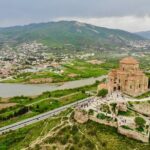
Cross-shaped Jvari hits you fast. You’re looking at a 6th-century monastery whose name means cross, built in that cross shape, with big views over the Mtkvari and Aragvi rivers and the ancient town of Mtskheta. I like the wow-factor viewpoints and the fact that admission tickets are free at both stops. The only real downside to plan around: you’ll only get about 30 minutes at Jvari and around 1 hour at Svetitskhoveli, so it’s great for seeing the highlights, but not for slow, deep wandering.
This half-day group tour runs from 9:00 am and comes back to the same meeting point at Budget Georgia on Anton Purtseladze St. With a maximum of 20 travelers and an English-speaking guide, the pace stays friendly and easy to follow. You’ll also get a mobile ticket, so there’s no fuss with paperwork.
In This Review
- Key highlights worth knowing before you go
- Jvari Church: the cross-shaped viewpoint over the rivers
- Svetitskhoveli Cathedral: Georgia’s early church at the spiritual center
- From 9:00 AM to back at Budget Georgia: how the timing really works
- Max 20 people and English guidance: what you can expect on the ground
- Price and value: what $31.44 buys you (and what it doesn’t)
- What to wear and how to plan photos in Mtskheta
- Who should book this tour, and who should consider a different plan
- Should you book Jvari Church & Svetitskhoveli from Tbilisi?
- FAQ
- Where does the tour start and end?
- What time does the tour begin?
- How long is the Jvari monastery and Mtskheta tour?
- What stops are included?
- Are admission tickets included, and are they free?
- Is the tour offered in English?
- How large is the group?
- Will I receive a mobile ticket?
- Can I cancel for free?
Key highlights worth knowing before you go
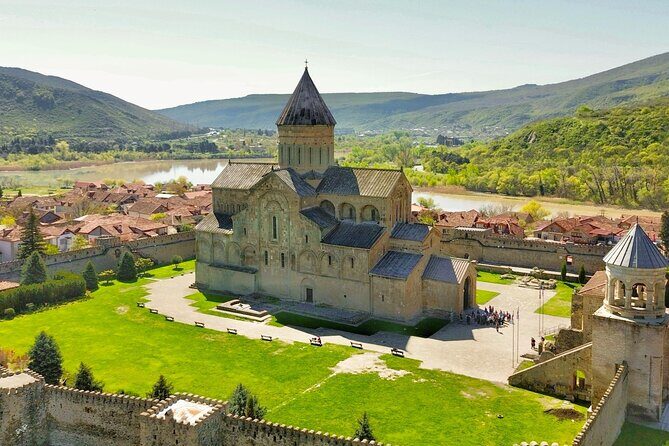
- Jvari means cross in Georgian: the church shape matches the name, and you’ll get the river-and-town panorama that goes with it
- Free admission at both stops: you can focus your time on photos and walking, not ticket lines
- Svetitskhoveli’s big status: it’s often described as the first church in Georgia and the country’s religious center
- Short, efficient timing: about 3 to 4 hours total, with set time at each site
- Small group (up to 20): easier questions, fewer crowd bottlenecks, and a calmer experience
- English offered: helpful if you want context without guessing your way through signs
Jvari Church: the cross-shaped viewpoint over the rivers
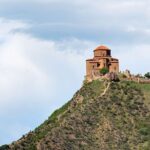
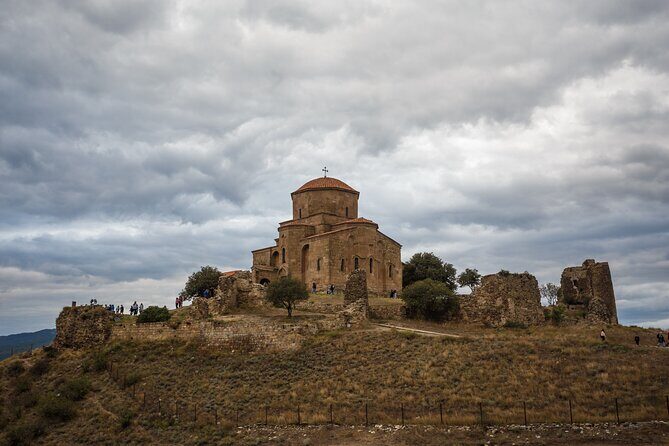
Jvari Church sits on the kind of hill where you understand why people built sacred places here. The monastery traces back to the 6th century, and the name Jvari is Georgian for cross. The building itself is shaped like a cross, which makes the site feel less like a random church and more like a symbol you can literally see.
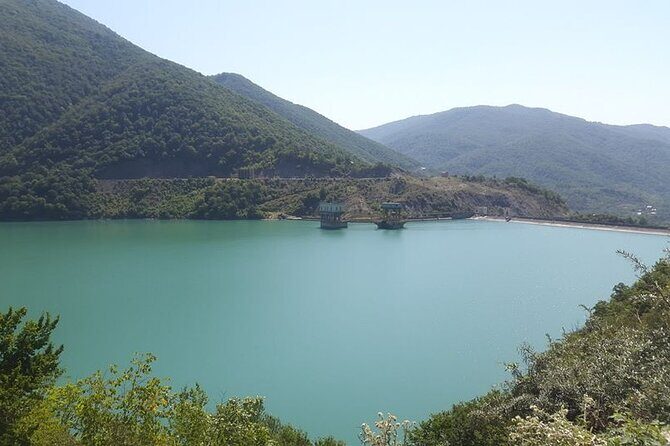
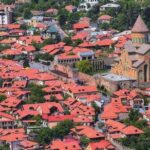
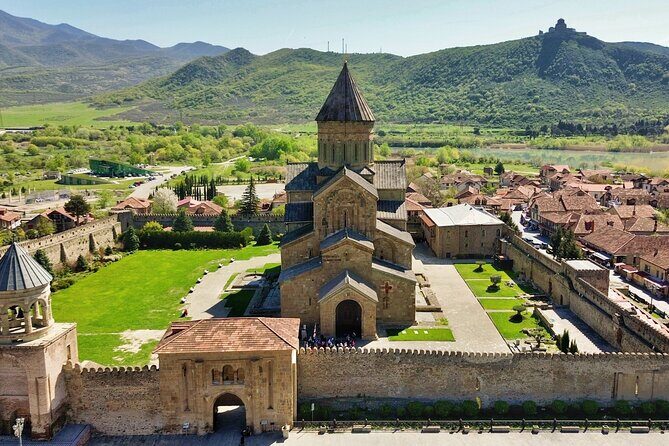
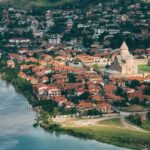
What you’ll enjoy most is the view. From up here you look out over the Mtkvari and Aragvi rivers, and you can spot Mtskheta from above. That’s the moment where the visit clicks: you’re not just touring a monument, you’re seeing why this area mattered for centuries—geography and faith sharing the same stage.
The practical side: the stop is around 30 minutes. That’s enough to take in the view, read a few details, and get your best photos. But if you’re the type who likes long, quiet time inside stone walls, you’ll probably wish the Jvari stop ran a bit longer.
You can also read our reviews of more tours and experiences in Tbilisi.



Svetitskhoveli Cathedral: Georgia’s early church at the spiritual center
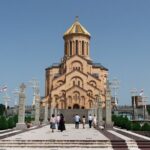
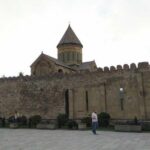
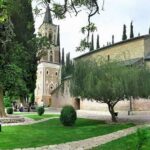
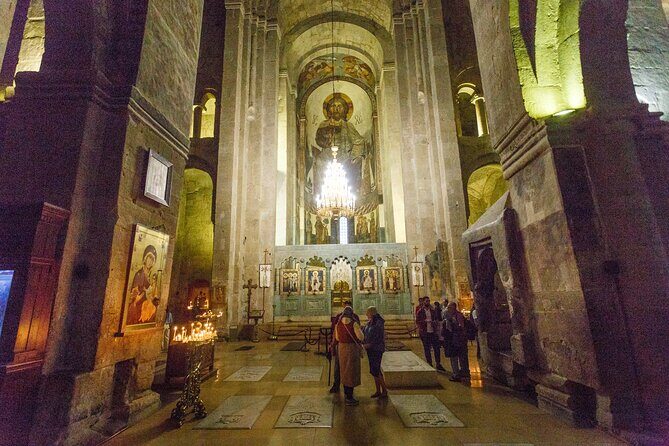
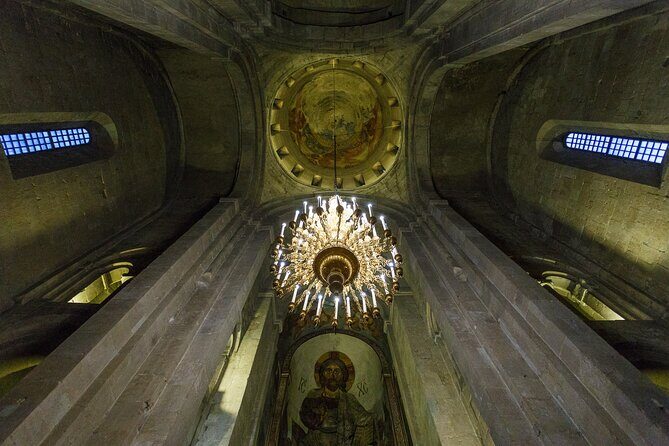
After the hilltop viewpoint, you shift from the open air and river views into the dense spiritual gravity of Svetitskhoveli. This cathedral is widely recognized as the religious center of Georgia, and it’s closely tied to the idea of the first church in the country. The current building dates to the 11th century, and it has a story of being destroyed multiple times—yet it still stands.
That “built, damaged, rebuilt” pattern matters more than you’d think. When you’re standing inside or near Svetitskhoveli, the place feels sturdy in a very human way: not a frozen museum piece, but something that survived conflict, repair, and changing eras. Even if you’re not a history superfan, you can feel why it stayed important.
Timing here is about 1 hour. That gives you a decent window to understand the main features and take photos without rushing across the site like a sprint. Still, this is a half-day plan, so you won’t have hours to explore every corner or read every inscription.
From 9:00 AM to back at Budget Georgia: how the timing really works
The tour starts at 9:00 am at Budget Georgia, located at 26 Anton Purtseladze St in Tbilisi. It ends back at the same meeting point, which is handy when you want a structured excursion without figuring out connections on your own.
You’re looking at roughly 3 to 4 hours total. That matters because it’s designed to fit into a day that already includes something else in Tbilisi. If you’re on a tight schedule, this is a smart way to hit two top Mtskheta landmarks without losing your whole day.
Here’s how the time breaks down: Jvari gets about 30 minutes, and Svetitskhoveli gets about 1 hour. So, you’ll spend a shorter stretch on the hill and a longer stretch at the cathedral. If you’re the type who dreams about one perfect viewpoint, you’ll want your camera ready early at Jvari so you’re not doing setup while the light changes.
One small extra tip based on how people like to combine sites in this area: if you’re visiting other Mtskheta-area landmarks, you might feel happier building your day so Jvari and Svetitskhoveli come when you’ve already warmed up your interest in the region. A good example is pairing with the nearby Chronicles of Georgia concept before heading to the monastery and cathedral, so you can connect the dots between place, story, and geography.
Max 20 people and English guidance: what you can expect on the ground
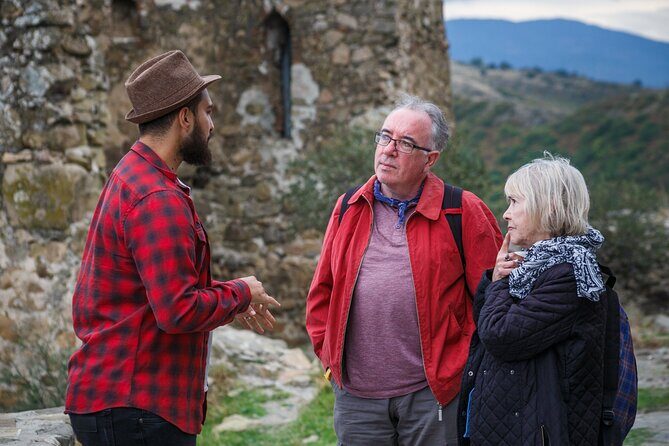
This is a group tour with a maximum of 20 travelers. That’s not tiny, but it’s small enough that you’re unlikely to feel like you’re trapped in a moving crowd. You also get English as the offered language, which makes a big difference when you want context quickly and don’t want to rely on translation apps every time you look up.
The overall service style here is described as efficient and supportive. In plain terms: the guide should keep the day organized, help with the flow between stops, and make sure you don’t feel lost. That matters most at places like Jvari and Svetitskhoveli, where the details can be easy to miss if you only look at the obvious.
Also, you don’t have to chase a paper ticket. The tour uses a mobile ticket, which is convenient if you’re already juggling maps, buses, and snack stops.
The only caution: since it’s an organized group schedule, you’ll follow the rhythm of the tour rather than setting your own pace. If you prefer total freedom over structure, a self-guided plan might feel better. But if you’re trying to get the essentials with good explanations, this format is a strong fit.
Price and value: what $31.44 buys you (and what it doesn’t)
The price is $31.44 per person for a half-day group tour. On paper, that can sound like a lot or a little depending on how you think about day trips. Here’s the practical value angle: you’re paying for an organized experience with an English guide, set time at two major sites, and smooth logistics that keep you from spending your day figuring things out.
On top of that, the admission tickets at both stops are free. That means your money goes toward the guided structure rather than site fees. For budget-minded travelers, free entry at big landmarks is a real win because it prevents one portion of the day from becoming unexpectedly expensive.
What the price typically does not cover in your imagination is extra time. This is not a full-day deep dive. The schedule is built around a quick, high-impact circuit: viewpoint first, cathedral next, and then back to Tbilisi. If you want hours of unhurried exploration and lots of optional stops, you may find this plan feels tight.
Still, for the right traveler, $31.44 is a fair way to get the highlights of Mtskheta with minimal friction.



What to wear and how to plan photos in Mtskheta
This tour is simple: you visit two key sites, you take in the views, and you move along. The main physical consideration is that you’ll be in a hilltop setting at Jvari and then inside/around a major cathedral at Svetitskhoveli. That usually means some walking on uneven ground and stairs or steps in places.
So, I’d plan for comfortable shoes and clothing that can handle changing conditions in an open-air viewpoint area. Bring a light layer if mornings feel cool, and keep water handy if you’re out before you’ve eaten.
Photo timing is also about strategy. At Jvari, you’re chasing the view over rivers and the town below, so you’ll want to be ready to shoot as soon as you arrive. Once you’re inside or near Svetitskhoveli, the lighting changes, and you’ll shift toward architectural details and wider angles rather than sweeping panoramas.
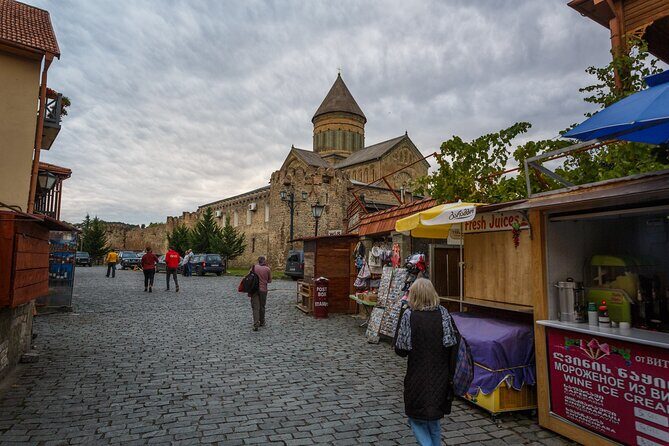
If you like a little “between stops” reward, Mtskheta is also known for quick souvenir-and-snack moments around the hills and viewpoints. You might spot small stalls selling magnetic fridge displays, including simple buy-one-get-one style deals, plus local drinks like fresh pomegranate juice. There’s also sometimes a wine ice cream option mentioned in this area—so if you like trying local twists, keep your eyes open as you wander near the hilltop atmosphere.
Who should book this tour, and who should consider a different plan
This tour makes the most sense if you’re:
- short on time in Tbilisi but still want the two headline sites in Mtskheta
- happy with a guided pace and want explanations in English
- trying to keep costs down since admission tickets are free
- the type who enjoys viewpoints as much as churches
It may not fit if you’re:
- expecting a slow museum-style experience with lots of quiet time
- traveling with mobility limitations and prefer a more flexible route (since the schedule is set and sites involve movement)
- the kind of traveler who hates groups and wants zero schedule pressure
For most people, though, this is a clean, confidence-building way to do Mtskheta. You’ll get the symbols (Jvari’s cross shape), the setting (rivers and town), and the center-piece cathedral (Svetitskhoveli) without needing to build a complex itinerary.
Should you book Jvari Church & Svetitskhoveli from Tbilisi?
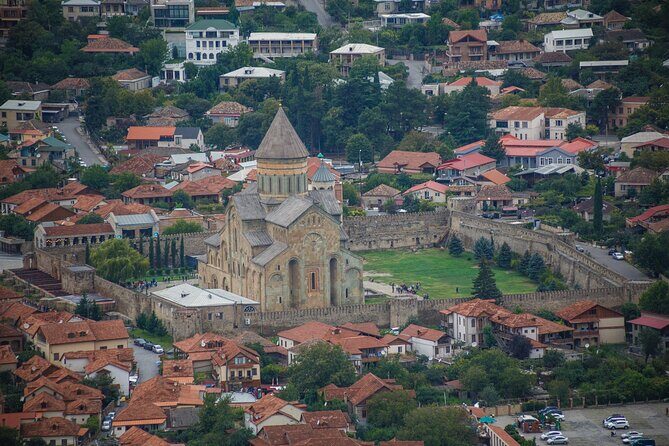
Yes, if you want a high-impact half day that hits two major Mtskheta landmarks with free admission and an English-speaking guide. It’s especially good for first-timers who want the big visuals fast: the Jvari river-and-city panorama followed by the gravity of Svetitskhoveli’s cathedral presence.
Don’t book it if you’re hoping for hours of unhurried wandering or if you want lots of extra add-ons beyond these two stops. In that case, you’d likely feel happier planning a slower, self-paced day.
If you want my simple decision rule: if your priority is seeing the essentials with low hassle, this tour is a strong match.
FAQ
Where does the tour start and end?
The tour starts at Budget Georgia, 26 Anton Purtseladze St, Tbilisi, Georgia, and it ends back at the same meeting point.
What time does the tour begin?
The start time is 9:00 am.
How long is the Jvari monastery and Mtskheta tour?
It runs about 3 to 4 hours.
What stops are included?
You’ll visit Jvari Church and Svetitskhoveli Cathedral.
Are admission tickets included, and are they free?
Admission tickets are listed as free for both Jvari Church and Svetitskhoveli Cathedral.
Is the tour offered in English?
Yes, the tour is offered in English.
How large is the group?
The maximum group size is 20 travelers.
Will I receive a mobile ticket?
Yes, the tour includes a mobile ticket.
Can I cancel for free?
Yes. You can cancel up to 24 hours in advance of the experience for a full refund.