REVIEW · TBILISI
Tbilisi Explorer: Essential Walking Tour for First-Timers
Book on Viator →Operated by Friendly.ge: Transfers & Tours in Georgia · Bookable on Viator
Tbilisi clicks into place on foot. This tour is a tight, easy-to-follow walk that mixes major landmarks with character streets, plus a one-way cable car for views without extra strain. I like how the pace gets matched to you, not the other way around, and you still cover a lot of ground in just about 2 hours.
Two things keep this experience feeling practical, not rushed: you get a clear city overview from your guide, and the route hits many of the places you would otherwise bounce between on your own. I also like that many stops are free to enter, so your money goes to the guide and the walk, not ticket math.
The main thing to consider is that you are doing a moderate walking circuit with several stops in areas that can be hilly. Also, you’ll need to follow the dress code for worship sites (cover knees and shoulders, skip shorts and sleeveless tops), or you may be refused entry.
In This Review
- Why This Tbilisi Explorer Tour Makes Sense Fast
- Price and Value: What You Get for $41
- Starting at Freedom Square: Your Shortcut to Understanding Tbilisi
- The Old City Edge: Wall Ruins and an Anchiskhati Basilica Stop
- Bridge of Peace: A Modern Line Over the Mtkvari
- Sayat-Nova and the Armenian Cultural Thread
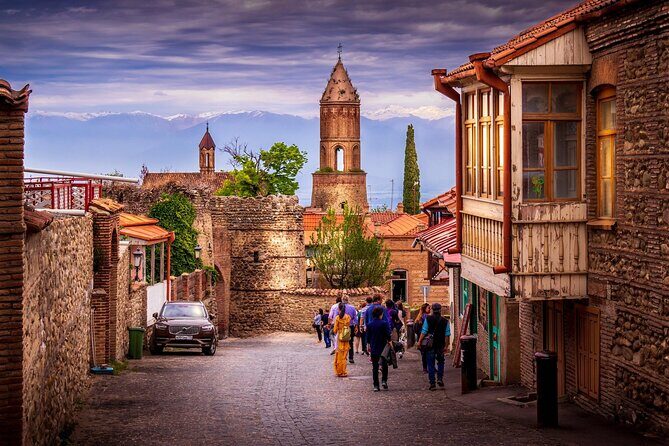
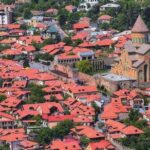
- Old Town Tbilisi: Where the Tour Turns into a Wander
- Rezo Gabriadze Marionette Theater: A Family-Friendly Culture Stop
- Sergey Parajanov Monument: Film Art as City Memory
- Shardeni Street: Your Pedestrian Stroll Through the Most Loved Corner
- Tramway Time: Aerial Tramway vs. the Included Cable Car
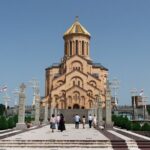
- Sioni Cathedral: Mount Zion in Georgian Orthodox Form
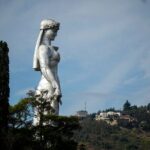
- Kartlis Deda: The 20-Meter Guardian on Sololaki Hill
- Jumah Mosque: One Mosque, Shared Prayer
- Rike Park and the River Walk Mood
- The Toaster Sculpture and the Fun Side of City Quirks
- Meidan Bazaar: Where Time-Conscious Shopping Fits
- Falcon and Pheasant Fountain: A Legend for Tbilisi’s Start
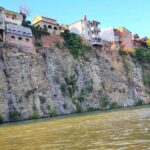
- Dzveli Tbilisi Sulphur Waterfall: Real Water in the Middle of Town
- Metekhi Cathedral: 12th-Century Stone on the Kura Edge
- How the Guide Style Shapes Your Day (Gio, Jonah, Koba, Aleksi, Tamar, Sofi)
- What You Should Watch for Before You Start
- Should You Book the Tbilisi Explorer Essential Walking Tour?
- FAQ
- How long is the Tbilisi Explorer walking tour?
- What does the tour cost?
- Where does the tour start?
- Does the tour include a cable car ride?
- Is the aerial tramway included?
- Is the tour private?
- What language is the tour offered in?
- Do I need to pay for entrance at the stops?
- What should I wear for churches and mosques?
- What is the cancellation policy?
Why This Tbilisi Explorer Tour Makes Sense Fast
- Personal pace matching: Guides adapt to your walking speed and timing, like Gio keeping up easily and Jonah tailoring the tour to his family’s schedule.
- A one-way cable car included: You get a higher-angle view payoff without adding more hours of walking.
- Big-city overview, small-time commitment: In about 1 hour 30 minutes to 2 hours, you cover the central core and Old Town highlights.
- Free-entry stops by design: Many landmark moments are free, so you can focus on seeing rather than paying.
- Culture in plain sight: You pass Georgian Orthodox churches, an Armenian cultural stop, and even the Jumah Mosque, all explained on the route.
Price and Value: What You Get for $41
At $41 per person for a 1.5-2 hour private walking tour, the value comes from two places: time and guidance. You’re not just ticking off names, you’re learning how Tbilisi fits together, from the central avenues to the Old Town layers.
Another quiet win: most of the listed stops have free admission. That doesn’t mean you’re short on highlights. It means your ticket is paying for a real route with context, plus that included one-way cable car ride.
You can also read our reviews of more walking tours in Tbilisi



Starting at Freedom Square: Your Shortcut to Understanding Tbilisi
You begin at Freedom Square on the east end of Rustaveli Avenue. It’s not just a meeting point. This square has had a bunch of names over the years, including Erivansky or Paskevich-Erivansky Square under Imperial Russia, and later Beria Square and Lenin Square during the Soviet era.
That mix matters because it teaches you how political change leaves physical labels behind. Within a short walk, you get a foundation for everything else on the route.
The Old City Edge: Wall Ruins and an Anchiskhati Basilica Stop
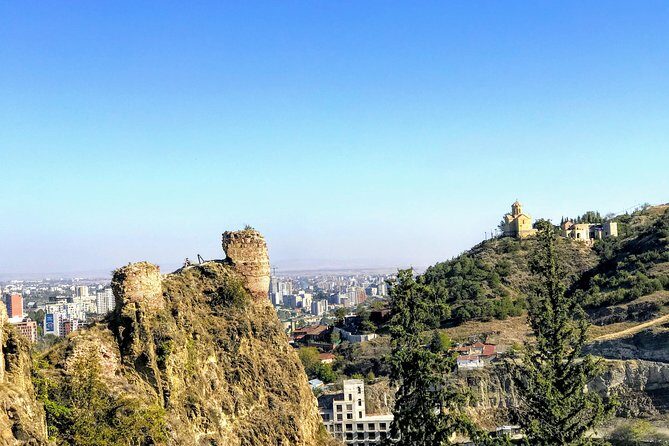
From Freedom Square, the tour heads into the older fabric of Tbilisi with Tbilisi Wall Ruins. These are a quick stop, but they’re a reminder that the city you see now sits over earlier layers.
Next comes Anchiskhati Basilica of St Mary, described as the oldest surviving church in Tbilisi, dating to the 6th century. As a Georgian Orthodox church, it’s a strong anchor point for understanding the religious side of Tbilisi’s story, and it’s also one of those places where the dress code actually matters in real time.
Tip: plan to bring covered legs and shoulders from the start. If you wait until later, you might lose the chance to see these sites when you reach them.
Bridge of Peace: A Modern Line Over the Mtkvari
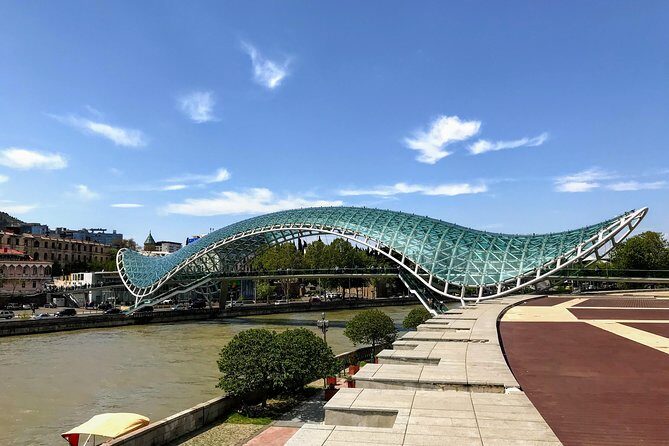
Then you shift into more modern Tbilisi at the Bridge of Peace. This bridge opened in 2010 and crosses the River Mtkvari (also known as the Kura River).
This stop works well because it gives you an instant “layout” moment. You’re getting a visual sense of how the river divides the city and how the newer areas connect back to the Old Town.
Sayat-Nova and the Armenian Cultural Thread

The tour includes the Monument of Sayat-Nova, tied to the Armenian poet and musician (ashugh) Sayat – Nova. The monument opened in Tbilisi on June 7, 2009, and the sculpture is near the northern wall of St Kevork Armenian church.
What makes this more than a statue quick-photo is the story connected to it: Sayat – Nova hid there during an attack in 1795, was killed on the doorstep of the church, and is buried there. That context helps you see why this stop is placed where it is, inside the broader religious and cultural neighborhood.




Old Town Tbilisi: Where the Tour Turns into a Wander
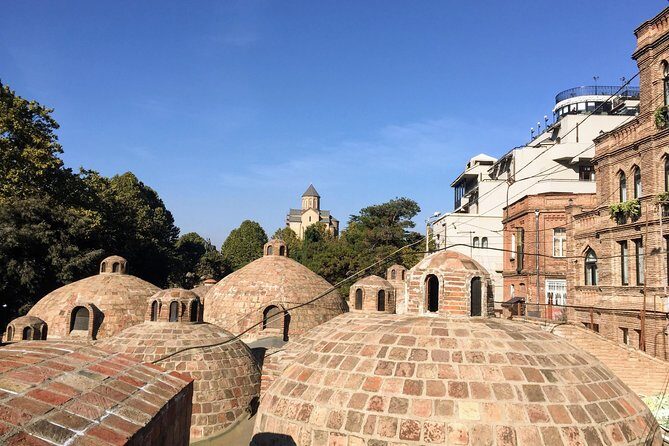
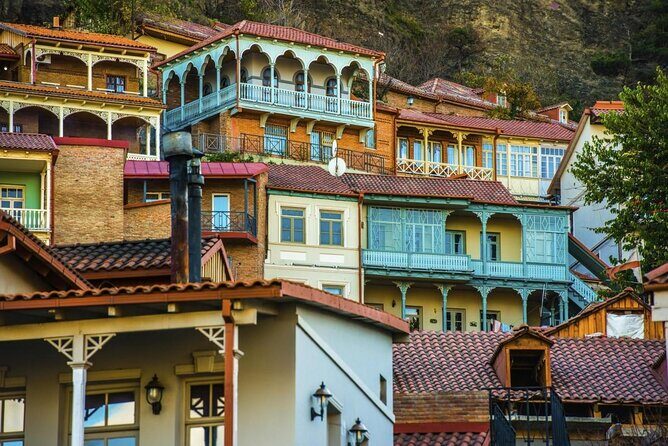
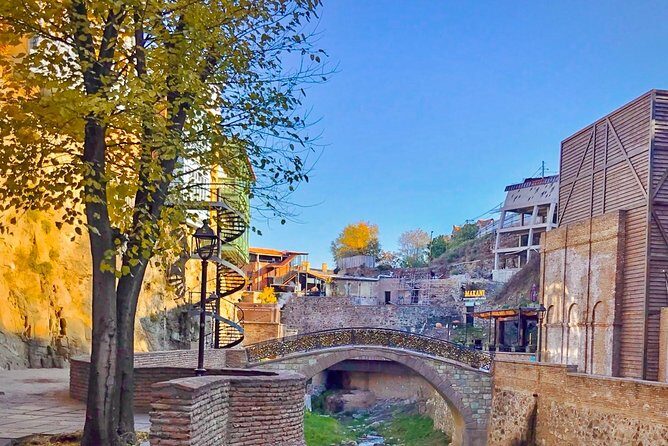
You’ll spend about an hour in Old Town Tbilisi, and that time is used for walking, looking, and shifting from sightseeing mode to atmosphere mode. The area is described as unique and beautiful, with restaurants and eateries, plus older buildings and theater nearby.
This hour is also where your guide’s personality really shows. Some guides keep it tight and efficient. Others slow down so you can actually notice the street details you’d miss if you only cared about the big monuments.
If you like asking questions, Old Town is the moment to do it. You’ll have the most variety on view, and your guide can connect the dots as you go.
Rezo Gabriadze Marionette Theater: A Family-Friendly Culture Stop

Next is Rezo Gabriadze Marionette Theater, opened in 1981. It’s framed as a beloved part of Tbilisi’s cultural scene, which makes it a nice break from churches and monuments.
It’s also a good stop if you’re traveling with kids or you just want something less solemn. Even if you don’t catch a show, seeing a cultural landmark mid-walk helps balance the day.
Sergey Parajanov Monument: Film Art as City Memory

Then you reach the Sergey Paradzhanov Monument, honoring a director with world-famous films like Shadows of Forgotten Ancestors (1964), The Colour of Pomegranates / Sayat-Nova (1969), The Legend of Suram Fortress (1985), and Ashik-Kerib (1988).
This kind of stop is underrated on walking tours because it connects place to art. It gives you another lens on Tbilisi and Georgia beyond the usual architecture photos, and it’s an easy way to remember names after your trip ends.
Shardeni Street: Your Pedestrian Stroll Through the Most Loved Corner
Jan Shardeni Street is one of the most popular and beautiful streets in Tbilisi, and it’s pedestrian-only for the walk. The route treats it as a must-do, with a simple point: if you’re in Georgia, you shouldn’t leave without seeing Shardeni.
This is a great stretch for photos, but it’s also a practical spot to slow down and browse. You’ll see the city’s “day to day” tourist energy here, so it’s a useful place to learn what to ignore and what to actually look at.
Tramway Time: Aerial Tramway vs. the Included Cable Car
One key detail: the tour includes a cable car (one way), but there’s also a specific Aerial Tramway in Tbilisi stop where the ticket is not included. That aerial tramway opened on June 23, 2012, connecting Rike Park with the fortress of Narikala.
So here’s the practical way to handle it: plan around the included cable car as your guaranteed view moment. If you want the aerial tramway ride too, you’ll need to pay separately.
Sioni Cathedral: Mount Zion in Georgian Orthodox Form
Next comes Sioni Cathedral Church, the Dormition cathedral. The name links back to a medieval tradition of naming churches after places in the Holy Land, and Sioni is tied to Mount Zion at Jerusalem.
This stop adds another layer of religious architecture after Anchiskhati. If you’re trying to understand the variety within Georgian Orthodox sacred spaces, these two church visits give you a quick comparison.
Kartlis Deda: The 20-Meter Guardian on Sololaki Hill
You then head to Kartlis Deda, a monument erected in 1958 for Tbilisi’s 1500th anniversary. It’s a 20-meter aluminum figure designed by Georgian sculptor Elguja Amashukeli, standing on top of Sololaki hill.
This is one of those “see the city from above” moments, even when you’re still on foot. A big statue perched above the city helps you understand how Tbilisi likes to mark viewpoints and high ground.
Jumah Mosque: One Mosque, Shared Prayer
Then it’s time for Jumah Mosque, also called the Friday Mosque. The tour notes that its architecture is unusual enough that you might not notice it’s a mosque at first glance, and it’s also one of the few mosques in the world where Shias and Sunnis pray together.
Practically helpful for visitors: it’s open for visitors of all religions or beliefs. Just remember the dress rule for worship sites still applies, since you’re walking into a religious space.
Rike Park and the River Walk Mood
You finish this “middle chunk” at Rike Park, a public recreation area popular with families, tourists, and residents out for a stroll. It’s a low-pressure place to slow down, take in the river area, and reset before the more quirky landmark stops.
This is also where you’re likely to feel the tour’s pacing choices. If you arrived hungry, this part of the city is where you’ll find snack-and-sip energy without making the day feel like a food tour.
The Toaster Sculpture and the Fun Side of City Quirks
At Sculpture the Toaster, you’ll see a man holding a horn, modeled on an ancient Colchian statuette tied to the nickname tamada. It’s one of the stops that reminds you Tbilisi doesn’t only treat history as solemn stone.
These quirky moments are useful for first-timers because they keep your brain from getting overloaded. When a tour is only churches and monuments, you start zoning out. A fun landmark reboots your attention.
Meidan Bazaar: Where Time-Conscious Shopping Fits
Next is Meidan Bazaar, positioned as a helpful option if you don’t want to wander for souvenirs and you’re short on time. The tour gives you around 20 minutes here, which is enough to spot what you like without turning your walking tour into a shopping marathon.
If you want souvenirs, this is where you’ll do it. If you don’t, it’s still useful because you’ll understand what locals call “normal daily browsing.”
Falcon and Pheasant Fountain: A Legend for Tbilisi’s Start
Then you reach the Monument Fountain Falcon and Pheasant, tied to a legend about Tbilisi’s founding in the 5th century by King Vakhtang Gorgasal.
Legends can be hard to track if you hear them out of context. On this tour, the fountain stop is placed so you can connect the idea of a founding story to a specific city marker.
Dzveli Tbilisi Sulphur Waterfall: Real Water in the Middle of Town
One of the most memorable practical sights is Dzveli Tbilisi Sulphur Waterfall, described as a real waterfall in the city center. It’s a short stop, but it’s exactly the kind of Tbilisi detail that feels unusual enough to stick in your memory.
If you like visual payoff, this is a top stop. It’s not just a statue, it’s motion.
Metekhi Cathedral: 12th-Century Stone on the Kura Edge
The final set piece on the walk is Metekhi Cathedral, also spelled Metekhi temple in the description. It’s a 12th-century structure positioned near the edge of the rocky bank of the Kura.
This makes the end of the route feel “anchored.” After all the streets, markets, and river-adjacent modern parts, you’re back to an older sacred building with strong placement.
How the Guide Style Shapes Your Day (Gio, Jonah, Koba, Aleksi, Tamar, Sofi)
The biggest praised aspect here is not a monument. It’s how the guide handles people.
I like that the tour is set up for personal attention, and you can see it in the real guide examples:
- Gio kept a guest’s pace and matched speed without making anyone feel slow.
- Jonah customized the route around a family’s timeline, covering Old Town and the Peace Bridge while staying on schedule.
- Koba ran the tour so it felt like time with a friend rather than a rigid script.
- Aleksi was patient with a toddler, and also helped manage the constant attention from sellers along the way. One review even calls out help with negotiating prices, which can matter when you’re trying to keep your day comfortable.
- Tamar is praised for passion about her city and for adding a wine tasting at the end.
- Sofi is praised for helping find souvenirs and answering questions clearly.
That pattern tells you something: the tour works best if you treat it like a conversation. Ask what you should prioritize next, and let the guide steer you from street to street.
What You Should Watch for Before You Start
This is an efficient walking tour, so you’ll want to plan for a few realities:
- Dress code for worship sites: cover knees and shoulders. No shorts or sleeveless tops.
- Moderate physical fitness: you’ll be walking through multiple neighborhoods and stops, with short breaks between.
- Weather matters: the tour requires good weather, and if conditions are poor you’ll be offered a different date or a refund.
- Optional extra costs: the Aerial Tramway ticket is not included at the stop where it’s mentioned.
If you’re ready for that, you’ll get a smooth day that doesn’t feel like you’re running from one ticket line to the next.
Should You Book the Tbilisi Explorer Essential Walking Tour?
Book it if you want a fast, guided orientation to Tbilisi and you like the idea of seeing Old Town plus major sights in about 2 hours. At $41, the value is strongest for first-timers who want to feel confident about where things are (and not just what they are).
I’d skip it or swap for something else if you hate walking, don’t want to follow a strict dress code, or you’re hoping for a deeply slow, sit-down style of travel. This tour is built for movement, photos, and getting bearings quickly.
If you do book, do one smart thing: tell your guide your pace and priorities at the start. That’s where the tour really shines, especially with guides who match your energy and keep the day feeling personal.
FAQ
How long is the Tbilisi Explorer walking tour?
It runs about 1 hour 30 minutes to 2 hours.
What does the tour cost?
The price is $41.00 per person.
Where does the tour start?
The meeting point is 2 Freedom Square, T’bilisi, Georgia.
Does the tour include a cable car ride?
Yes. The tour includes a cable car (one way).
Is the aerial tramway included?
No. The aerial tramway in Tbilisi is listed as not included, so you’d need a separate ticket if you want to ride it.
Is the tour private?
Yes. This is a private tour/activity, and only your group will participate.
What language is the tour offered in?
It is offered in English.
Do I need to pay for entrance at the stops?
Most listed stops show free admission. However, the aerial tramway ticket is not included.
What should I wear for churches and mosques?
A dress code is required for places of worship and selected museums. Knees and shoulders must be covered for both men and women, and you may be refused entry if you do not comply.
What is the cancellation policy?
You can cancel for a full refund up to 24 hours before the experience starts. If you cancel less than 24 hours before, the amount paid is not refunded. The experience requires good weather, and if it is canceled due to poor weather you’ll be offered a different date or a full refund.