REVIEW · TBILISI
Old tbilisi walking tour & wine tasting
Book on Viator →Operated by sunrise travel · Bookable on Viator
Tbilisi clicks fast when you walk with a pro. This Old Tbilisi walking tour pairs classic sights with a real sense of place, plus a wine tasting that gives you a different angle on Georgia. You’ll move from landmark churches to viewpoints and markets, all in English with a guide who clearly loves the city.
Two things I like a lot: the way the route stitches together stories (from founding legends to Christian Georgia), and the built-in variety—cathedrals, forts, baths, bazaars, and that Peace Bridge moment. If you’re lucky enough to get Nino, you’ll get the kind of guide who asks you to look closely, not just pass through.
One thing to consider: the cable car to Narikala costs extra at $1 USD per person, and you’ll do some walking plus stairs. The tour also depends on good weather, so have a flexible mindset.
In This Review
- Key points to know before you go
- What you’re really buying: a guided Old Tbilisi route plus wine
- Price and value: where the extra money shows up
- Meet in Avlabari: how the route feels in real life
- Metekhi Cathedral to Rike Park: royal legends and a modern symbolism stop
- Narikala Fortress by cable car: the $1 view that’s worth it
- Legvachtahvi Gorge and Sulfur Bath No 5: where the city smells like a story
- Meidan Bazaar and Sharden Street: authentic streets and table traditions
- Silk Road merchants, old bread, and two early Christian stops
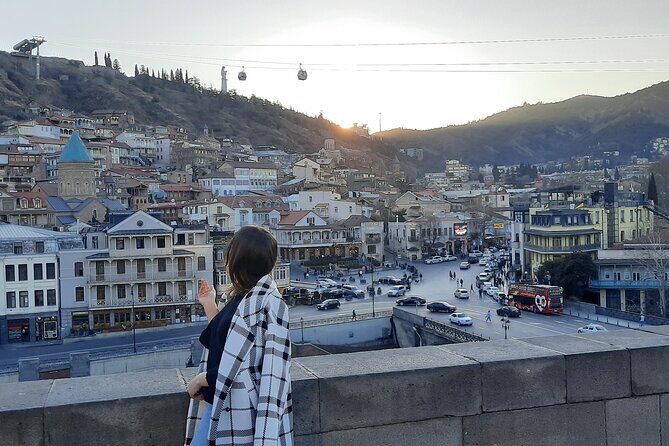
- Bridge of Peace at the end: a memorable crossing, not just another bridge
- What kind of traveler this tour fits best
- Should you book Old Tbilisi Walking Tour & Wine Tasting?
- FAQ
- How long is the Old Tbilisi walking tour?
- What does the tour cost?
- Is the tour private?
- What language is the tour offered in?
- What’s included in the price?
- What isn’t included?
- Do I need to pay for any admissions?
- Where does the tour start and end?
- What happens if weather is poor?
Key points to know before you go
- Nino-style storytelling connects sights you’d otherwise skim past.
- Old Tbilisi highlights in one pass: churches, baths, fort views, and key bridges.
- Wine tasting is included, so plan to pace yourself and sip slowly.
- Most stops are free to enter, but the Narikala cable car is $1 USD extra.
- Private tour format means it’s just your group on the route.
- English language tour keeps the facts and context clear the whole time.
What you’re really buying: a guided Old Tbilisi route plus wine
At $114.39 per person for about 2 hours 25 minutes, you’re paying for two main things: a live guide service and a wine tasting included in the experience. The itinerary also leans heavily on stops with free admission, so you’re not stacking ticket costs on top of the price.
Think of it like this: you’re not just collecting photos. You’re getting explanations for why each place matters, from royal-era landmarks to the city’s sulfur-bath culture. And because it’s a private tour, the pace tends to feel more like a “walk and talk” than a group herd.
You can also read our reviews of more walking tours in Tbilisi



Price and value: where the extra money shows up
Let’s be real about spending. The biggest add-on I see is the cable car to Narikala Fortress, listed as $1 USD per person. Everything else in the stop list shows free admission at most of the key viewpoints and churches.
Also, coffee/tea is not included. If you’re the type who stops for a quick drink mid-walk, budget a little for that. Wine tasting is part of the tour price, so you don’t need to plan another paid activity.
Meet in Avlabari: how the route feels in real life
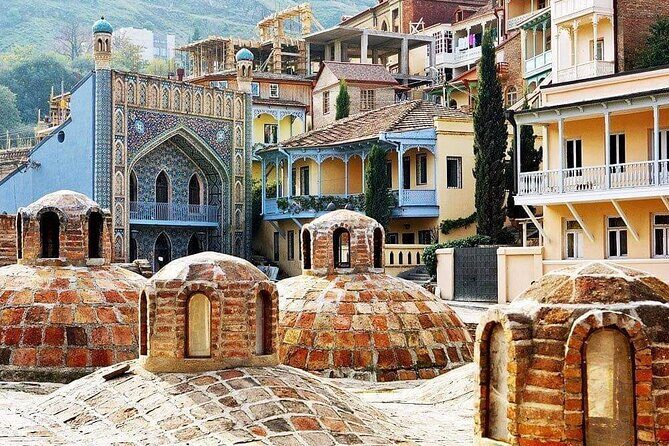
The tour starts in Avlabari, Tbilisi, and ends back at the same meeting point. That matters because you don’t have to worry about arranging a second ride home or navigating alone across town.
The flow is also smart for a first visit: it moves from elevated viewpoints and landmark churches down toward the city center rhythms—bazaars, famous streets, and the bread-and-merchant legacy tied to the Silk Road era. You’ll also hit a mix of “look from here” stops and “walk through this quarter” stops, so you don’t feel like you’re trapped in a single kind of scenery.
Metekhi Cathedral to Rike Park: royal legends and a modern symbolism stop

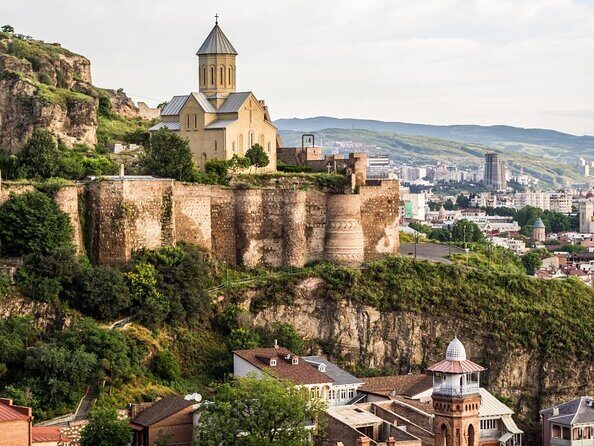
You start at Metekhi Cathedral, a palace church from the 13th century. This is one of those places where the setting does half the work: you’ll hear stories about the founding of the city, plus details about great kings and queens. The walk also gives you a sense of how the royal side of Tbilisi sits right in the middle of today’s scenery—there’s even talk of the palace of King Erekle and a statue tied to the city’s founder.
Then you move to Rike Park, where the tour shifts from medieval to modern symbols. You’ll see a part of the Berlin wall, and you’ll connect it to its symbolism. After that, you’ll explore interesting modern sculpture and head toward the teleferic area. It’s a quick pivot, but it helps you see Tbilisi as a city that keeps layers moving—old foundations, new interpretations.
Practical note: these first stops are scenic, but they can also be a little exposed depending on weather, so dress for wind and temperature swings.
Narikala Fortress by cable car: the $1 view that’s worth it
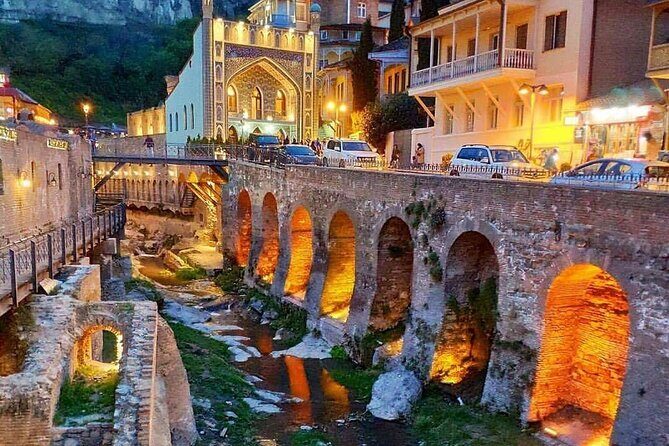
Next comes Narikala Fortress. You’ll climb up using a cable car (cost: $1 USD per person, not included). This is the part of the tour where the effort turns into payoff—fort views over the city are the kind of thing that makes the whole walk feel “worth it.”
Inside the fortress, you’ll learn the history of the site and explore it from within, not just stand outside. You’ll also see the statue of Mother of Georgia, a strong visual anchor for understanding how Tbilisi narrates identity through monuments.
If you’re deciding whether to pay the $1: I’d treat it as part of the experience design. Even in a short tour, the cable car keeps you from turning the day into a full-on staircase workout.
You can also read our reviews of more food & drink experiences in Tbilisi




Legvachtahvi Gorge and Sulfur Bath No 5: where the city smells like a story
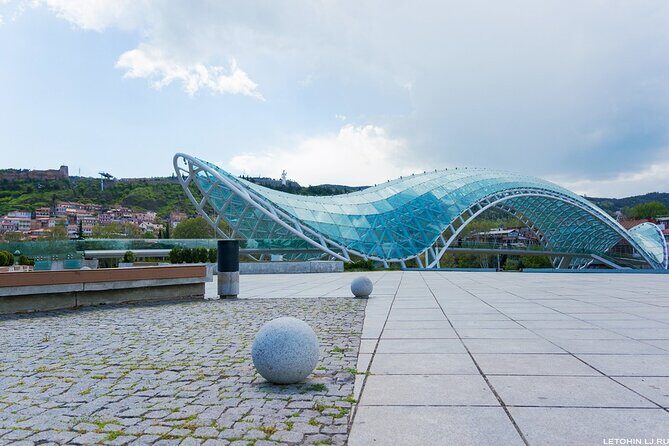
From the fortress, you move toward Legvachtahvi Gorge, passing through what’s described as a fig gorge. The key detail here is the waterfall flowing in the center of the city. That kind of water-in-the-middle feature is exactly what makes Tbilisi feel different from other old capitals—nature isn’t only in the distance.
Then you step into the sulfur baths quarter, stopping at Sulfur Bath No 5. This is one of my favorite types of city experiences: not a museum, not a viewpoint, but a living tradition. The guide will explain what makes these baths unique and share which celebrities have visited them at different times.
Even if you don’t go inside a bath facility today, you still get the context—why this quarter became important, why the sulfur element matters, and why people keep returning. It’s one of the most “Georgia-feels-like-Georgia” stops on the route.
Meidan Bazaar and Sharden Street: authentic streets and table traditions
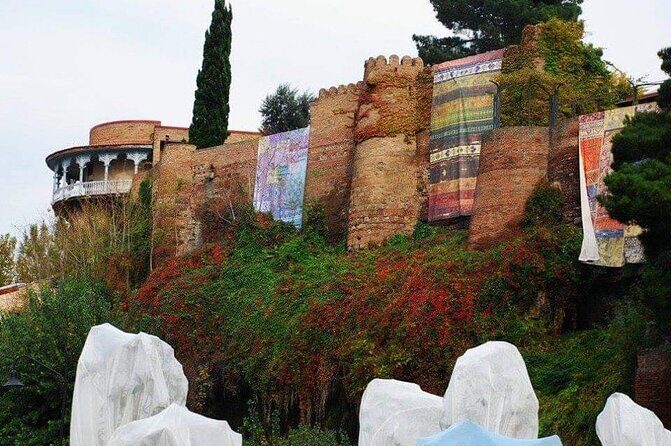
After the baths, the tour turns into a city-life walk. You head toward Meidan Bazaar, moving along Meidan street and visiting Maidan Bazar, described as an authentic place.
The explanation here isn’t just about what you’re looking at. You’ll learn what some streets in old Tbilisi were called and what they were related to—how daily life and city layout used names that carried meaning. This is the kind of detail that helps you understand a city without needing a textbook.
From there it’s over to Jan Shardeni Street (often called Sharden Street). This is where the walk becomes more about atmosphere: you’ll see a corner associated with Georgian designers, and you’ll get acquainted with traditions of the Georgian table. I like this because it nudges you toward cultural literacy. You start to notice how meals, hospitality, and craft fit into everyday identity.
Silk Road merchants, old bread, and two early Christian stops
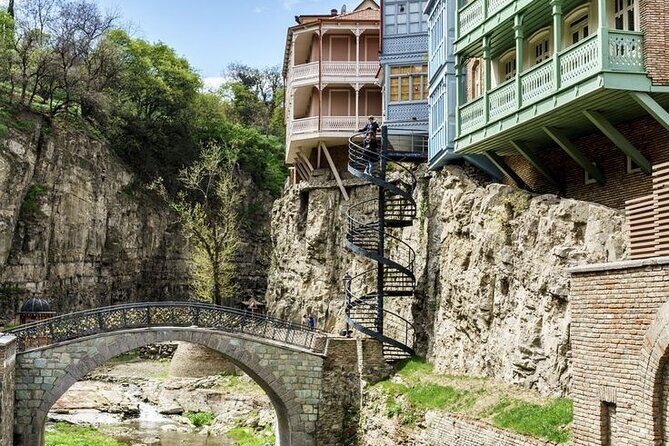
The tour keeps pulling threads forward with a stop at Karvasla Shopping Mall & Business Center. That sounds modern, but the guide story connects it to the big historical idea: the Silk Road passed through Tbilisi, and you’ll hear about the merchant stopovers tied to caravan life. You’ll also see buildings associated with those merchants.
One detail that makes this stop practical and memorable is the mention of the oldest Georgian traditional bread bakery nearby. Even if you just glance in and keep walking, it gives you a real anchor—Tbilisi wasn’t only trade and theology. It was also ovens, flour, and daily bread.
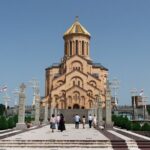
Then you move into spiritual landmarks. You’ll visit Sioni Cathedral Church, where you’ll hear stories about St. Nino and the Christianization of Georgia. The focus is narrative: who, why, and how belief spread into the fabric of the country.
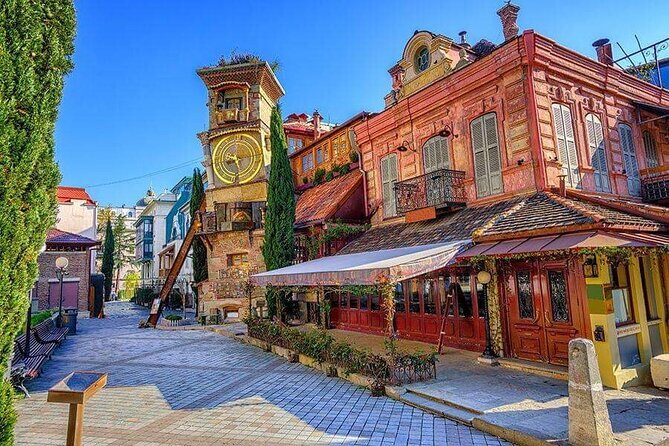
You’ll also stop at Anchiskhati Basilica, described as the oldest church in Tbilisi, and then take in the nearby Anchiskhati theater tower. This pairing works well because it shows how old religious space shares the city stage with other cultural landmarks.
Bridge of Peace at the end: a memorable crossing, not just another bridge
To wrap things up, you cross the Bridge of Peace. You’ll hear the history of its founding and why it was named Peace Bridge. Then comes a detail that adds personality: you’ll learn what message the bridge sends during the night hours.
I like finishing with something like this because it’s a clean emotional punctuation mark. You’re not ending at a parking lot and a straight line home. You end with a landmark that carries meaning, visible even if you don’t read it like a scholar.
What kind of traveler this tour fits best
This tour is a smart choice if you want:
- A first-time, high-clarity introduction to central Tbilisi.
- A walk that includes both major landmarks and local-feeling corners (bazaars and bath quarters).
- A guide-led experience in English, especially if you enjoy explanations that connect the dots.
It may be less ideal if:
- You dislike walking on uneven old-street surfaces.
- You want fully ticketed, timed museum stops with guaranteed indoor time.
- You’re hoping everything is included without any extra costs; the Narikala cable car is an add-on.
Should you book Old Tbilisi Walking Tour & Wine Tasting?
I’d book it if your priority is a guided route that helps you understand Tbilisi, not just skim it. The value math looks good: wine tasting and guide service are included, most admissions in the stop list are free, and only the Narikala cable car costs extra.
Also, if you’re the kind of traveler who likes city stories—founding legends, St. Nino, sulfur bath culture, Silk Road merchant life—this tour gives you those threads in a compact time window. Add the Peace Bridge ending, and you get a satisfying arc from old faith and royal power to modern city meaning.
If you do go: wear comfortable shoes, keep a little cash ready for the $1 cable car, and sip the wine tasting slowly. This is one of those days where the best souvenirs are the ones you remember after the walk is over.
FAQ
How long is the Old Tbilisi walking tour?
It runs about 2 hours 25 minutes.
What does the tour cost?
The price is $114.39 per person.
Is the tour private?
Yes. It’s private, so only your group participates.
What language is the tour offered in?
The tour is offered in English.
What’s included in the price?
Wine tasting and guide service are included.
What isn’t included?
Coffee and/or tea aren’t included. The cable car to Narikala Fortress costs $1 USD per person.
Do I need to pay for any admissions?
Most stops list admission as free. The Narikala cable car is the paid extra mentioned ($1 USD per person).
Where does the tour start and end?
It starts in Avlabari, Tbilisi, Georgia, and ends back at the same meeting point.
What happens if weather is poor?
The experience requires good weather. If it’s canceled due to poor weather, you’ll be offered a different date or a full refund.