REVIEW · TBILISI
Mtskheta, Gori, Uplistsikhe Guided Tour
Book on Viator →Operated by GabriTravel - Tour in Georgia · Bookable on Viator
That river-view moment hits fast. This guided day trip links Georgia’s spiritual beginnings with daily life in a cave-fortress and the heavy shadow of Soviet power—without you having to organize a thing. I really like that the early stops (Jvari and central Mtskheta) are free to enter, so your day starts with big-ticket sights and low friction. I also like how the tour keeps you moving efficiently in an air-conditioned vehicle, then slows down where it matters most: at the churches and at Uplistsikhe. One thing to consider is that lunch and the two major paid entrances (Uplistsikhe and Stalin Museum) add cost, and the lunch stop is not universally loved.
You’ll start with Jvari Church’s famous viewpoint over Mtskheta and the confluence of the Mtkvari and Aragvi rivers, then move to Georgia’s first capital for the Svetitskhoveli Cathedral complex. Later comes Uplistsikhe, a fortress-city carved into volcanic rock, followed by the Stalin House-Museum in Gori. On past departures, guides such as Jimmy and Russalina have impressed people by turning the long day into an easy story you can actually follow, plus practical tips (including where to find good wine after the tour). The possible drawback: the tour includes lunch at a specific restaurant, and at least one guide run has drawn complaints about price and quality.
In This Review
- Key Highlights You’ll Actually Feel
- Getting Oriented: What This Mtskheta–Gori Day Really Covers
- Jvari Church: The Viewpoint That Explains Mtskheta
- Mtskheta First Capital Walk: Svetitskhoveli’s Meaning (Not Just the Building)
- Strolling Uplistsikhe Cave City: Streets and Temples Carved from Volcanic Rock
- Gori’s Stalin House-Museum: Personal Artifacts and the Armored Rail Car
- Price and Logistics: Where Your Money Goes
- Lunch Reality Check: How to Handle the Restaurant Stop
- Guides Can Make or Break a Long Day
- Who Should Book This Tour (and Who Might Not)
- Should You Book the Mtskheta, Gori, Uplistsikhe Tour?
- FAQ
- Where does the tour start and end?
- Is this tour offered in English?
- What’s included in the price?
- What costs are not included?
- How long is the tour?
- What if weather is bad?
Key Highlights You’ll Actually Feel
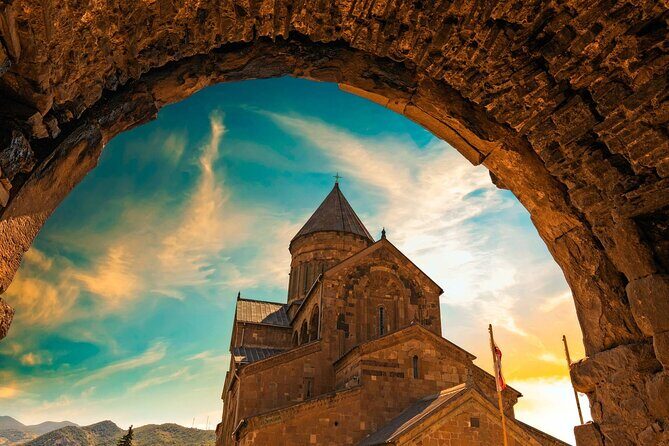
- Jvari’s river-junction viewpoint: the skyline moment for Mtskheta starts here.
- Free church/cathedral time: you get major sites without ticket pressure in the early half.
- Uplistsikhe carved-into-volcano ruins: you walk streets, squares, and temple remains cut from rock.
- Stalin Museum in Gori: not just photos—expect personal artifacts plus the armored railway carriage.
- Small group size (max 18): easier questions, less crowding at stops.
- English-friendly guiding: your guide works in English, with good on-the-ground explanations.
Getting Oriented: What This Mtskheta–Gori Day Really Covers
This is a classic “outer Tbilisi” day: churches and relics in Mtskheta, a cave city in Uplistsikhe, then a Soviet-era deep-spot in Gori. The timing is long on paper—about 9 to 10 hours—but it’s not a nonstop sprint. You spend real time at the key places, and the travel between them totals roughly three hours for the day’s driving.
The tour is priced at $19.50 per person, and that base price covers the guided experience and the air-conditioned vehicle. You bring a bit more money for what’s not included: lunch (about 20–30 GEL) and entrance fees for Uplistsikhe and the Stalin Museum ($6.50 each). Even after adding those, you still end up with a full guided loop that’s hard to replicate cheaply if you’re booking all transport and entrances yourself.
If you’re the type who likes your history straight and practical—what you’re seeing and why it mattered—this kind of route usually works well. If you’re picky about lunch quality, plan to be flexible. One restaurant stop has received negative feedback, so I’d treat it as a “fuel up” moment, not the culinary highlight of Georgia.
You can also read our reviews of more guided tours in Tbilisi


Jvari Church: The Viewpoint That Explains Mtskheta
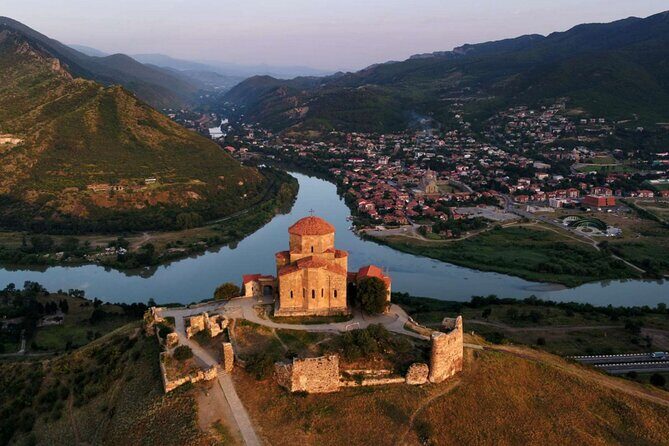
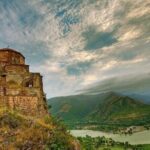
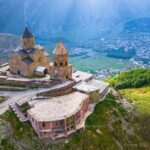
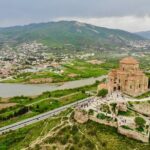
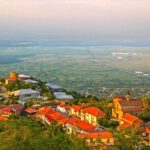
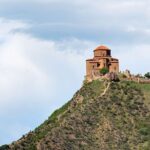
Jvari Monastery is where the tour earns its early wow-factor. You’re going up for one hour, and the payoff is a commanding view over Mtskheta and the confluence of the Mtkvari and Aragvi rivers. This is the kind of geography that makes history feel real. From up here, you can see why religious leaders and communities would care about this exact spot.
The monastery also ties directly into the story of Georgian Orthodox Christianity. It’s described as the birthplace of Georgian Orthodox Christianity, which means your visit is more than a scenic stop. You’re not just looking at stone—you’re looking at a place with major spiritual weight.
Practical note: Jvari can be a “stand and stare” place in a good way. Wear shoes you can trust on uneven ground, and give yourself a moment to pause before your guide starts the deeper explanation. That quiet minute makes the rest of the day easier.
Mtskheta First Capital Walk: Svetitskhoveli’s Meaning (Not Just the Building)
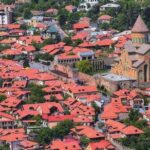
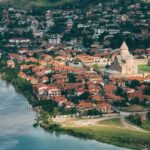
After Jvari, you head into Mtskheta, the city framed as Georgia’s first capital and religious center. You’ll get about 40 minutes here, and you’ll hear the story of why Mtskheta mattered long before it became a day-trip destination.
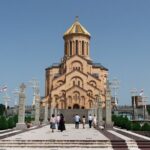
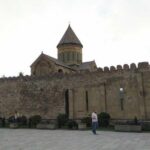
The highlight is the Svetitskhoveli Cathedral complex. This is where you’ll spend time at the main attraction—Svetitskhoveli Cathedral—with the element that the tour points out clearly: the chiton of Christ is located here. That single detail is why Svetitskhoveli gets visitors who might not even know much about Georgian history yet. It’s also why the guide’s narration matters. Without context, a cathedral is “just a cathedral.” With context, you understand the reverence and the stakes.
You’ll have an additional 30 minutes focused on the cathedral itself. So you’re not rushing through with a quick photo and a goodbye. Instead, the tour gives you a two-step rhythm: city story first, then the cathedral experience.
What I like about how the tour handles this stop is that it treats meaning and time as equals. You’re not only passing through. You’re learning how to read the place: what’s sacred here, why people care, and what this city has carried for centuries.
Strolling Uplistsikhe Cave City: Streets and Temples Carved from Volcanic Rock
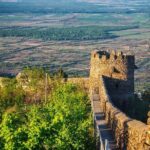
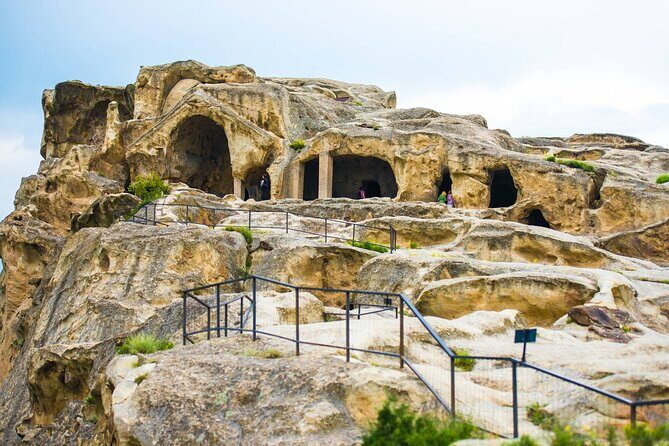
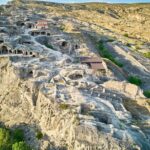
Uplistsikhe is the big physical contrast in the itinerary. The tour describes it as a cave city—an ancient fortress carved into volcanic rocks. You’ll have about 1 hour 30 minutes total for the stroll, and it’s time well used because the site is easier to understand when someone helps you connect the ruins to daily life.
Here’s what you can expect to see during the walk:
- remains of ancient temples
- houses and streets
- squares and open areas
That last bit—squares and streets—matters. It’s not only “cool caves.” It’s the idea of a working community shaped by rock. You start to picture how people moved, met, worked, and prayed inside the walls of a carved fortress.
A small-but-real planning detail: Uplistsikhe’s entrance fee is not included, priced at $6.50 per person. So when you budget, treat this as a planned extra rather than an accidental surprise.
Also consider comfort. Even though the tour describes it as a stroll, you’ll likely be on uneven stone surfaces. Bring shoes that handle rock without wobbling. And if you’re sensitive to heat, aim to hydrate early—this part of the day can feel longer when the sun hits exposed rock.
Gori’s Stalin House-Museum: Personal Artifacts and the Armored Rail Car
Then the mood shifts. Gori’s Stalin House-Museum is not gentle. It’s a different kind of history—one built around power, propaganda, and personal narrative.
You’ll spend about 1 hour here, and the tour frames the visit as a chance to see where Stalin was born and lived. More than that, it highlights his personal belongings and the armored railway carriage he used. That armored rail detail is important because it turns Stalin from a distant name into an object you can picture moving through landscapes and political eras.
The entrance fee for the Stalin Museum is also not included: $6.50 per person. So, like Uplistsikhe, this is another part of the trip you should plan to pay for up front.
I find museum stops like this work best when you keep your expectations grounded. This tour isn’t trying to settle debates—it’s giving you the site, the artifacts, and enough guidance to understand what you’re looking at. If you like history that includes uncomfortable angles, you’ll probably appreciate the directness.



Price and Logistics: Where Your Money Goes
Let’s talk value in plain numbers. The tour costs $19.50 per person and includes:
- guided experience
- air-conditioned vehicle
- mobile ticket
- English offered
What you should add:
- lunch: 20–30 GEL (not included)
- Uplistsikhe entrance: $6.50 per person (not included)
- Stalin Museum entrance: $6.50 per person (not included)
So your “all-in” day is typically your base fee plus about $13 in entrances, plus lunch. I like this pricing structure because the early church/cathedral stops are free, so you’re not paying for everything you see. Your money is focused on the two heavier-ticket sites and your meal.
Timing-wise, yes, it’s a long day: roughly 9 to 10 hours. But the tour helps you avoid the most exhausting part—figuring out connections and timing. You’re not hopping between taxis and ticket counters. One vehicle, one guide, one plan, and a group capped at 18 travelers so it doesn’t feel like herding cats.
One more logistics detail you’ll appreciate: the day starts at 8:45 am at 5 Samghebro St, Tbilisi, and it returns you to the same meeting point. That’s a big deal if you don’t want the stress of a last-minute end-of-day commute.
Lunch Reality Check: How to Handle the Restaurant Stop
Lunch is part of the Uplistsikhe segment, and the tour includes a stop at a local restaurant for traditional Georgian food. The price range you’ll face is 20–30 GEL.
Here’s the honest balance: one strong review praised the lunch as among the best food they had for the entire trip. Another pointed out a problem—driven to a mediocre place with high prices.
So my advice is simple:
- Go in hungry and open-minded, because the food can be excellent on some days.
- If you care a lot about value, look at the menu before ordering and compare portions and prices.
- If you love wine, ask your guide where to buy good Georgian wine after the tour. Some guides (like Jimmy on past runs) have given very practical recommendations.
If lunch disappoints, you haven’t ruined the day. The core sights here are strong enough that your afternoon and evening plans can still be great.
Guides Can Make or Break a Long Day
This is a guided route, and Georgia rewards good guiding. When the narration is clear, each stop becomes a chapter. When it’s not, you’re left juggling dates and place names.
On past departures, guides including Jimmy and Russalina have earned high marks for being entertaining and knowledgeable, and for keeping the day flowing smoothly. Russalina, in particular, has been described as especially good at connecting with the group and making the time feel special.
Even if your guide isn’t the same person, the best sign is that the tour is designed for English-speaking guests with enough context to help you understand what you’re seeing—especially around the cathedral relic focus and the Uplistsikhe daily-life theme.
Who Should Book This Tour (and Who Might Not)
I think this tour fits best if:
- You want a guided introduction to the region around Tbilisi without planning logistics.
- You like a mix of religious history, archaeology ruins, and 20th-century political history in one day.
- You can handle a long day and some walking over uneven stone at cave and museum sites.
You might look elsewhere if:
- You’re very sensitive to lunch quality and hate structured meal stops.
- You want more free time at fewer sites (this plan is tightly sequenced).
- You don’t enjoy museums with politically heavy themes.
One positive for flexibility: the tour says most travelers can participate. And with group size capped at 18, you’re less likely to feel rushed or lost.
Should You Book the Mtskheta, Gori, Uplistsikhe Tour?
If you’re visiting Georgia for the first time and you want the “big story” around Tbilisi—church roots, ancient urban life in volcanic rock, and a look into Stalin’s world—this is a smart booking. The $19.50 base price is a solid deal when you compare it to the guided day-trip coverage you’d otherwise arrange. Add in that the early top sights in Mtskheta are free to enter, and you get great bang for your money early on.
Just go in with two expectations:
- Bring budget for Uplistsikhe, Stalin Museum, and lunch.
- Treat lunch as possible good food, not guaranteed perfection.
With those in mind, you’ll finish the day feeling like you actually understand why Mtskheta, Gori, and Uplistsikhe matter—plus you’ll have scenery (Jvari’s viewpoint) and ruins (Uplistsikhe’s carved streets) that stick in your head.
FAQ
Where does the tour start and end?
It starts at 5 Samghebro St, Tbilisi, Georgia at 8:45 am and ends back at the same meeting point.
Is this tour offered in English?
Yes. The tour is offered in English.
What’s included in the price?
The price includes an air-conditioned vehicle and the guided experience, with a mobile ticket provided.
What costs are not included?
Lunch is not included (about 20–30 GEL), and you’ll also need to pay entrance fees for Uplistsikhe ($6.50) and Stalin’s Museum ($6.50).
How long is the tour?
Plan on about 9 to 10 hours total.
What if weather is bad?
This experience requires good weather. If it’s canceled due to poor weather, you’ll be offered a different date or a full refund.