REVIEW · TBILISI
Gori-Uplistsikhe Mtskheta-Jvari one Day private Tour
Book on Viator →Operated by Travel To Georgia · Bookable on Viator
Rock-cut caves, a dictator’s birthplace, and two UNESCO churches in one run can sound heavy, but this route stays manageable. What makes it work is the mix of history you can see (Uplistsikhe’s carved spaces) and major Georgian faith sites (Mtskheta and Jvari), with enough breaks to keep the day from dragging.
I really like that it’s a private group tour for up to 4, so you’re not stuck with a big crowd pace. You also get air-conditioned car time between sights, plus bottled water. Another highlight is how the day is structured to keep you moving without sprinting—Uplistsikhe gives you the kind of “walk, look, climb a bit” activity that feels like real sightseeing, not museum-bus fatigue.
One thing to consider: you should have a moderate fitness level. Uplistsikhe is on stone and uneven ground, and the churches sit on hills, so comfortable shoes matter.
In This Review
- Quick hits: what stands out
- Why this one-day loop works from Tbilisi
- Pickup and pacing: timing that keeps you from burning out
- Uplistsikhe: the rock-cut fortress city you can actually wander
- Lunch in Gori: a simple reset before the big monuments
- Stalin Museum in Gori: disturbing, but structured and memorable
- Svetitskhoveli Cathedral (UNESCO): where relics shape the architecture
- Jvari Monastery (UNESCO): the hilltop finish with river confluence views
- The private-guide experience: comfortable, informed, and not pushy
- Price and value: $185.49 per group (up to 4)
- Who this tour suits best (and who may want a different plan)
- Should you book this tour?
- FAQ
- What is the total duration of the Gori–Uplistsikhe–Mtskheta–Jvari tour?
- How many people can be in the group?
- Is pickup included?
- Are tickets included for the stops?
- What is included in the tour price besides transportation?
- Is lunch included?
- Is the tour physically demanding?
- Can I cancel and get a full refund?
Quick hits: what stands out
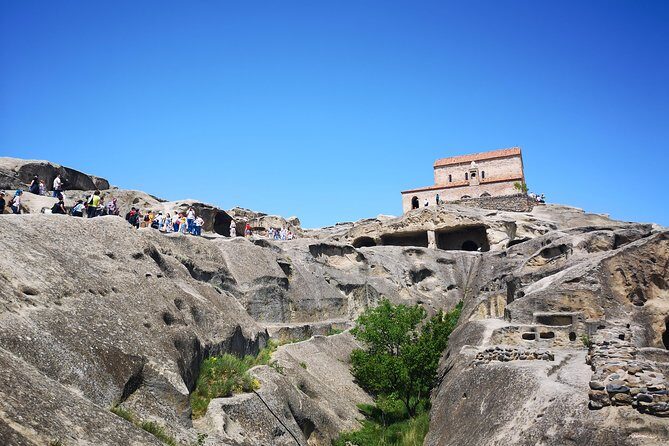
- Uplistsikhe’s rock-cut “fortress” city with both pagan and Christian architectural traces
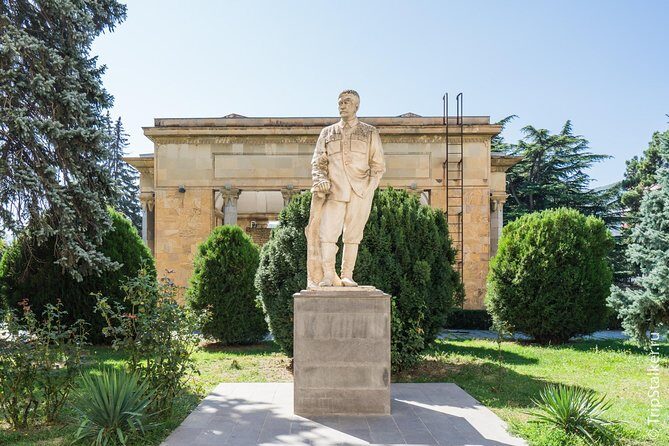
- Gori’s Stalin Museum plus nearby preserved birthplace under a stone canopy
- Svetitskhoveli Cathedral (UNESCO) tied to Christ’s robe and other sacred relics
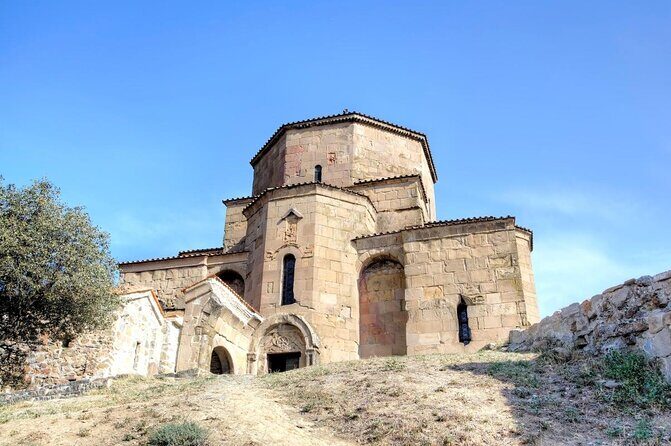
- Jvari Monastery (UNESCO) perched above the rivers where you get a classic view angle
- Private pacing for up to 4 with air-conditioned comfort and bottled water
Why this one-day loop works from Tbilisi
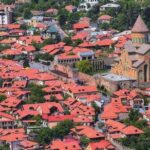
This is a smart day plan because it focuses on places that belong together geographically and thematically. You start in Gori, then head into Mtskheta and Jvari, the heartland of ancient Georgia’s religious story. Instead of hopping randomly, you’re basically following a thread: ancient cities and trade routes, then the Christian era that reorganized power, memory, and architecture.
I like that the stops aren’t all the same style. Uplistsikhe is rock-hewn and tactile; the Stalin Museum is more theatrical and interpretive; Svetitskhoveli and Jvari are spiritual and architectural. That variety is what keeps a long day feeling interesting. You get enough time at each stop to actually look, not just pose and rush out.
You also avoid the most common “day trip trap”: too many stops with too little context. Here, each place has a clear role in the story—Uplistsikhe as an ancient center, Gori as a political and personal landmark, Mtskheta and Jvari as the religious climax.
You can also read our reviews of more private tours in Tbilisi


Pickup and pacing: timing that keeps you from burning out
The tour starts around 9:00 am, and your first major arrival is Uplistsikhe at 11:00 am. That’s a good window. You’re not arriving so early that you waste time waiting, and you’re not arriving so late that the light and energy feel gone.
The day is built around practical blocks:
- 2 hours at Uplistsikhe
- about 1.5 hours for lunch time in Gori
- a 1-hour museum visit (with an option for extra free time in Gori)
- then roughly 1 hour each for Jvari and Svetitskhoveli
The payoff is that you’re not constantly in “get in, get out” mode. Even with a full itinerary, it’s paced like a real day out, which is exactly what you want when you’re trying to see a lot without turning it into a chore.
One more practical note: you’ll be spending time outside at at least one stop, and you’ll climb and walk at others. Bring comfortable shoes and dress for a bit of movement.
Uplistsikhe: the rock-cut fortress city you can actually wander
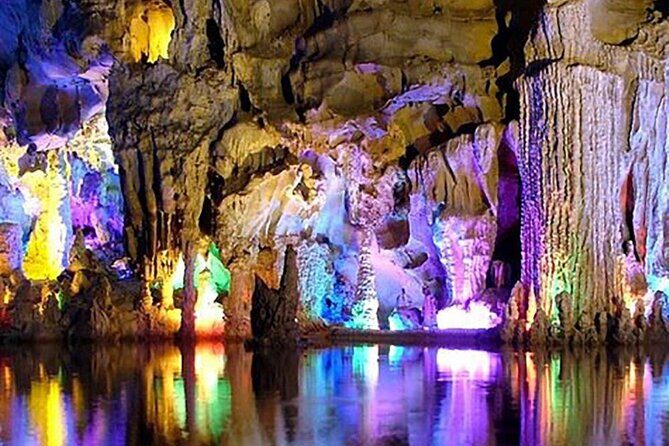
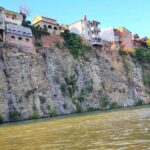
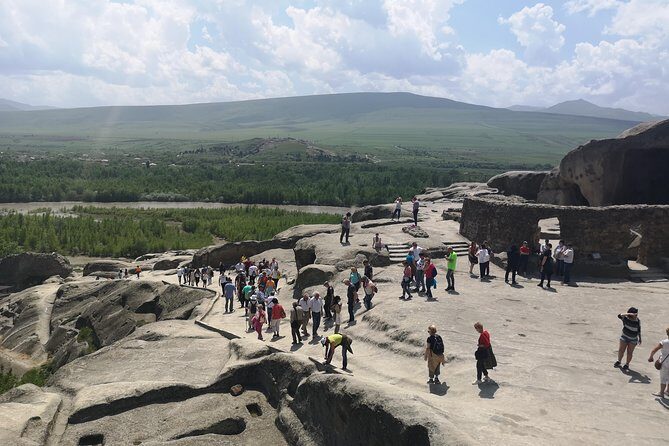
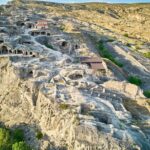
Uplistsikhe is the kind of place that makes your brain switch from reading history to walking through it. It’s a rock-hewn site on the left bank of the Mtkvari River, and the big draw is that you’re moving through structures that span an extremely long timeline—early Iron Age into the Middle Ages.
What I like most is the mix of influences. The site is known for an unusual combination of rock-cut styles linked to Anatolia and Iran, and you also see the coexistence of pagan and Christian architecture. In plain terms: you don’t just get ruins that look ancient; you get a sense of how cultures layered over each other.
You’ll want to take your time, because Uplistsikhe rewards slow looking. The stone spaces change in shape and mood as you move, and it helps to have a guide (or at least the audio story they provide) to point out what you’re seeing.
Possible drawback? You’re on uneven surfaces and stone steps. This isn’t a sit-and-watch kind of site. If your goal is mostly photos with minimal walking, you might find it more strenuous than you expect. If you like active sightseeing, you’ll likely enjoy it more than you thought.
Lunch in Gori: a simple reset before the big monuments
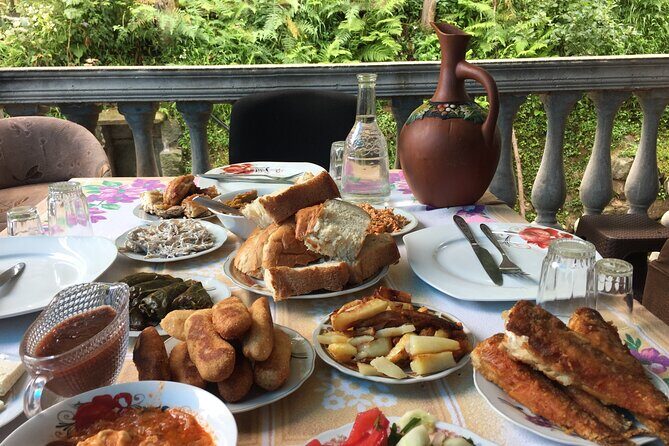
You’ll reach Gori for lunch around 1:00 pm, and you’ll have about 1.5 hours. Meals aren’t included in the tour price, even though lunch time is built into the plan—so you’re basically getting a guaranteed stop plus time to eat and recharge.
This matters more than it sounds. When you’re doing Uplistsikhe plus major churches after, lunch becomes your energy management. Use the break to refuel with something local and not-too-heavy, then you’ll feel ready for the more emotionally charged stops ahead.
If you’re the type who likes to keep your day smooth, you’ll also appreciate that you’re not trying to navigate a new town while hungry. The tour handles the timing; you just focus on eating.
Stalin Museum in Gori: disturbing, but structured and memorable
Gori’s Stalin Museum is a very specific kind of experience. It features staged, “surreal” reconstructions of scenes from Stalin’s life, with items like photos, gifts, and period furniture. It’s not just a hallway of documents—it’s an atmosphere made to feel like a portrait of power.
One detail that adds weight is the nearby preserved birthplace area. The house where Stalin was born is protected under a stone canopy nearby, so you can connect the museum’s narrative to a physical place rather than treating it as pure interpretation.
You’ll spend about 1 hour here, and admission is included. That duration works well. It’s long enough to see the main displays without letting it become mentally exhausting.
Balance matters, though: this is a subject that’s uncomfortable for many visitors. The museum doesn’t shy away from its subject matter, and if you prefer lighter themes on vacation, you might want to mentally prepare for the tone. On the other hand, if you like understanding how political systems were packaged and felt to ordinary people, this is a strong stop.
A few more Tbilisi tours and experiences worth a look



Svetitskhoveli Cathedral (UNESCO): where relics shape the architecture
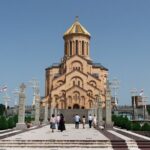
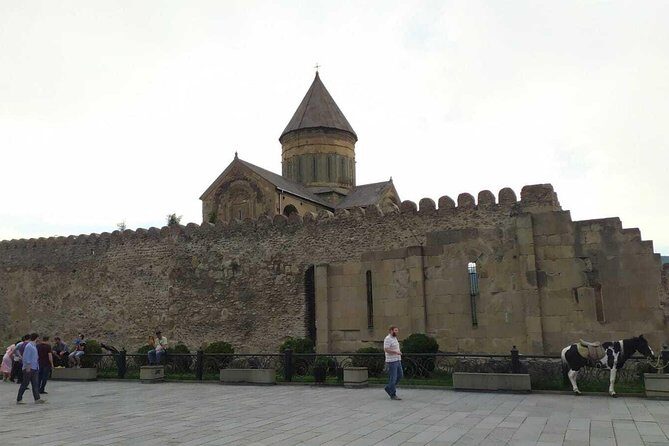
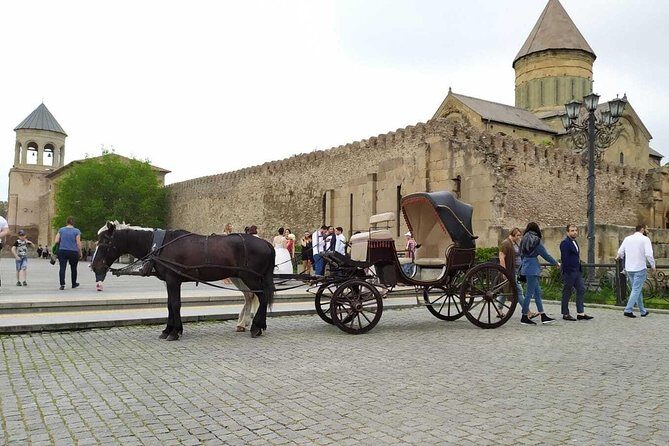
Next comes Svetitskhoveli Cathedral, an 11th-century UNESCO site and one of Georgia’s most sacred places. This is the kind of church complex that isn’t just about a single building. You’ll be looking at a larger religious complex that includes the church itself, plus structures like a gate, a bell tower, castles, and clerical residences.
What sets Svetitskhoveli apart is that it’s tied to famous relics. The cathedral is described as preserving the mantles of Christ and of the Prophet Elijah, and it also includes the tombs of King Vakhtang Gorgasali. Even if you’re not a “relic person,” this helps you understand why the site matters and why so much effort went into its presence and continuity.
You’ll typically have about 1 hour at the cathedral. I’d use that time in two ways: first, look at the structure and the layout; then shift your attention to the sacred objects and the meaning behind them. The building’s importance clicks when you treat it like a lived center of devotion, not just a monument.
Free admission here is a nice bonus, but the value is more than saving money. It means you can spend your energy on looking rather than tracking entry rules.
Jvari Monastery (UNESCO): the hilltop finish with river confluence views
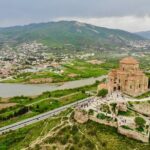
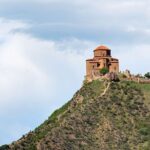
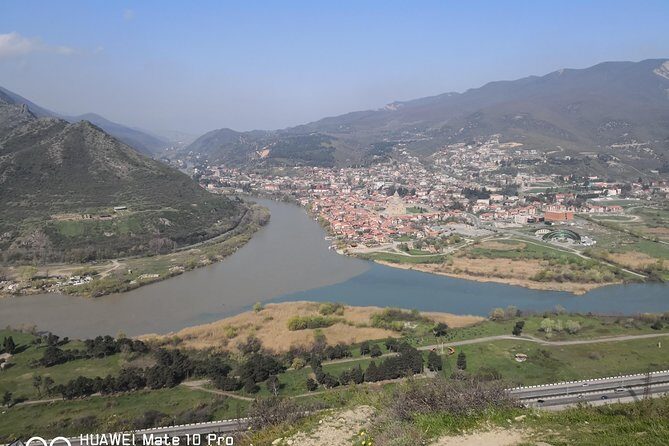
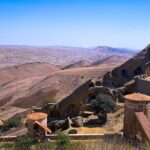
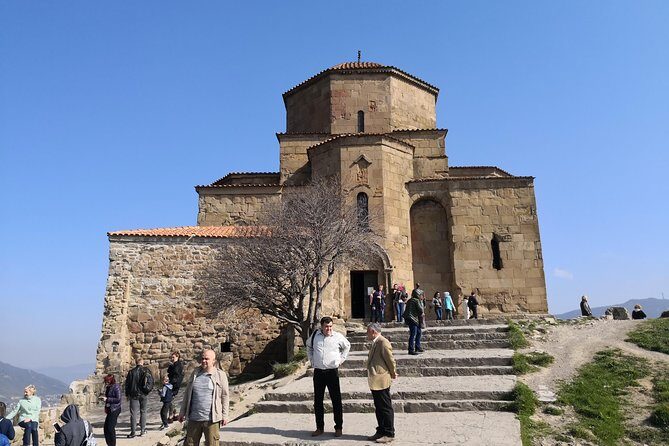
After Svetitskhoveli, you’ll head to Jvari Monastery, another UNESCO stop, associated with early Georgian Christian architecture. Jvari sits on a hill opposite Mtskheta, where the Aragvi and Mtkvari rivers meet—and that location is part of the experience. You’re not just visiting a church; you’re seeing why this spot became a spiritual symbol.
The story tied to the site is early and layered. After the adoption of Christianity, King Mirian III erected an enormous wooden cross on this site. Later, in the 6th century, Guaram, ruler of Kartli, built a small church beside the Holy Cross.
That timeline is helpful when you stand there. Jvari feels like a culmination—an end point of artistic and architectural aspirations rather than a random church on a route.
Expect about 1 hour here. You’ll likely spend some of that time just taking in the views and letting the setting settle in. If your legs are tired from Uplistsikhe, this hilltop stop can still be manageable, but take it slow and give yourself a few moments before you start climbing around for the best angles.
The private-guide experience: comfortable, informed, and not pushy
A major reason this tour tends to rate well is the human factor. In past outings, the guide David gets praise for making the day feel comfortable, with clear Russian explanations and a history talk style that stays friendly rather than overbearing.
That “not pushy” element matters on a day like this. When you visit politically heavy sites (like the Stalin Museum) and sacred sites (like Svetitskhoveli and Jvari), you want information that helps you understand, not lectures that drag. A good guide also helps you prioritize what to look for—especially at places like Uplistsikhe, where the stone spaces can otherwise feel confusing.
You also get practical comfort: an air-conditioned vehicle and private transportation. Add bottled water, and your headspace stays focused on the sights rather than logistics.
One more value point: private group tours up to 4 can be surprisingly efficient. Your pace matches your group, and you’re less likely to lose time waiting around.
Price and value: $185.49 per group (up to 4)
At $185.49 per group up to 4, this is priced like a true private tour, not a shared-bus experience. The value comes from what you’re not paying for indirectly: less time wasted, less crowd pressure, and a car that handles the between-stop distances while keeping everyone comfortable.
You also get included basics—bottled water, fuel surcharge, and admission ticket included for the Stalin Museum. Jvari and Svetitskhoveli are free in this plan, which helps the math feel fair.
What you should watch for is that lunch isn’t included (even though lunch time is scheduled). Plan on paying for your meal in Gori, and consider bringing a snack if you’re the type who gets hungry between sites.
If you’re traveling with family or friends and you want a structured day without wrestling the route on your own, this price can feel like a bargain. If you’re solo and comfortable navigating independently, it might feel more expensive—but the private pacing can still be worth it.
Who this tour suits best (and who may want a different plan)
This one-day itinerary is best for you if:
- you want a high-impact day with both ancient and modern political history
- you’re okay with moderate walking and uneven stone surfaces
- you like seeing places with context, especially when stepping from Uplistsikhe into Gori and then into UNESCO churches
It’s less ideal if:
- you need a low-movement day
- you strongly prefer only religious sites or only light cultural stops (because Stalin Museum is heavy by nature)
- you’d rather control every detail without a set schedule
Also, if you enjoy active sightseeing—places where you can explore stone rooms and see architecture up close—you’ll probably find Uplistsikhe to be a highlight rather than a chore. The “active recreation” aspect tends to make the day feel like you did something, not just where you went.
Should you book this tour?
I’d book it if you want one well-run day that stitches together Uplistsikhe, Gori, and Mtskheta’s two UNESCO anchors. The private size, air-conditioned transport, and guided-style storytelling (including the kind of Russian-language explanation associated with guide David) make the day feel smooth and thoughtful.
I’d only hesitate if you dislike uneven walking, or if the Stalin Museum topic feels too intense for your travel mood. In that case, you could still visit the churches and Jvari, but this specific package might be more than you want.
If your goal is a full taste of Georgia beyond Tbilisi—and you don’t mind a few hours of solid walking—this is a strong choice.
FAQ
What is the total duration of the Gori–Uplistsikhe–Mtskheta–Jvari tour?
It runs about 7 to 8 hours.
How many people can be in the group?
The tour is for up to 4 people per group.
Is pickup included?
Pickup is offered.
Are tickets included for the stops?
Stalin Museum has admission included. Jvari and Svetitskhoveli are listed as admission-free in this tour plan, and you’ll receive a mobile ticket.
What is included in the tour price besides transportation?
Included items are bottled water, an air-conditioned vehicle, private transportation, and fuel surcharge.
Is lunch included?
Lunch time is built into the day, but lunch itself is not included in the price.
Is the tour physically demanding?
It recommends travelers have a moderate fitness level, since you’ll be walking and moving through sites like Uplistsikhe and the monastery area.
Can I cancel and get a full refund?
Yes, you can cancel up to 24 hours in advance of the experience for a full refund.