REVIEW · TBILISI
Classic Tbilisi Walking Tour
Book on Viator →Operated by Georgian Holidays · Bookable on Viator
Tbilisi hits different at walking speed. This tour strings together the city’s big squares, stair-steep old streets, and a cable car ride up to Narikala Fortress, all with an English-speaking guide who helps you connect the dots from older layers of the city to the Soviet-era chapters. I especially liked how the route uses landmarks you can actually see (Freedom Square, Meidan Square, and the sulfur-bath area) instead of just passing through. One thing to plan for: churches on the route have dress requirements (headscarf for women, long trousers for men), so bring something you can wear comfortably.
You meet at Chronograph2 in Freedom Square at 10:00 am, then end in Abanotubani near the Monument Fountain with Falcon and Pheasant. It’s priced at $134 per person for about 3 hours, and while most stops don’t charge extra, the cable car is included—so your money goes toward a guided route plus the best view-time lift in town.
In This Review
- Key Points at a Glance
- Freedom Square: Your Easy Start in Sololaki
- Gudiashvili Square and the Walk Toward Kldisubani
- Betlemi Churches: Stair Climb, Big Views, and a 5th-Century Story
- Bridge of Peace: A Modern Bow Over the Mtkvari River
- Narikala Fortress by Aerial Cable Car: Views You’ll Keep Thinking About
- Abanotubani Finale: Sulfur Baths Area and the Meidan Square Feel
- Price and Value: What $134 Buys You (and What It Doesn’t)
- Guide Quality: Why the Tour Works Best With a Strong Host
- Getting Dressed and Walking Smart (Churches and Shoes)
- Who Should Book This Walking Tour?
- Should You Book the Classic Tbilisi Walking Tour?
- FAQ
- What time does the tour start?
- Where do I meet the guide?
- Where does the tour end?
- How long is the tour?
- Is the cable car included?
- Is the tour offered in English?
- Are there admission fees for the stops?
- What should I wear for the church stops?
- Does the tour run in bad weather?
- Is a mobile ticket used?
Key Points at a Glance
- Freedom Square to Sololaki: start with a clean intro to Tbilisi’s layout and recent street upgrades
- Kldisubani via Asatiani Street: a change of mood that helps you read neighborhoods, not just buildings
- Betlemi Churches + old Fire Temple remains: religious history with a practical, walkable viewpoint
- Bridge of Peace over the Mtkvari River: a modern photo stop that still feels grounded in the city
- Narikala Fortress by aerial cable car: included transport to historic heights and wide views
- Abanotubani finale near the baths: wrap up where you can keep exploring on your own
Freedom Square: Your Easy Start in Sololaki

You begin in the big civic heart of Tbilisi at Freedom Square, meeting at the Chronograph2 store at 10:00 am. This is a smart way to start because you’re placed right where the city’s main “directions” make sense. From here, the walk turns into a more local kind of sightseeing in Sololaki, with streets that are recently renovated.
I like this opening because it gives you something most first-day tours skip: context. You’re not just looking; you’re learning how the city organizes itself—where government-era energy sits next to residential streets and how that mix shapes the feel of a neighborhood. And since you start near the old city area, you also get an early rhythm going while the day is still calm.
Practical note: the tour’s listed as running in all weather. That usually means you’ll walk even if it’s gray or drizzly. Wear shoes you trust on uneven stone.
You can also read our reviews of more walking tours in Tbilisi
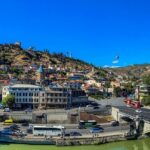


Gudiashvili Square and the Walk Toward Kldisubani

Next you reach Lado Gudiashvili Square, described as newly renovated. From there, you follow Asatiani Street toward the Kldisubani district. This portion matters because it’s a lesson in movement. Streets change character as you move—wide intersections to tighter lanes, more “public square” space to more residential, everyday textures.
You also get more than architecture. A good guide will point out how different eras leave signals. Even if you don’t think of yourself as a history person, this is one of those routes that teaches you to notice: the way buildings sit, the way streets funnel pedestrians, and how Soviet-era planning shows up in the feel of certain blocks and civic areas.
What I’d watch for here: where the crowd thins and where it thickens. Tbilisi is compact, but the vibe shifts quickly. If you’ve got a camera, this is a good window for street-level shots before you climb toward the fortress views.
Betlemi Churches: Stair Climb, Big Views, and a 5th-Century Story
Then the walk turns upward toward the Lower and Upper Betlemi Churches. The route is pedestrian and uphill, which means you earn your viewpoints without needing extra transport. Along the way, you’ll learn about an earlier layer of worship tied to the site: the remains of the Zoroastrian Ateshgah Fire Temple from the 5th century.
That’s a surprisingly powerful idea for a walking tour. You’re not only visiting one religious site—you’re seeing how one place can carry meanings across centuries. Even if you only catch parts of the story, you’ll still get the big picture: the city’s spiritual history didn’t happen in neat boxes. It stacked.
Dress code matters at church stops:
- women are expected to wear a head scarf and dress
- men should wear long trousers
If you forget, you might find places where you can adjust fast, but don’t count on it. I’d bring a lightweight scarf and plan your outfit before you leave.
Time tip: this stop includes about 30 minutes, which is enough time to look around, take a few photos, and get the viewpoint without feeling rushed.
Bridge of Peace: A Modern Bow Over the Mtkvari River
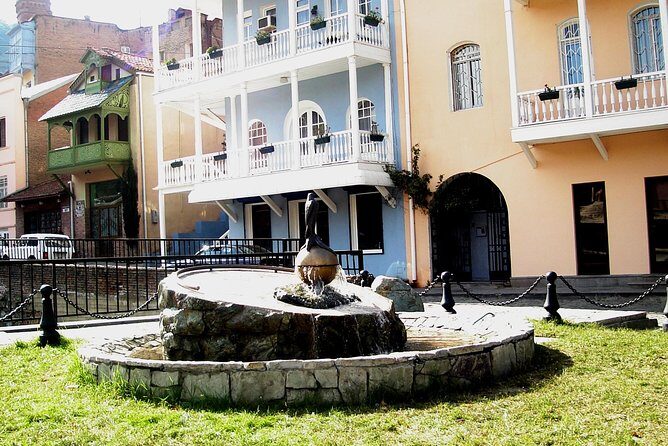
After the church viewpoints, you head to the Bridge of Peace—a contemporary pedestrian bridge shaped like a bow, built from glass and steel over the Mtkvari River.
This is one of those stops that could be “just a photo,” but it’s more useful than that when your guide explains how it fits into the riverfront and the city’s modern redevelopment. You get a calm walk and a clear river perspective without committing to a long day trip.
I like this bridge because it acts like a breather. You go from stairs and heritage sites to a straightforward, open space where you can reset your feet and focus on sightlines. Also, if the weather is clear, the river view makes it easier to understand why Narikala sits where it does.
Narikala Fortress by Aerial Cable Car: Views You’ll Keep Thinking About
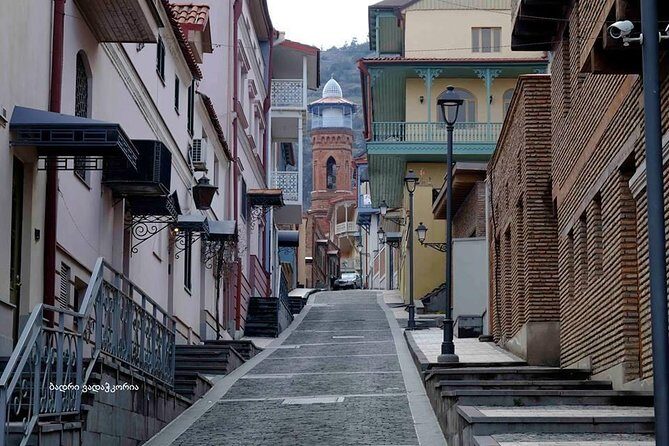
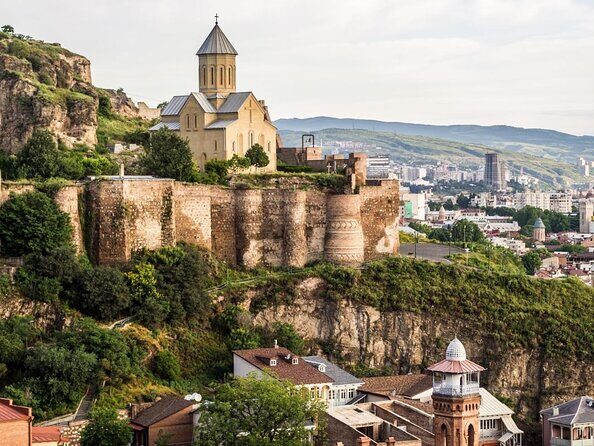
Now for the part that changes the whole day: you go to the aerial cable car station for the ride up to Narikala Fortress. The fortress dates back to the 4th century, and it’s set on the hill, so you get big angles on Tbilisi that you simply can’t get at street level.
Because the cable car ride is included, you’re saving both time and energy. You don’t need to find the best route up the hill yourself, and you avoid the “halfway there, still far” feeling that can happen when you hike to viewpoints without a plan.
This stop is about 1 hour, which I find is the right mix:
- long enough to walk a bit, look for the best views
- short enough that you’re not exhausted before the final descent
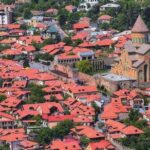
What to do during your hour: don’t just take one photo and move on. Spend a few minutes scanning for different angles—river views, older neighborhoods, and the spread of rooftops. Narikala is the kind of place where your brain starts building a map of the city.
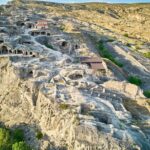


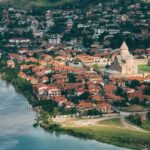

Abanotubani Finale: Sulfur Baths Area and the Meidan Square Feel
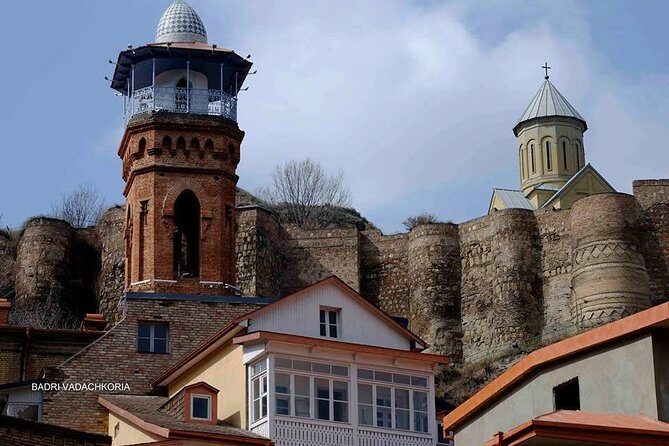
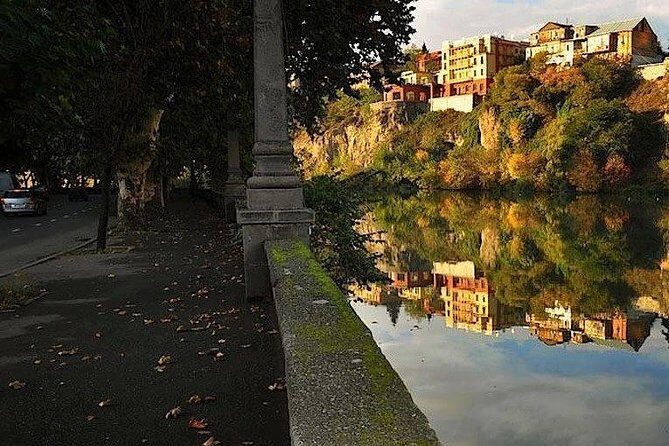
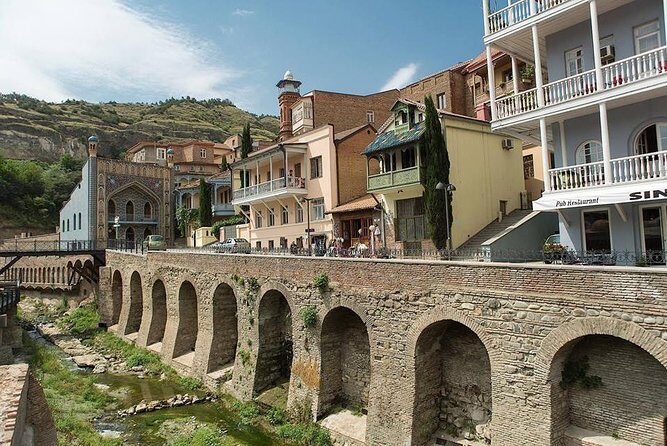
From Narikala, you go down toward the Sulfur Bathhouse area and end up near Meidan Square and the surrounding streets. The tour concludes in Abanotubani, by the Monument Fountain Falcon and Pheasant.
This ending is practical. Abanotubani is one of the most atmospheric areas in Tbilisi, and it’s also where you can decide what to do next without being stuck on a strict schedule. If you want to keep walking, you can. If you want to stop for a coffee, it’s easy. And if you’re curious about the baths themselves, you’re right there.
Time included here is about 30 minutes. That’s enough to take in the area and get your bearings. Think of it as a “landing” spot—finish the organized part and then choose your own pace.
Price and Value: What $134 Buys You (and What It Doesn’t)
At $134 per person, this isn’t a budget-only walk. So you need to judge value based on what you actually get, not just how many sights appear on the route.
Here’s what makes it feel worth it for many people:
- You get a professional guide, and the route is structured so you don’t waste time figuring out how neighborhoods connect.
- You get an included cable car ride to Narikala, which is the hardest “transport piece” to DIY efficiently.
- Most stop admissions are free based on the tour’s included notes, so you’re not repeatedly paying small entry fees across the day.
What you should plan to pay for separately:
- tips
- lunch (and generally any snacks if you get hungry)
- no hotel pickup or drop-off
- no vehicle service for attractions
- dinner
My take: if you’re visiting Tbilisi for the first time and want a route that covers major highlights without turning into a logistics project, the price starts to make sense. If you already know you’ll spend the day hopping between viewpoints on your own, you might feel the cost more.
Guide Quality: Why the Tour Works Best With a Strong Host
The tour’s success hinges on the guide, and the style here seems to be a good one. In particular, one guide named Eka has been described as friendly, engaging, knowledgeable, funny, and flexible with preferences. That’s the kind of guide who doesn’t just recite facts; she helps you steer the walk toward what you care about.
Even without naming the guide you’ll get, you can count on a core advantage: the tour is offered in English, and the guide’s role is to explain what you’re seeing, especially through the city’s different historical layers, including the Soviet-era imprint.
How to make the most of that: bring questions. Ask about why a square feels like a square, or how to read neighborhood shifts as you walk. With a good guide, those answers turn into faster, deeper sightseeing for the rest of your trip.
Getting Dressed and Walking Smart (Churches and Shoes)
Because the route includes church stops, dressing isn’t just a cultural courtesy—it’s part of your ability to participate comfortably. Plan for:
- head scarf for women
- long trousers for men
Also remember: the tour operates in all weather conditions, so you’ll want shoes for slick stone or uneven sidewalks. Keep your day bag light. You’ll be walking, climbing to churches, and then later descending after Narikala.
A small but helpful detail: it’s a group tour with a maximum of 99 travelers. That doesn’t mean it’s always crowded, but it does mean the guide may keep the pace steady to manage the group. If you like quiet, slow wandering, arrive ready to follow the schedule for the best overall experience.
Who Should Book This Walking Tour?
This is a strong fit if you:
- want a first-time-friendly way to understand Tbilisi without picking random landmarks
- like guided history tied to what you’re actually standing in front of
- want the Narikala viewpoints but don’t want the effort of planning transport up the hill
- prefer structured sightseeing with enough time to enjoy each stop (not a rushed “checklist tour”)
It may be less ideal if:
- you hate walking and stairs (there are uphill segments to the church area)
- you don’t want to follow church dress expectations
- you’re traveling with tight timing and would rather use a flexible self-guided plan
Should You Book the Classic Tbilisi Walking Tour?
If you’re planning just a short stay and you want the city to “make sense” quickly, I’d book it. The route is built around places that help you orient—squares, river views, and the Abanotubani area—plus the included cable car to Narikala, which is the best pay-off point in the whole day.
If you’re the type who loves museums and wants more time inside buildings, you might feel like you’d prefer longer stops. But for most visitors, this is the practical sweet spot: great visuals, solid context, and a finish in the most fun area to keep exploring on your own.
FAQ
What time does the tour start?
It starts at 10:00 am.
Where do I meet the guide?
Meet at Chronograph2 in Freedom Square (Tbilisi 0105, Georgia).
Where does the tour end?
The tour ends in Abanotubani near the Monument Fountain Falcon and Pheasant.
How long is the tour?
It runs for approximately 3 hours.
Is the cable car included?
Yes. The ride on the aerial cable car to Narikala Fortress is included.
Is the tour offered in English?
Yes, it’s offered in English.
Are there admission fees for the stops?
The tour notes indicate that admission tickets are free for the walking stops; Narikala Fortress includes the time/admission as part of the tour.
What should I wear for the church stops?
Women are expected to wear a head scarf and a dress. Men should wear long trousers.
Does the tour run in bad weather?
It operates in all weather conditions, so dress appropriately.
Is a mobile ticket used?
Yes, the tour includes a mobile ticket.