REVIEW · TBILISI
Chiatura and Katskhi Pillar One Day Urbex Tour
Book on Viator →Operated by Friendly.ge: Transfers & Tours in Georgia · Bookable on Viator
Falling cable cars and holy cliffs in one day. This Chiatura and Katskhi Pillar trip mixes industrial Georgia with deep religious art, all with a guide who keeps the story clear and practical. I love how it pairs the Stalin-era cableways Chiatura still running today with a real monastery complex that shows layers of history in the same place.
The second thing I like is the pacing: when you go private, you get focused attention instead of waiting around. One possible drawback: the ride and viewpoints involve old cable cars and elevated areas, so it is not a good match if you have a fear of heights or mobility limits, and the long drive can be rough if you get motion sickness.
In This Review
- What You Get From the Chiatura and Katskhi Pillar One-Day Urbex Tour
- Key Details That Matter Before You Go
- Mgvimevi Monastery: Where Church Art Meets Cliffside Engineering
- Katskhi Pillar: The Monk’s Vertical Monastery in Imereti
- Chiatura Cableways: Soviet Transport That Still Runs
- Walking Chiatura Center: Soviet Streets After the Gorge
- Long Drive Reality: When Timing and Body Comfort Matter
- The Big Value Play: Private Tour, Focused Guide, No Waiting
- What About Food and Time Pressure?
- Who This Tour Is Best For (and Who Should Skip It)
- Quick FAQ for Planning Your One-Day Route
- FAQ
- How long is the Chiatura and Katskhi Pillar tour?
- How much does the tour cost?
- What’s included in the price?
- Is lunch included?
- Are entrance tickets free for the main stops?
- Is the tour offered in English?
- Is this a private tour?
- Is the cable car experience safe if I fear heights?
- What if cable lines are closed or under repair?
- Can I cancel for a refund?
- Should You Book This Tour?
What You Get From the Chiatura and Katskhi Pillar One-Day Urbex Tour
This is a long but tightly packed day built for people who like their Georgia a little off the main tourist path. You start from Tbilisi, head west into the Imereti region area, and spend most of your time between three very different worlds: monastery art, a limestone pillar monastery, and a working Soviet-era transportation system that still moves people.
The value comes from the combination of free sights, a local guide for context, and a full day that feels like a real route rather than a quick photo stop. And if you upgrade to the private option, the day becomes more flexible because it is just your group and your guide.
Key Details That Matter Before You Go
- Private pace (when you choose it): You move without waiting on a larger group.
- Mgvimevi Monastery layers: 8th-century murals plus later painting, plus a rare curved wooden door held in the national museum.
- Katskhi Pillar and monk Maxime: You do not just see a rock; you hear how one resident shapes the place.
- Working Soviet engineering: The cable cars are still in use, with separate cars for passengers and manganese transport.
- Cable car reality checks: Some lines can be closed or under repair, so not every segment may be accessible.
A few more Tbilisi tours and experiences worth a look

Mgvimevi Monastery: Where Church Art Meets Cliffside Engineering
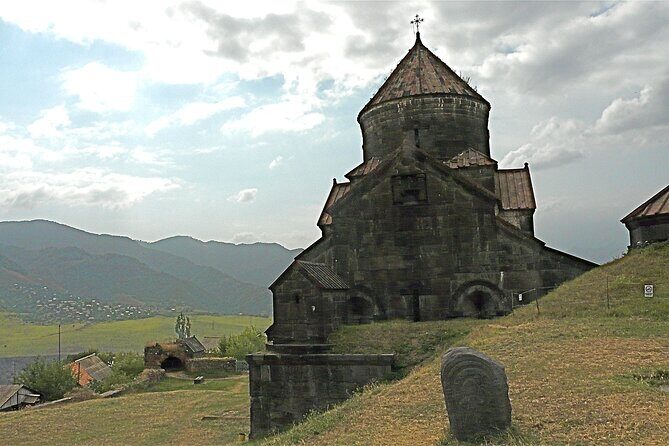
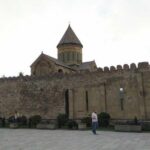
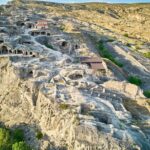
The day starts with Mgvimevi Monastery, a site that reads like a timeline if you look closely. The church dates to the 8th century, and the outside is decorated with crosses and ornamental borders. Inside, you get mural paintings from the 8th century, plus additional work from the 16th century, especially on the southern wall.
What I find especially interesting here is the way the older story survived under newer layers. There is an old fresco that was discovered beneath a later layer, showing a nobleman named Rati from the Racha region with his wife and his brother Niania Kakhaberisdze. It is the kind of detail that makes a monument feel less like a generic stop and more like a document.
Then there is the unusual practical side. Beneath the church, there is a long tunnel reinforced by arches. In the monastic complex you also get a small church partly carved into the side of a cliff and a two-storey bell tower built between the 12th and 14th centuries. That combination of art, stonework, and engineering helps you understand how monks lived in a place that demanded practical solutions.
Admission at this stop is free, and the visit is about 45 minutes. The time is short on paper, but it works because the site has clear focal points: the church murals, the cliff-carved church, and the bell tower.
Katskhi Pillar: The Monk’s Vertical Monastery in Imereti
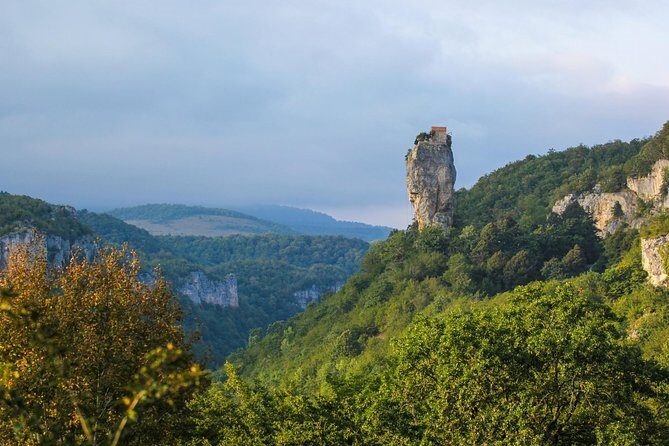
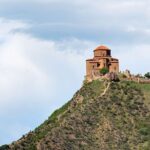
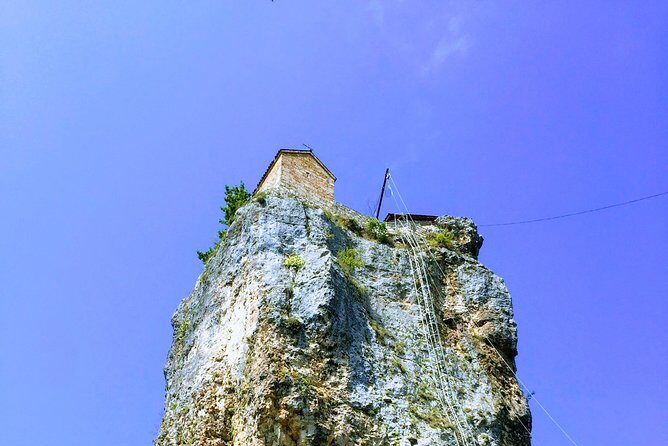
After monastery art, you shift to something visually extreme: Katskhi Pillar. This is a natural limestone monolith in the village of Katskhi in western Georgia, near Chiatura in Imereti. It is the kind of place that makes you slow down because your brain has to re-map what you are seeing.
The big reason this stop matters is not only the pillar itself. Your guide explains the human piece: Katskhi Pillar has a single resident monk named Maxime. That detail changes how you look at the site. Instead of treating it like an artifact or a viewpoint, you understand it as a working religious presence connected to daily life and solitude.
The visit time is about 45 minutes, and admission is free. In a day that includes Soviet infrastructure and working transport, Katskhi Pillar gives you a calmer tempo. It is also a great contrast stop: your body is moving between environments, and your eyes keep resetting.
Chiatura Cableways: Soviet Transport That Still Runs
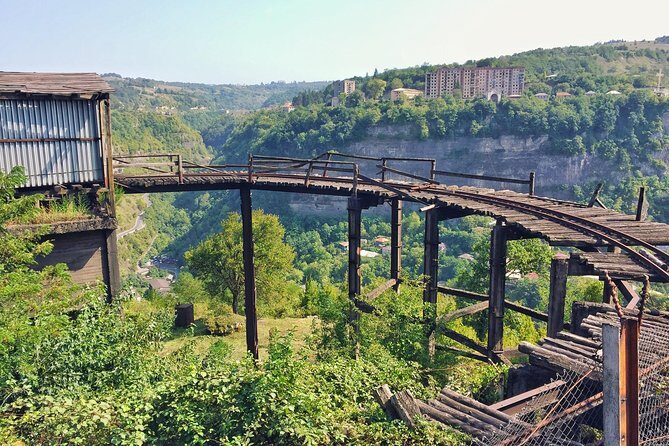
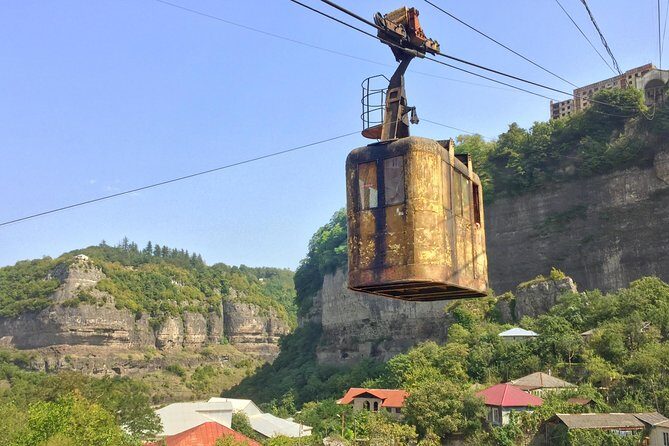
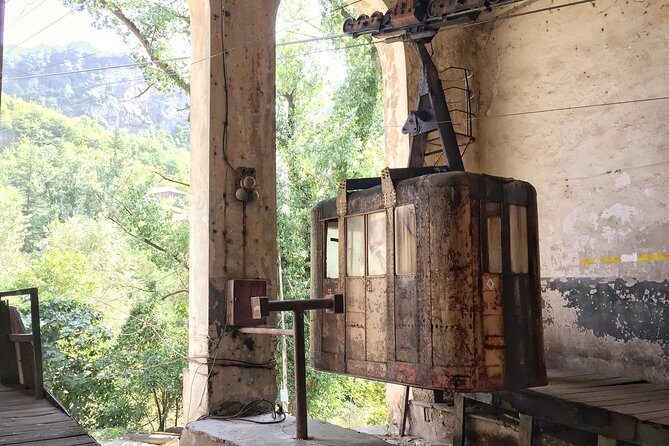
Now for the reason many people make the trip: Chiatura’s cableways. This is a Stalin-era cable car system that is still used today, serving as the main way to get around the city. The cable cars travel across the Qvirilia River gorge, connecting the town to mines above.
Here is what makes this stop more than a curiosity. The system is not just a scenic ride. It has 10 passenger cars and 2 manganese-transport cars. That mix tells you the cableways were designed for real labor and real movement, not only tourism.
Some stations have murals featuring Soviet heroes, so you get a second layer of meaning: transportation infrastructure decorated with political iconography. The cable span is over 6 km of cable, and the system is widely regarded as an exemplary feat of Soviet engineering.
Your time here is about 3 hours, which helps because you are not just looking at the equipment. You have time to watch how people use it, notice station details, and take in the overall layout. Admission is free.
Two practical notes you should not ignore:
- The maximum capacity per cable car is 4 people, so you may wait briefly while units cycle.
- Some cable lines may be closed or under repair, meaning you might not be able to visit every segment you hoped for.
Also, this part is the main stress point. The tour includes riding old cable cars and visiting elevated viewpoints. If you have a fear of heights or you feel uncomfortable in enclosed spaces, skip it.
Walking Chiatura Center: Soviet Streets After the Gorge
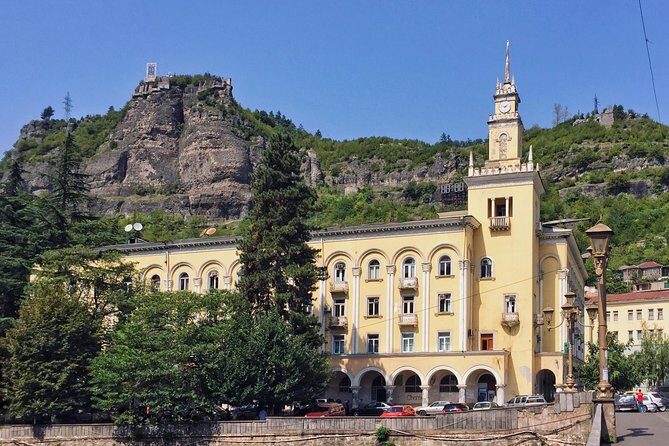
Once you have your fill of cable cars, you still get time to understand Chiatura beyond the machinery. The tour includes about 2 hours to walk around the center, and it is one of the better uses of time in a day like this.
Chiatura is not just cableways in the air. If you like Soviet architecture, you will enjoy how the town reads when you are on foot. Streets give you angles you do not get from a station platform. And walking helps you spot how the town’s layout responds to the steep terrain and the river gorge below.
This is also where the day becomes more human. You see everyday buildings, local routines, and the rhythm of a place that still uses its older infrastructure. It is not polished and it is not staged; it feels like a working town that happens to carry heavy history.


Long Drive Reality: When Timing and Body Comfort Matter
This is a full-day outing built around a long road move—about 2.5 hours each way. That is not a small detail. It affects who will feel good by the end of the day.
If you get motion sickness easily, or you have back problems, this drive can be the difference between a fun day and a tough one. You can plan around that by coming with snacks you tolerate well, hydration, and a comfortable seat position.
Weather matters too. The experience is subject to favorable weather conditions, and the cableways situation can change if lines are under repair.
If you want maximum comfort, the private upgrade can help because you often gain a smoother flow and more direct coordination between stops.
The Big Value Play: Private Tour, Focused Guide, No Waiting
A key part of the appeal is how the day feels when you are not squeezed into a big group. The tour format can be private, meaning it is only your group. That matters a lot with a route like this because timing can vary based on cable line status, viewpoint comfort, and how much you want to linger at murals or architecture details.
In my experience of this style of tour approach, the difference is simple: you spend less time managing other schedules, and more time asking follow-up questions. And when your guide is strong, those questions make the whole day click.
One guide name stands out from past groups: Aleksi (and in a related note, the guided attention is also described as coming from Alex). Either way, the pattern is consistent—clear cultural and historical explanations, politeness, and a pace that feels customized.
If you are the kind of traveler who likes to understand what you are seeing (instead of just shooting photos), this is exactly the tour format you want.
What About Food and Time Pressure?
Lunch is not included. That is common on these rural-industrial routes, but it changes how you plan your day. Bring a light plan: either eat before you go or be ready to grab something during the day if the schedule allows.
The stop durations are fairly specific, which helps the itinerary move. Still, the most time-flexible parts tend to be the places where you can linger without disrupting transport: the monastery details and the cableways watching.
So if you are someone who needs a slow, unstructured pace, you may find this day busy. If you like a full plan with time to see what matters, it works.
Who This Tour Is Best For (and Who Should Skip It)
This is a strong match for you if you like urban exploration, industrial archaeology, and Soviet-era architecture—especially when it is paired with real cultural sites like Mgvimevi Monastery and the living context of Katskhi Pillar.
It also fits travelers who enjoy off-the-beaten-path Georgia and do not mind a long day built on driving and viewpoint experiences.
Skip or think hard first if:
- you have a fear of heights or feel trapped in enclosed spaces
- you need accessibility support for mobility issues
- you get motion sickness in vehicles
- you want minimal physical discomfort and no waiting for cable cars
And if you are coming with kids, remember that children must be accompanied by an adult—and cable car conditions make that rule even more important.
Quick FAQ for Planning Your One-Day Route
FAQ
How long is the Chiatura and Katskhi Pillar tour?
It runs for about 12 hours (approx.).
How much does the tour cost?
The price is $123.00 per person.
What’s included in the price?
A bottled water, a local guide, and hotel pick-up only for private tours.
Is lunch included?
No, lunch is not included.
Are entrance tickets free for the main stops?
Admission tickets are listed as free for Monastery Mgvimevi and Katskhi Pillar, and also for the cableways and the Chiatura stop.
Is the tour offered in English?
Yes, it is offered in English.
Is this a private tour?
Yes. It is a private activity, and only your group participates.
Is the cable car experience safe if I fear heights?
This tour is not suitable for travelers with mobility issues or a fear of heights. It includes riding old cable cars and visiting elevated viewpoints, which may be challenging.
What if cable lines are closed or under repair?
Some cable lines can be closed or under repair, and visiting them may not be possible.
Can I cancel for a refund?
Yes. You can cancel up to 24 hours in advance for a full refund.
Should You Book This Tour?
Book it if you want a single day that blends functioning Soviet engineering with spiritual Georgia and you are comfortable with heights and long road time. The combination of free key sights, a local guide, and the private option (if you choose it) is a good value way to see parts of the country most visitors never reach.
Hold off if you dislike cable cars, hate narrow enclosed spaces, or your body struggles with long drives. For the right traveler, though, this is one of those days where you come away with clear images and better context than you would get from a quick stop-and-skip route.