REVIEW · TBILISI
Amazing 10 Days tour Around Georgia from Tbilisi All inclusive
Book on Viator →Operated by Travel To Georgia · Bookable on Viator
A 10-day route that feels like a greatest-hits tour. You’ll hop from Tbilisi’s hilltop views to Kazbegi’s mountain drama, then down into Kakheti wine country, and finish on Batumi’s Black Sea stretch. What makes it especially workable is the all-inclusive setup: transport, tickets, and most meals are handled for you, so you spend less time figuring out logistics and more time staring at stone churches and big scenery.
Two things I really like: first, the food. Georgian dishes here aren’t treated like an afterthought, and the meals are a major part of why the trip feels so smooth. Second, the guide support is strong; one name that comes up is David, praised for making stops feel clear and connected. One thing to consider: it’s a packed schedule with lots of driving and walking, so if you want slow travel or lots of free time, this may feel like you’re always moving.
In This Review
- Key highlights worth knowing
- Day 1 in Tbilisi: Parks, fortresses, baths, and a funicular view
- Day 2 to Kazbegi: Zhinvali Dam, Ananuri walls, and Gergeti above 2,000 meters
- Day 3 in Kakheti: castles, herbal tea, qvevri wine, and Tsinandali estates
- Day 4: Sighnaghi’s walls, Mtskheta’s UNESCO churches, and Uplistsikhe cave town
- Day 5: Vardzia cave monastery, Rabati Fortress, and Borjomi’s water-and-park vibe
- Day 6: Prometheus Cave, Gelati monastery, and Kutaisi’s Royal District
- Day 7: Okatse hanging trail, Kinchkha waterfalls, and Martvili canyon by boat
- Day 8: Ushguli and Svaneti’s high ground, plus Hatsvali and Chalaadi Glacier
- Day 9: Batumi area parks, boulevard views, and Gonio Fortress
- Day 10: Batumi Botanical Garden to close out your Georgia loop
- Price and what you’re really buying for $850
- Who should book this tour (and who should think twice)
- Should you book this 10-day Georgia tour from Tbilisi?
- FAQ
- What is included in the tour price?
- Are pickups available?
- Is alcohol included with meals?
- How long is the tour and what price should I expect?
- What if I need to cancel?
- Is this tour private or group-based?
Key highlights worth knowing
- Hotel + meals + entry fees bundled: fewer surprises, and you can budget fast.
- Big scenery in multiple regions: mountains, canyons, caves, and coastal views across the country.
- Wine stops with context: you’re not only tasting, you’re learning how qvevri wine works.
- Major church stops with UNESCO-level payoff: Jvari and Svetitskhoveli are on the route for a reason.
- Adventure options for active days: hanging trails, canyon boats, and glacier territory.
- Batumi added at the end: promenade, fortress history, and botanical gardens to close strong.
Day 1 in Tbilisi: Parks, fortresses, baths, and a funicular view
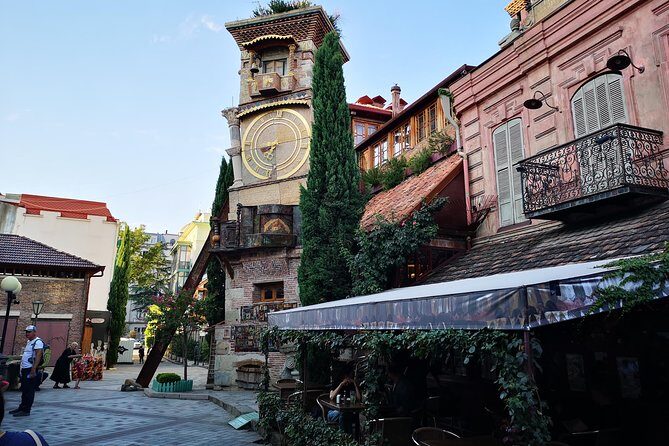
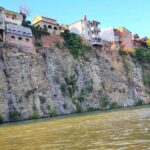
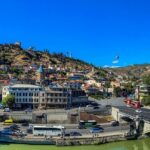
Your tour starts back at Old Tbilisi, then quickly helps you get your bearings. You begin with Rike Park, a modern centerpiece on the left bank of the Kura River. It’s art-forward and laid out so that, from above, the pathways help form a large-scale map of Georgia’s regions. It’s the kind of stop that looks better than it sounds once you’re actually there.
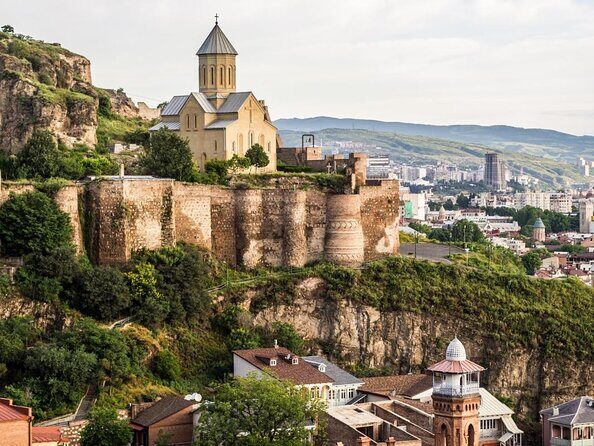
Next up is Narikala Fortress, the classic Tbilisi viewpoint. It’s free to enter, and it’s also one of those places you feel from multiple directions in the city—because the fortress draws your eye everywhere. If you can time it right, the views at night are the real reward.
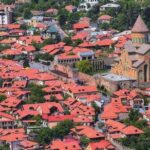
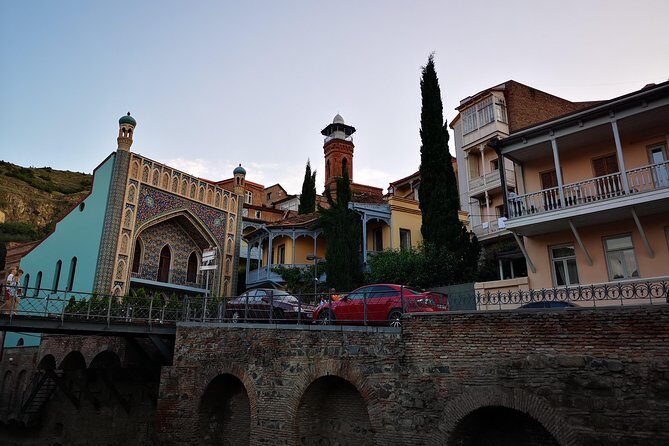
Then comes Abanotubani, the historic baths district. This stop matters because it shows Tbilisi’s layered identity in a small area: Georgian, Armenian, Catholic churches, plus a mosque, a synagogue, and the Ateshga fire temple. It’s a lot in a short walk, and it gives you a sense of why Georgia feels culturally busy even when you’re just strolling.
To finish Day 1, the tour heads to Mtatsminda Amusement Park on Mount Mtatsminda. It’s a fun way to wrap the day: rides, cafés, and a Ferris wheel near the edge with city views. If you’re traveling with kids, or you just want an easy evening without another ticketed site, this works well.
You can also read our reviews of more tours and experiences in Tbilisi.

Day 2 to Kazbegi: Zhinvali Dam, Ananuri walls, and Gergeti above 2,000 meters
Day 2 is all about big sky. You travel from Tbilisi toward the Kazbegi area, with scenic stops that break up the drive.
First, Zhinvali Reservoir and the dam viewpoint. It’s short but useful—it sets the tone for the mountains ahead.
Then you reach Ananuri Fortified Castle Ensemble on the original Georgian Military Highway corridor. The main draw here is the fortified layout: walls, towers, and churches grouped in a way that feels like a whole defensive system, not just a pretty building. You also get the Church of Virgin and Church of the Assumption details, which make the site feel specific rather than generic.
After that, there’s a colorful quick stop at the Russian Georgian Friendship Monument (often linked with the Gudauri panorama). It’s Soviet-era symbolism, but what you’ll really notice is the bright presence against the mountain backdrop.
The day’s headline is Gergeti Trinity Church near the village of Gergeti, high above the river valley at about 2,170 meters. This is where Georgia stops being “a good itinerary” and starts being a mountain memory. Even if you don’t love churches, the setting under Mount Mkinvartsveri gives the stop its punch.
You end with Gveleti Waterfall, a straightforward nature stop. You’re not here for museums; you’re here for movement and fresh air.
Day 3 in Kakheti: castles, herbal tea, qvevri wine, and Tsinandali estates
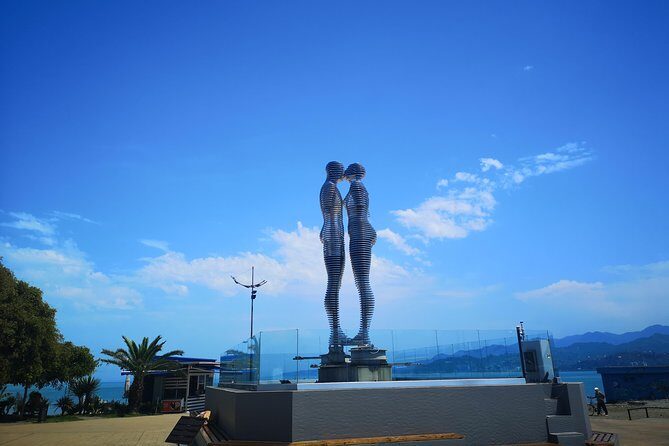
Day 3 turns into the Georgian version of a road-trip day with history and tastings.
You start at Ujarma Fortress, a 5th-century structure tied to the Kakheti story. The tour framing leans into mystery and atmosphere, and honestly, that’s part of why these fortresses work so well—stone walls always feel like they’ve been waiting for the right story.
Next is Gombori Pass, with a break that includes time for Gios Herbal tea. That’s one of those small stops that can make the day feel local, not just scenic.
Then comes Alaverdi St. George Cathedral near Telavi. It’s noted as the highest cathedral in Georgia (up to around 50 meters). Even when you’re not an architecture geek, “highest” is the kind of detail that helps you pay attention once you’re standing there.
The wine day becomes serious at Twins Wine Cellar, which is described as a museum complex focused on qvevri and qvevri wine. The standout detail: a set of oversized qvevri/pitchers (one noted at 500 liters) and explanations of the production process. If you like wine but hate vague tastings, this is the kind of stop that makes your palate understand what it’s drinking.
After the wine context, you visit Batonis-Tsikhe Fortress, the Master’s Fortress, tied to Kakhetian royal residence history. It’s a mix of churches, palace remains, and royal bath ruins—so you get both defensive and daily-life flavor.
The day closes at Tsinandali Palace in the village of Tsinandali. Here, the estate is framed as a cultural center tied to the Chavchavadze family, with restored vineyards and a chance to sample Tsinandali wine. You’re also given time around the historical winery/cellar setup and the estate atmosphere, which makes this more than a quick sip-and-go.
Day 4: Sighnaghi’s walls, Mtskheta’s UNESCO churches, and Uplistsikhe cave town
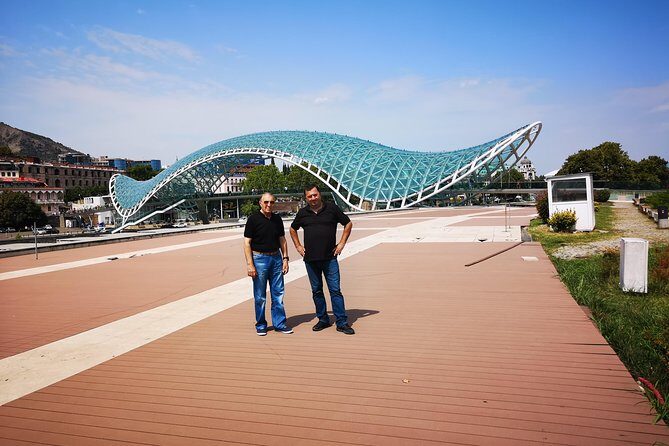
Day 4 is history-lovers’ gold because it mixes town walls, famous churches, and rock-cut settlement history.
You start in Kakheti at Bodbe Monastery of St. Nino, just a couple kilometers from Sighnaghi. The tour focuses on legend and repeated restoration through the centuries. It’s not just “see the church,” it’s a sense of continuity.
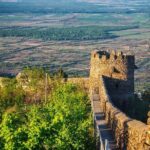
Then you hit Sighnaghi City Walls, a medieval 13th-century remnant with more than 20 towers. Only a section is walkable, but the views over the Alazani Valley are the point. Short walking, big reward.
Sighnaghi also includes a stop at The Sighnaghi Museum, where you can see archaeology finds and art. It specifically notes Pirosmani’s link to Kakheti and displays of his works.
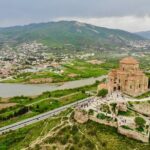
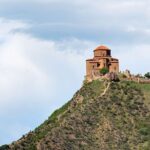
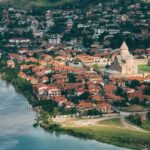
After that, you travel toward Mtskheta for the UNESCO church day. First is Jvari Church, a 6th-century monastery site on a hill opposite Mtskheta at the confluence of the Aragvi and Mtkvari rivers. It includes the famous cross story tied to early Christianity in Georgia.
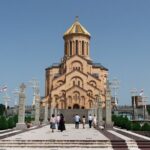
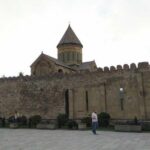
Then you visit Svetitskhoveli Cathedral, an 11th-century Georgian architectural landmark and UNESCO World Heritage site. This stop gets technical in a good way because it mentions preserved sacred relics: the mantles of Christ and the Prophet Elijah, plus the tombs of King Vakhtang Gorgasali.
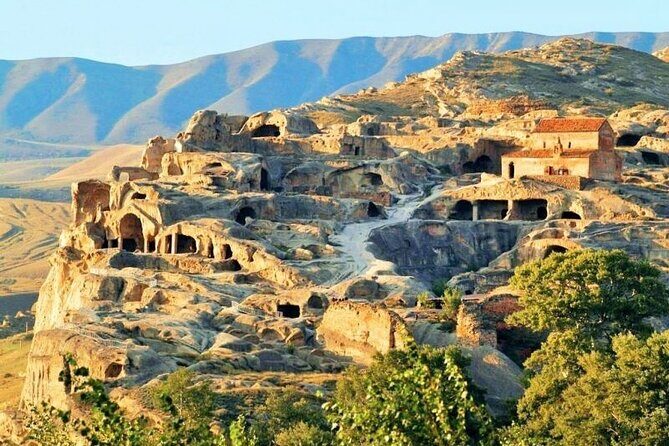
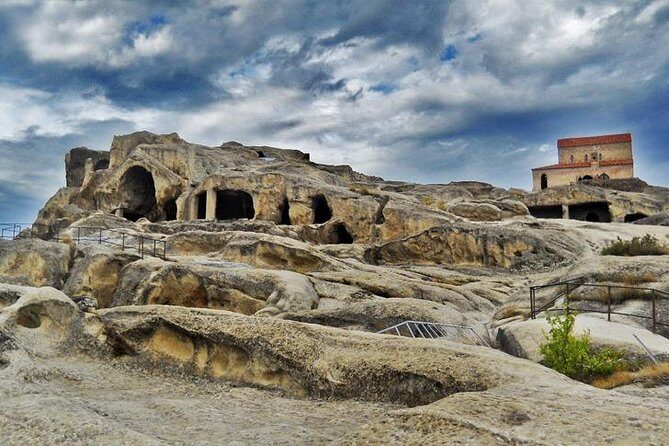
You end the day at Uplistsiche Cave Town, a rock-hewn city near Gori. It’s described as among the oldest settlements in the Caucasus region, with origins reaching back to early Bronze Age and a historical mention in the VII century. This is the kind of stop where your brain has to shift from “church timeline” to “settlement timeline,” and it’s a satisfying change.
Day 5: Vardzia cave monastery, Rabati Fortress, and Borjomi’s water-and-park vibe
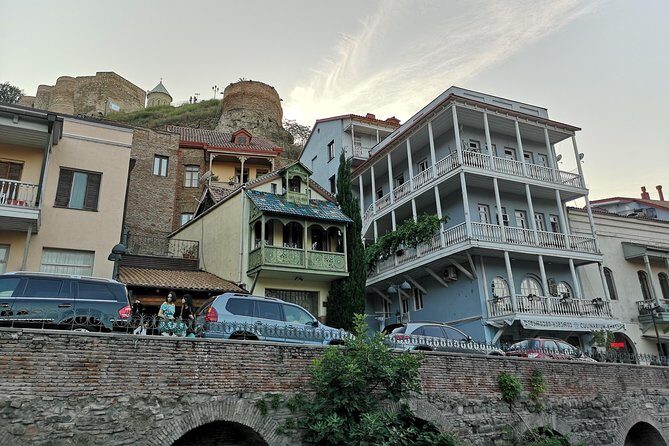
Day 5 moves into southern and central Georgia highlights.
First is Vardzia, the cave monastery complex built during the reign of King George III and Queen Tamar. The tour leans on the story behind the name—Tamara calling “Ak var dzia” (I am here, uncle). Whether you treat legends as history or as folklore, they make walking those cave halls feel more alive.
Next: Rabati Fortress in Akhaltsikhe (also called Rabati). The fortress ensemble includes multiple layers—a 14th-century castle piece, a fortress church, an 18th-century palace portion, and the Church of Saint Marine (1865) with relief work. This is a strong stop if you like seeing how different eras stack on top of each other.
After fortresses, you shift to relaxation at Borjomi Central Park. Borjomi is known for mineral waters, and you’ll also encounter the Romanov Palace area and trails toward the Mtsvane Monastery (Green Monastery), made of green-tinged stones. It’s a welcome tempo change after days of hiking, looking, climbing, and walking.

Day 6: Prometheus Cave, Gelati monastery, and Kutaisi’s Royal District
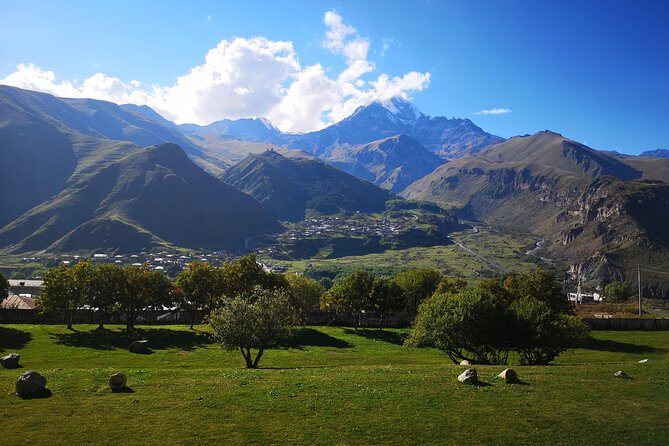
Day 6 is Western Georgia and it leans into caves and UNESCO-level church art.
You start at Prometheus Cave, near Kutaisi by way of Tskaltubo. The cave is described as having stalactites, stalagmites, curtains, petrified waterfalls, underground rivers, and lakes. A boat tour on an underground lake is part of the experience. If you’re traveling with someone who gets bored by “one more church,” this day is your backup plan.
Then it’s Tskaltubo, with a quick stop connected to mineral water origins and the idea that the water’s formation is very old. This is less about museum time and more about the regional identity of the place.
After that you reach Gelati Monastery, described as a major religious, cultural, and educational center with mosaics and frescoes. The tour also notes that King David the Builder is buried in the monastery yard. If you like art details, this is a stronger stop than people expect from the drive schedule.
Finally, Kutaisi—specifically the Royal District area around the White bridge and nearby streets. This gives you a city-feel moment, not just countryside scenery.
Day 7: Okatse hanging trail, Kinchkha waterfalls, and Martvili canyon by boat
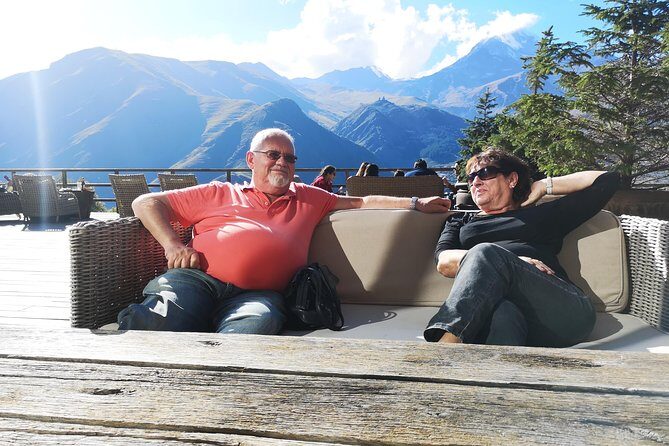
This is where the tour gets physically fun.
At Okatse Canyon, you walk a hanging trail described as about 780 meters long, passing through historic forests associated with the Dadiani legacy. There’s also a panoramic view end-point, plus a mention of photo cameras installed on the area. It’s the kind of stop that turns into instant bragging rights.
Next, Kinchkha Waterfall pairs waterfalls and canyon scenery. The tour notes an altitude around 1,000 meters and mentions the chance to swim in the canyon and set up tents by the river. That last part is more “bring your own spirit of adventure” than “everyone will do it,” but it tells you the area isn’t just for pass-by photos.
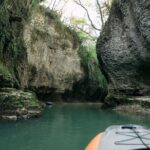
Then the highlight canyon stop arrives: Martvili Canyon. You’ll take a boat ride on the Abasha, and the route description notes a 300-meter one-way section. It also includes time to explore under the water and even mentions diving. Even if you don’t dive, you’ll still enjoy the angle the boat gives you—canyons are hard to fully understand from above.
(One small note: the canyon stop is listed twice in the day’s plan, so you’ll likely get two separate blocks of time or repeat chances to enjoy it.)
Day 8: Ushguli and Svaneti’s high ground, plus Hatsvali and Chalaadi Glacier
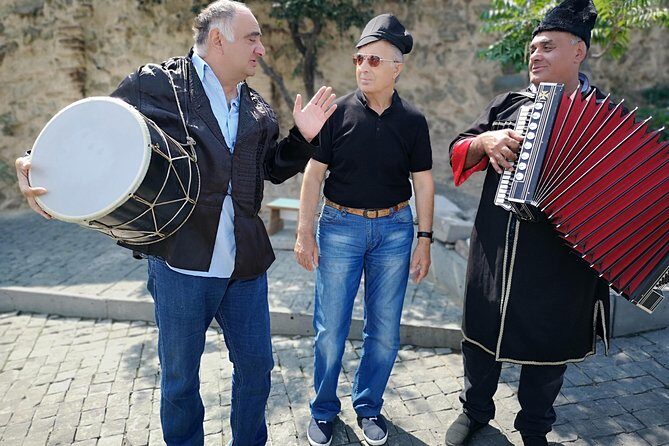
Day 8 is the “you came to Georgia for a reason” day.
You visit Ushguli, described as the highest settlement in Europe. It’s a community made up of four villages, with heights ranging from about 2,060 to 2,200 meters. The center area, Chazhashi, is noted as a UNESCO World Heritage Site. This matters because it turns the village from a postcard into a protected living landscape.
You also stop at LaMaria Church (Mother of God), a medieval Georgian Orthodox church in Upper Svaneti. It’s short, but it adds spiritual context to the highland setting.
Then you head to Hatsvali Ski Resort for views toward Ushba Mountain and Mestia. Even if you don’t ski, the viewpoint idea is simple: you’re buying time with the mountains.
After that, you visit the Svaneti Museum of History and Ethnography, founded in 1936. The tour description calls out items like unique icons and engravings, manuscripts, medieval weapons, metals and jewelry, pottery, and textiles. If you’ve been staring at towers and stones all week, the museum helps translate why the architecture looks the way it does.
Finally, there’s Chalaadi Glacier, described at about 1,850 meters and noted as the only glacier that extends into the forest zone. You get around three hours here. This is one of the more “Georgia on hard mode” days, so pack for walking comfort and weather shifts.
Day 9: Batumi area parks, boulevard views, and Gonio Fortress
You transition to the sea on Day 9, and the tone changes fast.
First is Shekvetili Dendrological Park, covering about 60 hectares. It’s described as having thousands of species of local and exotic flora. This is a smart breather before the city energy.
Then you head to Batumi Boulevard, with a seaside promenade, cafés and beach bars, and even dancing fountains. The tour description frames its history as more than a century old, and it’s a good place to slow down for an hour without losing the feeling that you’re still sightseeing.
You also visit Gonio Fortress, described as the oldest fortress of Georgia. Built by Romans in the 1st century AD, occupied by Byzantines in the 6th century, and by Ottomans in the 16th century. The tour description gives you the scale—47,000 square meters, with 18 towers—so it’s not just a quick wall photo.
If you’re wondering where the “boat trip in Batumi” fits: it’s listed as included, so expect a water-time block around the Batumi portion of the program.
Day 10: Batumi Botanical Garden to close out your Georgia loop
Your last day is a calm finishing move: Batumi Botanical Gardens, described as covering about 108.7 hectares along a coastline stretch between the Chakvistskali estuary and Green Cape. The garden includes elevation range from sea level up to roughly 220 meters, and it explains how the area moved from Kolkheti forest types toward a mix of introduced plants.
The late 1800s plant introduction efforts are part of the story, with names listed as contributors. It’s an easy ending because you’re not being rushed into one more dramatic sight. You can wander, sit, take photos, and let the trip’s variety settle in.
Price and what you’re really buying for $850
At $850 per person, the value isn’t just that the tour is “all inclusive.” It’s that the cost load that usually wrecks budgets—transport, entrance fees, and ticketed sites—is handled up front.
You also get 9 nights in a 3-star hotel, air-conditioned vehicle transport, WiFi on board, and airport transfers. Meals are mostly covered too: breakfast for 10 days, lunch for 10 days, and dinner for 6 days. That means you’ll still have a few evenings where you can choose your own dinner, but you won’t be scrambling every day.
The only real financial caveats are also clearly listed: alcohol drinks aren’t included, and dinner is not included for 4 days. If you plan to drink wine every meal, budget for that. If you’re fine with a few free evenings, it’s not a deal breaker.
Who should book this tour (and who should think twice)
This tour is a strong fit if you want:
- A lot of variety without booking separate day trips.
- Stone-and-scenery travel: fortresses, caves, major churches, canyons.
- Wine culture with structure, not just a quick tasting.
- Meals planned for you, including a mix of lunch and dinner coverage.
You might think twice if:
- You hate long driving days or fast transitions between stops.
- You want a lot of downtime in each town.
- You’re hoping every dinner is included and alcohol is free (it’s not).
Should you book this 10-day Georgia tour from Tbilisi?
I’d book it if you’re the kind of traveler who likes checking things off, but still wants the stops to make sense. This program stacks “big names” like Narikala, Jvari, Svetitskhoveli, Vardzia, and Gelati with active nature days like Okatse and canyon boat time, then lands the finishing mood in Batumi botanical gardens.
If you’re more of a slow, wander-without-a-plan person, you may find the pace demanding. But if you want a well-paced circuit where transport and entry fees are already handled and the guide support includes a named pro like David, this is an easy yes.
FAQ
What is included in the tour price?
The package includes 9 nights in a 3-star hotel, air-conditioned vehicle with private transportation, WiFi on board, airport transfers, entrance tickets and attractions fees, and all fees and taxes. Meals include breakfast for 10 days, lunch for 10 days, and dinner for 6 days. A boat trip in Batumi is also included.
Are pickups available?
Yes. Pickup is offered, and the tour also includes airport transfers. The tour starts at Old Tbilisi, Tbilisi, and ends back at the meeting point.
Is alcohol included with meals?
No. Alcohol drinks are not included in the package.
How long is the tour and what price should I expect?
It runs for about 10 days and costs $850.00 per person.
What if I need to cancel?
You can cancel up to 3 days in advance of the experience for a full refund. Canceling within 3 days of the start time does not qualify for a refund.
Is this tour private or group-based?
It’s a private tour/activity. Only your group will participate, and the description also mentions group discounts.