REVIEW · TBILISI
Mtskheta, Gori & Uplistsikhe Private Day Tour from Tbilisi
Book on Viator →Operated by Visit Georgia with George · Bookable on Viator
A full day that feels like four trips in one. This private route strings together UNESCO-listed heritage in Mtskheta, the rock-cut wonder of Uplistsikhe, and the strange, very Georgia story of Stalin in Gori. Add hotel pickup and a personal guide, and you get a schedule that actually works without you playing transport Tetris.
I especially love how fast you can move through big-name sites without rushing through their meaning. Two things I like most are the front-door pickup in Tbilisi and the way Uplistsikhe’s caves get explained with real local context, not just facts on a sign.
One possible drawback: the day runs about 7 to 9 hours, and two key stops (Uplistsikhe and the Stalin Museum) have entrance fees of $6 each that aren’t included. Plan for a long, walking day and a little extra cash for sites you’ll want to see up close.
In This Review
- Key highlights to know before you go
- The Route: Why Mtskheta, Uplistsikhe, and Gori work so well together
- Pickup and comfort from Tbilisi: the part you feel immediately
- Jvari Church near Mtskheta: short stop, big views, zero stress
- Svetitskhoveli Cathedral: the UNESCO moment that lands emotionally
- Uplistsikhe cave town: where the Iron Age feels physical
- Stalin Museum in Gori: a museum that shows how power presents itself
- How the pacing feels in real life (7 to 9 hours)
- English guide value: it changes what you remember
- Price and value: is $90 per person a good deal?
- What to expect at each stop (and what could slow you down)
- When this tour is a great fit (and when it isn’t)
- Should you book this private day tour from Tbilisi?
- FAQ
- How long is the Mtskheta, Gori & Uplistsikhe private day tour?
- What’s included in the tour price?
- Are entrance fees included?
- Is admission to Jvari Church and Svetitskhoveli Cathedral free?
- Is this a private tour?
- Do you pick up from hotels in Tbilisi?
- Is the tour offered in English?
- Can I cancel for free?
Key highlights to know before you go
- Private car + hotel pickup keeps the day easy, not stressful
- Jvari Church and Svetitskhoveli Cathedral are quick UNESCO stops with free admission
- Uplistsikhe caves get guided time with the Iron Age-era rock-town layout
- Joseph Stalin Museum in Gori adds a major 20th-century layer to the trip
- English-speaking guidance makes the story click as you move between eras
The Route: Why Mtskheta, Uplistsikhe, and Gori work so well together
This tour is built around one practical idea: you can see multiple “different Georgia” moods in a single day. You start in the spiritual and historic zone around Mtskheta, then shift into a carved-rock ancient town at Uplistsikhe. After that, you land in Gori for the Stalin Museum—an experience that’s about history, propaganda, and memory, all in one place.
The real value is continuity. The sites aren’t random. They’re in the same region, so your day has momentum, and your guide can connect themes like religion, empire, and ideology as you go.
Since it’s private, the pacing is in your hands. You’re not stuck with strangers who want to race, stop for souvenirs, or read every plaque slowly. With your own guide, you can ask questions and adjust timing when a view is too good to ignore.
You can also read our reviews of more private tours in Tbilisi



Pickup and comfort from Tbilisi: the part you feel immediately
The tour includes hotel pickup and drop-off, plus a private comfortable car. For day trips out of Tbilisi, this is one of the biggest “why bother booking” reasons—because getting to the right trailhead, road junction, or entrance on your own can quietly eat half your day.
In a private format, the car also matters for simple comfort. You’re doing a lot of stops, and the schedule covers several sites with walking and stair steps (especially at the cave town). A driver who knows the route means you spend time where you want to be, not on the road asking strangers for directions.
Past guests also mention guides like George and Gio, with a consistent theme: they keep things smooth and friendly, and they help families with the day’s flow. That kind of hands-on support matters when you have kids, limited time, or you just don’t want to think about logistics.
Jvari Church near Mtskheta: short stop, big views, zero stress
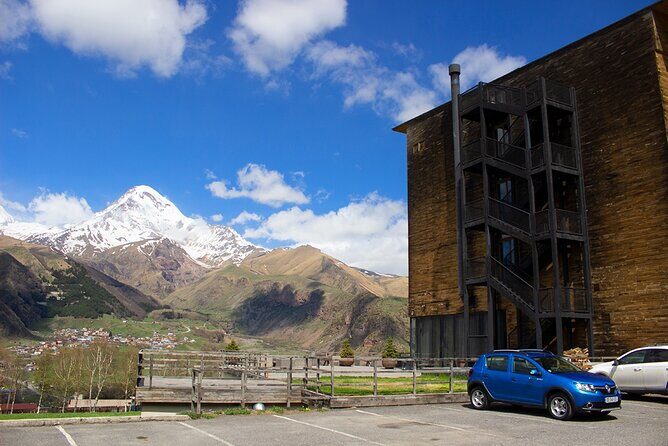
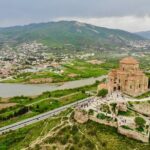
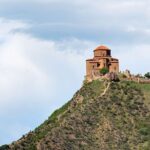
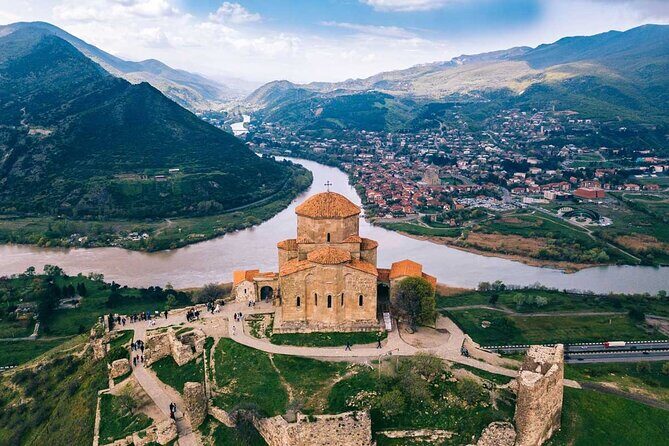
You’ll start with Jvari Church (also called Jvari Monastery), a sixth-century Georgian Orthodox site above the Mtskheta area. It’s recognized as part of the UNESCO World Heritage listing for Mtskheta’s historic structures, so this is not just a pretty church—it’s a meaningful “where Georgia became itself” stop.
The timing here is about 30 minutes with free admission. That short window is intentional. You’ll get enough time to see the architecture and soak in the setting without losing hours before the harder walking begins later in the day.
What you should do with the time: take a minute to look around before you take photos. The best advantage of Jvari is perspective—how the region opens up around the church. If you rush straight to the camera, you’ll miss the payoff of why people stop here in the first place.
Svetitskhoveli Cathedral: the UNESCO moment that lands emotionally
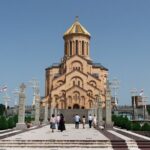
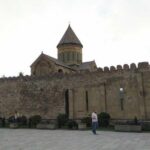
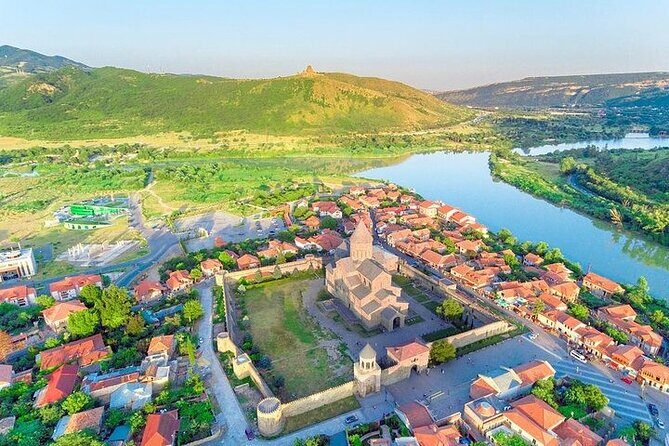
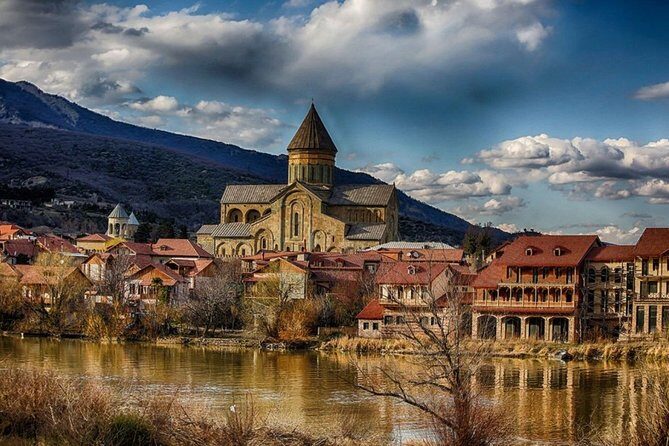
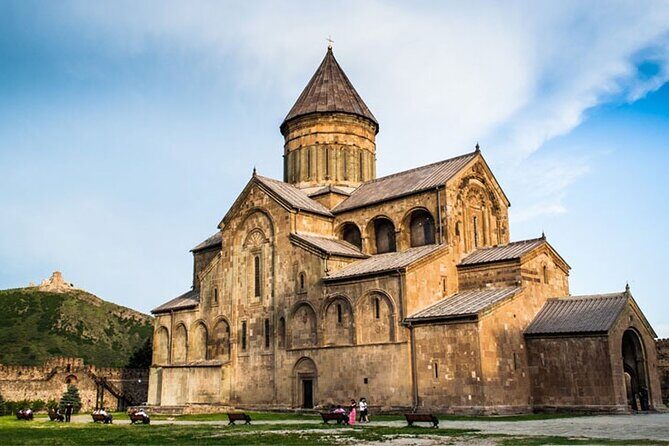
Next is Svetitskhoveli Cathedral, in Mtskheta. Like Jvari, it’s also UNESCO-listed and described as a masterpiece of the early Middle Ages in Georgia.
This stop is also timed around 30 minutes and has free admission. In other words, it’s a quick visit, but not a throwaway one. You’re there long enough to understand it as a central religious site, and to notice what’s distinctive about it compared with smaller monasteries.
Here’s the practical tip: go at a steady pace and listen to your guide’s explanation of what makes the cathedral important to Orthodox Christianity in Georgia. Even if you’re not a church-architecture person, you’ll get more out of the visit when you know what to look for—rather than just admiring the building and moving on.
Uplistsikhe cave town: where the Iron Age feels physical
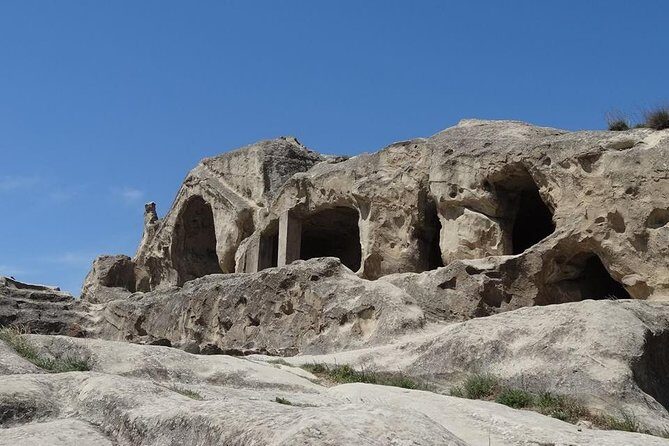
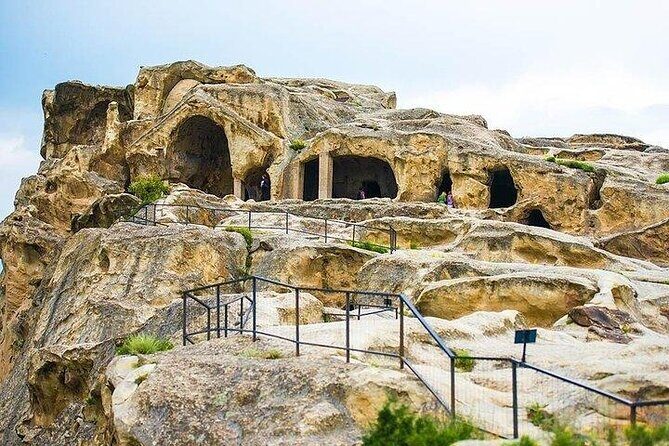
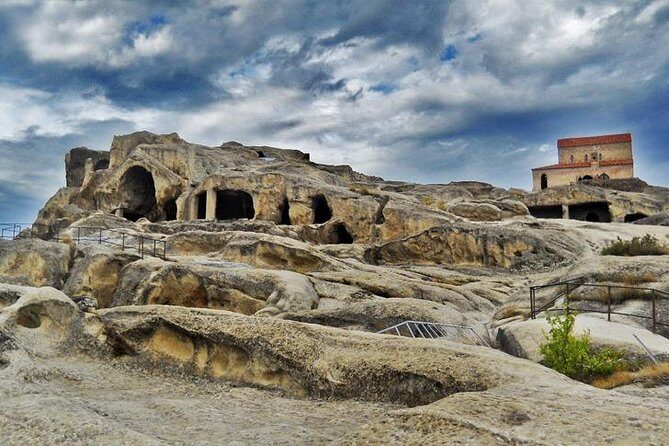
Uplistsikhe is the star for many people on this day. It’s an ancient rock-hewn town about 10 kilometers east of Gori, and the whole point is that you walk through a landscape that was shaped by hands long before modern roads existed.
Your time here is about 1 hour, and admission to the caves costs $6 per person (not included). This is one of the few places on the tour where you pay separately, so it’s worth treating it like the “main activity” and not rushing it.
The tour includes a local, in-depth guided focus on Uplistsikhe’s cave spaces. That matters because the site is easier to understand when someone helps you connect the layout to daily life: where people gathered, how spaces were used, and why carving a town into rock made sense in that era.
Also, wear shoes you trust. Cave towns mean uneven floors, steps, and tight areas. If you go in with solid footwear and a calm pace, you’ll enjoy it much more than if you treat it like a quick photo stop.



Stalin Museum in Gori: a museum that shows how power presents itself
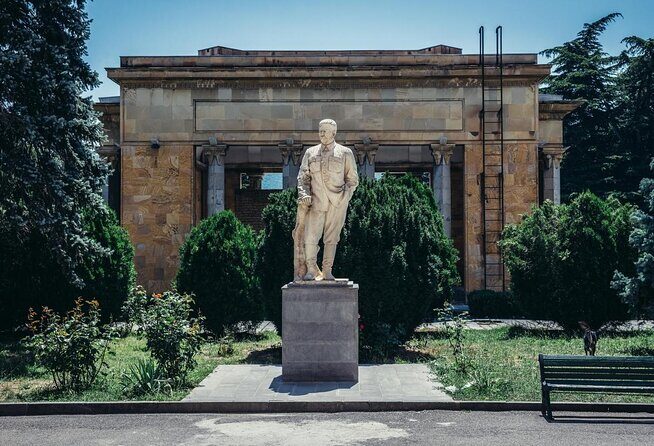
After Uplistsikhe, you head to Gori for the Joseph Stalin Museum. The museum complex is in a large palazzo with Stalinist Gothic styling, begun in 1951 as a museum connected to the history of socialism. The intent clearly shifted toward honoring Stalin as a memorial after his death in 1953.
Your guided time here is about 1 hour, and entrance costs $6 per person (not included). The exhibits are organized into six halls in roughly chronological order. There are items tied to Stalin—some described as his office furniture and personal effects—and a lot of documentation through photographs, paintings, and newspaper materials.
The ending includes one of twelve copies of Stalin’s death mask taken shortly after his death. That detail gives the museum a chilling emotional punch: it’s not only about political history, it’s also about how images and artifacts can be used to shape public memory.
A balanced way to approach this stop: keep one foot in context. You’re not just seeing what Stalin did; you’re seeing how a system wanted people to think about him. If you like history that mixes politics with storytelling devices, this section will feel memorable for the right reasons.
How the pacing feels in real life (7 to 9 hours)
On paper, 7 to 9 hours can sound like a long day. In practice, it works because the stops are spaced with clear time blocks: two 30-minute UNESCO sites, one hour at Uplistsikhe, and one hour at the Stalin Museum, plus driving.
Here’s where private helps: your guide can adjust micro-details like how long you linger at a viewpoint or how fast your group moves through areas that get crowded. For families, that flexibility can be the difference between a good day and a day where everyone’s cranky in the car.
Based on the experience style described by guests, the guides often bring strong local storytelling. That turns the travel time between sites into part of the experience instead of dead time. You’ll get context about what you just saw, and what you’re about to see, which helps the day feel coherent.
English guide value: it changes what you remember
The tour is offered in English, with a professional driver and guide. For sites like Uplistsikhe and the Stalin Museum, translation is more than convenience. It’s what lets you connect the physical space and the exhibit arrangement into a story.
In the reviews, guests consistently mention guides such as George and Gio as warm, helpful, and attentive. Some say the guide made them feel safe in the car and supported the group with anything they needed. That’s not just friendliness—it’s practical. When you feel looked after, you don’t waste mental energy worrying about timing, entrances, or what you’re looking at.
If you’re traveling with kids, that guide support matters even more. One review notes the tour was kid friendly and that the guide’s approach helped keep a family comfortable. If you need a calmer pace for younger travelers, a private guide can help you set it.
Price and value: is $90 per person a good deal?
At $90 per person, this is not the cheapest way to do Mtskheta, Gori, and Uplistsikhe. But it’s also not trying to be. You’re paying for a private car, hotel pickup and drop-off, and a guide who stays with you for the full day.
Your “included” package covers petrol and professional guide service, plus the driver’s time. The major attractions—Jvari, Svetitskhoveli, Uplistsikhe, and the Stalin Museum—are all handled in one organized loop.
Two entrance fees aren’t included: $6 for Uplistsikhe and $6 for the Stalin Museum. Both are small adds compared with the cost of doing the trip on your own with taxis plus paid guides separately.
So who gets the best value? You do if:
- you hate losing time to transportation planning
- you want someone to explain what you’re seeing
- you’re traveling as a small group or family and want flexibility
If you’re solo and comfortable figuring everything out, a cheaper DIY option may exist. But the private structure is exactly what makes this day feel like a real outing rather than a schedule you assembled yourself.
What to expect at each stop (and what could slow you down)
- Jvari Church (30 min, free): enough time for the main church and the setting. The only slowdown is weather and photo stops.
- Svetitskhoveli Cathedral (30 min, free): quick but meaningful. If you want to linger, you might have to move a little faster later.
- Uplistsikhe caves (1 hr, $6): walking and stairs. Tight spots can take time for anyone with mobility limits or small kids.
- Stalin Museum (1 hr, $6): indoor exhibits and displays. Time can stretch if you read documentation carefully or ask lots of questions.
The tour is private, so you can also request adjustments with your guide when you get there—within reason. That’s the benefit of having a person managing the day instead of a fixed group schedule.
When this tour is a great fit (and when it isn’t)
This experience is ideal for you if you want a single-day highlight reel with meaningful context. It’s also a smart choice if you’re short on time in Tbilisi but still want more than just city sights.
It’s also a good option for families, based on the emphasis on kid-friendly guiding seen in past guests’ feedback. If you have children and want a calm, organized day, private pickup plus a guide who helps with flow is a big win.
You might skip it if you’re the type who loves unstructured exploring and doesn’t mind figuring out transport and museum times yourself. Also, if you know you won’t enjoy political-history sites, the Stalin Museum may feel like the hardest stop emotionally on an otherwise scenic day.
Should you book this private day tour from Tbilisi?
I’d book it if you want four major sites—Jvari, Mtskheta’s Svetitskhoveli Cathedral, Uplistsikhe cave town, and the Stalin Museum—stitched into one smooth day. The private car, hotel pickup, English-speaking guide, and guided cave focus are the real reasons this works so well.
Also, the guide reputation in past visits matters. Guests describe the experience as friendly, safe, and well planned, with names like George and Gio showing up repeatedly for attentive service. If you want the day to run on rails while still feeling personal, this is the kind of tour that delivers.
If you do book, go in with two mindsets: comfortable shoes for Uplistsikhe, and curiosity for how different eras shape Georgia. You’ll come away with a day that’s more than photos—it’s a layered sense of place.
FAQ
How long is the Mtskheta, Gori & Uplistsikhe private day tour?
It runs about 7 to 9 hours.
What’s included in the tour price?
Hotel pickup and drop-off, a professional driver and guide, a private comfortable car, the private day tour, and petrol cost are included.
Are entrance fees included?
No. Uplistsikhe caves cost $6 per person, and the Stalin Museum costs $6 per person.
Is admission to Jvari Church and Svetitskhoveli Cathedral free?
Yes. Jvari Church and Svetitskhoveli Cathedral list free admission on the schedule.
Is this a private tour?
Yes. It’s private, so only your group participates.
Do you pick up from hotels in Tbilisi?
Yes, front-door pickup and drop-off from your hotel accommodation in Tbilisi are included.
Is the tour offered in English?
Yes. The tour is offered in English.
Can I cancel for free?
Yes. You can cancel up to 24 hours in advance for a full refund.