REVIEW · TBILISI
Tbilisi by Night Walking Tour
Book on Viator →Operated by Taste of Georgia · Bookable on Viator
Nighttime turns Tbilisi into a storybook. I really liked seeing the Old Town after dark with a local guide, and I loved the payoff at the Mtatsminda observation deck with sweeping city views. One consideration: this is a real walking tour at night, so comfortable shoes matter more than you think.
The best part is how the route mixes big sights with small moments you’d miss on your own—like the Rezo Gabriadze Clock Tower ritual and the illuminated river crossings. The tradeoff is simple: you’re out for about 3 to 3.5 hours, ending at the Tbilisi Funicular Lower Station area, so plan your dinner timing around that.
In This Review
- Key highlights for a smooth night in Tbilisi
- Tbilisi by Night: what makes this route worth your time
- Price and pacing: what $72.25 gets you (and what it doesn’t)
- Berikaoba start: improvised folk theater and a pagan-to-modern origin story
- Rezo Gabriadze Marionette Theater and the clock tower angel moment
- Old Town corridor: Anchiskhati Basilica and why “oldest” still feels real
- Baratashvili Bridge viewpoint: a photo-friendly pause in the route
- Bridge of Peace: LED lights over the Kura River
- Narikala Fortress on Metekhi hill: light show + architecture talk
- Cable car to the hilltop: one-way ride included, views guaranteed
- Passing Jumah Mosque and the religious split that’s close-by
- Leghvtakhevi Waterfall: center-of-city and lit up at night
- Chreli Abano viewpoint: the one-screen photo concept
- Abanotubani streets and sulfur bath area: walking without rushing
- Liberty Square and St. George Monument: a bright finish in the city center
- Tbilisi Funicular Lower Station: history in a short window
- Mtatsminda Park at the end: old and modern together
- Who should book this night tour (and who should skip it)
- Should you book Tbilisi by Night Walking Tour?
- FAQ
- What time does the tour start?
- How long is the tour?
- What’s the meeting point?
- Where does the tour end?
- Is the cable car included?
- Is the funicular ride included?
- What language is the tour offered in?
- Are admissions included?
- How big is the group?
- Is free cancellation available?
- Can I bring a service animal?
Key highlights for a smooth night in Tbilisi
- A local-led route built for night lighting: Old Town landmarks, illuminated bridges, and hilltop viewpoints.
- Rezo Gabriadze’s clock tower detail: you’ll hear about the hourly angel bell moment at the marionette theater area.
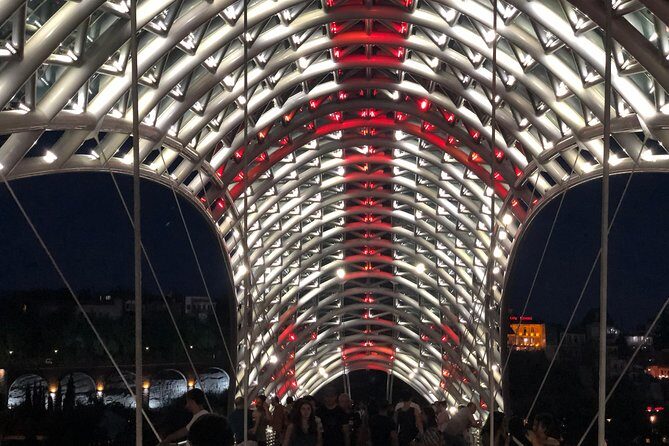
- LED wow factor over the Kura River: the Bridge of Peace is steel-and-glass with lights that look great on camera.
- Narikala Fortress light show on Metekhi hill: history with a night-mode atmosphere.
- Cable car included (one way): you get hilltop views without needing to climb the whole way.
- Photo-friendly viewpoints: including a secret-feeling stop at Chreli Abano for a one-screen composition shot.
Tbilisi by Night: what makes this route worth your time
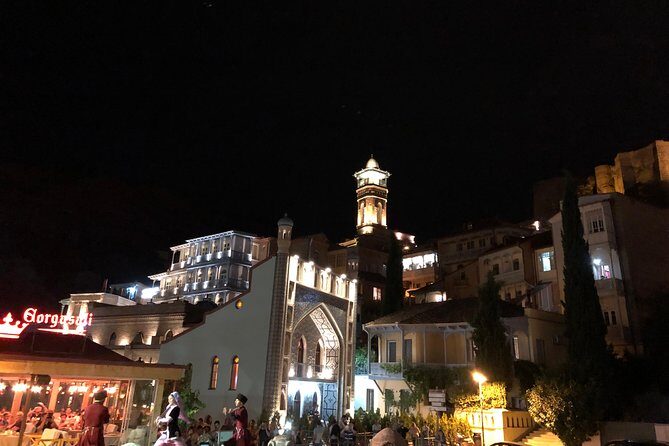
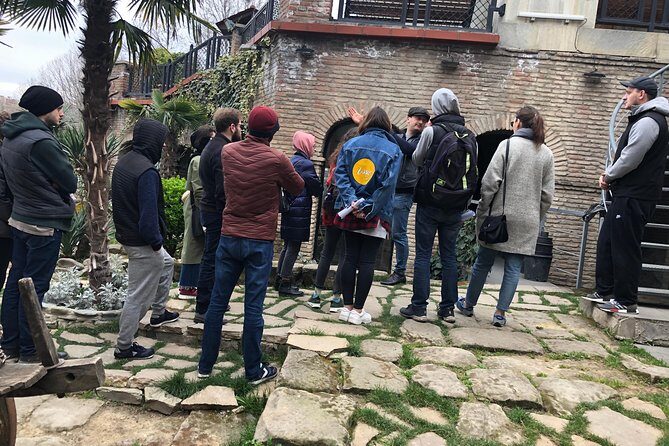
This tour is designed to solve a common problem in Tbilisi: the city is easy to wander in daylight, but at night it helps to have a guide who knows where the important angles are. You start at Berikaoba and work your way through the Old Town, down near historic churches and bridges, and up toward hilltop views by cable car.
For me, the value comes from three things. First, you get a tight story arc—from folk traditions and religious landmarks to modern architecture and illuminated river routes. Second, many stops are built around free or included viewing moments, so you’re not paying ticket after ticket just to walk. Third, it ends in a smart place for continuing your evening: near the Tbilisi Funicular Lower Station.
The pacing is relaxed but active. The route includes short walks between stops (often 10–20 minutes at a time), with multiple brief “look and learn” stops where you can actually take photos and not just hustle through.
You can also read our reviews of more walking tours in Tbilisi

Price and pacing: what $72.25 gets you (and what it doesn’t)
At $72.25 per person, you’re not just buying a stroll—you’re paying for a guided route with included transport. The tour includes taxes and fees, a tour guide, and one-way cable car. Most of the listed admissions are free for stops along the way, so your money is mostly going toward the guide’s time and the ride up the hill.
What’s not included: food and drinks, and also the funicular round-trip (the tour does stop near the funicular area, but it’s not packaged as a ride for you). If you want to hop on the funicular after the tour, that’s on you.
Group size is capped at 15 travelers, which is a sweet spot: you’re not stuck with a huge crowd blocking viewpoints, and the guide can still answer questions.
Berikaoba start: improvised folk theater and a pagan-to-modern origin story
You meet your guide near Berikaoba and kick off the night with a cultural intro that sets the tone for what comes next. You’ll hear about improvised masqueraded folk theater in Georgia, traced back to a pagan festivity tied to fertility and rebirth.
This first stop is short, but it matters. It frames Tbilisi at night as more than just lights and photos. You’re walking a city where traditions still show up in how people celebrate, tell stories, and connect old beliefs to modern life.
And practically speaking, this opening also gives you a quick warm-up before the Old Town gets denser on the walking route. You’re settling into the rhythm of the night.
Rezo Gabriadze Marionette Theater and the clock tower angel moment
Next comes the Rezo Gabriadze Marionette Theater and the famous clock tower beside it. The story here is delightful and easy to visualize: there’s an angel that comes out every hour to ring the bell.
Timing matters for one key moment. The tour notes a small show called The Circle of Life at 7:00 pm at the puppet theater & clock tower area. If you’re arriving exactly at start time, this is a prime window to catch that mini performance atmosphere before the walking portion carries you onward.
If you’re the kind of person who likes odd little traditions—mechanical, theatrical, and slightly whimsical—this stop is a strong reason to book. The focus isn’t just on architecture; it’s on the living behavior of the site after dark.
Old Town corridor: Anchiskhati Basilica and why “oldest” still feels real
As you move along, you pass Anchiskhati Basilica of St Mary, described as the oldest surviving church in Tbilisi dating from the sixth century. Even when you’re just passing it, your guide’s context helps you “read” what you’re seeing: this isn’t a random old building, it’s a marker of how long the city’s spiritual life has been rooted here.
A night walk can make older buildings feel like props unless someone connects them to time. This is where a good guide earns their fee—by explaining what makes the place worth lingering near, even if you don’t stop for long.

Baratashvili Bridge viewpoint: a photo-friendly pause in the route
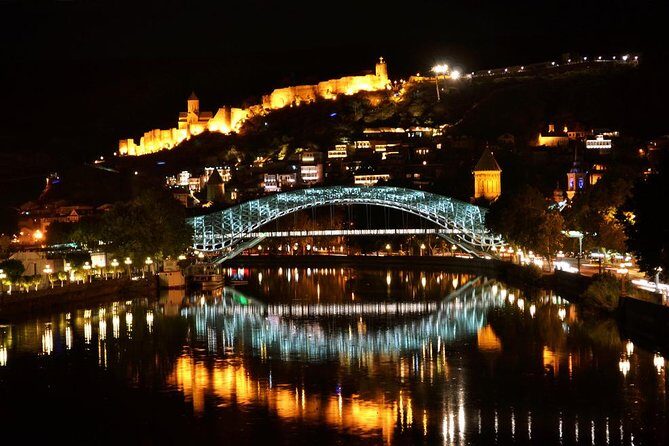
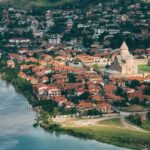
From there you reach Baratashvili Bridge, built in 1966 in place of the previously dismantled Mukhrani Bridge. The bridge is also tied to the honoring of Princess Mukhrani, which adds a human story to what could otherwise feel like just another crossing.
You’ll cross and then stop at a viewpoint for pictures of the Old Town. This is a good moment to reset your camera settings and enjoy the wide angle before you head into the more “night spectacle” zones.
Bridge of Peace: LED lights over the Kura River
Then comes one of the most visually fun portions of the tour: the Bridge of Peace. It’s described as a steel and glass construction illuminated with numerous LEDs, running over the Kura River in downtown Tbilisi.
This is the kind of stop that’s worth it even if you don’t usually chase nighttime lights. The combination of modern materials and the river beneath gives you depth in your photos—and also makes it feel like the route is balancing old and new on purpose, not by accident.
Plan for slow steps here. You’ll want time to walk the bridge and look back at the city lights.
Narikala Fortress on Metekhi hill: light show + architecture talk
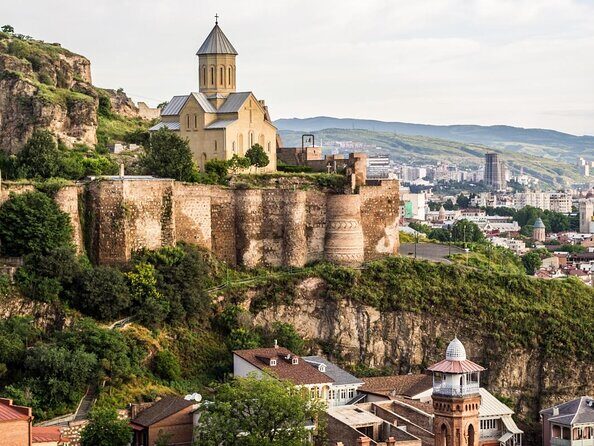
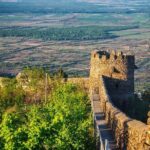
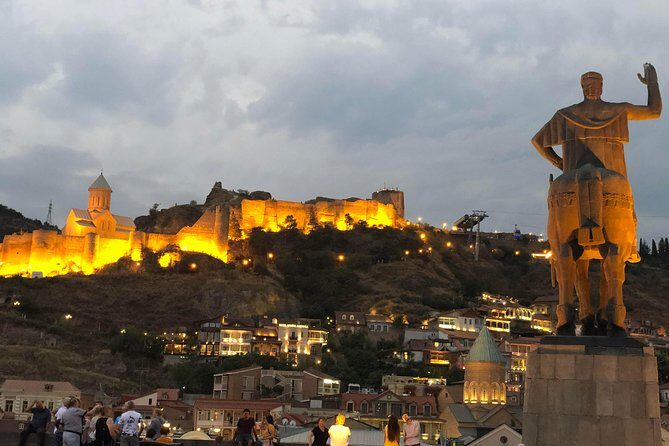
Next is Narikala Fortress, lit up on Metekhi hill. The tour focuses on its historical significance and architecture while you enjoy its night lighting and the light show atmosphere.
This is one of those stops where the view does most of the work—but the guide makes it click by tying the fortress to the city’s layout and development. If you’ve ever looked at a fortress wall and thought, cool, but why here, this is the kind of explanation that turns “nice view” into “now I get it.”
You’ll spend about 20–30 minutes around this area, so it’s not just a quick snapshot. It’s enough time to look, listen, and try a couple of angles without feeling rushed.
Cable car to the hilltop: one-way ride included, views guaranteed
Here’s the practical win: Rike-Narikala Cable Car (Lower Station) is part of the tour, with a one-way cable car ride included. This gets you up to a hilltop vantage without asking you to climb every meter on your own.
Once you arrive, you’ll have a chunk of time to walk around and take in views of the old town. The tour also includes info about the National Botanical Garden of Georgia, located in the Tsavkisis-Tskali Gorge on the southern foothills of the Sololaki Range. You won’t tour the garden itself during this night route, but the mention helps you understand what that “green” area you see around the hills actually is.
Passing Jumah Mosque and the religious split that’s close-by
Another quick but meaningful segment involves passing the Jumah Mosque, described as lit up and with Sunni and Shia Muslims praying side by side.
This isn’t a long stop, but it helps you understand how Tbilisi’s faith spaces can sit close together. At night, when everything is dimmer and easier to lump into “pretty architecture,” this kind of detail keeps your understanding grounded.
Leghvtakhevi Waterfall: center-of-city and lit up at night
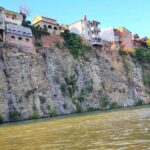
Then you’ll reach Leghvtakhevi Waterfall, described as surrounded by cliffs and located in the very center of Tbilisi. In the evening, it’s impressive with a lights show.
This stop is short (around 10 minutes), but it’s memorable because the location is unexpected. A waterfall in the center of a city sounds like a myth until you see it.
If you love quick night scenes you can photograph fast, this one delivers without demanding a long commitment.
Chreli Abano viewpoint: the one-screen photo concept
One of the most photo-minded parts of the route is Chreli Abano. You’ll follow your guide to a secret-feeling viewpoint designed for a specific type of shot: you can place multiple Tbilisi elements in one screen—houses with balconies, a mosque, a church, the fortress, and sulfur baths.
The tour gives you about 10 minutes here. That might feel brief, but it’s actually enough time for most people to take a couple of attempts once they understand the viewpoint logic.
This is also where the guide’s helpfulness matters. A good guide doesn’t just point. They teach you where to stand and what to include.
Abanotubani streets and sulfur bath area: walking without rushing
After the viewpoint, you’ll enjoy views of the tiny streets around Abanotubani and start taking photos near the sulfur bath area.
This segment shifts from spectacle to atmosphere. You’re moving at night through narrow streets where the lights reflect and bounce off stone surfaces. It’s not a checklist stop; it’s a chance to slow down and enjoy the texture of the old city.
Liberty Square and St. George Monument: a bright finish in the city center
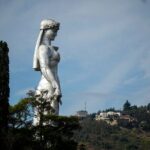
Next you pass Liberty Square (Freedom Square) and enjoy the view of the Monument of St. George, lit up.
This is quick—about 7 minutes—but it gives you a strong, graphic landmark before the end phase. It’s also a useful moment to orient yourself if you’re continuing on afterward.
Tbilisi Funicular Lower Station: history in a short window
You’ll end up near the Tbilisi Funicular (Lower Station). The tour includes a short walk and some guided history while you shoot video and capture the feel of the night city.
Just know: funicular round-trip isn’t included, so treat this as an end point and a chance to decide what you want to do next.
The tour concludes next to the main entrance of the Lower Station, which is handy because it keeps your night plan flexible.
Mtatsminda Park at the end: old and modern together
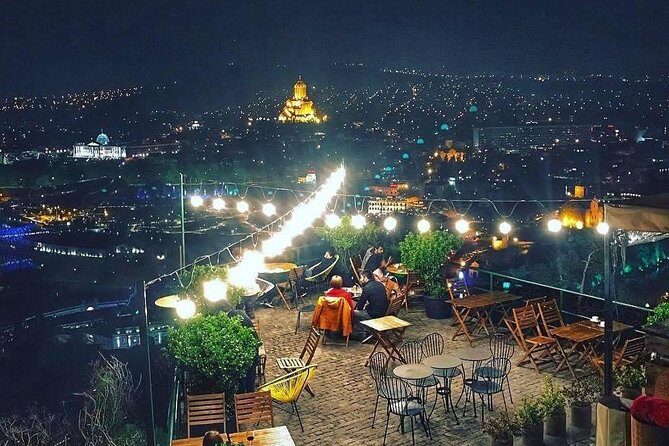
The hilltop finale is Mtatsminda Park, where you admire glowing modern and old buildings from the Mtatsminda observation deck.
The key idea here is contrast. You’ve spent the evening moving through centuries of religious sites and old-town streets, and then you look out at the city continuing into the present. The night lighting helps make that contrast visible all at once.
This is where the earlier climbs and bridges start paying off—because you can finally see the whole structure of the city in one direction.
Who should book this night tour (and who should skip it)
This tour is ideal if:
- You’re a first-time visitor who wants a guided orientation after dark.
- You like photo stops and want help choosing viewpoints.
- You don’t want to guess where the best nighttime angles are across Old Town and the hills.
- You prefer a small group (max 15) and a guide who will answer questions.
It may not be ideal if:
- You have limited mobility or dislike extended walking at night.
- You expect a full sit-down experience. This one is mostly walking and short stops.
- You’re tightly scheduled for dinner right after 10 pm. The tour ends at the funicular area, so your plans need to flow.
Should you book Tbilisi by Night Walking Tour?
If you want a guided night route that connects Tbilisi’s traditions, churches, bridges, and hilltop views in one evening, I’d book this. The included one-way cable car helps a lot, and the route is clearly built for nighttime lighting and good photo angles.
I’d especially lean toward this tour if you like asking questions and getting straight answers while you walk. In fact, guides like Anya and Zora (both highlighted in customer experiences) are praised for mixing strong local knowledge with patience—exactly what you want when you’re chasing both meaning and pictures in the dark.
If you can handle a few hours of walking and you’re excited by illuminated landmarks, this is a high-value way to see Tbilisi after dark.
FAQ
What time does the tour start?
The tour starts at 7:00 pm.
How long is the tour?
It lasts about 3 hours to 3 hours 30 minutes.
What’s the meeting point?
You meet near Berikaoba (Berikaoba MRW4+HPC, Tbilisi, Georgia).
Where does the tour end?
It ends next to the main entrance of the Tbilisi Funicular Lower Station (22 Daniel Chonqadze St).
Is the cable car included?
Yes. The tour includes one-way cable car.
Is the funicular ride included?
No. The funicular round-trip is not included.
What language is the tour offered in?
It’s offered in English, and the provider notes that the guide may be multi-lingual.
Are admissions included?
The itinerary lists several stops with free admission tickets, and the tour itself includes taxes and fees. (Food and drinks are not included.)
How big is the group?
The tour has a maximum of 15 travelers.
Is free cancellation available?
Yes. Free cancellation is available up to 24 hours before the experience’s start time.
Can I bring a service animal?
Yes. Service animals are allowed.