REVIEW · TBILISI
3 Days private tour in Georgia from Tbilisi
Book on Viator →Operated by Must See Georgia · Bookable on Viator
Georgia rewards a good plan. This private 3-day route from Tbilisi stacks UNESCO Mtskheta churches, classic Old Tbilisi strolling stops, and mountain viewpoints in a way that feels adjustable to you. I like that the focus is on real places, not just quick photo stops.
Two things I particularly like: you get an efficient mix of sacred sites and scenery, plus a guide who’s described as friendly, attentive, and genuinely invested—often named Davit. One consideration: the itinerary leans on good-weather mountain views, and the tour notes it requires good weather, so cloud or rain can affect what you see.
In This Review
- Key highlights at a glance
- Why This 3-Day Georgia Plan From Tbilisi Works
- Day 1 in Mtskheta and Old Tbilisi: Churches, Baths, and Cable-Car Views
- Jvari Church: the confluence viewpoint
- Svetitskhoveli Cathedral: Georgia’s living pillar story
- Tbilisi’s Sameba (Holy Trinity Cathedral): modern, monumental, and different
- Meidan Bazaar and the sulfur baths area: Old Tbilisi without the rush
- Bridge of Peace: short stop, strong design
- Narikala Fortress + Kartlis Deda: the city from above
- Day 2: Bodbe Monastery, Sighnaghi’s Slow Charm, and Khareba Wine Tunnels
- Bodbe Monastery of St. Nino: a calm, meaningful stop
- Sighnaghi: the City of Love with real views
- Tunnel Winery Khareba’s: 7.7 km under the hillside
- Day 3: Zhinvali Reservoir, Ananuri, Gudauri, and the Gergeti Church View
- Zhinvali Reservoir: that perfect blue surface stop
- Ananuri Fortified Castle Ensemble: stone feels alive
- Aragvi River: a short stop with useful geography
- Gudauri: ski-town scale and cable-car views
- Gergeti Trinity Church near Stepantsminda: the big finish
- Price and Value: What’s Included in $220 and What’s Extra
- Transportation Comfort: Pickup, Air-Conditioned Vehicle, and a Private Pace
- The Guide Makes the Difference: Davit’s Friendly, Committed Style
- When to Go and How Weather Can Affect Your Mountain Day
- Who This Private Tour Is Best For
- Should You Book This Tour from Tbilisi?
- FAQ
- FAQ
- How much does the 3-day private tour cost?
- Is pickup included from Tbilisi?
- What sights have admission tickets included?
- Is food included in the tour?
- Is this a private tour or a shared group?
- Do I need good weather for this tour?
Key highlights at a glance
- Davit-style personal attention: caring, funny, and focused on making the days feel easy and memorable
- Mtskheta UNESCO day: Jvari and Svetitskhoveli give you Georgian church power in a small area
- Old Tbilisi + sulfur baths zone: Meidan Bazaar area, Shardeni street vibe, and the Bridge of Peace
- Sighnaghi and Khareba wine tunnels: a calmer escape plus a very specific 7.7 km underground wine experience
- Mountain finale: Zhinvali reservoir photo stop, Ananuri fortress ensemble, Gudauri, and Gergeti Trinity Church
Why This 3-Day Georgia Plan From Tbilisi Works
This tour is designed for people who want a lot of Georgia in limited time, without feeling like a rushed bus circuit. It’s a private tour, so your group sets the pace, and the provider explicitly says the itinerary depends on you rather than a rigid script.
You’ll also appreciate the comfort basics. You’re traveling in an air-conditioned vehicle, with bottled water and WiFi on board. Pickup is offered, and airport transfers are included—so you can land, meet your guide, and start sightseeing rather than negotiating buses.
Value-wise, the price is $220 per person for 3 days of private transport plus many included entrance tickets. That matters because Georgia’s top sights can add up when you pay admission one by one and then layer in transport. Here, you’re buying time and smooth logistics. The trade-off is that a few key add-ons are not included (more on that later), especially for the Kazbegi-to-Gergeti approach and the wine tunnel tour tastings.
You can also read our reviews of more private tours in Tbilisi


Day 1 in Mtskheta and Old Tbilisi: Churches, Baths, and Cable-Car Views
Day 1 is a strong opener: it moves from UNESCO monuments outside Tbilisi into the city’s older quarters. It’s a satisfying arc—spiritual history first, then streets, river bridges, and viewpoints.
Jvari Church: the confluence viewpoint
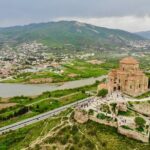
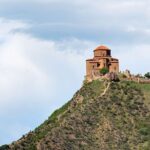
Jvari Church (Monastery of the Cross) sits on a rocky mountaintop above the confluence of the Mtkvari and Aragvi rivers, looking down toward Mtskheta. It’s a sixth-century Georgian Orthodox monastery, with the current Great Church of Jvari generally dated to 586–604. Admission is included, and your stop is about 30 minutes.
Practical tip: dress for wind. Even when the city is warm, ridge areas can feel chilly. Bring something to wipe lenses too, because this is the kind of place where river-and-town views tempt you to shoot a lot of photos.
Svetitskhoveli Cathedral: Georgia’s living pillar story
Next comes Svetitskhoveli Cathedral, described as the Cathedral of the Living Pillar. This is UNESCO-listed and tied to major Georgian religious tradition, including the burial site of Christ’s mantle. It’s also the second-largest church building in Georgia after the Holy Trinity Cathedral. Your time here is about an hour, with admission included.
What I like about putting Svetitskhoveli after Jvari: the locations feel different—one elevated and dramatic, the other central and monumental. Together, they give you the full mood of Georgian church architecture and how it shaped identity around Mtskheta.
Tbilisi’s Sameba (Holy Trinity Cathedral): modern, monumental, and different
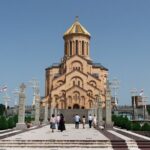
After Mtskheta, you head into Tbilisi for the Holy Trinity Cathedral, known as Sameba. This is Georgia’s main Orthodox cathedral, built between 1995 and 2004, with a mix of traditional Georgian church styles. You’ll spend around 40 minutes, and admission is included.
Sameba is huge and modern compared with the older stones of Mtskheta, so it can feel like a reset—less “medieval hilltop,” more “present-day national landmark.”
A few more Tbilisi tours and experiences worth a look
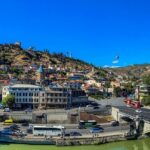
Meidan Bazaar and the sulfur baths area: Old Tbilisi without the rush
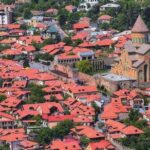
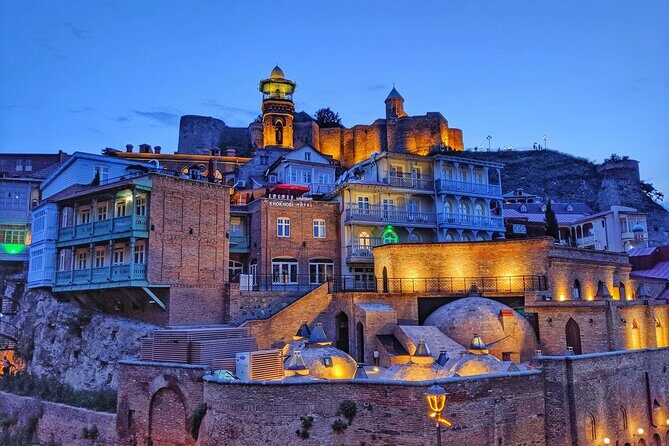
Then you shift into the city’s living texture. The plan includes a walk toward the Legvtakhevi (Fit ravine) area and a nearby waterfall, followed by time near the sulfur bath districts. Some bathhouses date to the 17th–19th centuries and are built on natural hot water springs.
You also pass by Meidan Square and Shardeni street, where you’ll find cafes, bars and pubs, souvenir shops, and art galleries. This stop is about 1 hour and marked as free admission.
My advice: treat this part like a slow walk, not a checklist. Shardeni is often where you get the easiest sense of how locals and visitors actually spend evenings—especially if your guide shares music or food ideas during the stroll (people specifically mention that kind of personal touch).
Bridge of Peace: short stop, strong design
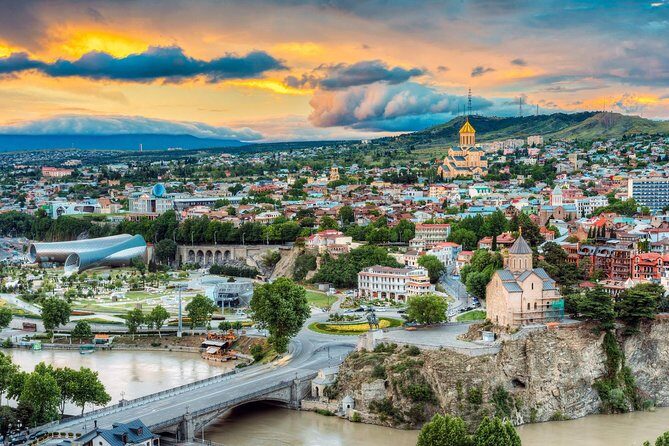
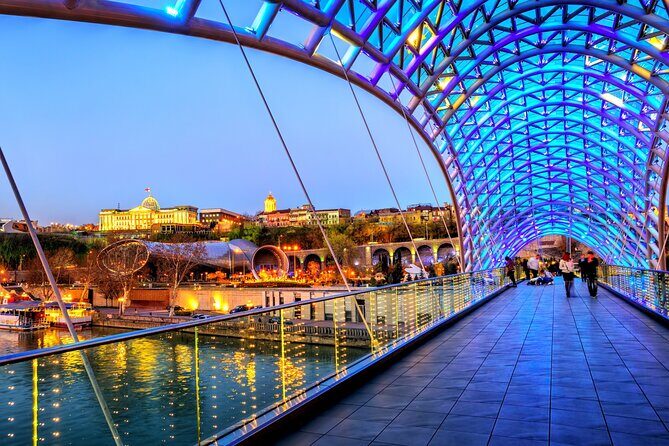
The Bridge of Peace is a bow-shaped pedestrian bridge over the Mtkvari River. It officially opened in May 2010 and was brought to Georgia from Italy in 200 unassembled components. Your time here is only about 5 minutes, with free admission.
It’s quick, but it’s worth it for the shape and the river views. Use the moment to orient yourself before the cable car and fortress angle.
Narikala Fortress + Kartlis Deda: the city from above
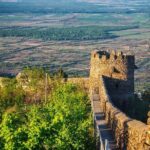
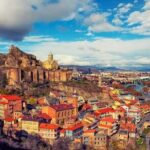
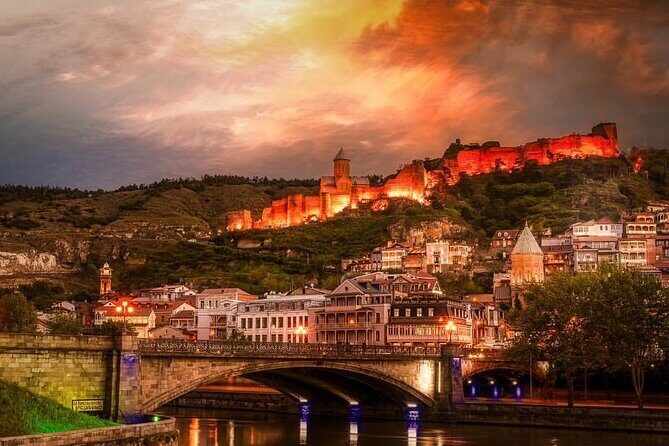
Finally, you head to Narikala Fortress via cable car. Narikala’s origin is tied to earlier fortifications—first built in the 4th century and later developed in the 7th and 12th centuries. The name Narikala is said to come from Mongols, meaning little fortress. After the fortress, you’ll also see the Mother of Georgia statue, Kartlis Deda, erected in 1958.
This part takes about 50 minutes, and admission is listed as not included. In practice, this often means your cable-car ride or related entry may be an extra cost.
Day 2: Bodbe Monastery, Sighnaghi’s Slow Charm, and Khareba Wine Tunnels
Day 2 is where the trip widens from Tbilisi’s edge into Kakheti’s vibe—religious depth, small-town atmosphere, and wine culture.
Bodbe Monastery of St. Nino: a calm, meaningful stop
Bodbe Monastery (St. George’s Monastery of St. Nino) is one of Georgia’s most important religious sites. A nunnery exists today where the monastery used to be. The St. George Cathedral holds the remains of St. Nino, known as Equal to the Apostles for bringing Christianity to Georgia. The plan includes a new cathedral being built nearby, using much of the same construction methods as older Georgian cathedrals. Your time here is about 45 minutes and admission is free.
This is a good moment to slow down. If Day 1 felt like strong landmarks one after another, Bodbe gives you a quieter emotional beat.
Sighnaghi: the City of Love with real views
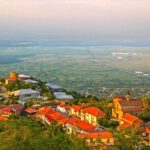
Next is Sighnaghi, described as the City of Love, located in eastern Kakheti. It’s tied to the Silk Road and has recently undergone restoration and infrastructure improvements. The town is known for high-end hotels and dining and fine wines, plus views of the Alazani Valley. Your time is about 1 hour, and admission is free.
What makes Sighnaghi work on a tight schedule: it gives you a change in pace without consuming a whole day. One hour is enough to walk a bit, absorb the restored look, and get your bearings before the wine tunnels.
Tunnel Winery Khareba’s: 7.7 km under the hillside
Khareba’s Tunnel Winery focuses on one very specific feature: 7.7 kilometers of wine tunnels dug out of a hillside in the early 1960s for constant-temperature aging. Today, the tunnels store over 25,000 bottles of Khareba’s European and qvevri wines.
Tours go into part of the tunnels, where tastings can take place, then up to a viewing tower and restaurant. Your stop is about 45 minutes, and admission is not included.
If you like wine but you also like unusual engineering and atmosphere, this is the kind of stop you remember. It’s not only about pouring; it’s about the setting and why the tunnels exist.
Day 3: Zhinvali Reservoir, Ananuri, Gudauri, and the Gergeti Church View
Day 3 is the mountain day, and it starts with the water-and-photo moment that often anchors the whole Kazbegi drive.
Zhinvali Reservoir: that perfect blue surface stop
Zhinvali is an artificial water reservoir on the river Aragvi, formed by a hydroelectric dam built in 1986. If you’ve ever driven the Georgian Military Road toward Gudauri or Mount Kazbegi (Gergeti Church), you’ve probably seen the famous blue surface lake. Even if you haven’t, you’ll likely get a stop near a small viewing platform with a great chance for landscape photos.
Your itinerary includes a dedicated stop here, timed for a quick, satisfying view before heading deeper into the fortress and church area.
Ananuri Fortified Castle Ensemble: stone feels alive
Ananuri is described as the only fortress of Georgia that reached us in its original form. You walk through the defense complex and get the feeling of living in the Middle Ages, along with context about the Aragva eristavi (heads of the people). You’ll also pay attention to the Assumption Church of the 17th century, decorated with bas-reliefs where the meaning is said to be hidden in the details.
This is about 45 minutes, and admission is free.
Aragvi River: a short stop with useful geography
A quick stop along the Aragvi River helps you understand what you’re seeing. The plan notes that the White Aragvi flows from Gudauri down to Pasanauri, where it meets the Black Aragvi; from there, it continues as the Aragvi. It goes on to the Jinvali Reservoir, then eventually merges with the Mtkvari near Mtskheta.
Even if your time is only about 15 minutes, that “map in your head” effect makes later viewpoints easier to appreciate.
Gudauri: ski-town scale and cable-car views
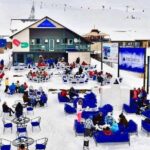
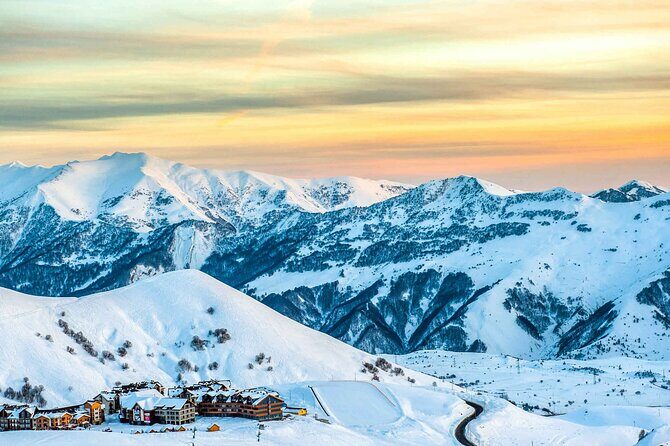
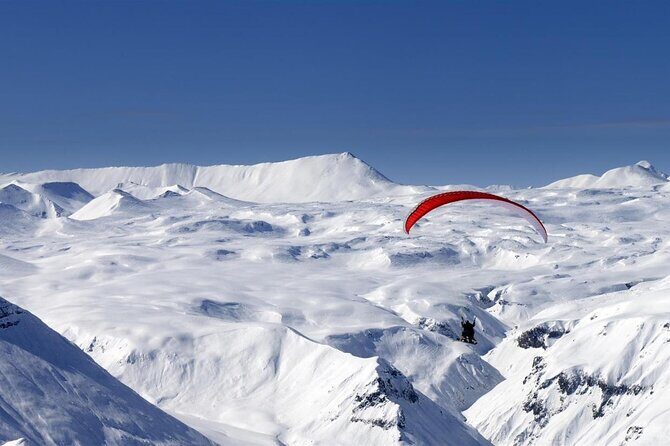
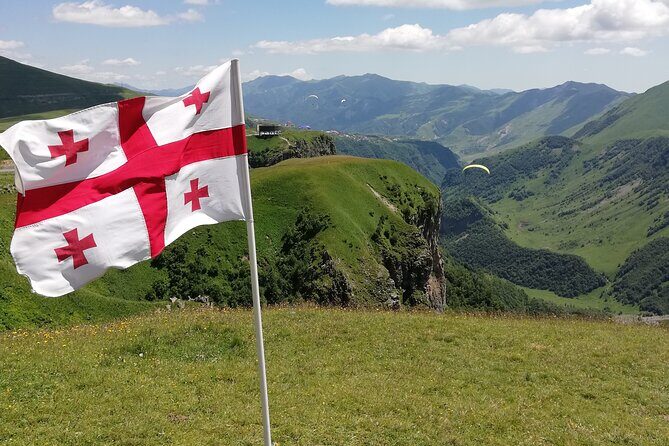
Gudauri is Georgia’s largest and highest ski resort, with elevations from about 1,993m to 3,276m. It has 34.8 km of slopes and 15 lifts. Even outside ski season, the area is built for views, and the plan notes great views from the cable car. Your time here is about 1 hour.
Admission is listed as free, but you should still plan for possible optional cable-car costs. The goal is to enjoy the height and the mountain feel.
Gergeti Trinity Church near Stepantsminda: the big finish
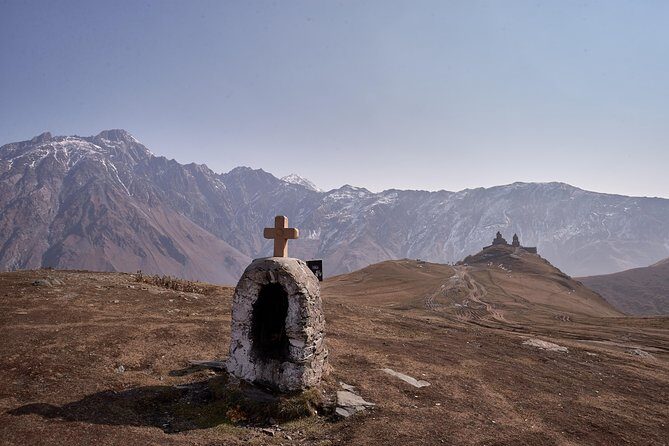
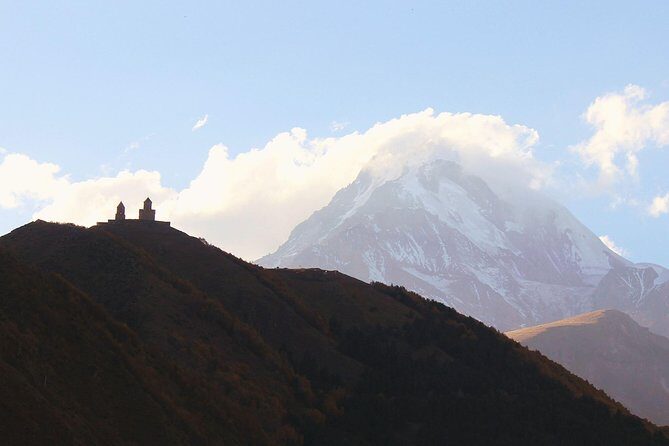
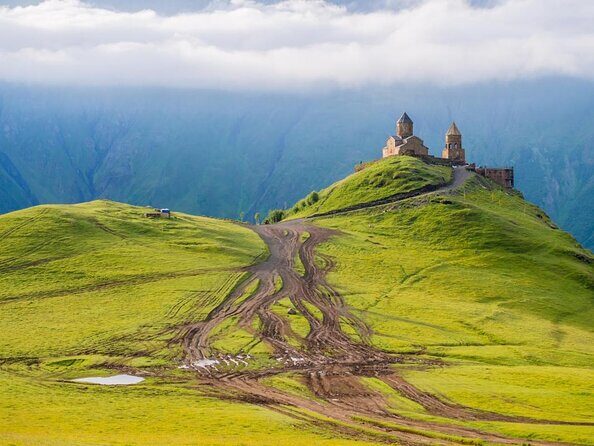
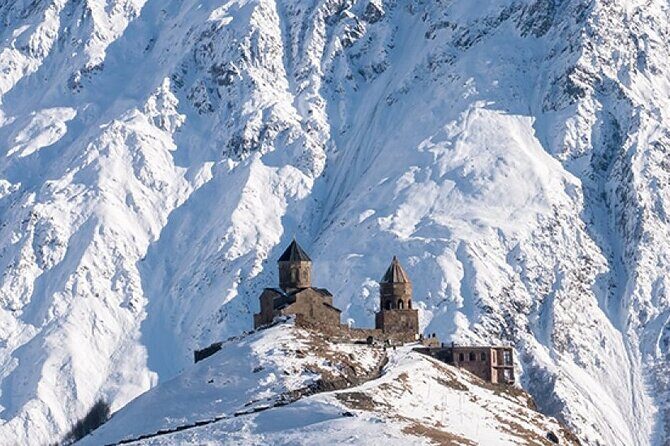
The grand finish is Gergeti Trinity Church near the village of Gergeti. The church is situated at about 2170 meters elevation on the right bank of the river Chkheri, under Mount Kazbek. Your time here is about 1 hour, and admission is listed as not included.
There’s also an important practical note: transportation from Kazbegi to Gergeti by 4WD car is optional and not included. So if you’re traveling in a vehicle or with conditions that make the drive/approach tricky, ask your guide how you’ll get there and what’s included in your day’s plan.
Pack for temperature swings. Mountain air can change fast, and church-hour photos often mean you’ll be standing still longer than you expect.
Price and Value: What’s Included in $220 and What’s Extra
At $220 per person for roughly 3 days, this sits in the category of “worth it if you want private comfort” rather than “cheap group sightseeing.” The big reason is the private transportation: you’re not just paying for a route—you’re paying for an air-conditioned vehicle, bottled water, and WiFi on board, plus pickup and airport transfers.
Also included are all fees and taxes, and the tour notes a mobile ticket.
What’s included on the sight side depends on the stop:
- Included admission: Jvari Church, Svetitskhoveli Cathedral, Sameba, Bodbe Monastery, Sighnaghi, Meidan/Baths area parts, Bridge of Peace, Ananuri, and the river stop.
- Not included admission/add-ons: Narikala area (likely cable car or related fees), Khareba Tunnel Winery, and Gergeti Trinity Church. 4WD transportation from Kazbegi to Gergeti is also optional and not included.
My value take: you’re already getting most of the ticket load taken care of for major UNESCO and heritage stops. If you also plan to do the tunnel winery tasting and reach Gergeti comfortably, budget extra for those two choices, because they’re the main “pay extra” moments.
Transportation Comfort: Pickup, Air-Conditioned Vehicle, and a Private Pace
This is a private tour, which changes how the days feel. You’re not waiting on strangers, and you can usually adjust small timing needs—like slowing down for views, or lingering near a cathedral detail you care about.
You’ll ride in an air-conditioned vehicle, with bottled water and WiFi on board. That doesn’t sound romantic, but it matters on Georgian roads where you can feel fatigue from stop-and-go driving.
Pickup offered and airport transfers included is another quiet win. It reduces the most stressful part of travel planning: figuring out what happens after landing. In a place where public transit can be fine but not always simple for short time windows, that support makes the trip feel smoother.
The Guide Makes the Difference: Davit’s Friendly, Committed Style
People often talk about the guide as a core part of the experience, and the names Davit/David show up clearly. The consistent message is that he’s open, helpful, attentive, and caring, with a strong commitment to making the trip work day by day. There’s also mention of humor and a feeling that the guide becomes part of the team, not just a person who hands you a timetable.
This matters for an itinerary like this, because you’re mixing very different settings:
- UNESCO church visits with time for looking
- Old Tbilisi walking zones with casual streets
- A wine stop that benefits from a good explanation
- A mountain day where timing and weather really affect outcomes
A guide who’s tuned in to your questions can turn those hours into a story you remember, not just a list of coordinates.
When to Go and How Weather Can Affect Your Mountain Day
The tour requires good weather. That’s not a small footnote here—Day 3 includes Gudauri and Gergeti Trinity Church under Mount Kazbek, and Zhinvali and Ananuri depend on visibility for the best photos.
If the day is cloudy or rainy, your experience may shift toward the interior parts of stops and the driving route rather than sweeping views. The provider notes that if canceled due to poor weather, you’ll be offered a different date or a full refund.
My practical approach: choose a season when you’re likely to get clear days, and keep your expectations flexible. Mountain travel is like that everywhere, and Georgia is no exception.
Who This Private Tour Is Best For
This tour is a great fit if you:
- Want first-time coverage of Georgia’s big “wow” stops from Tbilisi
- Prefer a private pace over crowd timing
- Like mixing architecture, religion, streets, and nature viewpoints
- Enjoy wine culture and want the tunnel winery experience specifically
You might want to consider a different style if you:
- Want a strict, hour-by-hour itinerary with no flexibility
- Dislike religious sites, since multiple days include major Orthodox churches and monasteries
- Prefer to pay only for exactly what you choose, because a few parts are listed as not included (Narikala area, Khareba, and Gergeti access/optional 4WD)
Should You Book This Tour from Tbilisi?
If you want a smooth, private 3-day intro to Georgia that blends UNESCO heritage, Old Tbilisi texture, Kakheti wine tunnels, and mountain viewpoints, this is a strong bet.
Book it if:
- You value an air-conditioned private vehicle and pickup support
- You want most main admissions handled for you
- You’re okay with paying extra for the tunnel winery and the Gergeti approach if you choose optional 4WD
Think twice if:
- You’re traveling during a period where weather is often unreliable, since the tour requires good weather for the best mountain day
- You want to avoid optional costs entirely, since Narikala, Khareba, and Gergeti are marked as not included
FAQ
FAQ
How much does the 3-day private tour cost?
The price is $220.00 per person for the 3 days (approx.).
Is pickup included from Tbilisi?
Pickup is offered, and the tour also includes airport transfers.
What sights have admission tickets included?
Admission tickets are included for Jvari Church, Svetitskhoveli Cathedral, Tbilisi Holy Trinity Cathedral, and the listed free-admission stops like parts of the Meidan area and Bridge of Peace. Admission is listed as not included for Narikala Fortress, Tunnel Winery Khareba’s, and Gergeti Trinity Church.
Is food included in the tour?
No. Food and drinks are not included.
Is this a private tour or a shared group?
It’s a private tour/activity, and only your group participates.
Do I need good weather for this tour?
Yes, the experience requires good weather. If it’s canceled due to poor weather, you’ll be offered a different date or a full refund.