REVIEW · TBILISI
17 Day Private Tour through Georgia
Book on Viator →Operated by Georgian Holidays · Bookable on Viator
Georgia moves fast, but you won’t feel rushed. This 17-day private-style route links Tbilisi’s big cathedrals, mountain monasteries, wine country, and Svaneti towers with a professional guide and driver doing the heavy lifting. You get a lot of iconic stops without feeling like you’re just hopping off a bus for a photo.
My two favorite parts are the way the itinerary mixes hands-on experiences (like cave towns and museum collections) with classic Georgian landmarks, and the fact that the schedule includes a sensible rhythm of walks, viewpoints, and time to wander. One thing to keep in mind: it’s a long country-crossing plan, with lots of driving days and some hikes that may feel demanding if you’re not used to mountain walking.
In This Review
- Key highlights you’ll actually use to decide
- A 17-day Georgia loop with Tbilisi as your bookends
- Day 1 and Day 2 in Tbilisi: Sameba to sulfur baths
- Kakheti Days 3–4: monastic roots, wine cellars, and Gremi’s royal leftovers
- UNESCO near Mtskheta, then to Kazbegi: Cross Pass minerals and Gergeti Church views
- Gori and Uplistsikhe to Kutaisi: Soviet history, cave streets, and Gelati’s Golden Age
- Svaneti Days 9–10: Ushguli’s medieval towers and frescos you can’t fake
- Svaneti Day 11 then Batumi: museum depth to Black Sea relaxation
- From Borjomi to Rabati Castle and Vardzia: spa park to rock-cut monastery
- The final days back in Tbilisi: lakes, reservoirs, and real downtime
- Price and value: $4,219 per person for a full-country plan
- Who should book this (and who should think twice)
- Should you book Georgian Holidays’ 17-day Georgia tour?
- FAQ
- Where does the tour start?
- How long is the tour?
- What time does the day start?
- What’s the best time to go?
- What’s included in the price?
- What isn’t included?
- How many people are in the group?
- Can I cancel and get a refund?
Key highlights you’ll actually use to decide
- Small-party feel (max 15) while still traveling with a dedicated guide/driver and pickup
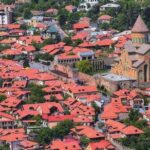
- Tbilisi’s “starter pack”: Sameba, Narikala by cable car, sulfur baths in Abanotubani, and major museums
- Kakheti wine route with multiple cellar styles, from Numisi’s historic cellar setup to Twins Wine Cellar’s process-viewing pitchers
- Svaneti at UNESCO level: Ushguli’s high-altitude villages plus church frescos and an optional glacier-foothills walk
- Black Sea contrast in Batumi: Roman-era Gonio Fortress and the Botanical Gardens
- Rock-cut Vardzia and fortress ruins to balance all that mountain air
A 17-day Georgia loop with Tbilisi as your bookends
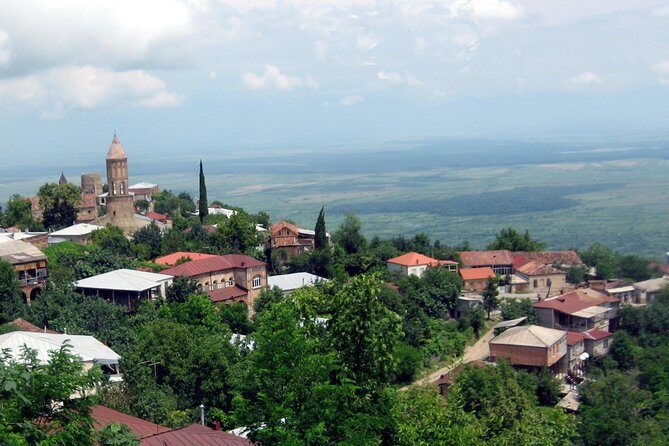
This tour starts in Tbilisi and is designed as a full-country circuit. You’ll meet at Tbilisi National Airport, then transfer to your hotel. The tour runs about 17 days with 16 overnights, and it’s listed as best for April through October.
A big practical note: the route covers roughly 2,485 km. That’s not a short “weekend tour,” so you should be comfortable with changing scenery day after day. The upside is that you get both ends of Georgia: Caucasus highs, Black Sea province life, and the volcanic plateau scenery on the way back.
You also get a start time of 9:00 am, which helps keep mornings from slipping away. And it’s capped at 15 travelers maximum, so it’s not a giant cattle-car crowd.
You can also read our reviews of more private tours in Tbilisi



Day 1 and Day 2 in Tbilisi: Sameba to sulfur baths
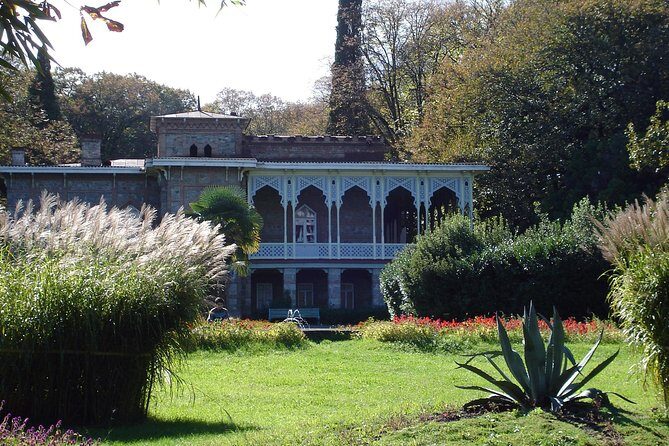
Tbilisi is where the trip sets its pace. You arrive, transfer to the hotel, then start exploring the city at full energy the next day.
On Day 2, the tour hits the main anchors in a smart order:
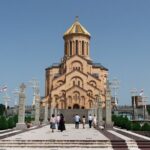
- Holy Trinity Cathedral (Sameba): a major Orthodox landmark and one of the tallest in the world. Admission is free and it’s the kind of site that helps you understand Georgian Christian roots right away.
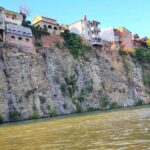
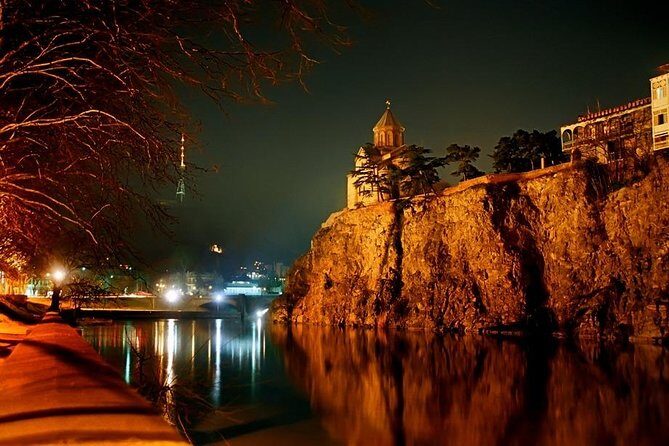
- Metekhi Cathedral: built in the 13th century, perched on the riverbank at Metekhi Plateau. It’s a quieter stop, but the positioning makes it feel like you’re watching Tbilisi from the past.
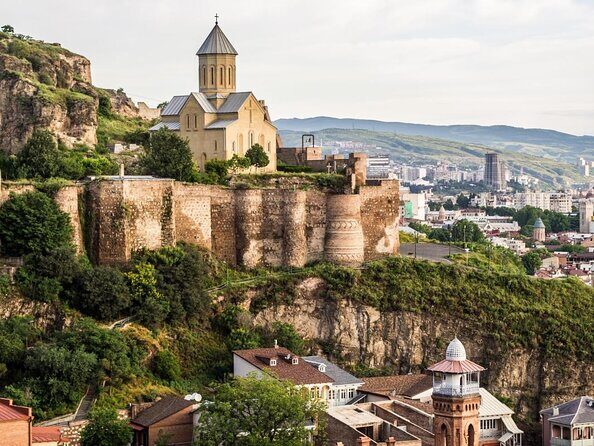
- Narikala Fortress: you ride up via aerial cableway to the fortress above the city. Admission is included. Narikala dates back to the 4th century, and the views over Tbilisi are the payoff.
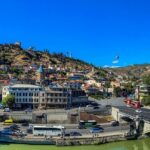
- Abanotubani: the sulfur bathhouse district and old-town lanes. This is one of the best places for casual wandering, with the canyon-ish river area, little falls, and the atmospheric “old Tbilisi” feel.
- Tbilisi History Museum: admission included. The museum covers everyday life and culture with huge depth, and it’s the kind of place that rewards curiosity more than speed.
- Georgian National Museum: also included, with human-history artifacts from the Paleolithic to medieval periods, plus archaeology and ethnography.
Timing matters here. The schedule mixes iconic sights with at least a couple museum blocks so you don’t only get buildings and viewpoints. If you’re the type who likes to read faces in a city—architecture, religion, daily objects—these museum visits help a lot.
Kakheti Days 3–4: monastic roots, wine cellars, and Gremi’s royal leftovers
Kakheti is where Georgia shifts from urban to agricultural, from city time to valley time.
Day 3 starts with David Gareja Monastery in the Gareja caves. It’s an old complex from the 6th century with hundreds of cave cells and churches. Admission is free, and the fact that part of the complex lies in Azerbaijan adds a real cross-border historical layer. Even if you don’t read every detail on site, you’ll feel the scale.
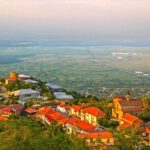
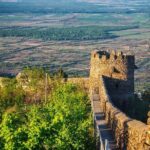
Then you move to Sighnaghi, perched in the eastern foothills, with curtain walls and a big valley view over the Alazani river. Admission is free and it works well as a decompression stop after cave monasteries.
Day 4 focuses on the Kakheti classics:
- Bodbe Monastery of St. Nino: built originally in the 9th century and renovated in the 17th. Admission is free and it’s a major pilgrimage site linked with St. Nino.
- Numisi Wine Cellar Museum at Velistsikhe: about 1.5 hours and described as one of the oldest cellars in Kakheti. Admission is free. This is valuable if you like learning how Georgian wine culture works beyond the tasting line.
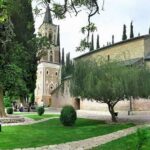
- Tsinandali House Museum of Alexander Chavchavadze: includes the residence, garden, and wine cellar. Admission free.
- Twins Wine Cellar Museum at Napareuli: this one’s more hands-on in concept. You can observe the process using transparent 500-liter pitchers. Admission is free, and the process-view approach is great if you enjoy “how it works” trips.
- Gremi Royal Citadel and Church of Archangels: a medieval-town remnant, once the capital of Kakheti’s kingdom era. Admission is free and it’s surrounded by medieval walls with turrets and towers.
End-of-day note: you stay overnight in Telavi after Gremi. That’s practical because it helps you avoid late-night hotel shuffles.
One consideration: Kakheti can make you hungry. Between the monastic stops and multiple cellar museums, plan to eat well and don’t rely on snacks alone.
UNESCO near Mtskheta, then to Kazbegi: Cross Pass minerals and Gergeti Church views
After Kakheti, the itinerary aims you toward Georgia’s UNESCO core and then north into high mountains.
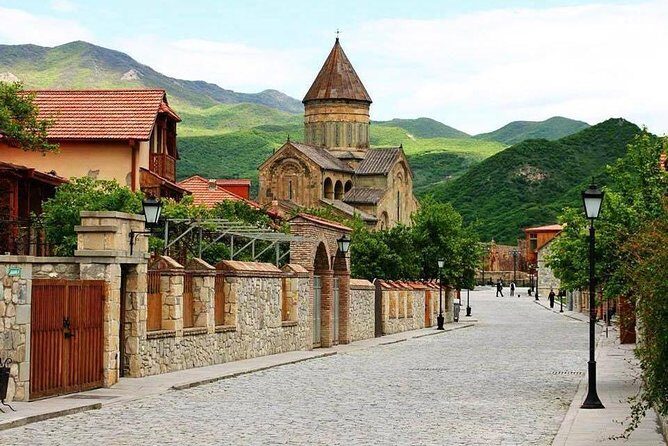
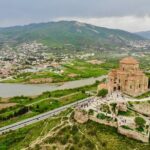
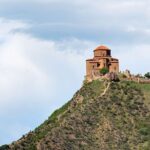
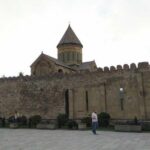
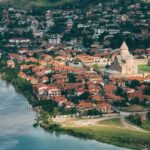
Day 5 includes Mtskheta, at the confluence of the Aragvi and Mtkvari rivers. The focus is Jvari Monastery and Svetitskhoveli Cathedral, both UNESCO World Heritage sites. Admission is listed as free. This is one of those areas where even a short visit can make you feel the “old kingdom” vibe.
You also stop at Ananuri Fortified Castle Ensemble, a fortified riverside complex. Admission is free. It’s a good visual bridge between valley history and mountain scenery.
From there you head north to Gudauri, around 2,196 m. That altitude shift is part of the appeal, even if you don’t chase altitude sickness by doing anything extreme.
Day 6 is a full Caucasus day with Kazbegi (Stepantsminda) as the goal. You stop at the Cross Pass (2,395 m) to taste local mineral waters. It’s a small moment, but it’s fun because it’s local routine, not just a scenic pull-off.
At Kazbegi, the centerpiece is Gergeti Trinity Church. You’ll do an easy walk for about 2 hours to the church on the mountain. Admission is free. The reward is panoramic views over Kazbegi town and the Kazbegi glacier. You then return to town and continue toward Dariali gorge and Gveleti waterfalls.
This day is a keeper for many reasons. It balances a clear destination (the church) with flexible “what’s around the corner” nature time (gorges and waterfalls). Just be realistic: you’re walking in mountain terrain, and weather can change quickly in this region.
Gori and Uplistsikhe to Kutaisi: Soviet history, cave streets, and Gelati’s Golden Age
Day 7 brings you into Kartli and then pushes west to Kutaisi.
In Gori, you visit the House Museum of Joseph Stalin, since the town is his birthplace. Admission is included. It’s not everyone’s cup of tea, but it’s historically unavoidable if you want to understand Georgia’s 20th-century layers.
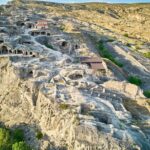
Next is Uplistsikhe Cave Town, dated as early as the 1st millennium BC. Admission is included. The value here is that you’re walking through an ancient rock-hewn town with chambers, tunnels, and “streets” carved into the hillside. It makes time feel physical.
On the way to Kutaisi, you make a few stops including the Rikoti pass and visit a pottery area and farmers’ markets (timing not specified). These smaller stops can turn a drive into something more lived-in.
Kutaisi itself includes visits to Gelati Academy and Monastery and Bagrati Cathedral, both UNESCO World Heritage sites. The schedule lists about 2 hours 10 minutes for the evening excursions. Admission is free.
On Day 8, you start with Sataplia Cave and Natural Reserve near Kutaisi. Admission is included. The reserve includes relict deciduous forests, karst caves, and well-preserved dinosaur footprints. That combination works well in a country where caves aren’t just tourist attractions—they’re part of the land.
From Sataplia you head toward Samegrelo and Zugdidi, visiting the Dadiani Palaces Historical and Architectural Museum. Admission is included. Then you continue north to Mestia in Svaneti, with a stop at the Enguri Dam, one of the highest concrete arch dams in the world.
This week is a good balance of Georgia’s eras: prehistoric cave carving, medieval UNESCO masterpieces, and Soviet-era historical memory.


Svaneti Days 9–10: Ushguli’s medieval towers and frescos you can’t fake
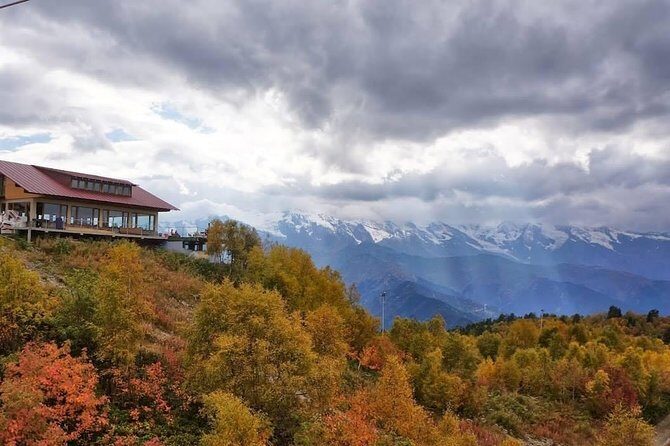
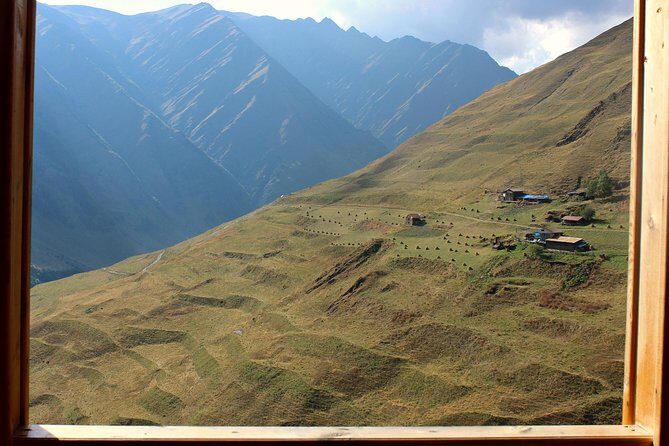
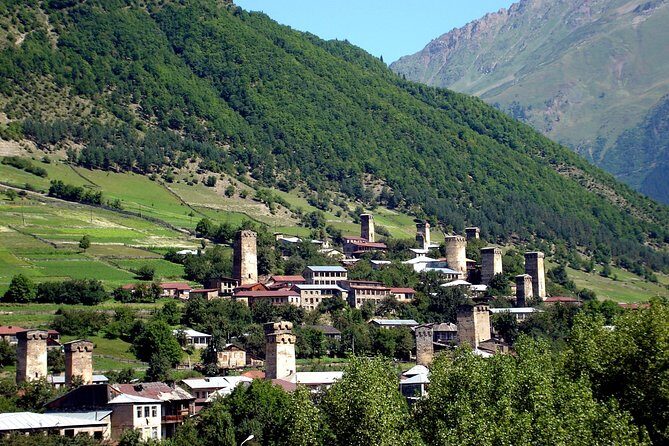
Svaneti is the reason many people plan a Georgia trip longer than a few days. It’s mountainous, culturally distinct, and visually powerful in a very practical way: you feel the remoteness in the architecture and daily life.
On Day 9, you drive to Ushguli, described as one of the highest continuously inhabited places in Europe. It includes four villages and is UNESCO-listed. Along the route you stop at the villages of Ipari and Kala to see churches with medieval frescos and murals. Admission is free.
You also get an optional easy hike toward the foothills of the Shkhara Glacier area, tied to the highest peak in Georgia. Admission is free and the schedule lists about 4 hours overall.
In the evening you return to Mestia and visit Margiani Museum, located in an ancient Svan housing estate. Admission is included. This is where you see the “how people lived” side more clearly than through monuments alone.
Day 10 includes village visits to Latali and Lemjeri near Mestia, again focused on churches with medieval decorations, frescos, and murals. The point is simple: Svaneti’s art is part of the everyday religious landscape, not a detached museum exhibit.
If you care about authenticity and not just icons, this two-day stretch is the core of the trip.
Svaneti Day 11 then Batumi: museum depth to Black Sea relaxation
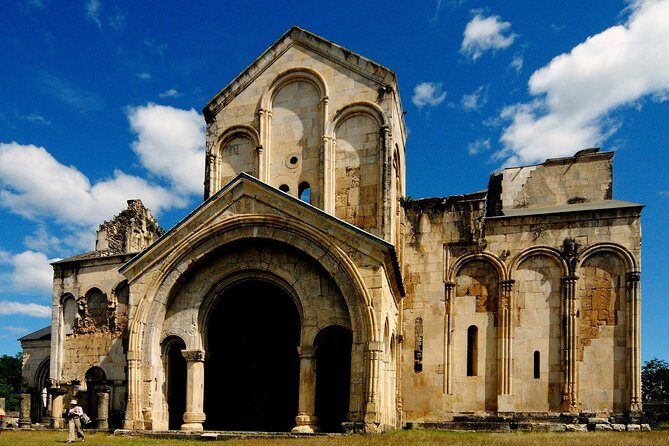
Day 11 starts with the Svaneti Museum of History and Ethnography. Admission is included. The collection includes ethnographic and archaeological artifacts, old Georgian manuscripts, and Orthodox icons painted in the Svan style. Admission is a big reason to pick this tour format over doing only outdoors.
Then you drive to Batumi, on the Black Sea. In the evening you get a short city tour with Piazza Square and a walk on the boulevards. Admission is free and the timing suggests it’s meant as a gentle landing after mountain days.
Day 12 adds coastal history and plants. You visit Gonio Fortress, about 10 km from Batumi, a Roman archaeological site from the 1st century AD, later under Byzantine rule. Admission is included.
Next is Batumi Botanical Gardens at Green Cape. Officially opened in 1912 and expanded during Soviet times, it has plants from different climate zones. Admission is included.
This is a nice change of pace: you go from carved stone heritage to a place where you walk and look at living collections.
From Borjomi to Rabati Castle and Vardzia: spa park to rock-cut monastery
Day 13 starts with Borjomi spa-resort time. You walk in the Borjomi Park and taste mineral waters from the springs. Admission is free and the schedule notes that Borjomi waters have been famous since the early 19th century and are exported widely.
You then continue to Akhaltsikhe in South Georgia.
Day 14 is a classic fortress-to-monastery day:
- Rabati Castle: a complex with a 14th-century castle plus churches, a mosque, a synagogue, and a museum. Admission is included. The museum has manuscripts, books, photos, archaeological and numismatic collections.
- Khertvisi Fortress ruins: a short stop listed around 30 minutes. Admission is included.
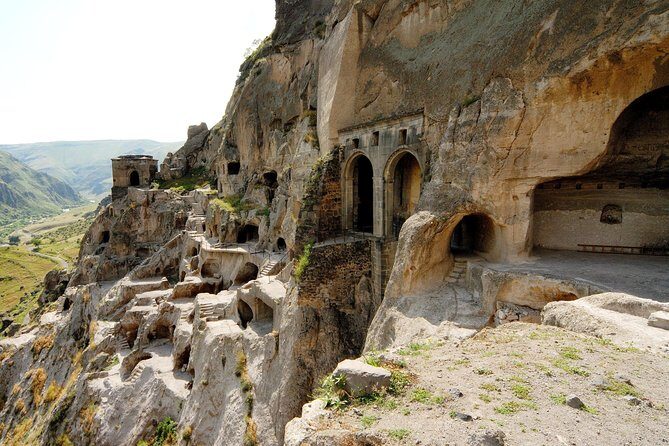
- Vardzia: the big one. A medieval monastery founded in the 12th century during the reign of Queen Tamar. It’s cut into rock along the Mtkvari river, with chambers and cave dwellings on different tiers. Admission is included and the schedule lists about 1 hour.
This day is valuable because it adds variety in Georgia’s sacred architecture: not only churches and monasteries, but also the defensible fortress logic that shaped survival.
The final days back in Tbilisi: lakes, reservoirs, and real downtime
Day 15 takes you back toward Tbilisi with stops on the way. You’ll pass through the Javakheti volcanic plateau and pause for alpine lakes Sagamo and Paravani, plus the Tsalka reservoir, described as the largest artificial lake in Georgia. In the evening, you arrive back in Tbilisi.
Day 16 includes free time in Tbilisi, which is smart. After almost two weeks of structured days, you’ll want time to do your own walking, revisit a favorite area, or shop slowly.
Day 17 ends with breakfast and checkout, then transfer to Tbilisi International Airport.
Price and value: $4,219 per person for a full-country plan
At $4,219 per person, this isn’t a budget trip. But it’s also not “just transport and a few tickets.” You’re paying for a long itinerary with 16 overnights, breakfast daily (16), 3 dinners, water, all fees and taxes, plus a professional guide and driver throughout.
Two things make the price feel more grounded:
- Private-style guidance and driving. You’re not coordinating between cities or figuring out ticket chaos each day.
- Admission coverage is built in for many of the big stops, with several marked as included or free.
Also, pickup is offered and there’s a mobile ticket option. Those details sound small, but they reduce stress over a 17-day arc.
From the feedback I saw, the operator has been praised for arranging comfortable 4/5-star accommodations and tailoring the flow with the guide. Guide names like Lasha and Dali show up in responses, which tells me they’re not just sending a driver and calling it a day.
Who should book this (and who should think twice)
This tour is a strong match if you want:
- Structure with real sightseeing time, not just “check the box” stops
- A blend of UNESCO monuments, cave towns, monasteries, and museums
- A route that covers Tbilisi, Kakheti, the Greater Caucasus, Svaneti, Batumi, and South Georgia
- Comfortable lodging and consistent daily meals (breakfast, plus dinners)
It may be less ideal if:
- You hate long drives between regions. The trip is long in both time and distance.
- You don’t like walking. There’s an easy hike to Gergeti Trinity Church and optional hiking in Ushguli-area terrain.
- You prefer to control every detail yourself. This is guided and scheduled by design.
Should you book Georgian Holidays’ 17-day Georgia tour?
If you’re aiming for a first big Georgia trip, I think this is a smart way to do it. You’ll see the country’s major regions in one connected storyline, from Orthodox cathedrals and sulfur baths to Svaneti’s UNESCO village life and rock-cut Vardzia.
Book it if you want a plan that includes museums and history, not only viewpoints, and you like the idea of paying once for a smooth route rather than juggling transportation and tickets daily.
Hold off if you only want one or two regions. Georgia is big, and this tour spreads it out on purpose. For a taste, a shorter route could fit better. For the full “Georgia arc,” this one makes a lot of sense.
FAQ
Where does the tour start?
The tour starts with a meeting at Tbilisi National Airport, followed by a transfer to your hotel.
How long is the tour?
It runs for 17 days (approx.) with 16 overnights.
What time does the day start?
The meeting start time is listed as 9:00 am.
What’s the best time to go?
The tour is listed as best from April through October.
What’s included in the price?
The tour includes all fees and taxes, water, 16 overnights, breakfast (16), and dinner (3). It also includes the guided experience and the items marked as included/free during the itinerary.
What isn’t included?
Flight tickets, insurance, visa fees, and meals unless mentioned are not included.
How many people are in the group?
There is a maximum of 15 travelers.
Can I cancel and get a refund?
You can cancel up to 6 days in advance for a full refund, and 2–6 days in advance for a 50% refund. Less than 2 days before the start time is not refunded.
If you want, tell me your travel month and your comfort level with driving and walking, and I’ll help you sanity-check whether this exact pacing fits your style.