REVIEW · TBILISI
Tour to Yerevan Sevan Dilijan Armenia from Tbilisi 2 days
Book on Viator →Operated by Friendly.ge: Transfers & Tours in Georgia · Bookable on Viator
Armenia in two days is a good idea. This is a private Armenia sampler with chauffeured ground transfers from Tbilisi, so you spend your time looking at Lake Sevan and major Yerevan sights instead of figuring out transport. I like the fact that the pace leaves room to wander on your own, not just shuffle from one photo spot to the next.
Two things I really appreciated: the all-in chauffeured transfers between stops (you relax while someone else handles the driving and timing), and the guidance from Aleksi, who helps you understand what you’re seeing as you go. The trip also builds in free time in Yerevan so you can eat where you want and walk the streets at a normal-human pace.
One consideration: the Georgia–Armenia border crossing can take a long time, sometimes hours, especially on busy days. You’ll want patience baked into your schedule.
In This Review
- Key Points Before You Go
- Armenia From Tbilisi in 2 Days: The Real Appeal
- Border Crossing Reality at Bagratashen
- Dilijan National Park: Forest Walking Without the Big-Tour Hassle
- Lake Sevan: The Jewel of Armenia, High and Big
- Yerevan Check-In at Republic Square and the Opera Building
- Cafesjian Center for the Arts: A Pay-Extra Option That’s Still Worth Knowing
- Vernissage Market: Shopping and People-Watching on Your Time
- Garni Temple: Hellenistic Architecture in the Mountain Setting
- Garni Gorge and the Basalt Organ (Symphony of Stones)
- Geghard Monastery: UNESCO-Listed Mountain Spiritual Architecture
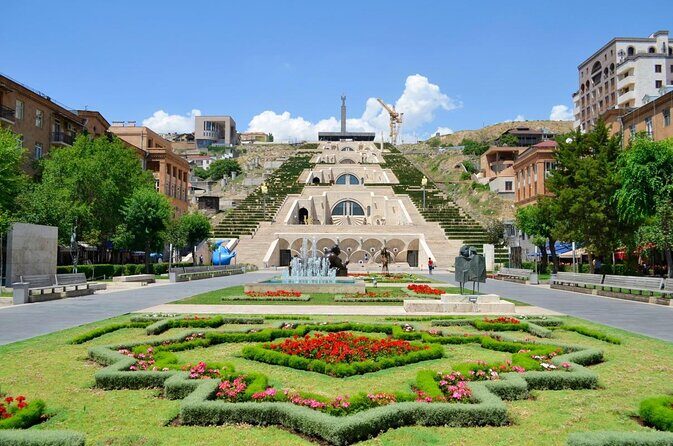
- Charent’s Arch and the Ararat Viewpoint Moment
- Price and Value: Is $225 a Good Deal?
- Who This Tour Fits Best
- Should You Book This 2-Day Armenia Side Trip?
- FAQ
- How long is the Armenia tour from Tbilisi?
- Is this tour private or shared?
- Is pickup included?
- What language is the tour in?
- Which meals are included?
- Are entrance fees included?
- Will the border crossing take time?
- Can I cancel for a refund?
Key Points Before You Go
- Private, English-speaking experience focused on your group only
- Door-to-door comfort with chauffeured transfers between every major stop
- Big scenery in short time: Dilijan forests and a high mountain lake
- Historic contrast: Garni temple to Geghard monastery (UNESCO site)
- Time in Yerevan that feels real: markets, square, and a museum option
Armenia From Tbilisi in 2 Days: The Real Appeal
If you’ve already got a few days in Georgia, this is a smart way to add Armenia without turning it into a logistics project. You’re not hopping between buses and taxis all day. Instead, you get a private driver setup and a tight route that still gives you breathing room.
What makes this plan work is the mix: natural beauty on Day 1, then Yerevan culture and architecture, followed by two of Armenia’s biggest “wow” historical stops on Day 2. You’ll come away feeling like you understand the country’s geography and heritage, even if you’re only scratching the surface.
Also, this format is ideal if you like learning without feeling trapped. The guide explains what matters, and then you’re free to walk at your own pace at each attraction.
A few more Tbilisi tours and experiences worth a look

Border Crossing Reality at Bagratashen
The day starts with the crossing of Georgia into Armenia at Bagratashen. On paper, it’s listed as a short stop with border work that can take around 30 minutes, but the fine print is what matters most: border time can stretch out and lines vary, especially on weekends or peak season.
Here’s how to handle it practically:
- Keep your documents easy to reach, not buried deep in a backpack.
- Don’t plan any tight “must be back by X” activities right after the border.
- Mentally budget extra time so you don’t feel rushed or stressed.
Once you clear it, the rest of the day flows pretty smoothly, and the scenic payoff starts quickly.
Dilijan National Park: Forest Walking Without the Big-Tour Hassle
Dilijan National Park is the kind of place you remember later because it feels calmer than the city. The forests cover more than 34,000 hectares and most of the area is woodland, with many tree types like oaks, beeches, and maples. If you’ve been driving through more open country, this is a nice reset.
You’re given about an hour here, which is enough time to:
- Walk in the shade and feel the temperature drop a bit.
- Spot how the area is used as a protected reserve since it was founded as a state forest reserve in 1958 and later named Dilijan National Park in 2002.
Admission is free, so you’re not forced into a ticketed, fast-moving loop. The trade-off is that this is still a short stop, so don’t expect a long hike. Think of it as a scenic break and a chance to breathe.
Lake Sevan: The Jewel of Armenia, High and Big
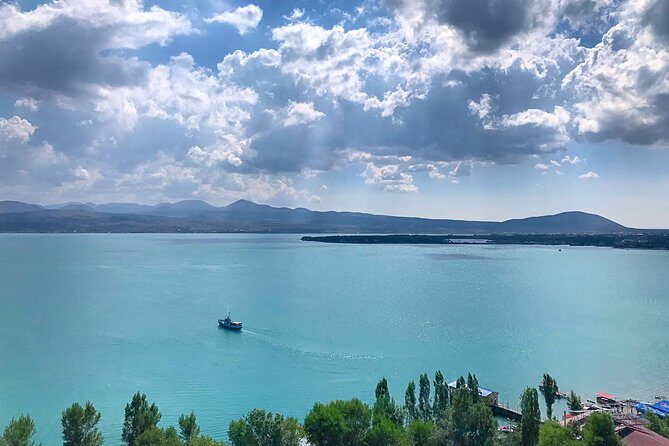
Lake Sevan is one of Armenia’s signature stops, and it earns the hype. It’s a high-mountain lake sitting in a huge mountain bowl at about 1,900 meters. The lake is extremely large for being in the highlands: roughly 940 square kilometers in surface area, with a maximum depth around 95 meters.
You get about 30 minutes on the shore. That’s not a full day, but it’s enough to:
- Take in the scale of the water and the surrounding peaks.
- Get your bearings for later if you want to return to Sevan on your own.
A detail I liked from the description: Sevan is fed by 28 rivers, but only one major river flows out (the Razdan). It gives you a better sense of why the lake feels like a self-contained system up there in the mountains.
Admission is free. Bring sun protection—high elevations can surprise you, even when the air feels cool.
Yerevan Check-In at Republic Square and the Opera Building
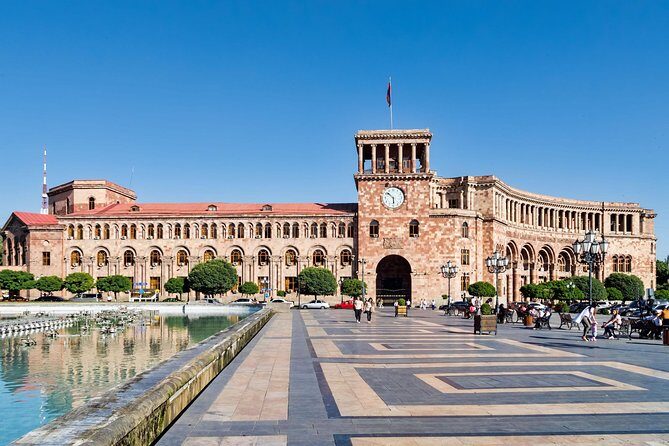
After the natural stops, you roll into Yerevan with time to check in at your hotel. Republic Square is the city’s central gathering spot, so it’s a helpful place to start. Even if you don’t go far, you can orient yourself quickly because it anchors the heart of Yerevan.
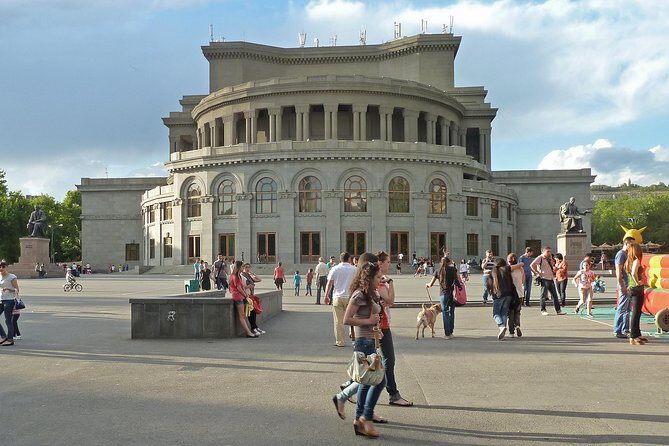
Then you visit the Armenian National Academic Theatre of Opera and Ballet named after Alexander Spendiaryan. The opera building opened in 1933, designed by Alexander Tamanian. Even if you’re not a hardcore opera fan, the architecture and the landmark status make it worth the stop.
Admission here is listed as free, so it’s one of those “why not” moments. The only drawback is that the visit time is about 30 minutes, so treat it as a look-and-learn stop rather than a deep museum-style experience.



Cafesjian Center for the Arts: A Pay-Extra Option That’s Still Worth Knowing
Later on Day 1, you’ll have a chance at the Cafesjian Center for the Arts. This is the one attraction on Day 1 where the ticket is not included, so you decide if it’s your thing.
What you should know before you pay: it focuses on contemporary art, and the center was opened in November 2009. It also runs a wider program—lectures, films, concerts, and educational initiatives. If you like stepping into a museum that feels modern compared to classic historic sites, it can balance out your day.
If you’d rather spend that hour outside, the trade-off is simple: you’ll skip a structured museum time but gain extra wandering time around Yerevan. Either choice can fit your travel style.
Vernissage Market: Shopping and People-Watching on Your Time
On Day 2, you start at Vernissage Market, an open-air market along Aram and Buzand streets. It runs about 350 meters and connects Hanrapetutyun Street with Khanjyan Street.
You get about an hour, and it’s set up for browsing rather than rushing. This is where you can:
- Look for Armenian crafts and small souvenirs.
- Practice your bargaining instincts if you’re comfortable doing that.
- Take in what local handmade trade looks like day-to-day.
Admission is free. The practical advice here is to go with a light budget for browsing, because the hardest part is deciding what you actually want to carry.
Garni Temple: Hellenistic Architecture in the Mountain Setting

Garni Temple is Armenia’s iconic Hellenistic site, dating to the 1st century AD. It’s surrounded by dramatic mountainous terrain, and you’ll feel it the moment you arrive.
The history here is not just ancient, it’s also modern restoration. A devastating earthquake in 1679 collapsed the colonnade, but enough masonry and ornamental friezes remained for reconstruction later. So when you look at the temple today, you’re seeing a blend of what survived and what was rebuilt.
Time is about 1 hour 30 minutes, and the admission is included. There’s also mention of a nearby 7th-century church and Arabic and Armenian inscriptions around the area, so you can spend a bit longer if you enjoy reading details.
If you’re traveling in winter, there’s a real chance of seeing snow. That can make Garni feel extra cinematic.
Garni Gorge and the Basalt Organ (Symphony of Stones)
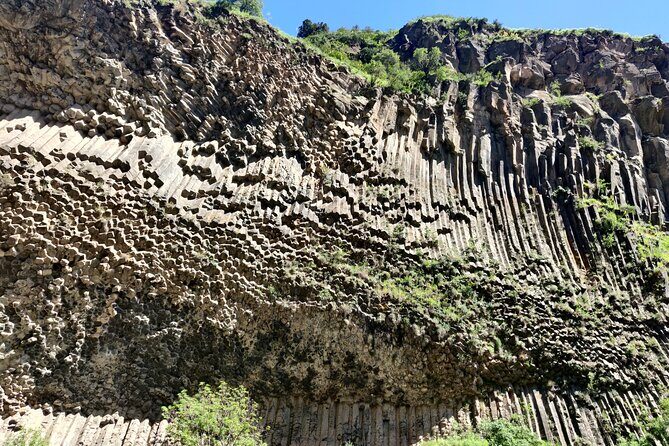
Next comes Garni Gorge, with its signature rock formation called the Symphony of Stones, also known as the Basalt Organ. It’s made of giant hexagonal and pentagonal basalt columns that rise nearly 50 meters high.
The reason it feels special is the “organ pipes” shape. The columns look like they were arranged, but they weren’t cut by hand in the way an organ pipe is. The symmetry and geometry come from volcanic rock formation patterns, and the running water from the Azat River adds to the effect.
You get about an hour, and admission is free. This is a good stop if you enjoy nature that looks designed, even when it’s purely geological. Wear shoes with grip if weather is slick—gorge areas can be uneven.
Geghard Monastery: UNESCO-Listed Mountain Spiritual Architecture
Geghard Monastery is one of Armenia’s most powerful historic sites, and it’s UNESCO-listed. The monastery dates to the 4th century, and the name means spear in Armenian, linked to the spear used to wound Jesus on the cross.
You’ll spend about an hour. In that time, you’re not just looking at one building—you’re moving through an environment with carved churches and detailed inscriptions. The standout named highlight is the Holy Lance Chapel, said to house the spear believed to have wounded Jesus.
Admission is included for this stop. The architecture is described as a mix of Armenian traditional building techniques with medieval design innovations, which is what makes it feel more layered than a single-style monument.
Practical note: monastery sites can involve stairs and uneven surfaces. Take your time.
Charent’s Arch and the Ararat Viewpoint Moment
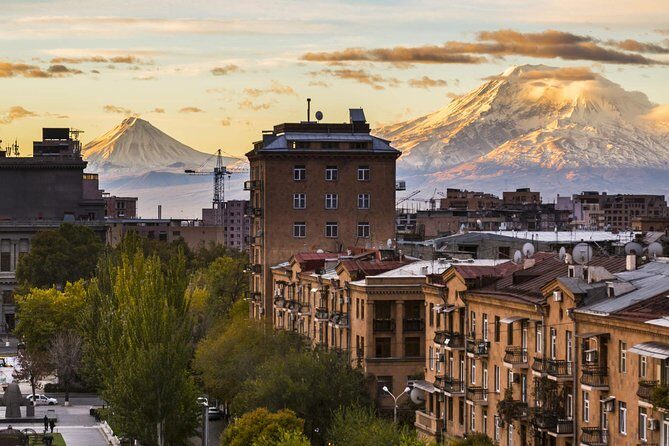
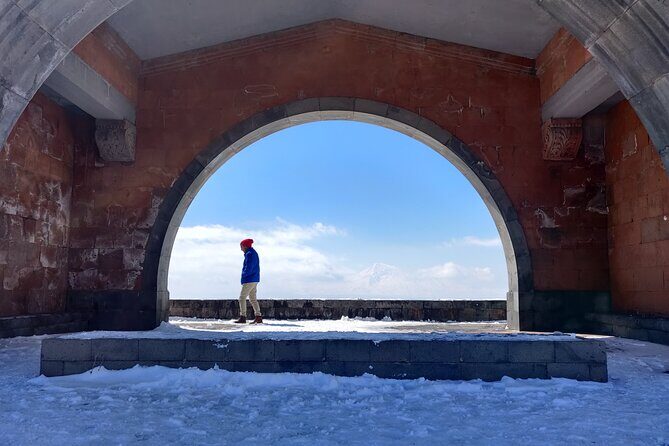
After Geghard and Garni, you’ll pass by Charent’s Arch. It’s a stone arch named after Yeghishe Charents, the Armenian poet and patriot, built on a hill with views of Mount Ararat.
The arch itself is simple at first glance, but the point is the viewpoint. It sits at an altitude of about 1500 meters, and it’s included in the list of historical and cultural landmarks of Voghjaberd. You get around 30 minutes, and admission is free.
This is one of those stops where you’ll decide based on weather and light. If the sky is clear, you’ll be glad it’s on the route.
Price and Value: Is $225 a Good Deal?
This tour costs $225 per person for about two days from Tbilisi. That price includes bottled water, private transportation, and all fees and taxes.
What you should treat as separate costs:
- Breakfast, lunch, and dinner are not included.
- Alcoholic beverages are not included.
- Hotel accommodation in Yerevan is not included.
- Cafesjian Center for the Arts ticket is not included.
So the real value question is whether you want to spend your time paying for transport and coordinating multiple drivers across two countries, or whether you’d rather pay once and get it handled. With the private setup, you get a single chauffeured rhythm through major highlights, plus admission fees for some key monuments (Garni Temple and Geghard).
If you’re comfortable with public transit, you could theoretically piece together a DIY route. But if you care about pace, clarity, and not losing half your day to figuring out logistics, this price tends to feel fair.
Who This Tour Fits Best
This is a strong match if:
- You want a fast, structured way to sample Armenia from Georgia.
- You prefer private driving and hate complicated transit.
- You like history and scenery but don’t want to run on a tight schedule all day.
It’s also a good fit for short-stay visitors who don’t want to commit to a longer Armenia road trip. Two days can feel like a whistle-stop tour, but here you get enough time at each location to actually absorb it.
Should You Book This 2-Day Armenia Side Trip?
I’d book it if your goal is major highlights with minimal hassle. The combination of Dilijan’s forest break, Lake Sevan’s scale, Yerevan’s central landmarks, and the big two on Day 2 (Garni and Geghard) is a practical way to get oriented fast.
I would hesitate only if you’re highly sensitive to delays at the border. If your trip dates line up with peak crowds, build in patience. Also budget for meals and a Yerevan hotel separately.
If you pick the right day and you’re open to asking your guide about what matters most to you, this works as a satisfying Armenia introduction—without turning your Georgia vacation into a transportation headache.
FAQ
How long is the Armenia tour from Tbilisi?
It’s listed as approximately 2 days.
Is this tour private or shared?
It’s private. Only your group participates.
Is pickup included?
Yes, pickup is offered.
What language is the tour in?
It’s offered in English.
Which meals are included?
Breakfast, lunch, and dinner are not included.
Are entrance fees included?
All fees and taxes are included, but not every attraction’s ticket is covered. Garni Temple and Geghard Monastery have admission tickets included, while Cafesjian Center for the Arts is not included. Many other stops list free admission.
Will the border crossing take time?
Border crossing may take significant time, sometimes hours, and delays can happen on weekends or during peak season.
Can I cancel for a refund?
Yes. Free cancellation is available, and you can cancel up to 24 hours in advance for a full refund.