REVIEW · TBILISI
Tbilisi City Tour, Most Popular Tourists Destinations In The Capital Of Georgia
Book on Viator →Bookable on Viator
Tbilisi in half a day feels like a cheat code. This private tour strings together the city’s big-name sights with a few places that explain why Tbilisi looks the way it does, from the riverfront to the views from Mtatsminda Park. I especially like the hotel pickup/drop-off and the fact you get personal guide time (not a cattle-car script). One thing to keep in mind: the route includes stairs and walking, so comfy shoes really matter.
What makes this tour work is the mix of old-town charm and skyline moments. You’ll pause at Metekhi Church across from the old town, swing by the Bridge of Peace lights, and wander Shardeni Street—one of the city’s most photographed pedestrian lanes. Then you’ll work your way up toward Narikala and Sololaki hill, with stops that show Georgia’s religious side and Soviet-to-modern layers in the same day.
The potential drawback is simple: it’s compact. Even with a private vehicle doing the heavy lifting between stops, you’ll still be on your feet for multiple segments, and that can slow you down if mobility is limited. If you’re traveling with kids, I like that guides (like Yasha and George, per the feedback) tend to adjust pace, but you should still plan for some hill time.
In This Review
- Key Highlights Worth Planning For
- A Half-Day Route That Covers Tbilisi’s Personality
- Price and Value: What $75 Buys You (and What It Doesn’t)
- Logistics That Make the Day Feel Easy
- Metekhi to Rike Park: River Views and a Strong First Impression
- Shardeni Street and Kartlis Deda: The Human-Scale Tbilisi
- Narikala Fortress and Abanotubani: Climb, Look, and Smell the History
- Freedom Square and Sameba: Big Symbols in the City Center
- Mtatsminda Park: Fun Rides Plus the Best Payoff View
- Chronicles of Georgia and Rezo Gabriadze Marionette Theater
- Practical Tips So the Day Doesn’t Feel Rushed
- Should You Book This Tbilisi City Tour?
- FAQ
- How long is the Tbilisi City Tour?
- Is hotel pickup and drop-off included?
- Is this tour private or shared?
- What extra costs should I expect for rides?
- Is the tour offered in English?
- Is there a lot of walking and steps?
Key Highlights Worth Planning For
- Hotel pickup and drop-off mean you skip the search-and-stress phase and start sightseeing right away.
- A private vehicle keeps the day comfortable between clusters of sites.
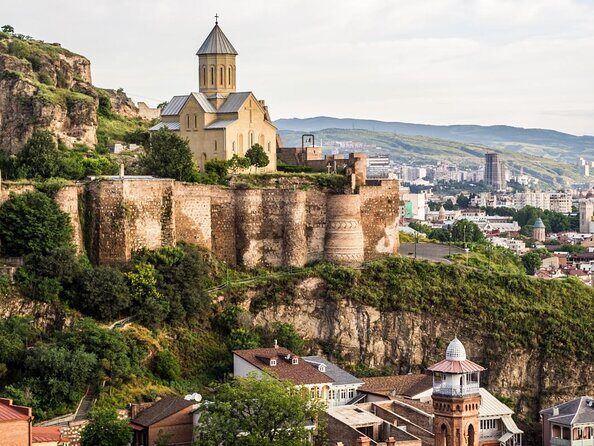
- The Narikala viewpoint run pairs fortress history with panoramic photo time over the Mtkvari River.
- Funicular and cable car are optional extras, so you can save money or add the ride based on energy.
- Mtatsminda Park at the end gives you a high reward payoff: rides plus city views from Mount Mtatsminda.
- Guides like Yasha, George, Omar, and Levani stand out for patient, talk-to-you clarity and keeping families on track.
A Half-Day Route That Covers Tbilisi’s Personality
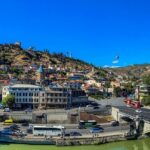
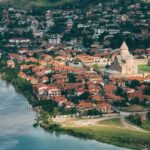
This tour is designed for first timers who want to get their bearings fast. In one afternoon you’ll see the visual story of Tbilisi: Orthodox churches on cliffs, a modern LED bridge over the Kura River, and the city’s iconic viewpoints climbing up from the sulfur-bath area.
I like that it doesn’t stop at postcard stops. You also hit places that help you understand how Tbilisi grew—religion and monarchy-era landmarks, Soviet-era symbolism, and then the modern city staged by parks, theaters, and monuments.
It’s also paced as a “see a lot, linger a little” tour. Most stops are short (often 10–30 minutes), so you aren’t trapped in one location forever, but you still get enough time to take photos, walk the area, and ask questions while the guide is with you.
You can also read our reviews of more city tours in Tbilisi
Price and Value: What $75 Buys You (and What It Doesn’t)
At $75 per person for roughly 4 to 5 hours, you’re paying for convenience and structure. The big value pieces are private tour, private vehicle transport, bottled water, and fuel included, plus hotel pickup and drop-off.
You’re also paying for guide time. With a private format, you can steer the day—ask follow-ups, spend extra minutes where something catches your eye, and skip what doesn’t. That matters in Tbilisi because the sights are spread across hills and neighborhoods.
What’s not included is where your final cost can change: cable car ride ($2 per person) and funicular ride ($10 per person). Everything else on the listed stops is free to enter in the tour plan, including major monuments and church sites (the tour notes free admission for these stops).
Logistics That Make the Day Feel Easy

The tour uses hotel pickup and drop-off, so you don’t lose time figuring out meeting points or chasing a guide through the old streets. A mobile ticket is provided, and the tour is offered in English.
Because it’s private, you travel with just your group. That usually means less waiting and more attention from the guide—especially useful if you have questions, need a slower rhythm, or want help planning where to eat afterward.
The comfort angle is real. A private vehicle handles the between-stop moves, but the route still includes walking segments. In the feedback, people repeatedly pointed out the importance of comfortable clothes and walking shoes—and that there are stairs you’ll likely encounter along the way.
Metekhi to Rike Park: River Views and a Strong First Impression
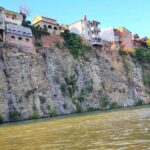
You start at Metekhi Cathedral (Metekhi Virgin Mary Assumption Church) on the left bank of the Mtkvari River, across from the old town. This stop is a smart opening because it immediately gives you a visual anchor: cliffs, river, and the Orthodox presence that shaped the city for centuries.
Next up is Rike Park, a modern hangout zone where locals and visitors mix. It’s not just a “pretty park stop.” It’s also one of the easiest places to feel Tbilisi’s daily rhythm—people strolling, kids playing, and the vibe that this city is more than a museum.
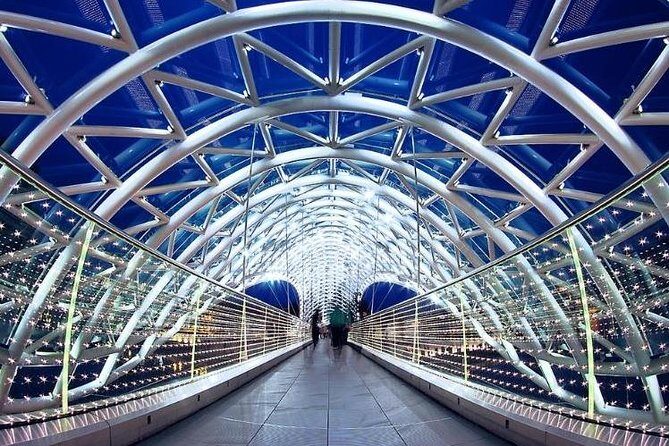
From there you cross to the Bridge of Peace, the bow-shaped pedestrian bridge over the Kura River. If you catch it in the right light, the LED illumination makes it feel like modern architecture dropped into an older city. It’s a great place to pause, breathe, and take photos before the day turns hillward.
Shardeni Street and Kartlis Deda: The Human-Scale Tbilisi
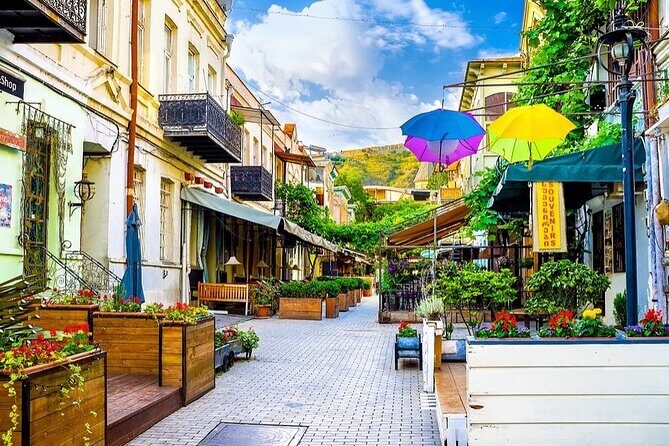
Jan Shardeni Street is the kind of place that makes you understand why people fall for Tbilisi fast. It’s a pedestrian lane filled with atmosphere, and the tour schedule gives you a short, focused window to enjoy the street without turning it into a long detour.
Then you move to Kartlis Deda, the iconic monument on Sololaki hill. I like this stop because it adds meaning to the city skyline. The statue is a tall aluminum figure in Georgian national dress, erected in 1958 for Tbilisi’s 1500th anniversary. It’s not just a photo prop—it’s a clue about how the city tells its own story.
After that, you’re set up for the big viewpoint payoff.

Narikala Fortress and Abanotubani: Climb, Look, and Smell the History
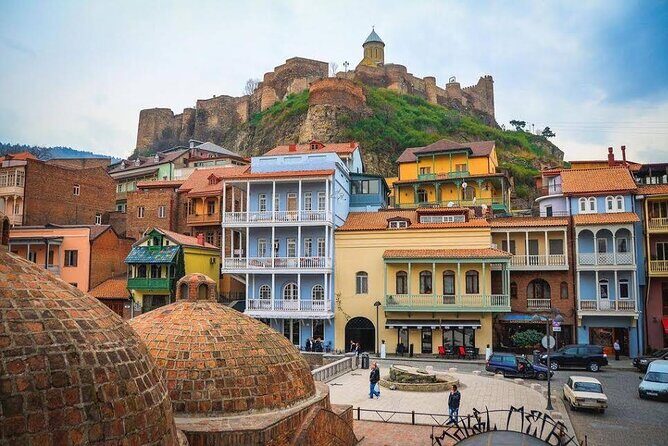
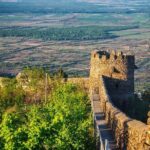
Narikala Fortress is one of the best “why you came” moments in Tbilisi. From the hilltop area overlooking the city and the Mtkvari River, you get wide angles that make the city’s shape click. The fortress includes two walled sections and even features the restored St Nicholas Church in the lower court.
This is also where you’ll feel the walking and stairs factor most. Take it slow here. Wear shoes with good grip, and don’t rush your photos—this is the stop where the day starts to feel cinematic.
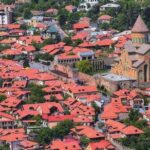
Then you go down into Abanotubani, Tbilisi’s recognizable bathhouse neighborhood with domed brick roofs. It’s a place you’ll want to look around carefully because it feels older than the surrounding city fabric. If the timing is right, the Dzveli Tbilisi Sulphur Waterfall near the area is an easy photo stop—short, fun, and very Tbilisi in theme.
Freedom Square and Sameba: Big Symbols in the City Center

The tour heads to Freedom Square, one of the central anchors of Tbilisi. This is a short stop, but it’s useful because it ties into the city’s long political timeline. The tour info notes it has held different names across eras under different regimes—one of those quiet reminders that cities change while people keep living in them.
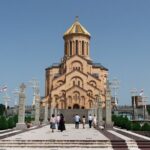
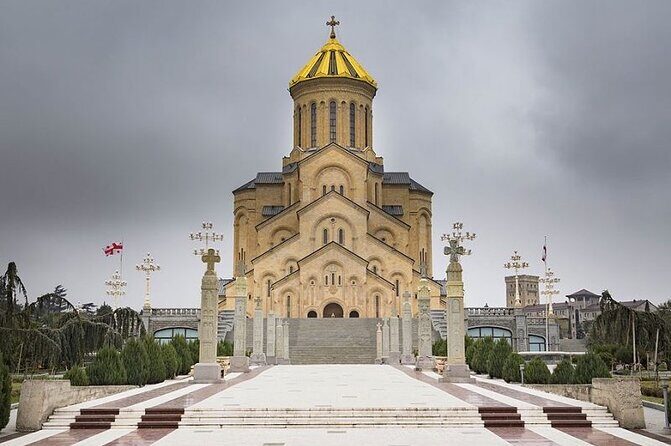
After that, you’ll visit the Tbilisi Holy Trinity Cathedral (Sameba), the main cathedral of the Georgian Orthodox Church. This stop is about scale and spiritual presence. Even if you’re not a church-focused traveler, it’s hard to ignore the cathedral’s role in the city.
What I like about these center stops is the contrast: you go from fortress views and sulfur-bath textures back to the broad, formal architecture of a main boulevard and landmark cathedral.
Mtatsminda Park: Fun Rides Plus the Best Payoff View
The day’s visual climax is Mtatsminda Amusement Park at the top of Mount Mtatsminda, overlooking Tbilisi. This is the stop that turns the tour from sightseeing into a proper experience—carousels, water slides, a roller-coaster, and a big Ferris wheel at the edge of the mountain.
You’ll also get the funicular experience as an add-on if you choose it. The tour lists funicular rides at $10 per person, and it separately lists cable car ($2 per person). Because these costs aren’t included in the tour price, you can decide based on your group’s energy and budget.
If you’re traveling with kids, this is usually the highlight. Even adults tend to enjoy it because it’s the rare “tour stop” that feels like a real outing, not just a monument photo.
Chronicles of Georgia and Rezo Gabriadze Marionette Theater
After Mtatsminda, the tour keeps things interesting with two culture-leaning stops.
First is the Chronicles of Georgia, a monument near Tbilisi Sea created by Zurab Tsereteli in 1985. The tour notes it was never fully finished, which gives it a slightly unfinished, human quality—like you’re seeing a work in progress rather than a polished final statement. It sits at the top of a large set of stairs, so be ready for steps if you’re planning photos.
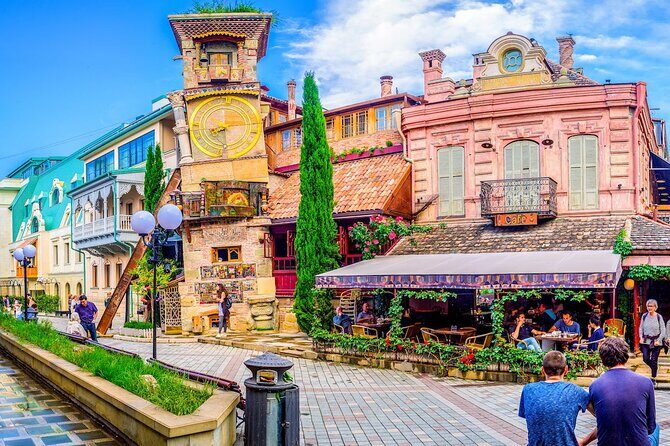
Then there’s Rezo Gabriadze Marionette Theater. The theater is modest in size, but it’s described as one of the world’s notable cultural institutions, with mature puppet performances that carry depth and meaning. If you only think of puppets as kids’ entertainment, this is a good reality check.
Practical Tips So the Day Doesn’t Feel Rushed
A few simple choices can make this tour much more enjoyable.
- Wear walking shoes. The route includes hills and stairs, and the tour isn’t trying to be “easy walking” the whole way.
- Bring a layer. Mountain viewpoints can feel cooler than the city center, and weather changes quickly.
- Plan your extra rides. If you want the full theme park feel, budget for the funicular. If you want to save, you can skip it.
- Use your guide’s flexibility. The guides in this tour style often adjust the day to real-world conditions and group needs. That’s especially helpful if you’re traveling with children or want to slow down at one of the viewpoints.
One more thought: because many stops are short, it’s smart to arrive with a few priorities (churches, skyline photos, street life, or theme park energy). Then you’ll feel like you truly got what you wanted.
Should You Book This Tbilisi City Tour?
Book this tour if you want a fast, well-organized introduction to Tbilisi with real variety: churches, old streets, a fortress viewpoint, sulfur-bath atmosphere, a major cathedral, and the big skyline payoff at Mtatsminda Park. The private vehicle + hotel pickup makes it feel low-friction, and at $75, it’s strong value when you compare it to the cost and hassle of trying to piece together the same route on your own.
Skip it or choose a different format if you dislike stairs and steep walking, or if your idea of a great day is staying in one place long enough to soak up details. This tour is built for movement.
If you do book it, I’d recommend going in with comfortable shoes, a few must-see preferences, and the mindset that this is your “get oriented” day—then you’ll be ready to explore Tbilisi on your own afterward.
FAQ
How long is the Tbilisi City Tour?
It runs about 4 to 5 hours.
Is hotel pickup and drop-off included?
Yes. Hotel pickup and drop-off are included.
Is this tour private or shared?
This is a private tour. Only your group participates.
What extra costs should I expect for rides?
Most listed stops are free in the tour plan, but cable car ride ($2 per person) and funicular ride ($10 per person) are not included.
Is the tour offered in English?
Yes. The tour is offered in English.
Is there a lot of walking and steps?
There is quite a bit of walking and you can expect stairs along the route, so walking shoes are strongly recommended.