REVIEW · TBILISI
Private Walking Tbilisi City Tour
Book on Viator →Operated by Gamarjoba Georgia Tours · Bookable on Viator
Tbilisi in four hours, with zero guesswork. This private walking tour lays out the city’s big icons in a smart arc: churches on the hill, the famous bridge, the Old Town, and a cable car ride to the Mother of Georgia area. It’s designed for people who want history told in plain language, plus time to look, ask questions, and move at a human pace.
I love two things most. First, the guide style can be excellent, with stories that make legends and architecture click. People have specifically praised guides such as Luka, Kate, Nico, Mariam, Oki, Nino, David, Nika, Roma, Magda, and Sally for being friendly, professional, and photo-friendly. Second, the route hits both the views and the everyday city: Narikala-area lookouts, the Bridge of Peace LEDs, and the Abanotubani sulfur bath district.
One thing to consider: at $45 per person for about four hours, this is not a long “cover every corner” marathon by car. If you’re expecting a wider, vehicle-based loop, one review flagged it as not worth the money for that style. Also, the cable car won’t run in windy weather, and churches require sensible dress (no shorts; women should cover heads).
In This Review
- Key points I’d plan around
- A smart 4-hour loop that pairs viewpoints with Old Town
- Hotel pickup and a guide who actually talks like a person
- The big payoff: cable car to Kartlis Deda (and why it’s worth the detour)
- Stop-by-stop: what you’ll see and what makes each part click
- Stop 1: Traveler’s Meeting Point (the warm start)
- Stop 2: Metekhi Cathedral (church on the cliff plateau)
- Stop 3: Monument of King Vakhtang Gorgasali (and the founding stories)
- Stop 4: Europe Square (Georgia’s public relationship with the EU)
- Stop 5: Rike Park (easy strolling before the climb)
- Stop 6: Rike–Narikala Cable Car (Upper Station) to Mother of Georgia
- Stop 7: Kartlis Deda (Mother of a Georgian) statue
- Stop 8: Bridge of Peace (steel-and-glass, with LED lighting)
- Stop 9: Patriarchate of Georgia and the seminary
- Stop 10: Anchiskhati Basilica (6th-century roots and icon stories)
- Stop 11: Rezo Gabriadze Marionette Theater and the angel clock tower
- Stop 12: Sioni Cathedral Church (another Vakhtang legend)
- Stop 13: Tamada statue (the toastmaster tradition)
- Stop 14: Jan Shardeni Street (Old Town’s main pedestrian lane)
- Stop 15: Abanotubani sulfur bath district (public baths with hot springs)
- Stop 16: Leghvtakhevi Waterfall (cool-down stop when it’s hot)
- Price and value: what $45 really buys you
- Weather and church rules: how to avoid small frustrations
- Who this tour fits best (and who should skip it)
- Should you book this Private Walking Tbilisi City Tour?
- FAQ
- How long is the Private Walking Tbilisi City Tour?
- How much does the tour cost?
- Is hotel pickup included?
- Is this tour private or shared?
- What language is the tour offered in?
- What does the tour include?
- Is the cable car ride included, and what if it’s windy?
- Are there rules for entering churches?
- Where do I meet my guide?
- Can I cancel for a refund?
Key points I’d plan around
- Cable car to the Mother of Georgia area for big city views, not just street-level sights
- A tight mix of landmarks: Metekhi, Sioni, Shardeni Street, Abanotubani sulfur baths, plus Narikala-area viewpoints
- Church-first cultural stops, where legends and meaning are part of the visit, not an afterthought
- Bridge of Peace details (LED lighting, steel-and-glass design) that make the photo stop more than a selfie moment
- Private, hotel pickup makes the whole thing feel easy, even if it’s mainly on foot
A smart 4-hour loop that pairs viewpoints with Old Town
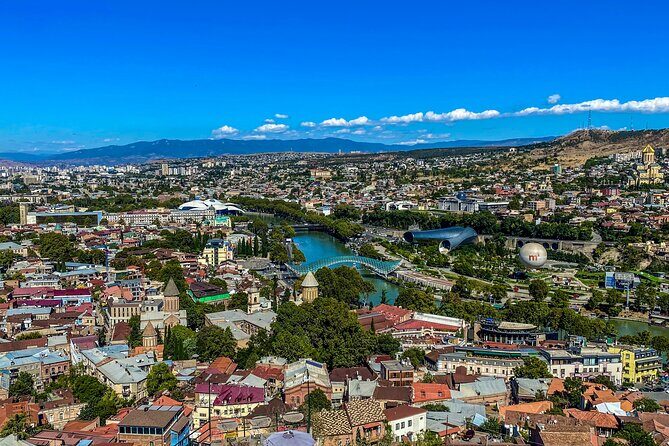
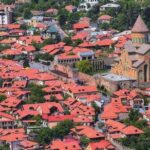
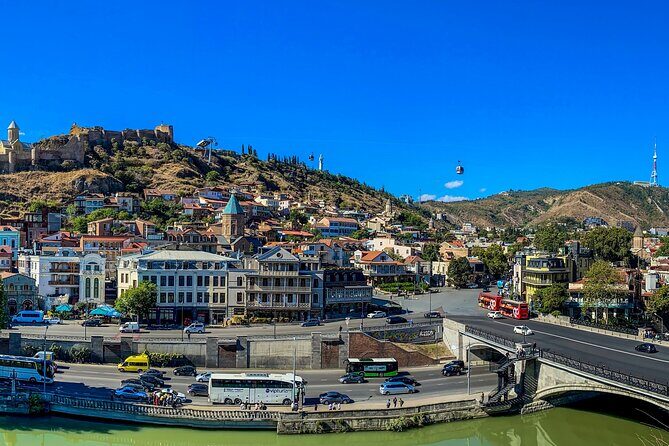
This tour is short by design: about four hours, give or take. That’s long enough to get your bearings in Tbilisi, but not so long that you’re bargaining with blisters. The route arcs from the riverside and cliff churches, up through the Narikala/“Mother of Georgia” area, then down into the historic lanes and bathhouse district.
I like that it doesn’t treat Tbilisi as one big museum. You’ll walk through sacred spaces, then hit places that are still very much part of daily life—like Shardeni Street’s pedestrian buzz and Abanotubani’s sulfur bath zone.
It’s also booked a lot—around 20 days in advance on average—so you’re not alone in wanting a good first-timer orientation.
You can also read our reviews of more walking tours in Tbilisi


Hotel pickup and a guide who actually talks like a person
You get pickup from your hotel reception, and the tour ends with a drop-off back at your hotel. That matters in Tbilisi, where hopping between neighborhoods on your own can eat up time and energy.
This is private, meaning it’s just your group, not a mixed crowd shuffled along by volume. The tour is offered in English, and you’ll get a mobile ticket plus online support. Confirmation comes at booking time.
The best part for me is that this feels like a conversation with a local who’s used to explaining the city to visitors. In the reviews, guides like Roma and Nino were praised for professionalism and lively pacing, while David was noted for strong English and for taking photos on request. That kind of “helping you experience the moment” is the difference between seeing places and actually remembering them.
The big payoff: cable car to Kartlis Deda (and why it’s worth the detour)
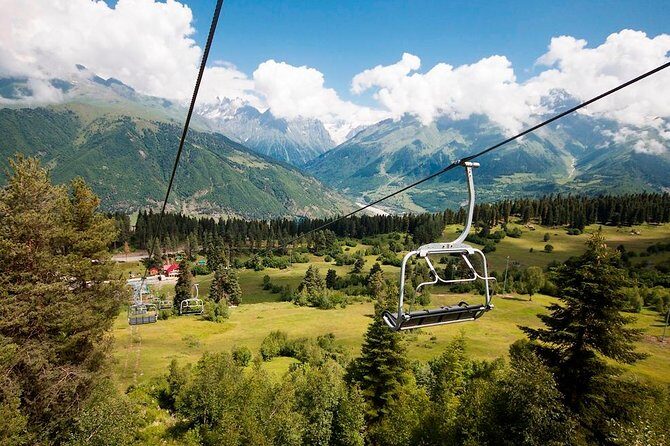
One of the highlights is the cable car ride up toward Narikala and the Mother of Georgia statue area. You don’t just hear about views—you get them. Expect a quick ride (about 10 minutes) and then time to take in the panorama.
Two details make this stop feel special. First, the statue itself is symbolic: Kartlis Deda (Mother of a Georgian) was erected in 1958 for Tbilisi’s 1500th anniversary, and the design is clear about Georgia’s message. In her left hand she holds a bowl of wine to greet friends. In her right hand she holds a sword for enemies. It’s not abstract art; it’s a readable statement.
Second, the cable car and viewpoints connect the dots between the hilltop churches and the Old Town below. If you’ve ever struggled to understand Tbilisi’s geography, this is where it starts to make sense fast.
Quick caution: cable cars won’t operate during windy weather. The tour still runs in all weather conditions, so if wind is an issue during your visit, you’ll want to be ready to keep moving and enjoy the walking stops instead.
Stop-by-stop: what you’ll see and what makes each part click
Stop 1: Traveler’s Meeting Point (the warm start)
You’ll begin at the designated meeting spot where the vibe is meant to feel friendly, not stiff. The idea here is simple: you can meet new exciting people, listen to music, play board games, or enjoy a glass of wine while you get going.
Even if your group is private, this kind of start sets the tone. It’s an easy landing before you step into steep streets and church interiors.
You can also read our reviews of more city tours in Tbilisi



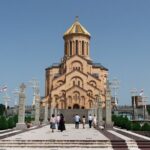
Stop 2: Metekhi Cathedral (church on the cliff plateau)
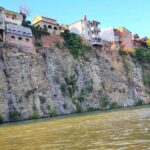
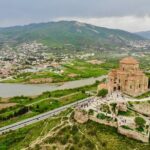
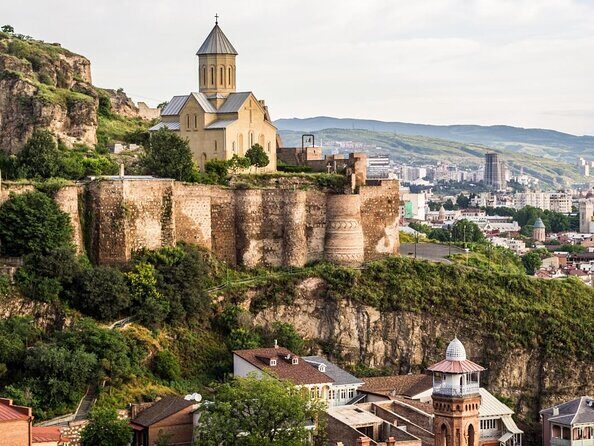
Metekhi is on the left bank of the Mtkvari River, perched on a cliff-like plateau. That position is part of why the stop matters. The church isn’t just a building; it’s a dramatic location.
You’ll also hear the story tied to early Georgian Christian history: legends connect the site to Vakhtang Gorgasali and to the 7th-century transfer of saint Shushanik. For me, this is where the tour earns its “culture” tag—history comes with context, not just dates.
Stop 3: Monument of King Vakhtang Gorgasali (and the founding stories)
Next is a short stop at the monument of King Vakhtang Gorgasali. He’s tied to the Chosroid dynasty, and the stories around him link to big claims like the reorganization of the Georgian Orthodox Church and the founding of Tbilisi.
Dates are said to be debated, which is actually useful for how the tour teaches you. You learn that history isn’t always one tidy timeline. The point isn’t to memorize; it’s to understand why certain figures loom so large in Georgian identity.
Stop 4: Europe Square (Georgia’s public relationship with the EU)
Crossing Europe Square gives you a quick, modern layer to the day. The guide will share information about the relationship between Georgia and the European Union—important for understanding what Georgians think about their place in the world today.
This stop is brief, but it keeps the tour from feeling stuck in medieval times only.
Stop 5: Rike Park (easy strolling before the climb)
Rike Park is on the left bank near the Bridge of Peace. It’s described as one of the younger recreational areas in Tbilisi, and it shows in the design: there’s room for families, summer visitors, and casual hangs.
You’ll get a quick look at entertainment features like singing and dancing fountains, children’s maze, mega-chess boards, and footpaths. There’s also a practical reason to care: the cable car start point to Narikala Fortress is in this area.
So yes, it’s pretty. But it’s also a functional “setup” stop—where the tour makes the next viewpoint phase feel logical.
Stop 6: Rike–Narikala Cable Car (Upper Station) to Mother of Georgia
This is the main climb. After the cable car ride, you’ll reach the Mother of Georgia area. Expect amazing views from up there.
If you’re traveling for photos, this is your moment. If you’re traveling for orientation, it’s even more valuable: you start seeing how the city’s layers relate to each other—river, hill, and Old Town.
Stop 7: Kartlis Deda (Mother of a Georgian) statue
You’ll spend time at Kartlis Deda, the 20-meter aluminum figure designed by Elguja Amashukeli. The symbolism is clear and teachable: the wine bowl for friends, the sword for enemies.
I like that this isn’t a random stop on a checklist. It’s a story stop. You’re meant to read the statue like a message and then carry that idea with you as you walk through the rest of the city.
Stop 8: Bridge of Peace (steel-and-glass, with LED lighting)
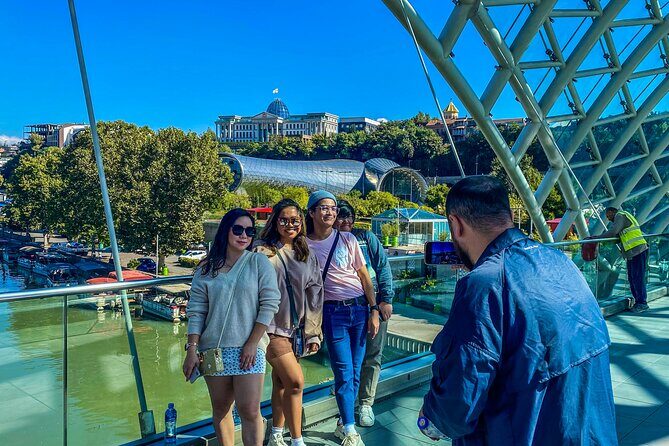
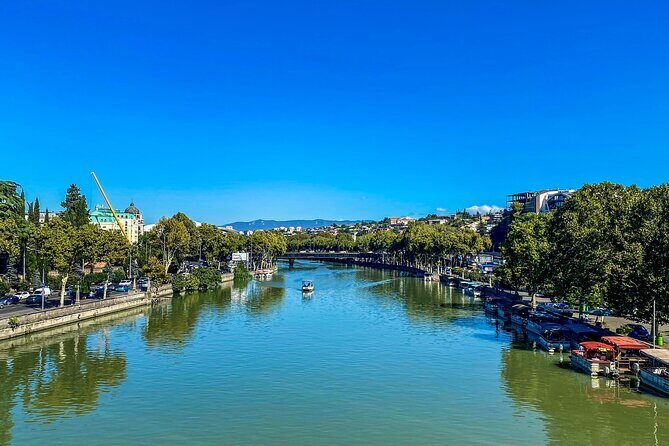
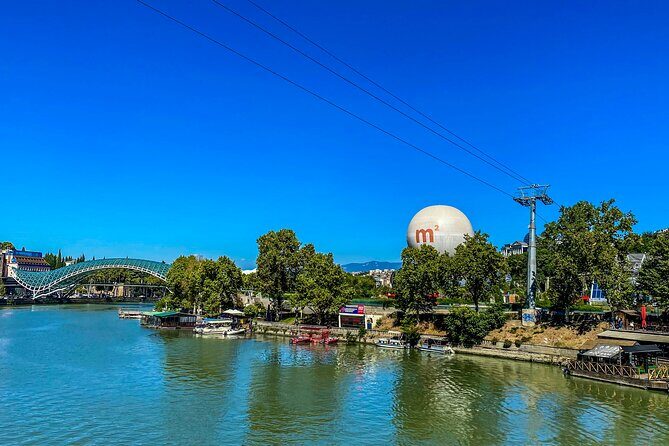
Bridge of Peace is the kind of place you’d almost walk past—until you learn it has real tech and design behind the look. It’s a pedestrian glass and steel bridge over the Mtkvari River, bow-shaped, officially opened in May 2010.
You’ll also hear the “how it got there” detail: the bridge was brought from Italy in 200 unassembled components. Length-wise, it’s 156 meters, and it has more than 10,000 LED bulbs that switch on daily 90 minutes before sunset.
If you time it near evening, it’s a totally different feeling. But even during the day, it’s a great reset between hill stops and Old Town lanes.
Stop 9: Patriarchate of Georgia and the seminary
You pause near the Patriarchate of Georgia and hear facts about the place. This stop works because it signals that religion in Tbilisi isn’t only about old churches you pass. It’s tied to institutions and education.
It’s also a breather spot—short, informative, and not too demanding.
Stop 10: Anchiskhati Basilica (6th-century roots and icon stories)
Anchiskhati Basilica is in the historical district of upper Kala, on Shavteli Street. It dates back to the 6th century and is linked to the Virgin Mary’s Birth.
The story gets interesting with names and movement: the name Anchiskhati comes later, and Peter Meskhi moved the Christ not made by hand image from the Anchi church to this one in 1675. He was granted the position of a pastor, and the Meskhishvilis became pastors connected to the church.
There’s even a connection to calligraphy dynasties through Aleximaskhishvilis. It’s one of those stops where a guide’s storytelling makes the city feel like a living network.
Stop 11: Rezo Gabriadze Marionette Theater and the angel clock tower
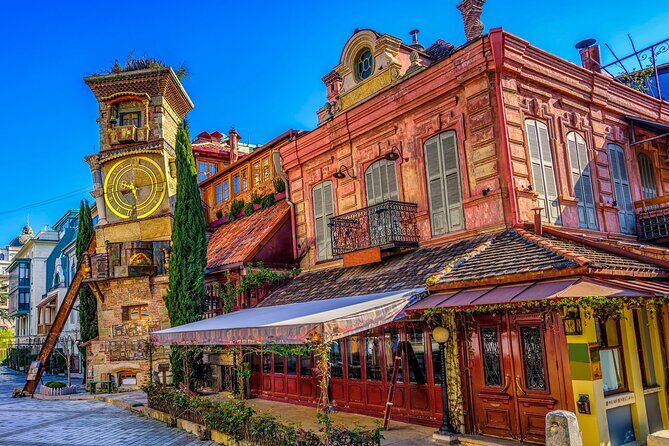
This is a fun one. The clock tower next to Rezo Gabriadze Marionette Theater was built in 2010, and every hour an angel comes out with a small hammer to ring the bell.
Inside, there’s a small puppet theatre, and shows are scheduled twice daily at 12:00 and 19:00 for The Circle of Life. Even if you don’t catch a show, the tower is a visual break from churches and bridges.
In a walking tour, “fun” stops matter. This one keeps the day from becoming all solemn stone.
Stop 12: Sioni Cathedral Church (another Vakhtang legend)
Sioni Cathedral Church is in old upper Kala on a street with the same name. Like Metekhi, it’s connected (at least through legend) to King Vakhtang Gorgasali and the 5th-century origin story.
Sioni is also a good place to slow down and listen. In a good guide-led tour, these cathedral stops are where you realize Tbilisi’s religious architecture isn’t random. It’s part of how the city marks identity.
Stop 13: Tamada statue (the toastmaster tradition)
Tamada means toastmaster in Georgian. This stop pulls you away from purely religious monuments and into social tradition.
You’ll hear stories about toastmastering. It’s quick, but it adds texture. Georgia’s culture is not just what’s written on stone.
Stop 14: Jan Shardeni Street (Old Town’s main pedestrian lane)
Jan Shardeni Street is one of Tbilisi’s most popular streets, and it’s pedestrian. You’ll be told that anyone visiting Georgia should not leave without seeing it.
This stop is less about a single landmark and more about rhythm: window-shopping, street scenes, and the feeling of Old Town as a living place. It’s also one of the easiest areas to “just look around” when you have a private guide who can still point out what matters.
Stop 15: Abanotubani sulfur bath district (public baths with hot springs)
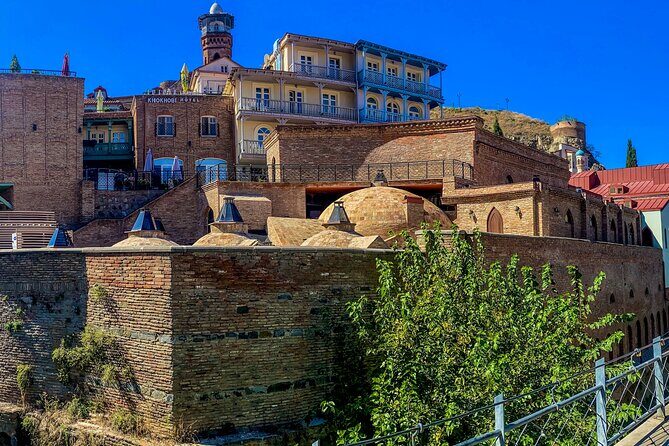
Abanotubani is the sulfur bath district in Old Town. There’s a whole street of public bathhouses using sulfurous waters from hot springs.
If you like sensory travel, this is a must. Even without booking a soak, the atmosphere tells you why locals still treat this area as a daily ritual zone.
Stop 16: Leghvtakhevi Waterfall (cool-down stop when it’s hot)
Leghvtakhevi is a waterfall stop where you can chill, especially when the weather is warm. The tour treats it as a final “reset,” giving you a bit of nature after more stone and city geometry.
It’s also a good way to end without feeling like you’re rushing out the door.
Price and value: what $45 really buys you
$45 per person for about four hours can feel either fair or disappointing, depending on what you expected.
Here’s the value math I’d use: you’re paying for a private, professional guide, plus hotel pickup and drop-off, and a cable car ride to the Mother of Georgia statue area. That is a lot of “logistics handled for you,” which is often where independent exploring costs time and energy.
Where the price can feel less justified is if your goal is maximum distance by vehicle or you want more stops packed into the day. One review specifically complained it wasn’t worth money compared with a bigger car-covered tour, and I get that mindset. This is a walking plan with a lot of meaning per stop, not a long drive-by sampler.
My advice: if you’re using Tbilisi as a first base and want your bearings plus iconic sights, this price tends to make sense. If you’re already covering the city by yourself and just want breadth, you might feel it’s too focused.
Also note gratuities are not included, so budget a little extra if your guide does a great job explaining the places.
Weather and church rules: how to avoid small frustrations
Two practical constraints can affect your day.
1) Cable car wind rule
Cable cars won’t operate during windy weather. The tour still operates in all weather conditions, so expect to adapt on the fly if that happens.
2) Church dress code
For church stops, it’s not allowed to enter in shorts, and women need to cover their heads. If you’re traveling light, bring a scarf you don’t mind using.
Dress matters more than you’d think on this route, because you have multiple sacred sites in a relatively tight schedule.
Who this tour fits best (and who should skip it)
This is a good fit if:
- You want an easy first look at Tbilisi’s main landmarks in a private format
- You like when guides explain legends and symbols, not just where to stand for photos
- You’re comfortable walking for a few hours and handling a mix of hilltop and Old Town lanes
- You want the cable car viewpoint to connect Narikala-area views with the rest of the city
You might skip it if:
- You mainly want a big “see everything” loop with lots of driving
- You dislike walking and want fewer stair-and-street transitions
- You plan a day with heavy wind and really want the cable car to be guaranteed
Should you book this Private Walking Tbilisi City Tour?
I’d book it if this is your first time in Tbilisi and you want a guided route that hits the must-see anchors: Metekhi and Sioni, Narikala-area views via the cable car, Bridge of Peace, Shardeni Street, and Abanotubani.
I wouldn’t book it if your main goal is covering the widest area possible in a short time by car. This tour is about focus, not mileage.
Given the rating (4.9) and that 97% of guests recommend it, plus the repeated praise for guides like Luka, Kate, Nico, Mariam, Nino, and David, the odds are good you’ll come away with a sharper sense of Tbilisi than you’d get from a self-guided checklist.
FAQ
How long is the Private Walking Tbilisi City Tour?
The tour lasts about 4 hours.
How much does the tour cost?
It’s $45.00 per person.
Is hotel pickup included?
Yes. The guide meets you at the reception of your hotel, and you’re also dropped back at your hotel.
Is this tour private or shared?
It’s a private tour/activity. Only your group participates.
What language is the tour offered in?
The tour is offered in English.
What does the tour include?
It includes a private professional guide, hotel pickup and drop-off, the cable car ride, and online support.
Is the cable car ride included, and what if it’s windy?
The cable car ride is included. Cable cars won’t be operating during windy weather, though the tour still runs in all weather conditions.
Are there rules for entering churches?
Yes. Shorts aren’t allowed inside churches, and women need to cover their heads.
Where do I meet my guide?
The guide meets you at the reception of your hotel.
Can I cancel for a refund?
Yes. You can cancel for free up to 24 hours before the experience start time for a full refund.