REVIEW · TBILISI
One-day tour in ancient Mtskheta, Gori and Uplistsikhe
Book on Viator →Operated by Evatour · Bookable on Viator
Ancient Georgia in one long day. This is a focused loop through UNESCO sites and then out into cave-city territory, with Mtskheta’s hillside monasteries, Gori’s fortress views, and the old rock-cut world of Uplistsikhe.
I especially like two things: the way the day connects big-name landmarks (Jvari and Svetitskhoveli) to the wider story of Georgia, and the fact that you also get real variety with a fortress town and a Stalin museum add-on. One thing to watch: admission fees for the Stalin museum and Uplistsikhe are not included, and lunch isn’t provided either, so budget extra time/money for food and tickets.
In This Review
- Key takeaways before you go
- Why this Mtskheta–Gori–Uplistsikhe day trip feels efficient
- The drive from Tbilisi: comfortable transport, not “tour-bus fatigue”
- Stop 1: Jvari Monastery and the confluence view that makes it click
- Stop 2: Svetitskhoveli Cathedral, where legend and design meet
- Mtskheta’s old-town stroll: the balconies and the slow pace you earn
- Stop 3: Gori Fortress for views, war history, and a quake scar
- Stop 4: Stalin Museum in Gori—what you’re actually paying for
- Stop 5: Uplistsikhe Cave Town, the “fortress of the lord”
- Price and value: what $50.13 buys in real terms
- Timing and pacing: why the short stops work here
- What to budget beyond the tour price
- Who should book this Mtskheta–Gori–Uplistsikhe tour
- Should you book it?
- FAQ
- How long is the tour?
- Is pickup offered from Tbilisi?
- What is included in the tour price?
- Do I pay for admission at the churches?
- Are the Stalin Museum and Uplistsikhe tickets included?
- Is lunch included?
- What is the group size?
- FAQ
- Is free cancellation available?
- When do ticket refunds stop if I cancel late?
Key takeaways before you go
- UNESCO big hitters first: Jvari and Svetitskhoveli are free to enter on this schedule.
- A proper cultural contrast: churches in Mtskheta, then Soviet-era history in Gori.
- Cave city timing: you get about an hour at Uplistsikhe, enough to get the layout without rushing.
- Comfort matters on a 10-hour day: air-conditioned transport plus bottled water.
- Small group feel: maximum 20 people, so questions are easier and the pace stays human.
Why this Mtskheta–Gori–Uplistsikhe day trip feels efficient
This one-day tour works because it clusters places that make sense together geographically and historically. You start with Mtskheta, the ancient capital of the Kingdom of Iberia, where the spiritual story of Georgia is written into stone and hilltop views. Then you move westward into Shida Kartli for Gori, and finally you head to Uplistsikhe, one of the oldest urban settlements in the region.
At the center of it is a practical rhythm: short, well-chosen stops rather than long, slow detours. Jvari and Svetitskhoveli are each timed tightly (about 20–30 minutes), which is ideal if you want the key architecture and the main legends without turning the day into a slow march. From there, the schedule gives you a longer look at the sites that benefit from more time, like Uplistsikhe.
You can also read our reviews of more tours and experiences in Tbilisi.



The drive from Tbilisi: comfortable transport, not “tour-bus fatigue”
The tour includes an air-conditioned vehicle and bottled water, which you’ll appreciate on a 10-hour day. Pickup is offered, and the meeting area is near public transportation, which helps if you’re already moving around Tbilisi on your own.
Since the day is long, this is one of those itineraries where comfort is part of the value. You’re not just buying “tickets,” you’re buying the ability to connect four major areas without spending your energy navigating intercity routes. The professional guide also matters here: you’ll get context fast, and that keeps each stop from feeling like a checklist.
One more perk worth noting: the tour uses a mobile ticket. That’s small, but on a day full of quick transitions, it saves friction at the start.
Stop 1: Jvari Monastery and the confluence view that makes it click
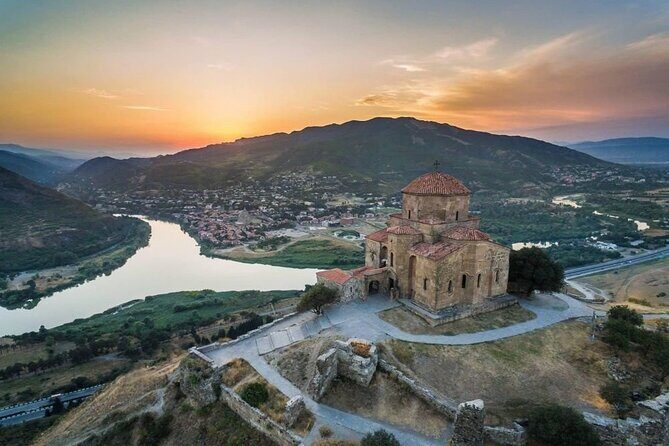
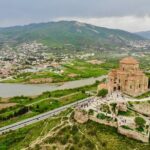
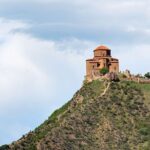
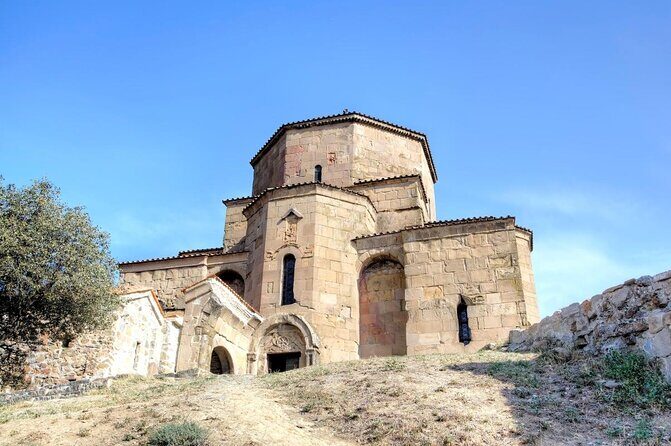
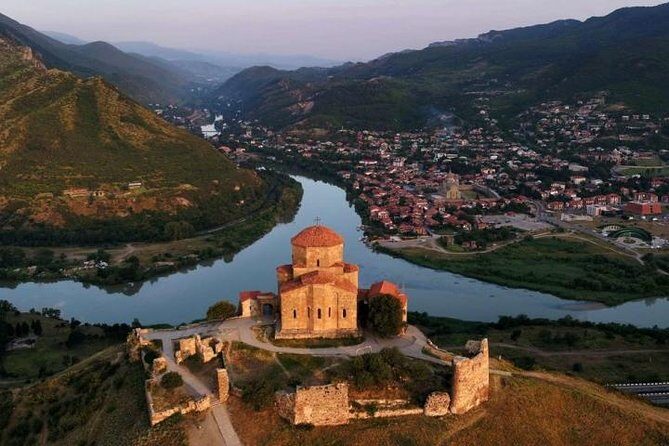
Jvari Monastery is a hilltop Georgian Orthodox site near Mtskheta, right where the Mtkvari and Aragvi rivers meet. If you like “place makes sense” travel, this stop delivers. The monastery isn’t just an object to look at; it’s built into the geography, so the view explains why people chose this spot early on.
What you’re looking at here traces back to the early spread of Christianity. The story goes that King Mirian III erected a huge wooden cross on this site soon after the adoption of Christianity in Georgia. Later, in the second half of the 6th century, Guaram (the ruler of Kartli) built a small church beside the Holy Cross. Even if you don’t remember every name, the timeline gives the place weight.
Practically, you get about 20 minutes at Jvari. That’s just right for: arriving, taking in the views, and noticing the architecture without feeling like you’re stuck in a long line. The good news is admission is free on this part of the schedule.
Stop 2: Svetitskhoveli Cathedral, where legend and design meet
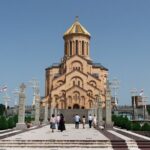
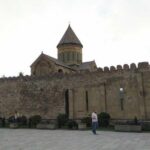
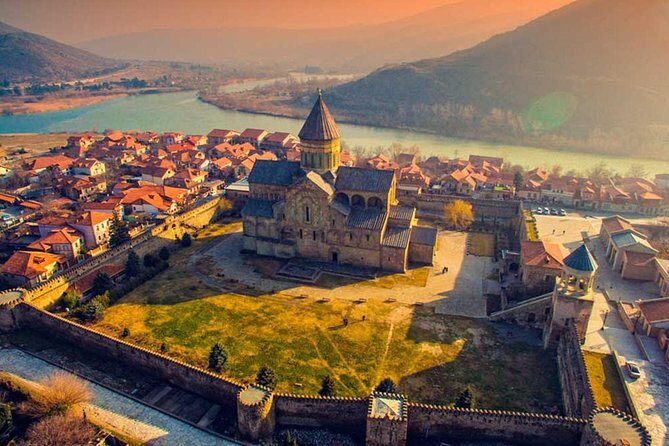
Next up is Svetitskhoveli Cathedral, also in Mtskheta and recognized as a UNESCO World Heritage site. This is the kind of place where the scale surprises you a bit. It’s described as the second largest church building in Georgia, after Holy Trinity Cathedral in Tbilisi.
The big reason I’d prioritize this stop is that it has two layers going at once: the early medieval architecture and the living legends tied to the site. The legend connected to Svetitskhoveli starts with Elioz from Mtskheta. He finds the Tunic of Jesus Christ in Jerusalem. Elioz’s sister Sidonia touches the tunic and dies; she’s buried wrapped in it, and a cedar grows over her grave.
That combo—architecture plus story—makes the cathedral feel more than just “another church.” It becomes a cultural anchor. You get about 30 minutes here, and admission is free as scheduled.
A small practical note: plan your time so you’re not rushing photos at the exact moment you should be standing back and taking in the whole space.
Mtskheta’s old-town stroll: the balconies and the slow pace you earn
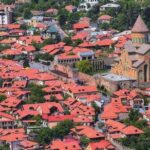
Between the two major church stops, you’ll also have time to explore the older parts of Mtskheta: streets with balconies and architecture that feels built for lingering. This isn’t an urban sightseeing blitz. It’s more like getting your bearings in an actual historic town, not just standing in front of a monument.
This is also where a good guide earns their pay. When someone like Aleko is leading (I’ve seen that name connected with excellent hosting in this itinerary), you can ask quick questions about what you’re seeing—why certain buildings face a certain way, what’s typical for the area, and how the old capital ties into the rest of Georgia’s story.



Stop 3: Gori Fortress for views, war history, and a quake scar
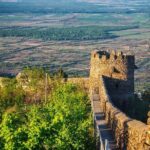
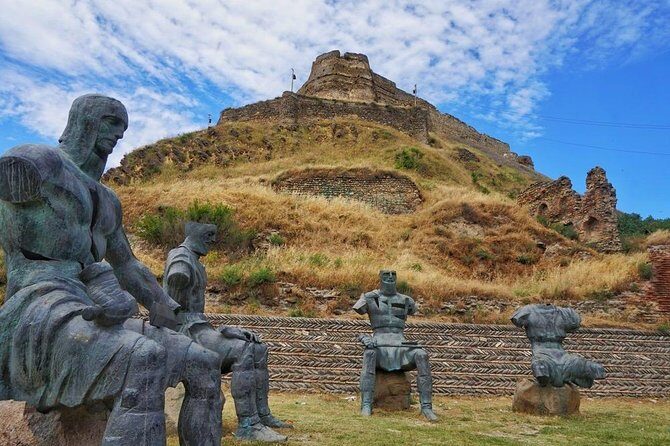
Then the tour shifts into Gori Fortress territory—different mood, different terrain. The fortress sits on a hill above the city and dates to the 13th century, but most of what you see today comes from later centuries (17th and 18th), after centuries of conflict and changing control.
The site was captured by the Ottomans in the 16th century and then passed back and forth between Turks, Georgians, and Persians. On top of that, a 6.2 magnitude earthquake in 1920 caused significant damage. That history matters because it explains why fortresses can look “layered,” not like a single perfectly preserved scene.
You get about 30 minutes at the fortress, and admission is free on this schedule. With a time limit like that, focus on two things:
- the panoramic sense of where the fortress controls the city
- the visible mix of structure styles and repair/age effects
If you like military architecture or simply want a break from churches, this is a satisfying change of pace.
Stop 4: Stalin Museum in Gori—what you’re actually paying for
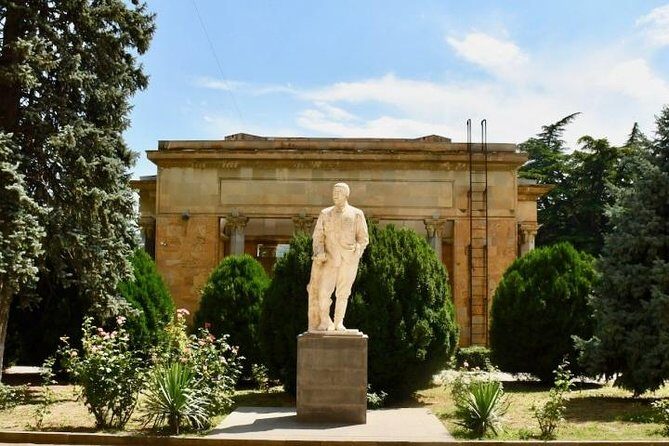
Gori is Joseph Stalin’s birthplace, and this stop goes straight into his life story through the Stalin Museum, with Soviet-era characteristics. The schedule gives you about 45 minutes.
Here’s the key value point: the museum is not included in the price, so you’re choosing it as an optional emphasis. If Soviet history is on your radar, this time slot makes sense because it’s long enough to feel like you’re learning something and not just scanning captions.
The museum also uses Georgian and Russian on exhibits, and that can matter depending on your language comfort. If you prefer a guided explanation, lean on your guide during this part so the text-heavy displays don’t feel like work.
Stop 5: Uplistsikhe Cave Town, the “fortress of the lord”
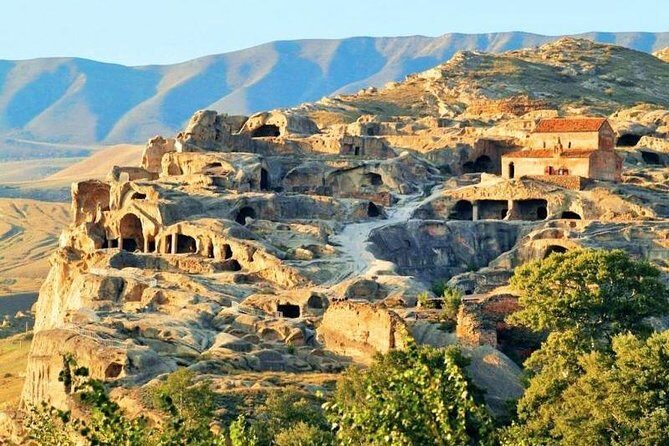
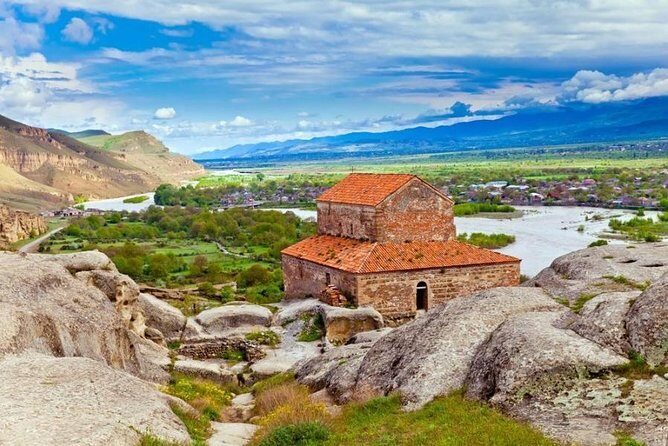
Finally comes the highlight for many people who like unusual architecture: Uplistsikhe Cave Town. The name is described as meaning fortress of the lord, and archaeologists identify it as one of the oldest urban settlements in Georgia.
This is not just a collection of caves. In ancient times, it was a major political and religious center in the heartland of Kartli (also known as Iberia in classical accounts). The earliest history goes back to the 2nd–1st millenniums B.C. In the Middle Ages, Uplistsikhe sat on an important trade route linking Byzantium with India and China—an astonishing connection if you pause to imagine long-distance movement across centuries.
Medieval written tradition also assigns it a mythical founder: Uplos, son of Mtskhetos and grandson of Kartlos. Whether you treat the story as mythology or cultural memory, it adds flavor to what you’re seeing on the rock.
You get about one hour at Uplistsikhe, and admissions are not included in the tour price. That timing is fair. Caves and rock-cut structures can be visually dense, but with an hour you can cover the core layout without feeling exhausted.
Practical tip: wear shoes you trust on uneven surfaces. Cave towns don’t do “comfortable stroll” well.
Price and value: what $50.13 buys in real terms
The price is listed at $50.13 per person, and the tour lasts about 10 hours. That’s the right length for a day trip that covers four major stops—especially when the itinerary includes transportation, guide time, and water.
Here’s the honest value math:
- Included: air-conditioned vehicle, bottled water, fuel surcharge, and a professional guide.
- Not included: Stalin museum admission and Uplistsikhe admission, plus lunch.
So the tour isn’t “all-in sightseeing.” It’s more like a guided day built around major landmarks plus two ticketed experiences that you pay for directly. If you plan to visit both ticketed stops, the day feels like strong value. If you’re indifferent about one, you can still enjoy the others, but you won’t “escape” the fact that lunch isn’t included.
It’s also useful to know this tour is often booked about 18 days in advance. That suggests it’s a popular combination, so booking ahead is a good move if your schedule is tight.
Timing and pacing: why the short stops work here
The schedule uses short windows at the church sites—about 20 minutes at Jvari and 30 minutes at Svetitskhoveli. That might sound quick on paper, but for places like these, it’s a smart use of time. You’re not trying to read every inscription. You’re capturing the architecture, the key legends, and the location.
The longer blocks land where they should:
- Gori Fortress gets enough time for the views and context.
- Stalin Museum gets time to actually see and absorb.
- Uplistsikhe gets a full hour so you can move through without feeling like you’re being herded.
This pacing is especially good if you don’t want to spend your whole day sitting in a car. Still, you should treat it as a full-day outing, not a lazy half-day.
What to budget beyond the tour price
Since lunch isn’t included, you’ll want to plan for food once you’re out in Gori. Bring snacks if you know you get hungry fast. It’s also worth keeping a little extra cash or payment flexibility for the two ticketed stops: the Stalin Museum and Uplistsikhe.
Also consider what you care about most:
- If you want UNESCO architecture and Christian legend sites, you’ll be happy with Jvari and Svetitskhoveli.
- If you want political history, plan time and ticket budget for the Stalin Museum.
- If you want geology-meets-architecture, set your expectations for Uplistsikhe and wear the right shoes.
Who should book this Mtskheta–Gori–Uplistsikhe tour
This tour is a great fit if you want a structured one-day overview of Georgia beyond Tbilisi, without giving up comfort. I’d say it suits:
- first-time visitors who want iconic sites with context
- travelers who like legends and meaning, not just photos
- people who enjoy variety in one day: churches, fortress history, a museum, then cave town ruins
It may not be ideal if you’re the type who wants long, unhurried stays at monuments, or if you dislike ticketed add-ons.
Should you book it?
If your goal is to see Mtskheta, Gori, and Uplistsikhe in one organized day, this is a solid booking. You get free access to the two major church stops on the itinerary, a guide to connect the stories, and comfortable transport to avoid time-wasting logistics.
I’d book it especially if you’re comfortable paying for the Stalin Museum and Uplistsikhe admissions directly and you don’t mind eating lunch on your own. If you do those two things and come with good walking shoes, you’ll get a day that feels like Georgia’s timeline in motion—Christian origins up on a hill, Soviet history in a city museum, and ancient rock-cut life in Uplistsikhe.
FAQ
How long is the tour?
It runs for about 10 hours.
Is pickup offered from Tbilisi?
Yes, pickup is offered, and the meeting point is near public transportation.
What is included in the tour price?
The tour includes an air-conditioned vehicle, bottled water, fuel surcharge, and a professional guide service, plus a mobile ticket.
Do I pay for admission at the churches?
Admission is listed as free for Jvari Church and Svetitskhoveli Cathedral on this itinerary.
Are the Stalin Museum and Uplistsikhe tickets included?
No. Admission fees for the Stalin museum and Uplistsikhe are not included.
Is lunch included?
No, lunch is not included.
What is the group size?
The tour has a maximum of 20 travelers.
FAQ
Is free cancellation available?
Yes. You can cancel for a full refund up to 24 hours in advance.
When do ticket refunds stop if I cancel late?
If you cancel less than 24 hours before the experience starts, the amount you paid will not be refunded.