REVIEW · TBILISI
Mtskheta Tour with All UNESCO Sites & Ancient Ruins
Book on Viator →Operated by SelectGeorgia-For Holiday · Bookable on Viator
If you like your churches with setting and story, this Mtskheta day trip delivers in a big way, starting with Jvari Church and ending with Shio-Mgvime Monastery. I like that you get hassle-free pickup plus a private air-conditioned vehicle, so you spend less time wrangling transport and more time looking up at what matters. I also like the way the guide turns UNESCO placards into real architecture and real belief, not just facts. One thing to consider: the day includes walking through old-town streets with stairs and uneven terrain, so comfortable shoes and patience help.
This is built as a private tour for your group with an English-speaking guide and a relaxed pace. I’ve found that when you’re visiting multiple UNESCO sites back-to-back, the difference is usually timing and explanations, and this one is designed around both.
In This Review
- Key highlights that make this tour worth your time
- UNESCO Mtskheta: why this day trip works
- Stop 1: Jvari Church for the view and the early church architecture
- Stop 2: Svetitskhoveli Cathedral and the Living Pillar story
- Stop 3: Samtavro Church for the 4th-century roots and royal rebuilding
- Stop 4: Shio-Mgvime Monastery for the cave hermit vibe
- The walking, stairs, and church dress code you’ll want to plan for
- Your guide’s storytelling: why it feels personal, not scripted
- Price and value: what $127.50 gets you in the real world
- Lunch and timing: plan for a full day, not a quick drive
- Who should book this Mtskheta UNESCO tour
- Should you book it? My honest take
- FAQ
- Is this tour private?
- Does the tour include hotel pickup?
- How long is the Mtskheta tour?
- Which UNESCO sites and ruins are included?
- Is admission included at the stops?
- What should I wear for Georgian Orthodox churches?
Key highlights that make this tour worth your time
- Hotel pickup + private ride: less hassle, more time at the monuments
- UNESCO sites in a tight loop: major landmarks of early Georgian Christianity
- Guide-led storytelling: you’ll understand what you’re seeing, not just where it is
- Admission tickets listed as free: helps value on top of what you pay for the tour
- Church etiquette matters: headscarves and proper clothing are expected
- Built around good weather: if conditions are poor, they may reschedule or refund
UNESCO Mtskheta: why this day trip works
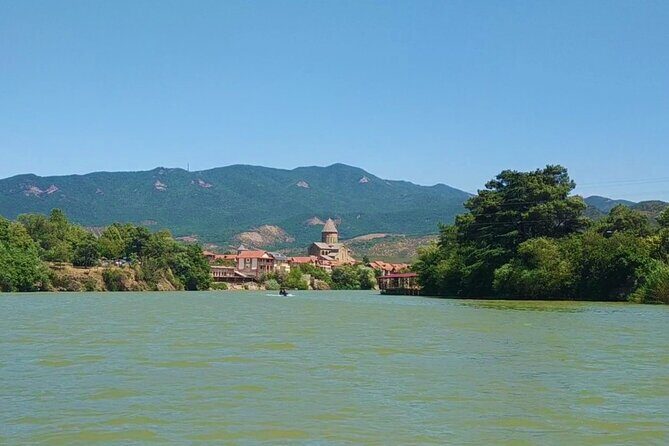
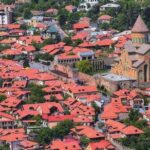
Mtskheta is one of those places where the buildings feel like they’ve been part of the landscape forever. And that’s not just romantic talk. Here, the UNESCO story is literally tied to how early Christianity spread and how Georgian kings, monks, and everyday believers shaped the holy sites over centuries.
This tour is interesting because it avoids the usual problem of one-site visits that feel too short. You get multiple major stops in about 9 hours, with guidance for each location. That means you’re not just collecting photos. You’re learning why each church or monastery looks the way it does, and why it mattered enough to be protected long-term.
You can also read our reviews of more tours and experiences in Tbilisi.


Stop 1: Jvari Church for the view and the early church architecture
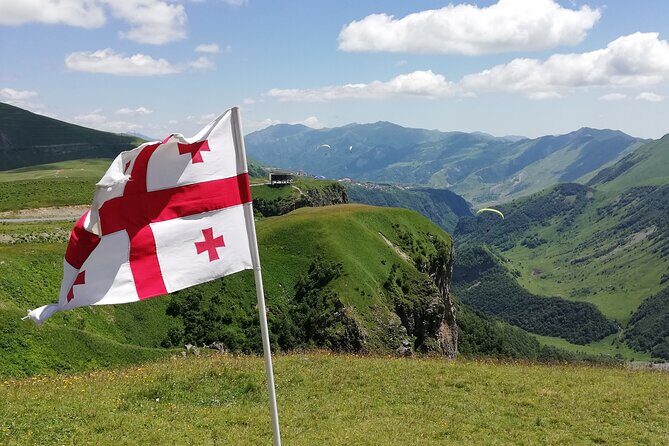
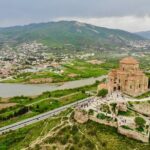
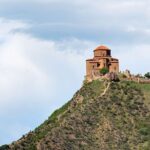
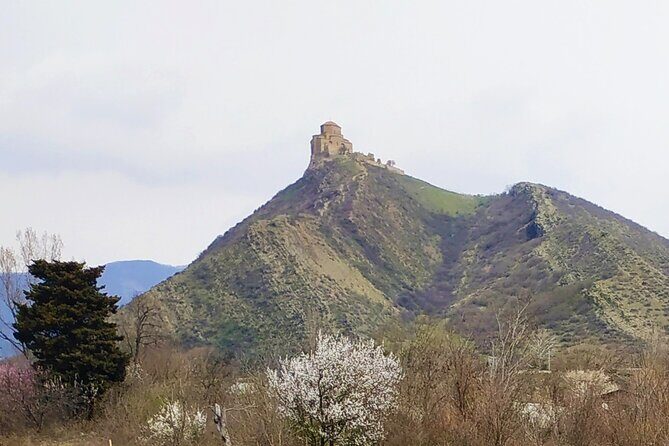
Jvari Church sits on Jvari Mount, about 656 meters above sea level, and the climb is part of the payoff. The first thing you’ll notice is the way the church hugs its setting. That harmony between structure and environment is one of the reasons this site is recognized as a UNESCO World Heritage place.
Jvari is also special because it’s described as a rare survivor: an Early Medieval Georgian Orthodox church that remained close to its original form. If you’re into architectural “firsts,” this stop gives context. Jvari is noted as the founder of the Jvari-type church architecture, a style that became common in Georgia and Armenia.
How long you’ll spend: about 30 minutes.
Tickets: listed as free.
My practical advice: bring your phone battery or a small power bank. You’ll want it for wide-angle shots of the surroundings from the height.
Stop 2: Svetitskhoveli Cathedral and the Living Pillar story
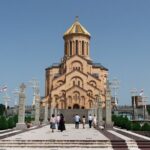
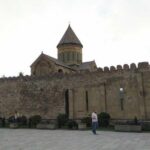
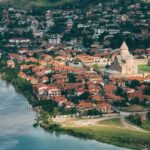
Svetitskhoveli Cathedral is the kind of place that makes you slow down, even if you’re normally a fast walker. This is one of Mtskheta’s major Orthodox landmarks, and it’s also a UNESCO World Heritage site.
The cathedral is known as the Cathedral of the Living Pillar. It has long been associated with the burial site of the claimed mantle of Jesus, and it’s also described as a principal Georgian Orthodox church. Over the centuries, the cathedral served as a burial place for kings—so when you’re standing there, you’re in a place that held political and religious meaning at the same time.
Architecturally, you’ll hear the key timeline: the current cross-in-square structure was completed between 1010 and 1029 by architect Arsukisdze, while the site itself goes back to the early fourth century. If you look at the exterior details, the 11th-century exterior decoration is presented as unusually well preserved.
This stop also comes with a cautionary layer. The cathedral is described as an endangered cultural landmark, with some priceless frescoes lost after being whitewashed during the Russian Imperial authorities. That doesn’t ruin the visit—honestly, it makes the remaining details feel more urgent. You’re seeing what survived.
How long you’ll spend: about 1 hour.
Tickets: listed as free.
My practical advice: go in expecting to pause. Don’t treat this like a quick photo stop. Give your eyes time to catch the proportions and the stonework.
Stop 3: Samtavro Church for the 4th-century roots and royal rebuilding
Samtavro Monastery has a different feel than Jvari and Svetitskhoveli. It’s still deeply tied to early Georgian Christianity, but it feels more like the everyday rhythm of monastic life wrapped around important history.
The monastery is described as founded in the 4th century by King Mirian III, when Saint Nino established an early church here. Then the main temple’s style is dated to the first half of the 11th century, likely built or rebuilt soon after Svetitskhoveli Cathedral by King George I and Catholicos-Patriarch Melchizedek I.
If Svetitskhoveli gives you big cathedral weight, Samtavro gives you layered “continuity.” UNESCO protects it, and it’s presented as combining the Transfiguration Church and the Nunnery of St. Nino under one site umbrella. That’s a useful concept for your visit: you’re not only looking at one building, you’re seeing a complex of faith sites that evolved together.
How long you’ll spend: about 30 minutes.
Tickets: listed as free.
My practical advice: this is a good place to take a slower moment and review what you learned earlier. By now, the guide’s explanation of early architecture should start to click.
Stop 4: Shio-Mgvime Monastery for the cave hermit vibe
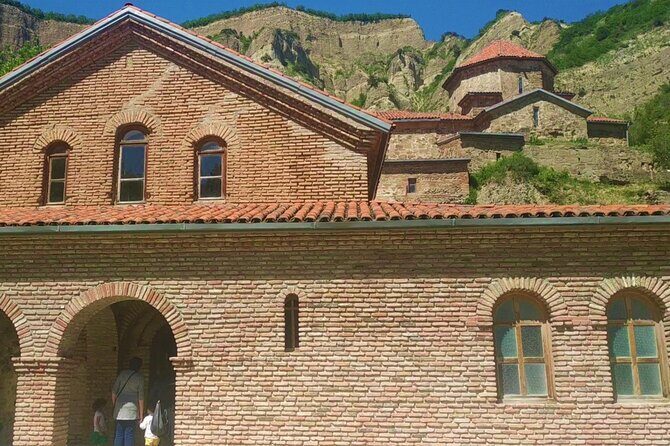
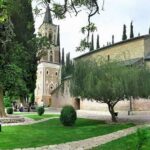
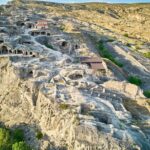
Shio-Mgvime Monastery is the wild card in the best way. It’s connected to St. Shio, a monk described as one of the Thirteen Assyrian Fathers who came to Georgia as Christian missionaries. That background matters because it explains why this monastery feels both local and part of a wider early Christian movement.
The site includes a deep cave connection: St. Shio spent his last years as a hermit in a cave. Even if you don’t think of yourself as a “monastery person,” the tone of the place usually changes after you hear that.
The earliest building is described as dating to the 560s–580s: a plain and strict cruciform church (simple, not decorative for decoration’s sake). It has an octagonal dome covered with a conic roof shape, and it once housed an iconostasis moved to the Art Museum of Georgia.
Later alterations happened, including changes in the 11th and 18th centuries, but the original architecture is described as retained. That mix—old core, later adjustments—tends to make the site easier to understand than a fully rebuilt monument.
How long you’ll spend: about 1 hour.
Tickets: listed as free.
My practical advice: wear grippy shoes. Even when it’s not wet, cave and monastery areas can mean uneven ground and small rises.


The walking, stairs, and church dress code you’ll want to plan for
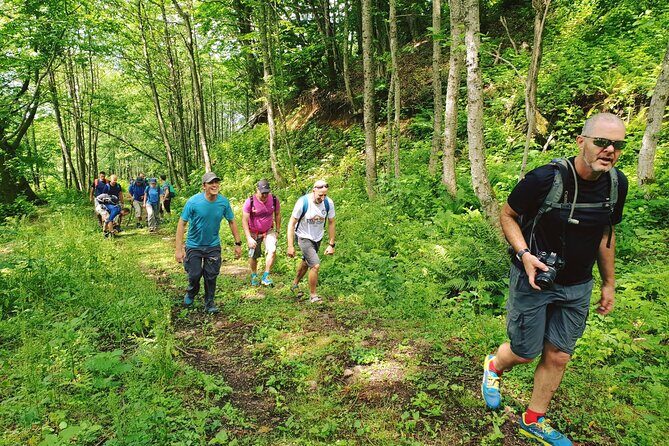
This tour includes walking in Mtskheta’s old town with various terrain and stairs. That’s not just a footnote—it affects how much you enjoy the day. If you show up in shoes that look good but don’t feel stable, your legs will start negotiating your enjoyment halfway through.
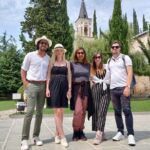
Also, church etiquette is real here. Ladies need headscarves and dresses in Georgian Orthodox churches. Short trousers for men are forbidden. Scarves and dresses are available near some church entrances, but I still recommend being prepared so you don’t waste time or scramble in the last minute.
My practical tip: bring a scarf even if you think you’ll find one on-site. Then you can focus on the visit, not the outfit logistics.
Your guide’s storytelling: why it feels personal, not scripted
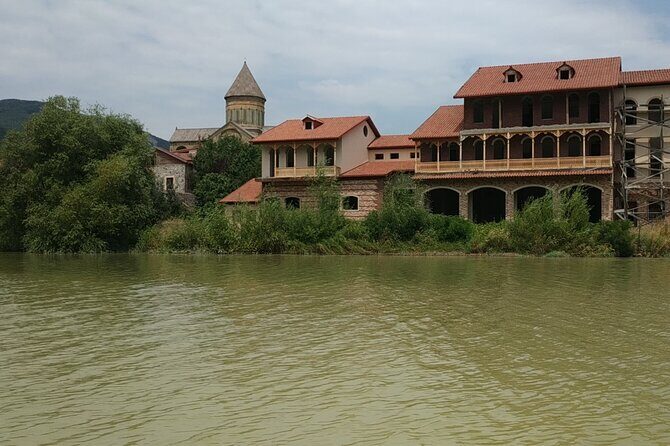
This is a private tour, so only your group participates. That matters because the guide can pace explanations to your questions and attention span. In the feedback I’ve seen from this experience format, guides are often praised for telling stories in a way that holds focus.
Two guide names show up in customer comments: Giorgi and Mr George. That’s a strong sign the guiding style here is narrative—stories that connect architecture, belief, and the people behind the monuments. And you’ll feel that shift as the stops add up. At the start, you’re orienting. By the cathedral and monastery, the details start to make sense as part of one bigger story of early Christianity in Georgia.
Price and value: what $127.50 gets you in the real world
At $127.50 per person, this tour is priced like a focused, all-in-one UNESCO day rather than a collection of separate tickets and taxis. What makes it feel like decent value is the combination of logistics and content:
- Hotel pickup reduces the hassle cost of getting out of Tbilisi and into Mtskheta.
- A private air-conditioned vehicle keeps the day comfortable when weather or traffic turns annoying.
- Admission tickets are listed as free at each stop, which helps you avoid extra surprises.
- You get English guidance and a plan that hits multiple key monuments in about 9 hours.
One more value detail: the tour offers group discounts. Even though it’s private for your group, if you’re traveling with others, it can make the per-person price nicer.
Lunch and timing: plan for a full day, not a quick drive
The day runs about 9 hours, starting at 9:00 am. That’s a long-but-manageable schedule if you’re staying hydrated and wearing proper shoes.
Lunch depends on the option you choose. The tour information says dietary restrictions can be used to offer lunch if you booked a tour with lunch. If you booked the budget tour option, lunch isn’t included, but you’ll stop in a restaurant to have lunch.
My practical advice: choose the lunch option if you know you’ll need something specific (or if you hate decision fatigue mid-day). Otherwise, be ready to eat at a restaurant stop without much choice.
Who should book this Mtskheta UNESCO tour
I’d recommend this tour if you:
- want UNESCO sites without chaining together multiple taxis
- like history explained in plain language, not just signage
- want a structured day that still gives time to breathe at each church
- appreciate a private group experience where the guide can slow down for your questions
It’s also a good pick if you’re using this as your main Mtskheta introduction. The tour hits the big anchors—Jvari, Svetitskhoveli, Samtavro, and Shio-Mgvime—so you leave with a map in your mind, not just random landmarks.
If you hate walking or stairs, you might find the terrain a strain. The tour explicitly notes walking through old town with varied terrain and steps, so that’s the one clear mismatch.
Should you book it? My honest take
Book it if you want a guided, efficient UNESCO day with pickup, a private vehicle, and a guide who makes the monuments click. The price feels fair for what you get, especially with the free admission listed for the stops and the time you save on transport.
Skip it or reconsider if you’re very sensitive to walking. This is a “good shoes and steady pace” kind of day. If that sounds fine, you’re set up for a memorable tour: you’ll see rare early church architecture at Jvari, the spiritual and royal gravity of Svetitskhoveli, the early roots and royal rebuilding at Samtavro, and the cave-hermit atmosphere at Shio-Mgvime.
FAQ
Is this tour private?
Yes. It’s described as a private tour/activity, so only your group participates.
Does the tour include hotel pickup?
Yes, pickup is offered, and you’ll travel in a private air-conditioned vehicle.
How long is the Mtskheta tour?
It’s listed as about 9 hours.
Which UNESCO sites and ruins are included?
The included stops are Jvari Church, Svetitskhoveli Cathedral, Samtavro Church, and Shio-Mgvime Monastery.
Is admission included at the stops?
Admission tickets are listed as free for each of the four stops.
What should I wear for Georgian Orthodox churches?
Ladies need headscarves and dresses. Men should not wear short trousers. Scarves and dresses are available near some church entrances.